
The Politics of Distraction: Why Alberta’s Complaints Matter Less Than They Appear

A fair reading is that a significant share of Alberta’s current complaints function as sideshows, but not empty ones. They are distractions with a purpose, and that purpose is political rather than policy-driven.

At the federal level, the Carney government’s real files are structural and unforgiving: restoring long-term productivity, managing a fragile transition to a low-carbon economy without regional collapse, stabilizing housing and infrastructure finance, and navigating a volatile global trade and security environment. None of those problems yield to symbolic confrontation. They require boring competence, capital discipline, and political stamina. Against that backdrop, disputes over judicial appointments, equalization rhetoric, or procedural grievances are comparatively low-impact on Canada’s material trajectory.

From Alberta’s perspective, however, these conflicts are useful theatre. They re-center politics on identity, grievance, and sovereignty rather than on questions where provincial governments have fewer clean answers of their own. A public argument about judges, Ottawa elites, or federal overreach is easier to sustain than a hard conversation about Alberta’s economic diversification, fiscal exposure to commodity cycles, or long-term labour force constraints. These fights allow provincial leaders to frame themselves as defenders rather than managers.

For the Carney government, the danger is not that these complaints derail core policy, but that they consume political oxygen. Every hour spent responding to performative ultimatums is an hour not spent building coalitions around housing finance reform or industrial strategy. The risk is cumulative. A steady drip of constitutional agitation can distort the agenda, forcing Ottawa into a reactive posture that favours short-term messaging over long-term statecraft.

That said, dismissing the disputes entirely would be a mistake. Sideshows still shape public mood. They erode trust in institutions, normalize the idea that core democratic guardrails are negotiable, and create a climate where substantive reform becomes harder to explain and sell. The judicial appointment fight matters less for what it changes immediately than for what it signals: a willingness to challenge institutional norms to score political points.

In the bigger picture, then, Alberta’s complaints are not the main story of Canada’s moment, but they are part of the background noise that can either be managed or allowed to metastasize. The test for the Carney government will be whether it can keep its focus on the genuinely consequential files while refusing to let performative conflict define the national agenda. Governments lose momentum not when they face opposition, but when they mistake noise for substance.
When the Witness Holds the Gavel: The Constitutional Perils of Reverse Disclosure

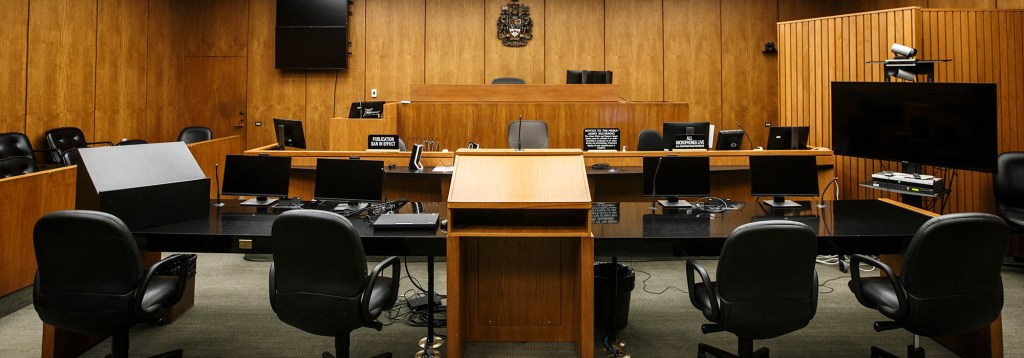
Canada’s lower courts are now bearing the brunt of an ill-conceived and constitutionally fraught innovation in sexual assault law: reverse disclosure. Introduced under Bill C‑51 in 2018, this legislative regime forces accused persons to disclose in advance any private communications; such as texts, emails, or social media messages, they intend to use in cross-examination of the complainant. The complainant, in turn, is granted full participatory rights and legal representation to argue against the admissibility of such evidence. While politically expedient and publicly palatable in the wake of the Ghomeshi trial, the legal architecture of reverse disclosure has proven to be unstable, incoherent, and in many cases, plainly unconstitutional.

Trial courts across the country have issued sharply divergent rulings on how these provisions should operate. In some decisions, judges have deemed the mandatory timelines imposed on the defence to be incompatible with the fair-trial rights guaranteed by section 7 of the Charter. Others have questioned the very foundation of the regime, arguing that it unjustly burdens the accused with obligations that reverse the presumption of innocence and compromise the right to full answer and defence. Nowhere else in Canadian criminal procedure is a complainant, essentially a Crown witness, granted standing to challenge what evidence may be used in their own cross-examination. It is a distortion of the adversarial system.

The concept of reverse disclosure is not merely controversial; it is structurally flawed. The defence is no longer free to mount a case in the manner required by the facts and theory of the defence, but is instead placed under the supervision of the court and the complainant’s counsel, long before trial. This undermines not only trial strategy, but also the accused’s right to test the Crown’s case without disclosing defence evidence in advance. Worse still, it creates an asymmetry in which the complainant is effectively briefed on what the defence intends to argue, giving them an opportunity, conscious or not, to shape their testimony accordingly.

This problem is compounded by the legislative vagueness surrounding what constitutes a “private record” and how relevance, prejudice, and privacy should be weighed. The result has been legal uncertainty and procedural chaos. Judges are left to interpret a vague and often contradictory set of provisions, and defence counsel must navigate a landscape where each courtroom may yield different rules and interpretations. This is not how constitutional criminal law is meant to function.

Some courts have gone so far as to strike down portions of the reverse disclosure regime altogether, citing fundamental Charter violations. These judgments are not aberrations, they are warnings. When a regime designed to protect complainants ends up jeopardizing the constitutional rights of the accused, the entire framework must be re-evaluated. The criminal trial must remain a place where the presumption of innocence is more than a platitude, and where the right to a fair trial is not subject to the political winds of the day.

Until the Supreme Court addresses these concerns decisively, lower courts will continue to struggle with reverse disclosure. And in that struggle, justice itself hangs in the balance.