Quiet Competence: The Technocratic Leadership of Mark Carney and Keir Starmer

In an era marked by political turmoil, populism, and polarized electorates, the emergence of two distinctly technocratic leaders, Canada’s Mark Carney and the United Kingdom’s Keir Starmer, signals a subtle, but significant shift in governance. Both men have stepped into their roles as Prime Ministers in the last year, bringing with them a pragmatic, policy-driven style that eschews grandstanding for steady, results-oriented leadership.

Mark Carney’s ascension to the Canadian premiership in March 2025 was, by many measures, unconventional. Known primarily for his extraordinary track record as an economic steward, having helmed two of the world’s most influential central banks, Carney entered politics without prior elected office experience. Yet this outsider status may be his greatest asset. Carney’s approach is quintessentially technocratic: data-driven, nuanced, and focused on long-term stability rather than short-term political gain.

Early in his tenure, Carney moved decisively, but quietly to abolish the consumer carbon tax, a move that was politically contentious, but signaled his willingness to recalibrate policies based on public sentiment and economic realities. Simultaneously, he maintained other industrial carbon levies, showing a measured balancing act between environmental priorities and economic concerns. His focus on national sovereignty, especially in the context of complex geopolitical pressures from the United States, demonstrates his comfort in navigating both domestic and international arenas with calculated precision.

Across the Atlantic, Keir Starmer’s rise to UK Prime Minister in mid-2024 was accompanied by a return to a more traditional, sober style of governance after over a decade of Conservative rule. Starmer’s background as a human rights lawyer and former Director of Public Prosecutions clearly informs his methodical and legalistic approach to leadership. His government has tackled thorny domestic challenges, from public sector strikes to immigration policy reform, without resorting to populist rhetoric or headline-grabbing gestures.

Starmer’s pragmatism is evident in his recent reforms: ending winter fuel payments for millions, launching an early prisoner release scheme to reduce overcrowding, and instituting new border security measures. These decisions, while controversial, reflect a focus on institutional reform and social justice framed within achievable policy frameworks. Unlike more flamboyant predecessors, Starmer projects a sense of quiet competence, aiming to rebuild public trust through consistency and fairness rather than drama.

What unites Carney and Starmer is their shared embrace of technocratic governance, an approach that values expertise, incremental progress, and policy refinement over ideological battles or media theatrics. Both leaders seem intent on “getting on with the job,” navigating complex political landscapes with a steady hand. This approach is particularly noteworthy given the current political climate, where many leaders lean heavily on spectacle or populist appeals.

Their quiet competence is not without risks. Technocratic leaders can be perceived as detached or insufficiently charismatic, which can make it challenging to galvanize broad popular enthusiasm. Yet, for electorates fatigued by volatility and crisis, Carney and Starmer offer a reassuring alternative: governance that promotes substance over style and incremental progress over sweeping promises.

The early months of Mark Carney’s and Keir Starmer’s premierships illustrate the power of quiet, data-driven leadership in modern politics. Their technocratic approaches may not dominate headlines, but they offer a compelling model for steady, pragmatic governance in an era that sorely needs it.

The Liberal Party’s New Power Struggle: Carney vs The Old Guard

Now that Mark Carney has won the 2025 federal election, and as Prime Minister, named his new cabinet, his ability to navigate the internal politics of the Liberal Party will be just as crucial as his capacity to govern the country. While Carney’s experience as Governor of the Bank of Canada and later the Bank of England gives him credibility as a skilled economic manager, political leadership is an entirely different challenge. Government is not just about making rational policy decisions; it is about managing competing egos, regional interests, and the internal factionalism that defines any major political party. The question is whether Carney, a newcomer to elected politics, can withstand the pressures of a party where everyone wants a piece of the action.

One of Carney’s greatest strengths is his ability to operate within complex institutions, where navigating bureaucracy and political sensitivities is essential. However, the Liberal Party is not a technocratic body, it is an organization with entrenched factions, long-standing rivalries, and individuals who expect rewards for their loyalty. A Prime Minister must act as both leader and power broker, ensuring that key players feel valued while still asserting control over the direction of the government. If Carney fails to grasp this dynamic early on, he risks being seen as an outsider unable to command the loyalty of his own caucus.

A major test will be how he handles the various factions within the party. The Liberals are not a monolithic entity; they consist of a progressive wing that leans heavily on social justice issues and a centrist bloc that prioritizes economic pragmatism. There are also strong regional interests at play, particularly from Ontario and Quebec, where powerful party figures hold significant influence. A successful leader must strike a balance, ensuring that no single faction feels alienated while maintaining a clear sense of direction. If Carney leans too heavily into one camp, especially if he is seen as overly technocratic at the expense of political instinct, he risks internal dissent.

Another potential challenge is dealing with the remnants of Trudeau’s inner circle. If Carney takes the leadership, it will not necessarily mean the party’s Trudeau-era power structure disappears overnight. There will be long-time MPs and advisers who built their careers under Trudeau’s leadership and may not be quick to embrace Carney’s vision. Some may resist his authority outright, while others could quietly work against him if they feel sidelined. Managing this transition will require careful maneuvering, if Carney fails to integrate these figures into his team in a way that acknowledges their influence, he could find himself facing internal power struggles before he even settles into office.

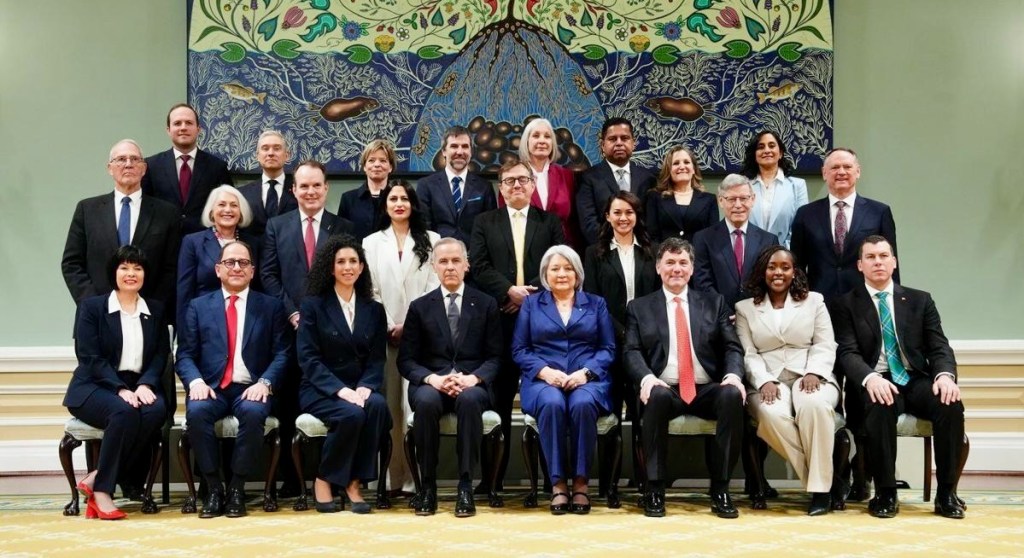
Cabinet appointments announced today will be an early indicator of whether Carney understands the importance of political management. Every successful leader knows that forming a cabinet is not just about qualifications; it is about rewarding allies, neutralizing threats, and ensuring regional representation. If Carney takes a purely meritocratic approach, appointing ministers based solely on expertise rather than political necessity, he could alienate those who expect a return on their loyalty. The most effective prime ministers understand that governing is about both competence and coalition-building; failing to strike that balance can quickly lead to discontent within caucus.

Beyond Parliament Hill, Carney will also need to connect with the party’s grassroots. The Liberal base consists of volunteers, donors, and riding association leaders who expect their voices to be heard. Carney’s reputation as an elite, internationalist figure could work against him if he does not make a concerted effort to engage directly with these groups. If he is perceived as distant or disconnected from the party’s rank and file, he could struggle to maintain cohesion within the Liberal movement. Trudeau, for all his faults, had a deep personal connection with the party’s grassroots, something that sustained him through difficult periods. Carney will need to build that relationship from scratch.

Like any new leader, Carney will face an early test, a moment that defines his ability to command respect and authority within his party. Whether it is a scandal, an economic crisis, or a policy misstep, how he handles that first major challenge will set the tone for his leadership. If he shows strength and decisiveness, he could solidify his position within the party. But if he falters, doubts about his leadership will begin to fester, potentially leading to deeper internal divisions.

Ultimately, Carney’s success will hinge on his ability to adapt. He has the intellectual firepower and the institutional experience, but politics is a game of relationships, instincts, and survival. If he can master that side of the job, he could thrive. If not, he risks becoming yet another promising leader undone by the very party that brought him to power.

Carney’s Distinction: Spending vs Investing

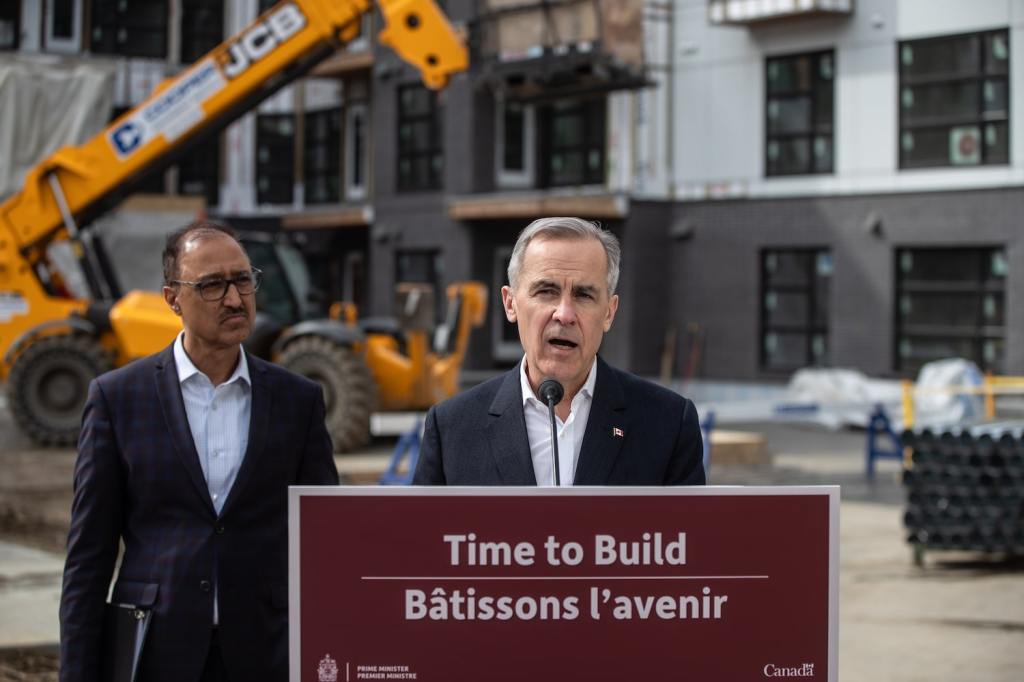
Mark Carney’s recent remarks at the housing development announcement have sparked an intriguing debate on fiscal responsibility that could well shape our nation’s political discourse this election season. In a climate where every policy decision is scrutinized, Carney’s clear differentiation between mere spending and genuine investment stands out as both a pragmatic and visionary approach.

At the event, Carney took the podium with a measured resolve, declaring, “This is not merely spending.” The announcement, a multi-billion-dollar initiative aimed at creating thousands of affordable homes, was not just a government outlay but, as Carney argued, a strategic investment in the country’s future. He reminded us that spending provides short-term relief, a temporary boost that often fades without leaving a lasting impact. In contrast, investing builds physical assets, from homes that shelter citizens to infrastructure that drives long-term economic growth.

During the press conference, a journalist pressed Carney for clarity: “But what exactly distinguishes spending from investing, especially in these turbulent economic times?” Carney’s response was incisive. “Consider this housing initiative. If we were simply spending, we’d be issuing subsidies or providing temporary relief. That money would dissipate, leaving us to confront the same issues a year or two down the line. What we’re doing here is building assets that not only meet immediate needs, but also stabilize our market for decades to come.” His explanation resonated, emphasizing that when the government borrows money for tangible investments, it’s laying the groundwork for future prosperity, rather than just adding to the current debt burden.

Critics have raised valid concerns about increasing deficits, asking, “But what about government deficits? Isn’t this just adding to our debt load?” Carney acknowledged the worry, noting that borrowing for short-term fixes often leads to a perilous cycle of debt. However, he argued, borrowing to invest in enduring assets, such as new housing, yields dividends in the form of job creation, improved living standards, and a robust, resilient economy. “Debt for spending is dangerous because it leaves nothing behind,” he stated. “Debt for investment, however, is different. When we invest in projects that drive economic growth, we’re not just managing debt, we’re transforming it into a catalyst for long-term stability.”

As someone who has witnessed countless policy debates, I find Carney’s distinction particularly refreshing. In an era dominated by immediate solutions, and short-lived political gains, his perspective challenges leaders to think beyond the next election cycle. The choice, as Carney laid it out, is stark: Will our policymakers continue to opt for fleeting spending that merely masks underlying problems, or will they embrace investments that secure a prosperous future?

This is more than a fiscal debate, it’s a much needed, fundamental question about our nation’s priorities. As voters and citizens, Canadians must demand that our leaders consider the long-term impacts of their decisions. The current housing development initiative, if executed wisely, is a testament to the power of strategic investment over transient spending, such as tax cuts for the rich, or removing the carbon tax. It promises to deliver not just immediate relief, but a foundation upon which a stronger, more resilient economy can be built. Again, this goes beyond the usual election cycle promises, and short-term thinking, that politicians usually indulge in, to get the votes they need to stay in power. 

In these uncertain times, Carney’s message is a timely reminder that every dollar spent should be scrutinized for its future value. As the election nears, his call to invest in our collective future rather than merely spending for today is one that deserves our full attention, and, perhaps, our support.

Carney’s First Move as Prime Minister: A Smaller, More Focused Cabinet

Mark Carney was sworn in as Canada’s 24th Prime Minister during March 2025, taking over from Justin Trudeau at a time of economic uncertainty, and escalating trade tensions with the United States. Carney, the former governor of both the Bank of Canada and the Bank of England, is widely seen as a steady hand in financial matters. His first major move as leader was to restructure the Liberal cabinet, streamlining its size and refocusing its priorities to address the most pressing issues facing the country.

One of the defining characteristics of Carney’s new government is efficiency. The cabinet has been reduced in size, reflecting longstanding calls within the Liberal Party for a more effective governance structure. With no more than 20 ministers, the streamlined approach is meant to improve coordination and decision-making. A key figure in this reshaped cabinet is Dominic LeBlanc, who takes on the powerful role of Minister of International Trade and Intergovernmental Affairs, while also serving as President of the King’s Privy Council. His extensive political experience positions him as a central player in both trade negotiations and federal-provincial relations, two areas where stability will be crucial.

Mélanie Joly retains her role as Minister of Foreign Affairs, but with an expanded focus on international development. At a time of growing global instability, Canada’s diplomatic relationships will be under close scrutiny, particularly as tensions with the United States continue to simmer. Meanwhile, François-Philippe Champagne steps into the critical position of Minister of Finance. His background in trade and innovation makes him well suited to tackle Canada’s economic challenges, especially as the government navigates the fallout of trade disputes, and seeks to bolster domestic investment.

Another notable appointment is Anita Anand, who assumes the role of Minister of Innovation, Science, and Industry. With Canada needing a competitive edge in technology and research, her portfolio will play a key role in shaping the country’s economic future. Bill Blair moves into National Defence, bringing his experience in emergency preparedness and public safety to an increasingly complex security environment. With global conflicts intensifying and Canada’s military commitments under review, Blair’s role will be one of the most closely watched in the new cabinet.

On the domestic front, Carney has signaled a renewed emphasis on Indigenous relations and social equity. Patty Hajdu remains in charge of Indigenous Services, reinforcing the government’s commitment to reconciliation and improved support for Indigenous communities. Jonathan Wilkinson, whose portfolio has been expanded to include both Energy and Natural Resources, will be tasked with balancing Canada’s economic interests with environmental sustainability—a challenge that has long been a point of contention in federal politics.

Chrystia Freeland, one of the government’s most experienced ministers, has taken on the role of Minister of Transport and Internal Trade. Her ability to manage complex negotiations will be key as the government looks to strengthen internal trade and infrastructure development. Meanwhile, Steven Guilbeault has been given a new role overseeing Canadian culture, heritage, and national parks. His appointment suggests a renewed effort to promote national identity and environmental conservation as part of the government’s broader agenda.

Overall, Carney’s cabinet reshuffle reflects a clear strategy: economic resilience, strengthened trade relationships, national security preparedness, social equity, and environmental sustainability. By bringing together experienced political veterans and streamlining decision-making, the new Liberal government is positioning itself to navigate both domestic and global challenges with a renewed sense of purpose. Whether this strategy will prove effective remains to be seen, but for now, Carney’s government appears focused and ready to tackle the road ahead.