No Seed, All Sizzle: My Secret Weapon in Modern Dating

I’ve learned there are a few phrases in a man’s conversational toolkit that can stop time, reset the vibe, and spark a flash of unexpected interest. “I cook a tasty risotto” is decent. “I volunteer at the local animal shelter” gets a respectful nod. Yet nothing, and I mean nothing, hits quite like “I’ve had a vasectomy.”

Boom. Eyes widen. Shoulders relax. Somewhere in the distance, you can almost hear a jazz saxophone kick in. Suddenly, I’m no longer just another charming guy with good shoes and half-decent banter – I’m the unicorn of casual dating. The Responsible One. The Guy Who Took the Hit So Nobody Else Has To.

Make no mistake, this is not about pity. I don’t limp into rooms or tell tragic tales of what was bravely left behind in a clinic that smelled faintly of antiseptic and regret. Quite the opposite. I say it with a wink and a little smile, because I know exactly what it means to them. No babies. No pills. No oopsies.

In that moment, it’s as if the entire weight of reproductive labour, historically dropped squarely on women’s shoulders, suddenly lifts. No tracking cycles. No last-minute pharmacy dashes. No quiet dread over a missed period, and a malfunctioning condom. I’m walking, talking sexual freedom, with a surgical receipt.

Now, not every woman reacts the same way. Some go wide-eyed and whisper “thank you” like I’ve just rescued a puppy from a burning building. Others get curious, like I’ve admitted I can tie knots with my tongue or moonlight as a tantra instructor. Either way, it’s a green light wrapped in satin and signed “with gratitude.”

The snip, you see, is the ultimate adult move. It doesn’t just say I’m not planning on having more (or any) kids. It says I’ve thought about consequences. I’ve taken action. I’ve made a permanent decision not to play Russian roulette with someone else’s uterus. That’s hot.

Sex becomes lighter. Freer. No post-coital math, no awkward “you on the pill?” conversations, no side-eye toward the bedside drawer and its expired latex. Just grown-up fun, with a safety net sewn in by a professional.

And let’s not ignore the sheer boldness of it. There’s something undeniably sexy about a man who says, “Yeah, I let someone down there with a scalpel, and I did it for the team.” That’s confidence. That’s swagger. That’s a whole new level of big dick energy (ironic, considering the location of the procedure).

So, yes, when I mention I’ve had a vasectomy, women’s eyes light up. Not just because of what it says about the plumbing, but because of what it says about the person attached to it. Consider it a plot twist, a punchline, and a promise: no surprises, just pleasure.

I may have had the tubes tied, but trust me, the vibes? Completely unleashed.

Shared Spaces, Different Rules: When BDSM, Swinging, and Polyamory Collide

This has been an ongoing topic of conversation among a number of my friends and community members over the last year. While this post is not the definitive answer, I hope it helps continue the discussion.

Merged doesn’t have to mean blurred

More and more, those of us in the BDSM, polyamory, and swinger communities are finding ourselves in overlapping spaces: at events, online, and even in our relationships. What used to be distinct subcultures with their own values and norms is starting to feel like one big, blended scene.

For some, this is energizing. For others, it’s disorienting.

The truth is, we don’t all approach relationships, power, or sex the same way. And while there’s room for overlap, there’s also the risk of misunderstanding, boundary friction, or even cultural erasure if we don’t approach this merger with care.

So let’s talk about what we’re gaining, and what we could lose, when our communities start to share the same space.

Why the Overlap is Happening

The convergence of these communities isn’t random. We all operate outside traditional relationship structures and sexual expectations. We value consent, self-determination, and authenticity.

And let’s be honest; finding safe, welcoming spaces can be hard. It makes sense that events and groups are becoming more collaborative and open to cross-community participation.

Many people don’t want to pick just one label. A polyamorous submissive might enjoy occasional swinger parties. A Dominant may explore romantic non-monogamy. Shared spaces let people experiment and connect without feeling boxed in.

On a practical level, venue access, costs, and organizers’ energy also drive collaboration, yet collaboration only works when we recognize how different our needs and expectations can be.

What We Gain by Coming Together

💬 Bigger, Stronger Communities
Merging creates larger, more resilient networks. Whether we’re sharing resources, building friendships, or pushing for social recognition, we’re stronger together.

📚 Learning Across Lifestyles
Each community has something to teach. BDSM offers detailed consent frameworks and boundary-setting. Polyamory brings emotional literacy and communication models. Swingers know how to host low-pressure sexual spaces. Shared wisdom benefits us all.

🎉 More Inclusive Events
Workshops, discussion nights, and play parties with room for cross-community participation give people a chance to explore without committing to a label.

📢 Amplified Visibility
Speaking together helps shift the narrative about non-normative relationships and sexualities. We challenge stereotypes more effectively when our voices are united.

But There Are Real Risks, Too

⚠️ Different Cultures, Different Norms
Each community operates on its own foundation:

  • BDSM: Structured power dynamics, not necessarily tied to sex or romance.
  • Swinging: Primarily recreational sex, often in couple-based social networks.
  • Polyamory: Emotional intimacy, often with long-term relational goals.

These are more than an orientation or styles, they’re cultural languages. Colliding without translation causes friction.

🚧 Consent and Boundary Confusion
In BDSM, consent is explicit and often negotiated in advance. In swinger circles, casual physicality may be expected. Poly meetups might center on emotional connection, not touch. If expectations aren’t clear, people get hurt, even unintentionally.

🏠 Loss of Dedicated Spaces
Some BDSM dungeons now carry sexual expectations introduced through swinger norms. For those who use BDSM as a non-sexual, power-centered expression, that shift can feel deeply alienating.

🧩 Risk of Exclusion
When merged spaces cater mostly to those who fit all three categories, others get pushed to the edge. An asexual Dominant, or a solo polyamorous person uninterested in parties, may not find what they need in these new environments.

🤷‍♂️ Public Misunderstanding
Outsiders already conflate BDSM, polyamory, and swinging. Merged visibility can increase confusion: polyamory gets reduced to casual sex, BDSM gets sexualized, swinging gets dismissed. Nuance is lost.

So How Do We Do It Right?

Clarity Above All
Be transparent. Is this a BDSM workshop with room for poly topics? A swinger party with structured scenes? People need to know what they’re walking into.

Consent Is More Than a Buzzword
It’s not just about sex or play – it’s about everything. Don’t assume touch, energy, or conversation is welcome without agreement.

Shared Events, Distinct Zones
Merged doesn’t have to mean blurred. Offer spaces within events that honor BDSM protocol, support poly dialogue, or provide swinger-friendly play. Let people choose their comfort zones.

Center Marginalized Voices
Make space for the folks who get overlooked – queer, trans, neurodivergent, BIPOC, disabled, and asexual folks deserve to feel included in merged scenes, too.

Final Thoughts

The blending of BDSM, swinging, and polyamory is happening, whether we plan for it or not. The question is: will we do it with care?

We don’t need to erase our boundaries to share space. We just need to see each other clearly, communicate well, and build with intention.

If we do that, we create a community that’s not only broader; but deeper, richer, and more resilient than any of us could build alone.


Suggested Tags

#BDSM #Polyamory #Swingers #Community #ConsentCulture #NonMonogamy #EthicalNonMonogamy #PowerExchange #RelationshipAnarchy #RespectTheDifferences #MergedSpaces #AltSexualities #NavigatingBoundaries #FetLifeVoices

A Polyamory Field Guide for Confused Monogamists

Because love is wild, weird, and occasionally involves group calendars.

Welcome, curious traveler. If you’ve stumbled upon this guide, it likely means someone you know: your co-worker, yoga teacher, ex, cousin, or that barista with the undercut and a quiet glow, has outed themselves as polyamorous. And you? You’re confused, intrigued, possibly mildly panicked. Never fear! This field guide will gently walk you through the exotic, misunderstood, and thoroughly lovable creature that is the polyamorous human – so, let’s begin.

🧭 Species Overview: What Even Is a Polyamorous Person?
Scientific name
Homo relatus plurimus
Common name
: “Poly person,” “Polycule member,” “My girlfriend’s girlfriend’s boyfriend”

These marvelous mammals form consensual, often complex, romantic or emotional bonds with more than one partner at a time, and they do it on purpose. This is not cheating, drama, or a mid-life crisis wrapped in a dreamcatcher. This is a relationship orientation, NOT a lifestyle, based on honesty, consent, and surprisingly detailed calendar invites.

🔍 Identification Tips: How to Spot a Polyamorous Person
Poly people often blend in with the general population, but subtle signs include:
• An uncanny fluency in emotional vocabulary (“We’re having a boundaries conversation later tonight!”).
• Casual references to more than one romantic partner without a trace of scandal.
• Slightly glazed eyes when explaining relationship structures to their monogamous friends.
• A tote bag with a slogan like “Love is not a limited resource,” or “Jealousy is a feeling, not a crime scene.”

🛠️ Care and Handling: Interacting With a Polyamorous Person
 DO:
• Ask questions respectfully if you’re curious.
• Understand that their love life isn’t about you.
• Remember that polyamory is about choices, not deficiencies.
• Recognize that it’s not “open season” on their relationship.

 DO NOT:
• Say, “I could never do that” as if it’s a moral high ground.
• Ask, “Which one is your real partner?”
• Suggest therapy unless they’ve asked you for referrals.
• Assume they’re hitting on you. Seriously. They’re busy.

📅 Mating Rituals and Social Habits
Polyam folks engage in a variety of rituals, including:
Metamour brunches (bonding with their partner’s partner over pancakes and mutual respect).
Group text diplomacy, where emotional logistics rival that of small governments.
Cuddle piles – think platonic affection meets adult slumber party.
Relationship check-ins that sound like performance reviews, but with more hand-holding.

They are generally very adept at managing emotional needs, being transparent, and decolonizing their expectations of romance. Wild, I know.

🧠 Cognitive Traits: What’s Going On in Their Big Open Minds? 
Common traits include:
• A belief in abundance over scarcity.
• A deep commitment to radical honesty.
• Advanced communication skills developed through trial, error, and books with titles like The Ethical Slut, polysecure, and More Than Two (we don’t talk about the drama around that one).
• Often hold the revolutionary idea that different people meet different emotional needs, and that’s… fine?

🦺 Safety Precautions
Approaching a polyamorous person does not put you at risk of:
• Losing your spouse (unless you’re already halfway there).
• Being dragged into a cult (unless it’s the cult of clear communication).
• Having to talk about your feelings (okay, maybe a little).

🗣️ Frequently Asked Questions (FAQ)
Q: So do you all just sleep together?

A: Sometimes! But also sometimes we just eat noodles and talk about boundary renegotiation. It’s not a porno, Karen.

Q: What if you fall in love with someone else?
A: That’s kind of the idea. Love isn’t subtraction – it’s multiplication.

Q: Isn’t it just a phase?
A: So is high school. Doesn’t mean it wasn’t real.

Q: Can I be poly too?
A: Of course! If you’re willing to unpack your social conditioning, communicate honestly, and manage three anniversaries, a birthday, and a shared Google Doc titled “Feelings.”

🎉 Conclusion: Love Is Weird. That’s the Point.
At the end of the day, polyamory isn’t about being cooler, smarter, or more emotionally evolved than anyone else. It’s just one way, among many, to approach human connection. So if you meet a polyamorous person, don’t panic. Don’t assume. Just listen. They’re not here to convert you. They’re just living a life that works for them.

And in the grand safari of love, that’s something to admire, even if you prefer your own cozy monogamous tent. Now if you’ll excuse us, we’ve got a potluck at 7pm, and a relationship summit at 9pm.

A Gentleman’s Guide to Fostering Love

At this point in my life, I’ve figured out who I am, and what I bring to the table. I’m not here for grand romantic illusions, nor am I fumbling through awkward first dates trying to impress anyone. No, what I do is far more refined – I teach, I mentor, I foster.

I provide a comfortable, well-appointed sanctuary for remarkable women in their 30s and 40s who are figuring out their next steps. They come into my life, full of ambition, wit, and occasionally a deep frustration with men who still haven’t mastered basic emotional intelligence. They stay for a while, we share some incredible experiences, and eventually, they find their forever home; sometimes with another partner, sometimes in a new adventure, and sometimes still with me, just in a different way.

Now, before you assume I’m some kind of wandering sage, let me be clear; I’m not a lonely old monk dispensing wisdom and jazz records. I’ve got a full, dynamic love life of my own. My partner in her 60s keeps me on my toes, challenging me in ways only someone who’s been around long enough to take no nonsense can. She’s my equal, my match, and my co-conspirator in navigating a life filled with love, humor, and a shared appreciation for craft ale, especially stouts. And then there are my younger partners, fiercely independent, brilliantly talented, and unwilling to settle for anything less than what they deserve.

I’m not collecting people; I’m building connections. And fostering isn’t about temporary fixes or waiting for someone to move on. It’s about appreciating the time we have together, without needing to force it into a predefined shape. Some partners stay in my orbit for years, others drift in and out, and it all works because honesty, respect, and a shared love of good conversation make everything smoother.

People often assume polyamory is chaotic, but that’s only if you’re doing it wrong. For me, it’s about balance. It’s about offering and receiving care without ownership. It’s about knowing that love isn’t a finite resource, and that just because someone moves on to another stage of their life doesn’t mean what we had wasn’t real.

And while I’ve fostered many wonderful women through various chapters of their journeys, let’s not forget, I’m a bit of a rescue myself. My partners challenge me, push me to grow, and occasionally force me to retire my outdated pop culture references. They bring new energy, new perspectives, and new reasons to keep up with life’s ever-changing rhythms.

So no, I don’t date in the traditional sense. I create space for extraordinary women to thrive, sometimes with me, sometimes elsewhere. And if that means I get to spend my years surrounded by sharp minds, quick wit, and an ever-expanding appreciation for different ways of loving? Well, I’d say that’s a pretty great forever home of my own.

Reinforcing Mononormativity at Women’s Expense

Jennyfer Jay’s writing and social media presence offer an intimate, often vulnerable look into her personal experiences navigating contemporary womanhood. Her reflections on casual dating, relationships, and emotional growth resonate with many women grappling with a world that seems increasingly disconnected and transactional. However, despite the sincerity of her storytelling, her work implicitly reinforces mononormative narratives, those that assume monogamy as the only valid or fulfilling form of romantic relationship. This framing not only limits the imagination of what relationships can look like, but paradoxically sets women up for failure in the very dynamics she critiques.

Jay’s essays frequently center on the emotional toll of casual sex and emotionally unavailable men. While these are valid themes, her framing often implies that the natural arc of a woman’s life, and healing, is toward securing emotional commitment from one man. This reinforces the mononormative ideal that stability, validation, and maturity are achieved through exclusive partnership. In her work, men who avoid commitment are treated as broken or selfish, while women who desire commitment are portrayed as evolved or emotionally ready. This binary undercuts the possibility that diverse relationship structures, such as ethical non-monogamy, relationship anarchy, or solo polyamory, might also offer meaningful paths toward emotional growth, security, and connection.

What Jay’s narratives tend to overlook is the systemic nature of the mononormative trap. By valorizing monogamous commitment as the end goal, she leaves little room for women to explore other models of love and companionship without shame. Her reflections, while emotionally resonant, often risk pathologizing women’s unhappiness as stemming from men’s refusal to play their part in the monogamous script, rather than from the script itself. In this way, Jay participates in a cultural feedback loop where women are socialized to desire a particular kind of relationship, and then blamed, or encouraged to blame men, when it fails.

This dynamic is particularly evident in her TikTok content, where Jay sometimes uses the confessional format to speak to younger women about “knowing their worth” or “not settling for less.” While empowering on the surface, the subtext implies that true worth is ultimately validated by a partner who chooses exclusivity. This undermines women who find satisfaction in non-exclusive relationships, or who define emotional success on different terms. Furthermore, it shifts the burden of relational success onto women’s ability to “choose better,” rather than questioning the limiting structures themselves.

To be clear, Jennyfer Jay’s work has value: it opens important conversations, validates emotional experiences, and challenges harmful behaviour, but it is also crucial to interrogate the assumptions it upholds. A deeper, more liberatory feminist approach would challenge the centrality of monogamy altogether, recognizing that love, commitment, and emotional fulfillment need not conform to normative ideals. Without this lens, Jay’s content risks entrenching the very narratives it seeks to critique, leaving women emotionally entangled in systems that do not serve them.

Sources:
• Jennyfer Jay on Medium: https://medium.com/@JennyferJay
• Jennyfer Jay on TikTok: https://www.tiktok.com/@jennyferjay
• Pieper, M. (2020). Mononormativity and Its Discontents. Journal of Contemporary Social Theory.
• Barker, M. (2013). Rewriting the Rules: An Integrative Guide to Love, Sex and Relationships. Routledge.

Why Your Dismissive-Avoidant Partner Loves You From Across the Room (With the Door Slightly Ajar)

Ah, the dismissive-avoidant attachment style. The human equivalent of a cat: they might love you, they might not, but either way, they’re going to knock your emotional mug off the table just to see what happens.

Dismissive-avoidants are the folks who will cuddle you on the couch and then, without warning, evaporate like steam in a British mystery novel. You think things are going great, you’re texting every day, you’ve met each other’s pets, you’ve even shared fries. Suddenly, they’re “just really needing some space” and have gone to “work on themselves” in the wilderness with no signal and no return date.

Now, don’t get me wrong, they’re not bad people. They just learned, somewhere along the way, that feelings are kind of like bees: unpredictable, swarming, and best avoided if possible. These folks often grew up in homes where vulnerability was about as welcome as a raccoon at a wedding. So, they built themselves emotional panic rooms and installed locks with 87-digit codes.

Dating a dismissive-avoidant can be a little like dating a haunted house. There’s a lot going on inside, but they don’t want you poking around in the attic. Ask them how they feel, and they’ll either crack a joke or vanish in a puff of logic. “I don’t need to talk about feelings. Feelings are just electrical impulses. You know what else are electrical impulses? Traffic lights. And I don’t cry at those, do I?”

These are the champions of “I’m not really looking for anything serious” and “I just want to see where this goes”, which is often directly into a brick wall labeled unavailable. But don’t let that deter you, because dismissive-avoidants do fall in love. It just takes a while. And by a while, I mean longer than it takes for an avocado to go from rock-hard to brown mush.

They actually value connection deeply, but only if it doesn’t interfere with their need for independence, alone time, or the ability to escape through a metaphorical skylight at any moment. They’re like emotional ninjas: stealthy, elusive, and weirdly attractive.

If you’re dating one, the key is patience, and a good sense of humor. Celebrate the small wins: they made eye contact while discussing their emotions? Break out the champagne. They admitted they missed you (after a three-week silence)? Start planning the wedding.

Just remember: when they say, “I don’t really do emotions,” what they mean is, “Emotions are terrifying and I don’t know how to do them without short-circuiting like a 1996 printer.”

So love them gently, laugh a lot, and maybe invest in a nice doormat that says “Welcome-ish.”, because with a dismissive-avoidant, you never know when they’ll show up, but when they do, it’s almost always in their own charming, weirdly tender way. Just don’t ask them to define the relationship too soon. That’s how you get ghosted via interpretive dance.

From Work Husbands to Instagram Crushes: Embracing the Messy Beauty of Human Bonds

There’s been a lot of talk lately about “microcheating”, that nebulous zone between platonic friendship and outright infidelity that’s often fueled by digital intimacy. You’ve probably seen the headlines or heard a podcast warn you about the dangers of liking your ex’s selfie or texting a coworker late at night. Critics point to social media as the villain, a tool for secret flirtations and emotional betrayal, but let’s take a breath and be honest; people have always had emotionally rich, complicated connections outside of their primary partnerships. We just used to call them something else.

Take, for example, the decades-old concept of the “work wife” or “work husband.” Long before we were DM’ing heart emojis or watching each other’s stories on Instagram, we were confiding in coworkers, sharing emotional labor, cracking inside jokes, and supporting each other through the grind of daily life. These relationships have always lived in a gray area, close enough to be intimate, but generally understood to stop short of romantic or sexual; and yet, we largely accepted them as harmless, even beneficial. We chuckled at the idea of having “two spouses”, one at home, and one who understands your work stress better than anyone else. No one called it microcheating back then, it was just life.

The moral panic around microcheating today says more about our evolving discomfort with complexity than it does about the relationships themselves. In a world that’s increasingly networked, emotionally porous, and socially dynamic, we are clinging to a monogamous template that often doesn’t serve how we actually live or love. When people form emotional attachments through social media, or deepen their connections with someone outside their marriage, the problem isn’t necessarily the connection, it’s the secrecy, the shame, the absence of clear agreements. If anything, these “infractions” point to a need for more openness, more dialogue, and more room for complexity in how we relate to each other.

As someone who supports and lives polyamory, believing that humans are naturally wired for multiple meaningful relationships, I find it fascinating how society polices these invisible lines. Why is it okay to rely on your “work husband” for emotional validation every day, but suspicious if you develop a deep bond with someone online? Why is one seen as harmless routine, and the other as emotional betrayal? It often comes down to how much control we believe we’re entitled to exert over our partners’ inner lives. Frankly, that control is rarely about love, it’s often more about fear.

The truth is, what is being called microcheating is a symptom of a culture that wants the emotional richness of multiple connections, but refuses to grant itself the language or permission to explore them consciously. People are starving for intimacy, for shared secrets, for someone who listens without judgment. They find it where they can, sometimes in a DM thread, sometimes across the break room coffee machine. Rather than pathologizing these relationships, we should be making space for them. We should be encouraging couples, and moresomes, to talk about what kinds of emotional connections they’re open to, what boundaries feel respectful, and how to share space without falling into surveillance or possessiveness.

In polyamorous circles, we understand that love and connection aren’t zero-sum. My emotional intimacy with one person doesn’t diminish what I share with another, rather it expands my capacity. So when I see the hysteria over someone maintaining a friendship that’s “too close,” I wonder, what would change if we trusted each other more? If we understood that our partners are complex, full-hearted beings who may love more than one person deeply, and that’s not a threat, but a gift?

The rise of microcheating discourse reflects a growing tension between our social conditioning, and our relational reality. Maybe instead of drawing stricter lines, we should be blurring them with intention. Naming the feelings! Creating agreements! Inviting more truth into the room, because whether it’s a work spouse, an online confidante, or someone you just really vibe with over coffee, there’s nothing inherently wrong with emotional closeness. What matters is the integrity with which we hold it.

Attachment Styles: A Pigeonhole for Every Relationship Problem

I wrote this piece in response to a comment from one of my readers.  I hope they like it; it’s a follow up on the post “A Pigeonhole for Every Personality” 

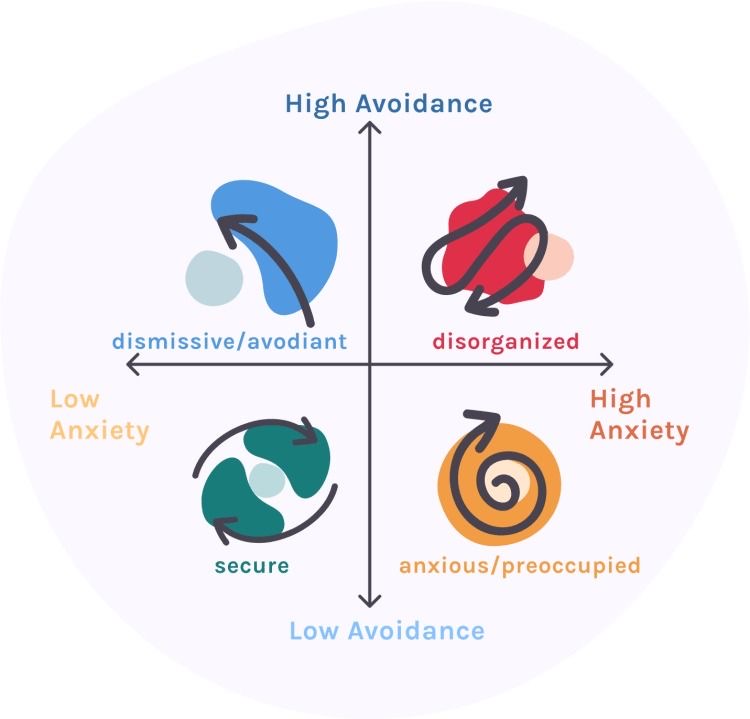
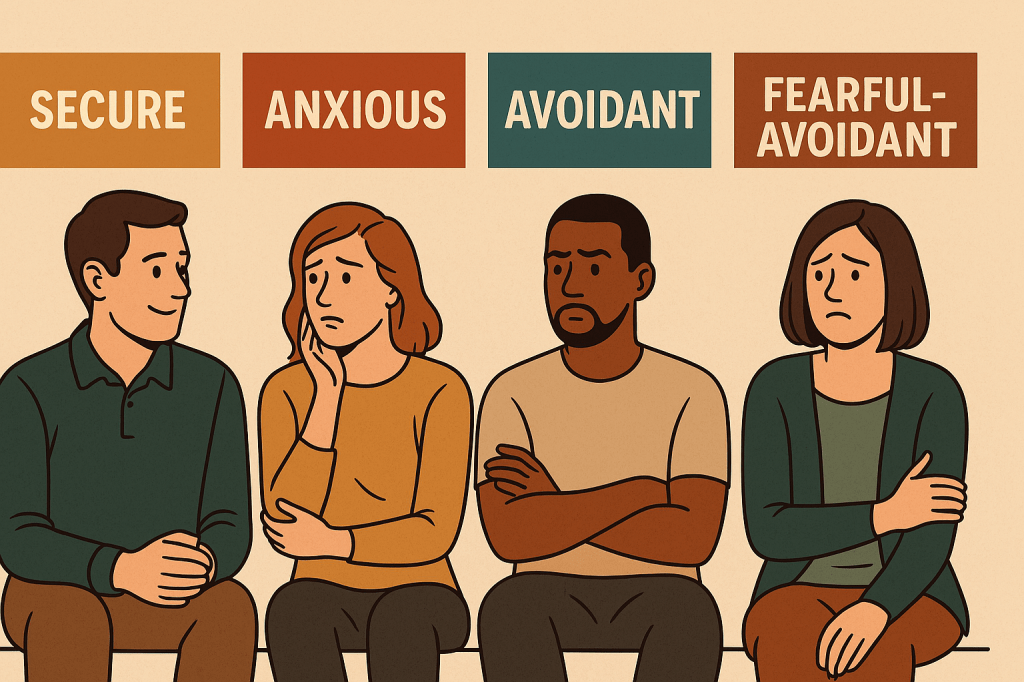
If there’s one thing western society loves almost as much as personality tests, it’s diagnosing relationship dynamics with attachment styles. Suddenly, every awkward text message delay, every weird argument over who forgot to buy oat milk, and every vague feeling of existential dread about love can be neatly categorized into one of four labels: SecureAnxiousAvoidant, or the truly thrilling combo package—Fearful-Avoidant.

It’s like the Myers-Briggs of romance, except instead of deciding whether you’re an introvert or extrovert, you get to figure out whether you cling to your partner like a koala in a windstorm, or bolt for the door the second someone gets emotionally vulnerable.

The concept of attachment styles comes from psychologist John Bowlby, who first theorized that the way we bonded with our caregivers as infants shapes how we approach relationships in adulthood. Sounds reasonable, right? But the internet has turned this into an all-consuming diagnostic tool, where every failed romance is either the fault of an anxious partner texting too much or an avoidant partner texting… never.

The Pigeonholes of Love
Let’s start with the holy grail: Secure Attachment. If you have this, congratulations! You are a unicorn. You text back promptly, communicate your needs like a functional adult, and somehow don’t panic when your partner asks, “Hey, can we talk?” You were probably raised by parents who hugged you at the right times, and never forgot to pick you up from soccer practice. The rest of us admire you, resent you a little, and assume you exist mostly in fiction.

Then there’s Anxious Attachment, a.k.a. the Overthinker’s Club. These are the people who send, “Hey, everything okay?” when you don’t respond within 15 minutes, then follow up with, “Sorry, never mind, ignore me,” followed by, “Actually, I just wanted to check in,” and finally, “I guess you hate me now.” They crave closeness, but also kind of expect to be abandoned at any moment, which makes dating them an emotional rollercoaster with no seatbelts.

On the flip side, we have Avoidant Attachment, the poster child for ghosting. These folks see a heartfelt emotional conversation the way most people see an unsolicited call from their car insurance provider: something to be avoided at all costs. Their love language is “mysterious silence” and they’d rather disappear into the woods than have a deep talk about feelings. Commitment feels suffocating, which is why they often end up dating people with anxious attachment, because nothing says “healthy relationship” like one person desperately clinging, and the other desperately pulling away.

And then, for the truly chaotic, we have Fearful-Avoidant Attachment, also known as “Anxious and Avoidant, Because Why Not?” These individuals desperately want connection but also deeply fear it, making every relationship a high-stakes game of emotional Jenga. They text “I miss you” and then immediately throw their phone into the sea. They want love, but also, love is terrifying. It’s exhausting for everyone involved.

Escaping the Labels
Like every other personality test, attachment styles are useful, until they become a life sentence. Sure, maybe your childhood shaped your relationship habits, but that doesn’t mean you’re doomed to spend eternity analyzing your texts like a forensic scientist. People can change, grow, and even, brace yourself, go to therapy.

So, the next time someone tells you they’re anxiously attached or avoidantly wired, smile, nod, and remember;  nobody fits neatly into a box. Except maybe Secure people. But honestly, who trusts them?

He Said, She Said: The Perks of Dating Across Generations

He Says: Dating an independent younger mother is like finding a partner with superhero qualities. She’s resilient, focused, and masterful at managing her time; better than most CEOs. She doesn’t need rescuing; she’s already fought her battles and won. What she values is a partner who brings wisdom, stability, and a calm presence in her whirlwind of responsibilities. For an older guy like me, it’s refreshing. There’s no pretense, no unnecessary drama, just an authentic, meaningful connection, built on mutual respect.

And let’s talk about her energy! It’s magnetic, a constant reminder that life is vibrant and full of possibilities. She keeps me engaged, challenges me to stay present, and proves that growing older doesn’t mean slowing down. More than that, she’s aligned with my thinking about the beauty of balance; how to be both independent and deeply connected.

She Says: Dating an older gentleman is like stepping into an oasis of calm after the daily chaos of parenting. He’s emotionally grounded, self-assured, and, best of all, done with playing games. My time is my most valuable asset, and I need someone who respects my schedule, understands my priorities, and supports me without trying to control or fix things. Older men get that.

What I love about him is his ability to listen, his steady presence. I’ve spent so much time managing crises and doing everything myself that it’s a relief to be with someone who can just be there without adding pressure. He doesn’t expect perfection, he values honesty and effort, and there’s something deeply reassuring about being with someone who knows who they are, what they want, and how to be a real partner.

He Says: Stability? Sure, but let’s talk about the fact that I’m learning just as much from her. Her independence is inspiring, it pushes me to be more adaptable, more open to change. And that vitality? It’s contagious. I may have a few gray hairs, but that doesn’t mean I’m set in my ways. If anything, her passion and determination remind me that life is about movement, growth, and embracing new experiences.

What makes this work is that we’re not trying to force anything. We don’t have to be everything to each other, but we show up when it counts. When life throws us curveballs, we face them together; no drama, no games. It’s a partnership built on respect, not expectations.

She Says: And let’s not forget patience. Older men have a way of slowing things down in the best possible way. In a world that’s constantly demanding more, that kind of presence is priceless. I used to worry about how a relationship might affect my kids, but with him, it’s just… easy. He’s patient with them, but he also knows when to step back and give me space to handle things. He respects the boundaries I’ve set as a parent, but he’s always there when I need him.

And the way he makes time for me, just us, no distractions, reminds me of how important it is to nurture the connection we’ve built. There’s an ease to being with him that I didn’t know I was looking for, and now that I’ve found it, I can’t imagine going back to anything less.

He Says: And that’s what makes it work, isn’t it? We’re not playing by anyone else’s rules. We’re just two people figuring it out together, supporting each other, growing together, and sharing a real connection. Her kids, her responsibilities, they’re part of the package, but they’re never a barrier. I’m not here to replace anyone or change anything; I’m here to be part of her life, to add something positive. And honestly, it’s one of the most rewarding things I’ve ever done.

Living the SoPoRA Life: A Light-Hearted Take on Choosing Autonomy

Ever feel like your life is an endless RSVP? Invitations roll in: “Come to this event! Join me for that activity! Let’s grab a drink!” It’s lovely to be included, truly. But what’s less lovely are the interrogations that follow when I politely decline.

“What are you doing instead?”
“Are you feeling okay?”
“Wait… who’s more important than me?”

Ah, the joys of boundary-setting in a world that thrives on FOMO and social expectations.

This isn’t my first rodeo with the honesty vs. transparency debate, but today I want to shift the focus. It’s not about what I say to others – it’s about how I choose to live my daily life. For me, it’s far simpler (and far more satisfying) to opt in when I genuinely want to connect than to constantly opt out to preserve my space.

If the world were a little more straightforward, I’d label my lifestyle as that of a Solo Polyamorous Relationship Anarchist (or SoPoRA for short). What does that mean? It’s a big mouthful, sure, but at its core, it’s a fancy way of saying I value my autonomy and independence while cherishing meaningful, non-hierarchical connections with others.

Solo Polyamory is all about embracing the beauty of being my own primary partner, while maintaining multiple, consensual relationships. It’s not about having less love – it’s about loving without turning my life into a game of musical chairs, where one partner automatically claims the “primary” seat.

And Relationship Anarchism? That’s the freedom to reject societal scripts about how relationships should work. No automatic rankings of romantic partners above friends. No forcing connections into neat little boxes labeled “partner,” “friend,” or “fling.” Instead, each relationship is uniquely crafted based on mutual agreement and organic growth.

Now, before you picture me as some lone wolf prowling around in emotional isolation, let me clarify: this choice doesn’t mean I don’t value connection – it just means I thrive on creating it without compromising my independence. 

But what this looks like practically, I hear you ask? Well, I love my space – my home is my sanctuary, and it’s where I recharge. I set firm personal boundaries to maintain my autonomy – this isn’t selfish – it’s self-care. Communication is my superpower – I prioritize honesty, consent, and mutual understanding with anyone I’m involved with.

Solo Polyamory and Relationship Anarchism require a level of self-awareness and emotional intelligence that can feel like a full-time job some days. But the rewards? Oh, they’re worth it. There’s a joy in living authentically, in crafting connections that adapt as people grow, and in knowing every “yes” you give is genuine.

So, the next time I politely decline an invitation, know this: it’s not about you. It’s about me choosing to live a life that feels full, free, and fulfilling – one beautifully crafted, consensual connection at a time.