Ever feel like your life is an endless RSVP? Invitations roll in: “Come to this event! Join me for that activity! Let’s grab a drink!” It’s lovely to be included, truly. But what’s less lovely are the interrogations that follow when I politely decline.
“What are you doing instead?” “Are you feeling okay?” “Wait… who’s more important than me?”
Ah, the joys of boundary-setting in a world that thrives on FOMO and social expectations.
This isn’t my first rodeo with the honesty vs. transparency debate, but today I want to shift the focus. It’s not about what I say to others – it’s about how I choose to live my daily life. For me, it’s far simpler (and far more satisfying) to opt in when I genuinely want to connect than to constantly opt out to preserve my space.
If the world were a little more straightforward, I’d label my lifestyle as that of a Solo Polyamorous Relationship Anarchist (or SoPoRA for short). What does that mean? It’s a big mouthful, sure, but at its core, it’s a fancy way of saying I value my autonomy and independence while cherishing meaningful, non-hierarchical connections with others.
Solo Polyamory is all about embracing the beauty of being my own primary partner, while maintaining multiple, consensual relationships. It’s not about having less love – it’s about loving without turning my life into a game of musical chairs, where one partner automatically claims the “primary” seat.
And Relationship Anarchism? That’s the freedom to reject societal scripts about how relationships should work. No automatic rankings of romantic partners above friends. No forcing connections into neat little boxes labeled “partner,” “friend,” or “fling.” Instead, each relationship is uniquely crafted based on mutual agreement and organic growth.
Now, before you picture me as some lone wolf prowling around in emotional isolation, let me clarify: this choice doesn’t mean I don’t value connection – it just means I thrive on creating it without compromising my independence.
But what this looks like practically, I hear you ask? Well, I love my space – my home is my sanctuary, and it’s where I recharge. I set firm personal boundaries to maintain my autonomy – this isn’t selfish – it’s self-care. Communication is my superpower – I prioritize honesty, consent, and mutual understanding with anyone I’m involved with.
Solo Polyamory and Relationship Anarchism require a level of self-awareness and emotional intelligence that can feel like a full-time job some days. But the rewards? Oh, they’re worth it. There’s a joy in living authentically, in crafting connections that adapt as people grow, and in knowing every “yes” you give is genuine.
So, the next time I politely decline an invitation, know this: it’s not about you. It’s about me choosing to live a life that feels full, free, and fulfilling – one beautifully crafted, consensual connection at a time.
As our understanding of love and relationships evolves, so too does the way we define intimacy. A concept that’s starting to catch the attention of both relationship experts and storytellers alike is symbiosexuality. While it may not yet be a household term, it offers a new way of thinking about emotional connection, rooted in the biological principle of symbiosis—the mutually beneficial relationship between different organisms. In the realm of love, symbiosexuality suggests that relationships should be rooted in harmony, interdependence, and growth, not just between people, but also between humans and nature, and even between humans and technology.
In today’s dating world, where people are increasingly searching for more meaningful, emotionally fulfilling connections, symbiosexuality offers a model that reflects these desires. Gone are the days of relationships based solely on attraction or shared interests. Today’s singles are looking for something deeper: a connection that nurtures both partners, encouraging emotional and intellectual growth. Symbiosexuality embraces this shift, proposing that love can thrive when both individuals contribute to each other’s flourishing. It’s not about one person being “the other half” of the other, but about both people being whole in their own right, yet stronger together.
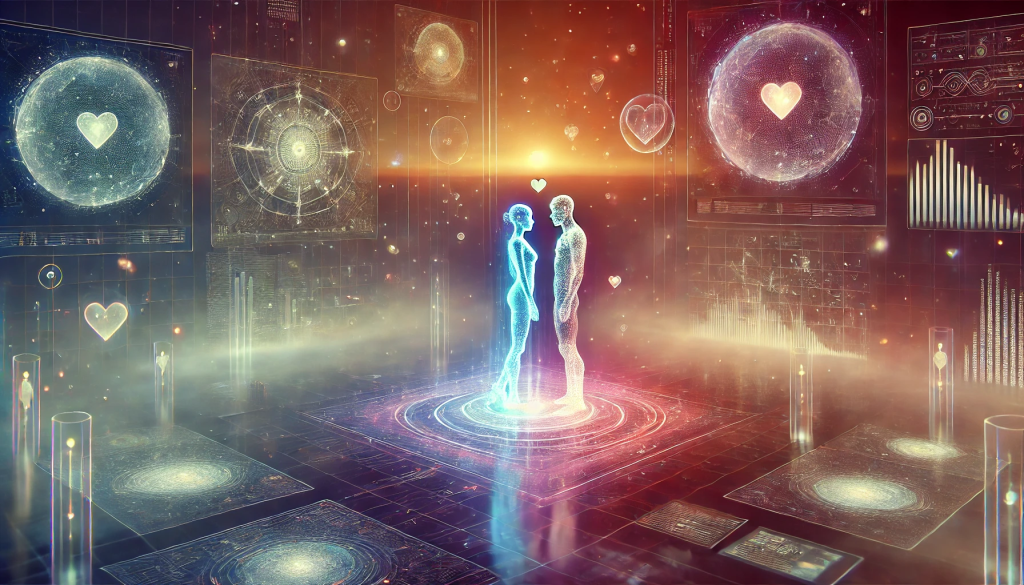
Technology has also played a significant role in changing how we form relationships, expanding the boundaries of intimacy far beyond physical presence. The rise of virtual dating, AI companions, and even relationships formed in virtual reality all reflect the growing need for connection that goes beyond the tangible. In this new world of digital love, symbiosexuality takes on a unique form—relationships with AI or virtual partners that are based on mutual emotional fulfillment and support. These connections might seem like something out of science fiction, but they’re becoming more real as technology advances. In some ways, they embody the symbiosexual model by providing companionship that nurtures the emotional well-being of the person, even when it’s not with another human.
At the same time, there’s a growing movement toward non-traditional relationship structures, like polyamory, where people cultivate multiple relationships that meet different needs. This, too, aligns with the idea of symbiosexuality—relationships that form a web of interdependence rather than a single, dependent bond. In polyamory, partners take on different roles, offering everything from emotional support to intellectual stimulation, and in doing so, they create a balanced, symbiotic ecosystem of connection.
Another fascinating aspect of symbiosexuality is how it dovetails with the eco-sexuality movement, which celebrates intimacy with nature itself. As environmental concerns become more urgent, many people are seeking to reconnect with the Earth in a deeply personal way. This trend goes beyond the idea of environmental activism; it’s about seeing nature as a partner, one that sustains and nurtures us. Whether it’s through ritual, activism, or simple acts of mindfulness, eco-sexuality offers a way to deepen our relationship with the planet—a form of love that acknowledges the symbiotic relationship between humanity and the Earth.
The idea of symbiosexuality isn’t just shaping how we date—it’s also influencing how we tell stories. Literature, especially science fiction, is filled with depictions of relationships that challenge traditional ideas of intimacy. In Dune, for example, the relationship between humans and the sandworms is symbiotic—both species rely on each other for survival. Similarly, Octavia Butler’s Xenogenesis Trilogy takes the concept of symbiosis even further, exploring how humans might merge with aliens to create a new, interdependent species. These narratives present love not as something confined to humans but as something that can span species, challenging our conventional boundaries of what intimacy means.
In modern fiction, the relationship between humans and AI also provides fertile ground for exploring symbiosexuality. Kazuo Ishiguro’s Klara and the Sun and Ian McEwan’s Machines Like Me both examine the emotional depth of human-AI relationships. In these stories, AI characters offer a form of emotional companionship that mirrors the symbiotic dynamics of human relationships. This opens up new ways of thinking about intimacy—what if the emotional support we need can come not from another human, but from a machine? These books raise fascinating questions about what it means to connect on a deep, emotional level and whether true symbiosis is possible between human and artificial beings.
But symbiosexuality isn’t confined to speculative fiction; it also appears in the real world. Novels like The Overstory by Richard Powers and Oryx and Crake by Margaret Atwood examine the relationships humans have with the natural world, urging us to rethink our connection with the Earth. These stories echo the central message of symbiosexuality—that love and intimacy can transcend human relationships, extending into our interactions with the environment. In these works, the survival of both humanity and nature depends on a mutually supportive, symbiotic relationship.
As we look to the future of relationships, symbiosexuality provides a fresh perspective on love. It’s no longer just about finding someone who completes us; it’s about forging relationships that allow both partners to grow, thrive, and evolve together. Whether it’s in human relationships, connections with the natural world, or bonds with technology, symbiosexuality challenges us to think beyond traditional ideas of love and intimacy. It asks us to consider how we can build relationships that are not only fulfilling on an individual level but that also contribute to the collective well-being of all involved.
In a world where connection is more important than ever, symbiosexuality offers a model for love that is as dynamic and interconnected as the world we live in. The question now is, as we look ahead, how will we embrace this new vision of intimacy? Will we be open to forging bonds that are less about ownership and more about mutual growth, balance, and care? That’s the essence of symbiosexuality, and it may just be the future of love.
As you reflect on your own relationships, consider this: Who or what in your life helps you grow, and how can you reciprocate that care? In a world that’s constantly evolving, perhaps the key to love lies not in searching for perfection, but in creating a mutually supportive, flourishing connection.
Update When discussing this piece with a partner, apart from it being too long, they felt that the focus on a sexual connection in the term might be limiting. Researchers have a history of mixing up labels for physical sexuality with intimacy and/or romance, and so the term “symbioromantic” or “symbiointimate” may be a more fitting descriptor than “symbiosexual” for relationships where intimacy is deeply rooted in emotional, intellectual, or spiritual connections rather than physical acts. While “symbiosexual” implies a focus on sexual interaction, “symbioromantic” emphasizes the shared emotional growth and interdependence that defines the bond. Romantic intimacy often transcends physicality, centering instead on mutual understanding, care, and the blending of lives in a way that nurtures both individuals. By shifting the focus to the romantic aspect, “symbioromantic” acknowledges that fulfilling, profound connections can thrive even in the absence of physical intimacy, making it a more inclusive term.
Ah, online dating—a wondrous digital land where love blossoms, hearts are broken, and oh no, not another dead fish photo. If you’re dipping your toe into the wild waters of matchmaking apps, let me help you avoid the missteps that send people running for the hills (or just swiping left faster than you can say, “partner in crime”).
Your Kids: The Little Darlings Who Don’t Belong in Your Profile Look, I’m sure your children and dare I say grandchildren are angels (or at least occasionally). But posting their photos in your dating profile—especially as your main picture—can make a potential match think, “Am I auditioning to be a romantic partner or a nanny?” Keep your kids out of the spotlight for now. This is your moment to shine, not theirs.
And while we’re on the topic: if your bio starts with “My kids are the loves of my life,” it’s sweet… but also a bit of a mood-killer. Potential partners might wonder, “Where does that leave room for me?” Save the love declarations for the people swiping right on you.
Stop Copy-Pasting “Hey Beautiful” When someone receives “Hey beautiful” for the 47th time that day, it doesn’t feel special—it feels like a generic coupon for romance. Try something more creative, like referencing their profile. Trust me, “Hey, I see you’re into paddleboarding—do you have a shark-escape plan?” will get you further than bland flattery.
Let Go of the Clichés Speaking of originality, if your bio includes “looking for a partner in crime,” you may as well add, “and I moonlight as a walking, talking dating stereotype.” Everyone’s seen it. Everyone’s rolled their eyes. Be specific about what you want—something that feels uniquely you.
Negativity Is a Buzzkill “Drama-free.” “No toxic baggage.” “Sick of games.” Okay, we get it, you’ve been hurt—join the club! But plastering this all over your profile reads like a giant neon sign flashing BITTER, PARTY OF ONE. Instead, focus on the positives: what you’re looking forward to, what you value, what excites you about the idea of meeting someone new. Optimism is sexy.
“A Nice Lady” (or Gentleman) Requesting a “nice lady” makes you sound like you’re ordering at a diner: “I’ll have the nice lady with a side of vanilla, please.” Instead, describe the qualities that light you up—compassion, humor, confidence, whatever it is. Trust me, nobody’s pining to be described as “nice.”
Let’s Talk About That Fish Unless you’re starring in a reality show called The Bait Whisperer, it’s time to put the bass down and back away slowly. Dead fish photos are a universal “ugh” moment. If you love fishing, mention it in your profile, but swap the fish for a photo of you looking happy and rugged by a lake.
“I’m an Open Book, Just Ask” This one screams lazy. A dating profile is your chance to give people a taste of who you are—not to set them up for a pop quiz. Share a few fun tidbits about yourself. Think of it like leaving breadcrumbs, not a scavenger hunt.
Your Pets Are Cute, But… We all love a good dog or cat pic (seriously, who doesn’t?), but if your entire bio reads like an ode to Fluffy, potential matches may think they’re competing with your fur baby. Keep it balanced—show you have room in your life for both your beloved pets and a partner.
Your Photos Need to Spark Joy If your profile photos include frowning selfies, dimly lit shots, or your ex cropped out of the frame (we can tell, by the way), it’s time for a refresh. Aim for friendly, well-lit, and authentic photos that make people want to grab a coffee with you—or at least swipe right.
Friends or Lovers? Pick a Lane “Looking for friendship first” is like saying, “I’m browsing, not buying.” It’s fine to want to take things slow, but if romance is on the table, don’t bury it under disclaimers. Be clear about your intentions.
Avoid the Pitfalls, Embrace the Possibilities Your online dating profile should feel like a teaser trailer to a movie people actually want to see. Be authentic, positive, and approachable. And above all, remember: the goal is to attract the right match, not scare them off with fish, frowns, or fatal clichés. Now, go forth and swipe wisely!
I am polyamorous, and have been for many a year. I cultivate and maintain a network of secure attachment relationships with people who are also polyamorous, who often have multiple partners of their own. I prefer to date and partner with experienced poly people, and occasionally someone crosses my path that feels so aligned that this policy goes out the window, and I get to date a polynewbie.
There will be many more posts on relationships in the 21st Century, and in the meantime, this one is where I will be sharing some of my favourite poly quotes, adding to it as the months go by.
Please be aware, while I am happy to discuss relationship dynamics, I am not interested in any negative commentary, and will block any source of unthinking, rude or obnoxious messages.
I hope you enjoy these thoughts. I tend to use the Canadian English spelling of polyamorous, but when posting quotes I use exactly what and how it was published.
”The quality of a polycule is directly proportional to the communication skills of its least emotionally secure member. Or, if you prefer something gentler, less absolute, more accepting. A polycule’s health depends less on its most skilled communicator, than on how well its least secure member feels heard. ” – @chrismcbean.bsky.social
“Polyamory (noun): when multiple people are plotting to care about you, a wholesome conspiracy” – @PolydotLand
“Polyamory is NOT endless orgies, nor is it cuckoldry with extra steps.
Polyamory is two idiots walking down the street holding hands debating with one another about how each of them should ask out their respective crushes, and then neither of them following through.” – @5aximus
“Solo polyamory helps me go at a comfortable pace. Now that I’m no longer entering relationships with a particular goal in mind, like marriage or cohabitation, I’m not in a rush to find out whether a partner can give me those traditional markers of relational success/fulfilment.” – @unapolygetic
“Your significant other is allowed to have meaningful relationships with other people. Your significant other is allowed to get things from those relationships that they don’t get from you. Demanding you be the only source of pleasure and support in their life is possessive and toxic.” – @LadylsAVamp_
“I was asked, ‘who is your best friend?’ I don’t know. I don’t use language like that anymore. It doesn’t fit. I have friends that hold the keys to different doors of my personality. And some open my heart. Some my laughter. Some my sin. Some my civic urgency.” – @abgljoe
“One of my favourite challenges posed by polyamory lies in its potential to undermine the idea that women are ‘rivals’ for the attentions of men. Hey, what if we are ‘collaborators’ in loving and supporting our mutual partners? I know, wild eh …” – @carriejenkins
“Solo polyamory is finding it more enjoyable to opt in to spending time with people as opposed to opting out to get my own space.” – @PolyamAwareness
“Relationships fail when people take their own insecurities and project them as their partner’s flaws.”- @stevemaraboli
I want to reflect upon a fascinating conversation I had late Christmas night with a dear friend. We ended up talking about personal boundaries, and the ways we protect ourselves emotionally. It was one of those deep, reflective discussions that linger long after the words are spoken.
At some point, I shared a hard lesson I learned from an ex-partner about the concept of indifference. That simple admission opened a door to a much larger, layered conversation about what indifference truly means, how it functions, and the role it plays in our relationships; both with others and with ourselves.
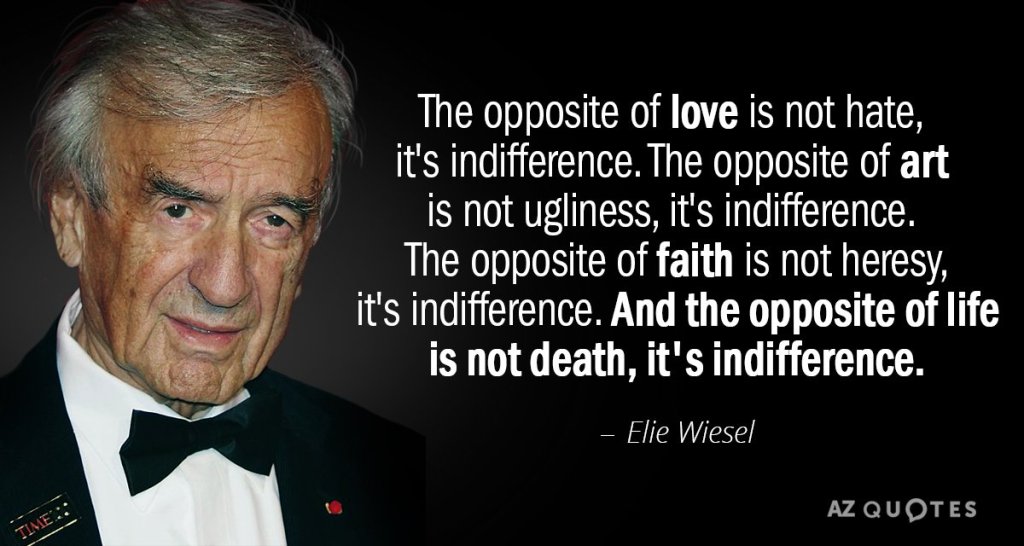
What struck me was how much weight the word indifference carries. It’s such a profound concept when you think about it. Philosophers like Elie Wiesel have said that indifference, not hatred, is the true opposite of love. Love and hate, after all, are both fiery, emotional investments; they require energy, passion, and focus. But indifference? That’s the absence of all of that. It’s an emotional void, a refusal to care.
We talked about how indifference can be more painful than outright hate. At least with hate, you know you’re being seen, felt, acknowledged in some way. Indifference, on the other hand, feels like being erased, like you don’t matter enough to warrant any reaction at all. In relationships, it can create this deep loneliness; a silent, aching space where love or even conflict should be.
But then we got into the darker side of indifference, how it can also be wielded as a kind of weapon. It’s not always passive, you know? Sometimes it’s deliberate, a way to assert control or punish without saying a word. We’ve all seen or felt it in some form: the cold shoulder, the ignored text, the subtle withholding of care or acknowledgment. Those silences and omissions can be sharper than words.
We explored a few examples, like in romantic relationships, when one partner uses indifference to send a cruel, unspoken message: “You don’t matter.” Or in workplaces, where a boss might undermine someone by pretending their contributions don’t exist. That kind of calculated indifference is devastating because it’s so insidious. It leaves the other person questioning their worth.
What’s tricky is that indifference isn’t always malicious. It can be a survival mechanism too, right? Sometimes, detaching and withdrawing emotionally is a way to protect ourselves from toxic dynamics or emotional exhaustion. The question is whether indifference is being used as self-preservation or as a means to harm or manipulate someone else.
Honestly, the more we talked about it, the more I realized how thin the line is between healthy detachment and destructive indifference. I think perhaps that intention is everything, whether it’s about creating space for yourself or shutting someone out entirely.
The whole conversation left me reflecting on my own tendencies and how I’ve used or experienced indifference in my life. It’s a lot to sit with, but also something I feel like I need to understand better.
What do you think? Have you ever found yourself wrestling with indifference, either as a tool or as something you’ve been on the receiving end of?
In the age of digital connectivity, dating has been revolutionized by community websites, social media, and a growing number of dating apps. While the convenience and access these platforms provide are undeniable, they’ve also redefined romance in ways that feel increasingly transactional. The pursuit of meaningful relationships has often been reduced to a series of swipes, clicks, and algorithm-driven decisions—shifting the way people view love, intimacy, and human connection.
Dating apps such as Tinder, Bumble, and Hinge have adopted a gamified approach to romance. Their swipe-based mechanics mimic the reward systems of video games, offering quick hits of validation or rejection with every right or left swipe. Like pulling the lever of a slot machine, the instant gratification these apps deliver often prioritizes surface-level judgments, such as physical appearance, over meaningful compatibility. Finding a partner becomes a numbers game, where the goal is less about connection and more about who can “win” the next match.
This gamification feeds into a consumer-market mindset, where potential partners are treated as products to browse, evaluate, and discard. Profiles are carefully curated advertisements, each bio or photo a sales pitch for attention. Users scroll through these digital shelves, comparing options and weighing perceived value, much like shopping for goods. This commodification of dating fosters a transactional approach—relationships are often pursued based on what someone offers, rather than a foundation of mutual emotional investment.
Behind the scenes, the algorithms that drive dating apps reinforce this dynamic. Designed to prioritize efficiency, they aim to generate quick matches at scale. The sheer volume of options, while seemingly beneficial, creates the illusion of endless possibilities. For many, this fuels the “paradox of choice,” a phenomenon where too many options lead to indecision and dissatisfaction. A lingering sense that someone “better” might be just one swipe away can prevent users from committing, encouraging them to chase an ideal match rather than nurture real, imperfect relationships.
Adding to this transactional nature are the apps’ monetized features—premium subscriptions that promise greater visibility, unlimited swipes, or the ability to filter matches with precision. Dating, in many cases, has literally become pay-to-play. Users can boost their profiles to gain attention or unlock exclusive tools to “optimize” their romantic prospects. These features further commodify dating, making connections feel like purchases rather than organic discoveries.
Beyond the structural elements of these platforms, dating apps have also reshaped cultural attitudes toward intimacy. While they have opened doors to more diverse forms of relationships, they’ve also normalized casual connections and short-term encounters. In many cases, relationships are treated as temporary exchanges—sources of companionship, validation, or physical intimacy with little emphasis on long-term commitment. This casualization aligns perfectly with a transactional mindset: relationships are only as valuable as what they provide in the moment.
The consequences of this shift are significant. Emotional detachment has become more common, as relationships are often viewed as fleeting and disposable. Genuine effort and emotional depth can take a backseat when a quick match requires less investment. Treating people as profiles to be judged can lead to objectification, reducing empathy and human connection. Meanwhile, the impersonal and competitive nature of dating apps can take a toll on mental health. Users may experience burnout, rejection, or feelings of inadequacy as they navigate an endless cycle of swipes and shallow interactions.
Still, dating apps are not inherently harmful—they are tools that reflect and amplify existing cultural values. They have made meeting new people easier than ever and have connected individuals across geography, lifestyles, and interests. Yet their emphasis on efficiency and superficial traits has undeniably shaped modern relationships into transactional exchanges.
If dating is to become more meaningful again, it will require intention—both from the platforms and their users. Rather than surrendering to the gamified, commodified nature of these apps, individuals must approach them with mindfulness, prioritizing depth and authenticity over convenience and quantity. In doing so, there may still be hope to restore romance to something deeper than just another transaction.






 The Rowanwood Chronicles