
It’s astonishing, and frankly infuriating, that in 2025 we’re still arguing about the value of the measles vaccine. The data is clear, the science is airtight, and yet somehow, vaccine hesitancy continues to chip away at public health. Let me be blunt: the risk of a vaccine like the MMR is vanishingly small compared to the catastrophic potential of a disease like measles. And if you don’t believe that, then you’re either ignoring the data or falling for misinformation. Either way, lives are at risk.
Measles isn’t just a “harmless childhood illness.” That’s a dangerous myth. Measles is one of the most contagious viruses we know, spread through the air, able to linger for hours, and capable of infecting up to 90% of unvaccinated people exposed to it. In well-resourced countries, about 1 or 2 out of every 1,000 children who get measles will die. That’s not a rounding error. That’s a funeral. And it gets worse in poorer regions where malnutrition and limited healthcare access make mortality rates even higher.
And for the kids who survive? About 1 in 20 ends up with pneumonia, 1 in 10 gets a potentially permanent ear infection, and roughly 1 in 1,000 develops encephalitis, a dangerous brain swelling that can cause lifelong disability. Years later, a rare but fatal condition called SSPE can develop from a childhood measles infection, slowly destroying the brain. No cure. No mercy.
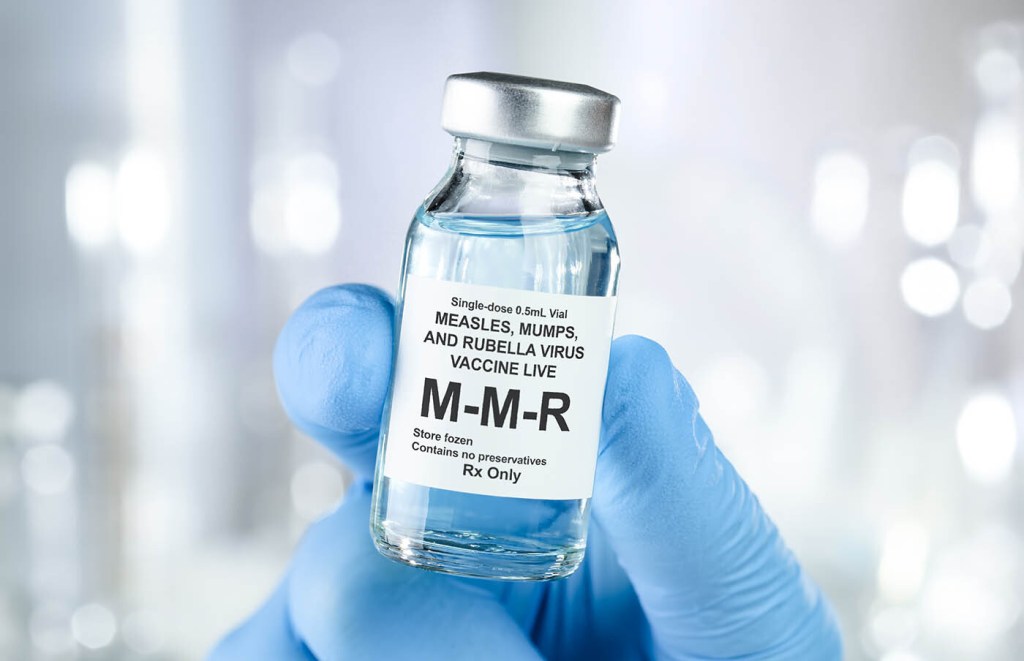
Now contrast that with the MMR vaccine. It has been used globally for decades, and it works. Two doses give you about 97% protection. Most people have no side effects at all. At worst, maybe a fever or a mild rash. Some kids, about 1 in 3,000 to 4,000, might experience a febrile seizure, which is scary for parents, but causes no long-term harm. And the odds of a life-threatening allergic reaction? Less than one in a million. In other words, you’re more likely to be struck by lightning. Twice!
And we’ve seen what happens when vaccine coverage drops. Samoa in 2019 is a tragic case study. After a decline in vaccine confidence, a measles outbreak swept the islands. Eighty-three people died, mostly young children. In Europe that same year, measles cases exploded. More than 82,000 in the WHO European Region, and 72 people dead. In the U.S., the 2019 outbreak saw over 1,200 cases, largely among unvaccinated individuals, threatening the country’s measles elimination status. This isn’t theoretical. This isn’t debatable. It’s what happens when people stop vaccinating.
It’s no surprise that the World Health Organization named vaccine hesitancy one of the top ten global health threats. And it should be, because when you refuse a vaccine, you’re not just making a decision for yourself, you’re putting babies, cancer patients, and immunocompromised people at risk. You’re weakening herd immunity, which is the only thing standing between them and a virus that doesn’t care about your opinions or your YouTube rabbit holes.
Let’s stop sugarcoating it. Vaccines are safe. Measles is deadly. Choosing not to vaccinate isn’t a personal health decision, it’s a public health threat. We’re not debating anymore. We’re fighting ignorance with facts, and if that offends you, maybe it should.
 The Rowanwood Chronicles