
In recent weeks, two moments involving Rosemary Barton have sharpened a long-simmering concern about the state of Canadian political journalism. Taken together, they invite a serious question about boundary discipline, not at the margins of commentary, but at the very centre of institutional authority. When the senior political correspondent at a public broadcaster appears uncertain about where journalism ends and punditry begins, the issue is no longer personal style. It is structural.
The most telling example came during Barton’s criticism of Mark Carney for publicly pushing back against Donald Trump. Carney’s assertion that Canadians are strong was met not with a question about strategy or consequences, but with a rebuke. Barton suggested that he should not “talk like that” while negotiations with the United States were ongoing. This was not interrogation. It was correction. The distinction matters. Journalism tests claims and identifies risks. Punditry adjudicates what ought to be said and enforces preferred norms of behaviour. In this case, the journalist stepped into the role of strategic adviser.
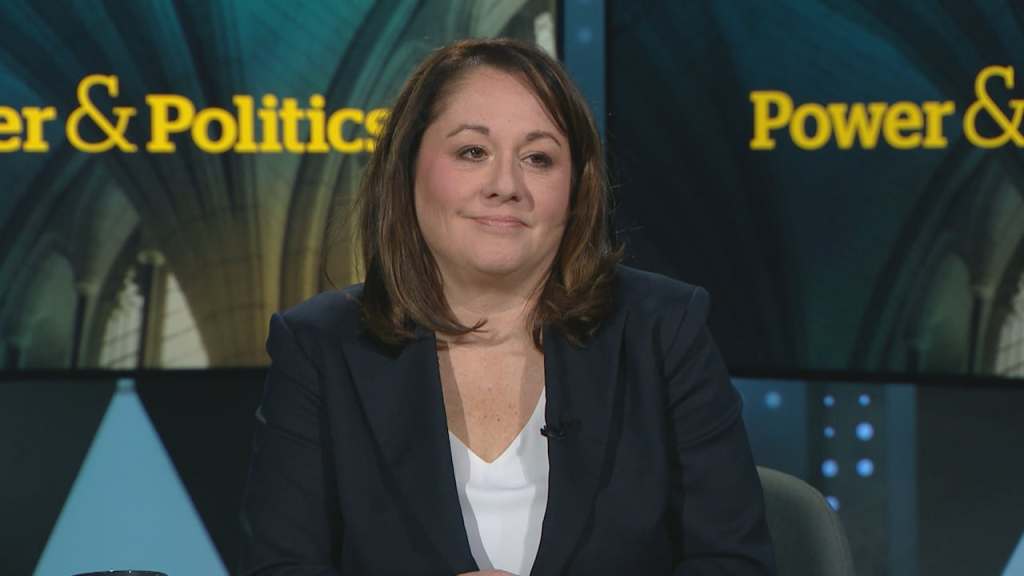
That intervention rested on an unstated, but powerful assumption. It treated rhetorical restraint toward the United States as the only responsible posture and framed public assertiveness as diplomatically naïve or reckless. Yet this is not a settled fact. It is a contested theory of power. For many Canadians, public expressions of confidence and sovereignty are not obstacles to negotiation, but instruments of democratic legitimacy. By presenting elite caution as self-evident realism, Barton transformed a debatable worldview into an implied journalistic standard.
This moment did not stand alone. It echoed a broader pattern in which certain political choices are framed as inherently reasonable while others are treated as violations of an unwritten rulebook. Barton’s interviews frequently embed normative assumptions inside ostensibly neutral questions. The effect is subtle, but cumulative. Political actors who align with institutional orthodoxy are invited to explain. Those who depart from it are warned, corrected, or disciplined. Over time, skepticism becomes asymmetrical, and audiences begin to sense that the field of legitimate debate is being quietly narrowed.
The problem is compounded by Barton’s position. A senior political correspondent does not merely report events. The role carries symbolic weight. It signals what seriousness looks like, what competence sounds like, and which instincts are deemed responsible. When that authority is used to police tone or enforce elite etiquette, it reads not as opinion, but as instruction. Viewers are not encountering a commentator among many. They are encountering the voice of the institution.
This is particularly consequential at a public broadcaster. CBC’s democratic legitimacy depends on its ability to distinguish clearly between explanation and advocacy. When journalists appear more concerned with managing political risk on behalf of elites than with illuminating choices for the public, trust erodes. Citizens do not feel informed. They feel managed. That erosion rarely arrives as a scandal. It accumulates through moments that feel small, instinctive, even well intentioned, yet consistently tilt in the same direction.
The Carney episode also revealed a deeper misalignment of priorities. Carney’s remarks were aimed at Canadians, not at Trump. They functioned as reassurance and civic affirmation in a moment of external pressure. Barton’s response implicitly subordinated domestic democratic speech to foreign sensibilities. That is a value judgment about whose audience matters most. It may be a defensible argument in a column. It is not a neutral premise for an interview.
None of this requires imputing bad faith or crude partisanship. The issue is not ideology so much as role confusion. Contemporary political media increasingly collapses reporting, analysis, and commentary into a single on-air persona. The incentives reward strong takes and strategic framing. Over time, journalists can begin to experience elite consensus as common sense and dissent as irresponsibility. The line does not disappear all at once. It fades.
At the senior level, however, that line must be actively maintained. Journalism asks why choices are made and what consequences follow. Punditry advises, corrects, and enforces norms. When a journalist tells a political actor what should or should not be said, the boundary has been crossed. When that crossing becomes habitual, it reshapes the institution’s relationship with the public.
The question, then, is not whether Rosemary Barton is tough enough or fair enough in any single exchange. It is whether she still recognizes the limits of her authority. A senior political correspondent is not a shadow negotiator, a risk manager, or a guardian of elite comfort. The role is to clarify politics, not to perform it.
If that distinction is lost at the top, the consequences cascade downward. Journalism becomes strategy. Explanation becomes correction. And the public broadcaster, slowly and without declaration, ceases to act as a referee and begins to play the game itself.



 The Rowanwood Chronicles