Patients Are Not Property: Time to Rethink How We Regulate the Sale and Retention of Primary Care Rosters

In the midst of Canada’s growing primary care crisis, it’s time we take a hard look at how patient rosters are handled, or mishandled, when physicians transition or leave their practices. Across the country, millions of Canadians are without a family doctor. Against this backdrop, we can no longer tolerate a system in which doctors purchase entire rosters of patients only to turn around and drop half of them, not based on clinical need, but lifestyle preference.

This is not a matter of gender. It is a matter of professional accountability and ethical stewardship. Patients are not chattel. They are people, often elderly, immunocompromised, managing multiple chronic conditions, who place their trust in a system that is supposed to protect their continuity of care. When a physician acquires a patient list, they are not buying a gym membership or a book of business. They are assuming responsibility for the long-term health of hundreds, sometimes thousands, of human beings.

Let’s be clear: physicians have every right to structure their practice in a way that supports their well-being. Burnout is real, and work-life balance matters, but that personal balance cannot come at the expense of vulnerable patients being systematically cast adrift.

Professional colleges, including the College of Physicians and Surgeons of Ontario (CPSO), do provide formal mechanisms for a doctor to reduce their patient list. These guidelines exist to allow flexibility, but they were never meant to be a loophole for roster triage based on convenience. If the intention was always to serve only a part-time practice, why was the entire roster purchased? Why was the community not informed in advance? And why are regulatory bodies permitting what amounts to a public harm, wrapped in private contractual terms?

These are not just hypothetical concerns. The abandonment of patients, especially those without alternatives, has ripple effects throughout the entire healthcare system. Walk-in clinics become overwhelmed. Emergency rooms fill with non-emergency cases. Preventable conditions go unmanaged until they become acute, and meanwhile, the public’s trust in the integrity of primary care continues to erode.

If physicians wish to buy a practice, that is a valid path to establishing their career; but there must be clear, enforceable rules to ensure that patient care is not commodified in the process. A few policy options worth considering:

  • Conditional licensing of roster transfers: Require binding disclosure of the incoming physician’s intended working hours and patient capacity before the sale is finalized, with oversight by a neutral third party such as the local health authority.
  • Mandatory transition plans: If a physician intends to offload more than 10% of a newly acquired roster, they should be required to demonstrate how those patients will be supported in finding alternate care – not simply left to fend for themselves – meaning that there is actually an alternative primary caregiver available who is willing and able to add them to their existing roster.
  • Public-interest reviews of large roster changes: Just as utility companies can’t hike rates without justification, physicians shouldn’t be able to restructure public-facing services without transparent public reasoning.

Ultimately, the issue is not about lifestyle choices. It’s about stewardship. Every doctor, upon licensing, accepts a social contract with the people they serve. That contract includes not just the right to treat patients, but the responsibility to do so with equity, consistency, and integrity.

We wouldn’t accept it if a public school principal took over a school and expelled half the students because they only wanted to work mornings. We shouldn’t accept it in primary care either.
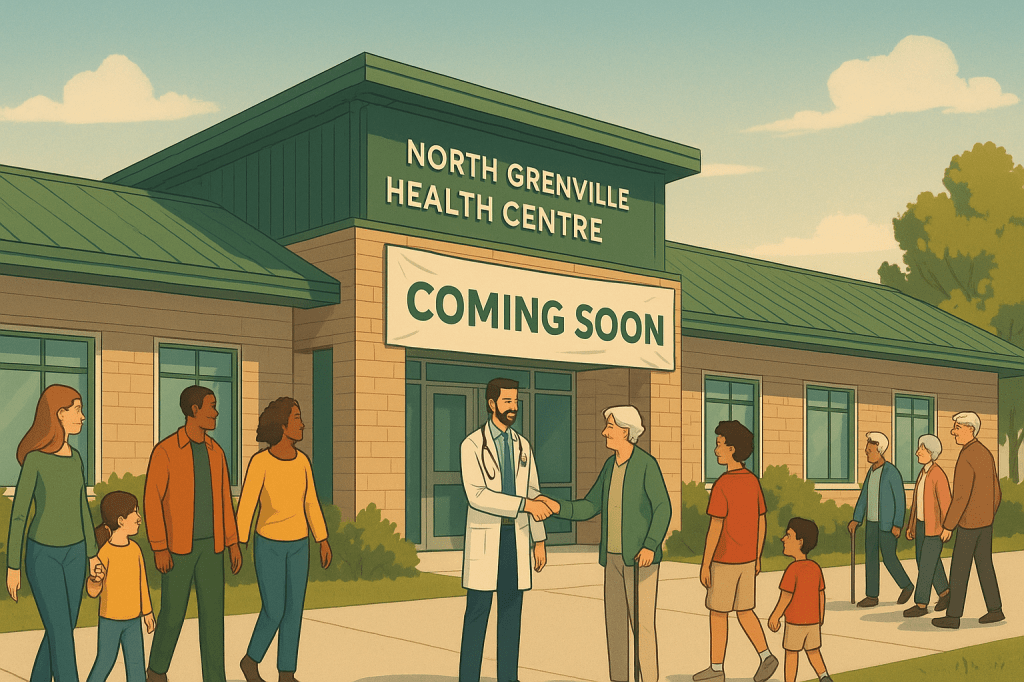
A Municipal Remedy: Why North Grenville Should Open Its Own Healthcare Centre

In North Grenville, the demand for primary healthcare has long outpaced the available supply. While the Rideau Crossing Family Health Clinic has served the community admirably, it seems to have reached its physical and staffing capacity. With a growing population, and increasing concerns over access to primary care, it’s time for the Township of North Grenville to consider a bold, but practical move: establish its own municipally-operated healthcare clinic.

This is not an untested idea. Across Canada, municipalities are taking healthcare into their own hands – literally. In Colwood, British Columbia, the city made headlines in 2023 when it became the first in the country to hire family physicians directly as municipal employees. Offering job stability, pensions, and administrative support, Colwood removed many of the barriers that deter physicians from entering or staying in primary care practice. It wasn’t about competing with existing private clinics, it was about ensuring no resident went without a family doctor.

Orillia, Ontario, is exploring a similar strategy. Recognizing that nearly 25% of the region lacks access to a primary care provider, city councillors there are considering opening a municipal clinic and hiring physicians as city staff. Their aim is to enhance, not undermine, the local healthcare network by filling a gap that traditional models are no longer meeting.

In Manitoba, rural communities like Killarney-Turtle Mountain are actively recruiting international physicians and managing their relocation as part of a municipally driven recruitment strategy. These towns have realized that waiting for provincial solutions is no longer viable. Meanwhile, in Huntsville, Ontario, a physician incentive program funded by the town is already yielding results, with new doctors signing on to help address longstanding shortages.

North Grenville has a chance to follow this growing municipal trend. Simply encouraging more physicians to join the private sector won’t be enough, there’s nowhere for them to go within the Township. A municipally-operated clinic, built with a collaborative mindset, and not as competition, can complement existing services while expanding capacity.

Such a clinic could offer a modern team-based care model that includes nurse practitioners, physician assistants, social workers, and administrative staff, all working under the umbrella of the municipality. With support from provincial and federal programs such as Ontario’s primary care transformation funds or the federal Foreign Credential Recognition Program, North Grenville could create a sustainable and forward-looking solution tailored to its own needs.

How to Move Forward: A Practical Path for the Township
To begin, North Grenville’s municipal council could establish a Healthcare Services Task Force to study local demand, identify gaps in coverage, and recommend a viable service delivery model. This task force should include community health experts, residents, and local politicians.

Next, the Township should apply for funding through Ontario Health’s community-based primary care programs, and the federal government’s health human resources strategy. Partnering with the local hospital, regional health teams, and post-secondary institutions could support the recruitment of new healthcare professionals, including recent graduates and internationally trained physicians.

Land acquisition or repurposing of an existing municipal facility could provide a location, with design input ensuring accessibility, environmental sustainability, and integrated team care. North Grenville does have the amazing resource of the Kemptville Campus, with one of its strategic pillars being “Health and Wellness”. The Township could also offer incentives such as relocation grants, housing support, and flexible hours to make municipal employment attractive to prospective staff.

Finally, a clear communications strategy should be launched to explain that the goal is not to replace or compete with existing providers, but to enhance and expand healthcare access in underserved areas and improve outcomes for all residents.

It’s time to stop waiting and start acting. Our citizens deserve timely, reliable healthcare. Let’s build it, right here at home.

Sources
https://tnc.news/2024/12/26/b-c-city-hiring-family-doctors-as-municipal-government-workers
https://barrie.ctvnews.ca/orillia-could-hire-family-doctors-to-create-municipal-clinic-1.7173907
https://www.winnipegfreepress.com/breakingnews/2024/04/19/diagnosis-critical-desperate-manitoba-municipalities-recruiting-doctors-on-their-own
https://barrie.ctvnews.ca/incentive-program-attracts-new-physicians-to-huntsville-to-address-shortage-in-primary-care-1.7093138
https://www.canada.ca/en/employment-social-development/news/2025/03/the-government-of-canada-is-investing-up-to-143-million-to-help-address-labour-shortages-in-the-health-sector.html

A Welcome with Questions: What Dr. Kaur’s Arrival Reveals About North Grenville’s Physician Incentive Strategy

Ontario is facing a growing shortage of primary care physicians, leaving millions of residents without regular access to a family doctor. This crisis is particularly acute in rural and small-town communities, where aging populations and physician retirements have widened care gaps. In response, municipalities across the province are adopting innovative strategies to attract, recruit, and retain doctors. These include financial incentive programs, housing and relocation support, flexible practice models, and community integration initiatives aimed at making smaller communities more appealing.

So, the arrival of a new physician in a small Ontario town is typically a cause for celebration. Access to primary care is under increasing pressure across the province, and communities like North Grenville work diligently to recruit and retain family physicians. Thus, when Mayor Nancy Peckford announced the addition of Dr. Pawandeep Kaur to the Rideau Crossing Family Health Centre in Kemptville, it was a moment of optimism.

However, a closer examination of the circumstances surrounding Dr. Kaur’s recruitment reveals complexities that warrant further scrutiny, particularly concerning the application and effectiveness of North Grenville’s Family Physician Incentive Program.

Dr. Lavitt’s Brief Tenure
Dr. Samantha Lavitt joined the Rideau Crossing Family Health Centre in June 2024 as part of the municipality’s North Grenville Primary Care Incentive Program. Her arrival was heralded as a significant step forward in enhancing primary care access for the community. However, less than a year into her tenure, Dr. Lavitt announced her departure, effective June 1, 2025. The reasons for her short stay have not been publicly disclosed, but her brief tenure raises questions about the program’s ability to retain physicians in the community. 

A Seamless Transition – But Not an Expansion
To ensure continuity of care, Dr. Kaur will begin transitioning into Dr. Lavitt’s practice starting April 16, 2025, with a full handover by June 1. This overlap aligns with the College of Physicians and Surgeons of Ontario (CPSO) guidelines, which mandate that physicians provide appropriate arrangements for patient care continuity upon leaving a practice.

While this transition is commendable from a patient care perspective, it is important to note that Dr. Kaur is not an addition to North Grenville’s physician roster, but a replacement. The total number of family physicians in the community remains unchanged.

The Optics of Growth
Mayor Peckford’s announcement welcomed Dr. Kaur as “another new family doctor,” a phrase that suggests an increase in the local healthcare workforce. However, this characterization is misleading, as Dr. Kaur is filling the vacancy left by Dr. Lavitt. The use of the term “new” in this context may create a perception of growth where there is none.

Furthermore, Dr. Kaur’s recruitment is again tied to the township’s Family Physician Incentive Program. This raises questions about the program’s application. Designed to attract new physicians to underserved areas, the program appears, in this instance, to be used to maintain existing capacity rather than expand it. 

A Stepping Stone, or a Sustainable Solution?
The brief tenure of Dr. Lavitt and the subsequent recruitment of Dr. Kaur under the same incentive program highlight potential vulnerabilities in the program’s design. If physicians view the program as a short-term opportunity or a stepping stone to other positions, the community may face ongoing challenges in maintaining stable, long-term primary care services. Perhaps the program’s retention strategies may need reevaluation to ensure sustainable healthcare delivery in North Grenville? 

Moving Forward with Transparency
While Dr. Kaur’s arrival ensures that existing patients continue to receive care, the situation underscores the need for transparency in how recruitment programs are utilized. It is essential to assess whether these programs are achieving their intended goals of expanding healthcare access, and to consider adjustments that enhance their effectiveness in both attracting and retaining physicians.

As North Grenville continues to navigate the complexities of healthcare provision, clear communication and strategic planning will be key to ensuring that the community’s needs are met not just today, but in the years to come.

Sources
• Rideau Crossing Family Health Centre. “Practice Update.” rideaucrossingfhc.ca
• My Kemptville Now. “North Grenville welcomes newest physician.” mykemptvillenow.com
• North Grenville. “North Grenville Enhances Primary Care Access with Arrival of Dr. Lavitt.” northgrenville.ca
• College of Physicians and Surgeons of Ontario. “Physician Information.” register.cpso.on.ca

From Prescriptions to Prevention: The Growing Impact of Canadian Pharmacists

Pharmacists in Canada have become essential pillars of the healthcare system, taking on expanded roles that go far beyond dispensing medications. As our population grows and ages, and as primary care resources become increasingly strained, pharmacists are stepping up to fill critical gaps in care. Their unique combination of accessibility, expertise, and patient trust makes them well-suited to these enhanced responsibilities.

One of the most visible ways pharmacists have broadened their reach is through vaccine administration. It wasn’t so long ago that getting a flu shot or other routine vaccinations required a trip to the doctor’s office or a public health clinic. Now, across Canada, pharmacists play a key role in immunization programs. The COVID-19 pandemic underscored their importance, as pharmacists helped deliver millions of vaccine doses quickly and efficiently, often reaching communities where healthcare access was otherwise limited.

Another area where pharmacists are making a real difference is in treating minor ailments. In many provinces, they are now authorized to prescribe medications for everyday conditions such as urinary tract infections, seasonal allergies, and cold sores. This reduces the need for a lengthy wait at a doctor’s office and allows patients to receive timely treatment. Alberta, for instance, has been at the forefront, granting pharmacists the authority to prescribe independently. It’s a model that has proven effective and is gradually being embraced elsewhere.

Beyond acute issues, pharmacists are increasingly involved in the long-term management of chronic diseases like diabetes, hypertension, and asthma. Their role often includes monitoring patients, adjusting medications, and providing counseling to ensure treatments are followed correctly. Programs like Ontario’s MedsCheck allow pharmacists to conduct thorough reviews of a patient’s medication regimen, helping to prevent complications and improve quality of life. For those managing complex conditions, this kind of hands-on support can be transformative.

Pharmacists have also emerged as key players in addressing Canada’s opioid crisis. Many now provide naloxone kits and training, equipping individuals and families to respond to overdoses. Additionally, they support patients undergoing opioid substitution therapy, such as methadone or buprenorphine treatment, helping to reduce stigma and promote recovery. These services demonstrate the compassion and expertise pharmacists bring to some of the most challenging aspects of healthcare.

Their work extends even further, encompassing point-of-care testing for conditions like strep throat, high cholesterol, or blood sugar levels. By offering immediate results and on-the-spot advice, pharmacists enable patients to make informed decisions without delay. Nova Scotia, for example, has introduced rapid strep throat testing in pharmacies, where patients can receive a prescription on the same visit if necessary.

Mental health care is another area where pharmacists are proving invaluable. They regularly counsel patients on the proper use of psychiatric medications, monitor for side effects, and collaborate with other healthcare providers to ensure effective treatment. Saskatchewan has introduced collaborative care models that empower pharmacists to take a more active role in managing mental health conditions, a critical service given the growing demand for mental health support.

Education and preventive care are also cornerstones of pharmacists’ expanding role. They are often the first point of contact for patients seeking advice on lifestyle changes, smoking cessation, or managing the early signs of chronic illnesses. Programs in provinces like Ontario provide pharmacists with the tools and reimbursement to run smoking cessation clinics, helping countless patients improve their long-term health.

These expanded responsibilities are not without challenges. The scope of practice varies across provinces, and public awareness about what pharmacists can offer remains limited. Additionally, some services lack adequate funding, which can hinder their availability. But the potential is enormous. By empowering pharmacists further—perhaps by granting them authority to prescribe routine medications like birth control—Canada can make significant strides in improving healthcare access and outcomes.

In a system often characterized by long wait times and overstretched resources, pharmacists have emerged as trusted, knowledgeable, and accessible providers. Their ability to combine technical expertise with compassionate care is reshaping how Canadians experience healthcare, proving that pharmacists are much more than dispensers of medications—they are true healthcare partners.