Why Remembering You’re Always an Outsider Is Good for Business Consultants

As a business consultant, it’s common to spend extended periods embedded within a client’s organization. You may have a desk in their office, attend team meetings, and collaborate closely with staff at every level. It can feel like you’re part of their team, and sometimes clients may even treat you as one of their own.

But here’s an important reality that every consultant should keep front and center: no matter how much time you spend on-site, you are not, and never truly become, a member of their staff or permanent team. Recognizing this boundary is not just a philosophical point; it’s crucial for your effectiveness, your professionalism, and your well-being.

The Consultant’s Unique Position: Inside and Outside
Consultants occupy a unique vantage point that combines proximity and distance. You have access to the inner workings of the organization, insight into its culture, and the ability to influence decisions. Yet, unlike employees, you maintain independence and objectivity. That distance is your strength.

When you start to blur the lines, seeing yourself as “one of them” or becoming emotionally over-invested, you risk losing that objectivity. You may find it harder to challenge entrenched thinking or push for necessary, but uncomfortable changes. This can reduce the value you bring and potentially damage your credibility.

Why Clients Want You Close, But Not Part of the Team
Clients invite consultants in because they want fresh eyes, outside expertise, and sometimes a catalyst for change. If you were simply another internal employee, your perspective would be limited by existing organizational dynamics, politics, and habits.

That desk in the office is a practical convenience, a way to collaborate effectively. But it’s also a reminder: you’re a guest with a mission, not a permanent resident. This helps preserve your role as a trusted advisor rather than an insider subject to the same pressures and biases.

Maintaining Professional Boundaries Benefits Everyone
Keeping a clear boundary between consultant and client staff creates space for honest feedback and transparent communication. It allows you to speak truth to power without fear of reprisal or emotional entanglement.

For your own well-being, it helps maintain perspective. You avoid burnout that can come from overidentifying with a client’s internal struggles or organizational drama. You’re able to recharge between engagements, bringing renewed energy and insight to each new project.

Practical Tips for Consultants
Remember Your Contractual Role: You are hired for a defined scope and duration. Keep that in mind to avoid mission creep.
Maintain Objectivity: Regularly check your assumptions and biases. Ask yourself if you’re seeing the organization clearly or through the lens of familiarity.
Protect Your Boundaries: It’s okay to say no or push back if a client expects you to overstep your role.
Stay Connected to Your Own Network: Consulting can be isolating. Keep in touch with peers and mentors outside the client environment.
Celebrate Your Outsider Status: Use it as a source of strength. Your independence allows you to spot blind spots and opportunities that internal teams may miss.

Having a desk in your client’s office may create an illusion of belonging, but never forget you are a professional outsider with a distinct role and valuable perspective. Embracing that reality keeps you effective, respected, and energized throughout your consulting career.

Great Textpectations: And Other Hauntings From Ghosters Anonymous

Ah yes, ghosting, the ultimate disappearing act of the digital age. It’s like ditching a party through the bathroom window without so much as a “thanks for the snacks.” Passive-aggressive? Check. Lazy? Double check. But effective? Sure, if you count avoiding awkward conversations as an accomplishment. Spoiler alert – it’s not.

Let’s be real. Ghosting is less about sparing someone’s feelings and more about dodging accountability. It’s like saying, “I’m too emotionally constipated to have an adult conversation, so here’s eternal silence instead.” Bravo, ghoster. You’ve unlocked the relationship equivalent of turning off your phone and calling it self-care.

Now, here’s the plot twist: some people ghost people they actually like. Why, you ask? Oh, just a cocktail of commitment issues, fear of vulnerability, and the maturity of a houseplant. Think of it as emotional dodgeball, except they threw the ball, ran home, and never came back.

Research (and common sense) shows that people with attachment avoidance are the reigning champions of ghosting. These are the folks who would rather fake their own death than text, “This isn’t working out.” Instead, they fade away like a bad Wi-Fi signal, leaving you wondering if it was something you said, did, or wore (it wasn’t).

Here’s the kicker, ghosting isn’t about you. It’s about them. Their fears. Their insecurities. Their inability to handle adult-level emotions. So, when someone ghosts you, consider it a blessing. You just dodged a lifetime of, “Why won’t they talk about their feelings?” Pop the champagne and move on.

That said, let’s not sugarcoat it, ghosting hurts. It’s the emotional equivalent of yelling into an empty canyon and waiting for an echo that never comes. One minute you’re texting about your favorite pizza toppings, the next you’re refreshing your messages like a stock ticker in free fall. And just when you’ve pieced yourself back together, in shuffles the ghost turned zombie.

Ah yes, the zombie; a ghoster who rises from the dead with a “Hey stranger!” text at 2 a.m., as if they didn’t vanish like a magician’s rabbit. It’s the ultimate insult: “I didn’t care enough to stay, but I’m bored enough to come back.” Block them, delete the thread, and light a sage stick for good measure.

So, what’s the moral of the story? Ghosting is the coward’s way out. It’s a neon sign flashing, “I can’t handle hard conversations!” If you’re ghosted, clap for yourself because you dodged an emotional grenade. And if the zombie reappears? Ghost them right back. Poetic justice tastes even better than that pizza you never got to share.

No Seed, All Sizzle: My Secret Weapon in Modern Dating

I’ve learned there are a few phrases in a man’s conversational toolkit that can stop time, reset the vibe, and spark a flash of unexpected interest. “I cook a tasty risotto” is decent. “I volunteer at the local animal shelter” gets a respectful nod. Yet nothing, and I mean nothing, hits quite like “I’ve had a vasectomy.”

Boom. Eyes widen. Shoulders relax. Somewhere in the distance, you can almost hear a jazz saxophone kick in. Suddenly, I’m no longer just another charming guy with good shoes and half-decent banter – I’m the unicorn of casual dating. The Responsible One. The Guy Who Took the Hit So Nobody Else Has To.

Make no mistake, this is not about pity. I don’t limp into rooms or tell tragic tales of what was bravely left behind in a clinic that smelled faintly of antiseptic and regret. Quite the opposite. I say it with a wink and a little smile, because I know exactly what it means to them. No babies. No pills. No oopsies.

In that moment, it’s as if the entire weight of reproductive labour, historically dropped squarely on women’s shoulders, suddenly lifts. No tracking cycles. No last-minute pharmacy dashes. No quiet dread over a missed period, and a malfunctioning condom. I’m walking, talking sexual freedom, with a surgical receipt.

Now, not every woman reacts the same way. Some go wide-eyed and whisper “thank you” like I’ve just rescued a puppy from a burning building. Others get curious, like I’ve admitted I can tie knots with my tongue or moonlight as a tantra instructor. Either way, it’s a green light wrapped in satin and signed “with gratitude.”

The snip, you see, is the ultimate adult move. It doesn’t just say I’m not planning on having more (or any) kids. It says I’ve thought about consequences. I’ve taken action. I’ve made a permanent decision not to play Russian roulette with someone else’s uterus. That’s hot.

Sex becomes lighter. Freer. No post-coital math, no awkward “you on the pill?” conversations, no side-eye toward the bedside drawer and its expired latex. Just grown-up fun, with a safety net sewn in by a professional.

And let’s not ignore the sheer boldness of it. There’s something undeniably sexy about a man who says, “Yeah, I let someone down there with a scalpel, and I did it for the team.” That’s confidence. That’s swagger. That’s a whole new level of big dick energy (ironic, considering the location of the procedure).

So, yes, when I mention I’ve had a vasectomy, women’s eyes light up. Not just because of what it says about the plumbing, but because of what it says about the person attached to it. Consider it a plot twist, a punchline, and a promise: no surprises, just pleasure.

I may have had the tubes tied, but trust me, the vibes? Completely unleashed.

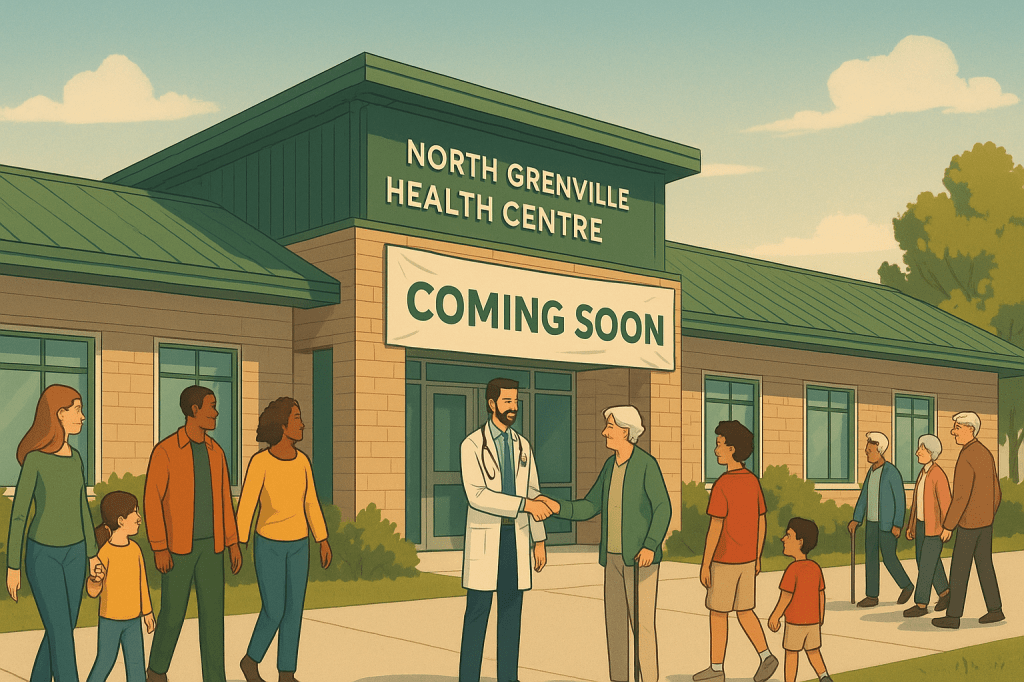
A Municipal Remedy: Why North Grenville Should Open Its Own Healthcare Centre

In North Grenville, the demand for primary healthcare has long outpaced the available supply. While the Rideau Crossing Family Health Clinic has served the community admirably, it seems to have reached its physical and staffing capacity. With a growing population, and increasing concerns over access to primary care, it’s time for the Township of North Grenville to consider a bold, but practical move: establish its own municipally-operated healthcare clinic.

This is not an untested idea. Across Canada, municipalities are taking healthcare into their own hands – literally. In Colwood, British Columbia, the city made headlines in 2023 when it became the first in the country to hire family physicians directly as municipal employees. Offering job stability, pensions, and administrative support, Colwood removed many of the barriers that deter physicians from entering or staying in primary care practice. It wasn’t about competing with existing private clinics, it was about ensuring no resident went without a family doctor.

Orillia, Ontario, is exploring a similar strategy. Recognizing that nearly 25% of the region lacks access to a primary care provider, city councillors there are considering opening a municipal clinic and hiring physicians as city staff. Their aim is to enhance, not undermine, the local healthcare network by filling a gap that traditional models are no longer meeting.

In Manitoba, rural communities like Killarney-Turtle Mountain are actively recruiting international physicians and managing their relocation as part of a municipally driven recruitment strategy. These towns have realized that waiting for provincial solutions is no longer viable. Meanwhile, in Huntsville, Ontario, a physician incentive program funded by the town is already yielding results, with new doctors signing on to help address longstanding shortages.

North Grenville has a chance to follow this growing municipal trend. Simply encouraging more physicians to join the private sector won’t be enough, there’s nowhere for them to go within the Township. A municipally-operated clinic, built with a collaborative mindset, and not as competition, can complement existing services while expanding capacity.

Such a clinic could offer a modern team-based care model that includes nurse practitioners, physician assistants, social workers, and administrative staff, all working under the umbrella of the municipality. With support from provincial and federal programs such as Ontario’s primary care transformation funds or the federal Foreign Credential Recognition Program, North Grenville could create a sustainable and forward-looking solution tailored to its own needs.

How to Move Forward: A Practical Path for the Township
To begin, North Grenville’s municipal council could establish a Healthcare Services Task Force to study local demand, identify gaps in coverage, and recommend a viable service delivery model. This task force should include community health experts, residents, and local politicians.

Next, the Township should apply for funding through Ontario Health’s community-based primary care programs, and the federal government’s health human resources strategy. Partnering with the local hospital, regional health teams, and post-secondary institutions could support the recruitment of new healthcare professionals, including recent graduates and internationally trained physicians.

Land acquisition or repurposing of an existing municipal facility could provide a location, with design input ensuring accessibility, environmental sustainability, and integrated team care. North Grenville does have the amazing resource of the Kemptville Campus, with one of its strategic pillars being “Health and Wellness”. The Township could also offer incentives such as relocation grants, housing support, and flexible hours to make municipal employment attractive to prospective staff.

Finally, a clear communications strategy should be launched to explain that the goal is not to replace or compete with existing providers, but to enhance and expand healthcare access in underserved areas and improve outcomes for all residents.

It’s time to stop waiting and start acting. Our citizens deserve timely, reliable healthcare. Let’s build it, right here at home.

Sources
https://tnc.news/2024/12/26/b-c-city-hiring-family-doctors-as-municipal-government-workers
https://barrie.ctvnews.ca/orillia-could-hire-family-doctors-to-create-municipal-clinic-1.7173907
https://www.winnipegfreepress.com/breakingnews/2024/04/19/diagnosis-critical-desperate-manitoba-municipalities-recruiting-doctors-on-their-own
https://barrie.ctvnews.ca/incentive-program-attracts-new-physicians-to-huntsville-to-address-shortage-in-primary-care-1.7093138
https://www.canada.ca/en/employment-social-development/news/2025/03/the-government-of-canada-is-investing-up-to-143-million-to-help-address-labour-shortages-in-the-health-sector.html

A Welcome with Questions: What Dr. Kaur’s Arrival Reveals About North Grenville’s Physician Incentive Strategy

Ontario is facing a growing shortage of primary care physicians, leaving millions of residents without regular access to a family doctor. This crisis is particularly acute in rural and small-town communities, where aging populations and physician retirements have widened care gaps. In response, municipalities across the province are adopting innovative strategies to attract, recruit, and retain doctors. These include financial incentive programs, housing and relocation support, flexible practice models, and community integration initiatives aimed at making smaller communities more appealing.

So, the arrival of a new physician in a small Ontario town is typically a cause for celebration. Access to primary care is under increasing pressure across the province, and communities like North Grenville work diligently to recruit and retain family physicians. Thus, when Mayor Nancy Peckford announced the addition of Dr. Pawandeep Kaur to the Rideau Crossing Family Health Centre in Kemptville, it was a moment of optimism.

However, a closer examination of the circumstances surrounding Dr. Kaur’s recruitment reveals complexities that warrant further scrutiny, particularly concerning the application and effectiveness of North Grenville’s Family Physician Incentive Program.

Dr. Lavitt’s Brief Tenure
Dr. Samantha Lavitt joined the Rideau Crossing Family Health Centre in June 2024 as part of the municipality’s North Grenville Primary Care Incentive Program. Her arrival was heralded as a significant step forward in enhancing primary care access for the community. However, less than a year into her tenure, Dr. Lavitt announced her departure, effective June 1, 2025. The reasons for her short stay have not been publicly disclosed, but her brief tenure raises questions about the program’s ability to retain physicians in the community. 

A Seamless Transition – But Not an Expansion
To ensure continuity of care, Dr. Kaur will begin transitioning into Dr. Lavitt’s practice starting April 16, 2025, with a full handover by June 1. This overlap aligns with the College of Physicians and Surgeons of Ontario (CPSO) guidelines, which mandate that physicians provide appropriate arrangements for patient care continuity upon leaving a practice.

While this transition is commendable from a patient care perspective, it is important to note that Dr. Kaur is not an addition to North Grenville’s physician roster, but a replacement. The total number of family physicians in the community remains unchanged.

The Optics of Growth
Mayor Peckford’s announcement welcomed Dr. Kaur as “another new family doctor,” a phrase that suggests an increase in the local healthcare workforce. However, this characterization is misleading, as Dr. Kaur is filling the vacancy left by Dr. Lavitt. The use of the term “new” in this context may create a perception of growth where there is none.

Furthermore, Dr. Kaur’s recruitment is again tied to the township’s Family Physician Incentive Program. This raises questions about the program’s application. Designed to attract new physicians to underserved areas, the program appears, in this instance, to be used to maintain existing capacity rather than expand it. 

A Stepping Stone, or a Sustainable Solution?
The brief tenure of Dr. Lavitt and the subsequent recruitment of Dr. Kaur under the same incentive program highlight potential vulnerabilities in the program’s design. If physicians view the program as a short-term opportunity or a stepping stone to other positions, the community may face ongoing challenges in maintaining stable, long-term primary care services. Perhaps the program’s retention strategies may need reevaluation to ensure sustainable healthcare delivery in North Grenville? 

Moving Forward with Transparency
While Dr. Kaur’s arrival ensures that existing patients continue to receive care, the situation underscores the need for transparency in how recruitment programs are utilized. It is essential to assess whether these programs are achieving their intended goals of expanding healthcare access, and to consider adjustments that enhance their effectiveness in both attracting and retaining physicians.

As North Grenville continues to navigate the complexities of healthcare provision, clear communication and strategic planning will be key to ensuring that the community’s needs are met not just today, but in the years to come.

Sources
• Rideau Crossing Family Health Centre. “Practice Update.” rideaucrossingfhc.ca
• My Kemptville Now. “North Grenville welcomes newest physician.” mykemptvillenow.com
• North Grenville. “North Grenville Enhances Primary Care Access with Arrival of Dr. Lavitt.” northgrenville.ca
• College of Physicians and Surgeons of Ontario. “Physician Information.” register.cpso.on.ca

Reinforcing Mononormativity at Women’s Expense

Jennyfer Jay’s writing and social media presence offer an intimate, often vulnerable look into her personal experiences navigating contemporary womanhood. Her reflections on casual dating, relationships, and emotional growth resonate with many women grappling with a world that seems increasingly disconnected and transactional. However, despite the sincerity of her storytelling, her work implicitly reinforces mononormative narratives, those that assume monogamy as the only valid or fulfilling form of romantic relationship. This framing not only limits the imagination of what relationships can look like, but paradoxically sets women up for failure in the very dynamics she critiques.

Jay’s essays frequently center on the emotional toll of casual sex and emotionally unavailable men. While these are valid themes, her framing often implies that the natural arc of a woman’s life, and healing, is toward securing emotional commitment from one man. This reinforces the mononormative ideal that stability, validation, and maturity are achieved through exclusive partnership. In her work, men who avoid commitment are treated as broken or selfish, while women who desire commitment are portrayed as evolved or emotionally ready. This binary undercuts the possibility that diverse relationship structures, such as ethical non-monogamy, relationship anarchy, or solo polyamory, might also offer meaningful paths toward emotional growth, security, and connection.

What Jay’s narratives tend to overlook is the systemic nature of the mononormative trap. By valorizing monogamous commitment as the end goal, she leaves little room for women to explore other models of love and companionship without shame. Her reflections, while emotionally resonant, often risk pathologizing women’s unhappiness as stemming from men’s refusal to play their part in the monogamous script, rather than from the script itself. In this way, Jay participates in a cultural feedback loop where women are socialized to desire a particular kind of relationship, and then blamed, or encouraged to blame men, when it fails.

This dynamic is particularly evident in her TikTok content, where Jay sometimes uses the confessional format to speak to younger women about “knowing their worth” or “not settling for less.” While empowering on the surface, the subtext implies that true worth is ultimately validated by a partner who chooses exclusivity. This undermines women who find satisfaction in non-exclusive relationships, or who define emotional success on different terms. Furthermore, it shifts the burden of relational success onto women’s ability to “choose better,” rather than questioning the limiting structures themselves.

To be clear, Jennyfer Jay’s work has value: it opens important conversations, validates emotional experiences, and challenges harmful behaviour, but it is also crucial to interrogate the assumptions it upholds. A deeper, more liberatory feminist approach would challenge the centrality of monogamy altogether, recognizing that love, commitment, and emotional fulfillment need not conform to normative ideals. Without this lens, Jay’s content risks entrenching the very narratives it seeks to critique, leaving women emotionally entangled in systems that do not serve them.

Sources:
• Jennyfer Jay on Medium: https://medium.com/@JennyferJay
• Jennyfer Jay on TikTok: https://www.tiktok.com/@jennyferjay
• Pieper, M. (2020). Mononormativity and Its Discontents. Journal of Contemporary Social Theory.
• Barker, M. (2013). Rewriting the Rules: An Integrative Guide to Love, Sex and Relationships. Routledge.

Why Your Dismissive-Avoidant Partner Loves You From Across the Room (With the Door Slightly Ajar)

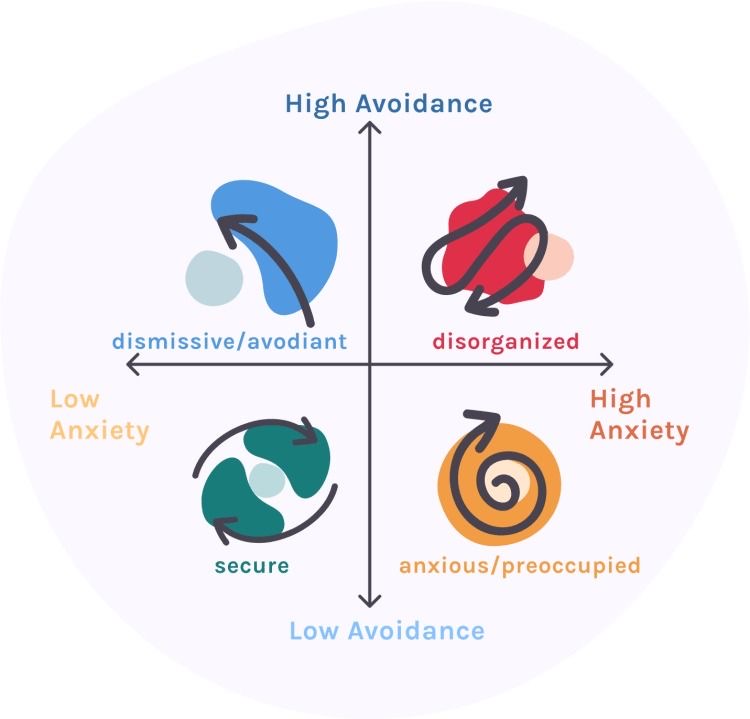
Ah, the dismissive-avoidant attachment style. The human equivalent of a cat: they might love you, they might not, but either way, they’re going to knock your emotional mug off the table just to see what happens.

Dismissive-avoidants are the folks who will cuddle you on the couch and then, without warning, evaporate like steam in a British mystery novel. You think things are going great, you’re texting every day, you’ve met each other’s pets, you’ve even shared fries. Suddenly, they’re “just really needing some space” and have gone to “work on themselves” in the wilderness with no signal and no return date.

Now, don’t get me wrong, they’re not bad people. They just learned, somewhere along the way, that feelings are kind of like bees: unpredictable, swarming, and best avoided if possible. These folks often grew up in homes where vulnerability was about as welcome as a raccoon at a wedding. So, they built themselves emotional panic rooms and installed locks with 87-digit codes.

Dating a dismissive-avoidant can be a little like dating a haunted house. There’s a lot going on inside, but they don’t want you poking around in the attic. Ask them how they feel, and they’ll either crack a joke or vanish in a puff of logic. “I don’t need to talk about feelings. Feelings are just electrical impulses. You know what else are electrical impulses? Traffic lights. And I don’t cry at those, do I?”

These are the champions of “I’m not really looking for anything serious” and “I just want to see where this goes”, which is often directly into a brick wall labeled unavailable. But don’t let that deter you, because dismissive-avoidants do fall in love. It just takes a while. And by a while, I mean longer than it takes for an avocado to go from rock-hard to brown mush.

They actually value connection deeply, but only if it doesn’t interfere with their need for independence, alone time, or the ability to escape through a metaphorical skylight at any moment. They’re like emotional ninjas: stealthy, elusive, and weirdly attractive.

If you’re dating one, the key is patience, and a good sense of humor. Celebrate the small wins: they made eye contact while discussing their emotions? Break out the champagne. They admitted they missed you (after a three-week silence)? Start planning the wedding.

Just remember: when they say, “I don’t really do emotions,” what they mean is, “Emotions are terrifying and I don’t know how to do them without short-circuiting like a 1996 printer.”

So love them gently, laugh a lot, and maybe invest in a nice doormat that says “Welcome-ish.”, because with a dismissive-avoidant, you never know when they’ll show up, but when they do, it’s almost always in their own charming, weirdly tender way. Just don’t ask them to define the relationship too soon. That’s how you get ghosted via interpretive dance.

From Work Husbands to Instagram Crushes: Embracing the Messy Beauty of Human Bonds

There’s been a lot of talk lately about “microcheating”, that nebulous zone between platonic friendship and outright infidelity that’s often fueled by digital intimacy. You’ve probably seen the headlines or heard a podcast warn you about the dangers of liking your ex’s selfie or texting a coworker late at night. Critics point to social media as the villain, a tool for secret flirtations and emotional betrayal, but let’s take a breath and be honest; people have always had emotionally rich, complicated connections outside of their primary partnerships. We just used to call them something else.

Take, for example, the decades-old concept of the “work wife” or “work husband.” Long before we were DM’ing heart emojis or watching each other’s stories on Instagram, we were confiding in coworkers, sharing emotional labor, cracking inside jokes, and supporting each other through the grind of daily life. These relationships have always lived in a gray area, close enough to be intimate, but generally understood to stop short of romantic or sexual; and yet, we largely accepted them as harmless, even beneficial. We chuckled at the idea of having “two spouses”, one at home, and one who understands your work stress better than anyone else. No one called it microcheating back then, it was just life.

The moral panic around microcheating today says more about our evolving discomfort with complexity than it does about the relationships themselves. In a world that’s increasingly networked, emotionally porous, and socially dynamic, we are clinging to a monogamous template that often doesn’t serve how we actually live or love. When people form emotional attachments through social media, or deepen their connections with someone outside their marriage, the problem isn’t necessarily the connection, it’s the secrecy, the shame, the absence of clear agreements. If anything, these “infractions” point to a need for more openness, more dialogue, and more room for complexity in how we relate to each other.

As someone who supports and lives polyamory, believing that humans are naturally wired for multiple meaningful relationships, I find it fascinating how society polices these invisible lines. Why is it okay to rely on your “work husband” for emotional validation every day, but suspicious if you develop a deep bond with someone online? Why is one seen as harmless routine, and the other as emotional betrayal? It often comes down to how much control we believe we’re entitled to exert over our partners’ inner lives. Frankly, that control is rarely about love, it’s often more about fear.

The truth is, what is being called microcheating is a symptom of a culture that wants the emotional richness of multiple connections, but refuses to grant itself the language or permission to explore them consciously. People are starving for intimacy, for shared secrets, for someone who listens without judgment. They find it where they can, sometimes in a DM thread, sometimes across the break room coffee machine. Rather than pathologizing these relationships, we should be making space for them. We should be encouraging couples, and moresomes, to talk about what kinds of emotional connections they’re open to, what boundaries feel respectful, and how to share space without falling into surveillance or possessiveness.

In polyamorous circles, we understand that love and connection aren’t zero-sum. My emotional intimacy with one person doesn’t diminish what I share with another, rather it expands my capacity. So when I see the hysteria over someone maintaining a friendship that’s “too close,” I wonder, what would change if we trusted each other more? If we understood that our partners are complex, full-hearted beings who may love more than one person deeply, and that’s not a threat, but a gift?

The rise of microcheating discourse reflects a growing tension between our social conditioning, and our relational reality. Maybe instead of drawing stricter lines, we should be blurring them with intention. Naming the feelings! Creating agreements! Inviting more truth into the room, because whether it’s a work spouse, an online confidante, or someone you just really vibe with over coffee, there’s nothing inherently wrong with emotional closeness. What matters is the integrity with which we hold it.

Attachment Styles: A Pigeonhole for Every Relationship Problem

I wrote this piece in response to a comment from one of my readers.  I hope they like it; it’s a follow up on the post “A Pigeonhole for Every Personality” 

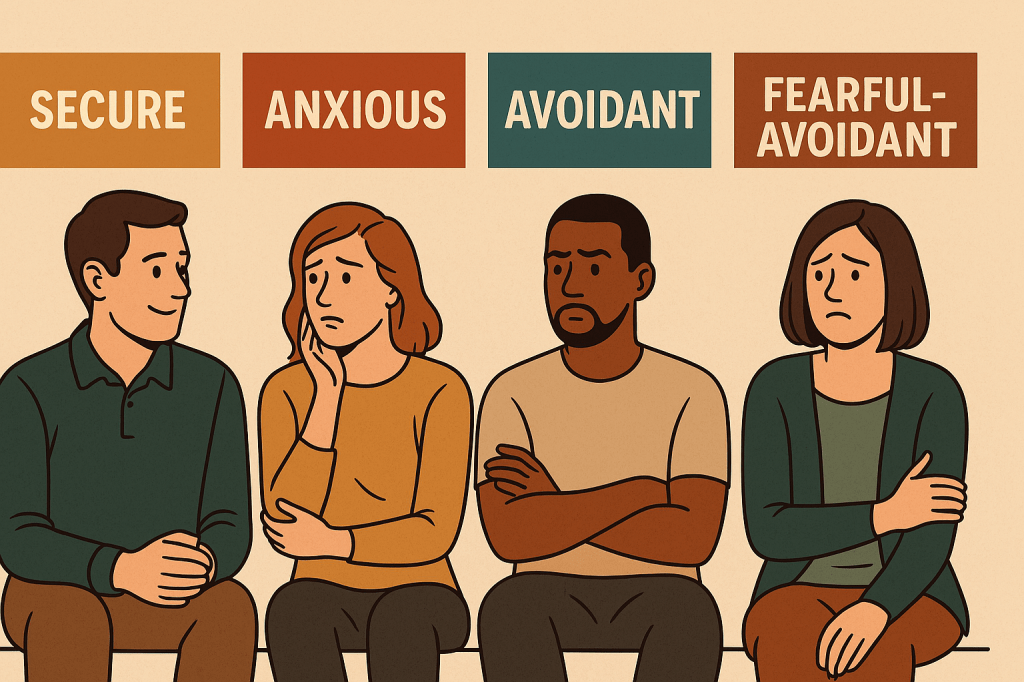
If there’s one thing western society loves almost as much as personality tests, it’s diagnosing relationship dynamics with attachment styles. Suddenly, every awkward text message delay, every weird argument over who forgot to buy oat milk, and every vague feeling of existential dread about love can be neatly categorized into one of four labels: SecureAnxiousAvoidant, or the truly thrilling combo package—Fearful-Avoidant.

It’s like the Myers-Briggs of romance, except instead of deciding whether you’re an introvert or extrovert, you get to figure out whether you cling to your partner like a koala in a windstorm, or bolt for the door the second someone gets emotionally vulnerable.

The concept of attachment styles comes from psychologist John Bowlby, who first theorized that the way we bonded with our caregivers as infants shapes how we approach relationships in adulthood. Sounds reasonable, right? But the internet has turned this into an all-consuming diagnostic tool, where every failed romance is either the fault of an anxious partner texting too much or an avoidant partner texting… never.

The Pigeonholes of Love
Let’s start with the holy grail: Secure Attachment. If you have this, congratulations! You are a unicorn. You text back promptly, communicate your needs like a functional adult, and somehow don’t panic when your partner asks, “Hey, can we talk?” You were probably raised by parents who hugged you at the right times, and never forgot to pick you up from soccer practice. The rest of us admire you, resent you a little, and assume you exist mostly in fiction.

Then there’s Anxious Attachment, a.k.a. the Overthinker’s Club. These are the people who send, “Hey, everything okay?” when you don’t respond within 15 minutes, then follow up with, “Sorry, never mind, ignore me,” followed by, “Actually, I just wanted to check in,” and finally, “I guess you hate me now.” They crave closeness, but also kind of expect to be abandoned at any moment, which makes dating them an emotional rollercoaster with no seatbelts.

On the flip side, we have Avoidant Attachment, the poster child for ghosting. These folks see a heartfelt emotional conversation the way most people see an unsolicited call from their car insurance provider: something to be avoided at all costs. Their love language is “mysterious silence” and they’d rather disappear into the woods than have a deep talk about feelings. Commitment feels suffocating, which is why they often end up dating people with anxious attachment, because nothing says “healthy relationship” like one person desperately clinging, and the other desperately pulling away.

And then, for the truly chaotic, we have Fearful-Avoidant Attachment, also known as “Anxious and Avoidant, Because Why Not?” These individuals desperately want connection but also deeply fear it, making every relationship a high-stakes game of emotional Jenga. They text “I miss you” and then immediately throw their phone into the sea. They want love, but also, love is terrifying. It’s exhausting for everyone involved.

Escaping the Labels
Like every other personality test, attachment styles are useful, until they become a life sentence. Sure, maybe your childhood shaped your relationship habits, but that doesn’t mean you’re doomed to spend eternity analyzing your texts like a forensic scientist. People can change, grow, and even, brace yourself, go to therapy.

So, the next time someone tells you they’re anxiously attached or avoidantly wired, smile, nod, and remember;  nobody fits neatly into a box. Except maybe Secure people. But honestly, who trusts them?

The Often Hidden, and Misunderstood Dominant/submissive Dynamic in Human Relationships

At the core of every human interaction lies a subtle dance of power and vulnerability – a dynamic of dominance and submission. This concept, while often misunderstood or dismissed, is deeply embedded in the way we connect with one another, influencing everything from romantic relationships to professional interactions and even friendships. It’s not always about control or acquiescence in the traditional sense, but about the ebb and flow of influence, support, and leadership.

The Universal Nature of Power Dynamics
Power dynamics exist on a spectrum, manifesting in ways both explicit and implicit. In romantic partnerships, for instance, one partner might naturally take the lead in decision-making or planning, while the other might shine in nurturing emotional intimacy. Neither role is inherently superior – both are essential to a healthy balance. This interplay isn’t about domination in a harsh sense; it’s about trust. Submission, in this context, is a choice to yield or follow, often driven by respect for the other’s strengths.

Even in friendships, these dynamics are present. Think about your closest friends: Is there someone who often initiates plans or provides guidance when you’re struggling? Conversely, is there someone who seeks comfort or advice from you? These roles might shift over time or depend on the situation, but the dynamic persists.

Why Dominance and Submission Are Not Always About Control
Dominance often carries a negative connotation, evoking images of manipulation or authoritarian behavior. But in healthy dynamics, dominance is less about control and more about leadership, confidence, or decisiveness. Similarly, submission isn’t about weakness—it’s about trust, vulnerability, and the willingness to let someone else take the reins when appropriate.

Consider a workplace setting. A manager might take on the dominant role by providing direction, while employees adopt a submissive role by following that direction to achieve shared goals. However, a good manager also knows when to step back and listen, showing that dominance and submission are situational and reciprocal.

The Fluidity of These Roles
The most successful relationships – romantic, platonic, or professional – are those where dominance and submission flow naturally and aren’t rigidly fixed. A romantic partner who typically leads financially might lean on their counterpart for emotional stability. A friend who usually gives advice might need a shoulder to cry on. Recognizing this fluidity allows for deeper, more authentic connections because each person feels valued for their unique contributions.

The Pitfalls of Imbalance
Problems arise when one person perpetually dominates or perpetually submits, leaving no room for reciprocity. An overly dominant person may come across as controlling or dismissive, while an overly submissive person may lose their sense of self or feel unfulfilled. Healthy dynamics require mutual respect, clear communication, and a willingness to adapt to each other’s needs.

Embracing the Dynamic
Recognizing the Dominance/submission dynamic in your relationships doesn’t mean you need to label or overanalyze every interaction. Instead, it’s an opportunity to better understand yourself and the people around you. Who tends to take charge, and in what situations? When do you feel most comfortable leading, and when do you find strength in stepping back?

Ultimately, this dynamic is not about power for its own sake – it’s about balance. Every human connection thrives on give-and-take, on moments of leadership and surrender. Embracing this truth can help you build deeper, more meaningful relationships grounded in trust, respect, and mutual support.

In what areas of your life do you see this dynamic at play?