The Penguin: Ottawa’s Small Club with Big Nights

Nestled on Elgin Street in Centretown, Ottawa, The Penguin was a small, but influential live music venue during the late 1980s and throughout the 1990s. Despite its modest size, it attracted a remarkable range of touring acts across rock, blues, jazz, and alternative music. Concert databases and historical accounts show that the club hosted artists such as Blue Öyster Cult, the Jim Rose Circus, Tori Amos, and Béla Fleck. The Penguin earned a reputation as a stop for touring musicians who wanted a more intimate connection with their audience, and for local music fans, it became a hub of discovery where every night promised something unexpected.

Part of the club’s charm lay in its atmosphere and attention to detail. Upper Canada beers flowed from the taps, including the rare dark ale that few other Ottawa venues offered on draft. Low ceilings, close seating, and proximity to the stage created a space where performances felt immediate, every note and improvisation amplified by the intimacy of the room.

I moved to Ottawa permanently in the early 1990s, having developed both professional and personal connections over the preceding years. Friends like Bruce, who knew all the city’s best bars, clubs, and restaurants, introduced me to the vibrant local music scene, and The Penguin quickly became a favourite of ours.

Some of my most vivid memories are of nights when artists I admired personally played there. Steve Hackett, the former Genesis guitarist, performed in August 1992. I remember him alternating between electric and acoustic guitars, and at one point he sat on the stage to play an extended classical acoustic passage that seemed to suspend time in the room.

A few years later, in October 1994, I saw The Jazz Passengers at The Penguin, joined by Debbie Harry. The combination of New York City avant-garde jazz and Harry’s iconic voice created a one-of-a-kind performance. The room was alive with energy and unpredictability, and the intimacy of the venue made every note feel immediate. The band started playing and Bruce and I looked at each other “Is that Blondie’s Rapture?” And sure enough Harry walks out onto the stage! 

Cassandra Wilson’s performance during her 1994 tour supporting Blue Light ’til Dawn remains unforgettable. Walking onto the stage in a dark blue sheer dress, she filled the room with a smoky, folk-infused jazz sound that left the audience mesmerized. While I have not yet confirmed the exact date in archival newspapers, the memory of that evening, her voice, the hush in the crowd, the room’s energy remains vivid decades later. I did send Ms. Wilson a note requesting confirmation of the date, and she replied that she would check for me, so stay tuned. 

The Penguin was more than just a club; it was a space where small details: a well-poured local ale, the room’s acoustics, the proximity to the stage, combined with talent to create nights that linger long in memory. For musicians and fans alike, it transformed ordinary evenings into stories worth telling, a testament to the intimate magic that only a club like The Penguin could produce.

Sources:
• Pollstar listings (1994 tour notices) showing Cassandra Wilson listed for Ottawa/Penguin dates and related dates.
• Crowd-sourced concert archives and venue listings for The Penguin, including setlists showing Steve Hackett at The Penguin, Aug 22, 1992, and Deborah (Debbie) Harry with The Jazz Passengers at The Penguin, Oct 11, 1994.  

Jeff Beck: Redefining the Electric Guitar

“Performing This Week… Live at Ronnie Scott’s” by Jeff Beck is my absolute favourite live album, and there is rarely a month goes by without it being played or watched at home. While there are many outstanding modern guitarist, this is why Jeff Beck is top of my list. 

Jeff Beck’s claim to the title of the finest modern guitarist rests on four pillars. He altered the vocabulary of the electric guitar. He bridged genres without compromise. He proved, live and on record, that virtuosity can serve melody. He earned the reverence of institutions and peers who rarely agree. Few players changed how the instrument could sound and feel across so many eras, while refusing to be boxed in by fashion or formula.

The breakthrough arrived fast. With the Yardbirds in 1965 and 1966, Beck used the electric guitar as a sound design tool, not just a solo voice. On Heart Full of Soul he bypassed an actual sitar, and bent a fuzzed-out Stratocaster line into something convincingly raga-like, helping introduce Indian inflections to British rock radio. Shapes of Things pushed further, with controlled feedback and an Eastern scale that many historians now tag as a first true psychedelic rock single. Those records did not copy American blues forms. They mutated them, igniting a new language of sustain, noise and melody that others would chase for years.   

Beck’s solo debut Truth, cut in 1968 with Rod Stewart and Ronnie Wood, turned that language into shock therapy. It was a heavy, spacious record that foreshadowed the architecture of Led Zeppelin, and the rise of hard rock on both sides of the Atlantic. Tracks such as Beck’s Bolero and the reimagined Shapes of Things pointed toward the sonic mass that would soon be called heavy metal, yet they kept dynamics and drama at the center. The result was less a genre template than a manifesto about force and finesse.    

Then he changed course again. Blow by Blow in 1975 and Wired in 1976 reshaped the commercial prospects of instrumental music. Beck applied blues phrasing to jazz-rock structures with George Martin in the producer’s chair, landing a platinum instrumental LP and a No. 4 slot on the Billboard 200. Fusion could be lyrical rather than clinical, and the guitar could carry an entire album without a singer. Those records did not just broaden a fan base. They expanded the market for instrumental rock and set a standard that fusion and rock guitarists still measure against.    

Technique made those pivots possible. Beck abandoned the pick, playing with fingers that plucked and snapped strings while the right hand worked the Stratocaster’s vibrato arm and the volume knob in real time. He could swell a note into the mix like a violinist, then smear its pitch with a glissando that mimicked slide guitar, or tease harmonics into vocal shapes. This was not gear-driven flash. It was touch, control and micro-dynamics turned into grammar. Many great players mastered the how of speed and articulation. Beck mastered the why of phrasing, timbre and breath.    

The stage confirmed it. The 2007 Ronnie Scott’s residency in London remains a benchmark for modern guitar performance. Backed by Vinnie Colaiuta and Tal Wilkenfeld, Beck moved from lyrical balladry to feral fusion without breaking the spell of melody. The set list stretched across his career, yet everything sounded current because the tone lived at his fingertips, not in presets. It was a masterclass in restraint and risk, caught on a live album and film that have become essential study texts for working guitarists.   

Recognition followed the work, not the other way around. Beck is a two-time Rock and Roll Hall of Fame inductee, first with the Yardbirds in 1992 and again as a solo artist in 2009. He holds the record for the most wins in the Grammy category that best maps his lane, Best Rock Instrumental Performance, and earned eight Grammys in total. These honors matter here because they span decades and styles. Institutions often lag behind innovation. In Beck’s case they kept pace, acknowledging that his instrumental music moved listeners and players alike.     

Influence is the last measure. Beck shaped how guitarists think about feel. The modern vocabulary of fingerstyle electric lead, of singing vibrato-arm inflection, of volume-knob dynamics used as composition, owes him a debt. The tributes that poured in at his passing were notable less for celebrity and more for specificity. Players did not just say he was great. They cited the details of his touch and control that they had tried, and failed, to replicate. That is the quiet test of greatness. When the best explain what makes someone singular, and the explanation centers on the unteachable, the case is closed.   

Call it a contest on taste if necessary, but if the criteria are innovation, breadth, touch, live authority and a recorded legacy that keeps revealing new corners, the verdict is clear. Jeff Beck did not simply play the guitar. He reinvented it every decade he held one.

Sources:
Rock & Roll Hall of Fame. Jeff Beck inductee profile.
Grammy.com. Jeff Beck artist page.
Associated Press. Obituary and career overview.
Guitar Player. How to Play Guitar Like Jeff Beck.
Premier Guitar. Jeff Beck and the Magic Volume Knob.
Guitar World. Jeff Beck whammy bar and slide phrasing.
Wikipedia. Blow by Blow album page. Chart position and certification.
Ultimate Classic Rock. Yardbirds’ Shapes of Things.
Wikipedia. Heart Full of Soul. Raga influence and fuzz usage.
Guitar Player. Truth retrospective.
MusicRadar. Beck’s Bolero feature.
Live at Ronnie Scott’s album page.
A Green Man Review. Ronnie Scott’s live review.  

My Favorite Films Part III: Music, Story, and Cinematic Art

This third installment continues my celebration of cinema as a multisensory art form, with music once again our guide. These seven films span epochs, genres, and emotions, from epic battles to transcendent romance, each bound by the way soundscapes enrich story, character, and image. They are films where music isn’t background noise; it’s atmosphere, character, and memory, and I return to them because they resonate as deeply for my ears as they do for my eyes and heart.

12. Kingdom of Heaven (Director’s Cut)
2005 (Director’s Cut 2005) | Director: Ridley Scott | Writer: William Monahan

A blacksmith becomes a knight in Jerusalem, defending the city during the Crusades as faith, politics, and identity clash in epic conflict. The Director’s Cut restores 45 minutes of character depth and narrative clarity.

Why I like it: The Director’s Cut deepens the emotional stakes and moral tension, making every battle and moment of faith feel earned. Harry Gregson-Williams’s score elevates the walls of Jerusalem and the heart of its defenders. It’s a historical epic that resonates emotionally through its music, visuals, and a compassion-filled narrative.

13. Vicky Cristina Barcelona
2008 | Director/Writer: Woody Allen

Two American friends vacation in Barcelona, entangled in romance with a charismatic painter and his unstable ex-wife, a messy, sensual exploration of desire and self.

Why I like it: The vibrant Spanish setting and passionate performances draw me in, and the music, weaving classical and flamenco tones, makes the city sing. It’s playful, messy, and beautiful; like love itself, a collision of impulse, emotion, and art that I find utterly irresistible.

14. Dune: Part One & Part Two
2021 & 2024 | Director: Denis Villeneuve | Writers: Jon Spaihts, Denis Villeneuve, Eric Roth; Frank Herbert for Part Two

Set on the desert planet Arrakis, Paul Atreides becomes the prophesied leader, navigating politics, prophecy, and rebellion. The saga crescendos with alliances, revenge, and evolving destinies amid cosmic danger.

Why I like it: Villeneuve’s vision pairs epic scale with intimate emotion, and Hans Zimmer’s haunting score makes the spice-laden dunes thrum inside me. Part Two’s deeper political and emotional arc, “a love story first” even amid war, anchors its grandeur in human feeling, perfectly in tune with my love of story carried by sound and scope.

15. Across the Universe
2007 | Director: Julie Taymor | Writers: Dick Clement, Ian La Frenais, Julie Taymor

A psychedelic musical romance set against 1960s America, weaving 34 Beatles songs into a story of love, politics, and the counterculture era.

Why I like it: A film where soundtrack is substance – the Beatles’ music tells the emotions of war, youth, and love. Taymor’s visuals are feverish and inventive, and the songs don’t just play – they pulse. It’s a vivid dream of political and romantic energy that lives in my heart like a favorite song.

16. Cairo Time
2009 | Director/Writer: Ruba Nadda

A Canadian woman waiting for her husband in Cairo forms a quiet, unexpected connection with a local friend; an atmospheric film of longing and place.

Why I like it: It’s a film of small moments made powerful, the hush of Cairo mornings, unspoken longing, and ambient sound that’s almost music. Niall Byrne’s score gently underscores longing and cultural nuance. It’s a quiet romance, rich in atmosphere and subtle emotion.

17. Henry V
1989 | Director/Writer: Kenneth Branagh

Shakespeare’s history play brought to cinematic life. King Henry rallies his soldiers against overwhelming odds, blending heroic oratory with battlefield grit.

Why I like it: Branagh’s passionate performance, poetic language, and sweeping visuals are all heightened by Patrick Doyle’s stirring score. It moves me when words alone could not. It’s bravery made beautiful, sound and speech united in grand purpose.

18. Orlando
1992 | Director/Writer: Sally Potter

A gender-fluid soul wanders across centuries, shifting identity and time, in a cinematic ode to self, history, and transformation.

Why I like it: Orlando is visual poetry, and its minimalist, haunting score echoes Woolf’s timelessness. The film flows like a piece of ambient music, dreamlike and meditative, reminding me how cinema can feel like breathing through centuries. It’s as much emotion as art, ebbing in time and sound.

Closing Thoughts
These seven films span conflict, identity, wonder, and connectionyet what binds them for me is the music. Whether epic orchestras, Beatles melodies, ambient ambience, or subtle composition, each soundtrack shapes the story’s soul. They remind me that a film becomes unforgettable not just through how it looks or what happens, but how it feels. In this part of my personal canon, sound is the membrane between scene and heart, and these films resonate there.

My Favorite Films Part II: Music, Story, and Cinematic Art

Continuing my exploration of favorite films, this second collection also celebrates the interplay of music, storytelling, and cinematic artistry. These are films where the soundtrack does more than accompany the action – it shapes every emotion, enhances every character, and magnifies the power of performance and visual design. Each film here is a complete sensory experience, one that I return to because it moves me as much musically as it does narratively.

6. Pride and Prejudice (2005)
2005 | Director: Joe Wright | Writer: Deborah Moggach (from Austen)

Elizabeth Bennet challenges social norms and her own prejudices as she sparrs with Mr. Darcy, finding unexpected love.

Why I like it: Elizabeth’s intelligence, independence, and wit speak to me. Dario Marianelli’s piano-driven score guides every heartbeat, from tension to longing, heightening the romantic and social stakes. I love how the music works with the performances and cinematography to make subtle emotion tangible. It’s a film where intellect, feeling, and music are inseparable, mirroring my own appreciation for stories that engage both mind and heart.

7. Casino Royale
2006 | Director: Martin Campbell | Writers: Neal Purvis, Robert Wade, Paul Haggis (from Fleming)

James Bond earns his license to kill, facing betrayal, love, and his own emotional awakening in a deadly high-stakes game.

Why I like it: I enjoy seeing Bond stripped to his raw humanity, vulnerable yet cunning. The soundtrack – from Chris Cornell’s theme to tense orchestration – heightens every moment of risk and emotion. I love the fusion of storytelling, music, and action: the score amplifies tension and heartbreak alike, letting me experience the stakes as fully as the characters do.

8. Kill Bill Vol. 1 & 2
2003, 2004 | Director/Writer: Quentin Tarantino

A betrayed assassin, the Bride, embarks on a relentless, stylish quest for vengeance and, ultimately, peace.

Why I like it: The film is an operatic spectacle, and the music – spanning Ennio Morricone, Japanese pop, and rock – propels every fight, escape, and revelation. I revel in the intensity, style, and layered storytelling. The Bride’s journey is one of transformation, resilience, and autonomy, and the soundtrack ensures each beat lands with cinematic and emotional precision, making it unforgettable.

9. Possession (2002)
2002 | Director: Neil LaBute | Writers: David Henry Hwang, Laura Jones, Neil LaBute (from A. S. Byatt)

Modern scholars unravel the secret romance of two Victorian poets, uncovering parallels to their own lives and loves.

Why I like it: I love the way intellect, history, and romance intertwine. The haunting, lyrical music echoes the poets’ passion and underscores the emotional resonance across centuries. I’m drawn to stories where words, love, and discovery ripple through time, and the soundtrack ensures that every revelation and longing feels deeply felt.

10. Aliens
1986 | Director: James Cameron | Writers: James Cameron (screenplay); story by Cameron, David Giler, Walter Hill

Ellen Ripley returns to confront the alien menace, finding both terror and her fierce maternal strength.

Why I like it: Ripley’s courage and care inspire me. James Horner’s score heightens every moment of terror, heroism, and triumph. I’m drawn to the tension, the bonds of chosen family, and the way music amplifies every heartbeat, making suspense, action, and maternal devotion resonate with a visceral emotional power.

11. Moulin Rouge!
2001 | Director: Baz Luhrmann | Writers: Baz Luhrmann, Craig Pearce

A tragic love story set in a bohemian Paris cabaret, where art, passion, and sacrifice collide.

Why I like it: I’m swept up by the music, theatricality, and raw emotion. Every mash-up of pop and classical music is a sensory thrill, giving voice to passion and heartbreak. I love how the visuals, performance, and music coalesce, making the spectacle deeply moving and utterly alive, a perfect expression of art as a full-bodied experience.

Closing Thoughts
These films reaffirm my belief that cinema is a holistic art form, where music, narrative, performance, and visuals converse with one another to create a lasting emotional impact. From romance to action, from historical epic to modern tragedy, each selection captivates me through its unique harmony of sound and sight. Together with Part I, they form a personal canon – movies that I return to for inspiration, reflection, and the simple, enduring pleasure of being carried by story and music.

My Favorite Films Part I: Music, Story, and Cinematic Art

For me, a film is never just a story on a screen. I experience it as a convergence of senses and artistry: the framing of a shot, the cadence of dialogue, the nuance of performance, the sweep of production design – but always, equally, the music. A soundtrack can transform a scene, turning ordinary emotion into something transcendent, guiding my heart as much as the narrative guides my mind. This first part of my favorite films highlights those that move me through story, music, and cinematic craftsmanship, forming an immersive experience I return to again and again.

1. The Lord of the Rings (Extended Editions)
2001–2003 | Director: Peter Jackson | Writers: Fran Walsh, Philippa Boyens, Peter Jackson, Stephen Sinclair

A sweeping fantasy epic where hobbits, warriors, and kings unite to destroy the One Ring, resisting corruption and forging unlikely bonds amid war.

Why I like it: I’m captivated by the depth of the world and the moral stakes of loyalty, courage, and chosen family. Howard Shore’s score is integral, a musical backbone that elevates battle, sorrow, and triumph alike. The extended editions let me linger on every character nuance, visual detail, and the orchestral music that carries the emotional weight, making the story as immersive for the heart as it is for the eyes.

2. Blade Runner (Final Cut)
2007 (original 1982) | Director: Ridley Scott | Writers: Hampton Fancher, David Peoples

In a rain-soaked, neon Los Angeles, a weary detective hunts rogue replicants, blurring the line between human and artificial life.

Why I like it: I’m drawn to its meditation on identity and mortality, a story that lingers in the mind long after the credits. Vangelis’s haunting synthesizer score defines the atmosphere, turning every raindrop and neon reflection into a sonic experience. The music, cinematography, and acting fuse seamlessly, making me feel the melancholy, tension, and beauty of a world that’s both alien and intimately human.

3. Monsoon Wedding
2001 | Director: Mira Nair | Writer: Sabrina Dhawan

A chaotic Delhi wedding gathers extended family, exposing secrets, desires, and generational tensions while celebrating resilience and love.

Why I like it: The interwoven stories of love, family, and tradition resonate deeply with my own life. The music – Bollywood, classical, and folk – animates the chaos, making every dance, argument, and revelation pulse with rhythm and emotion. I return to this film for its warmth, humor, and humanity, and the soundtrack ensures I’m dancing emotionally as well as mentally, caught up in the joy and mess of life.

4. Lawrence of Arabia
1962 | Director: David Lean | Writers: Robert Bolt, Michael Wilson

A sweeping desert epic tracing T. E. Lawrence’s transformation from eccentric officer to legendary leader of the Arab Revolt.

Why I like it: The grandeur of the deserts and Lawrence’s moral complexity enthrall me. Maurice Jarre’s score turns the desert into a character, giving voice to both isolation and transcendence. I admire the cinematic sweep, the subtlety of performance, and the orchestral music that amplifies every moment of tension, courage, and reflection. The film reminds me of the vastness of human experience, both visually and musically.

5. The Martian
2015 | Director: Ridley Scott | Writer: Drew Goddard (novel by Andy Weir)

Stranded on Mars, astronaut Mark Watney survives through ingenuity, humor, and science until Earth can bring him home.

Why I like it: I love the optimism, wit, and relentless problem-solving. The use of 70s pop songs adds humor and heart, making the isolation bearable and delightfully human. Music becomes part of survival, and every track resonates with hope, playfulness, and ingenuity. The combination of scientific ingenuity, visual storytelling, and musical choices perfectly balances intellect, emotion, and entertainment for me.

Final Thoughts
These five films exemplify how music and narrative can intertwine to create something larger than the sum of their parts. From sweeping epics to intimate tales, each one offers a fully immersive experience, engaging my imagination, my emotions, and my ear for melody and harmony. They remind me that cinema is a multidimensional art, where sight, sound, and story can linger in memory long after the screen goes dark.

It’s Time for a Global BBC iPlayer: Why International Access Is Long Overdue

For decades, the BBC has been a benchmark of public broadcasting, respected for its journalism, admired for its dramas, and cherished for its documentaries. Yet, for those of us living outside the United Kingdom, access to this cultural wealth remains frustratingly limited. While the BBC continues to produce world-class content with global appeal, its flagship streaming service, BBC iPlayer, remains geo-blocked to users outside the UK. In an era of global media consumption, it’s time for that to change. The BBC should offer a subscription-based version of iPlayer to international audiences.

First, the demand is clear. British television has a massive international fanbase. From Doctor Who to Planet Earth, from Fleabag to Line of Duty, BBC programmes consistently rank among the most downloaded, discussed, and pirated shows worldwide. This level of interest indicates a global market willing to pay for legal, high-quality access. As streaming becomes the dominant form of content delivery, the absence of a legal international BBC iPlayer forces viewers either to do without or to use VPNs to bypass regional restrictions. A subscription model would provide a legitimate, revenue-generating alternative that meets the needs of this global audience.

Second, the BBC’s current patchwork approach to international content distribution is inadequate. Services like BBC Select and BritBox offer limited slices of the full iPlayer experience, focused mostly on documentaries or classic series. These platforms, while welcome, are no substitute for the full breadth of current programming; including news, culture, drama, comedy, and live events, that defines the BBC brand. By restricting its best content to UK viewers, the BBC undermines its own global reach and influence.

Third, public broadcasters everywhere face funding challenges. The BBC is no exception, with licence fee revenues under political and economic pressure. A global subscription iPlayer could open a valuable new revenue stream, reducing dependence on domestic licence fees while remaining true to the BBC’s public service mission. Other national broadcasters, such as Australia’s ABC and Germany’s ZDF, are experimenting with broader digital access models. The BBC, with its unmatched content library and global brand recognition, is uniquely positioned to lead in this space.

There are an estimated 5.5 million British citizens living abroad, many of whom maintain strong cultural ties to the UK. If just a quarter of them, around 1.4 million people, were willing to pay £100 annually for full access to BBC iPlayer, it would generate an additional £140 million in revenue. That figure alone is equivalent to nearly 4% of the BBC’s annual licence fee income, and could significantly offset recent budget deficits. For comparison, BritBox, a joint venture between the BBC and ITV offering only a limited catalogue of British content, has attracted approximately 3.4 million subscribers worldwide. This proves there is a willing and growing international audience ready to pay for high-quality British programming, even without live news, current affairs, or the full range of iPlayer’s offerings. A global iPlayer subscription model would not only bring in meaningful new revenue, it would also reinforce the BBC’s relevance, while reaffirming the corporation’s commitment to serving British citizens, no matter where they live.

And finally, speaking personally, as a Brit living in Canada, I want access to myBBC in all its glory. I was raised on it, I trust it, and I miss it. I am more than willing to pay a fair subscription fee for full access to the iPlayer, including news, current affairs, live coverage, and the very best of British storytelling. I am not alone. Millions of British expatriates around the world feel the same. We are not asking for a free ride, just a way to reconnect with a cultural and civic institution that still matters deeply to us.

In a world where cultural exchange is increasingly digital, the BBC has both an opportunity and an obligation to act. Millions already turn to it for trusted journalism and rich storytelling. A global iPlayer would not only serve this audience, it would strengthen the BBC’s mission in the 21st century. It’s time to unlock the doors and let the world in.

Sources:
• BBC Select: https://www.bbcselect.com/
• BritBox Canada: https://www.britbox.com/ca/
• BBC Annual Plan 2024–2025: https://www.bbc.com/aboutthebbc/reports/annualplan
• Ofcom Report on Public Service Broadcasting (2023): https://www.ofcom.org.uk/__data/assets/pdf_file/0021/266616/psb-annual-report-2023.pdf

“I should be watching Question Time
That ain’t workin’, that’s the way you do it – 
I want my, I want my, I want my BBC!”

Steeleye Span’s Present: A Timeless Celebration of Electric Folk

Steeleye Span’s Present (2002), a huge favourite of mine, stands as a majestic tribute to the band’s golden years, a celebration of their 35-year journey in the folk rock movement. Unlike a conventional greatest hits collection, Present offers a fresh take on their most iconic songs, re-recorded with the confidence and expertise that only decades of experience can bring. It’s an album that doesn’t just look back – it reinterprets, refines, and ultimately reaffirms why Steeleye Span remains one of the most enduring names in British folk music.

What makes Present so special is how it balances nostalgia with renewal. These are not mere replicas of the original recordings; instead, they showcase the evolution of the band’s sound. The production is clearer, richer, and more dynamic, highlighting the textures of their electrified folk arrangements in a way that earlier versions couldn’t always capture. Maddy Prior’s vocals, as commanding as ever, soar over Peter Knight’s violin work and the band’s tight instrumentation, proving that their chemistry has only deepened over time.

The tracklist reads like a journey through Steeleye Span’s most defining moments. From the haunting acapella of Gaudete to the rollicking energy of All Around My Hat, the band revisits the songs that shaped their legacy. Thomas the Rhymer and Cam Ye O’er Frae France showcase their ability to fuse traditional ballads with rock energy, while deeper cuts remind listeners of the band’s remarkable depth. Hearing these songs with updated recordings adds a sense of rediscovery, even for long-time fans who have played the originals countless times.

Perhaps the most impressive aspect of Present is how effortlessly Steeleye Span proves the timelessness of their music. Many bands attempt to revisit their classics, only to sound like faded echoes of their past. Not so here. These recordings pulse with life, as if Steeleye Span is reminding the world why their work mattered in the first place. The passion, the precision, and the unmistakable character of their sound remain as potent as ever.

In the end, Present is far more than an anniversary project – it’s a statement. It confirms Steeleye Span’s status as pioneers who have never lost their edge. Whether you’re a lifelong fan or a newcomer to their music, this album serves as both a retrospective and a testament to the staying power of electrified folk. It’s a love letter to their legacy, delivered with the same energy that made them legends in the first place.

Why my ‘70s NAIM Audio HiFi still Hits the Right Notes

In an age of slick streaming platforms and high-tech gadgets, I’m still loyal to my ‘70s NAIM Audio stereo system. This vintage setup, revered for its unmatched sound and no-nonsense durability, delivers a listening experience that many modern systems struggle to emulate. That warm, enveloping sound pulls me into the heart of every track, making even the simplest songs feel like intimate performances.

The beauty of my NAIM system, a NAC 12 pre-amp, coupled with a NAP 120 power amp, lies in its timeless craftsmanship. Built with meticulous care and engineered for longevity, it has weathered decades of use without faltering. While today’s tech often succumbs to planned obsolescence, my NAIM stereo just keeps on going, proving that true quality never goes out of style. This philosophy reflects the legacy of Julian Vereker, NAIM Audio’s founder and the mastermind behind the brand’s commitment to capturing the soul of music.

Vereker wasn’t just an engineer; he was a passionate music lover. His mission? To craft audio gear that faithfully preserves the emotion of a performance. This ethos, rooted in what audiophiles call the “British hi-fi sound,” eschews flashy effects in favor of clarity, precision, and fidelity. Listening to my NAIM system feels authentic – no overhyped bass or unnecessary frills, just the music as it was meant to be heard.

There’s also something irresistibly nostalgic about spinning my favorite albums on this classic setup. The tactile joy of turning physical dials and the sleek, minimalist design of the components make the experience as much about connection as it is about sound. In a world that often prioritizes convenience over quality, my NAIM system serves as a reminder of an era when hi-fi wasn’t just gear – it was an art form.

Yet even as I revel in my vintage setup, I can’t help but admire NAIM’s latest creation: the NAIT 50 anniversary system. Launched to celebrate the company’s 50th year, it blends NAIM’s rich heritage with modern upgrades, staying true to Vereker’s vision while embracing contemporary tech. It’s a perfect nod to the past and a bold step forward, proof that the brand’s dedication to excellence hasn’t wavered.

For me, my 1970s NAIM stereo is more than equipment – it’s a time machine and a testament to enduring craftsmanship. It proves that some things really do get better with age, and it reminds me that investing in quality always pays off. With the NAIT 50 carrying Vereker’s legacy into the future, NAIM continues to show that great sound is, and always will be, timeless.

My Love Affair with the Northumbrian Smallpipes

I want to share my love of Northumbrian smallpipes with you. Yes, it is partly because I was born and raised in that part of the world, but I have always been a huge fan of the folk music and instruments of the British Isles.  In my late teen/early twenties, I was a member of an electric folk band called ‘Pastime with Good Company’ playing a variety of the ‘fill’ instruments such as mandolin, crumhorn, and bodhran, along with the odd backing vocals. We were paid in beer for the first year or two, and it was just great fun seeing the same friendly faces at the Blackbird, the King’s Arms or a Working Men’s club. 

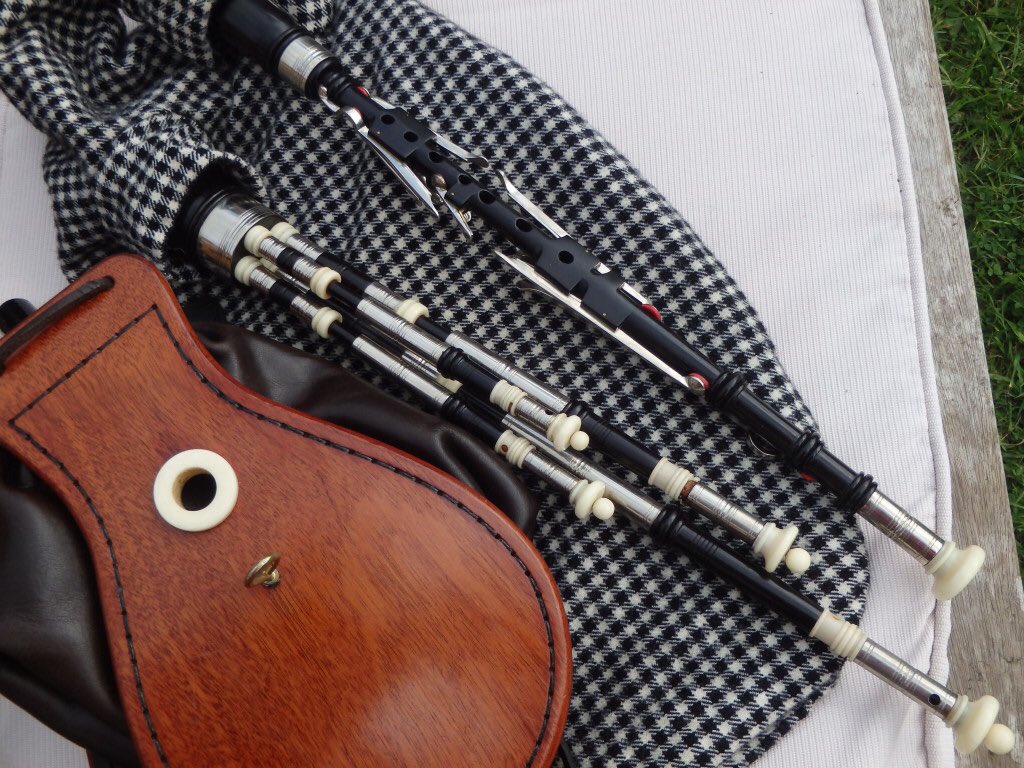
The Northumbrian smallpipes are a traditional folk instrument from Northeast England with a rich and varied history. These small pipes are known for their sweet, melodious sound, and are distinguished by their closed-finger holes, allowing for a staccato playing style unique among bagpipes.

Dating back to the 17th century, their evolution was heavily influenced by various cultural and musical trends over the centuries. The modern version, with its distinctive closed chanter and keyed system, emerged in the early 19th century, thanks to innovations by pipemakers such as John Dunn and Robert Reid.

Throughout its history, the Northumbrian piping tradition has been shaped by many notable musicians. One key figure is Billy Pigg (1902-1968), renowned for his virtuosic playing and composition. Pigg’s influence on the Northumbrian piping repertoire is profound, with many of his compositions still widely played today. He was a central figure in reviving interest in the instrument during the mid-20th century, often performing at folk festivals and on radio broadcasts.

Another significant figure is Richard Butler, an old work colleague and friend, who served as the Duke of Northumberland’s Piper for four decades until his death in 2022. I remember watching and listening to Richard practice most lunchtimes, while I munched on my date and cream cheese stottie, drinking tea from one of the lab’s old enamel mugs. Butler was an esteemed piper and educator, known for his deep knowledge of the instrument and his contributions to Northumbrian music. He played at many high-profile events, including performances for British royalty, as well as producing educational materials for the pipes, ensuring the tradition’s continuation through his teaching and published works. 

The history of the Northumbrian smallpipes is marked by the role of ducal piper at Alnwick Castle. This tradition dates back to the 18th century, with pipers playing at various ceremonial and public functions. Notable past pipers, before Richard, include William Green and Tom Clough, both of whom made significant contributions to the repertoire and technique of Northumbrian piping. Andrew Davison is the current official Piper to His Grace the Duke of Northumberland, and Chairman of the Northumbrian Pipers’ Society.

Kathryn Tickell, a modern-day ambassador of the Northumbrian smallpipes, has further elevated the instrument’s profile. Born in 1967, Tickell learned to play from her family and local pipers. Her career has seen her perform internationally, collaborate with various artists, and release numerous acclaimed albums. Tickell’s contributions have been pivotal in bringing the Northumbrian pipes to new audiences and ensuring their ongoing relevance in contemporary music. Her work with Sting and Jon Lord has always been favourites of mine, but it’s her ability to blend the pipes with more modern instruments and the human voice that pleases me the most.

The Northumbrian smallpipes continue to build their storied history, enriched by the contributions of many talented musicians including Ian Gelston, Alice Robinson, and Andrew Lawrenson. From the early pipers who developed the instrument to modern virtuosos like Kathryn Tickell, the tradition continues to thrive, bridging the past with the present. Richard Butler’s legacy exemplifies the dedication required to preserve and advance this unique musical tradition.

When I get a moment, I will update this post with links to some of my favourite pieces.