
Zohran Mamdani’s victory in the Democratic primary for New York City mayor represents a seismic shift in the city’s political landscape, one that carries reverberations far beyond municipal governance. At just 33 years old, the Queens-born state assemblyman and self-described democratic socialist toppled former Governor Andrew Cuomo, the establishment favorite, signaling a generational and ideological realignment within the Democratic Party.
Grassroots Power vs. Establishment Legacy
Cuomo entered the race with formidable credentials: a deep political network, endorsements from figures like Bill Clinton and Michael Bloomberg, and at least $25 million in Super PAC funding. Yet, despite this financial and institutional advantage, his campaign floundered. Critics pointed to a lackluster message, lingering baggage from his 2021 resignation amid sexual harassment allegations, and a scared reluctance to engage broader audiences.
In contrast, Mamdani surged from near anonymity (0–1% in early polling) to command 43.5% of first-choice votes on primary night, an astonishing ascent driven by a youth-led, grassroots coalition. Supported by endorsements from Bernie Sanders and Alexandria Ocasio‑Cortez, his campaign tapped into the deep well of dissatisfaction over rising housing costs, stagnant wages, and a city increasingly and wildly unaffordable.
Policy Vision: Progressive Ambition or Overreach?
Mamdani’s policy platform, ambitious in scope, centers on affordability and public service transformation. Proposals include a rent freeze for stabilized units, fare-free buses, universal childcare, and municipal grocery stores, all paid for through new taxes on corporations and high-income earners.
While appealing to a generation struggling with inflation and economic precarity, these ideas have drawn scrutiny over execution feasibility, budget implications, and economic impact. Wall Street and real estate interests have voiced concern, warning of tax burdens and regulatory uncertainty.
The Ranked-Choice Factor and Cross-Endorsements
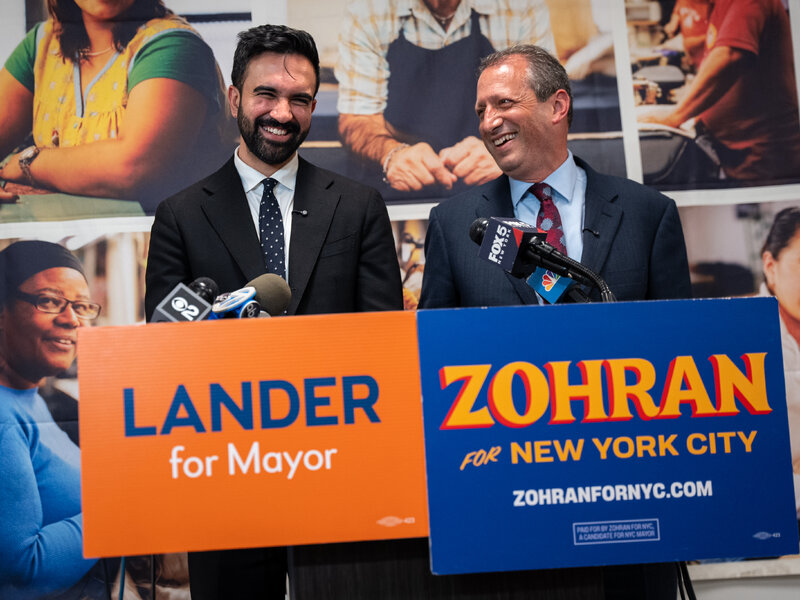
New York’s ranked-choice voting system played a decisive role. Mamdani strategically formed cross-endorsements, most notably with Brad Lander, who garnered around 11% of the vote, to position himself as a second-choice favorite. Analysts widely agree this will likely cement his victory once second-round, and later votes are redistributed.
Navigating Controversy: Israel, Palestine, and Identity
Despite the momentum, Mamdani’s campaign has not been immune to controversy. His outspoken criticisms of Israeli policies, including references to the “globalization of the Intifada” and support for Boycott, Divestment, Sanctions (BDS) a Palestinian-led movement for freedom, justice and equality, have drawn accusations of antisemitism, particularly in a city with one of the largest Jewish populations outside Israel. He has sought to clarify his statements, asserting his opposition to hate and his commitment to civil rights. The controversy may crystallize how future general election opponents choose to attack, while also spotlighting internal tensions within urban progressive politics.
Cuomo’s Concession, so What Comes Next?
On primary night, Cuomo recognized that the narrow path to victory was irrevocably closed, conceding to Mamdani, and acknowledging the campaign’s resonance with younger voters. Notably, he left open the possibility of running in the general election on an independent ballot line, a move that could fracture the Democratic vote and complicate the race.
The Broader Implications for the Democratic Party
Mamdani’s emergence marks a broader ideological turning point within the Democratic Party. It highlights the growing influence of progressive, youth-driven politics willing to challenge entrenched power. His candidacy echoes similar movements in other U.S. cities where left-leaning candidates have flipped local offices, redefining policy scopes on housing, climate, social services, and racial justice.
For Democrats nationally, New York is a critical test case: can a bold progressive agenda resonate with urban voters in a general election? And can party unity be maintained while platform demands intensify?
November Showdown: A Crowded Field
If Mamdani completes the nomination, he heads into a three‑way fall election against the independent incumbent Eric Adams, whose legal troubles and declining approval ratings have damaged his standing, and Republican Curtis Sliwa. The contest’s contours are stark: progressive change vs status quo, left coalition vs fractured moderate support, and a referendum on policy versus personality.
A Turning Point in Urban Governance
The Democratic primary in New York City was more than a local race, it was a referendum on the future direction of American progressive politics. Mamdani’s success, powered by grassroots strategy, ranked-choice prowess, and a sweeping vision for economic justice, exposes the vulnerabilities of establishment politics and signals a generational handoff within the party. As ranked ballots are fully tallied, and the fight shifts to November, New Yorkers and national observers will be watching closely. Is this the beginning of a progressive resurgence, or a fleeting moment in a cyclical political saga?





 The Rowanwood Chronicles