
Kitchen Table Poly: The Joy, the Chaos, and the Crumbs in Between

As you ease into the weekend, here’s a cheerful wander through the world of kitchen table poly (KTP), where coffee meets connection, and everyone’s feelings try to fit around the same plate of muffins.

Juggling hot pancakes while trying not to burn the syrup
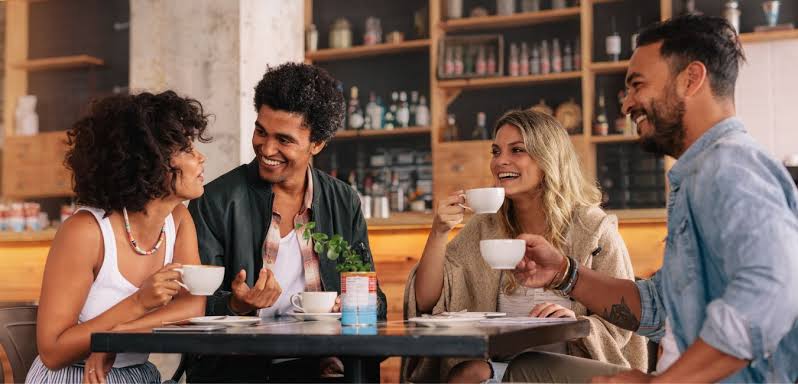
There’s a certain romantic ideal in polyamory known as kitchen table polyamory – the notion that everyone in the constellation can sit around the same table, drink coffee, and chat comfortably about their shared lives. In theory, it’s beautiful: all hearts open, no secrets, no tension, just the gentle clinking of mugs and the hum of consensual love. In practice, however, it’s more often like juggling hot pancakes while trying not to burn the syrup.

The term itself conjures homey images: sunlight streaming through a window, laughter echoing off tile, someone passing the butter while another partner mentions a date night plan. It’s the poly version of a Norman Rockwell painting, if Rockwell had painted metamours and handled complex emotional logistics instead of fishing trips. At its best, it is that warm and easy, a place where communication feels natural and everyone knows they’re safe and seen.

But here’s the catch: kitchens are also where the mess shows. Dishes pile up, crumbs multiply, and sooner or later, somebody knocks over the orange juice of unspoken jealousy. What looks like “just coffee” might also include passive-aggressive sugar stirring or the subtle choreography of seating choices, because while the theory is “we’re all adults who love each other’s happiness,” the reality can be “I adore your joy in principle, but could we not hold hands over the croissants?”
KTP isn’t the moral high ground
The beauty of kitchen table poly is the shared humanity of it. It’s the belief that love isn’t a competition, that community is more sustaining than secrecy. It thrives when people are genuinely curious about each other, not threatened by comparison. It’s the pleasure of knowing that your partners’ partners are good to them, and sometimes even becoming friends who can roll their eyes affectionately about the same endearing quirks. (“He alphabetizes the spice rack again? Adorable, right?”)

But not everyone wants to live there. Some prefer “parallel poly,” where the metaphorical tables are separate, perhaps linked by a hallway of mutual respect, but not by shared breakfast. That’s fine too. Kitchen table poly isn’t the moral high ground; it’s just one style of community. And even those who love it occasionally need a little solitude, a coffee mug that’s their own, a kitchen that’s quiet.

The table is for connection, not competition
Ultimately, kitchen table poly is less about proximity and more about possibility.It’s about knowing that even if life occasionally spills, there’s still room to laugh, mop it up, and pour another cup. Love, like a kitchen, works best when everyone does their part, and remembers that the table is for connection, not competition.

So pull up a chair, grab a muffin, and take a breath. The coffee’s strong, the company’s complex, and the conversation might just teach you something about the art of being human. After all, every good kitchen has both chaos and comfort, and the best ones smell faintly of trust.

Polyamory: The Questions That Never Go Away

The other day, I found myself having a familiar conversation with a friend, the kind I’ve had countless times with people curious about my relationship orientation and wondering if it might be a fit for them. It struck me that I’ve been here before, walking through the same starting points, answering the same questions. So I decided to put my thoughts into a reference piece. That way, when the topic comes up again, we can skip the “Polyamory 101” stage and dive straight into the richer, deeper conversations that matter most. With that all said, here’s how I think about the moral, ethical, and societal questions people often ask me about polyamory.

I’ve been openly polyamorous for decades now. Long enough to have seen the word move from whispered corners of niche communities into mainstream conversations, long enough to have been called both a dangerous libertine and a brave pioneer. And no matter how many workshops, blog posts, and late-night kitchen-table talks we have, the same core questions always seem to come back: Is this right? Is this fair? And what does it mean for the world we live in?

These are the moral, ethical, and societal questions about polyamory. I’ve lived with them, wrestled with them, and come to see them not as irritants, but as invitations to think more deeply about love, freedom, and responsibility.

The Moral Questions: Is It Right?
The first challenge people throw at polyamory is moral. We’ve been raised in a culture that equates “true love” with exclusive love. From fairy tales to wedding vows, monogamy is painted as the gold standard of moral romance. So when I say I love more than one person, and mean it, some people hear betrayal or moral failure.

But morality isn’t just about what’s familiar. It’s about how we treat people. I’ve always believed that love is not a finite resource; my love for one person doesn’t diminish my love for another any more than loving one child means I love the others less. In my experience, the moral litmus test for polyamory isn’t “one or many”, it’s whether everyone involved is respected, valued, and cared for.

Jealousy often gets cast as a moral signpost too. In monogamous thinking, if you’re jealous, it must mean something wrong is happening, or that love is being stolen away. In poly life, jealousy is a signal, not a verdict. It asks: What do I need? What am I afraid of? Can we talk about this? It’s uncomfortable work, but it’s moral work, the kind that builds rather than breaks trust.

The Ethical Questions: Is It Fair?
Even when people accept that polyamory can be moral, they ask about ethics, the fairness and integrity of the thing. And here, I’ll be the first to admit: it’s easy to get this wrong.

Polyamory rests on the foundation of informed consent. That’s not just a buzzword. It means that every partner knows the full truth of the relationship structure and has genuinely chosen it without manipulation or coercion. If someone’s “agreeing” because they fear losing their partner, that’s not consent, that’s survival.

It also means telling the truth even when it’s messy. Ethical polyamory is radical honesty in action: “Yes, I have feelings for someone else.” “Yes, I’m sleeping with them.” “Yes, I want to go deeper with them.” That kind of disclosure can sting, but it’s the only way this works without slipping into betrayal.

Then there’s the question of power. In polyamory, mismatched emotional maturity, financial independence, or social status can easily tilt the playing field. I’ve seen relationships where one partner held the “permission card”, and the other lived in quiet resentment. I’ve also seen polycules where new partners were treated like secondary accessories rather than full human beings. Ethical polyamory demands constant checking of those dynamics, because it’s all too easy for someone to feel trapped in what was meant to be a consensual, liberating arrangement.

The Societal Questions: What Does It Mean for the World?
Even if you sort out the personal morality and the interpersonal ethics, polyamory still sparks societal questions. Should we, as a culture, recognise polyamorous families in law? What would that mean for marriage, for inheritance, for child custody? These aren’t abstract questions when you’re raising kids with multiple committed partners, or when a hospital only recognises one “next of kin.”

There’s also the matter of public perception. Polyamory still carries stigma, enough that people can lose jobs, face custody challenges, or be ostracised from their communities if they’re open about it. That stigma bleeds into how we’re portrayed in media: either as exotic free-love rebels or as moral cautionary tales. Rarely as ordinary, loving, responsible adults living in families that just happen to be larger than average.

Public health debates make an appearance here too. Some assume that more partners mean more risk, full stop. The truth is more nuanced. In my experience, poly people, because we have to talk about sexual health with multiple partners, are often more rigorous about testing, safer sex practices, and ongoing health conversations than many monogamous folks.

And then there’s the question of the next generation. What does it mean for kids to grow up in polyamorous households? I can only speak from my own circle, but the kids I’ve seen raised in poly families tend to understand diversity in relationships from a young age. They learn that love can take many forms, that honesty matters, and that family is defined by care and commitment rather than a strict headcount.

Living the Questions
I don’t pretend polyamory is for everyone. It’s not morally superior to monogamy; it’s simply another valid form of relationship, one that requires its own skills, boundaries, and resilience. But I’ve learned that these moral, ethical, and societal questions are not hurdles to clear once and forget. They’re a constant part of the landscape.

Every time I commit to someone new, I’m asking myself: Is this right? Is this fair? What will this mean for the web of relationships I’m part of? Those questions don’t weaken my relationships, they strengthen them. They keep me honest. They keep me accountable.

Polyamory, at its best, isn’t just about loving more than one person. It’s about loving with more integrity, more awareness, and more intention. And in that sense, the questions aren’t a problem to solve. They’re the very thing that keeps the love alive.

The “True Love Will Change Him” Myth

One of the most persistent cultural myths about relationships is the idea that “true love” can fundamentally change someone’s nature. It appears in countless stories: the roguish bachelor who becomes the devoted husband, the restless wanderer who finally settles down, the free spirit tamed by the right partner. In the context of polyamory, this myth often takes a specific form: the belief that a happily polyamorous person will eventually abandon multiple loves when they meet the “right one.”

For many polyamorous people, this is a familiar experience. We disclose our relationship orientation clearly and early, often as one of the very first things we share. And yet, it is not uncommon to encounter potential partners who hear “I am polyamorous” not as a statement of identity or practice, but as a challenge to be overcome. The assumption lingers that love, if deep enough, will lead to conversion.

This assumption reveals more about the cultural scripts we inherit than about the people involved. Generations of romantic storytelling have reinforced the notion that the highest form of intimacy is exclusive, permanent monogamy. When polyamorous individuals do not conform to this arc, partners may experience confusion, disappointment, or even a sense of betrayal, as though a promised transformation has failed to occur.

The problem runs deeper than mismatched expectations. At first glance, polyamory appears to be a liberating and beautiful idea. Who would not want more love, more intimacy, more sources of support and joy? Yet when lived in practice, polyamory frequently exposes unresolved vulnerabilities. The experience of sharing a partner can provoke profound feelings of abandonment, inadequacy, or betrayal. For many, it becomes the first time they must directly confront the reality of their attachment style and emotional insecurities.

This is one reason polyamory is often misunderstood. It is not simply “more love,” nor is it an easy alternative to monogamy. It is a demanding practice that requires rigorous self-examination, radical honesty, and a capacity for discomfort. Jealousy, fear, and insecurity do not disappear in polyamory; they are amplified. To remain in the dynamic requires bravery, and a willingness to name and work through these challenges.

It also requires discipline. Not only sexual discipline, though that is critical, given the need for careful vetting and consideration of potential partners, but emotional discipline. Communication skills become the backbone of any polyamorous structure. And here, one of the most sobering truths emerges. 

“The quality of a polycule is directly proportional to the communication skills of its least emotionally secure member; or, if you prefer something gentler, less absolute, more accepting – a polycule’s health depends less on its most skilled communicator, than on how well its least secure member feels heard.”

If even one person in the network is unable to express needs, set boundaries, or listen without defensiveness, the strain reverberates outward. This is why intentional partner choice matters. Attraction and chemistry may open the door, but sustainability depends on emotional maturity and the capacity for dialogue. Without these, polyamory can quickly collapse into chaos and harm, easily mistaken for selfishness or exploitation disguised as “freedom.”

The myth of “true love will change him” bypasses this complexity. It reassures us that we will not need to face our own insecurities, because eventually the polyamorous partner will conform to a monogamous ideal, but this reassurance is hollow. The harder truth is that no amount of affection can erase a person’s fundamental orientation toward relationships. Attempting to do so often results not in intimacy, but in resentment and disillusionment.

A more grounded vision of love recognizes people as they are, rather than as we wish them to be. True love, in this light, is not about rewriting someone’s story, but about choosing to join it. It requires clarity, communication, and the courage to engage with the difficult emotions that inevitably arise. Polyamory, when practiced with integrity, is not a rejection of love’s depth, but an expansion of its possibilities, provided those involved are willing to meet the demands it places upon them.

Ultimately, the challenge of polyamory is also its gift. It forces participants to confront their own fears, to sharpen their honesty, and to expand their capacity for empathy. It strips away the comforting illusion that love can be a simple cure-all. In doing so, it offers a different, and perhaps more radical, lesson: that love is not about changing another person, but about embracing them fully, while also accepting the work required to embrace oneself.

An idea that’s been waiting since 2019 is finally ready to come into the light. PolyConnections will be a shared space for stories and reflections from across the polyamorous community: a place to write, to connect, and to listen. It’s been a long time coming, but the conversation is about to begin.

Shared Spaces, Different Rules: When BDSM, Swinging, and Polyamory Collide

This has been an ongoing topic of conversation among a number of my friends and community members over the last year. While this post is not the definitive answer, I hope it helps continue the discussion.

Merged doesn’t have to mean blurred

More and more, those of us in the BDSM, polyamory, and swinger communities are finding ourselves in overlapping spaces: at events, online, and even in our relationships. What used to be distinct subcultures with their own values and norms is starting to feel like one big, blended scene.

For some, this is energizing. For others, it’s disorienting.

The truth is, we don’t all approach relationships, power, or sex the same way. And while there’s room for overlap, there’s also the risk of misunderstanding, boundary friction, or even cultural erasure if we don’t approach this merger with care.

So let’s talk about what we’re gaining, and what we could lose, when our communities start to share the same space.

Why the Overlap is Happening

The convergence of these communities isn’t random. We all operate outside traditional relationship structures and sexual expectations. We value consent, self-determination, and authenticity.

And let’s be honest; finding safe, welcoming spaces can be hard. It makes sense that events and groups are becoming more collaborative and open to cross-community participation.

Many people don’t want to pick just one label. A polyamorous submissive might enjoy occasional swinger parties. A Dominant may explore romantic non-monogamy. Shared spaces let people experiment and connect without feeling boxed in.

On a practical level, venue access, costs, and organizers’ energy also drive collaboration, yet collaboration only works when we recognize how different our needs and expectations can be.

What We Gain by Coming Together

💬 Bigger, Stronger Communities
Merging creates larger, more resilient networks. Whether we’re sharing resources, building friendships, or pushing for social recognition, we’re stronger together.

📚 Learning Across Lifestyles
Each community has something to teach. BDSM offers detailed consent frameworks and boundary-setting. Polyamory brings emotional literacy and communication models. Swingers know how to host low-pressure sexual spaces. Shared wisdom benefits us all.

🎉 More Inclusive Events
Workshops, discussion nights, and play parties with room for cross-community participation give people a chance to explore without committing to a label.

📢 Amplified Visibility
Speaking together helps shift the narrative about non-normative relationships and sexualities. We challenge stereotypes more effectively when our voices are united.

But There Are Real Risks, Too

⚠️ Different Cultures, Different Norms
Each community operates on its own foundation:

  • BDSM: Structured power dynamics, not necessarily tied to sex or romance.
  • Swinging: Primarily recreational sex, often in couple-based social networks.
  • Polyamory: Emotional intimacy, often with long-term relational goals.

These are more than an orientation or styles, they’re cultural languages. Colliding without translation causes friction.

🚧 Consent and Boundary Confusion
In BDSM, consent is explicit and often negotiated in advance. In swinger circles, casual physicality may be expected. Poly meetups might center on emotional connection, not touch. If expectations aren’t clear, people get hurt, even unintentionally.

🏠 Loss of Dedicated Spaces
Some BDSM dungeons now carry sexual expectations introduced through swinger norms. For those who use BDSM as a non-sexual, power-centered expression, that shift can feel deeply alienating.

🧩 Risk of Exclusion
When merged spaces cater mostly to those who fit all three categories, others get pushed to the edge. An asexual Dominant, or a solo polyamorous person uninterested in parties, may not find what they need in these new environments.

🤷‍♂️ Public Misunderstanding
Outsiders already conflate BDSM, polyamory, and swinging. Merged visibility can increase confusion: polyamory gets reduced to casual sex, BDSM gets sexualized, swinging gets dismissed. Nuance is lost.

So How Do We Do It Right?

Clarity Above All
Be transparent. Is this a BDSM workshop with room for poly topics? A swinger party with structured scenes? People need to know what they’re walking into.

Consent Is More Than a Buzzword
It’s not just about sex or play – it’s about everything. Don’t assume touch, energy, or conversation is welcome without agreement.

Shared Events, Distinct Zones
Merged doesn’t have to mean blurred. Offer spaces within events that honor BDSM protocol, support poly dialogue, or provide swinger-friendly play. Let people choose their comfort zones.

Center Marginalized Voices
Make space for the folks who get overlooked – queer, trans, neurodivergent, BIPOC, disabled, and asexual folks deserve to feel included in merged scenes, too.

Final Thoughts

The blending of BDSM, swinging, and polyamory is happening, whether we plan for it or not. The question is: will we do it with care?

We don’t need to erase our boundaries to share space. We just need to see each other clearly, communicate well, and build with intention.

If we do that, we create a community that’s not only broader; but deeper, richer, and more resilient than any of us could build alone.


Suggested Tags

#BDSM #Polyamory #Swingers #Community #ConsentCulture #NonMonogamy #EthicalNonMonogamy #PowerExchange #RelationshipAnarchy #RespectTheDifferences #MergedSpaces #AltSexualities #NavigatingBoundaries #FetLifeVoices

A Polyamory Field Guide for Confused Monogamists

Because love is wild, weird, and occasionally involves group calendars.

Welcome, curious traveler. If you’ve stumbled upon this guide, it likely means someone you know: your co-worker, yoga teacher, ex, cousin, or that barista with the undercut and a quiet glow, has outed themselves as polyamorous. And you? You’re confused, intrigued, possibly mildly panicked. Never fear! This field guide will gently walk you through the exotic, misunderstood, and thoroughly lovable creature that is the polyamorous human – so, let’s begin.

🧭 Species Overview: What Even Is a Polyamorous Person?
Scientific name
Homo relatus plurimus
Common name
: “Poly person,” “Polycule member,” “My girlfriend’s girlfriend’s boyfriend”

These marvelous mammals form consensual, often complex, romantic or emotional bonds with more than one partner at a time, and they do it on purpose. This is not cheating, drama, or a mid-life crisis wrapped in a dreamcatcher. This is a relationship orientation, NOT a lifestyle, based on honesty, consent, and surprisingly detailed calendar invites.

🔍 Identification Tips: How to Spot a Polyamorous Person
Poly people often blend in with the general population, but subtle signs include:
• An uncanny fluency in emotional vocabulary (“We’re having a boundaries conversation later tonight!”).
• Casual references to more than one romantic partner without a trace of scandal.
• Slightly glazed eyes when explaining relationship structures to their monogamous friends.
• A tote bag with a slogan like “Love is not a limited resource,” or “Jealousy is a feeling, not a crime scene.”

🛠️ Care and Handling: Interacting With a Polyamorous Person
 DO:
• Ask questions respectfully if you’re curious.
• Understand that their love life isn’t about you.
• Remember that polyamory is about choices, not deficiencies.
• Recognize that it’s not “open season” on their relationship.

 DO NOT:
• Say, “I could never do that” as if it’s a moral high ground.
• Ask, “Which one is your real partner?”
• Suggest therapy unless they’ve asked you for referrals.
• Assume they’re hitting on you. Seriously. They’re busy.

📅 Mating Rituals and Social Habits
Polyam folks engage in a variety of rituals, including:
Metamour brunches (bonding with their partner’s partner over pancakes and mutual respect).
Group text diplomacy, where emotional logistics rival that of small governments.
Cuddle piles – think platonic affection meets adult slumber party.
Relationship check-ins that sound like performance reviews, but with more hand-holding.

They are generally very adept at managing emotional needs, being transparent, and decolonizing their expectations of romance. Wild, I know.

🧠 Cognitive Traits: What’s Going On in Their Big Open Minds? 
Common traits include:
• A belief in abundance over scarcity.
• A deep commitment to radical honesty.
• Advanced communication skills developed through trial, error, and books with titles like The Ethical Slut, polysecure, and More Than Two (we don’t talk about the drama around that one).
• Often hold the revolutionary idea that different people meet different emotional needs, and that’s… fine?

🦺 Safety Precautions
Approaching a polyamorous person does not put you at risk of:
• Losing your spouse (unless you’re already halfway there).
• Being dragged into a cult (unless it’s the cult of clear communication).
• Having to talk about your feelings (okay, maybe a little).

🗣️ Frequently Asked Questions (FAQ)
Q: So do you all just sleep together?

A: Sometimes! But also sometimes we just eat noodles and talk about boundary renegotiation. It’s not a porno, Karen.

Q: What if you fall in love with someone else?
A: That’s kind of the idea. Love isn’t subtraction – it’s multiplication.

Q: Isn’t it just a phase?
A: So is high school. Doesn’t mean it wasn’t real.

Q: Can I be poly too?
A: Of course! If you’re willing to unpack your social conditioning, communicate honestly, and manage three anniversaries, a birthday, and a shared Google Doc titled “Feelings.”

🎉 Conclusion: Love Is Weird. That’s the Point.
At the end of the day, polyamory isn’t about being cooler, smarter, or more emotionally evolved than anyone else. It’s just one way, among many, to approach human connection. So if you meet a polyamorous person, don’t panic. Don’t assume. Just listen. They’re not here to convert you. They’re just living a life that works for them.

And in the grand safari of love, that’s something to admire, even if you prefer your own cozy monogamous tent. Now if you’ll excuse us, we’ve got a potluck at 7pm, and a relationship summit at 9pm.

Living the SoPoRA Life: A Light-Hearted Take on Choosing Autonomy

Ever feel like your life is an endless RSVP? Invitations roll in: “Come to this event! Join me for that activity! Let’s grab a drink!” It’s lovely to be included, truly. But what’s less lovely are the interrogations that follow when I politely decline.

“What are you doing instead?”
“Are you feeling okay?”
“Wait… who’s more important than me?”

Ah, the joys of boundary-setting in a world that thrives on FOMO and social expectations.

This isn’t my first rodeo with the honesty vs. transparency debate, but today I want to shift the focus. It’s not about what I say to others – it’s about how I choose to live my daily life. For me, it’s far simpler (and far more satisfying) to opt in when I genuinely want to connect than to constantly opt out to preserve my space.

If the world were a little more straightforward, I’d label my lifestyle as that of a Solo Polyamorous Relationship Anarchist (or SoPoRA for short). What does that mean? It’s a big mouthful, sure, but at its core, it’s a fancy way of saying I value my autonomy and independence while cherishing meaningful, non-hierarchical connections with others.

Solo Polyamory is all about embracing the beauty of being my own primary partner, while maintaining multiple, consensual relationships. It’s not about having less love – it’s about loving without turning my life into a game of musical chairs, where one partner automatically claims the “primary” seat.

And Relationship Anarchism? That’s the freedom to reject societal scripts about how relationships should work. No automatic rankings of romantic partners above friends. No forcing connections into neat little boxes labeled “partner,” “friend,” or “fling.” Instead, each relationship is uniquely crafted based on mutual agreement and organic growth.

Now, before you picture me as some lone wolf prowling around in emotional isolation, let me clarify: this choice doesn’t mean I don’t value connection – it just means I thrive on creating it without compromising my independence. 

But what this looks like practically, I hear you ask? Well, I love my space – my home is my sanctuary, and it’s where I recharge. I set firm personal boundaries to maintain my autonomy – this isn’t selfish – it’s self-care. Communication is my superpower – I prioritize honesty, consent, and mutual understanding with anyone I’m involved with.

Solo Polyamory and Relationship Anarchism require a level of self-awareness and emotional intelligence that can feel like a full-time job some days. But the rewards? Oh, they’re worth it. There’s a joy in living authentically, in crafting connections that adapt as people grow, and in knowing every “yes” you give is genuine.

So, the next time I politely decline an invitation, know this: it’s not about you. It’s about me choosing to live a life that feels full, free, and fulfilling – one beautifully crafted, consensual connection at a time.

My Favourite Polyamory Quotes

I am polyamorous, and have been for many a year. I cultivate and maintain a network of secure attachment relationships with people who are also polyamorous, who often have multiple partners of their own.  I prefer to date and partner with experienced poly people, and occasionally someone crosses my path that feels so aligned that this policy goes out the window, and I get to date a polynewbie.  

There will be many more posts on relationships in the 21st Century, and in the meantime, this one is where I will be sharing some of my favourite poly quotes, adding to it as the months go by. 

Please be aware, while I am happy to discuss relationship dynamics, I am not interested in any negative commentary, and will block any source of unthinking, rude or obnoxious messages. 

I hope you enjoy these thoughts. I tend to use the Canadian English spelling of polyamorous, but when posting quotes I use exactly what and how it was published. 

The quality of a polycule is directly proportional to the communication skills of its least emotionally secure member.
Or, if you prefer something gentler, less absolute, more accepting.
A polycule’s health depends less on its most skilled communicator, than on how well its least secure member feels heard.
” – @chrismcbean.bsky.social

Polyamory (noun): when multiple people are plotting to care about you, a wholesome conspiracy” – @PolydotLand

Polyamory is NOT endless orgies, nor is it cuckoldry with extra steps.

Polyamory is two idiots walking down the street holding hands debating with one another about how each of them should ask out their respective crushes, and then neither of them following through.” – @5aximus

Solo polyamory helps me go at a comfortable pace. Now that I’m no longer entering relationships with a particular goal in mind, like marriage or cohabitation, I’m not in a rush to find out whether a partner can give me those traditional markers of relational success/fulfilment.” – @unapolygetic

Your significant other is allowed to have meaningful relationships with other people. Your significant other is allowed to get things from those relationships that they don’t get from you. Demanding you be the only source of pleasure and support in their life is possessive and toxic.” –  @LadylsAVamp_

 “I was asked, ‘who is your best friend?’ I don’t know. I don’t use language like that anymore. It doesn’t fit. I have friends that hold the keys to different doors of my personality. And some open my heart. Some my laughter. Some my sin. Some my civic urgency.” – @abgljoe 

One of my favourite challenges posed by polyamory lies in its potential to undermine the idea that women are ‘rivals’ for the attentions of men. Hey, what if we are ‘collaborators’ in loving and supporting our mutual partners? I know, wild eh …” – @carriejenkins 

Solo polyamory is finding it more enjoyable to opt in to spending time with people as opposed to opting out to get my own space.” – @PolyamAwareness

Relationships fail when people take their own insecurities and project them as their partner’s flaws.”- @stevemaraboli