
A Municipal Remedy: Why North Grenville Should Open Its Own Healthcare Centre

In North Grenville, the demand for primary healthcare has long outpaced the available supply. While the Rideau Crossing Family Health Clinic has served the community admirably, it seems to have reached its physical and staffing capacity. With a growing population, and increasing concerns over access to primary care, it’s time for the Township of North Grenville to consider a bold, but practical move: establish its own municipally-operated healthcare clinic.

This is not an untested idea. Across Canada, municipalities are taking healthcare into their own hands – literally. In Colwood, British Columbia, the city made headlines in 2023 when it became the first in the country to hire family physicians directly as municipal employees. Offering job stability, pensions, and administrative support, Colwood removed many of the barriers that deter physicians from entering or staying in primary care practice. It wasn’t about competing with existing private clinics, it was about ensuring no resident went without a family doctor.

Orillia, Ontario, is exploring a similar strategy. Recognizing that nearly 25% of the region lacks access to a primary care provider, city councillors there are considering opening a municipal clinic and hiring physicians as city staff. Their aim is to enhance, not undermine, the local healthcare network by filling a gap that traditional models are no longer meeting.

In Manitoba, rural communities like Killarney-Turtle Mountain are actively recruiting international physicians and managing their relocation as part of a municipally driven recruitment strategy. These towns have realized that waiting for provincial solutions is no longer viable. Meanwhile, in Huntsville, Ontario, a physician incentive program funded by the town is already yielding results, with new doctors signing on to help address longstanding shortages.

North Grenville has a chance to follow this growing municipal trend. Simply encouraging more physicians to join the private sector won’t be enough, there’s nowhere for them to go within the Township. A municipally-operated clinic, built with a collaborative mindset, and not as competition, can complement existing services while expanding capacity.

Such a clinic could offer a modern team-based care model that includes nurse practitioners, physician assistants, social workers, and administrative staff, all working under the umbrella of the municipality. With support from provincial and federal programs such as Ontario’s primary care transformation funds or the federal Foreign Credential Recognition Program, North Grenville could create a sustainable and forward-looking solution tailored to its own needs.

How to Move Forward: A Practical Path for the Township
To begin, North Grenville’s municipal council could establish a Healthcare Services Task Force to study local demand, identify gaps in coverage, and recommend a viable service delivery model. This task force should include community health experts, residents, and local politicians.
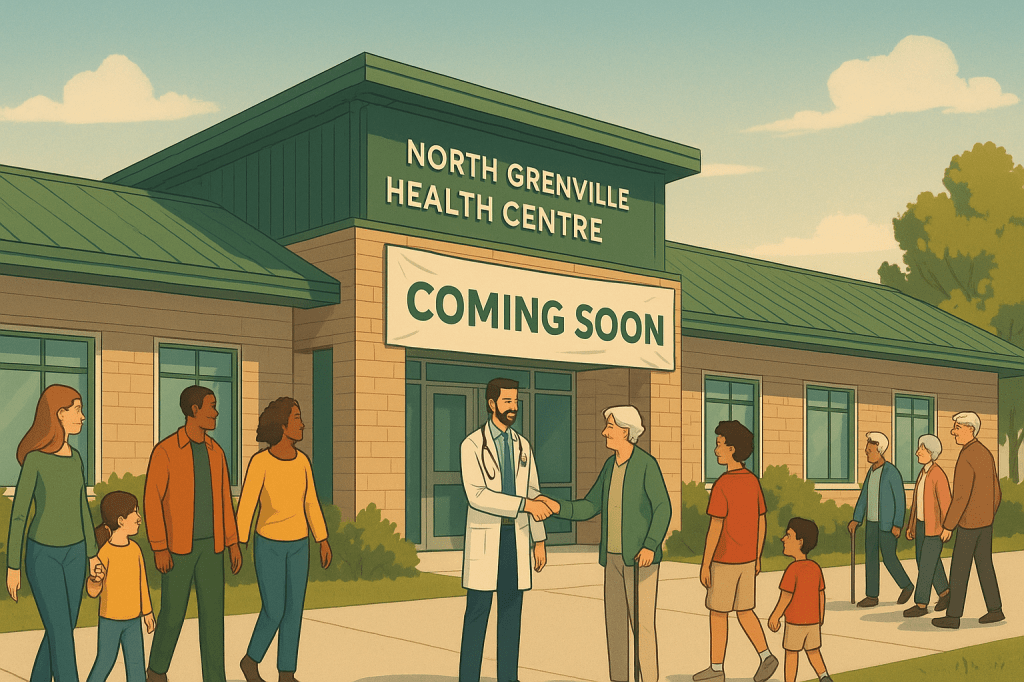
Next, the Township should apply for funding through Ontario Health’s community-based primary care programs, and the federal government’s health human resources strategy. Partnering with the local hospital, regional health teams, and post-secondary institutions could support the recruitment of new healthcare professionals, including recent graduates and internationally trained physicians.

Land acquisition or repurposing of an existing municipal facility could provide a location, with design input ensuring accessibility, environmental sustainability, and integrated team care. North Grenville does have the amazing resource of the Kemptville Campus, with one of its strategic pillars being “Health and Wellness”. The Township could also offer incentives such as relocation grants, housing support, and flexible hours to make municipal employment attractive to prospective staff.

Finally, a clear communications strategy should be launched to explain that the goal is not to replace or compete with existing providers, but to enhance and expand healthcare access in underserved areas and improve outcomes for all residents.

It’s time to stop waiting and start acting. Our citizens deserve timely, reliable healthcare. Let’s build it, right here at home.

Sources
https://tnc.news/2024/12/26/b-c-city-hiring-family-doctors-as-municipal-government-workers
https://barrie.ctvnews.ca/orillia-could-hire-family-doctors-to-create-municipal-clinic-1.7173907
https://www.winnipegfreepress.com/breakingnews/2024/04/19/diagnosis-critical-desperate-manitoba-municipalities-recruiting-doctors-on-their-own
https://barrie.ctvnews.ca/incentive-program-attracts-new-physicians-to-huntsville-to-address-shortage-in-primary-care-1.7093138
https://www.canada.ca/en/employment-social-development/news/2025/03/the-government-of-canada-is-investing-up-to-143-million-to-help-address-labour-shortages-in-the-health-sector.html

A Welcome with Questions: What Dr. Kaur’s Arrival Reveals About North Grenville’s Physician Incentive Strategy

Ontario is facing a growing shortage of primary care physicians, leaving millions of residents without regular access to a family doctor. This crisis is particularly acute in rural and small-town communities, where aging populations and physician retirements have widened care gaps. In response, municipalities across the province are adopting innovative strategies to attract, recruit, and retain doctors. These include financial incentive programs, housing and relocation support, flexible practice models, and community integration initiatives aimed at making smaller communities more appealing.

So, the arrival of a new physician in a small Ontario town is typically a cause for celebration. Access to primary care is under increasing pressure across the province, and communities like North Grenville work diligently to recruit and retain family physicians. Thus, when Mayor Nancy Peckford announced the addition of Dr. Pawandeep Kaur to the Rideau Crossing Family Health Centre in Kemptville, it was a moment of optimism.

However, a closer examination of the circumstances surrounding Dr. Kaur’s recruitment reveals complexities that warrant further scrutiny, particularly concerning the application and effectiveness of North Grenville’s Family Physician Incentive Program.

Dr. Lavitt’s Brief Tenure
Dr. Samantha Lavitt joined the Rideau Crossing Family Health Centre in June 2024 as part of the municipality’s North Grenville Primary Care Incentive Program. Her arrival was heralded as a significant step forward in enhancing primary care access for the community. However, less than a year into her tenure, Dr. Lavitt announced her departure, effective June 1, 2025. The reasons for her short stay have not been publicly disclosed, but her brief tenure raises questions about the program’s ability to retain physicians in the community. 

A Seamless Transition – But Not an Expansion
To ensure continuity of care, Dr. Kaur will begin transitioning into Dr. Lavitt’s practice starting April 16, 2025, with a full handover by June 1. This overlap aligns with the College of Physicians and Surgeons of Ontario (CPSO) guidelines, which mandate that physicians provide appropriate arrangements for patient care continuity upon leaving a practice.

While this transition is commendable from a patient care perspective, it is important to note that Dr. Kaur is not an addition to North Grenville’s physician roster, but a replacement. The total number of family physicians in the community remains unchanged.

The Optics of Growth
Mayor Peckford’s announcement welcomed Dr. Kaur as “another new family doctor,” a phrase that suggests an increase in the local healthcare workforce. However, this characterization is misleading, as Dr. Kaur is filling the vacancy left by Dr. Lavitt. The use of the term “new” in this context may create a perception of growth where there is none.

Furthermore, Dr. Kaur’s recruitment is again tied to the township’s Family Physician Incentive Program. This raises questions about the program’s application. Designed to attract new physicians to underserved areas, the program appears, in this instance, to be used to maintain existing capacity rather than expand it. 

A Stepping Stone, or a Sustainable Solution?
The brief tenure of Dr. Lavitt and the subsequent recruitment of Dr. Kaur under the same incentive program highlight potential vulnerabilities in the program’s design. If physicians view the program as a short-term opportunity or a stepping stone to other positions, the community may face ongoing challenges in maintaining stable, long-term primary care services. Perhaps the program’s retention strategies may need reevaluation to ensure sustainable healthcare delivery in North Grenville? 

Moving Forward with Transparency
While Dr. Kaur’s arrival ensures that existing patients continue to receive care, the situation underscores the need for transparency in how recruitment programs are utilized. It is essential to assess whether these programs are achieving their intended goals of expanding healthcare access, and to consider adjustments that enhance their effectiveness in both attracting and retaining physicians.

As North Grenville continues to navigate the complexities of healthcare provision, clear communication and strategic planning will be key to ensuring that the community’s needs are met not just today, but in the years to come.

Sources
• Rideau Crossing Family Health Centre. “Practice Update.” rideaucrossingfhc.ca
• My Kemptville Now. “North Grenville welcomes newest physician.” mykemptvillenow.com
• North Grenville. “North Grenville Enhances Primary Care Access with Arrival of Dr. Lavitt.” northgrenville.ca
• College of Physicians and Surgeons of Ontario. “Physician Information.” register.cpso.on.ca

Building the Future: Kemptville’s Affordable Housing Vision

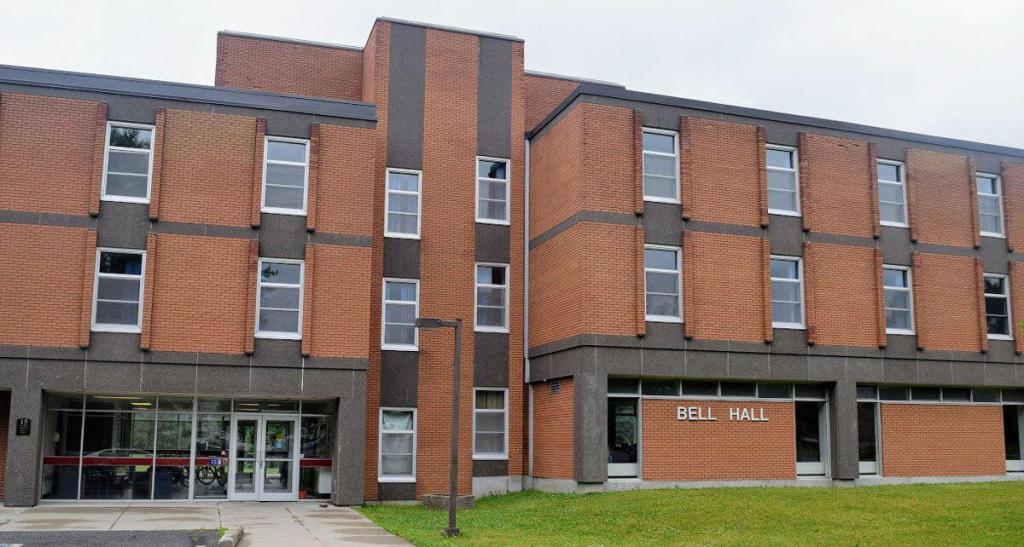
In communities across Canada, the housing crisis has become more than a policy debate, it’s a daily struggle. While costs rise and waitlists grow, the Municipality of North Grenville, just south of Ottawa, is offering a bold response. Its $25 million proposal to convert Bell Hall, a vacant dormitory on the Kemptville Campus, into more than 60 affordable rental units is both practical and symbolic, a microcosm of what’s possible when local governments lead.

The campus itself is a 630-acre hub of community, education, and sustainability activities. Once part of the University of Guelph’s agricultural network, it’s now owned by the municipality and governed by a 2021 master plan that prioritizes adaptive reuse, environmental responsibility, and deep community engagement. Bell Hall fits that vision precisely; a municipally owned, appropriately zoned, fully serviced building, already standing and waiting to be converted.

This is not a speculative plan. Developed over months with input from senior staff and not-for-profit partners, the Bell Hall project targets the real needs of North Grenville’s most vulnerable; seniors, veterans, and working families being priced out of their hometown. It offers not just housing, but stability, dignity, and a sense of belonging.

And yet, despite being shovel-ready, the proposal remains stalled in a growing backlog at the Canada Mortgage and Housing Corporation (CMHC). It’s a familiar story for municipalities across the country, many of whom are reporting delays due to limited federal processing capacity, particularly in underwriting. As federal priorities shift with the political winds, viable projects are left in limbo.

Mayor Nancy Peckford recently sounded the alarm in the Ottawa Citizen, arguing that the issue is not preferential treatment, but systemic inefficiency. Her call for transparency and faster turnaround is resonating with other small communities also ready to build. In an age where housing need is immediate, the logic is simple: when a plan meets all the criteria, and the groundwork is laid, it should move forward.

Some critics are suggesting that municipalities are just now “stepping up” on housing, but local governments have long managed zoning and development approvals. What’s new is the scale and pace of their engagement, assembling land, forming partnerships, applying for federal tools, and leading where senior governments lag.

North Grenville’s approach is part of a broader shift in small-town Canada, where pressures once confined to major cities are now spreading. The housing crisis isn’t urban anymore, it’s national. In this context, Bell Hall becomes more than a local project. It’s a test of the federal-municipal partnership that modern housing policy demands.

There’s also economic logic behind the urgency. A 2023 Deloitte report estimated that expanding community housing could add $70 billion to Canada’s GDP over five years. In places like Kemptville, where growth is manageable and materials can be sourced locally, the multiplier effects are significant with jobs, procurement, community stabilization, and reduced strain on health and social services.

And this is just one community. Rural municipalities across Eastern Ontario are facing similar challenges – aging populations, limited rental stock, and infrastructure that hasn’t kept pace. A regional alliance, or even a coordinated appeal, could elevate the urgency of rural housing and draw more attention to what’s at stake.

North Grenville is ready. Bell Hall is ready. The question is whether the federal system is ready to respond with the speed and seriousness the moment demands. If the next government wants to prove its commitment to housing, here is the perfect place to start.