
The Text Message That Wasn’t a Joke

There are moments in politics when the medium matters as much as the message. This was one of them.

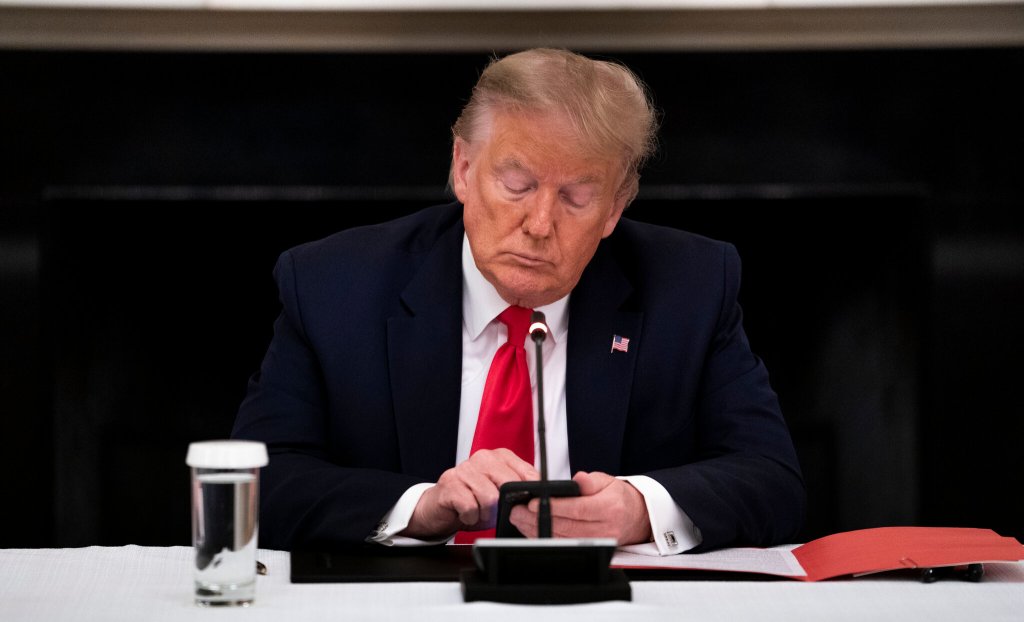
A sitting U.S. president, responding not through a press conference or diplomatic channel but via text message, reportedly informed the Prime Minister of Norway that because “his country” had not awarded him a Nobel Peace Prize, he no longer felt bound to think purely in terms of peace. Peace would remain “predominant,” he said, but other considerations were now on the table. Among them, the assertion that the world could not be secure without complete and total U.S. control of Greenland.

This was not satire. It was not a leak from a fringe source. It was confirmed by Norway’s prime minister himself.

There are several layers of gravity here, and none of them are comforting.

First, the Nobel Peace Prize is not awarded by the Norwegian government. This is not an obscure constitutional detail. It is basic diplomatic knowledge. The fact that this distinction was either ignored or weaponized tells us something important about how grievance is being framed as justification.
Second, the framing is transactional. Peace is no longer presented as a principle but as a conditional behavior. Reward me, or I will revise my obligations. That is not how stable international order works. It is, however, how protection rackets work.

Third, Greenland. Again.

The fixation is not new, but the escalation is. To move from “strategic interest” to “complete and total control” is to abandon the language of alliances and adopt the language of possession. It implicitly reframes sovereignty as negotiable under pressure, and security as something that flows from dominance rather than cooperation.

And finally, the medium. A text message.

In diplomacy, texts are casual, deniable, and easily leaked. They are the opposite of deliberate statecraft. When world-shaping claims are made this way, it suggests either a profound disregard for process or a calculated attempt to bypass it.

Neither interpretation is reassuring.

What matters most is not whether this message was intended to shock. What matters is that it normalizes the idea that peace is optional, sovereignty is conditional, and grievance can be elevated to doctrine.

Senior statesmen are meant to cool systems, not destabilize them. When texts like this become part of the public record, they do not just strain alliances. They recalibrate expectations about how power speaks.

And once expectations shift, history tends to follow.

Sources:

Official confirmation of receipt and diplomatic context
• Government statement from Norway’s prime minister confirming he received the message and its context (reply to Norway and Finland, tariff/de-escalation request).
Major international reporting on the message’s contents

• PBS NewsHour/Norwegian message reporting including the Nobel Peace Prize and Greenland quotes as first reported by PBS and confirmed by Støre.
• Reports linking Trump’s message to the Nobel Peace Prize snub and Greenland discussion from CBS News.
• The Guardian coverage describing Trump’s linkage between not winning the Nobel Prize and his policy stance toward Greenland.
• Financial Times summary of the same developments (Trump note on Nobel and Greenland).
• AP News reporting on European officials confirming Trump tied his stance on Greenland to the Nobel Peace Prize snub and escalating tensions with NATO allies.
Additional corroboration from independent news outlets

• ABC News detailed summary including parts of the text and Norway’s response that the Nobel is awarded by an independent committee.
• Jagonews24 summary confirming exact phrasing attributed to Trump’s text and the diplomatic context.  

A Tale of Two Resource Economies: Alberta vs. Norway 

When it comes to managing the wealth derived from oil and gas, two regions stand out for their contrasting approaches: Norway (pop. 5.5million) and Alberta (pop. 4.9million). Both have harnessed their natural resources for economic growth, yet their strategies for licensing and managing these resources couldn’t be more different. The way each has handled its wealth offers key lessons in resource management, long-term planning, and the risks of relying too heavily on finite resources.

Norway: A Model of Prudence and Vision
Norway’s approach to managing its oil wealth is often hailed as a textbook example of responsible governance. Since the discovery of significant offshore oil reserves in the 1960s, Norway has been careful in extracting and managing its resources. Central to its success is the Government Pension Fund Global (GPFG), established in 1990 to invest surplus oil revenues for future generations. The Norwegian government adopted the principle of saving the vast majority of oil revenues, putting them into a sovereign wealth fund, which today is worth over $1.5 trillion USD.

But the key to Norway’s success is not just the size of its fund—it’s the disciplined, long-term vision that drives its policy. The fund is managed independently of the national budget, with only around 3% of its value being used each year to support government spending. The idea is to use oil wealth as a means to stabilize the economy, particularly during times of volatility in oil prices, while preserving it for future generations. The fund is diversified across global markets, ranging from equities and bonds to real estate, and is governed by a strict set of ethical guidelines that ensure investments align with environmental and social responsibility.

What stands out most about Norway’s resource licensing is its careful approach to development. The government has been strategic in its licensing policies, issuing permits in a way that balances long-term sustainability with economic growth. By managing resource extraction with an eye on long-term returns, Norway has avoided the so-called resource curse, a phenomenon that has plagued other oil-rich nations.

Alberta: A Cautionary Tale
Alberta, on the other hand, has taken a much less consistent approach to its oil and gas revenues. Since the 1970s, Alberta has been a major player in the global energy market, thanks to its vast reserves of oil sands. The province established the Heritage Savings Trust Fund in 1976, with the goal of saving a portion of its oil wealth for future generations. However, Alberta’s approach to managing this fund has been less disciplined than Norway’s.

The fund, now valued at around $19 billion CAD, has seen inconsistent contributions and, more often than not, withdrawals to cover the province’s operating expenses. This lack of long-term planning has led to missed opportunities for growth. When oil prices have been high, Alberta has relied heavily on resource revenue to fund public services, rather than investing for the future. This short-term approach has left the province vulnerable to the fluctuations in oil prices, with little in the way of a financial cushion to soften the blow during downturns.

Alberta’s resource licensing policies have also been marked by political expediency. The province has often prioritized immediate economic growth over long-term sustainability, leading to environmental concerns and a boom-bust economic cycle. Unlike Norway, which has been cautious in licensing new projects, Alberta has pushed forward with aggressive development, particularly in its oil sands sector. While this has spurred economic activity, it has also raised questions about the environmental costs and the wisdom of rapid, large-scale extraction.

Key Takeaways
The differences between Alberta and Norway are stark. Norway’s long-term vision, driven by a carefully managed sovereign wealth fund, stands in sharp contrast to Alberta’s more reactive, short-term approach. While both have abundant natural resources, it is Norway’s commitment to future generations, disciplined fund management, and cautious resource licensing that has helped it build a sustainable economic model. Alberta, in contrast, offers a cautionary tale of how reliance on resource wealth without long-term planning can leave a province exposed to the volatility of the global energy market.

As the world’s energy landscape continues to evolve, Alberta would do well to study Norway’s example—not just in terms of saving oil wealth but also in fostering a more sustainable approach to resource extraction and development. The future of resource economies will depend on the choices made today.