When Negation Becomes the Message: The Conservative Leader’s Policy Vacuum

The second of a pair of posts to start the week off right.

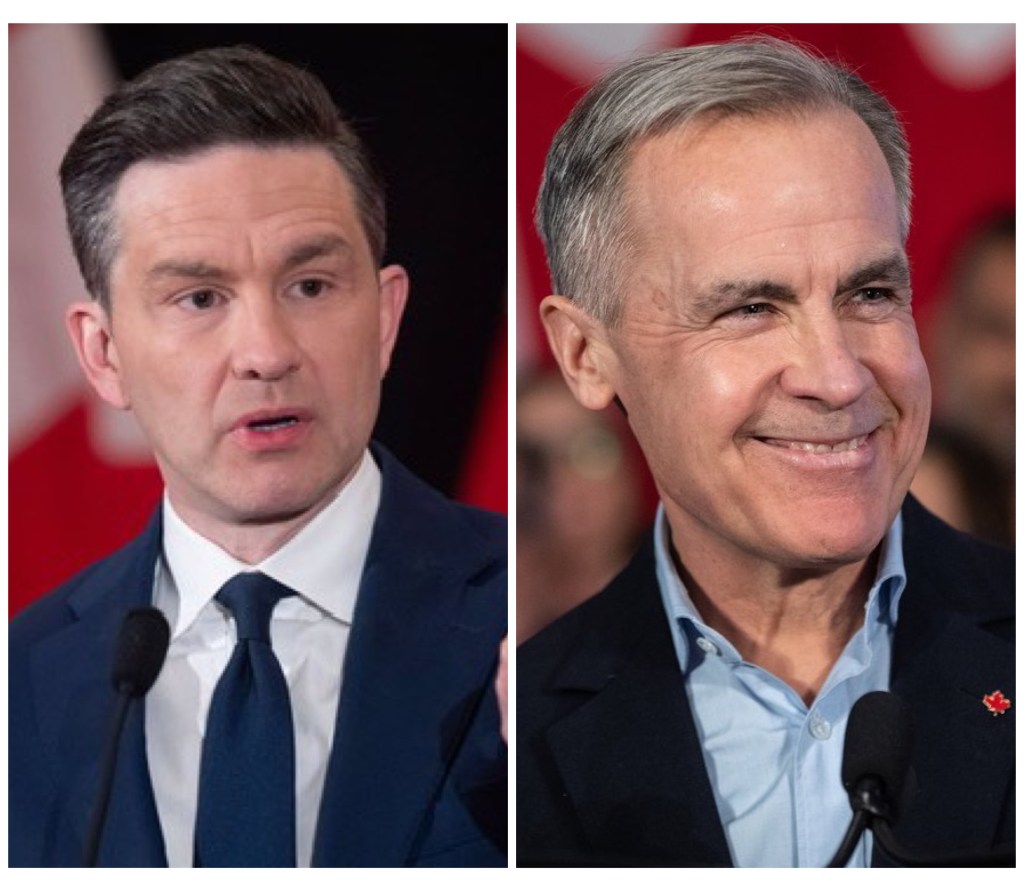
Pierre Poilievre’s recent performances in the House of Commons and in front of microphones have taken on a strikingly reactive and unanchored quality, particularly when his focus turns to blaming Prime Minister Mark Carney for Canada’s economic and institutional pressures. Rather than advancing a coherent alternative policy framework, his interventions often circle around grievance, accusation, and rhetorical repetition. The result is a leader who appears to be responding to events rather than shaping them, leaving audiences with sound bites instead of a governing vision.

A central reason Poilievre sounds rudderless is that opposition by negation is doing the heavy lifting. Attacks on Carney’s competence, motives, or globalist credentials substitute for detailed Conservative proposals on inflation, productivity, climate transition, or industrial policy. Blame becomes the message. Without clear policy markers to return to, Poilievre’s speeches drift, anchored more in tone than substance. This creates the impression of motion without direction, agitation without destination.

The resemblance to MAGA-style messaging lies less in ideology than in method. Like many populist communicators, Poilievre relies on simplified villains, emotionally charged language, and a constant framing of institutions as captured or corrupt. This approach can energize a base, but it is poorly suited to a parliamentary system where credibility is built through policy seriousness and coalition-building. When every problem is reduced to the personal failure of the leader across the aisle, the speaker forfeits the opportunity to demonstrate readiness to govern.

There is also a structural problem at play. With the Liberals close to a majority and recent Conservative defections weakening caucus morale, Poilievre’s attacks land in a context where power dynamics have already shifted. Blaming Carney for parliamentary outcomes that Poilievre can no longer meaningfully influence only underscores the imbalance. The rhetoric begins to sound performative rather than strategic, aimed at maintaining outrage rather than altering outcomes.

Perhaps most damaging is that this style leaves policy silence where voters expect alternatives. On housing, productivity, health system reform, and climate resilience, Canadians hear far more about Liberal failure than Conservative plans. In a period of economic uncertainty, the absence of a clearly articulated program makes Poilievre’s leadership feel provisional, as though the party is still campaigning rather than preparing to govern.

In that sense, the MAGA comparison is less about American politics and more about political drift. When grievance replaces agenda, leaders risk sounding unmoored, defined by what they oppose rather than what they would build. For a Conservative leader seeking to convince Canadians he is a government-in-waiting, that is not merely a stylistic problem. It is a strategic one.

Pierre Poilievre and the Erosion of Conservative Cohesion

First of a pair of posts to start the week off right. 

The recent developments within the Conservative Party of Canada have marked a notable shift in the parliamentary landscape and exposed significant strains in Pierre Poilievre’s leadership. Over the past several weeks a sequence of defections and a resignation have transformed what might once have been viewed as isolated dissent into a pattern that raises questions about internal dissatisfaction and strategic direction. Conservative Members of Parliament crossing the floor to join Prime Minister Mark Carney’s Liberal government and an unexpected resignation from a sitting Conservative MP signal more than routine political realignment; they suggest deepening fractures in the Conservative caucus under Poilievre’s leadership.

The most visible manifestation of this trend was the decision by Michael Ma, Member of Parliament for Markham–Unionville, to formally leave the Conservative caucus and join the Liberals. Ma’s move, announced in early December 2025, came only weeks after Nova Scotia MP Chris d’Entremont made the same transition, citing dissatisfaction with the direction of Conservative politics and an attraction to the Liberals’ policy approach and governance agenda. These defections have materially advantaged the Liberal government, bringing it within one seat of a majority in the House of Commons and thereby altering the balance of power in Parliament.  

In conjunction with these floor crossings, Edmonton MP Matt Jeneroux’s announcement that he will resign from Parliament rather than continue under the current Conservative leadership has intensified speculation about internal party morale. The combination of defections and the resignation of a sitting MP so soon after a general election is highly unusual; Jeneroux’s departure, though not a floor crossing, underscores wider unease among Conservative ranks and reflects strategic choices by individual MPs about their political futures.  

Commentators and political observers have read these departures as symptomatic of a broader dissatisfaction with Poilievre’s leadership style and strategic posture. Floor crossers have explicitly referenced disagreements over tone and direction, framing their moves as a response to a negative or uncompromising political approach that they believe detracts from constructive governance. D’Entremont’s statements about feeling misaligned with his party’s leadership emphasize a preference for engagement with pragmatic policy solutions over relentless opposition.  

The reaction within Conservative circles has been mixed, but often defensive. Poilievre himself has publicly rejected the notion that his leadership style should change in response to these departures, framing the defections as electoral betrayal rather than internal critique and asserting that the party must remain focused on its core commitments. However, Liberal House Leader Steven MacKinnon has suggested that Ma’s decision is not unique but part of a small but growing contingent of Conservative MPs who are “extremely frustrated” with the party’s political direction.  

In practical terms, the departure of two MPs and the resignation of another in such close succession has a tangible impact on parliamentary arithmetic and strategic leverage. With the Liberals approaching a working majority, the Conservative opposition’s ability to influence legislative business is diminished, altering the dynamics of the minority Parliament. These shifts also have implications for the upcoming Conservative leadership review, where questions about unity, electoral viability, and direction will dominate discussion among delegates and members.  

The cumulative effect of these events is not merely numerical. It reflects a broader narrative of internal tension within the Conservative Party, tensions that revolve around how best to advance policy goals, maintain electoral appeal, and manage ideological diversity within a fractured caucus. Whether these departures precipitate further exits or merely represent short-term recalibration remains an open question. What is clear is that these developments have dealt a substantive blow to Poilievre’s efforts to project unity and discipline, instead highlighting the challenges of leadership in an era of fluid parliamentary allegiances and evolving political identities.

Pierre Poilievre and the Perils of a Political Retreat: Alberta as Safe Harbour or Symbol of Stubbornness?

At time of publication, there are no hard facts that support the notion that Mr. Poilievre will be standing in an Alberta by-election to regain a parliamentary seat. Prime Minister Mark Carney has stated that if this happens he has told Mr. Poilievre that he will trigger a by-election as soon as possible, “with no games, nothing.” 

Update
Within an hour of my publishing this post, Conservative MP-elect Damien Kurek says he will resign his Alberta seat so Conservative Leader Pierre Poilievre can run in a forthcoming by-election.

With the dust barely settled on the 2025 federal election; an election that saw Pierre Poilievre’s Conservatives fall short of forming government, new political tremors are already stirring on the Prairies. In a move that has stunned even some within his party, a newly elected Alberta Conservative MP is reportedly prepared to resign their seat to make way for Poilievre to run in a by-election.

This extraordinary gesture, while perhaps well-intentioned, forces Canadians to confront uncomfortable questions about leadership, legitimacy, and political culture. When a party leader is rejected by the country, what message does it send when they attempt to cling to power through a political back door?

A federal by-election in Alberta might appear, at first glance, like a logical next step for a leader whose personal popularity in that province remains high. Yet politics is not merely about numerical safety; it’s about national optics, political narrative, and public trust. This latest development is not just a test of Pierre Poilievre’s judgment; it’s a test of how far Canadian political norms can stretch before they snap.

What Happens When the Nation Says “No”?
Poilievre led the Conservatives through a campaign in which he promised transformation, fiscal discipline, and a crusade against what he called the “gatekeepers” of Canada’s institutions. The message, while resonant with segments of the electorate, ultimately fell short. He lost not just the confidence of Parliament, but of the majority of Canadians. In Canadian political culture, such a loss carries a clear implication: it’s time to step aside.

History provides no shortage of examples. Stéphane Dion resigned promptly after the Liberals’ dismal 2008 result. Michael Ignatieff, after the Liberal collapse in 2011 and the personal loss of his own seat, departed politics altogether. Andrew Scheer, who arguably performed better by winning the popular vote in 2019, still stepped down under pressure. Erin O’Toole, ousted by caucus after a 2021 campaign that yielded no significant breakthroughs, made no attempt at a comeback.

In each of these cases, the defeated leader recognized an essential political truth: leadership legitimacy comes not just from internal loyalty, but from external validation. Without a mandate from voters, remaining at the helm, or re-entering the ring, can seem more like ego than service.

Alberta as Sanctuary or Sideshow?
Poilievre’s political instincts have long found fertile ground in Alberta. His messages about oil, taxes, and personal freedom resonate strongly in a province often at odds with the federal government. A by-election there would almost certainly be safe terrain.

But that very safety raises difficult questions. Is the goal to represent the people of Alberta, or to use them as a political life raft? Reports that a newly elected MP, who just earned the trust of their constituents, might step aside to create space for Poilievre do not sit well with everyone. It smacks of backroom deal-making at a time when Canadians are demanding transparency and authenticity.

Alberta is no longer a monolith. Calgary and Edmonton have shown a consistent willingness to elect Liberals and New Democrats, especially in urban ridings. The electorate is younger, more diverse, and increasingly skeptical of overt political opportunism. A by-election staged to rehabilitate a failed leader could risk turning a Conservative stronghold into a national conversation about political entitlement.

The Constituency Question: Representation or Rehabilitation?
At its core, a by-election is a local exercise in democracy. Constituents elect someone to speak for their needs, not to serve as a stepping stone in a national chess match. If Poilievre proceeds with this path, it raises the question: who is the by-election really for?

Canadians are not blind to political calculation. They understand strategy, but they also understand sincerity. A leader who has been rejected nationally, yet insists on staying in the House of Commons via a seat that wasn’t theirs to begin with, risks being seen as more focused on personal relevance than party renewal.

This dynamic becomes even more delicate when local party members, many of whom fought hard to win a close race, are told to stand down or step aside. A backlash could erupt not just among voters, but within the Conservative grassroots. The image of parachuting a defeated leader into a riding might not sit well in the era of decentralized political engagement and hyper-local activism.

Internal Divisions and Leadership Overhang
Poilievre’s leadership was always going to be a high-risk, high-reward proposition. His populist rhetoric electrified many disaffected voters, but alienated others, including centrist swing voters in Ontario and British Columbia. That coalition wasn’t enough to win in 2025, and now, it may not be enough to secure his continued relevance.

Within the party, the response to the by-election rumour has been mixed. Some insiders, eager for continuity, view it as a practical step. Others see it as a dangerous delay to a necessary leadership transition. A successful by-election campaign might embolden Poilievre’s loyalists, but it won’t erase the larger strategic failures of the campaign. Worse, it may divide caucus between those pushing for reform and those clinging to the status quo.

If Poilievre wins a seat, but not a second chance, the Conservative Party risks entering a prolonged period of drift, neither fully post-Poilievre nor able to rebrand under new leadership. It’s the political equivalent of suspended animation.

What Kind of Political Culture Do We Want?
At a deeper level, the question is not just about Pierre Poilievre. It’s about the kind of political culture Canadians want. Do we reward resilience at any cost, or do we expect our leaders to recognize when their time is up?

Canadian political history has respected those who step aside with dignity after defeat. They may later return, as Jean Chrétien did after a long opposition tenure, but they do so only after earning back the trust of the public and their party. A quick return via a strategically engineered by-election feels more like a workaround than a comeback.

A Moment of Reckoning
Poilievre’s possible bid to return to the House of Commons via a by-election in Alberta, on the heels of a national rejection, could set a precedent, but it may be one the country comes to regret. He may win the seat, but lose the opportunity to be remembered as a leader who put country and party renewal ahead of personal ambition.

In that sense, this is no ordinary by-election rumour. It is a moment of reckoning, for a leader, a party, and a political culture that must decide whether to move forward or loop endlessly around the gravitational pull of defeat.

Pierre Poilievre’s Fear Tactics: A Betrayal of Canadian Values

This is the first of hopefully many guest posts for this blog.

I have been heartened by the civility characterizing the 2025 Canadian Federal Election Campaign. Amid global unrest, our nation’s commitment to respectful discourse has been a beacon of hope. Until today.

Today, Pierre Poilievre crossed a line. He didn’t just resort to name-calling; he employed fear on a scale that is both alarming and disheartening.

Leadership demands vision, a comprehensive plan, and the ability to inspire confidence. A true leader assesses situations holistically, allocates resources wisely, and maintains composure under pressure.

However, Mr. Poilievre chose a different path. He took a speculative report, designed to explore potential future scenarios, and distorted its findings to paint a dystopian narrative. This manipulation wasn’t just misleading; it was a calculated attempt to exploit Canadians’ emotions for political gain.

The report in question, published by Policy Horizons Canada, is intended to inform policymakers about possible future challenges and opportunities. It’s a tool for strategic foresight, not a definitive prediction. By presenting its content as an imminent threat, Mr. Poilievre has not only misrepresented the report, but also undermined the very purpose of such forward-thinking analyses.

This approach is not just a deviation from responsible leadership; it’s a betrayal of the trust Canadians place in their elected officials. It sows unnecessary fear and distracts from constructive dialogue about our nation’s future.

I urge every Canadian to read the report themselves at Policy Horizons Canada. Understand its intent, and see through the fear-mongering.

https://horizons.service.canada.ca/en/2025/01/10/future-lives-social-mobility/index.shtml

Our future is ours to shape. Let’s base our decisions on facts, not fear.

About the Author

Angela is a Canadian veteran who was honoured to be part of the first class of women at Collège militaire royal de Saint-Jean and retired from the Canadian Forces in 1991. Since then, she has built a diverse career in industry and has owned and operated small businesses for over two decades. Her lifelong commitment to service, leadership, and community informs her thoughtful perspective on Canada’s future.

Manufactured Crisis? How Manning’s Separation Rhetoric Boosts Poilievre’s Leadership Image

Preston Manning’s recent comments suggesting that Mark Carney’s political positions might drive Western Canada toward separatism seem to serve a dual purpose: first, they reinforce long-standing Western alienation narratives, and second, they may act as a strategic setup for Pierre Poilievre to position himself as a national unifier ahead of the next federal election.

Western alienation has been a recurring theme in Canadian politics, particularly under conservative figures who have used it as a rallying point. Manning, as a former leader of the Reform Party, has deep roots in this movement. By framing Carney, who is associated with the Liberals and seen as a potential successor to Trudeau, as a threat to Western unity, Manning effectively stokes regional frustrations. However, the timing and messaging of his comments raise questions about whether they are part of a broader conservative strategy.

If Western separation is framed as an impending crisis, Poilievre can step in as the “voice of reason” advocating for national unity, all while reinforcing his commitment to Western interests. This allows him to attack both the Liberals and Carney while appearing above the fray as a leader who can keep the country together. This tactic, raising the specter of division to later present a preferred leader as the solution, is a classic political maneuver.

Additionally, such rhetoric creates a convenient contrast between Poilievre and Carney. Carney is often positioned as a technocratic elite with strong international credentials, whereas Poilievre appeals to populist, anti-establishment sentiments. By invoking Western alienation, Manning shifts the conversation away from policy and toward identity-based politics, an area where Poilievre has excelled.

Ultimately, whether this is a deliberate “red flag” operation or simply a reflection of Manning’s personal beliefs, the effect is the same: it benefits Poilievre by giving him a crisis to “solve,” reinforcing his national leadership image while deepening the perception of Liberal detachment from Western concerns.

The Ford-Poilievre Equation: Will Ontario’s Voting Patterns Derail Federal Conservative Hopes?

With Doug Ford calling a provincial election for February 27th, 2025, the bigger question is how will this move affect Pierre Poilievre’s federal election ambitions? 

The notion that Ontarians prefer to separate their provincial and federal allegiances stems from an observable—but not universal—trend in Canadian voting patterns. Historically, Ontarians have been seen as pragmatic voters who often prioritize balance in governance, particularly when one party’s policies become too dominant at one level of government. This sentiment can manifest as a counterweight strategy: if a party governs provincially, voters may feel the need to elect a different party federally to avoid over-concentration of power. However, the reality is nuanced, and many factors interplay with this perceived pattern.

Historical Context and Party Dynamics
For much of Canada’s modern political history, Ontario has served as the battleground that determines national election outcomes. Given its population and seat count in the House of Commons, the province holds disproportionate influence over which federal party forms government. Historically, there have been instances when Ontarians demonstrated a preference for contrasting party control. For example:

1995–2003: While Mike Harris and the Ontario Progressive Conservatives implemented the controversial “Common Sense Revolution,” Ontarians repeatedly supported Jean Chrétien’s Liberal Party at the federal level. Voters may have been wary of similar austerity measures being implemented federally.

2003–2018: During the Ontario Liberal Party’s 15-year rule, the federal Liberal Party experienced both opposition and government periods. However, the Stephen Harper years (2006–2015) saw Ontarians lean Conservative federally, even while backing the Liberals provincially—a testament to their selective pragmatism.

Doug Ford and Ontario Politics
Doug Ford’s premiership has been polarizing. His government’s handling of issues like healthcare, education, and pandemic management has garnered both staunch support and fierce criticism. A victory in the upcoming February 27th election would reinforce Ford’s leadership in Ontario and demonstrate voter confidence in his provincial policies. However, his association with the federal Conservative Party—though unofficial—could complicate federal dynamics.

Critics argue that Ford’s policies, including his cuts to social programs and controversial land-use decisions, such as opening portions of the Greenbelt for development, might alienate centrist Ontario voters from Pierre Poilievre’s federal Conservative Party. Many Ontarians may see the potential of a Conservative majority at both levels as a risk to maintaining a balanced political environment, especially if Ford’s policies are seen as misaligned with their values.

Federal Conservatives and Pierre Poilievre
Pierre Poilievre’s leadership of the federal Conservative Party marks a shift toward a more populist, right-wing approach. While this strategy has energized parts of the Conservative base, particularly in Western Canada, it remains uncertain how it will resonate with Ontario’s diverse electorate. The province’s suburban and urban voters, who tend to swing elections, may view a Ford-Poilievre tandem as too ideologically extreme.

If Ontarians re-elect Ford, Poilievre may face an uphill battle convincing the province’s moderate voters that his federal policies differ meaningfully from Ford’s. This could weaken the Conservative Party’s ability to make significant inroads in the 905 region, a critical area surrounding Toronto that often decides federal elections.

Counterarguments and Complexities
While the separation of provincial and federal voting patterns is an observable trend, it is far from absolute. Some commentators argue that shared governance by the same party can actually strengthen voter confidence if the party is performing well. For instance, Doug Ford’s ability to deliver on infrastructure projects, such as highway expansions, may enhance perceptions of Conservative competence, benefiting Poilievre federally. Additionally, the collapse of the Ontario Liberal Party and the challenges faced by the NDP at the provincial level leave limited alternatives for voters disenchanted with Ford.

Voter behavior is increasingly issue-driven rather than party-driven. Federal and provincial elections are often fought on vastly different platforms. Healthcare, education, and municipal matters dominate provincial elections, while federal campaigns focus on national defense, the economy, and foreign policy. Ontarians may see Ford and Poilievre as addressing separate issues, reducing the perceived risk of a Conservative double government.

While there is historical precedent suggesting that Ontarians often prefer different parties at the provincial and federal levels, it would be reductive to assume that Doug Ford’s re-election would automatically weaken the federal Conservative Party’s chances of winning a majority. Ontarians are pragmatic voters who weigh numerous factors beyond party labels. However, should Ford’s government face mounting criticism or become embroiled in scandals, this could cast a shadow on Poilievre’s campaign, particularly among centrist voters. Conversely, if Ford’s policies resonate with Ontarians and his government appears competent, it could bolster the case for a Conservative federal government.

Ultimately, the outcome will hinge on voter perceptions of leadership, policy, and governance at both levels—a dynamic interplay that defies simple predictions.

Is Ford Coming for Poilievre? 

The idea that Ontario Premier Doug Ford may be positioning himself as a future contender for the leadership of the federal Conservative Party – and ultimately the role of Prime Minister – is worth serious consideration, especially given Ford’s political trajectory and unique approach to conservatism.

Ford’s Political Ambition
Doug Ford has consistently demonstrated a knack for navigating and surviving in the political spotlight. As Premier of Ontario, Ford has carefully cultivated a “common man” image, appealing to a broad swath of voters, including blue-collar workers and suburban families – key demographics for any federal election. His brand of conservatism is less ideologically rigid than Pierre Poilievre’s; Ford focuses on pragmatism and populist messaging, which could make him a strong contender in federal politics.

While Ford has repeatedly stated he is focused on Ontario, his actions suggest he is not averse to expanding his influence. His willingness to work with Prime Minister Justin Trudeau on infrastructure projects and economic initiatives may be positioning him as a centrist alternative to Poilievre’s more hardline, ideological approach. This strategy could help Ford appeal to swing voters in urban areas and ridings that Poilievre might struggle to win.

Tensions with Poilievre
Ford and Poilievre’s relationship has been notably distant. Ford has avoided openly endorsing Poilievre or closely aligning with him, even during the latter’s rise to federal Conservative leadership. This distance hints at a potential rivalry, or at the very least, an unwillingness to be overshadowed by Poilievre on the national stage.

Poilievre’s leadership style, which leans heavily on ideological conservatism and combative rhetoric, may alienate moderate voters – a gap Ford could exploit. Ford’s track record of winning elections in a diverse province like Ontario demonstrates his ability to bridge divides and appeal to a broader electorate, including centrists who might find Poilievre’s approach too polarizing.

Ontario, the Powerhouse of Canadian Politics 
Historically, Ontarians have shown a preference for balancing power between provincial and federal governments, often avoiding having the same political party in charge at both levels. This dynamic could spell trouble for Doug Ford if Pierre Poilievre’s federal Conservatives win the next election. A federal Conservative victory might shift Ontario voters toward the provincial Liberals or NDP in an effort to counterbalance federal policies, particularly if there is dissatisfaction with Conservative governance nationally. Ford’s political calculus must account for this trend, as maintaining his grip on Ontario could become significantly more challenging with a Conservative government in Ottawa. This precarious balance might also incentivize Ford to consider a move to federal politics, especially if he perceives his provincial support waning.

While Ford has not explicitly declared any federal ambitions, the possibility that he could eventually seek Pierre Poilievre’s job cannot be dismissed. His pragmatic approach to conservatism, ability to appeal to diverse voters, and political survival instincts make him a viable alternative for a party looking to broaden its appeal. Whether by design or by opportunity, Ford may very well see himself as Canada’s next Conservative Prime Minister-in-waiting.