A Dangerous Symbol: Why Alberta’s Citizenship Marker Is a Badge of Exclusion

A government that tattoos its citizens with a loyalty stamp is not protecting democracy. It is manufacturing division.

Alberta’s plan to add a visible Canadian citizenship marker to driver’s licences and provincial photo IDs is sold as a pragmatic fix for administrative headaches, and a modest boost to election integrity. In reality it is a blunt instrument that will stigmatize newcomers, invite profiling, escalate privacy risks, and do virtually nothing to solve the narrow problems the government points to. This policy is not about efficiency. It is about visibility, and visibility in this case is a tool for exclusion.

Start with the claim that this will protect elections. The province has pointed to a handful of isolated incidents to justify a universal treatment of every person who carries a licence in Alberta. The scale does not remotely justify the sweep. Elections Alberta has not identified a systemic problem that requires permanently marking who is a citizen on the everyday card that everyone carries. There are far less intrusive ways to strengthen the integrity of the ballot than turning driver’s licences into a public ledger of status. If the problem is rare, the solution should be targeted, not universal.

Now consider the everyday, lived consequences of adding a visible citizenship marker. A small tag on a card is not a neutral bureaucratic convenience. It is a social signal that will be read within seconds by a wide range of people who exercise power over daily life: police officers, service providers, employers, landlords, front-line staff in health clinics and banks. The absence of that tag is, in practice, the same as a visible mark. When a human scans an ID and sees no “CAN” or similar symbol, they will know the person is likely not a citizen. That knowledge will change behavior.

The harm here is predictable. Racialized and immigrant communities will carry this burden disproportionately. Citizenship status correlates strongly with place of birth, language, and race. Policies that place a visible marker on status therefore do discrimination by another name. The Alberta Human Rights Act protects characteristics such as race, colour, ancestry and place of origin. A policy that has the predictable effect of singling out people because of those characteristics should be treated with deep suspicion. The government’s design converts private legal status into a public marker that will be used, intentionally or not, to exclude, interrogate and penalize.

Privacy is another casualty. Adding more personal data to a card that lives in pockets and purses increases the risk of misuse and error. The same announcement that proposed the citizenship marker also proposed including health numbers on the same cards. Those are sensitive identifiers. Combining multiple markers and numbers into a single, widely used document creates a tempting target for fraud and function creep. Once institutions are accustomed to seeing citizenship on an ID, the line between appropriate use and mission creep becomes dangerously thin. History shows that extra data on everyday documents rarely stays limited to the original, narrow purpose.

There is also the basic problem of accuracy. Mistakes happen. Bureaucratic records are imperfect. Imagine being wrongly marked, or left unmarked, and then facing a delay in accessing health care, government supports, or a job because an overworked clerk or a skeptical stranger read your card and assumed something about your rights. Fixing those mistakes takes time, money and dignity that many people cannot spare. That risk is not hypothetical. Governments themselves admit to data mismatches and unexplained records when they discuss the systems they use. We should not make people pay for a government’s sloppy data by making their legal status visible on a daily basis.

Finally, consider the chilling effect. Communities that feel targeted withdraw. They stop reporting crime. They stop seeking services. They withdraw from civic life. That is a perverse outcome for a democratic society. If the government’s aim is social cohesion and civic participation, stamping people’s IDs with a citizenship marker pushes in precisely the opposite direction.

There are sensible alternatives that protect both security and dignity. Back-end verification systems allow agencies to check status when the law requires it without turning every encounter into a status interrogation. Voluntary proof-of-citizenship cards could be issued for the small number of people who want a single card for passport office interactions or specific benefits applications. Strengthening poll-worker training and refining procedures at the point of service can shore up election integrity without branding the population. A proper privacy impact assessment and an independent human-rights review should be prerequisites for any change that touches identity.

This is not merely a policy error. It is a marker of values. Do we want a province that solves narrow administrative problems by creating new, visible categories that will be used to sort people? Or do we want a province that insists on privacy, on minimizing state visibility into people’s legal status, and on solving problems with proportionate measures?

If Alberta proceeds, expect legal pushback. Policies with predictable discriminatory effects should, and will, be challenged. Human-rights law recognizes that discrimination can occur through effects rather than explicit language. A seemingly neutral policy that disproportionately burdens persons who belong to protected groups will not withstand careful legal scrutiny.

The loudest argument for the citizenship marker is convenience. Convenience is not a trump card when human dignity hangs in the balance. We can tidy up administrative processes without creating a social scoring system that singles people out in grocery stores, hospitals, and bus stations. We can secure ballots without making identity a visible badge of belonging.

The test for public policy is simple. Does it solve the problem at hand with the least intrusion necessary? Adding citizenship to everyone’s everyday ID fails that test. It substitutes spectacle for problem solving, visibility for nuance, and bluntness for proportionality.

Alberta should drop this plan, sit down with civil-society groups, privacy experts and human-rights lawyers, and design targeted, less intrusive solutions. Failing that, opponents should prepare for court, for public protest and for relentless political pressure. Democracies survive on inclusion, not on visible lists of who belongs. If we care about the health of our civic life we should resist anything that turns identity into a signal for exclusion.

Sources: 
Global News, “Alberta adding proof of Canadian citizenship to provincial driver’s licences”, Jack Farrell and Lisa Johnson, Sept 15, 2025.
CityNews Edmonton, “Immigration lawyer, critics raise concerns about citizenship marker on Alberta ID”, Sept 16, 2025.
Statement from Premier Danielle Smith, official announcement posts, Sept 2025.
Institute for Canadian Citizenship commentary, reaction coverage, Sept 2025.
Alberta Human Rights Act commentary and analysis, relevant legal background.
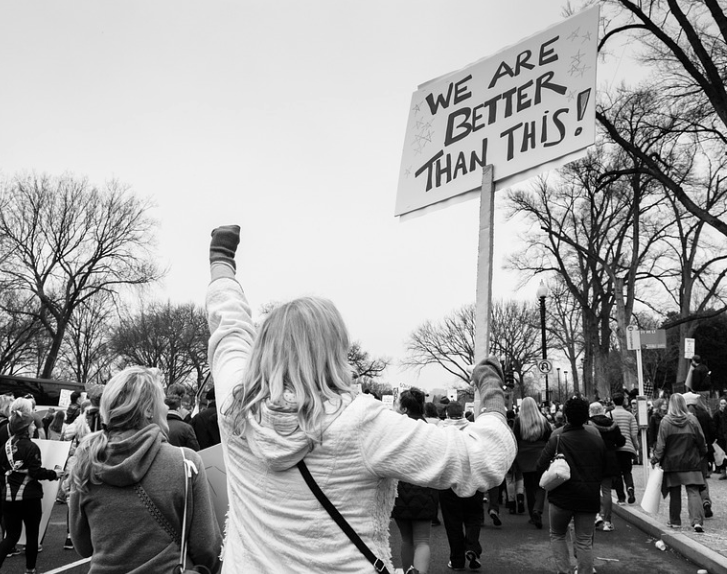

The Paradox of Progress: Why Social Change Often Feels Like Loss To The Majority 

In the work of a business consultant, change is a constant theme. Helping teams and organizations evolve often involves navigating the resistance that accompanies any disruption to the status quo. But this resistance isn’t unique to the corporate world, it mirrors broader societal reactions to social rebalancing efforts aimed at addressing inequality.

When societies attempt to redress systemic inequities and provide fair treatment for historically marginalized groups, resistance from the majority is a predictable, if not inevitable, response. What feels like progress to one group can feel like a loss to another. This phenomenon, rooted in psychology, social dynamics, and cultural identity, often transforms equality into a battleground.

Fear of Loss: The Power of Perception
Psychologists point to loss aversion as a key driver of resistance. People fear losing what they perceive as theirs more than they value gaining something new. In the context of social change, efforts to redistribute opportunities or resources to marginalized groups, such as workplace diversity initiatives, can feel to the majority like favoritism or unfair quotas. The reality that their rights remain intact often does little to assuage the emotional perception of loss.

Compounding this fear is a mindset known as zero-sum thinking. Many see opportunities and resources as a fixed pie: if one group gets a larger slice, another must get less. This belief frames the push for equity as a direct threat to the majority’s status, even though social equity often creates broader benefits for society as a whole.

Identity Under Siege
Resistance is not just about resources, it’s also about cultural identity. When dominant norms are challenged by changes like gender-neutral policies, anti-racist education, or expanded LGBTQ+ rights, these shifts can feel deeply personal to those who see their traditions as under attack. This fear of cultural loss often fuels narratives that frame change as an existential threat to the majority’s way of life.

Visible changes exacerbate this perception. Policies aimed at diversity, for example, are often highly noticeable: new hiring practices, updated media representation, or inclusive language reforms. These changes stand out more than the entrenched inequities they seek to address, making them seem disproportionate or unnecessary.

Status and Power: The Fight to Stay on Top
Social dominance theory offers another lens to understand the pushback. Those accustomed to holding power within a social hierarchy often resist efforts to level the playing field. For these groups, rebalancing isn’t just about perceived loss, it’s a challenge to their very status, sparking defensive claims of oppression.

The perception of threat is amplified by polarized media and political rhetoric. Leaders and platforms that oppose social progress often frame equity efforts as an attack on the majority, fueling fear and resentment. This narrative turns equality into a zero-sum game and victimizes those who already hold power.

The Role of Historical Context
Another factor driving resistance is historical amnesia. Without an understanding of the systemic barriers faced by marginalized groups, rebalancing efforts can seem unjustified. For instance, policies like affirmative action, intended to address historical inequities, are often misinterpreted as preferential treatment, rather than as remedies for long-standing disadvantages.

Bridging the Divide
Resistance to social progress isn’t rooted in actual losses of rights, but in the perception of loss. Psychological tendencies, cultural attachment, and divisive narratives all play a role in creating this resistance. Addressing it requires empathy, education, and open dialogue.

By fostering an understanding of systemic inequities and the broader benefits of equity, societies can bridge divides and navigate the inevitable pushback that accompanies change. Social progress may be disruptive, but it paves the way for a more inclusive and equitable future – one where progress is not seen as a loss, but as a shared gain.

From Margins to Mainstream: Mapping Canada’s Extremist Surge

Masked street mobilizations and online echo chambers are visible symptoms of a deeper shift in Canada’s political landscape. What once seemed like marginal groups have found renewed capacity to organize, recruit and intimidate through a blend of in-person rallies and social media amplification. The Niagara rally reported by CBC is not an isolated curiosity, but part of a pattern of small, local actions that feed a national ecosystem of grievance, identity politics and conspiratorial narratives.  

The scale of the problem can be measured in public data. Police-reported hate crimes reached 4,777 incidents in 2023, an increase of 32 percent from 2022 and more than double the level recorded in 2019. These statistics do not merely count crimes. They indicate a widening public space in which targeted hostility against religious, racial and sexual minorities has become more frequent and more visible. The sharp rise in antisemitic and sexual orientation motivated incidents stands out as evidence that certain communities are being disproportionately affected.  

National security agencies have also sounded alarms. Recent public reporting from the Canadian Security Intelligence Service documents the diversification of extremist threats within Canada and the real-world harms that can emerge from online radicalization. Analysts point to a mosaic of actors including white supremacists, ethnonationalists, militia-style adherents and anti-government networks. That heterogeneity makes a single policy response insufficient. Effective mitigation requires coordinated law enforcement, targeted community supports and a sharper focus on the digital platforms that enable cross-jurisdictional recruitment.  

Transnational influences matter. Ottawa’s 2021 decision to list the U.S. Three Percenters militia as a terrorist entity underscores how American militia culture and extremist flows cross the border. That decision was an acknowledgement that ideological currents and organizational tactics are not constrained by national boundaries. Canadian actors borrow symbols, rhetoric and operational playbooks from movements abroad, complicating the domestic security picture and raising questions about how best to disrupt international networks without undermining civil liberties.   

Civil society research highlights the central role of online environments in the recent resurgence. Scans of social media and fringe platforms document how recruitment, normalization and coordination occur through memes, influencers and algorithmic suggestion. Those processes create local nodes of activity that can quickly translate into physical gatherings, harassment campaigns or worse. The internet does not create grievances, but it accelerates their spread and lowers the cost of mobilization.  

Policy responses must be pragmatic and evidence based. Better resourcing for hate crime reporting and victim support will improve data quality and community resilience. Transparent intelligence-public safety engagement can help identify violent plots early without casting suspicion across entire communities. Digital literacy initiatives and platform accountability will reduce the fertile ground on which extremist recruiters thrive. Above all, elected leaders must use language that reduces polarization rather than stokes it, because political rhetoric shapes both perception and legitimacy in the public square.

Sources:
CBC report on the Niagara rally https://www.cbc.ca/news/canada/hamilton/second-sons-rally-in-niagara-1.7628162
Statistics Canada Police-reported hate crime in Canada, 2023 https://www150.statcan.gc.ca/n1/daily-quotidien/250325/dq250325a-eng.htm
CSIS Public Report 2024 https://www.canada.ca/content/dam/csis-scrs/images/2024publicreport/newest/Public_Report_2024-ENG.pdf
Reuters on Three Percenters terrorist listing https://www.reuters.com/world/americas/canada-puts-us-right-wing-three-percenters-militia-group-terror-list-2021-06-25/
ISD An Online Environmental Scan of Right-wing Extremism in Canada https://www.isdglobal.org/wp-content/uploads/2020/06/An-Online-Environmental-Scan-of-Right-wing-Extremism-in-Canada-ISD.pdf

Nation-Building by Design: The Strategic Nature of Carney’s Infrastructure Agenda

Canada is entering a new phase of nation-building, one that blends urgent economic needs with longer-term structural transformation. Under Prime Minister Mark Carney, the government has moved decisively to put infrastructure back at the centre of Canadian economic policy. The legislative and programmatic architecture that has been put in place in 2025 reveals not only a desire to build quickly, but also a strategy to re-shape the foundations of trade, energy, housing, and Arctic sovereignty. The pattern of investment and institution-building shows a layered approach: short-term relief to pressing bottlenecks, medium-term positioning of Canada as a reliable trading partner and energy supplier, and long-term steps to reinforce sovereignty, climate resilience, and competitiveness.

At the core lies the One Canadian Economy Act, passed in June 2025, which dismantles federal barriers to interprovincial trade while creating the Building Canada Act. This framework enshrines the ability to designate projects of “national interest” for streamlined approval. The intent is clear: Canada cannot afford to have critical transmission lines, export terminals, or transportation corridors stalled indefinitely in regulatory gridlock. To operationalize this authority, the government launched a Major Projects Office (MPO), with an Indigenous Advisory Council integrated into its structure. The MPO serves as a single-window permitting and financing hub, designed to shepherd nation-building projects through approvals in under two years. The short-term gain is administrative clarity and accelerated approvals; the medium-term payoff is a pipeline of projects that directly enhance trade capacity and energy reliability.

Housing has been treated with equal urgency. The creation of Build Canada Homes, announced in the May Throne Speech and detailed in August, signals a willingness to intervene directly in housing supply. Paired with CMHC’s Housing Design Catalogue, which offers standardized blueprints for gentle density from accessory units to six-plexes, the federal role is shifting from passive funding to active delivery. Short-term gains include faster project approvals and cost savings for small-scale builders. In the medium term, Build Canada Homes intends to scale modular and prefabricated construction to double housing output, stabilizing affordability while anchoring domestic supply chains in Canadian lumber and inputs. The long-term structural effect would be the normalization of higher building rates across the country, a prerequisite for sustaining workforce mobility and economic competitiveness.

Trade and corridor infrastructure forms the third pillar. The Trade Diversification Corridor Fund, budgeted at five billion dollars, is designed to expand port and rail capacity and reduce Canada’s overreliance on U.S. gateways. The High Frequency Rail (HFR) project between Toronto, Ottawa, Montreal, and Quebec City is continuing, promising transformative improvements to the most densely populated corridor. In the short run, HFR stimulates engineering and pre-construction employment. Medium-term gains will appear in reduced congestion, faster business travel, and increased regional integration. The long-term dividends include lower emissions and globally competitive connectivity between Canada’s political and financial capitals.

The expansion of the Port of Churchill in northern Manitoba illustrates how the government is aligning regional development with national strategy. With over $175 million in new federal funding, $36 million from Manitoba, and parallel commitments from Saskatchewan, Churchill is being re-equipped as a trade-enabling Arctic gateway. Recent investments in rail reliability, storage capacity for minerals, and new wharf facilities are positioning it as a potential hub for agricultural exports and critical minerals. The short-term impact is the stabilization of Hudson Bay Railway service, critical for northern communities. The medium-term benefit is expanded shipping capacity during the navigable season. The long-term prize lies in climate-extended Arctic navigation, which could turn Churchill into a permanent transatlantic container port, reshaping Canada’s role in global shipping.

Energy and clean industrial infrastructure represent another strategic frontier. Through the Canada Growth Fund (CGF), Ottawa is deploying $15 billion to de-risk large low-carbon projects, with seven billion earmarked for carbon contracts for difference. This mechanism gives investors certainty that carbon pricing will not collapse, unlocking private capital for carbon capture, hydrogen, and industrial decarbonization. Short-term benefits include early project commitments, such as waste-to-energy facilities in Alberta. Medium-term, these contracts build a domestic market for clean technologies and expand Canada’s share in global green supply chains. Long-term, CGF instruments lay the foundation for a carbon-competitive industrial economy, ensuring Canadian heavy industry remains viable under international climate rules.

The Arctic and defence agenda provides a parallel set of strategic investments. NORAD modernization, including the joint development of over-the-horizon radar with Australia, directly strengthens northern surveillance. The Canadian Patrol Submarine Project, with three bidders shortlisted, will anchor significant industrial activity in Canadian shipyards. In the short run, these procurements inject capital into defence industries. Medium-term gains include jobs, technology transfer, and new capacity in coastal infrastructure. The long-term effect is reinforcement of Arctic sovereignty and continental security at a time of intensifying geopolitical competition.

Underlying all of this is continuity through existing transfers such as the Canada Community-Building Fund, which locks in $26.7 billion for local water, transit, and road projects through 2034. These represent the essential backbone investments that ensure communities can absorb population growth and remain livable, complementing the marquee projects at the national level.

Taken together, these initiatives reveal a strategy that is both defensive and offensive. In the short term, Canadians will see more housing starts, more shovels in the ground for rail and port expansions, and more certainty for clean-tech investors. Over the medium term, the country will gain diversified trade routes, a more mobile workforce, and scaled-up housing supply that cools inflationary pressures. In the long run, the institutional innovations of 2025, the One Canadian Economy Act, the Major Projects Office, and the Canada Growth Fund, may be remembered as the architecture that enabled Canada to hold its ground as a sovereign, competitive, and sustainable economy in a fracturing world.

Reevaluating Policing Priorities: A Call for Community-Centered Approaches in Ottawa

The Ottawa Police Service (OPS) has proposed a significant budget increase, citing the need to enhance services across the city. However, evidence suggests that reallocating existing funds towards community-focused policing could be a more effective, and sustainable approach to reducing crime without additional financial burden.

Community Policing: A Proven Strategy
The OPS has implemented several community-oriented strategies that have shown promising outcomes. The Community Outreach, Response, and Engagement (CORE) Strategy, for instance, focuses on addressing the root causes of crime in specific areas such as the ByWard Market and Rideau Street. By increasing foot patrols and engaging with local stakeholders, the OPS has reported a 17.9% reduction in calls for service and a 4.62% decrease in crime across these hotspots. 

Similarly, the District Deployment Model tailors policing efforts to the unique needs of Ottawa’s diverse neighborhoods. This approach emphasizes collaboration with community partners to resolve local issues, enhancing service delivery and community trust.

Resource Reallocation: Investing in Prevention
The proposed budget increase for the OPS is substantial, potentially adding approximately $30 million to the police budget. Critics argue that these funds could be more effectively utilized by investing in community-based services that address the root causes of crime, such as poverty, mental health, and education.

Initiatives like Crime Prevention Ottawa’s “Vision Jasmine” project have demonstrated the effectiveness of community-led efforts in reducing crime. By focusing on community engagement and support, such programs have led to a significant reduction in crime rates in neighborhoods that experienced multiple homicides. 

Building Trust Through Engagement
Community policing emphasizes building trust and collaboration between police and community members. The OPS’s CORE Strategy and District Deployment Model are steps in this direction, aiming to create stronger relationships with residents and address their unique concerns. Investing in these initiatives can lead to more effective policing and a safer community overall.

While the OPS’s request for a budget increase highlights the need for enhanced services, a shift towards community-focused policing offers a more sustainable and effective solution. By reallocating existing resources to initiatives that address the underlying causes of crime and foster community trust, Ottawa can create a safer and more equitable environment for all residents.

Blood and Creed: Vice President Vance’s Reimagining of American Citizenship

On July 5, 2025, Vice President J.D. Vance delivered a notable address at the Claremont Institute’s Statesmanship Award Dinner in San Diego. For a man in the second-highest office of the land, his treatment of American citizenship was striking, not for its novelty, but for its clear departure from foundational norms. 

From Creed to Kinship
Vance began by challenging the idea of the United States as a creedal nation, a polity bound by shared principles of the Declaration of Independence, calling it simultaneously over-inclusive (drawing in “hundreds of millions, maybe billions” who support American ideals abroad) and under-inclusive (excluding those with ancestral ties, but extremist beliefs). He presented a contrasting model of citizenship rooted in ancestry, place, and “blood-and-soil.” With sentimental reference to generations of his family buried in a Kentucky cemetery, Vance argued that belonging should be tied to living history and rootedness rather than abstract ideals. 

This represents more than rhetorical flourish. It signals a paradigm shift, from civic affiliation to ethnic membership. In Vance’s terms, ancestry becomes a qualifier; heritage becomes identity.

Critique from the Center and Beyond
Historians and public intellectuals wasted little time pushing back. Ambassador Daniel Fried offered a powerful critique in The National Interest, opposing Vance’s redefinition for its reversal of Abraham Lincoln’s post–Civil War vision. Lincoln had conceived the nation as “a new nation, conceived in liberty”, not as a bloodline-bound entity. Fried emphasized that Lincoln saw citizenship as a matter of shared principles, not ancestry, drawing on immigrants who “feel…they are part of us” through creed.

Historian and public author John Ganz described Vance’s stance as an “anti-Declaration.” He highlighted the inconsistency of invoking Revolutionary and Civil War symbols while undermining the very ideals those conflicts advanced. Ganz drew contrast with Harry Jaffa, whose defense of Lincoln affirmed that “all men are created equal” meant just that, regardless of bloodline.

Tad Stoermer’s “Heritage Citizenship”
Into this debate steps Tad Stoermer: public historian, educator, and author, who coined the term “heritage citizenship” to categorize this turn toward ancestry-based belonging. Stoermer views this not as nostalgic reflection but as active project: a “restoration” of a racially-defined First Republic rooted in whiteness. The goal, he suggests, is the rewriting of constitutional logic, to reassert lineage as citizenship’s arbiter. 

Why This Matters Today
If Vance’s vision is enacted, it would have real-world consequences:

1. Birthright Citizenship at Risk
The 14th Amendment guarantees citizenship based on birth within U.S. jurisdiction: an inclusive, principle-based foundation. Vance’s model, however, introduces a lineage test, posing a legal challenge to this constitutional baseline.

2. Political and Social Exclusion
Consider the millions of post-1965 immigrant-descended Americans: legal, patriotic, educated, yet lacking “Appalachian blood.” Their citizenship, under Vance’s rubric, becomes negotiable, diluted by ancestry.

3. Ideological Flexibility for Elites
Despite its broad implications, heritage citizenship allows selective exceptions, for political elites, spouses, or allies (e.g., Vance’s own wife, born in California to Indian immigrants), which erodes the internal consistency of the ideology. Vance can romanticize heritage, while simultaneously reserving membership for his inner circle.

Going Backwards – Constitutionally and Symbolically
This vision directly counters Lincoln’s redefinition of the Union after 1863. At Gettysburg, he consecrated the Union’s cause as “a new birth of freedom,”establishing citizenship through legal equality. Vance’s model, in contrast, retreats into pre-14th Amendment logic, where race and lineage determined belonging.

It also undermines the United States’ role on the global stage. Fried points out that the American creed, its principle-based identity, enabled it to attract “hundreds of millions, maybe billions” of adherents abroad, forming what he describes as a “positive-sum” global leadership structure  . Heritage-based identity, by contrast, is zero-sum, exclusive, and inward-looking.

A Historian’s Judgment
For any senior historian, the implications are stark:
Constitutional Regression: Voting rights and equal protection, hard-won through amendments and civil rights struggles, are put back on the chopping block.
Political Inequality: Heritage citizenship enables a bifurcated class of Americans, those with “authentic” lineage and those without.
National Myth versus National Reality: The U.S. has always been a nation of immigrants and wanderers. Vance’s speech polices belonging by ancestry, contra 250 years of integrated identity-building.

Vice President Vance’s Claremont Institute speech is not merely poetic, it is profoundly political. It stakes out heritage, soil, and blood as qualifiers of sovereignty. Critics like Fried, Ganz, and Stoermer understand this as both intellectual and legal retrenchment. The choice now faces American democracy: Will we continue as a principle-based republic, where citizenship is claimed through belief, law, and shared action? Or will we succumb to a lineage-based model that narrows the definition of who belongs?

In highlighting ancestry over creed, Vance’s model asks an inflammatory question: does American identity belong to those we include, or those we exclude? The answer, for nearly two centuries, has been creed. It must remain so.

In a nation guided by Vance-style heritage criteria, citizenship would shift from being a legal, civic covenant to a cultural inheritance. That model would disqualify immigrants, their children, Jewish Americans, those of Latino or Asian descent, even well-known political figures, unless they belong to the “right” ancestry group. Yet the model grants latitude for elite figures, a glaring hypocrisy exposing the project’s exclusionary core. It’s not just a nostalgic vision, it’s a blueprint for a tiered citizenry: real if you’re insider heritage, negotiable if not.

Cascadia Rising: Ecology, Identity, Politics

I began this article over a year ago, and at the time my biggest challenge was finding its focus. I wasn’t sure what the central thread should be, so I followed the flow of ideas and shaped it into a summary of recent activities and announcements. In many ways, it became a placeholder; something to capture the moment and hold space until I had the chance to return and explore the subject in greater depth.

1. Bioregional Roots & Indigenous Foundations
The idea of Cascadia springs from the interconnected ecosystems spanning the Cascade Range; anchored by rivers like the Fraser, Columbia, and Snake, a landscape long inhabited by diverse Indigenous nations: Chinook, Haida, Nootka, Tlingit, and dozens more, whose vibrant cultures predate colonial borders by millennia.   

In Indigenous understanding, stewardship over land and salmon-rich waters isn’t just practical; it’s spiritual. Their societies are woven into place, honoring ecosystems as kin. This pre-colonial history sets a vital foundation for any modern Cascadia vision.

Today, Cascadian movements forefront Indigenous sovereignty and truth and reconciliation, advocating for dialogue-led, consensus-based confederation models where First Nations guide governance and cultural revitalization, like restoring Chinuk Wawa as a regional lingua franca.  

2. Bioregionalism & Mapping as Decolonizing Tools
Bioregionalism – which Cascadia champions, breaks from traditional politics, centering its framework on natural boundaries and ecological integrity. Indigenous mapping traditions inform this, such as bioregional atlases by Tsilhqotʼin, Nisga’a, Tsleil-Waututh, and others that helped affirm territorial claims in court.  

Through community-driven cartography, highlighting traditional ecosystems, language, stories; bioregional maps act as instruments of empowerment, healing, and planning rooted in place-based knowledge.  

3. Elizabeth May’s Provocative Invitation & BC’s Identity
In January 2025, Green Party of Canada leader Elizabeth May reignited Cascadian conversation with a striking, partly rhetorical offer: that California, Oregon, and Washington might consider joining Canada; with BC naturally included in the idea, based on shared values like universal healthcare, reproductive rights, and climate justice.  

Her gesture wasn’t an actual policy, but served as an emblematic spark, fueling grassroots discussions across the region; especially in BC, where many already feel culturally closer to the U.S. West Coast than to central Canada. This made the concept of transnational Cascadia feel suddenly plausible.  

4. Governor Newsom & West Coast Climate Leadership
Cascadia’s vision isn’t purely conceptual, it’s grounded in concrete policy collaboration:
• In May 2025Governor Gavin Newsom was appointed co-chair of the U.S. Climate Alliance, joining a bipartisan coalition of 24 governors spearheading high-impact, state-driven climate action, encompassing nearly 60% of the U.S. economy and 55% of its population.
Newsom also announced a major cap-and-invest (formerly cap-and-trade) budget proposal, extending California’s program through 2045 and earmarking billions toward firefighting, high-speed rail, and climate adaptation projects.   
• The three regional partners – California, Québec, and Washington, have also agreed to explore linkage of their carbon markets, signaling potential for a broader, cross-border climate economy.  
• Simultaneously, West Coast governors (Newsom, Oregon’s Tina Kotek, and Washington’s Bob Ferguson) signed a joint statement promising to defend their states’ climate policies against federal rollback, demonstrating regional resolve and cohesion.  

5. Indigenous and Climate Confluence in Cascadia’s Future
Modern Cascadia stands at the intersection of Indigenous resurgence and regional policymaking. Here’s how they converge:
Indigenous frameworks act as ethical and governance cornerstones; urging truth, place-based authority, and cultural restoration, especially in BC where colonial histories persist.
Bioregionalism and community mapping form tools for inclusion and urban planning that honor traditional ecological knowledge.
Cross-border cooperation on climate, via co-carbon markets and alliances, offers practical scaffolding for aligning policy with ecological realities.
Political solidarity, as seen in Newsom’s climate leadership and the West Coast climate defense, underscores Cascadia’s capacity as a functional mega-region, not merely a cultural idea.

Cascadia Reimagined: A Vision of Inclusive, Place-Based Governance
Cascadia today is evolving, not as a secessionist movement, but as an integrated regional model that:
• Places Indigenous sovereignty and ecological connection at its core.
• Encourages cross-jurisdictional collaboration on climate, economy, and culture.
• Utilizes bioregional mapping as a decolonizing and planning tool.
• Builds grassroots resonance through symbols, discourse, and identity.
• Innovates policy frameworks connecting shared values, particularly across BC and U.S. West Coast states.

Elizabeth May’s invitation, Governor Newsom’s climate strategy, and Indigenous leadership together signal a Cascadia imbued with governance relevance, moral thickness, and aspirational scope.

Sources
• Cascadia Bioregional Movement. Indigenous Sovereignties. Cascadia Bioregion. https://cascadiabioregion.org/indigenous-sovereignties
• Cascadia Bioregion. The Cascadia Movementhttps://cascadiabioregion.org/the-cascadia-movement
• Cascadia Bioregion. Independence and Public Opinionhttps://cascadiabioregion.org/independence-2
• CascadiaNow! Building a Resilient Cascadiahttps://www.cascadianow.org
• Brandon Letsinger. It’s Time for a Cascadia Political Movementhttps://brandonletsinger.com/political-movement/its-time-for-a-cascadia-political-movement
• KIRO 7 News. Canadian Lawmaker Offers to Take Washington, Oregon, California as New Provinces. January 10, 2025. https://www.kiro7.com/news/local/canadian-lawmaker-offers-take-washington-oregon-california-new-provinces/LPFT7I4AYBGCLHBKVOB2TIFQOQ
• Cascadia Daily News. Washington Joining Canada? Don’t Bet Your Timbits. January 10, 2025. https://www.cascadiadaily.com/2025/jan/10/washington-joining-canada-dont-bet-your-timbits
• OPB (Oregon Public Broadcasting). West Coast Governors Say They Will Defend Their Climate Policies Against Trump Attack. April 10, 2025. https://www.opb.org/article/2025/04/10/west-coast-governors-we-will-defend-our-climate-policies-against-trump-attack
• Office of Governor Gavin Newsom. Governor Newsom Appointed Co-Chair of U.S. Climate Alliance. May 9, 2025. https://www.gov.ca.gov/2025/05/09/governor-newsom-appointed-co-chair-of-u-s-climate-alliance
• U.S. Climate Alliance. News & Eventshttps://usclimatealliance.org/news-events
• CalMatters. Newsom’s Budget Leans on Cap-and-Invest to Fund High-Speed Rail and Firefighting. May 2025. https://calmatters.org/environment/climate-change/2025/05/california-governor-climate-budget-cap-trade-high-speed-rail
• ClearBlue Markets. California Cap-and-Invest Program: Extension Proposed in California Budget. 2025. https://www.clearbluemarkets.com/knowledge-base/california-cap-and-invest-program-program-extension-proposed-in-california-budget
• Washington Department of Ecology. Shared Carbon Market Agreement between California, Québec, and Washington. March 20, 2024. https://ecology.wa.gov/about-us/who-we-are/news/2024/mar-20-shared-carbon-market

Feeding Ourselves Together: Why Community Co‑op Food Stores Belong in a Barrier-Free Canada

I have written before about why we need to see cooperative food stores in communities across Canada. With the recent reduction or removal of trade barriers, now is the time to make this happen.  

Across Canada, there is a growing hunger – not only for better food, but for better ways of feeding our communities. The conventional supermarket model, dominated by multinational chains and long supply chains, has left many rural and urban neighbourhoods underserved, overpriced, or entirely cut off from fresh, affordable produce. In this landscape, community-based food cooperatives offer a compelling alternative. They prioritize local sourcing, democratic ownership, and keeping profits within the community. With momentum building to eliminate interprovincial trade barriers in Canada, the conditions are finally aligning to help co‑ops move from niche to necessary.

Historically, Canada’s internal trade system has been surprisingly fragmented. Despite a national economy and federal structure, provinces have operated with distinct sets of rules on everything from food labeling to trucking routes. These non-tariff barriers have acted like an invisible tax on internal trade – estimated by economists to be equivalent to a 21 percent tariff. The consequences have been far-reaching: regional producers face steep compliance costs just to sell across a provincial border; small grocers and co‑ops encounter shipping delays and complex regulations; and ultimately, consumers pay more at the till, with one estimate suggesting Canadians lose up to $200 to $250 per year on food costs due to internal barriers.

This disjointed regulatory landscape has been particularly tough on community co‑ops, which often rely on smaller suppliers who can’t afford to navigate provincial red tape. A co‑op in Saskatchewan wanting to feature artisanal Quebec cheese, or a Northern Ontario store hoping to offer Nova Scotia apples, may find themselves tangled in transportation rules, inspection standards, or product packaging requirements that vary from one province to the next. For organizations founded on values of local empowerment and food access, these barriers have long undermined their ability to operate efficiently and expand.

But change is in the air. A concerted effort, led by federal and provincial governments in response to longstanding calls from economists, producers, and consumers, is finally dismantling these internal walls. The Canadian Free Trade Agreement (CFTA), adopted in 2017, was a foundational shift. It moved from a restrictive “positive list” approach, where only specified goods could cross provincial lines freely, to a “negative list,” where everything is presumed tradeable unless specifically excluded. Further momentum arrived in 2025 with the introduction of the One Canadian Economy Act, which enshrined mutual recognition of many provincial regulations and expanded labour mobility agreements. Recent cooperation between provinces like Alberta, British Columbia, and Nova Scotia has also smoothed trade in alcohol and agri-food products, and Ontario is now joining these efforts.

For food co‑ops, these developments are transformative. Reduced regulatory duplication and harmonized standards mean a broader, more diverse pool of suppliers is accessible. A co‑op in Winnipeg can now stock free-range eggs from a Manitoba farm alongside preserves from Prince Edward Island without needing a legal team to ensure compliance. With fewer restrictions on trucking and packaging, costs are lowered and logistics are simplified. This makes it more feasible for new co‑ops to start up, for existing ones to expand, and for regional partnerships to flourish.

Communities stand to gain tremendously from this shift. Food cooperatives can now tap into a more diverse national supply while staying true to their commitment to local and sustainable sources. Access to different growing zones and seasonal products across the country helps stabilize supply, especially for regions prone to climate disruptions. In Indigenous and Northern communities, where reliable food access remains a challenge, co‑ops empowered by seamless interprovincial trade could offer life-changing improvements.

There is also a broader economic story here. With fewer trade restrictions, small- and medium-sized farms and food businesses gain new markets. Many of these enterprises are community-owned or family-run. Selling into co‑ops in other provinces can help them grow sustainably without abandoning their values. The revenue generated stays local, supporting jobs, infrastructure, and innovation. Over time, this creates a virtuous cycle of local food systems supporting each other across provincial lines – a true pan-Canadian cooperative economy.

The benefits are not only economic. Food co‑ops build social capital. They encourage civic participation, give members a voice in decision-making, and often support education, nutrition, and sustainability initiatives. By breaking down provincial barriers, Canada is not just enabling trade; it is strengthening the social fabric of its communities.

Still, vigilance is needed. Some of the most entrenched barriers, particularly in supply-managed sectors like dairy and poultry, remain in place. Continued advocacy will be necessary to ensure reforms are fully implemented and that smaller players, including co‑ops, are not overlooked in favour of large industrial producers. But the path forward is clearer than it has ever been.

The vision of a Canada where every town and neighbourhood can nourish itself through a thriving, cooperative food economy is no longer idealistic – it is within reach. The removal of internal trade barriers is more than just a policy win; it is a catalyst for community renewal. It allows cooperatives to be what they were always meant to be: rooted in the local, connected across regions, and working together to feed a stronger, fairer nation.

Sources:
Retail Insider (2025). “Interprovincial Trade Barriers Impact Canada’s Food and Beverage Sector.” https://retail-insider.com/retail-insider/2025/01/interprovincial-trade-barriers-impact-canadas-food-and-beverage-sector
Canada Regulatory Review (2025). “The Impact of Lower Interprovincial Trade Barriers on Canada’s Agriculture and Agri-Food Sector.” https://www.canadaregulatoryreview.com/the-impact-of-lower-interprovincial-trade-barriers-on-canadas-agriculture-and-agri-food-sector
Financial Times (2024). “Internal Canadian Trade Costs More Than You Think.” https://www.ft.com/content/90d68648-1905-48f9-906c-301ff047ca56
Canadian Grocer (2025). “Breaking Down Interprovincial Trade Barriers: What’s at Stake for the Food Sector?” https://canadiangrocer.com/breaking-down-interprovincial-trade-barriers-whats-it-food-sector
Reuters (2025). “Carney Says Canada Aims to Have Free Internal Trade by July 1.” https://www.reuters.com/world/americas/carney-says-canada-aims-have-free-internal-trade-by-july-1-amid-us-tariffs-2025-03-21/

The Regressive Weight of Road and Bridge Tolls

Tolls on bridges and highways are often presented as pragmatic tools of modern infrastructure finance. They provide a clear user-pay model, in which those who drive the road or cross the bridge contribute directly to its upkeep. Yet beneath the tidy arithmetic lies a deeper inequity. Tolling is inherently regressive, disproportionately affecting those least able to shoulder the burden, while leaving the wealthy relatively untouched. In the Canadian context, with a geography that frequently demands travel over water or long stretches of road, tolls create a system where access is rationed by income rather than need.

The Confederation Bridge linking Prince Edward Island to the mainland is an instructive example. Until this summer, Islanders and visitors alike were charged more than $50 per vehicle for the right to leave the province. For many families and small businesses, this was not a casual expense but a recurring cost that shaped economic opportunity and even the rhythm of daily life. Following recent political attention, the toll has been reduced to $20, but the principle remains unchanged. Crossing a bridge that connects one part of the country to another still requires a fee that weighs more heavily on working families than on tourists or affluent professionals. It is not simply a question of price but of fairness in access to mobility. 

Ontario’s Highway 407 tells a similar story, albeit in a different register. Originally built as a public project, the highway was privatized under a 99-year lease in the late 1990s. Since then, tolls have risen sharply, far outpacing inflation, with profits flowing to private shareholders rather than to the public purse. The highway’s users include commuters with little choice but to pay for faster access into Toronto. For higher-income households, the fee is a convenience. For those on modest wages, it can become a recurring penalty that extracts a significant portion of their income simply to get to work on time. The toll structure reinforces a two-tier mobility system, in which efficiency is a privilege purchased rather than a public good ensured. 

Beyond inequity, tolling is also an inefficient means of raising revenue. Collection and enforcement systems consume a substantial share of funds, with studies showing that administrative costs can swallow up to a third of toll revenues. The very act of charging per crossing introduces distortions, encouraging some drivers to divert onto untolled secondary routes, which increases congestion and emissions elsewhere. The costs, both financial and social, ripple outward in ways rarely accounted for in the fiscal logic of tolling schemes. 

If the objective is to ensure that those who benefit from road systems pay a fair share, there are more equitable instruments available. A progressive licensing system that levies higher annual fees on luxury or high-value vehicles would generate steady, predictable revenue without punishing those who rely on basic mobility. Such a measure would align responsibility with capacity to pay, ensuring that the wealthiest drivers contribute more to infrastructure upkeep. At the same time, it would leave ordinary workers and families free from the arbitrary impositions of per-trip tolls.

Canada’s transportation network binds communities, sustains commerce, and enables social life. It should not be carved into segments where access is contingent on one’s bank account. Tolls, whether on bridges or highways, undermine the principle of equitable mobility. A system of progressive licensing fees offers a better path, one that respects both fairness and fiscal responsibility. The country requires infrastructure policies that do not merely balance budgets, but also balance justice.

Sources
• Global News. “Confederation Bridge tolls lowered.” July 28, 2025. https://globalnews.ca/news/11314912/confederation-bridge-tolls-lowered
• Government of Canada. “Canada’s new government cuts transportation costs in Atlantic Canada.” July 28, 2025. https://www.pm.gc.ca/en/news/news-releases/2025/07/28/canada-s-new-government-cuts-transportation-costs-in-atlantic-canada
• Wikipedia. “Ontario Highway 407.” Accessed August 2025. https://en.wikipedia.org/wiki/Ontario_Highway_407
• Institute for Research on Poverty (University of Wisconsin). “Equity Implications of Tolling.” Working Paper 1378-10. https://www.irp.wisc.edu/publications/dps/pdfs/dp137810.pdf

The United States: Rogue Superpower in a World of Rules

Among the ironies of our time, few are more stark than the United States’ position as the architect of the postwar international order, yet increasingly its most consistent violator. While Washington projects itself as the defender of liberty and law, its behavior on the global stage reveals a pattern of exceptionalism that borders on outright rogue conduct. Through its rejection of international legal institutions, selective engagement with treaties, and deliberate undermining of multilateral frameworks, the U.S. has placed itself outside the moral and legal structures it once championed. It is not a rogue state in the traditional sense of irrational belligerence, but a rogue superpower: one that acts with impunity, claims special exemption from global norms, and expects deference without accountability.

Nowhere is this more visible than in the United States’ relationship with the two primary institutions of international justice – the International Criminal Court (ICC) and the International Court of Justice (ICJ). The ICC, established in 2002 to prosecute individuals for genocide, crimes against humanity, and war crimes, was initially shaped with U.S. involvement. Yet when it became clear that the Court could assert jurisdiction over American officials and soldiers, Washington turned hostile. Under the George W. Bush administration, the U.S. “unsigned” the Rome Statute. Two decades later, the Trump administration went so far as to impose sanctions on ICC officials investigating alleged U.S. war crimes in Afghanistan, a breathtaking rejection of international accountability.

The ICJ, which adjudicates disputes between states, has faced similar rebuke. In 1986, after the Court found the U.S. guilty of unlawful use of force in its covert war against Nicaragua, the Reagan administration withdrew from the ICJ’s compulsory jurisdiction altogether. This pattern of participation-when-convenient and withdrawal-when-challenged defines American behavior toward supranational courts. While the U.S. demands accountability from adversaries, condemning Russia’s invasion of Ukraine or China’s abuses in Xinjiang, it immunizes itself from any comparable scrutiny. This is not justice. It is legal imperialism.

This attitude extends well beyond the courts. The U.S. has refused to join, or has actively sabotaged, numerous treaties and international organizations when their mandates threaten to constrain American power. It never ratified the United Nations Convention on the Law of the Sea (UNCLOS), despite abiding by its provisions in practice, because the treaty might impede U.S. naval dominance and deep-sea exploitation rights. It signed but never ratified the Kyoto Protocol, then withdrew from the Paris Agreement under Trump—undermining global climate efforts at a critical juncture. It refused to ratify the Arms Trade Treaty, unsigned the ICC, and withdrew from UNESCO and the UN Human Rights Council under various pretexts, only to rejoin later with little reflection. This stop-start diplomacy, driven by domestic politics rather than principled internationalism, has eroded trust in the United States as a stable global partner.

Nowhere has this erosion been more visible than during the COVID-19 pandemic. In 2020, at the height of a global health emergency, the Trump administration withdrew from the World Health Organization (WHO), accusing it of pro-China bias. The move was as symbolic as it was destructive, signaling to the world that the United States would rather abandon multilateral coordination than tolerate criticism or compromise. Though President Biden reversed that decision, the damage to global confidence in American leadership was profound.

What makes all this especially corrosive is that the United States does not retreat from these institutions out of isolationism or irrelevance, but from an inflated sense of exceptionalism. The underlying logic, whether expressed by a Republican or Democratic administration, is that the U.S. is a unique force for good and must therefore not be bound by the same rules as others. This belief animates laws like the American Service-Members’ Protection Act, which authorizes military force to free any American detained by the ICC. It is the rationale behind the rejection of nuclear disarmament treaties like the Treaty on the Prohibition of Nuclear Weapons. It fuels the refusal to ratify core labor rights conventions under the International Labour Organization. This is not principled leadership. It is institutionalized impunity.

The consequences of this behavior ripple outward. When the world’s most powerful democracy refuses legal oversight, it licenses others, Russia, China, Israel, even allies like Saudi Arabia, to do the same. It weakens the authority of the very institutions designed to prevent war, protect civilians, and resolve disputes peacefully. It turns what should be universal norms into optional guidelines for the weak, and ignites a global cynicism toward international law as a whole.

America’s rogue status is not merely a theoretical concern for academics or human rights lawyers. It is a real and present danger to global order. The United States wields extraordinary influence over international finance, trade, and military alliances. When it breaks the rules, it doesn’t just bend them, it reshapes the entire system. The result is a world where power substitutes for principle, and might defines right.

If the United States wishes to restore its global standing, not as a bully, but as a builder, it must recommit to the legal frameworks it once helped design. That means rejoining and respecting the jurisdiction of the ICC and the ICJ. It means honoring treaties even when inconvenient. It means ending the era of selective multilateralism and embracing the responsibilities that come with its global reach.

Until that shift occurs, the United States will remain a paradox in the international system: the indispensable nation behaving, more often than not, like a rogue one.

Sources:
• ICC Rome Statute: https://www.icc-cpi.int/resource-library/documents/rome-statute-of-the-international-criminal-court
• ICJ Nicaragua v. United States (1986): https://www.icj-cij.org/en/case/70
• UN Treaty Collection: https://treaties.un.org
• Human Rights Watch: https://www.hrw.org
• Arms Control Association: https://www.armscontrol.org
• United Nations Framework Convention on Climate Change (UNFCCC): https://unfccc.int
• Congressional Research Service: https://crsreports.congress.gov