Trump 2028: A Dynasty in the Making

As our southern neighbours celebrate their July 4th Independence Day, I thought I might run a little dystopian thinking by you, just for shits and giggles. 

With President Donald J. Trump firmly ensconced in the White House following his inauguration on January 20, 2025, the political spotlight has already shifted to the 2028 presidential contest. Now that Trump has reclaimed the presidency, serving a second, non‑consecutive term, the future of the Republican Party, and particularly the Trump brand, becomes even more intriguing. He cannot run again in 2028 due to the 22nd Amendment, yet his political influence remains as potent as ever. When Trump hints at “Trump 2028,” is he pointing toward a fading hope for a senior comeback, or planting the seeds for a dynastic succession?

Trump’s dismissal of J.D. Vance as the presumptive 2028 nominee, his blunt “No” in mid-2024, was a calculated move. It conveyed more than personal preference; it signaled that no one outside the Trump orbit, especially outside his own family, should assume control of the MAGA movement. That dismissal keeps the party’s trajectory anchored firmly to his legacy and opens the conversation to another Trump, likely Donald Trump Jr., as a strategic heir.

The Trump phenomenon is less ideology, more brand. It thrives on personality, controversy, and performative loyalty rather than governing philosophy. In this context, succession isn’t about grooming a policy-savvy protégé; it’s about sustaining a brand identity built on defiance, spectacle, and a perceived voice for disenfranchised Americans. The successor needs the name recognition, the meme-worthy charisma, and the combative mindset that defines the brand. Among the Trump offspring, only Don Jr. checks all those boxes.

Donald Trump Jr. has transformed himself into the Trump heir apparent. He is a constant fixture in conservative media, wields substantial pull on social platforms, and echoes the base’s grievances with unapologetic fervor. He didn’t build the MAGA mythos; he inherited and amplified it. That inheritance, and his relationships with influencers and activists in the base, have elevated his profile far above that of other Trump offspring. Ivanka has retreated, Eric remains in the family business, and Tiffany is entirely absent from politics. Don Jr. has emerged not just as a surrogate, but as a potential candidate.

Trump’s strategic ambiguity on “Trump 2028” serves multiple purposes. It flusters rivals, keeps the media’s attention, and maintains his grip on the Republican narrative. It also whets the base’s appetite for continuity. Because Trump remains in power, he commands the stage, and if he cannot hold it past 2028, he may hand it to someone who shares his blood, his message, and his followers’ fervor.

Is Don Jr. ready? The question isn’t about his credentials, he has none in elected office, but about his fit for a movement that prizes authenticity over formality. He is a provocateur, not a policy wonk, but if the base values combativeness and brand loyalty over experience, that could be enough. His candidacy would signal that Trumpism is shifting from a moment to a dynasty.

In essence, Trump’s rejection of Vance, his jesting about “Trump 2028,” and the steady rise of Don Jr. aren’t isolated events, they are pieces of a grander design. It’s a blueprint for a political legacy that goes beyond a single man, one that may redefine how power and influence are planned, and passed on, in American conservatism.

As Trump settles into his second term, the real battle isn’t just in Congress or the 2026 midterms, it’s in the heirs he chooses. Will the Republican Party coalesce around a Vance-or-DeSantis alternative, or will Trump Sr. successfully transfer authority to his son? For the MAGA faithful, the answer could come sooner than we think, and carry the Trump name once again into the White House in 2028.

Sources
• U.S. Constitution, 22nd Amendment.
The Hill, “Trump: Vance Not Default 2028 Nominee,” June 2024.
Axios, “Inside the Trump Family Political Machine,” October 2023.
• Maggie Haberman, Confidence Man: The Making of Donald Trump and the Breaking of America, 2022.
• Pew Research Center, “Trump Voter Demographics and Political Influence,” 2020.


A Turning Point for Democrats: Embracing or Repelling the Mamdani Moment

As I write this, I’m still struck by the fact that this is even a controversy. The policies Zohran Mamdani is proposing: free public transit, universal childcare, publicly owned services, are standard practice across much of Europe and other G7 nations, yet many Democrats are voicing concern that New Yorkers, and perhaps Americans more broadly, still aren’t ready to embrace what they call “socialist” ideas.

In June 2025, New York voters spoke clearly. Fifty-six percent of Democratic primary voters chose Zohran Mamdani, a 33-year-old democratic socialist, to carry the party’s nomination for mayor. His platform includes free public transit, universal childcare, rent freezes, and publicly owned grocery stores. To many, this was a breath of fresh air in a city suffocating under the weight of rising costs and entrenched inequality. To others, it was a red flag waving at the edge of a cliff. Now, Democrats face a decision that could define the party for years to come.

Mamdani’s victory was not a fluke. His campaign, reportedly the largest volunteer mobilization in the city’s history, reached over 750,000 doors with 30,000 committed canvassers. He ran on small donations and working-class energy, uniting activists, renters, and disaffected youth. Against him stood Andrew Cuomo, backed by unions, wealthy donors, and a legacy machine. Yet Cuomo could not withstand the wave of grassroots momentum.

The question now facing Democrats is not only how Mamdani won, but what they should do about it. Cuomo is already considering an independent run. Mayor Eric Adams, expelled from the Democratic fold, is still in the race and is quietly collecting business support. This sets up a potential three-way general election, one that could split the left-leaning vote and throw the door open for the candidate who best reassures moderate, outer-borough voters. Democrats must decide if Mamdani’s energy is transferable to the broader electorate or if his policies will cost them the mayoralty.

Mamdani offers a bold, future-oriented vision. He speaks of climate policy not as abstraction but as urban necessity. His platform calls for retrofitting buildings, expanding transit access, and protecting tenants, all framed as investments in equity and resilience. He proposes paying for this with new taxes on the wealthy and on corporations that profit from the city’s infrastructure and labour. For progressives, he represents hope. For moderates, he presents risk.

Critics argue that Mamdani’s platform is more idealism than governance. Taxing millionaires at the city level is legally complex and politically fragile. Governor Hochul has already signaled opposition to any such proposal. Implementing rent freezes and creating city-owned grocery stores would require significant legislative cooperation and administrative capacity. There are also concerns about whether such sweeping programs are financially viable under New York City’s budget constraints.

National Republicans have already begun to label Mamdani as a communist, a charge that PolitiFact has debunked. He is a democratic socialist, not a revolutionary. He believes in using democratic institutions to expand access to public goods and services. Nevertheless, the right will use his image to galvanize resistance, not only in New York but nationwide. Democrats, particularly those eyeing swing districts in 2026, will be watching closely.

The party also faces internal tensions. Some centrist Democrats worry about alienating suburban and immigrant voters who may view Mamdani’s platform as radical. Others remember Buffalo in 2021, when India Walton won the Democratic primary only to be defeated in the general election by a write-in campaign for incumbent Byron Brown. Business leaders in New York have already begun organizing to prevent a Mamdani administration. They are joined by conservative Democrats and Republicans who see this as an existential challenge.

Mamdani’s base, however, is broader than many expected. He performed well not only in left-leaning Brooklyn neighborhoods but also in parts of Queens, the Bronx, and Staten Island. He attracted support from Hispanic, Black, and Asian voters, many of whom feel excluded from the city’s economic gains. Still, his positions on Israel, elite school admissions, and Indian politics have alienated parts of the Jewish, Korean, and Hindu communities. Holding this coalition together in the general election will be a test of political skill and message discipline.

This race is not just about New York City. It is a referendum on the direction of the Democratic Party. After disappointing results in 2024, especially in swing districts and rural areas, Democrats are torn between a progressive future and a centrist past. Mamdani’s success presents a new model: bold ideas, grassroots energy, and unapologetic populism. If he wins in November, the party may shift permanently. If he loses, the lesson may be that ideology cannot overcome institutional resistance and suburban caution.

Democrats now face three decisions. First, whether to support Mamdani fully or distance themselves from his agenda. Second, whether to adopt parts of his platform as a new standard or treat it as a local anomaly. Third, how to communicate his vision without triggering a backlash that could hurt candidates elsewhere.

In many ways, the choice has already been made. Mamdani is now the party’s nominee in the country’s largest and most diverse city. Whether his campaign signals renewal or foreshadows division will depend on the next five months. The general election in November will not just determine who leads New York, but what kind of party the Democrats want to be.

Why Canada’s Digital Services Tax Is Poking the Bear – And Why Australia and New Zealand Are Still Holding the Stick

It was only a matter of time before Canada threw its toque into the ring on the global debate over taxing tech giants. After years of polite patience, Ottawa finally said enough is enough and committed to implementing a Digital Services Tax (DST), retroactively, no less, dating back to January 1, 2022. The goal? To make Big Tech pay its fair share for the billions they earn from Canadians’ online clicks, swipes, and searches. Predictably, this move hasn’t exactly gone down well south of the border, especially with Donald Trump, who’s already threatening retaliatory tariffs faster than you can say “Google it.”

Canada’s DST is a 3% levy on revenues from digital services; think online marketplaces, advertising platforms, and social media, that target Canadian users. The tax only kicks in for companies making over €750 million globally and more than $20 million in Canadian digital revenues. So, yes, this is about Amazon, Google, Meta, and Apple. Not your cousin’s Shopify side hustle.

The reasoning behind the move is, frankly, hard to argue with. For years, digital multinationals have made huge profits in countries where they have lots of users but no physical offices. Since our tax codes were written in the days of rotary phones, these companies have legally side-stepped corporate taxes in places like Canada while hoovering up data and ad dollars with industrial-grade efficiency. The DST is intended as a band-aid solution until a global fix comes together, though that band-aid is now being applied with an increasingly firm hand.

In truth, the global tide may finally be turning on Silicon Valley’s long, tax-free world tour. For over a decade, Big Tech has surfed a wave of international growth, scaling into nearly every market on Earth without paying local dues. Armed with sophisticated tax avoidance schemes, usually routed through Ireland or the Netherlands, the giants of the digital economy have profited handsomely while governments watched domestic retailers struggle to compete. But now, faced with growing public backlash and creaking public coffers, countries from France to India to Canada are drawing a line. The message is clear: if you make money off our citizens, you’re going to help fund the roads, schools, and social programs that keep them clicking.

The global fix in question is the OECD’s “Two-Pillar” solution, a diplomatic marathon attempting to modernize international tax rules. Pillar One aims to reallocate taxing rights to market countries (like Canada), while Pillar Two would establish a global minimum corporate tax of 15%. Canada has said it would delay DST collection if the OECD deal is implemented, but with the U.S. dragging its heels on ratification, Ottawa is preparing to go it alone.

That’s where Trump comes in. Never one to let a perceived slight slide, he’s treating Canada’s DST as a direct assault on U.S. interests. After all, the companies getting dinged are almost entirely American. Trump’s threats to slap retaliatory tariffs on Canadian exports are classic “America First” bluster, but they’re not without precedent. The U.S. already opened Section 301 investigations into several other countries’ DSTs, accusing them of unfairly targeting American firms. Biden’s administration cooled the rhetoric, but the sentiment remains.

Of course, Canada isn’t the only country to stick its neck out on this. France was the pioneer, pushing ahead with a 3% DST despite fierce U.S. pushback. Italy, Spain, and the UK followed suit. Even India got into the act with its “equalisation levy,” predating many Western attempts. Each of these nations, like Canada, grew tired of waiting for multilateral action while Silicon Valley giants dodged their tax nets with Olympic-level agility.

Interestingly, not everyone in the Anglosphere has been quite so bold. Take Australia. A few years back, it flirted with a DST, there were consultations, white papers, and worried glances toward Washington. But ultimately, Canberra decided to give the OECD process a shot and beefed up its anti-avoidance laws instead. Its Multinational Anti-Avoidance Law and Diverted Profits Tax now let the tax office go after digital firms that try to shuffle profits offshore. It’s the equivalent of hiring a tough new accountant rather than inventing a new tax altogether.

New Zealand, meanwhile, has taken a “just in case” approach. Legislation for a 3% DST was passed in 2023, but it’s sitting in a drawer for now, ready to go if the OECD talks collapse. The Kiwis have been clear they don’t want to pull the trigger unless absolutely necessary, probably because they’d prefer not to find themselves on the receiving end of a tweetstorm or tariff tantrum from the next American administration.

So here we are: Canada, gloves off and calculator in hand, is forging ahead, determined to claw back a fair share from the tech titans. Australia and New Zealand, pragmatic as ever, are hedging their bets and keeping trade relationships intact, at least for now. But even their patience has limits. The longer the OECD deal stalls, the more tempting it becomes to follow Canada’s lead.

In the end, this is a fight not about code or commerce, but about fairness in the digital age. The world’s tax systems were built for an era of railroads and oil refineries, not cloud storage and influencer revenue. Until the global rules catch up, expect more countries to test their own digital tax solutions. Whether that means poking the American bear or just poking around in policy drawers remains to be seen. But one thing’s certain: tech giants might finally be running out of places to hide.

Why Mamdani’s “Democratic Socialist” Label Is a Strategic Win in the NYC Mayoral Race

In a city where political identities are often blurred by the pragmatism of urban governance, the decision by New York City mayoral candidate Zohran Mamdani to brand himself as a Democratic Socialist rather than the more conventional Social Democrat is not just a semantic flourish, it is a calculated and resonant act of political self-definition. With this move, Mamdani has signaled both clarity of purpose and a refusal to soften the ideological edges that increasingly define contemporary progressive movements.

The term “Social Democrat” has long carried the weight of historical compromise. It evokes images of European-style welfare capitalism: generous but measured; systemic but rarely disruptive. In the American context, it has often been used to describe politicians whose policies emphasize equity within capitalism without directly challenging its underlying structures. This has made it a safe label, palatable to centrists and progressives alike, but also, increasingly, a vague one. In contrast, “Democratic Socialist” offers sharper contours. It suggests not merely redistribution, but reimagination: of public housing as a universal right, of transit as a decommodified public service, and of the city itself as a collective endeavor rather than a marketplace.

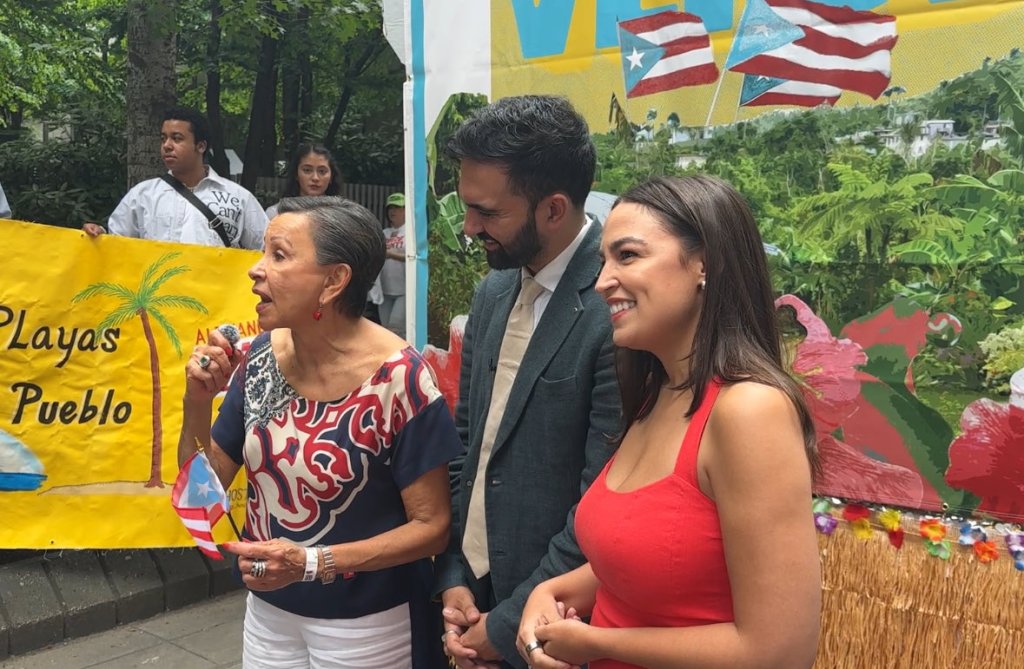
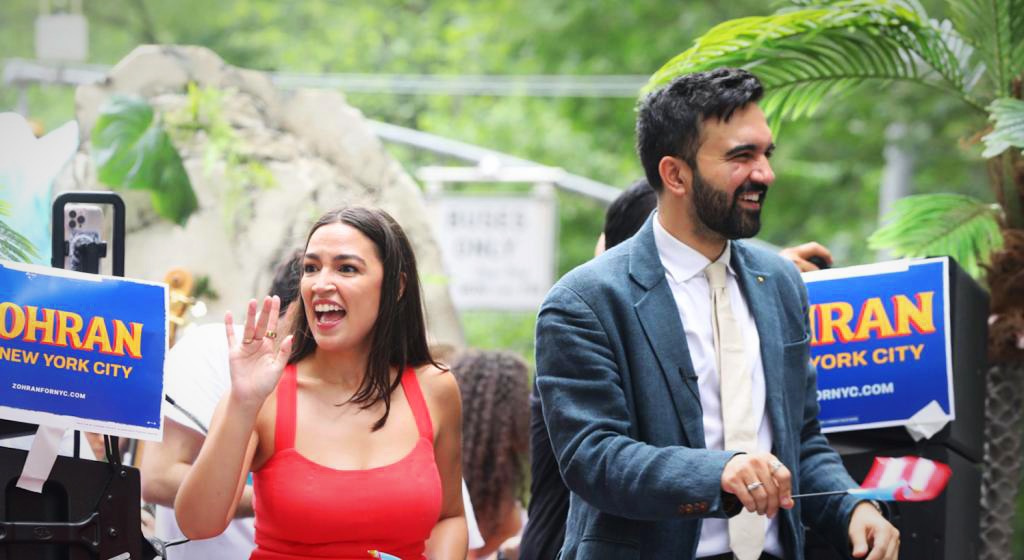
Mamdani’s use of the term places him firmly in the lineage of figures like Bernie Sanders and Alexandria Ocasio-Cortez, both of whom have successfully mainstreamed democratic socialism in American electoral politics. In doing so, he taps into an energized political current, particularly among younger voters, renters, union members, and New Yorkers disillusioned by the city’s deepening inequality and chronic dysfunction. For a generation raised amid austerity, pandemic precarity, and climate anxiety, the usual reformist language has begun to ring hollow. Mamdani’s brand of politics, by contrast, offers a promise of structural transformation, not just technocratic adjustment.

Importantly, this positioning also exerts strategic pressure on the rest of the field. In a crowded race where multiple candidates will profess progressive values, Mamdani’s unambiguous ideological label sets a benchmark. It forces other candidates to articulate whether their vision for the city includes systemic change or simply more efficient management. It also inoculates Mamdani from accusations of policy inconsistency or opportunism, his brand is explicit, unapologetic, and tied to a coherent political tradition.

The risks are not insignificant. “Socialism” remains a loaded term in American discourse, and Mamdani’s opponents will undoubtedly attempt to weaponize it. Yet recent electoral cycles suggest that voters, especially in urban areas, are increasingly unmoved by such attacks. If anything, they may interpret them as evidence that the candidate is willing to speak uncomfortable truths. In this context, reclaiming the term “Democratic Socialist” is not a liability, but an asset; a demonstration of conviction in an era fatigued by ideological hedging.

In choosing that label, Mamdani has not only clarified his own platform but reshaped the ideological stakes of the mayoral race. It is a move that marks him not merely as a candidate of the left, but as one committed to a transformative vision of what New York City could be.

Pride Without the Glitter: Why Canada’s Queer Community is Reclaiming Its Roots

There’s a quiet, but growing conversation taking place within Canada’s queer communities, one that asks whether it might be time to scale back the spectacle of Pride, and get back to what it was really about in the first place. The parades are still colourful, the parties still loud, but something’s shifting. With corporate sponsorship drying up and the political climate growing colder, many in the 2SLGBTQIA+ community are rethinking what Pride should look like in this new era.

For years, Pride events in cities like Toronto, Vancouver, and Montreal have felt less like grassroots activism, and more like mobile advertising campaigns. Walk down the route and you’ll see branded floats from banks, telcos, and beer companies. TD Bank, to name just one example, once earned applause for being an early supporter of queer inclusion, but these days, its giant green float can feel more like marketing than allyship. Many of us, especially those who’ve been around long enough to remember when participating in a Pride parade involved appreciable risk, can’t help but feel the soul has been somewhat bleached out of the rainbow.

Image source: Catalina Vásquez on Behance

Part of the shift is financial. With the Trump-era backlash and culture wars bleeding across the border, some corporations, particularly U.S.-based multinationals, are scaling back their public-facing support of Pride. In 2024, Reuters reported that global brands have “significantly reduced” their LGBTQ-themed campaigns in markets like Canada to avoid conservative backlash. These decisions affect more than just parade floats; they impact grants, community programming, and the broader financial ecosystem that’s supported major Pride festivals for years.

Yet, this isn’t necessarily bad news. In fact, many long-time activists see it as an opportunity to re-centre Pride around the people it’s meant to serve. Before there were glitter canons and wristbands with logos, Pride was a protest. The first Canadian marches, in the wake of the 1981 Toronto bathhouse raids, were acts of raw defiance, calling out police brutality and demanding civil rights. Nobody was handing out swag. No corporations were clambering to associate their brand with queer people. That history matters.

Now, with funding drying up and public support shifting, a new generation of organizers is looking backward to move forward. Smaller Pride celebrations are cropping up across the country that focus less on parade floats and more on community picnics, protest marches, zine fairs, and teach-ins. In places like Peterborough and Hamilton, organizers have made the deliberate choice to scale down the main event in favour of something that feels more connected, less commercial.

We’re at a cultural crossroads. Pride doesn’t need to be louder to be more meaningful. In fact, the moment may call for exactly the opposite. There’s power in returning to the grassroots, not out of nostalgia, but out of necessity. If Pride becomes less about the glitter and more about the grit again, that might just be the most radical thing we’ve done in decades.

Sources
• CBC News (June 2024): “Pride organizers across Canada reassess role of corporate sponsorship”
• Reuters (June 2024): “Global brands rethink LGBTQ marketing amid backlash”
• Xtra Magazine (May 2023): “The Fight Over Pride: Protest or Party?
• The Canadian Encyclopedia (2022): “How the Bathhouse Raids Sparked Toronto Pride”

The Right-Wing Assault on Zohran Mamdani: A Case Study in Fear, Faith, and Manufactured Outrage

This week’s Democratic primary win by Zohran Mamdani in New York City has sparked a swift and vitriolic backlash from the American political right. For many progressives, Mamdani represents a fresh, principled voice, an openly socialist, Muslim elected official rooted in grassroots organizing. Yet, to the MAGA-aligned right, he’s become an instant caricature: the bogeyman of “woke” America, Islamic extremism, and anti-capitalist menace rolled into one.

What’s striking is not just the speed or ferocity of the attacks, but their coherence. The American right has launched a well-coordinated, multi-front campaign to delegitimize Mamdani before he’s even secured office. This isn’t just about a single candidate, it’s about creating a chilling example for anyone who dares to combine faith, leftist politics, and immigrant heritage in one political package.

The attacks fall into four clear categories: ideological smears, identity-based vilification, legalistic threats, and strategic political framing. Let’s unpack each in turn.

Ideological Smears: “100% Communist Lunatic”
Leading the charge, unsurprisingly, was Donald Trump himself. In a Truth Social post, Trump called Mamdani a “100% Communist Lunatic,” mocked his appearance (“he looks TERRIBLE”), and dismissed his intelligence. “He has a grating voice and is not very smart,” Trump wrote, using his familiar playground style to frame Mamdani as both alien and absurd.

This wasn’t just personal insult, it was deliberate ideological messaging. Trump’s followers picked up the cues. Fox News commentators immediately recycled the “radical Marxist” label, lumping Mamdani with other left-wing figures like AOC and Ilhan Omar. Charlie Kirk, head of Turning Point USA, accused Mamdani of being “openly hostile to American values,” while Ben Shapiro described him as “a warning shot for every city in America flirting with socialist politics.”

The goal is clear: to equate Mamdani’s democratic socialism with authoritarian communism, hoping the average voter won’t notice the difference, or care.

Identity Attacks: Islamophobia on Full Display
Once the ideological lines were drawn, the right turned to its most reliable weapon: fear of the Other. Mamdani’s Muslim identity has become the centerpiece of a series of ugly, Islamophobic attacks that call back to the darkest days of post-9/11 paranoia.

Right-wing influencer Laura Loomer declared that Mamdani’s win meant “Muslims will start committing jihad all over New York.” Charlie Kirk took a similar route, tweeting, “24 years ago a group of Muslims killed 2,753 people on 9/11. Now a Muslim Socialist is on pace to run New York.”

This isn’t dog-whistling. It’s a blaring siren aimed at reinforcing the idea that no Muslim, especially one on the political left, can ever be truly American. Donald Trump Jr. added fuel to the fire, posting that “NYC has fallen,” linking Mamdani’s faith to the city’s supposed moral and political collapse.

It’s a tactic steeped in the logic of fear. By framing Mamdani as a religious threat, not just a political one, the right seeks to incite suspicion and revulsion in undecided voters, and rally the conservative base with xenophobic energy.

Legal Threats: Revoking Citizenship and Deportation
Perhaps the most extreme tactic has come from fringe legal proposals that are gaining traction in some corners of the Republican ecosystem. The New York Young Republican Club issued a statement urging that Mamdani’s citizenship be revoked and that he be deported under the Cold War–era Communist Control Act.

Joining in were social media accounts linked to campus Republican groups at Notre Dame and elsewhere, who posted memes calling for Mamdani’s removal “before he turns NYC into Gaza.

Of course, Mamdani is a U.S. citizen, and the Communist Control Act has long been rendered toothless, but the mere invocation of such tools shows the level of desperation, and the fantasy of a purer, ideologically homogeneous America that many on the far right still chase. That such rhetoric is being normalized through prominent GOP-aligned accounts is a worrying sign of how authoritarian instincts now animate large swaths of the American right.

Strategic Framing: The New Face of the Democratic Party
Beyond the bluster, there is calculation. Republican strategists are already working Mamdani’s win into their national messaging. Rep. Richard Hudson, chair of the National Republican Congressional Committee, called Mamdani “the new face of the Democratic Party” and warned that he was “anti-police, anti-ICE, and antisemitic.”

Elise Stefanik, a top Trump ally and potential gubernatorial candidate in New York, blasted the state’s Democrats and Governor Kathy Hochul, claiming their “weakness and chaos” enabled Mamdani’s win. “This is what happens when you abandon law and order,” she warned, painting Mamdani’s victory as a symptom of broader Democratic decay.

The GOP’s playbook here is familiar: elevate the most progressive voices within the Democratic coalition and present them as mainstream, thereby frightening moderate voters. It’s the same tactic used against AOC and “The Squad,” now applied to a new, compelling candidate who threatens to expand the progressive tent even further.

A Test of American Pluralism
What we’re witnessing is not just the rejection of a political ideology, it’s an assault on the possibility that someone like Zohran Mamdani can belong in American political life. A socialist. A Muslim. The child of immigrants. A man whose vision of justice includes housing for all, and decarceration as part of a broader push to treat social problems (like addiction, poverty, and mental illness) through public health and community investment, not criminal punishment.

The right’s response is a mixture of panic and performance, yet their firepower is real, and their message is resonating in dark corners of the internet and Fox-friendly swing districts alike.

For Mamdani and others who share his vision, the challenge now is twofold: defend against the smears, and articulate a hopeful, inclusive vision that transcends them; because while the attacks are ugly, they are also revealing. They tell us exactly what the political right fears most: a future where people like Zohran Mamdani don’t just run, they win.

Sources
• Truth Social (Trump posts)
• Charlie Kirk and Donald Trump Jr. tweets, June 2025
• Statements from the NY Young Republican Club
• Fox News broadcast transcripts, June 24–26, 2025
• Public posts by Laura Loomer and Elise Stefanik on X (formerly Twitter)

New York Awakens: The Rise of Mamdani and a Progressive Shift

Zohran Mamdani’s victory in the Democratic primary for New York City mayor represents a seismic shift in the city’s political landscape, one that carries reverberations far beyond municipal governance. At just 33 years old, the Queens-born state assemblyman and self-described democratic socialist toppled former Governor Andrew Cuomo, the establishment favorite, signaling a generational and ideological realignment within the Democratic Party. 

Grassroots Power vs. Establishment Legacy
Cuomo entered the race with formidable credentials: a deep political network, endorsements from figures like Bill Clinton and Michael Bloomberg, and at least $25 million in Super PAC funding. Yet, despite this financial and institutional advantage, his campaign floundered. Critics pointed to a lackluster message, lingering baggage from his 2021 resignation amid sexual harassment allegations, and a scared reluctance to engage broader audiences.

In contrast, Mamdani surged from near anonymity (0–1% in early polling) to command 43.5% of first-choice votes on primary night, an astonishing ascent driven by a youth-led, grassroots coalition. Supported by endorsements from Bernie Sanders and Alexandria Ocasio‑Cortez, his campaign tapped into the deep well of dissatisfaction over rising housing costs, stagnant wages, and a city increasingly and wildly unaffordable.

Policy Vision: Progressive Ambition or Overreach?
Mamdani’s policy platform, ambitious in scope, centers on affordability and public service transformation. Proposals include a rent freeze for stabilized units, fare-free buses, universal childcare, and municipal grocery stores, all paid for through new taxes on corporations and high-income earners. 

While appealing to a generation struggling with inflation and economic precarity, these ideas have drawn scrutiny over execution feasibility, budget implications, and economic impact.  Wall Street and real estate interests have voiced concern, warning of tax burdens and regulatory uncertainty. 

The Ranked-Choice Factor and Cross-Endorsements
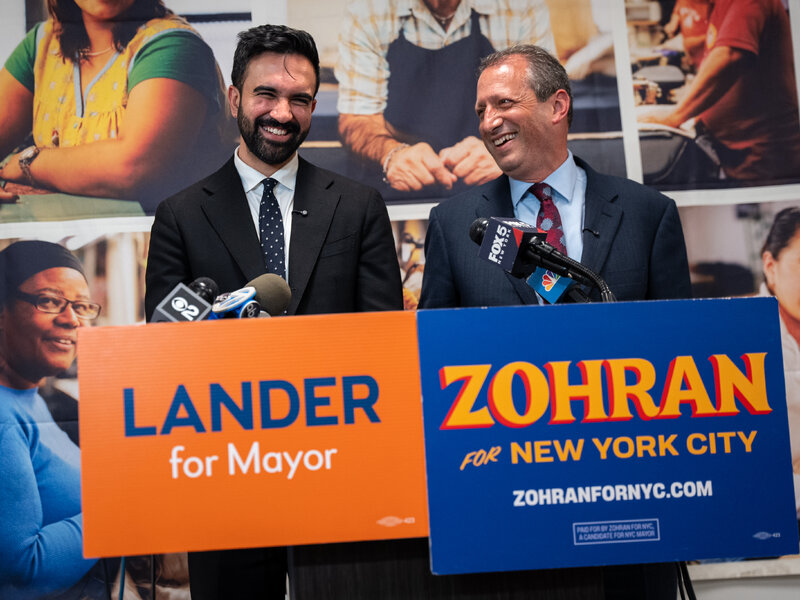
New York’s ranked-choice voting system played a decisive role. Mamdani strategically formed cross-endorsements, most notably with Brad Lander, who garnered around 11% of the vote, to position himself as a second-choice favorite. Analysts widely agree this will likely cement his victory once second-round, and later votes are redistributed. 

Navigating Controversy: Israel, Palestine, and Identity
Despite the momentum, Mamdani’s campaign has not been immune to controversy. His outspoken criticisms of Israeli policies, including references to the “globalization of the Intifada” and support for Boycott, Divestment, Sanctions (BDS) a Palestinian-led movement for freedom, justice and equality, have drawn accusations of antisemitism, particularly in a city with one of the largest Jewish populations outside Israel. He has sought to clarify his statements, asserting his opposition to hate and his commitment to civil rights. The controversy may crystallize how future general election opponents choose to attack, while also spotlighting internal tensions within urban progressive politics.

Cuomo’s Concession, so What Comes Next? 
On primary night, Cuomo recognized that the narrow path to victory was irrevocably closed, conceding to Mamdani, and acknowledging the campaign’s resonance with younger voters. Notably, he left open the possibility of running in the general election on an independent ballot line, a move that could fracture the Democratic vote and complicate the race.

The Broader Implications for the Democratic Party
Mamdani’s emergence marks a broader ideological turning point within the Democratic Party. It highlights the growing influence of progressive, youth-driven politics willing to challenge entrenched power. His candidacy echoes similar movements in other U.S. cities where left-leaning candidates have flipped local offices, redefining policy scopes on housing, climate, social services, and racial justice. 

For Democrats nationally, New York is a critical test case: can a bold progressive agenda resonate with urban voters in a general election? And can party unity be maintained while platform demands intensify?

November Showdown: A Crowded Field
If Mamdani completes the nomination, he heads into a three‑way fall election against the independent incumbent Eric Adams, whose legal troubles and declining approval ratings have damaged his standing, and Republican Curtis Sliwa. The contest’s contours are stark: progressive change vs status quo, left coalition vs fractured moderate support, and a referendum on policy versus personality.

A Turning Point in Urban Governance
The Democratic primary in New York City was more than a local race, it was a referendum on the future direction of American progressive politics. Mamdani’s success, powered by grassroots strategy, ranked-choice prowess, and a sweeping vision for economic justice, exposes the vulnerabilities of establishment politics and signals a generational handoff within the party. As ranked ballots are fully tallied, and the fight shifts to November, New Yorkers and national observers will be watching closely. Is this the beginning of a progressive resurgence, or a fleeting moment in a cyclical political saga?

By-Elections Signal Alberta’s Political Crossroads

The results of Alberta’s three provincial by-elections on June 23, 2025, offer more than simple electoral bookkeeping, they reflect shifting political winds across urban and rural divides, growing challenges for the governing United Conservative Party (UCP), and the solidifying leadership of Alberta NDP Leader Naheed Nenshi. While each race had its own dynamics, taken together, they sketch the early contours of the province’s next political chapter.

In Edmonton-StrathconaNaheed Nenshi secured a commanding victory, winning approximately 82% of the vote. This was no surprise, Strathcona has long been an NDP stronghold, but the size of the margin reaffirmed Nenshi’s appeal among urban progressives. More importantly, it granted the former Calgary mayor a seat in the legislature, allowing him to move from campaign trail rhetoric to legislative combat. For the NDP, this is a strategic milestone. Having a leader with Nenshi’s profile and cross-city recognition seated in the Assembly provides the party with both visibility and gravitas as it prepares to challenge Danielle Smith’s UCP in the next general election.

Meanwhile, Edmonton-Ellerslie delivered a more muted result for the NDP. While Gurtej Singh Brar held the seat for the party, the margin narrowed noticeably compared to previous elections. The UCP candidate, Naresh Bhardwaj, ran a stronger-than-expected campaign, capturing a significant share of the vote. This tightening suggests that even in NDP-leaning urban ridings, voter allegiance cannot be taken for granted. It also indicates that the UCP’s message still resonates with parts of the city’s electorate, particularly among working-class and immigrant communities whose support is increasingly contested territory.

The race in Olds-Didsbury-Three Hills played out very differently. As expected, the UCP retained this rural seat, with Tara Sawyer taking over from long-time MLA Nathan Cooper. However, the UCP’s vote share dropped markedly from the 75% it earned in the 2023 general election to around 61%. More striking was the performance of the Republican Party of Alberta (RPA), whose candidate Cameron Davies captured nearly 20% of the vote. The NDP surprisingly edged out the RPA for second place, though rural Alberta remains largely out of reach for them. The RPA’s strong showing, however, is cause for concern within the UCP’s rural flank. Separatist and hard-right discontent, once marginal, is becoming a disruptive force capable of peeling away conservative votes.

Together, these results underline a growing polarization in Alberta politics. The urban-rural split is hardening, with Edmonton increasingly dominated by the NDP and rural ridings remaining UCP strongholds, though now with visible fractures. The UCP retains power, but the by-elections exposed soft spots, especially in its ability to hold urban constituencies and suppress internal dissent from the right. Nenshi’s formal arrival in the legislature sets the stage for a more dynamic opposition, with a leader who brings both charisma and executive experience. His challenge now will be expanding the NDP’s base beyond its urban comfort zone while navigating the complex economic and cultural anxieties shaping Alberta’s electorate.

The by-elections may not have changed the balance of power in the legislature, but they altered the strategic terrain. What was once a contest between entrenched camps now feels more fluid, volatile, and competitive. That should make both major parties pause, and prepare.

Sources
CTV News Edmonton: https://www.ctvnews.ca/edmonton/article/alberta-ndp-leader-nenshi-wins-seat-in-one-of-three-byelections
The Albertan: https://www.thealbertan.com/olds-news/tara-sawyer-wins-olds-didsbury-three-hills-byelection-10853458
The Hub: https://thehub.ca/2025/06/24/a-win-a-warning-and-a-wobble-in-albertas-byelection-results

Why the West Applies a Double Standard on Israel

In international relations, consistency is often sacrificed at the altar of strategic interest. Nowhere is this more glaring than in the West’s treatment of Israel. While Western leaders are quick to condemn human rights violations, breaches of international law, and military aggression in most parts of the world, Israel remains a conspicuous exception. The recent conflicts in Gaza, the continued expansion of settlements in the West Bank, and the killing of civilians have drawn sharp criticism from human rights organizations, yet Western governments offer little more than qualified support, often couched in the language of “self-defence.”

Were any other nation to behave in a similar manner, bombing dense civilian areas under the claim of rooting out terrorism, occupying territory for over half a century, or engaging in collective punishment, the outcry from Washington, London, Ottawa, or Berlin would be swift and uncompromising. Yet, in Israel’s case, the pattern is predictable: diplomatic shielding, media reframing, and a reflexive invocation of antisemitism to deflect criticism.

This moral dissonance is not accidental. It is the result of historical, strategic, and political factors that have entrenched Israel’s exceptional status in the Western imagination. Foremost among these is the enduring legacy of the Holocaust. The genocide of six million Jews in Europe left a deep scar on the conscience of Western democracies, particularly Germany and the United States. In the aftermath of World War II, support for the establishment of a Jewish homeland was seen not only as a matter of justice, but of redemption. That sense of obligation persists, even when it conflicts with the principles of international law and universal human rights.

Israel has also embedded itself as a crucial strategic ally in Greater West Asia (GWA). It is a technologically advanced, militarily powerful, and politically stable partner in a region that has long been plagued by authoritarianism and volatility. Intelligence cooperation, arms development, and a shared interest in containing Iran have bound Israel and Western states, especially the United States, into a tightly knit alliance. This alliance, while often described in ideological terms as a partnership of democracies, is grounded in hard power and realpolitik.

Domestic western politics further reinforce this bond. In the United States, support for Israel transcends party lines, bolstered by a powerful pro-Israel lobby led by organizations such as AIPAC. Members of Congress routinely pledge unwavering support, while criticism of Israel can be politically perilous. In Canada, the U.K., and Australia, similar dynamics play out, albeit on a smaller scale. Politicians who speak out against Israeli policies risk being labelled antisemitic or accused of enabling terrorism. This silencing effect extends into media and academia, where critiques of Israeli actions are often met with institutional resistance.

Media framing plays a pivotal role in sustaining public support. Western coverage of conflicts involving Israel is often shaped by narratives of defence and victimhood. Rockets fired by Hamas are headline news; the destruction of entire apartment blocks in Gaza tends to be relegated to the fine print. Palestinian voices are underrepresented or presented through a security lens. When civilian casualties occur, they are regrettable but justifiable; when Israeli lives are lost, they are a tragedy and a rallying cry. This asymmetry in storytelling has a powerful effect on public perception and, by extension, policy.

Underlying all of this is the West’s enduring habit of applying different standards to allies and adversaries. Russia’s invasion of Ukraine has rightly been condemned as a violation of sovereignty, and a threat to international order. Iran’s domestic repression and regional aggression are frequently highlighted in official communiqués. Yet when Israel imposes a blockade on Gaza, builds illegal settlements, or enacts policies that human rights organizations have labeled apartheid, the West remains largely silent. The principle of international law becomes selectively invoked, its moral force diluted by political convenience.

This selective morality undermines the credibility of Western foreign policy. It sends a clear message to the world: rules apply, but not to everyone. For countries in the Global South, this hypocrisy is not lost. It fuels resentment, breeds cynicism, and erodes the legitimacy of institutions meant to uphold international norms. It also weakens the West’s ability to advocate for human rights elsewhere, as its own inconsistencies become fodder for authoritarian propaganda.

None of this is to deny Israel’s right to exist or to defend its citizens from violence, but rights come with responsibilities. The consistent failure of Western governments to hold Israel accountable when it breaches international standards does neither Israel nor the broader international community any favours. In fact, it encourages impunity, hardens divisions, and prolongs a conflict that desperately needs resolution.

A rules-based order cannot survive on exceptions. If the West truly believes in human rights, international law, and the dignity of all peoples, then it must apply those standards universally, without fear, favour, or exception.

References:

  • Human Rights Watch. (2021). A Threshold Crossed: Israeli Authorities and the Crimes of Apartheid and Persecution. https://www.hrw.org/report/2021/04/27/threshold-crossed
  • Amnesty International. (2022). Israel’s apartheid against Palestinians: a cruel system of domination and a crime against humanity. https://www.amnesty.org/en/documents/mde15/5141/2022/en/
  • Mearsheimer, J. & Walt, S. (2007). The Israel Lobby and U.S. Foreign Policy. Farrar, Straus and Giroux.
  • Finkelstein, N. (2003). The Holocaust Industry. Verso.
  • Pappé, I. (2006). The Ethnic Cleansing of Palestine. Oneworld.

Backroom Ontario: How the Ford Government Governs in the Shadows

The Ford government’s recent actions paint a troubling portrait of a leadership increasingly comfortable with obfuscation, procedural shortcuts, and performative consultation. Across multiple files, from environmental policy to Indigenous relations, Queen’s Park has displayed a consistent pattern of backhanded governance, marked by secrecy, evasion, and a disregard for both democratic norms and legal obligations.

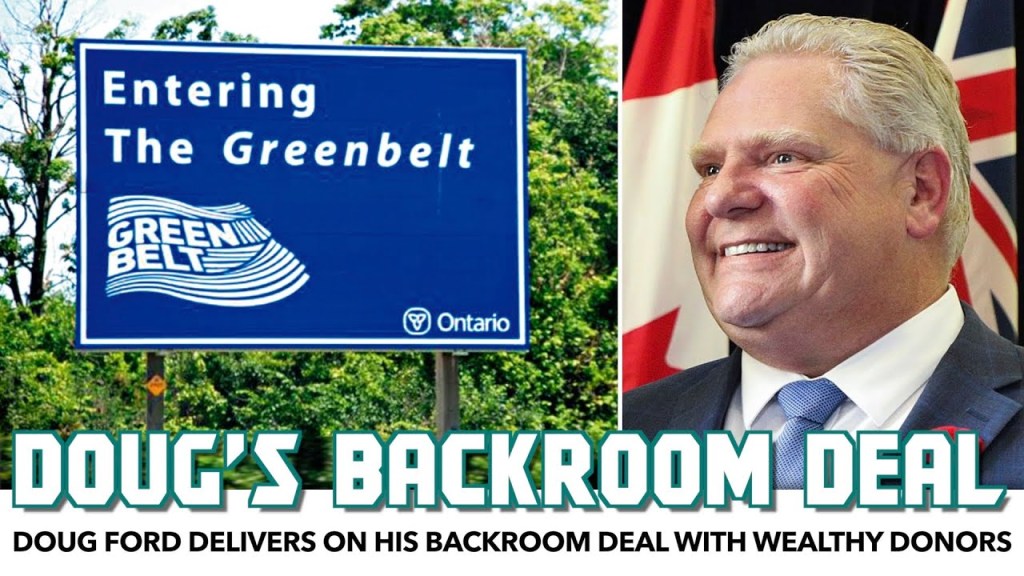
The Greenbelt scandal exemplifies this tendency in sharp relief. Ontario’s Information and Privacy Commissioner recently condemned the Ford government for deliberately making it difficult to track internal decision-making on land development. Staff used code words such as “GB,” “special project,” and most egregiously, “G*” in email subject lines, deliberately sabotaging searchability within the government’s own filing systems. Coupled with the use of private email accounts and a notable absence of meeting minutes or documentation, the evidence suggests not mere carelessness, but a concerted effort to obscure deliberations over one of the province’s most politically explosive issues.

This level of secrecy isn’t just bureaucratic mismanagement, it’s political damage control in real time. The government’s reversal of Greenbelt development plans did little to reassure the public, especially in the absence of any credible explanation or documentation as to how those decisions were made in the first place. When even watchdogs with statutory authority can’t access the paper trail, public accountability becomes a hollow phrase.

Meanwhile, Bill 5, part of the so-called “Unleashing the Economy Act”, reveals an equally unsettling willingness to bypass consultation and oversight in the name of economic development. This omnibus legislation fast-tracks industrial and mining projects across northern Ontario, including the ecologically sensitive Ring of Fire region, by reducing or eliminating requirements for municipal and environmental approvals. Most critically, it sidelines the constitutional duty to consult Indigenous communities.

First Nations leaders, particularly in Treaty 9 territory, were quick to denounce the bill. Chiefs burned environmental documents in protest and staged rallies in Thunder Bay, accusing the province of engaging in “consultation theatre”, informing communities of decisions only after they were made. Even a last-minute amendment to include optional post-passage consultations did little to mollify concerns. The government’s approach sends a clear message: consultation is something to be endured, not engaged.

What ties the Greenbelt and Bill 5 controversies together is not just their shared disregard for transparency and inclusion, but the mechanisms used to enforce that disregard. Whether through technical manipulation of record-keeping systems, suppression of documentation, or legislative sleight-of-hand, the government repeatedly avoids open debate and sidesteps legal and ethical responsibilities. It’s a governance style rooted in control, not collaboration.

These are not isolated incidents. The Ford administration has shown a consistent pattern of centralizing power through Minister’s Zoning Orders (MZOs), a tool meant for rare and urgent cases. Since 2019, the Premier has issued MZOs at an unprecedented rate, frequently overriding municipal decisions, and benefiting well-connected developers. Auditor General reports have raised red flags, and opposition parties have warned that such orders erode local democracy and set dangerous precedents. Still, the pattern continues, unimpeded.

Other examples confirm the trend. In 2018, the Ford government launched a controversial “snitch line” encouraging parents to report teachers who used an updated sex-ed curriculum, a move widely condemned as punitive and authoritarian. In 2019, sudden changes to autism services blindsided thousands of families, leading to mass protests and eventual policy reversals. Yet, even in those reversals, the government refused to acknowledge fault, framing retreats as “adjustments” rather than admissions of flawed policy-making.

This is politics by backchannel, a deliberate erosion of democratic norms dressed in the language of efficiency. Public engagement is reduced to afterthought; opposition voices are ignored or demonized; and when watchdogs raise the alarm, they are met with silence or spin. In each case, the common denominator is the Ford government’s willingness to weaponize the machinery of governance against transparency.

The implications are serious. Trust in institutions erodes when those in power show contempt for the very mechanisms designed to hold them accountable. The duty to consult Indigenous communities is not an optional courtesy, it is a constitutional requirement. Environmental stewardship and municipal autonomy are not bureaucratic hurdles, they are democratic protections. To dismiss them is not just arrogant, but reckless.

Unless reined in, this mode of governance threatens to become normalized. The lesson emerging from Queen’s Park is clear: when political expedience trumps process, communities lose their voice, environmental safeguards are gutted, and Indigenous sovereignty is sidelined. This should alarm all Ontarians, regardless of political stripe.

The Ford government’s backhanded approach may win short-term headlines or developer applause, but the long-term costs, to transparency, legitimacy, and public trust, are steep. If Ontario is to retain even the appearance of responsible government, it must reject this cynical model and restore meaningful consultation, clear record-keeping, and respect for constitutional obligations as non-negotiable principles of provincial governance. Anything less is a betrayal of public service.