This week, the Federal Court is hearing a constitutional challenge against Prime Minister Justin Trudeau’s decision to prorogue Parliament until March 24, 2025. The applicants, David MacKinnon and Aris Lavranos, argue that this move is unconstitutional, claiming it undermines Parliament’s ability to hold the government accountable – especially in the face of pressing issues like recent U.S. tariff threats. They contend that while the Prime Minister has the authority to advise the Governor General on prorogation, this power is not absolute and must be exercised with reasonable justification.
Federal lawyers, however, insist that Trudeau’s decision aligns with constitutional conventions and falls outside the scope of judicial review. They argue that the government remains accountable to voters, and prorogation is a legitimate tool within Canada’s parliamentary system. The court’s ruling could set a significant precedent, determining whether prime ministers have unchecked authority to suspend legislative scrutiny or whether limits must be imposed.
Amid this legal battle, conservative politicians and business leaders have been vocal in their calls to end prorogation, claiming it damages democracy and disrupts economic stability. But their outrage is as selective as it is hypocritical. When Conservative Prime Minister Stephen Harper twice prorogued Parliament – once in 2008 to dodge a confidence vote, and again in 2009 to stall inquiries into his government – many of these same voices either defended the move or remained conspicuously silent. Their sudden concern for democratic norms now suggests that their stance depends entirely on who is in power.
Business leaders, too, have taken up the cry, arguing that prorogation creates uncertainty that harms investment and economic confidence. Yet these same figures have backed policies that introduce far greater instability – aggressive deregulation, tax cuts that balloon deficits, and budget standoffs that delay essential government funding. Their selective outrage makes it clear: they aren’t worried about economic disruption in principle, only about the inconvenience of a temporary legislative pause that may slow down policies they favor.
Conservatives have long weaponized procedural arguments to suit their political needs. When in opposition, they decry any government move that limits their ability to grandstand. When in power, they are quick to use the same tools to stifle criticism and control the political narrative. Harper’s use of prorogation to shut down inquiries into the Afghan detainee scandal is a prime example. Back then, the argument was that Parliament needed a “break” to focus on governance. Now, with Trudeau at the helm, they claim a temporary pause is an attack on democracy itself. The double standard could not be clearer.
Ultimately, the conservative push to end prorogation isn’t about principle – it’s about power. Their calls for accountability and stability ring hollow when contrasted with their own history of procedural manipulation. This is not a stand for democracy; it is political opportunism, plain and simple.
The privatization of public utilities is one of the most serious threats to the well-being of Ontario’s citizens. Essential services such as electricity, natural gas, and potable water are not mere commodities; they are fundamental to public health, economic stability, and social equity. Yet, time and again, privatization has proven to be a short-sighted policy that prioritizes corporate profit over public interest, leading to rising costs, reduced accountability, and degraded service quality.
Ontario has already had a taste of these consequences. The partial privatization of Hydro One in 2015, sold as a way to fund infrastructure projects, stripped the public of full control over a critical utility. The result? Electricity rates surged while executive salaries ballooned, all while Ontarians faced an affordability crisis. Now, the same logic is being applied to water infrastructure, with growing interest in public-private partnerships (P3s) that risk putting a basic human right in the hands of profit-driven corporations.
The United Kingdom serves as a cautionary tale. Margaret Thatcher’s aggressive privatization agenda in the 1980s dismantled public control over water, gas, and electricity. Decades later, the consequences are glaringly evident—privatized water companies have failed to maintain infrastructure, leading to widespread sewage pollution in rivers and skyrocketing utility bills. In 2023, public outrage reached a boiling point as UK citizens demanded renationalization, fed up with a system that prioritized shareholder dividends over basic service quality.
Ontario does not need to look across the Atlantic to see privatization’s dangers. The sale of Highway 407 in the late 1990s remains one of the most infamous examples. Originally built with public funds, the highway was sold to a private consortium, which promptly implemented steep toll increases. Now, it is one of the most expensive toll roads in North America, generating billions in private profits while Ontario drivers pay the price.
Similarly, in the 1990s, Premier Mike Harris’s government moved to privatize parts of Ontario’s water services, leading to deregulation that contributed to the Walkerton tragedy in 2000. E. coli contamination in the town’s water supply led to seven deaths and thousands of illnesses. A key lesson from Walkerton was that water safety should never be compromised for cost-cutting measures—yet renewed interest in water privatization suggests that this lesson is being ignored.
Proponents of privatization often push P3s as a supposed middle ground, but the reality is that these arrangements often result in long-term financial burdens for taxpayers and reduced service quality. In Ontario, numerous P3 infrastructure projects, including hospitals and transit systems, have faced cost overruns, delays, and contract disputes that leave the public footing the bill. The Brampton Civic Hospital, one of Ontario’s earliest P3 healthcare projects, ended up costing nearly $200 million more than a traditional public model, demonstrating how these deals frequently benefit corporate interests at the public’s expense.
When it comes to water and electricity, the risks are even greater. Private firms operating under P3 models have strong incentives to minimize costs, which can lead to deferred maintenance, staff reductions, and lower service quality. Meanwhile, the public remains on the hook for any failures, as companies structure contracts to shield themselves from financial risk while reaping the profits.
Once essential services are privatized, reversing the decision becomes extremely difficult. Private companies, armed with deep lobbying power, fight fiercely to protect their revenue streams. In the case of Hydro One, the Ontario government now owns less than 50% of the company, making it virtually impossible to fully reassert public control without an expensive and politically complex buyback.
The simple truth is that profit should never be the primary driver in the management of public utilities. Roads, water, electricity, and natural gas are the backbone of a functioning society, and their operation must be based on public interest, environmental sustainability, and affordability—not corporate greed.
Ontario must resist further privatization and instead strengthen public ownership of essential services. This means investing in infrastructure, enforcing transparency, and ensuring that these utilities serve the people rather than the pockets of a few wealthy shareholders. The province has seen the consequences of privatization firsthand, and the path forward is clear: protect public utilities, prioritize public well-being, and reject the false promises of privatization before it’s too late.
Managing both the supply and demand sides of the economy is critical when considering the implementation of a Universal Basic Income (UBI). A well-structured UBI program has the potential to stimulate economic growth and reduce poverty but requires careful planning to avoid inflationary pressures or supply shortages that could undermine its benefits.
On the demand side, UBI directly increases people’s purchasing power by providing a fixed income, thereby boosting consumer spending. Households are better able to meet their basic needs, such as food, housing, and healthcare, while also increasing discretionary spending on non-essential goods and services, including entertainment, travel, and retail. This injection of purchasing power can invigorate various sectors of the economy and drive broader economic activity. However, this surge in demand poses risks. If supply chains cannot adjust to meet the increased demand, inflationary pressures may emerge, especially in sectors with limited capacity, such as housing. For example, stagnant housing supply coupled with heightened demand could lead to skyrocketing rents and property prices. Similarly, inadequate production in critical areas like groceries or energy could result in shortages, exacerbating economic instability. Without safeguards, landlords or businesses may exploit increased consumer spending by raising rents or essential costs like transportation, effectively eroding the benefits of UBI. Rental controls and stable public transportation costs are therefore essential to prevent the market from absorbing the additional income without improving overall living standards.
The supply side of the economy, therefore, plays a pivotal role in determining the success of UBI. Policies must be implemented to ensure that businesses and industries can scale up production to meet heightened demand. Investments in infrastructure, energy production, and manufacturing are necessary to expand capacity and prevent bottlenecks. Labor market dynamics must also be addressed, as UBI may lead some workers to leave low-paying or undesirable jobs, potentially causing shortages in essential industries. To counteract this, governments can support workforce adaptation through investments in automation, technological innovation, and targeted training programs. Additionally, UBI may encourage individuals to pursue entrepreneurial ventures or invest in their education, potentially fostering long-term productivity and economic growth.
Balancing these dynamics requires deliberate strategies. Sustainable funding mechanisms, such as taxes on wealth, corporate profits, or consumption, are essential to finance UBI without undermining fiscal stability. These taxation strategies can also help mitigate inequality by discouraging excessive accumulation or speculative practices that drive economic disparities. To address potential price spikes, temporary measures such as subsidies or price controls on essential goods may be necessary, particularly during the initial rollout of UBI. A phased introduction of UBI, starting with smaller-scale trials, allows supply chains and industries time to adjust, minimizing the risk of economic shocks.
Ultimately, a successful UBI policy requires coordination between the demand and supply sides of the economy. On the demand side, increased consumer spending has the potential to stimulate growth and alleviate poverty. On the supply side, proactive measures must ensure that production and labor markets can adapt to meet the new economic realities without triggering inflation or shortages. By managing these elements in tandem, and by instituting measures like rental control and stable transportation costs to protect consumers, UBI can create a more balanced and inclusive economy, fostering resilience and shared prosperity.
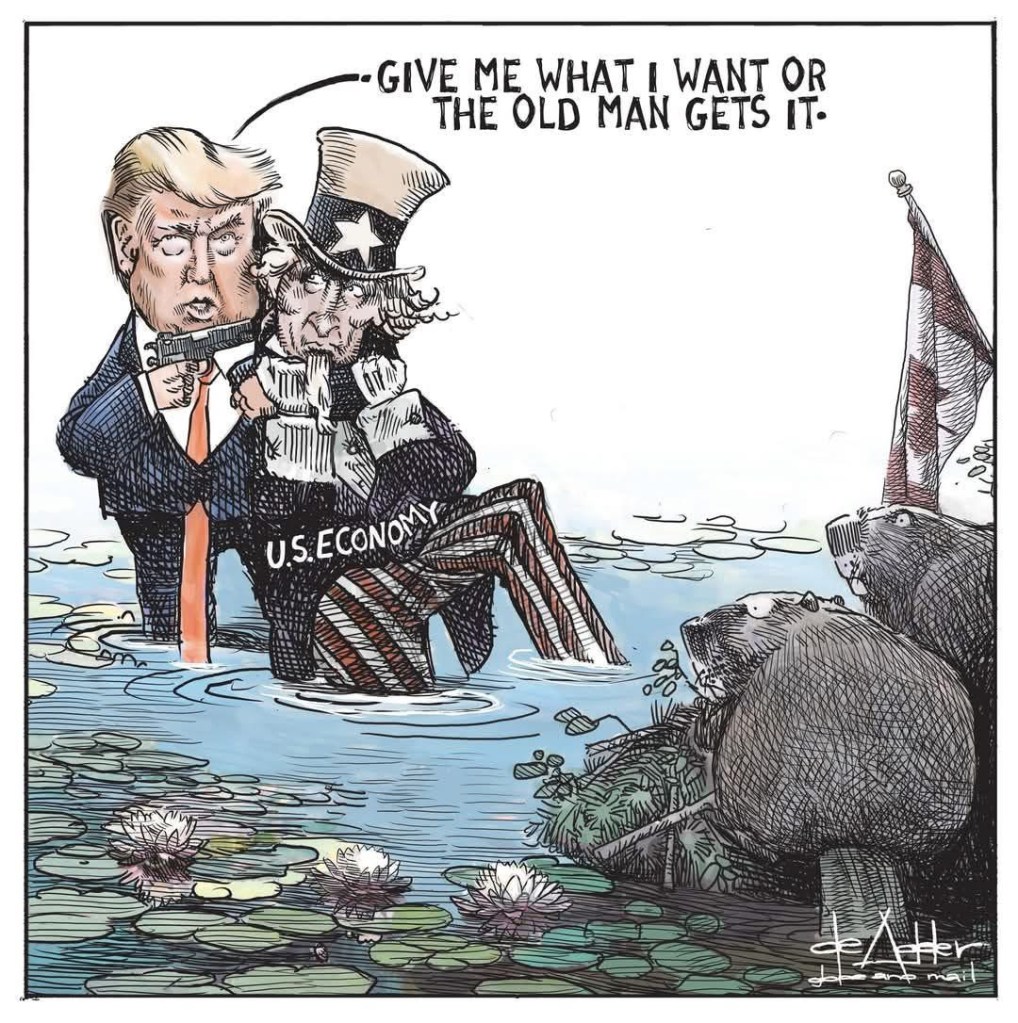
The idea of the United States invading Canada is pure fantasy – fiction that resurfaces when political tensions rise. History has seen conflict between the two nations, notably the War of 1812, but in modern times, such an invasion is not just improbable – it’s impossible. The recent escalation of trade tensions, triggered by the U.S. threat of 25% tariffs on Canadian imports in February 2025, has renewed debate over the state of relations. But let’s be clear: trade disputes don’t lead to tanks rolling across borders.
Canada and the U.S. share the world’s longest peaceful border (8,890 km) and a deeply intertwined economy. Canada is the U.S.’s second-largest trading partner, with trade worth hundreds of billions annually. A military invasion would shatter this economic relationship, triggering global market chaos, retaliatory tariffs, and crippling sanctions. The U.S.-Mexico-Canada Agreement (USMCA) would collapse, devastating American industries and consumers. Even the mere suggestion of aggression would spook markets and alienate key allies, making it a non-starter for even the most hardline economic nationalists.
Yes, the U.S. has the world’s most powerful military. No, that doesn’t mean invading Canada is feasible. Geography alone makes occupation nearly impossible. Vast forests, prairies, and the Rocky Mountains would bog down any invading force. Even during the War of 1812, when Canada was smaller and less industrialized, American forces struggled to maintain supply lines. Today, with modern infrastructure and a well-equipped Canadian military, the challenge would be exponentially greater.
Canada’s armed forces, though smaller than the U.S. military, are highly professional, technologically advanced, and well-integrated into NATO. The moment American troops crossed the border, global condemnation would be swift, and allies, including European powers, would not tolerate such an egregious violation of international law. The U.S. would find itself isolated and facing retaliatory action.
Invading Canada wouldn’t just be a military disaster, it would make the U.S. a global pariah. Canada is one of the world’s most respected nations, known for diplomacy, peacekeeping, and strong alliances. An unprovoked attack would trigger severe sanctions from the EU, UK, and other key trading partners, crippling U.S. banks and multinational corporations. The diplomatic fallout could even fracture NATO.
At home, the American public would reject such a reckless move. Canadians, fiercely proud of their independence, would mount an unyielding resistance. Any occupying force would face guerrilla warfare, sabotage, and mass civil disobedience – turning Canada into another unwinnable quagmire, like Vietnam or Iraq. The political backlash within the U.S. would be massive, with protests and upheaval against a war that serves no legitimate purpose.
Beyond all this, a war with Canada would be a direct threat to North American security. The U.S. and Canada work together through NORAD, jointly protecting the continent. Disrupting this alliance would leave both nations vulnerable to adversaries like China and Russia. In today’s world, power is determined by cybersecurity, economic influence, and technological dominance – not outdated military conquest.
Even in the heat of a 2025 trade war, where tensions are high, the leap from tariffs to military action is absurd. Trade disputes are fought with economic measures, not invasions. The fact that some even entertain this notion is more a reflection of political hyperbole than any serious strategic consideration.
A U.S. invasion of Canada isn’t just impractical – it’s impossible. The economic fallout, military challenges, guaranteed international backlash, and fierce Canadian resistance make it a non-option. The U.S. and Canada have their disagreements, but history has shown that their relationship is built on cooperation, shared values, and mutual benefit. The current trade war will eventually be resolved through negotiation, not war.
So, let’s put this nonsense to rest. Canada isn’t going anywhere. And if anyone thinks otherwise – think again.
As we are deep into the February 2025 Ontario election, I thought I might share my vision for the province, which might just be a little wide of traditional thinking for this part of North America, but would help rebalance the out of control neoliberal free-market capitalism we have today.
I personally don’t feel that the New Democratic Party (NDP) is far enough to the left, as it makes too many compromises in order to attract centralist voters, whereas the Democratic Socialists of Canada (DSC) are uncompromising idealists, and politically ineffective. I fall somewhere in between these two parties, taking the best of both, and hopefully crafting a strategic message that’s attractive to others.
Vision The vision for Ontario is one of prosperity and equity, placing the well-being of its citizens at the forefront. This vision emphasizes robust investments in education, social programs, healthcare, and economic infrastructure to foster sustainable growth. The goal is to empower small and medium-sized communities, easing the burden on overpopulated urban centers and promoting regional equity, ensuring that all Ontarians benefit from the province’s future.
Core Pillars of the Mandate The mandate is built upon five core pillars, each aimed at creating a more inclusive, prosperous Ontario. These pillars are focused on empowering citizens through education, improving community well-being, ensuring healthcare accessibility, fostering economic resilience, and promoting decentralized urban planning.
Education for Empowerment A commitment to universal access to high-quality education is foundational. The focus will be on equipping Ontarians with the skills necessary for a modern, equitable economy. This will be achieved by expanding public education funding, particularly in smaller and medium-sized communities, ensuring that schools have access to modern facilities, resources, and technology. To make post-secondary education more accessible, tuition fees will be capped, grants increased, and debt forgiveness programs introduced for students who work in underserved areas. Moreover, lifelong learning programs will be developed to offer free or subsidized adult education and skills-training in emerging industries such as green energy and trades.
Social Equity and Community Well-Being The goal is to build a society that is inclusive and supportive of its most vulnerable populations. Prioritizing affordable housing development in smaller communities will ensure that these areas remain accessible and livable. In addition, social safety nets such as universal childcare, guaranteed basic income pilots, and targeted support for Indigenous, rural, and marginalized communities will be strengthened. Public transit systems will also be expanded in smaller communities to reduce isolation and promote economic integration, ensuring better access to resources and opportunities for all.
Healthcare Accessibility and Innovation Comprehensive healthcare that is accessible to all Ontarians is central to the mandate. Efforts will focus on strengthening local healthcare systems, particularly in smaller communities. By decentralizing healthcare services, the government will build and expand hospitals, clinics, and mental health centers, ensuring that these communities are well-served. Recruitment incentives for healthcare professionals will encourage doctors, nurses, and allied health workers to settle in underserved areas. Additionally, long-term care will be reformed, transitioning to fully public and community-centered models to ensure seniors receive care with dignity.
Economic Resilience and Green Growth The mandate aims to promote sustainable economic growth through targeted investments in local industries and green initiatives. Creating tax incentives and grants for businesses to establish operations in smaller communities will be key to developing these regions economically. Expanding rural broadband to guarantee high-speed internet access will empower remote work, education, and commerce. Support for green industries, including renewable energy, sustainable agriculture, and low-emission manufacturing, will help these smaller regions thrive while contributing to environmental sustainability. Furthermore, worker-focused policies such as a $20/hour minimum wage, strong union protections, and expanded benefits like paid sick leave will ensure fair wages and working conditions across Ontario.
Decentralized Urban Planning Shifting the focus from overburdened urban centers to smaller communities is a central part of the vision. Population redistribution strategies will provide tax benefits and relocation assistance for families and businesses moving to smaller towns. This will be complemented by investments in local infrastructure to improve water, energy, and transportation systems, making these communities more attractive for growth. Moreover, smart city planning will prioritize environmentally conscious and community-driven urban development, curbing urban sprawl and preserving green spaces.
Accountability Framework To ensure the success of these initiatives, an accountability framework will be established. Regional citizens’ assemblies will guide local development, providing a channel for community input and ensuring government responsiveness. Transparent reporting will be maintained, with annual progress reports on education, healthcare, and economic initiatives. Regular equity audits will be conducted to ensure that the benefits of these programs are distributed fairly across rural, Indigenous, and urban populations.
Conclusion The transformative changes outlined in this mandate will be funded through a progressive taxation system. The wealthiest individuals and corporations will contribute their fair share, while tax loopholes and corporate subsidies will be minimized, redirecting billions toward public investments. A modest increase in taxes on luxury goods, high-value real estate, and environmentally harmful industries will also generate revenue while promoting sustainability. Additionally, funding from inefficient urban sprawl projects will be reallocated to support investments in smaller communities. By partnering with federal programs and green investment funds, the province will secure additional resources for vital infrastructure, education, and healthcare reforms, ensuring fiscal responsibility while driving long-term economic growth.
This vision for Ontario is rooted in social democracy, seeking to build a fair, inclusive, and sustainable province by addressing the needs of all its citizens. By prioritizing smaller communities and strengthening public infrastructure, it aims to balance equity with opportunity, ensuring that no one is left behind in Ontario’s future.
I wrote this piece a while back when it became clear that the Labour government wasn’t going to acknowledge the mess that Brexit has left the country, and then planning on doing something about it.
It’s been more than eight years since the UK voted to leave the European Union, and the country remains tangled in the wreckage of that decision. Those who championed Brexit—promising economic renewal, restored sovereignty, and an end to Brussels’ supposed meddling—have either slunk away from public life or now conveniently blame everything, but Brexit itself, for the country’s dismal state. Meanwhile, the UK economy limps along, its political class is in shambles, and its global standing is diminished.
Let’s start with the economy. The Office for Budget Responsibility (OBR) has repeatedly confirmed that Brexit has shaved at least 4% off the UK’s GDP—a staggering hit equivalent to the cost of COVID-19, but without the excuse of a global pandemic. Investment has stalled, businesses struggle with trade barriers, and the labour market is in disarray. The much-touted trade deals—supposedly the jewels of an independent Britain—have been underwhelming at best. The Australia deal, for example, was so lopsided that even its Conservative architect, George Eustice, admitted it was a mistake.
Meanwhile, Britain’s political leadership is paralysed by the Brexit-induced culture war that still defines Tory policy. Rishi Sunak, the latest in a conveyor belt of weak Conservative prime ministers, finds himself hostage to the hard-right fringes of his party, who still cling to Brexit as a nationalist totem. Labour, under Keir Starmer, tiptoes around the issue, unwilling to reopen old wounds but acutely aware that Brexit is a disaster.
And then there’s Northern Ireland. The supposed “solution” to the Brexit border dilemma—the Windsor Framework—hasn’t ended unionist resentment or calmed the waters. Businesses in Northern Ireland enjoy a unique advantage of dual access to UK and EU markets, but politically, the province remains deeply fractured. The Democratic Unionist Party (DUP) continues to throw tantrums over Brexit’s impact, while the broader UK-EU relationship remains one of managed hostility rather than genuine partnership.
In short, Britain is poorer, politically broken, and increasingly irrelevant on the world stage. The great post-Brexit “Global Britain” experiment has failed, leaving a country adrift, governed by a party unable to admit its mistakes and an opposition too cautious to offer real alternatives. And yet, despite mounting evidence of economic self-harm, Brexit remains a political third rail. No major party dares to say what most people now quietly accept: Brexit was a colossal error, and the UK is paying the price.
Canada’s supply management system for dairy, poultry, and eggs is about to prove its worth as U.S. tariffs threaten to drive up food prices across the country. Unlike the free-market volatility seen in other parts of the grocery sector, supply-managed goods benefit from a carefully controlled production and pricing system that shields both farmers and consumers from external shocks. While some food categories, particularly those reliant on global trade, are expected to see price hikes due to shifting tariff policies, supply management will help ensure that Canadian shoppers don’t feel the full brunt of these disruptions when it comes to staples like milk, cheese, chicken, and eggs. This is part of the reason why the Bloc Québécois has been fighting to protect Canadian agrifood supply management from future trade negotiations with the U.S.
At the heart of this system is production control, which ensures that Canadian farmers produce only as much as the domestic market demands. This prevents overproduction, which can drive prices down unsustainably, and underproduction, which leads to shortages and skyrocketing costs. By maintaining a predictable balance between supply and demand, Canada avoids the kind of dramatic price swings that often plague food markets when international trade is disrupted. If American producers face steep tariffs on their agricultural exports to Canada and Mexico, they will likely respond by raising production or looking for alternative markets, creating instability in global food supply chains. However, because Canada’s system prioritizes production for domestic consumption, our supply-managed sectors will be largely insulated from this volatility.
Another key advantage of this system is import restrictions, which limit how much foreign dairy, poultry, and eggs can enter the Canadian market. These restrictions act as a buffer, shielding the domestic food supply from sudden external price shocks. If U.S. tariffs make it more expensive for American farmers to produce and export their goods—whether due to higher costs for feed, fertilizers, equipment, or transportation—the price of their products will rise accordingly. But because Canada strictly controls how much foreign dairy and poultry can enter the market, these increases won’t directly impact the availability or affordability of Canadian supply-managed goods. While consumers in the U.S. could see price hikes on essential groceries due to their country’s changing trade policies, Canadian shoppers will find more stability in their supply-managed products.
Perhaps the most critical component of Canada’s approach is price regulation at the farm level, which guarantees that producers receive a fair, cost-based price for their goods. This system prevents the kind of unpredictable swings that occur in unregulated markets, where external factors like trade wars, economic downturns, or climate disruptions can send food prices soaring overnight. By ensuring that Canadian farmers earn a predictable and stable income, the system also reduces the likelihood of sudden price hikes at the grocery store. Even as global food markets react to U.S. tariffs with rising costs, supply-managed products will remain steady, providing much-needed price relief for Canadian households.
That’s not to say that supply management is a perfect shield against inflation. Many inputs required for farming—such as animal feed, fuel, transportation, and packaging—are still subject to global market forces, meaning that rising costs in these areas could indirectly influence retail prices. Additionally, supply management does not cover all food categories. Sectors like beef, pork, grains, and processed foods remain more exposed to international price fluctuations, meaning that consumers will still feel some of the effects of U.S. tariff policies. However, compared to a fully unregulated system, Canada’s approach offers a crucial layer of protection for both farmers and consumers.
As the impact of U.S. tariffs unfolds, Canadians may start to appreciate the stability that supply management provides. While some critics argue that the system limits consumer choice and keeps prices higher than they would be in a fully open market, the reality is that it prevents the extreme price fluctuations that can wreak havoc on household budgets. In uncertain economic times, a reliable and predictable food supply isn’t just a convenience—it’s a necessity. Canada’s supply management system ensures that, at least when it comes to dairy, eggs, and poultry, Canadian shoppers can count on consistent pricing, regardless of what happens in the broader global economy.
With Doug Ford calling a provincial election for February 27th, 2025, the bigger question is how will this move affect Pierre Poilievre’s federal election ambitions?
The notion that Ontarians prefer to separate their provincial and federal allegiances stems from an observable—but not universal—trend in Canadian voting patterns. Historically, Ontarians have been seen as pragmatic voters who often prioritize balance in governance, particularly when one party’s policies become too dominant at one level of government. This sentiment can manifest as a counterweight strategy: if a party governs provincially, voters may feel the need to elect a different party federally to avoid over-concentration of power. However, the reality is nuanced, and many factors interplay with this perceived pattern.
Historical Context and Party Dynamics For much of Canada’s modern political history, Ontario has served as the battleground that determines national election outcomes. Given its population and seat count in the House of Commons, the province holds disproportionate influence over which federal party forms government. Historically, there have been instances when Ontarians demonstrated a preference for contrasting party control. For example:
1995–2003: While Mike Harris and the Ontario Progressive Conservatives implemented the controversial “Common Sense Revolution,” Ontarians repeatedly supported Jean Chrétien’s Liberal Party at the federal level. Voters may have been wary of similar austerity measures being implemented federally.
2003–2018: During the Ontario Liberal Party’s 15-year rule, the federal Liberal Party experienced both opposition and government periods. However, the Stephen Harper years (2006–2015) saw Ontarians lean Conservative federally, even while backing the Liberals provincially—a testament to their selective pragmatism.
Doug Ford and Ontario Politics Doug Ford’s premiership has been polarizing. His government’s handling of issues like healthcare, education, and pandemic management has garnered both staunch support and fierce criticism. A victory in the upcoming February 27th election would reinforce Ford’s leadership in Ontario and demonstrate voter confidence in his provincial policies. However, his association with the federal Conservative Party—though unofficial—could complicate federal dynamics.
Critics argue that Ford’s policies, including his cuts to social programs and controversial land-use decisions, such as opening portions of the Greenbelt for development, might alienate centrist Ontario voters from Pierre Poilievre’s federal Conservative Party. Many Ontarians may see the potential of a Conservative majority at both levels as a risk to maintaining a balanced political environment, especially if Ford’s policies are seen as misaligned with their values.
Federal Conservatives and Pierre Poilievre Pierre Poilievre’s leadership of the federal Conservative Party marks a shift toward a more populist, right-wing approach. While this strategy has energized parts of the Conservative base, particularly in Western Canada, it remains uncertain how it will resonate with Ontario’s diverse electorate. The province’s suburban and urban voters, who tend to swing elections, may view a Ford-Poilievre tandem as too ideologically extreme.
If Ontarians re-elect Ford, Poilievre may face an uphill battle convincing the province’s moderate voters that his federal policies differ meaningfully from Ford’s. This could weaken the Conservative Party’s ability to make significant inroads in the 905 region, a critical area surrounding Toronto that often decides federal elections.
Counterarguments and Complexities While the separation of provincial and federal voting patterns is an observable trend, it is far from absolute. Some commentators argue that shared governance by the same party can actually strengthen voter confidence if the party is performing well. For instance, Doug Ford’s ability to deliver on infrastructure projects, such as highway expansions, may enhance perceptions of Conservative competence, benefiting Poilievre federally. Additionally, the collapse of the Ontario Liberal Party and the challenges faced by the NDP at the provincial level leave limited alternatives for voters disenchanted with Ford.
Voter behavior is increasingly issue-driven rather than party-driven. Federal and provincial elections are often fought on vastly different platforms. Healthcare, education, and municipal matters dominate provincial elections, while federal campaigns focus on national defense, the economy, and foreign policy. Ontarians may see Ford and Poilievre as addressing separate issues, reducing the perceived risk of a Conservative double government.
While there is historical precedent suggesting that Ontarians often prefer different parties at the provincial and federal levels, it would be reductive to assume that Doug Ford’s re-election would automatically weaken the federal Conservative Party’s chances of winning a majority. Ontarians are pragmatic voters who weigh numerous factors beyond party labels. However, should Ford’s government face mounting criticism or become embroiled in scandals, this could cast a shadow on Poilievre’s campaign, particularly among centrist voters. Conversely, if Ford’s policies resonate with Ontarians and his government appears competent, it could bolster the case for a Conservative federal government.
Ultimately, the outcome will hinge on voter perceptions of leadership, policy, and governance at both levels—a dynamic interplay that defies simple predictions.
It began in the aftermath of the Trump years – a nation divided, fractured at its very core. The United States, once a symbol of strength and unity, had unraveled under the weight of its own polarization. Years of escalating political infighting, economic instability, and growing regional tensions had pushed the great experiment of American democracy to its breaking point. When the collapse came, it was not with a bang, but with a slow, inevitable unraveling.
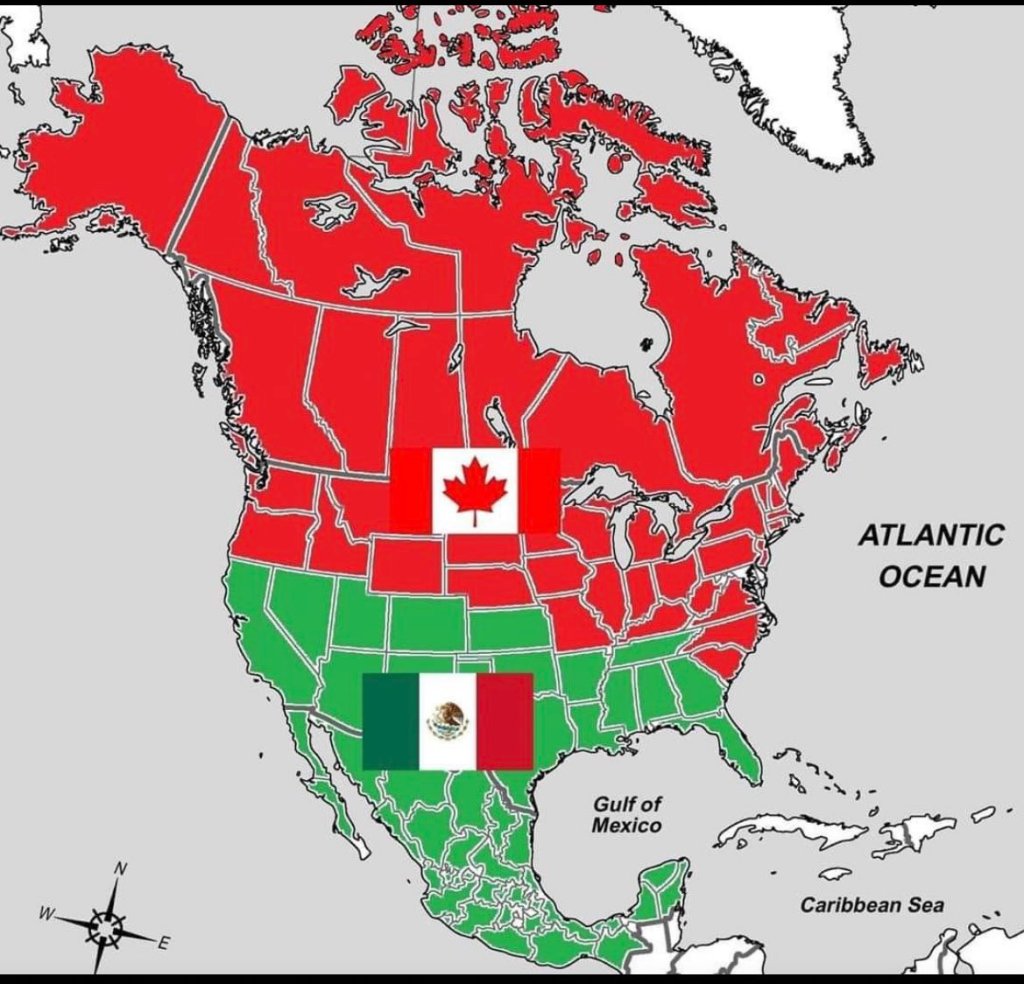
In the early 2030s, the federal government, weakened by years of partisan gridlock and financial crises, failed to contain the growing unrest. States, long at odds over issues of governance, resources, and ideology, began asserting their independence. California, Texas, and other powerful states declared their sovereignty, severing ties with Washington, D.C., and leaving the remnants of the federal government powerless. What was once a union of fifty states dissolved into chaos.
As the world watched in shock, two nations quietly stepped forward: Canada and Mexico. Both had been America’s neighbors and partners, but now, they saw an opportunity, and a necessity, to reshape the continent.
The Canadian Annexation To the north, Canada extended a cautious but determined hand to the crumbling states along its border. The former states of Michigan, Minnesota, North Dakota, and Montana, facing economic collapse and a bitter winter with no central government to guide them, sought refuge under Ottawa’s governance. Canada, ever pragmatic, offered them integration in exchange for loyalty to its parliamentary system and adoption of its healthcare and social policies.
The Pacific Northwest—Washington, Oregon, and northern California—quickly followed. Their progressive politics and environmental priorities aligned well with Canada’s ethos. Vancouver and Seattle became twin metropolises, and the region flourished under Canadian stewardship. The newly expanded Canada, now stretching as far south as the Sierra Nevada, became an economic powerhouse, blending American innovation with Canadian stability.
Mexico’s Revival To the south, Mexico reclaimed lands it had lost centuries earlier. Texas, Arizona, New Mexico, and southern California were among the first to fall into its orbit. For these states, heavily influenced by Hispanic culture and history, the transition was both practical and symbolic—a return to roots.
Mexico, long underestimated on the global stage, rose to meet the challenge. The integration of these territories revitalized its economy, spurred technological innovation, and solidified its status as a regional superpower. Cities like Los Angeles and Austin, while retaining their unique identities, became hubs of a new Mexican-led cultural renaissance. Spanish replaced English as the dominant language in much of the region, and Mexico’s influence spread northward.
A Continent Redefined By the 2040s, the map of North America had been redrawn. Canada and Mexico had divided the former United States almost evenly, with a handful of independent city-states like New York and Chicago remaining as neutral enclaves. The continent was no longer dominated by a single superpower but by two distinct and rising nations, each shaped by the remnants of the United States they had absorbed.
Canada, now stretching from the Arctic to the Rockies and the Great Lakes to the Pacific, became a beacon of progressive governance and environmental stewardship. Mexico, infused with the energy of its newly integrated territories, grew into a vibrant economic and cultural force, bridging Latin America with the former United States.
The world adapted to this new reality. China and the European Union moved to fill the void left by America’s collapse, but Canada and Mexico ensured North America remained a critical player on the global stage. Though the stars and stripes had fallen, the legacy of the United States lived on—in the governments, cultures, and people of its successor states.
And so, the great American experiment ended, not in triumph or tragedy, but in transformation, a testament to the resilience of a continent and the enduring power of reinvention.
I feel strongly about the subject of school closures as an efficient means to reduce budgets. Maintaining and rebuilding schools in small communities is not just a matter of preserving tradition; it is a strategic investment in Ontario’s future. Strong rural and small-town communities contribute to the province’s economic diversity and resilience. By keeping schools open and ensuring they remain well-resourced, the government can signal its commitment to equity, sustainability, and the well-being of all Ontarians, regardless of where they live. This approach ensures that small communities remain vibrant, and that their children have access to the opportunities they need to thrive.
Schools are the cornerstone of small communities, serving not only as centers for education, but also as hubs for social, cultural, and economic activity. Their presence signals vitality and opportunity, attracting families and businesses while fostering a sense of identity and cohesion. Closing a school, however, often undermines the foundation of a community, creating a ripple effect that can lead to long-term decline. Maintaining and rebuilding schools in small communities is therefore essential to preserving their future viability and ensuring equitable access to education across the province.
One of the most significant impacts of a school closure is the loss of families, particularly those with young children. Families are unlikely to settle in a community where their children must commute long distances to access education, especially if this limits their ability to participate in extracurricular activities or form meaningful connections within the area. Without a local school, the community’s population ages, property values drop, and economic activity dwindles. Schools are often directly linked to local businesses, from daycares and grocery stores to service providers, all of which rely on a stable base of families to thrive. The loss of a school can set off a vicious cycle, with economic decline further accelerating depopulation.
Beyond its economic role, a school is a source of pride and identity for small communities. It serves as a gathering place for events, sports, and cultural activities, fostering social cohesion and strengthening intergenerational ties. Its closure sends a demoralizing message to residents that their community is no longer seen as viable or deserving of investment. This loss of identity can erode the community’s resilience and willingness to adapt to challenges. Rebuilding schools or reinvesting in existing facilities can reverse this narrative, renewing a sense of hope and commitment among residents.
Closing schools disproportionately harms students. Lengthy commutes to consolidated schools in larger towns not only impose financial and logistical burdens on families but also isolate students from their peers and limit their participation in extracurricular activities. Smaller schools offer a more personalized learning environment, where students benefit from closer teacher-student relationships and stronger connections to their community. Preserving these schools ensures that students receive a holistic education that goes beyond academics, grounding them in their local culture and heritage.
While proponents of school closures often argue for cost efficiency, this perspective overlooks the broader social and economic costs to the community. Consolidation may save money in the short term, but the long-term consequences—population decline, reduced economic activity, and diminished community identity—are far more costly. The financial argument also fails to consider innovative ways to make small schools sustainable, such as integrating other services like libraries or healthcare clinics, or adopting flexible education models like satellite campuses or blended learning.










 The Rowanwood Chronicles