A Whisper of Momentum: Could the Democrats Be Tilting Toward a Kinder, More Grassroots Future?

Something is stirring within the Democratic Party of the United States. The off-year elections held this week were, in purely political terms, a resounding success. Democrats swept high-profile races in Virginia, New Jersey, and New York City, while quietly notching smaller but strategically vital wins in states like Georgia and California. These victories, taken together, have left political analysts wondering whether we are seeing the faint outlines of a new political momentum; one that could pull the party closer to its grassroots and, perhaps, toward a more caring, socially grounded, even socialist vision of governance.

In Virginia, Abigail Spanberger’s victory for governor was a study in moderate competence. Her campaign was pragmatic, rooted in local concerns: affordability, infrastructure, and the language of unity over ideology. In New Jersey, Mikie Sherrill followed a similar script, emphasizing trust and stability in a time of global uncertainty. Both are centrists, comfortable in the tradition of cautious, business-friendly Democratic politics that has defined the party’s leadership for decades.

And yet, something more radical glimmered elsewhere. In New York City, Zohran Mamdani, a self-described democratic socialist, captured the mayoralty with a platform that read like a manifesto for a more humane urban future: a rent freeze, free public transit, and universal childcare. His campaign attracted young voters and those disillusioned by what they see as the corporate centrism of Washington. For many, his win was not just local — it was symbolic. It suggested that, beneath the polished pragmatism of the party establishment, there lies a restless hunger for deeper change.

Down-ballot, too, the signs were intriguing. In Georgia, Democrats flipped Public Service Commission seats on the strength of voter frustration over energy prices, a victory built less on ideology than empathy for working-class struggles. In California, the passage of Proposition 50, which allows the legislature to draw congressional districts, handed Democrats a structural advantage that could support longer-term policy experimentation. Across the map, voters seemed to respond to messages centered on care: the cost of living, health, childcare, and the simple question of who the system serves.

These results invite a larger question: Are we witnessing the start of a shift toward a more caring, grassroots Democratic Party; one that takes social justice and collective wellbeing as its compass?

The case for optimism rests on several pillars. Mamdani’s win gives the left a tangible foothold in executive leadership, something not seen since the days of Bernie Sanders’ insurgent campaigns. The new generation of Democratic voters is younger, more diverse, and more skeptical of market orthodoxy than at any point in recent memory. The cost-of-living crisis has blurred the old ideological lines, making redistributive and solidarity-based policies newly attractive to the middle class. And in the wake of Trump’s re-election, the moral and cultural energy of resistance has turned inward, focusing less on opposition and more on what a humane Democratic vision might actually look like.

Yet optimism must coexist with realism. The party’s leadership remains firmly in centrist hands. The Democratic National Committee, congressional leadership, and major donor networks are aligned with a strategy of cautious coalition-building and market-compatible reform. They have reason to be pleased: the moderate playbook, they can argue, just won two governorships. Leaders like Spanberger and Sherrill embody the view that Democrats must win from the middle to govern at all. Their victories, like Joe Biden’s before them, reinforce the institutional belief that centrism is safety.

This is the core tension now facing the party: the grassroots energy that fuels local and progressive campaigns versus the corporate and donor-driven pragmatism that defines national leadership. For the socialist or justice-oriented wing to shape the future, it must turn local victories into durable infrastructure; unions, candidates, policy think tanks, and media networks that can sustain the pressure upward. Without that, the leadership will absorb the energy, rebrand it in softer language, and continue to steer the ship gently leftward without truly changing its course.

The most likely scenarios unfold along three lines. In the first, progressive candidates keep winning, their policies prove popular, and the national platform slowly adapts; integrating labour rights, universal childcare, and socialised public services into the mainstream Democratic identity. In the second, the leadership co-opts the rhetoric of care without altering the underlying economic model, producing a modestly kinder capitalism that soothes but does not transform. And in the third, the leadership doubles down on centrism, citing electability, and the left’s momentum fractures into isolated city-level experiments.

At this moment, it is too early to tell which path will prevail. The evidence of change is real, but fragile. Mamdani’s New York, after all, stands beside Spanberger’s Virginia; two visions of the Democratic Party separated by temperament, class, and strategy. The question is not whether the party can win, but what it intends to do with its wins.

Still, for those who believe in a more compassionate politics, one that measures success not by GDP but by dignity, these elections whisper possibility. The caring impulse, long buried under poll-tested language, is stirring again. It will take courage, organisation, and persistence to turn that whisper into policy, but every movement begins this way: not with a roar, but with the quiet sound of voters choosing empathy over fear.

Sources:
Reuters, Democrats bask in electoral victories a year after Trump’s reelection(Nov 5 2025)
The Guardian, Democrats have racked up election wins across America – but they would do well not to misread the results (Nov 5 2025)
Politico, The last time Democrats won like this was right before the 2018 blue wave (Nov 5 2025)
AP News, Georgia PSC races highlight voter anger over energy costs (Nov 5 2025)
NBC Washington, Takeaways from Election Day 2025 (Nov 5 2025).

Nuremberg Revisited: A Timely Warning to the Trump Administration

The forthcoming film Nuremberg, slated for release on November 7th, 2025, offers more than just a historical drama, it arrives at a moment in time that invites reflection on the nature of authoritarian power, the fragility of democratic institutions, and the price paid when societies fail to hold tyranny to account. In publishing a cinematic depiction of the post-World-War II trials of Nazi war criminals, the film sends a pointed message, especially to the current U.S. administration, about the consequences of unrestrained power and the urgent need for vigilance in protecting democratic norms.

First, the timing of the release is significant: over eighty years since the original Nuremberg Trials of 1945–46, when the victors of the war sought to ensure that those responsible for crimes against humanity would be held to account. The film’s arrival at this milestone moment suggests that the lessons of that era are not mere relics, but living admonitions. For a present-day administration facing pressures from populist rhetoric, democratic back-sliding, or executive overreach, the film signals that the world remembers what unchecked power is capable of. The very act of dramatizing how the Nazi regime’s leaders were judged and how justice was pursued underscores that history is watching.

Second, by focusing on the moral, psychological and institutional dimensions of tyranny through characters such as Hermann Göring and the American psychiatrist mesmerized by his charisma, the film reminds us that dictators do not always rule by brute force alone, they often wield legitimacy, manipulation and institutional subversion. In a modern context, this is a cautionary tale. When a government begins undermining norms, bypassing checks and balances, or valorizing strong-man tactics, it is not merely a political condition, it echoes the first steps of authoritarianism. The release of this film invites the Trump administration (and by extension any power-consolidating regime) to reflect: the fate of dictatorships is grim, and history does not neglect them.

Third, the timing signals an admonition that accountability matters. The heroes of the film are not the dictators themselves, but the institutions and individuals who insisted on judgment, on due process, on shining light into darkness. That message runs counter to any present-day posture that seeks to evade responsibility or diminish oversight. For the U.S. administration, which holds itself up (and is held up by others) as a model for rule-of-law governance, the film is a reminder that even victors in war cannot sidestep justice: they must build systems that can stand scrutiny. The release date thus communicates that the film is more than entertainment – it is timely commentary.

By arriving in late 2025, a time when global politics are turbulent and the boundaries of democratic norms are under pressure, the film functions as a mirror. It asks: What happens when the “good guys” forget that the preservation of democracy requires constant vigilance? The implication for the Trump administration is subtle but unmistakable: look at the outcome of authoritarianism in the 20th century; learn from the decay of institutional safeguards; and recognize that public memory and moral judgment endure long after the regimes have fallen.

Nuremberg does more than retell a famous trial, it sends a message to the present: authoritarianism isn’t just history’s problem, it is today’s risk. By releasing now, the film invites the Trump administration to see itself in the narrative, one where the rule-of-law must be defended, where power must be constrained, and where the cost of forgetting is steep.

When Confederation Feels Like Confrontation: Ontario and Quebec’s Alberta Dilemma

As I write in my Ottawa living room, and although my sympathies stretch eastward into Quebec and the Martimes, I am watching Alberta events on the evening news as if viewing a distant cousin gone rogue. From here, in Central Canada, we’ve built our identity on a tapestry of industrial dynamism, social progressiveness, and an uneasy, yet genuine, devotion to national unity. So when Alberta thunders about “owning” its oil sands, rails under federal pipeline delays, and threatens separatism with a bravado more suited to Texas than to the spirit of Confederation, it feels less like a debate among equals, and more like a family spat escalating into road rage.

The Great Divide
Central Canada’s frustration begins with a simple question: Why can’t Alberta appreciate that its prosperity rides on Canada’s backbone? We know well the clang of steel from Lake Ontario factories, the laboratories of McGill and U of T, the commuter trains of the GTA carrying workers into offices that fuel innovation, culture, and trade. We see our tax dollars flow westward into infrastructure grants and environmental clean‑ups, yet all we hear back is how Ottawa is strangling Alberta’s lifeblood. In boardrooms and bistros alike, we exchange incredulous glances. “Is that really how they see us?”

In Ontario’s legislature or Quebec City’s cafés, the lament is the same. Alberta’s insistence on unfettered resource development, against carbon pricing, against pipeline regulations, against the minimal environmental guardrails that we accept as part of modern governance, strikes us as not only shortsighted, but tone‑deaf. After all, we’re the ones negotiating trade deals abroad, keeping Canada’s credit rating intact, and answering to the world for our climate commitments. When Alberta rips up its federal‑provincial agreements, and paints itself as a victim, it risks making the rest of us look like oppressors.

When Conservatives Moved the Needle
It wasn’t a personal chemistry with any one leader that mattered so much as policy alignment. Under Conservative governments, particularly during the years following 2006, Ottawa embraced free‑market principles that resonated deeply in Alberta: lower corporate taxes, streamlined approvals, and a lighter regulatory touch on energy projects. This wasn’t about nostalgia for a single prime minister, but about a political philosophy that saw energy as an engine of growth, not a problem to be managed.

From Alberta’s perspective, deregulated markets and balanced budgets felt like recognition of its core economic values. In Central Canada, we may have questioned some of those choices, but we accepted that a spectrum of economic approaches made Canada stronger. The result was a pragmatic détente: pipelines moved forward, investment flowed, and while we debated environmental trade‑offs, there was at least mutual respect for each region’s priorities.

When Regionalism Becomes Roadblock
Today, the rhetoric out west often sounds like, “Build the pipeline, or we’ll build our own exit ramp.” Yet Central Canada knows unequivocally that there is no exit ramp. Our factories, hospitals, and schools depend on the interprovincial movement of people, goods, and capital. The same pipelines Alberta demands are the conduits that keep our cars running, and our manufacturing humming. When Alberta complains that Ottawa’s carbon tax is an “Ottawa cash grab,” it ignores that those funds have helped pay for the recent transit expansions in Edmonton and Calgary, along with the wastewater infrastructure upgrades in Lethbridge.

Even more galling is the separatist thunder: poll after poll invites alarm with one in three Albertans saying they might consider leaving Canada under a Liberal government, feels like a hostage‑negotiation tactic, rather than a legitimate policy platform. Central Canada hears the echoes of Texas secession talk, fireworks and flags, bravado and bluster, but we see the policy vacuum behind the spectacle. We wonder: can they name a single agreement on the global stage that would willingly recognize a 4.4 million‑person “Republic of Alberta”? Or do they really believe they can simply flip a switch and declare independence?

Progressive Values Under Siege
For all our differences, Central Canada prides itself on progressive values: public healthcare that is universal, environmental targets that align with global science, and social policies that aim to reduce inequality. We do not see these as luxuries, but as imperatives for a 21st century nation. So when Alberta snarls at any shift toward renewable energy or regulatory tightening, we perceive a rejection, not only of policy, but of shared national values. It’s as if Alberta believes that “progressive” is a dirty word, an urban‑elitist dictate, rather than a democratic choice.

The result is a mutual distrust. We view Alberta as obstinate, and uncooperative; they view us as meddlesome and judgmental. And somewhere in the commotion, Canada the country begins to feel less like “one nation” and more like warring fiefdoms.

Pathways to Reconciliation
Even as Central Canadians exhale in frustration, we still cling to the idea that this can be repaired. We remember that the Constitution, our shared contract, grants Alberta ownership of its resources (Section 92A), but also vests Ottawa with authority over interprovincial trade, environmental standards, and national unity. Those overlapping jurisdictions are not battlegrounds to be won; they are negotiation tables to be inhabited with respect.

Here’s what we in the centre would propose:
1. Joint Stewardship Councils
Permanent federal‑provincial bodies—one on energy and one on climate—co‑chaired by ministers from Ottawa and Edmonton, with rotating seats for other provinces. Their mandate: to align pipelines, carbon policy, and regional development in a single coherent plan.
2. Mutual Accountability Reporting
Instead of one‑way complaints, require quarterly reports on how federal actions affect provincial economies and vice versa, published publicly so Albertans and Ontarians alike can see the trade‑offs.
3. Shared Diversification Funds
A federally matched investment fund for Alberta to channel resource revenues into hydrogen, critical minerals, and technology hubs—mirroring grants Ontario and Quebec receive for their own diversification.
4. Cultural Exchange Programs
Scholarships and internships pairing Alberta students with agencies in Ottawa, and Central Canadians with energy‑sector positions in Calgary and Fort McMurray, because trust grows when people move across the lines, not when walls go up.

Towards a True Confederation
As I look east from Ontario or west from Quebec, I still see Alberta as part of Canada’s grand promise, a province of immense resources, entrepreneurial spirit, and resilient people. But a promise requires reciprocity. If Alberta wants the benefits of the Canadian federation, it must share responsibility for national projects, ideals, and compromises. And if Central Canada wants Alberta to feel at home in Confederation, we must speak not with condescension, but with open hands and honest trade‑offs.

In the end, Texas doesn’t have to be our model, and neither does Paris or Beijing. We can be distinctly Canadian: united not in uniformity, but in a federalism that accepts our regional flavors and binds them together in mutual respect. Only then will Alberta’s roar feel like a proud Canadian voice, rather than an echo of someone shouting from outside our walls.

Results Over Bureaucracy: Transforming Federal Management and Workforce Planning

Canada’s federal government employs hundreds of thousands of people, yet far too often, success is measured by inputs rather than results. Hours worked, meetings attended, or forms completed dominate performance metrics, while citizens experience delays, inconsistent service, and bureaucratic frustration. Prime Minister Mark Carney has an opportunity to change this by embracing outcomes-based management and coupling it with a planned reduction of the federal workforce—a strategy that improves efficiency without undermining service delivery.

The case for outcomes-based management
Currently, federal management emphasizes process compliance over actual impact. Staff are assessed on whether they followed procedures, logged sufficient hours, or completed internal forms. While accountability is important, focusing on inputs rather than outputs fosters risk aversion, discourages initiative, and prioritizes process over public value.

Outcomes-based management flips this paradigm. Departments and employees are held accountable for tangible results: timeliness, accuracy, citizen satisfaction, and measurable program goals. Performance evaluation becomes tied to impact rather than paperwork. Managers are empowered to allocate resources strategically, encourage innovation, and remove obstacles that slow delivery. Employees gain clarity on expectations, flexibility in execution, and motivation to improve services.

This approach is widely recognized internationally as best practice in public administration. Governments that adopt outcomes-focused management report faster service delivery, higher citizen satisfaction, and better use of limited resources. It is a tool for effectiveness as much as efficiency.

Planned workforce reduction: 5% annually
Outcomes-based management alone does not shrink government, but it creates the environment to do so responsibly. With clearer accountability for results, the government can reduce headcount without impairing services. A planned 5% annual reduction over five years, achieved through retirements, attrition, and more selective hiring, offers a predictable, sustainable path to a smaller, more focused public service.

No mass layoffs are necessary. Instead, positions are left unfilled where feasible, and recruitment is limited to essential roles. Over five years, the workforce contracts by approximately 23%, freeing funds for high-priority programs while maintaining core services. At the end of the cycle, a full review assesses outcomes: delivery quality, service metrics, and costs. Adjustments can be made if reductions have inadvertently affected citizens’ experience.

Synergy with the other reforms
This plan works hand-in-hand with the other two reforms proposed: eliminating internal cost recovery and adopting a single pay scale with one bargaining agent. With fewer staff and a streamlined compensation system, management gains greater clarity and control. Removing internal billing and administrative overhead frees staff to focus on outcomes, while a unified pay scale ensures fair and consistent compensation as the workforce shrinks. Together, these reforms create a coherent, accountable, and modern public service.

Benefits for Canadians
Outcomes-based management and planned workforce reduction offer multiple benefits:
1. Efficiency gains: Staff focus on work that delivers measurable results rather than administrative juggling.
2. Cost savings: Attrition-based reductions lower salary and benefits expenditures without disruptive layoffs.
3. Transparency: Clear metrics demonstrate value to taxpayers, building public trust.
4. Resilience and innovation: Departments adapt faster, encouraging problem-solving and continuous improvement.

Political and administrative feasibility
Canada has successfully experimented with elements of outcomes-based management in programs such as the Treasury Board’s Results-Based Management Framework and departmental performance agreements. These initiatives demonstrate that the federal bureaucracy can shift focus from inputs to results if given clear mandates and strong leadership. Coupled with a predictable downsizing plan, the government can modernize staffing while maintaining accountability and service quality.

A smarter, results-driven public service
Prime Minister Carney has the opportunity to reshape Ottawa’s culture. Moving from input-focused bureaucracy to outcomes-based management, and pairing it with a responsible workforce reduction, creates a public service that delivers more for less. Citizens experience faster, more reliable services; employees understand expectations and have clarity in their roles; and the government maximizes value from every dollar spent.

Together with eliminating internal cost recovery and adopting a single pay scale, this reform completes a trio of policies that make the federal government smaller, smarter, and more accountable. Canadians deserve a public service focused not on paperwork, but on results that matter. This is the path to a modern, efficient, and effective Ottawa.

Frank McLynn: A Biographer Who Talks Back to History

“History is not a static record, and truth is not a simple story. It is a conversation, sometimes a quarrel, and always an argument well made.”

If you haven’t yet fallen into the work of Frank McLynn, consider this a gentle warning: once you do, history will never look quite the same. McLynn isn’t merely a writer of biographies; he is a thinker about biography itself, a historian who insists on a conversation with his peers even as he recounts the lives of figures long departed. His work is a masterclass in the art of writing history that is simultaneously rigorous, readable, and refreshingly candid.

Engaging with History, Not Just Telling It
Take his monumental work on Richard Francis Burton. Most biographers, in approaching a figure like Burton: the explorer, linguist, orientalist, and provocateur would pick a path of reverence, sensationalism, or straightforward chronology. McLynn does none of these exclusively. Instead, he immerses himself in the entire scholarly conversation on Burton, dissecting assumptions, noting disagreements, and then calmly explaining why his own interpretation diverges. He doesn’t dismiss other historians; he engages with them, highlighting blind spots, overlooked evidence, or interpretive errors. The result is not just a biography, but a kind of intellectual conversation that readers can follow and participate in.

Version 1.0.0

This dialogic approach is rare in modern biography. Many writers simply present their research, leaving the reader to assume that their conclusions are self-evident. McLynn, by contrast, shows the intellectual gears turning behind the narrative: why he favors one interpretation over another, why certain sources carry more weight, and why some claims advanced by previous historians are problematic. In doing so, he educates as he narrates, giving readers insight into the historian’s craft as well as the subject’s life.

The Challenge of Burton’s Lost Papers
McLynn’s work on Burton becomes even more remarkable when one considers the obstacles he faced. Much of Burton’s personal material: letters, diaries, manuscripts was deliberately destroyed by his wife, Isabel, after his death. Earlier biographers often treated this loss as a barrier too high to surmount, leaving gaps in the narrative or filling them with speculation that blurred the line between evidence and invention.

McLynn confronts these gaps head-on. He does not pretend they do not exist, nor does he indulge in imaginative reconstruction disguised as fact. Instead, he reconstructs Burton’s world with meticulous care, using surviving letters, published works, contemporary accounts, and even indirect references to piece together a life both vivid and credible. The result is a biography that is as rigorous as it is lively, a rare balance in historical writing, especially given the fragmentary nature of the surviving sources.

What stands out is McLynn’s ethical sensitivity. He demonstrates that historical gaps do not justify careless inference. Rather, he shows how one can be faithful to the evidence while still producing an engaging narrative. Readers gain not only a sense of Burton himself, but also an appreciation for how historians navigate the tension between curiosity and respect, interpretation and invention.

The Ethics and Craft of Biography
This transparency is one of McLynn’s defining traits. He models intellectual honesty in every chapter, reminding readers that biography is as much about interpretation as it is about fact. He acknowledges the limits of sources, the biases of previous scholars, and the moral ambiguity of his subjects. By doing so, he invites readers to think critically, weigh evidence, and arrive at their own conclusions.

McLynn’s biographies are, in a sense, lessons in historiography. Through his work, we see how historical interpretation evolves, how scholars argue across time, and how personal and cultural biases shape the telling of any life. He makes these debates accessible, without ever oversimplifying them, allowing readers to witness the historian’s reasoning in action.

Themes Across McLynn’s Work
Across his wide-ranging oeuvre, from Napoleon Bonaparte to Genghis Khan, from Carl Jung to Marcus Aurelius, McLynn’s approach is consistent. He is drawn to figures who are morally complex, intellectually audacious, or too misunderstood to be captured by conventional narratives. He eschews hagiography and sensationalism alike, favoring instead a careful, nuanced exploration of character and context.

Another hallmark is his attention to cultural and historical environment. McLynn situates his subjects within the broader currents of their times, showing how context shapes decisions, ambitions, and legacies. In Genghis Khan: The Man Who Conquered the World, for example, he paints a rich picture of the Mongol steppe and tribal politics, helping readers understand the extraordinary achievements of a man often caricatured in previous accounts. Similarly, in his Napoleon biography, he balances the public image with the private complexities of the man, providing both strategic analysis and human insight.

Why McLynn Matters
For readers, engaging with McLynn is thrilling. You are not merely absorbing facts; you are witnessing a historian navigate a maze of interpretation, weighing evidence, and arguing with the ghosts of scholarship past. His biographies are immersive, yet intellectually rigorous, blending narrative excitement with careful reasoning.

In a publishing world awash with hagiography, sensationalism, and truncated life sketches, McLynn reminds us why biography matters. He shows that history is a living dialogue, shaped by questions as much as answers. And in every book, quietly but insistently, he is the biographer who talks back, both to his subjects, and to the historians who have preceded him.

“He writes not to canonize or condemn, but to illuminate, and in doing so, he reveals something equally compelling about the practice of history itself.”

For those willing to read closely, McLynn’s footnotes, source critiques, and occasional asides provide a secondary narrative: a conversation about scholarship itself. In this sense, reading McLynn is not just a journey through the lives of extraordinary figures; it is a lesson in how history is written, interpreted, and understood.

Good Cop, Bad Cop, and the Ghost of Ronald Reagan

The latest Canada-U.S. flare-up could almost be mistaken for political theatre. On one side of the stage, Ontario Premier Doug Ford channels a hard-nosed populist energy that plays perfectly to American conservative media. On the other, Prime Minister Mark Carney performs the part of the calm, worldly statesman who reassures allies that Canada still wants dialogue. Together they have turned a difficult trade moment with Donald Trump into something that looks suspiciously like a good-cop, bad-cop routine.

The flashpoint came when Ford’s government released an advertisement in mid-October quoting Ronald Reagan’s 1987 radio address on free trade. Using Reagan’s own words, “Over the long run, such trade barriers hurt every American worker and consumer. High tariffs inevitably lead to retaliation by foreign countries.” The ad struck a nerve south of the border. Ford’s communications team framed the clip as a warning to Trump not to reignite trade wars that would hurt both economies. The Reagan Foundation objected, calling it a misrepresentation and claiming no permission had been granted to edit the footage, but the real explosion came from Trump himself.

Within hours, Trump denounced the video as “fake,” accused Canada of using “fraudulent propaganda,” and declared that “all trade negotiations with Canada are hereby terminated.” The social-media fireworks were vintage Trump – equal parts bluster and strategy. Yet the Canadian side, particularly Carney, appeared unruffled. His office reiterated that Canada remained open to dialogue and emphasized the importance of “mutual respect.” It was classic de-escalation language, signalling steadiness in the face of chaos.

Ford, meanwhile, looked quite comfortable being the villain of the week in Washington. His supporters at home applauded the move as patriotic spine, and conservative talk shows in the U.S. replayed the Reagan clip endlessly. For Ford, this was not just about Ottawa’s trade posture, it was also domestic optics. Standing up to Trump sells well in parts of Ontario, but so does invoking Reagan, a hero to many small-c conservatives. The ad’s provocation was almost certainly deliberate.

Carney’s response complemented Ford’s aggression in a way that looked suspiciously coordinated. While Ford’s office blasted American protectionism, Carney quietly engaged in back-channel diplomacy. Reports from Washington described him as “measured but firm,” assuring Trump that Canada sought cooperation but could not accept one-sided terms. The effect was to let Ford raise the temperature so Carney could later cool it down, extracting concessions or at least opening a channel for reason.

For all its drama, the episode underscored a larger point about Canadian strategy. With Trump back in the White House and America’s politics as volatile as ever, Canada seems to be experimenting with pressure and persuasion in tandem. Ford’s bluster makes Carney’s calm look even more statesmanlike, while Carney’s civility makes Ford’s fury appear authentic rather than reckless. It is a risky dance, but one that may keep Trump guessing and Canada’s interests protected.

Whether the Reagan ad was a blunder or a calculated feint, it has achieved something no memo ever could: it reminded Washington that Canada can still play hardball, and that even ghosts from the Gipper’s era can be drafted into the game.

Finally, as a side note, perhaps Ford is double dipping a little bit, by using the Bad Cop routine to catalyze a run at the federal Conservative leadership. 

Sources:
Business Insider,
Politico,
AP News,
The Independent,
Reuters.

Food Security Requires a Canadian Grocery Fairness Act to Break the Supermarket Cartel

Food prices in Canada are now so high that a growing share of households are skipping meals or relying on food banks, yet the country’s dominant grocery chains continue to post record profits. It’s an economic contradiction that Canadians are no longer willing to ignore. After years of voluntary codes, polite meetings with industry leaders, and vague promises of self-regulation, the time has come for Parliament to act. Canada needs a Grocery Fairness and Anti-Cartel Act to restore competition, transparency, and trust in the food supply.

The data are damning. Between 2019 and 2024, grocery prices rose by more than 25 percent, outpacing both wages and overall inflation. Meanwhile, profit margins at the country’s three dominant players, Loblaw, Sobeys’ parent company Empire, and Metro, reached their highest levels in decades. These three corporations control nearly 60 percent of the national grocery market and, in some provinces, more than 75 percent. Despite the removal of gas taxes and a slowdown in supply chain costs, prices have not come down. The explanation is simple: the grocery sector operates as a de facto cartel.

Canadians have seen evidence of this before. In 2018, a major bread price-fixing scandal revealed collusion among suppliers and retailers that spanned more than a decade. The Competition Bureau’s investigation led to fines and admissions of wrongdoing, but no lasting structural change. The same corporate families and alliances continue to dominate shelf space, dictate supplier terms, and shape consumer prices. Voluntary codes have done little to curb their power. When a handful of companies can quietly move in lockstep on pricing, even without explicit collusion, the outcome is the same: higher costs for everyone else.

A Grocery Fairness Act would not be radical. It would simply align Canada with the kind of market safeguards that already exist in other developed economies. The United Kingdom established a Groceries Code Adjudicator in 2013 to oversee fair dealing between supermarkets and suppliers. The European Union enforces strict competition rules that prevent excessive market dominance and punish “tacit collusion.” Canada, by contrast, still relies on a Competition Act designed for a different era, one that assumes the threat to markets comes from explicit conspiracies rather than structural concentration.

The model law proposed by several economists and policy experts would impose a national market-share limit of 15 percent per grocery chain, and 25 percent in any province. Companies that exceed those thresholds would be required to divest stores or brands until the market is more balanced. It would also make the existing Grocery Code of Conduct legally binding rather than voluntary, ensuring that farmers and small suppliers are protected from arbitrary fees, delisting threats, and other coercive practices.

Most importantly, the law would require large grocers to publish detailed pricing and profit data by category, showing whether retail increases are justified by rising costs. If a chain’s margins expand while input costs stay flat, the public deserves to know. Transparency alone would discourage the kind of quiet, parallel pricing behaviour that has become the norm.

Critics will call this “interference in the market,” but the truth is that Canada no longer has a functioning grocery market in the classical sense. When three firms dominate distribution, logistics, and supply contracts, the market’s self-correcting mechanisms are broken. Economists call it “oligopolistic coordination”; ordinary Canadians call it being gouged at the checkout.

Breaking up concentration would also open the door to regional cooperatives, independent grocers, and Indigenous food enterprises that have been squeezed out of distribution networks. Local ownership builds resilience, especially in rural and northern communities where dependence on a single chain often leads to higher costs and poorer food access.

There is also a broader principle at stake: when corporations profit from a basic human necessity, government has a duty to ensure that profit is earned through efficiency, not exploitation. If the banking sector can be regulated for systemic risk and telecommunications companies for fair access, surely food, the most essential of goods, deserves the same scrutiny.

Canada’s political establishment has been slow to move. The federal government has encouraged the large chains to sign a voluntary code, but participation remains partial and unenforced. Provinces have little power to act independently. The result is a cycle of press releases, hearings, and photo opportunities, while the price of a loaf of bread continues to climb.

A Grocery Fairness and Anti-Cartel Act would mark a decisive shift. It would give the Competition Bureau real structural tools rather than case-by-case investigations. It would make transparency mandatory and collusion punishable by substantial fines or even criminal liability for executives. Most importantly, it would restore the principle that essential markets exist to serve citizens, not to enrich monopolies.

Canada prides itself on fairness. Yet fairness in the grocery aisle has become an illusion. If Parliament wants to restore public confidence and make life affordable again, it should begin not with subsidies or rebates, but with the courage to challenge the corporate concentration that underlies the problem. The country needs a real grocery market, competitive, transparent, and accountable. Anything less is a betrayal of every Canadian who still believes that food should be priced by cost, not by cartel.

Sources:
Statistics Canada, Consumer Price Index data 2019–2024;
Competition Bureau of Canada, Bread Price-Fixing Investigation Report (2018);
Office for National Statistics (UK), Groceries Code Adjudicator Review 2023;
European Commission, Competition Regulation 1/2003.

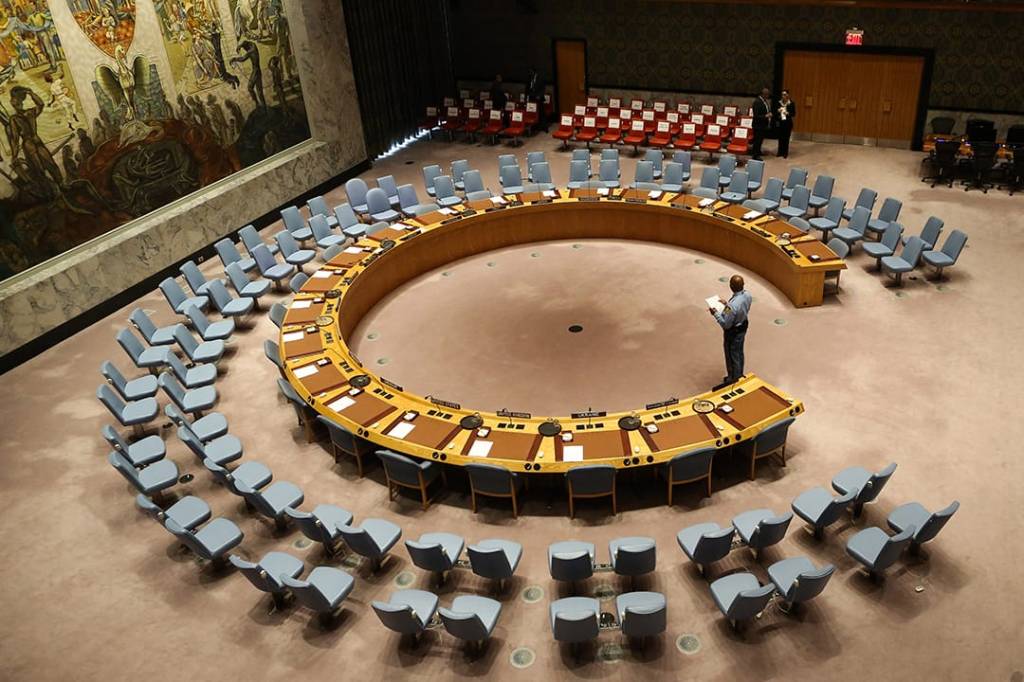
The UN’s Veto Trap: How Superpowers Sabotage Their Own Scapegoat 

The United Nations is often portrayed as the cornerstone of international diplomacy, a forum where nations come together to resolve disputes, prevent wars, and promote human rights. Yet, in practice, the UN is frequently cast as a convenient scapegoat by the very superpowers that designed it. Its structure, particularly the veto power held by the five permanent members of the Security Council, the United States, Russia, China, the United Kingdom, and France, has become a structural bottleneck, ensuring that decisive action is only possible when the interests of these nations align. Until the veto is removed, the UN will remain hamstrung, caught between high expectations and systemic limitations.

The veto was introduced in 1945 as a compromise to secure the participation of the world’s most powerful states. Without it, the founding members feared that superpowers might bypass or abandon the organization altogether. In theory, the veto was a stabilizing mechanism. In practice, it has become a tool for inaction. Consider Syria: during the ongoing civil war, Russia has repeatedly vetoed resolutions condemning the Assad regime and calling for intervention, while China has often supported Russia’s position. As a result, the Security Council has been paralyzed even in the face of clear evidence of atrocities, leaving millions of civilians exposed to violence. Western leaders then criticize the UN for inaction, conveniently ignoring the very vetoes that prevented it from acting.

Other historical examples reinforce this pattern. During the Rwandan genocide in 1994, the Security Council was slow to act, partly due to reluctance from major powers to commit troops or risk entanglement. The UN Assistance Mission in Rwanda (UNAMIR) was critically under-resourced, and resolutions to expand its mandate were delayed or watered down. Later, when Iraq invaded Kuwait in 1990, the Security Council acted decisively, but only because the superpowers’ interests aligned in opposing Saddam Hussein. This selective engagement demonstrates that the UN’s effectiveness is contingent less on law or morality than on the geopolitical priorities of the P5.

Even more recently, the Russian invasion of Ukraine in 2022 exposed the limitations of the UN system. Russia’s veto prevented any meaningful Security Council action, forcing Western nations to rely on unilateral sanctions, NATO coordination, and General Assembly resolutions that carry moral but not binding authority. Russia, in turn, dismissed UN criticism as biased or irrelevant, highlighting the paradox: the UN is invoked when it serves the interests of a superpower, and criticized when it does not. Similarly, the ongoing Israeli-Palestinian conflict shows how the U.S. veto has blocked resolutions condemning settlements or military actions, creating a perception that international law is applied selectively.

These examples illustrate a persistent problem: the UN is used by superpowers as both a tool and a scapegoat. It legitimizes actions when convenient, shields states from criticism, and is blamed for failures beyond its control. The veto allows a single nation to prevent collective action, regardless of the humanitarian or legal merits of a situation. Meanwhile, smaller nations, despite representing the vast majority of UN members, have little real influence. The General Assembly can issue resolutions expressing global consensus, but these are largely symbolic without enforcement mechanisms.

The solution is straightforward: no country should have veto power. The veto institutionalizes inequality and ensures that the UN cannot fulfill its mandate impartially. Proposals have been made to reform the Security Council, including requiring multiple vetoes to block a resolution or eliminating the veto for crimes against humanity, genocide, or aggression. Yet these reforms have stalled because the P5 have no incentive to relinquish privilege. True UN reform requires equalizing the decision-making process, where all nations have a voice and no single state can unilaterally obstruct action. Only then could the UN function as a legitimate arbiter of international law and human rights.

Until veto power is removed, the UN will continue to struggle. It will remain a forum where crises are debated but seldom resolved, where resolutions are celebrated symbolically but ignored in practice, and where superpowers externalize responsibility, casting the organization as weak or ineffectual while maintaining control behind the scenes. The world deserves a UN capable of enforcing its own principles, rather than one whose moral authority is hostage to the interests of a handful of powerful nations. Removing the veto is not just an administrative reform, it is a moral imperative, a prerequisite for a truly effective international system.

Project Ontario and Project 2025: Parallel Conservative Blueprints

The emergence of Project Ontario marks a new phase in Canadian conservative politics. While Premier Doug Ford’s Progressive Conservatives hold a comfortable majority, a group of policy advocates, commentators, and activists argue that his government has strayed too far from conservative principles. Through Project Ontario, they are pressing for a return to fiscal discipline, smaller government, and freer markets. The initiative is not a political party but a policy and advocacy movement aimed at shaping the direction of Ontario’s right. In many ways, it mirrors the role of Project 2025 in the United States: a blueprint designed to realign governance around more ideologically driven goals.

Project Ontario made its debut with a call for an autumn assembly of conservative thinkers, strategists, and policy experts. Its agenda emphasizes cutting red tape, lowering or reforming taxes, encouraging school choice, and tackling Ontario’s lagging productivity. Health care reform and housing affordability also feature heavily, framed through the lens of efficiency and deregulation. The group’s intellectual backbone comes from figures like Ginny Roth, Josh Dehaas, and Adam Zivo, with ties to institutions such as the Macdonald-Laurier Institute and the National Citizens Coalition. While the initiative presents itself as grassroots, it is clearly embedded within conservative policy networks.

Doug Ford has publicly dismissed Project Ontario, branding its supporters as “radical right” and “yahoos.” His sharp rejection underlines the political tension: while Ford governs from a pragmatic, populist center-right position, Project Ontario represents conservatives dissatisfied with compromise, seeking to tighten the ideological screws.

South of the border, Project 2025 represents the same instinct at a far larger scale. Organized by The Heritage Foundation, it is a sweeping plan to prepare a conservative administration for 2025. The nearly 900-page Mandate for Leadership: The Conservative Promise lays out detailed proposals for reshaping the executive branch, replacing civil servants with political loyalists, rolling back climate regulation, and imposing more conservative positions on education, immigration, and social policy. Its ambition is not merely to influence but to structurally reengineer American governance.

Comparing the two reveals important similarities. Both initiatives arise from frustration within conservative ranks, demanding that governments lean harder into free markets, deregulation, and fiscal restraint. Both set out to pre-write the policy script, defining what conservative governance “should” look like. And both blur the line between advocacy and preparation, building networks of people and ideas ready to be deployed when political openings appear.

Yet the differences are just as telling. Project Ontario is provincial, modest, and reformist. It seeks to push an existing government rather than overturn governing structures. Project 2025 is national, well-funded, and radical in scope, proposing changes that critics argue threaten democratic safeguards. Ontario’s conservatives debate incrementalism versus ideology within the safe confines of provincial policy; the U.S. effort aims at wholesale transformation of federal power.

The rise of Project Ontario highlights the pressures facing conservative parties across democracies. Governing requires compromise, but ideological movements demand purity. Whether Project Ontario grows into a defining force or remains a niche critique will depend on how well it mobilizes supporters, attracts funding, and survives Ford’s dismissive pushback. What is clear is that this is only the opening chapter of a story likely to grow louder in Ontario’s political landscape.

Watchlist: What to Track Next
Leadership: Will Project Ontario name formal leaders or remain a loose network of policy advocates?
Funding: Who finances the initiative, and how transparent will it be about its backers?
• Government Response: Will Ford continue to dismiss them, or be forced to absorb parts of their agenda to maintain support on his right flank?
Media Coverage: Do they gain traction in mainstream debate, or stay confined to policy circles?
Public Reception: Will Ontarians respond positively to their calls for fiscal restraint, or view them as too ideological for provincial politics?

Rethinking Public Safety: Core Changes Needed in Western Policing

Western policing institutions, from the United Kingdom to the United States, are facing mounting scrutiny for systemic failures that undermine public trust and fail to meet the safety needs of communities. Incidents of racial and gendered violence, misuse of force, and institutional culture problems reveal the limitations of the traditional model in which a single, uniformed police force handles the full spectrum of societal harms. This essay argues that public safety requires a reimagined, plural, and layered system. It presents six core principles for reform, grounded in evidence from pilot programs and case studies on both sides of the Atlantic, and discusses the implications for sustainable, accountable, and equitable policing.

Introduction
The model of policing inherited from 19th-century Western institutions, exemplified by Sir Robert Peel’s Metropolitan Police in London and early municipal police forces in the United States, was designed to maintain order and protect property. While law enforcement has evolved considerably, the persistence of systemic failures: including excessive use of force, discrimination, and insufficient accountability, reveals that the traditional, centralized policing model is increasingly misaligned with the safety needs of diverse urban and rural populations. Recent investigations, such as the BBC Panorama exposure of the Metropolitan Police and multiple high-profile police misconduct cases in the United States, underscore the urgency of systemic reform.

Reimagining public safety involves shifting from a monolithic force model to a plural, layered system in which enforcement is distinct from care, accountability is democratized, coercive intervention is minimized, social determinants are prioritized, non-police responders are professionalized, and transparent data guide decision-making.

Principle 1: Separate Enforcement from Care
Crisis responses for homelessness, mental health emergencies, substance use, and domestic conflict are often inappropriate for traditional police intervention. Uniformed officers, trained primarily for law enforcement rather than care, may escalate tensions, criminalize vulnerability, or fail to provide adequate support.

Alternative models, such as CAHOOTS (Crisis Assistance Helping Out On The Streets) in Eugene, Oregon, and similar community response teams in Toronto, Canada, deploy trained clinicians, social workers, and mediators to handle nonviolent crises. Evidence suggests these programs reduce unnecessary arrests, minimize injuries, and improve trust between communities and public safety agencies. In both UK and US contexts, embedding healthcare professionals alongside response teams reduces escalation and prevents downstream criminalization.

Principle 2: Localize and Democratize Accountability
Public trust is strengthened when local communities have oversight and voice in shaping public safety priorities. Establishing community boards with authority over local response teams, transparent complaint resolution processes, and independent civilian audits creates structural incentives for cultural change.

Both London’s Metropolitan Police governance reforms and civilian oversight structures in cities such as New York and Chicago highlight the importance of independent, empowered bodies capable of enforcing accountability. External oversight must have investigatory authority and sufficient resources to ensure timely and effective review of misconduct or systemic failures.

Principle 3: Reduce the Role of Armed, Coercive Interventions
The routine deployment of armed officers contributes to the normalization of coercion and increases the risk of harm, particularly for marginalized communities. In Western contexts, both the UK and US demonstrate the need to reserve armed intervention for narrowly defined, high-risk tasks.

For routine public safety, prioritizing de-escalation, nonviolent conflict resolution, and restorative justice practices promotes harm reduction and community reintegration. Programs such as restorative justice circles in US municipalities and diversionary policing initiatives in the UK demonstrate measurable reductions in recidivism and enhanced community cohesion.

Principle 4: Reinvest in Social Determinants of Safety
Long-term safety cannot be achieved solely through law enforcement. Investments in housing, mental health services, youth programs, education, and employment opportunities address root causes of harm and reduce the likelihood of criminalized behaviors.

Budget reallocations toward prevention and community infrastructure yield higher returns in public safety than expansion of enforcement. Examples include community-led housing initiatives in Scandinavian cities and youth engagement programs in US urban centers, which correlate with reduced crime rates and increased community resilience.

Principle 5: Professionalize Non-Police Crisis Responders
Alternative responders require clear professional frameworks to ensure effectiveness and sustainability. Developing recognized career paths, standardized training, legal authority, and integration with public safety systems is essential. Professionalization enables accountability, credibility, and continuity, ensuring that non-police interventions are treated as legitimate and reliable components of public safety.

Principle 6: Transparent Data and Outcomes
Transparency is foundational for accountability and evidence-based reform. Public dashboards reporting complaints, use of force, referral outcomes, and demographic impacts allow communities to scrutinize performance and guide policy decisions. Both UK and US jurisdictions increasingly deploy open data initiatives to monitor law enforcement and response teams, enhancing trust and supporting adaptive reforms.

Case Studies and Evidence

  • CAHOOTS (Crisis Assistance Helping Out On The Streets), Eugene, Oregon: Mental health crises handled by clinicians rather than police resulted in fewer arrests and reduced hospitalizations.
  • London’s community policing pilots: Embedding officers with community liaison roles increased reporting of minor crimes and improved citizen satisfaction.
  • Toronto’s mobile crisis teams: Mental health and addiction response teams reduced unnecessary emergency department admissions and arrests.

Recent BBC Panorama revelations in London illustrate the stakes of failing to implement such principles: custody suites became environments of normalized bigotry and violence, reflecting an institutional mismatch between coercive tools and public needs. Similar patterns in US police departments, documented through DOJ investigations and local reporting, demonstrate that this is a transatlantic problem.

Western policing institutions are at a critical juncture. The evidence indicates that centralized, uniformed police forces, designed historically to maintain order and protect property, are insufficient to meet contemporary public safety needs. A plural, layered system guided by the six principles; separating enforcement from care, democratizing accountability, reducing coercive interventions, reinvesting in social determinants, professionalizing non-police responders, and ensuring transparency, offers a path toward equitable, effective, and sustainable public safety across Western societies.

Reforms must be systemic, not incremental, and must embrace experimentation and evaluation. The lessons from pilot programs and investigative revelations alike underscore a simple truth: public safety is not merely the absence of crime, it is the presence of care, trust, and community resilience.

Sources:

  1. BBC Panorama. (2023). Undercover: Inside the Met.
  2. Casey, L. (2023). Baroness Casey Review: Independent Review into the Standards of Behaviour and Internal Culture of the Metropolitan Police Service.
  3. CAHOOTS Program (Crisis Assistance Helping Out On The Streets), Eugene, Oregon. White Bird Clinic.
  4. Toronto Mobile Crisis Services. City of Toronto.
  5. New York City Civilian Complaint Review Board.
  6. DOJ Investigations into US Police Misconduct, 2010–2023. U.S. Department of Justice.