
VIA Rail and Its Core Mission: Connecting Communities in Eastern Canada

In recent years, VIA Rail has faced internal and external pressures to prioritize speed and efficiency over regional accessibility, with proposals suggesting the reduction of service to smaller towns along the southern corridor in favor of focusing on larger urban centers. While such an approach might seem rational from a purely commercial perspective, it fundamentally misunderstands VIA Rail’s statutory mandate and the public value of its service. The introduction of a high-speed network such as Altos further underscores the importance of VIA Rail fulfilling its original mission: providing essential rail connectivity to smaller cities, towns, and villages in eastern Canada as part of a cohesive national transportation network.

VIA Rail’s mandate is not to compete with high-speed intercity travel. Its core purpose is to ensure that communities which lack alternative rapid transportation options remain linked to major metropolitan centers. Towns like Belleville, Kingston, Brockville, and Cornwall rely on VIA Rail for access to jobs, education, health care, and commerce. Reducing service to these communities in favor of express connections between larger cities would sever vital lifelines and exacerbate regional inequality, undermining the social and economic fabric of eastern Canada.

The coming of Altos high-speed rail makes this role even clearer. High-speed service is designed to connect major urban anchors quickly, leaving no capacity or mandate for serving smaller towns along the route. By concentrating on long-distance, limited-stop service, Altos will meet the demand for speed without addressing the needs of communities that depend on regular, accessible rail service. VIA Rail, therefore, must retain and enhance its focus on regional connectivity, ensuring that small and mid-sized communities continue to be fully integrated into Canada’s national transportation framework.

Investing in VIA Rail’s southern corridor for smaller-community service yields tangible benefits. Frequent, reliable connections allow residents of towns and villages to access economic opportunities in larger centers without requiring private vehicles or air travel, while supporting local economies by maintaining links for tourism, commerce, and labor mobility. Service improvements, schedule reliability, and modernized rolling stock for regional service are far more aligned with VIA Rail’s mission than reallocating resources toward high-speed, limited-stop service.

In the context of national rail strategy, VIA Rail’s mandate should be reaffirmed and protected. It is not a commercial exercise to maximize speed between cities, but a public service designed to ensure connectivity, accessibility, and equity. As Altos takes on the role of rapid intercity travel, VIA Rail must double down on its responsibility to smaller communities, strengthening the southern corridor as a reliable and inclusive lifeline for eastern Canada. Maintaining this distinction between high-speed and regional service is essential for a balanced, effective, and socially responsible rail network.
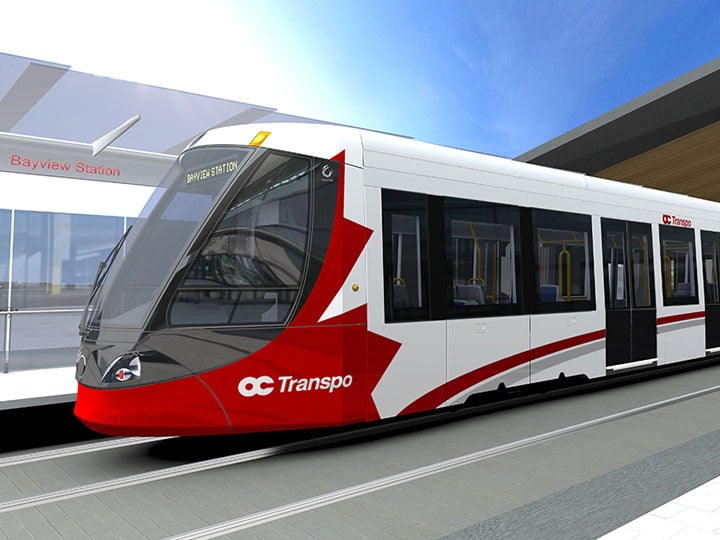

Why Metrolinx Should Run Ottawa’s Broken LRT

Those of you who regularly read my blog, know that I am a huge advocate of public transport, and a critic of the Public Private Partnership developing and operating the capital’s Light Rail Transit (LRT). 

Ottawa’s LRT system has been a profound disappointment, a fiasco of engineering failures, political mismanagement, and corporate negligence. Years after its launch, the system remains unreliable, its reputation tarnished by derailments, service disruptions, and public distrust. City officials, despite their best efforts, have failed to restore confidence or implement meaningful reforms. Given this ongoing dysfunction, it is time to consider a serious alternative: uploading the LRT to Metrolinx. A provincial takeover would bring in the expertise, resources, and oversight that Ottawa desperately needs while alleviating the financial strain on local taxpayers.

Metrolinx, despite its own challenges, has experience managing large-scale transit projects across Ontario. The agency has delivered rapid transit systems, expanded GO Transit, and led infrastructure projects that dwarf Ottawa’s troubled LRT. Unlike the City of Ottawa, which has been hamstrung by political infighting and bureaucratic inertia, Metrolinx operates with a broader provincial mandate and access to significantly greater funding. The province already has an interest in ensuring that Ottawa’s transit system is functional—after all, a well-run capital city benefits all Ontarians. Entrusting the LRT to Metrolinx would align Ottawa’s transit with the province’s long-term infrastructure planning, creating opportunities for better integration with intercity rail and bus services.

Financially, the benefits of provincial control are obvious. The LRT has drained Ottawa’s municipal budget, diverting funds away from other pressing priorities such as road maintenance, affordable housing, and social services. The city cannot afford to keep throwing money at a broken system while simultaneously planning for future expansions. If Metrolinx were to assume responsibility, the province would take on a greater share of the financial burden, allowing Ottawa to focus on local transit improvements that fall outside the LRT’s scope. This would not be an unprecedented move—Queen’s Park has already taken over major transit infrastructure in Toronto, such as the subway expansion projects, recognizing that municipal governments simply do not have the fiscal capacity to manage billion-dollar projects alone.

Of course, critics will argue that surrendering local control means sacrificing accountability. But let’s be honest: Ottawa’s local control has not served residents well. The city’s handling of the LRT has been defined by secrecy, questionable decision-making, and a lack of transparency. The provincial government, for all its faults, at least has the ability to intervene decisively when things go wrong. Under Metrolinx, operational standards would be enforced with greater rigor, and the pressure to deliver a functional transit system would be far greater than what we’ve seen from Ottawa City Hall. The public inquiry into the LRT debacle revealed a municipal government that was overwhelmed and, at times, complicit in its own failures. Perhaps it is time to let a more competent player take the lead.

This is not to say that Metrolinx is perfect. The agency has faced its own share of controversies, from cost overruns to delayed projects. But at least it has experience dealing with transit systems on a scale far larger than Ottawa’s. Unlike Ottawa’s municipal government, Metrolinx has the ability to negotiate directly with major infrastructure firms, access provincial funding streams, and bring in technical expertise that the city simply lacks. A takeover would not magically fix everything overnight, but it would place the LRT in the hands of those who at least know how to run a transit system.

The reality is that Ottawa’s LRT is beyond the city’s ability to fix on its own. Metrolinx, with its provincial backing and infrastructure expertise, offers the best hope for a reliable and efficient transit system. Ottawa residents deserve better than what they’ve been given. If that means surrendering local control to get a working train system, then so be it. The LRT was meant to be a transformative project for the city. If Ottawa cannot deliver on that promise, then it’s time to let Queen’s Park step in and do the job properly.