He Says: Dating an independent younger mother is like finding a partner with superhero qualities. She’s resilient, focused, and masterful at managing her time; better than most CEOs. She doesn’t need rescuing; she’s already fought her battles and won. What she values is a partner who brings wisdom, stability, and a calm presence in her whirlwind of responsibilities. For an older guy like me, it’s refreshing. There’s no pretense, no unnecessary drama, just an authentic, meaningful connection, built on mutual respect.
And let’s talk about her energy! It’s magnetic, a constant reminder that life is vibrant and full of possibilities. She keeps me engaged, challenges me to stay present, and proves that growing older doesn’t mean slowing down. More than that, she’s aligned with my thinking about the beauty of balance; how to be both independent and deeply connected.
She Says: Dating an older gentleman is like stepping into an oasis of calm after the daily chaos of parenting. He’s emotionally grounded, self-assured, and, best of all, done with playing games. My time is my most valuable asset, and I need someone who respects my schedule, understands my priorities, and supports me without trying to control or fix things. Older men get that.
What I love about him is his ability to listen, his steady presence. I’ve spent so much time managing crises and doing everything myself that it’s a relief to be with someone who can just be there without adding pressure. He doesn’t expect perfection, he values honesty and effort, and there’s something deeply reassuring about being with someone who knows who they are, what they want, and how to be a real partner.
He Says: Stability? Sure, but let’s talk about the fact that I’m learning just as much from her. Her independence is inspiring, it pushes me to be more adaptable, more open to change. And that vitality? It’s contagious. I may have a few gray hairs, but that doesn’t mean I’m set in my ways. If anything, her passion and determination remind me that life is about movement, growth, and embracing new experiences.
What makes this work is that we’re not trying to force anything. We don’t have to be everything to each other, but we show up when it counts. When life throws us curveballs, we face them together; no drama, no games. It’s a partnership built on respect, not expectations.
She Says: And let’s not forget patience. Older men have a way of slowing things down in the best possible way. In a world that’s constantly demanding more, that kind of presence is priceless. I used to worry about how a relationship might affect my kids, but with him, it’s just… easy. He’s patient with them, but he also knows when to step back and give me space to handle things. He respects the boundaries I’ve set as a parent, but he’s always there when I need him.
And the way he makes time for me, just us, no distractions, reminds me of how important it is to nurture the connection we’ve built. There’s an ease to being with him that I didn’t know I was looking for, and now that I’ve found it, I can’t imagine going back to anything less.
He Says: And that’s what makes it work, isn’t it? We’re not playing by anyone else’s rules. We’re just two people figuring it out together, supporting each other, growing together, and sharing a real connection. Her kids, her responsibilities, they’re part of the package, but they’re never a barrier. I’m not here to replace anyone or change anything; I’m here to be part of her life, to add something positive. And honestly, it’s one of the most rewarding things I’ve ever done.
Ever feel like your life is an endless RSVP? Invitations roll in: “Come to this event! Join me for that activity! Let’s grab a drink!” It’s lovely to be included, truly. But what’s less lovely are the interrogations that follow when I politely decline.
“What are you doing instead?” “Are you feeling okay?” “Wait… who’s more important than me?”
Ah, the joys of boundary-setting in a world that thrives on FOMO and social expectations.
This isn’t my first rodeo with the honesty vs. transparency debate, but today I want to shift the focus. It’s not about what I say to others – it’s about how I choose to live my daily life. For me, it’s far simpler (and far more satisfying) to opt in when I genuinely want to connect than to constantly opt out to preserve my space.
If the world were a little more straightforward, I’d label my lifestyle as that of a Solo Polyamorous Relationship Anarchist (or SoPoRA for short). What does that mean? It’s a big mouthful, sure, but at its core, it’s a fancy way of saying I value my autonomy and independence while cherishing meaningful, non-hierarchical connections with others.
Solo Polyamory is all about embracing the beauty of being my own primary partner, while maintaining multiple, consensual relationships. It’s not about having less love – it’s about loving without turning my life into a game of musical chairs, where one partner automatically claims the “primary” seat.
And Relationship Anarchism? That’s the freedom to reject societal scripts about how relationships should work. No automatic rankings of romantic partners above friends. No forcing connections into neat little boxes labeled “partner,” “friend,” or “fling.” Instead, each relationship is uniquely crafted based on mutual agreement and organic growth.
Now, before you picture me as some lone wolf prowling around in emotional isolation, let me clarify: this choice doesn’t mean I don’t value connection – it just means I thrive on creating it without compromising my independence.
But what this looks like practically, I hear you ask? Well, I love my space – my home is my sanctuary, and it’s where I recharge. I set firm personal boundaries to maintain my autonomy – this isn’t selfish – it’s self-care. Communication is my superpower – I prioritize honesty, consent, and mutual understanding with anyone I’m involved with.
Solo Polyamory and Relationship Anarchism require a level of self-awareness and emotional intelligence that can feel like a full-time job some days. But the rewards? Oh, they’re worth it. There’s a joy in living authentically, in crafting connections that adapt as people grow, and in knowing every “yes” you give is genuine.
So, the next time I politely decline an invitation, know this: it’s not about you. It’s about me choosing to live a life that feels full, free, and fulfilling – one beautifully crafted, consensual connection at a time.
As our understanding of love and relationships evolves, so too does the way we define intimacy. A concept that’s starting to catch the attention of both relationship experts and storytellers alike is symbiosexuality. While it may not yet be a household term, it offers a new way of thinking about emotional connection, rooted in the biological principle of symbiosis—the mutually beneficial relationship between different organisms. In the realm of love, symbiosexuality suggests that relationships should be rooted in harmony, interdependence, and growth, not just between people, but also between humans and nature, and even between humans and technology.
In today’s dating world, where people are increasingly searching for more meaningful, emotionally fulfilling connections, symbiosexuality offers a model that reflects these desires. Gone are the days of relationships based solely on attraction or shared interests. Today’s singles are looking for something deeper: a connection that nurtures both partners, encouraging emotional and intellectual growth. Symbiosexuality embraces this shift, proposing that love can thrive when both individuals contribute to each other’s flourishing. It’s not about one person being “the other half” of the other, but about both people being whole in their own right, yet stronger together.
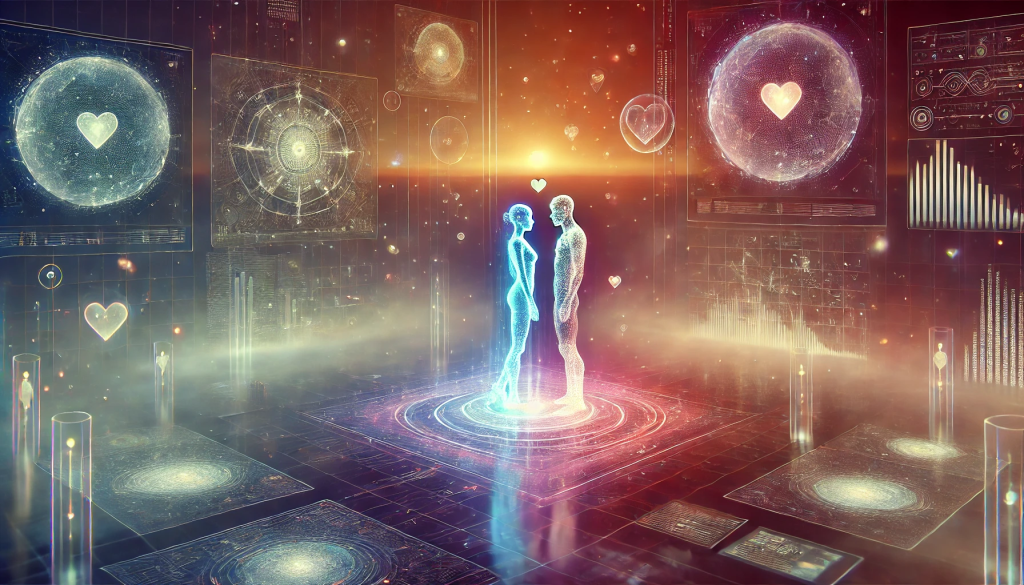
Technology has also played a significant role in changing how we form relationships, expanding the boundaries of intimacy far beyond physical presence. The rise of virtual dating, AI companions, and even relationships formed in virtual reality all reflect the growing need for connection that goes beyond the tangible. In this new world of digital love, symbiosexuality takes on a unique form—relationships with AI or virtual partners that are based on mutual emotional fulfillment and support. These connections might seem like something out of science fiction, but they’re becoming more real as technology advances. In some ways, they embody the symbiosexual model by providing companionship that nurtures the emotional well-being of the person, even when it’s not with another human.
At the same time, there’s a growing movement toward non-traditional relationship structures, like polyamory, where people cultivate multiple relationships that meet different needs. This, too, aligns with the idea of symbiosexuality—relationships that form a web of interdependence rather than a single, dependent bond. In polyamory, partners take on different roles, offering everything from emotional support to intellectual stimulation, and in doing so, they create a balanced, symbiotic ecosystem of connection.
Another fascinating aspect of symbiosexuality is how it dovetails with the eco-sexuality movement, which celebrates intimacy with nature itself. As environmental concerns become more urgent, many people are seeking to reconnect with the Earth in a deeply personal way. This trend goes beyond the idea of environmental activism; it’s about seeing nature as a partner, one that sustains and nurtures us. Whether it’s through ritual, activism, or simple acts of mindfulness, eco-sexuality offers a way to deepen our relationship with the planet—a form of love that acknowledges the symbiotic relationship between humanity and the Earth.
The idea of symbiosexuality isn’t just shaping how we date—it’s also influencing how we tell stories. Literature, especially science fiction, is filled with depictions of relationships that challenge traditional ideas of intimacy. In Dune, for example, the relationship between humans and the sandworms is symbiotic—both species rely on each other for survival. Similarly, Octavia Butler’s Xenogenesis Trilogy takes the concept of symbiosis even further, exploring how humans might merge with aliens to create a new, interdependent species. These narratives present love not as something confined to humans but as something that can span species, challenging our conventional boundaries of what intimacy means.
In modern fiction, the relationship between humans and AI also provides fertile ground for exploring symbiosexuality. Kazuo Ishiguro’s Klara and the Sun and Ian McEwan’s Machines Like Me both examine the emotional depth of human-AI relationships. In these stories, AI characters offer a form of emotional companionship that mirrors the symbiotic dynamics of human relationships. This opens up new ways of thinking about intimacy—what if the emotional support we need can come not from another human, but from a machine? These books raise fascinating questions about what it means to connect on a deep, emotional level and whether true symbiosis is possible between human and artificial beings.
But symbiosexuality isn’t confined to speculative fiction; it also appears in the real world. Novels like The Overstory by Richard Powers and Oryx and Crake by Margaret Atwood examine the relationships humans have with the natural world, urging us to rethink our connection with the Earth. These stories echo the central message of symbiosexuality—that love and intimacy can transcend human relationships, extending into our interactions with the environment. In these works, the survival of both humanity and nature depends on a mutually supportive, symbiotic relationship.
As we look to the future of relationships, symbiosexuality provides a fresh perspective on love. It’s no longer just about finding someone who completes us; it’s about forging relationships that allow both partners to grow, thrive, and evolve together. Whether it’s in human relationships, connections with the natural world, or bonds with technology, symbiosexuality challenges us to think beyond traditional ideas of love and intimacy. It asks us to consider how we can build relationships that are not only fulfilling on an individual level but that also contribute to the collective well-being of all involved.
In a world where connection is more important than ever, symbiosexuality offers a model for love that is as dynamic and interconnected as the world we live in. The question now is, as we look ahead, how will we embrace this new vision of intimacy? Will we be open to forging bonds that are less about ownership and more about mutual growth, balance, and care? That’s the essence of symbiosexuality, and it may just be the future of love.
As you reflect on your own relationships, consider this: Who or what in your life helps you grow, and how can you reciprocate that care? In a world that’s constantly evolving, perhaps the key to love lies not in searching for perfection, but in creating a mutually supportive, flourishing connection.
Update When discussing this piece with a partner, apart from it being too long, they felt that the focus on a sexual connection in the term might be limiting. Researchers have a history of mixing up labels for physical sexuality with intimacy and/or romance, and so the term “symbioromantic” or “symbiointimate” may be a more fitting descriptor than “symbiosexual” for relationships where intimacy is deeply rooted in emotional, intellectual, or spiritual connections rather than physical acts. While “symbiosexual” implies a focus on sexual interaction, “symbioromantic” emphasizes the shared emotional growth and interdependence that defines the bond. Romantic intimacy often transcends physicality, centering instead on mutual understanding, care, and the blending of lives in a way that nurtures both individuals. By shifting the focus to the romantic aspect, “symbioromantic” acknowledges that fulfilling, profound connections can thrive even in the absence of physical intimacy, making it a more inclusive term.
Ah, online dating—a wondrous digital land where love blossoms, hearts are broken, and oh no, not another dead fish photo. If you’re dipping your toe into the wild waters of matchmaking apps, let me help you avoid the missteps that send people running for the hills (or just swiping left faster than you can say, “partner in crime”).
Your Kids: The Little Darlings Who Don’t Belong in Your Profile Look, I’m sure your children and dare I say grandchildren are angels (or at least occasionally). But posting their photos in your dating profile—especially as your main picture—can make a potential match think, “Am I auditioning to be a romantic partner or a nanny?” Keep your kids out of the spotlight for now. This is your moment to shine, not theirs.
And while we’re on the topic: if your bio starts with “My kids are the loves of my life,” it’s sweet… but also a bit of a mood-killer. Potential partners might wonder, “Where does that leave room for me?” Save the love declarations for the people swiping right on you.
Stop Copy-Pasting “Hey Beautiful” When someone receives “Hey beautiful” for the 47th time that day, it doesn’t feel special—it feels like a generic coupon for romance. Try something more creative, like referencing their profile. Trust me, “Hey, I see you’re into paddleboarding—do you have a shark-escape plan?” will get you further than bland flattery.
Let Go of the Clichés Speaking of originality, if your bio includes “looking for a partner in crime,” you may as well add, “and I moonlight as a walking, talking dating stereotype.” Everyone’s seen it. Everyone’s rolled their eyes. Be specific about what you want—something that feels uniquely you.
Negativity Is a Buzzkill “Drama-free.” “No toxic baggage.” “Sick of games.” Okay, we get it, you’ve been hurt—join the club! But plastering this all over your profile reads like a giant neon sign flashing BITTER, PARTY OF ONE. Instead, focus on the positives: what you’re looking forward to, what you value, what excites you about the idea of meeting someone new. Optimism is sexy.
“A Nice Lady” (or Gentleman) Requesting a “nice lady” makes you sound like you’re ordering at a diner: “I’ll have the nice lady with a side of vanilla, please.” Instead, describe the qualities that light you up—compassion, humor, confidence, whatever it is. Trust me, nobody’s pining to be described as “nice.”
Let’s Talk About That Fish Unless you’re starring in a reality show called The Bait Whisperer, it’s time to put the bass down and back away slowly. Dead fish photos are a universal “ugh” moment. If you love fishing, mention it in your profile, but swap the fish for a photo of you looking happy and rugged by a lake.
“I’m an Open Book, Just Ask” This one screams lazy. A dating profile is your chance to give people a taste of who you are—not to set them up for a pop quiz. Share a few fun tidbits about yourself. Think of it like leaving breadcrumbs, not a scavenger hunt.
Your Pets Are Cute, But… We all love a good dog or cat pic (seriously, who doesn’t?), but if your entire bio reads like an ode to Fluffy, potential matches may think they’re competing with your fur baby. Keep it balanced—show you have room in your life for both your beloved pets and a partner.
Your Photos Need to Spark Joy If your profile photos include frowning selfies, dimly lit shots, or your ex cropped out of the frame (we can tell, by the way), it’s time for a refresh. Aim for friendly, well-lit, and authentic photos that make people want to grab a coffee with you—or at least swipe right.
Friends or Lovers? Pick a Lane “Looking for friendship first” is like saying, “I’m browsing, not buying.” It’s fine to want to take things slow, but if romance is on the table, don’t bury it under disclaimers. Be clear about your intentions.
Avoid the Pitfalls, Embrace the Possibilities Your online dating profile should feel like a teaser trailer to a movie people actually want to see. Be authentic, positive, and approachable. And above all, remember: the goal is to attract the right match, not scare them off with fish, frowns, or fatal clichés. Now, go forth and swipe wisely!
Learning to navigate personal, professional and community dynamics is a set of skills we must all acquire over time. Personal boundaries, rules, and agreements play distinct, yet interconnected roles in defining relationships, promoting autonomy, and fostering mutual respect. While all three establish guidelines for behavior, their purpose and application differ significantly.
Personal boundaries are internal, self-determined limits that individuals set to protect their emotional, physical, and mental well-being. These boundaries reflect personal values, needs, and comfort levels. For example, someone might set a boundary by choosing not to discuss certain personal topics at work. Boundaries are non-negotiable because they are intrinsic to the individual’s sense of self and are communicated to others as a means of self-respect and preservation.
Rules, on the other hand, are often imposed by one person or a governing entity and tend to define acceptable behavior in a specific context. Unlike boundaries, which are individual and internal, rules are external and often apply universally within a group or relationship. For example, a parent might establish a household rule requiring all family members to eat dinner together. Rules can sometimes feel restrictive, as they are not always collaboratively created.
Agreements are mutual understandings or decisions made between individuals, often through negotiation and consent. They rely on open communication and shared values to foster cooperation and harmony. For example, in a relationship, partners might agree to prioritize quality time together every weekend. Unlike rules, agreements are flexible and evolve based on the needs of all parties involved.
In essence, boundaries define the self, rules impose structure, and agreements promote collaboration. Recognizing these differences allows individuals to navigate relationships more effectively, and respectfully. This is a very old post for me, and one I have used for many years, when dating and partnership conversations turn to honest, open, clear and direct communication.
I am polyamorous, and have been for many a year. I cultivate and maintain a network of secure attachment relationships with people who are also polyamorous, who often have multiple partners of their own. I prefer to date and partner with experienced poly people, and occasionally someone crosses my path that feels so aligned that this policy goes out the window, and I get to date a polynewbie.
There will be many more posts on relationships in the 21st Century, and in the meantime, this one is where I will be sharing some of my favourite poly quotes, adding to it as the months go by.
Please be aware, while I am happy to discuss relationship dynamics, I am not interested in any negative commentary, and will block any source of unthinking, rude or obnoxious messages.
I hope you enjoy these thoughts. I tend to use the Canadian English spelling of polyamorous, but when posting quotes I use exactly what and how it was published.
”The quality of a polycule is directly proportional to the communication skills of its least emotionally secure member. Or, if you prefer something gentler, less absolute, more accepting. A polycule’s health depends less on its most skilled communicator, than on how well its least secure member feels heard. ” – @chrismcbean.bsky.social
“Polyamory (noun): when multiple people are plotting to care about you, a wholesome conspiracy” – @PolydotLand
“Polyamory is NOT endless orgies, nor is it cuckoldry with extra steps.
Polyamory is two idiots walking down the street holding hands debating with one another about how each of them should ask out their respective crushes, and then neither of them following through.” – @5aximus
“Solo polyamory helps me go at a comfortable pace. Now that I’m no longer entering relationships with a particular goal in mind, like marriage or cohabitation, I’m not in a rush to find out whether a partner can give me those traditional markers of relational success/fulfilment.” – @unapolygetic
“Your significant other is allowed to have meaningful relationships with other people. Your significant other is allowed to get things from those relationships that they don’t get from you. Demanding you be the only source of pleasure and support in their life is possessive and toxic.” – @LadylsAVamp_
“I was asked, ‘who is your best friend?’ I don’t know. I don’t use language like that anymore. It doesn’t fit. I have friends that hold the keys to different doors of my personality. And some open my heart. Some my laughter. Some my sin. Some my civic urgency.” – @abgljoe
“One of my favourite challenges posed by polyamory lies in its potential to undermine the idea that women are ‘rivals’ for the attentions of men. Hey, what if we are ‘collaborators’ in loving and supporting our mutual partners? I know, wild eh …” – @carriejenkins
“Solo polyamory is finding it more enjoyable to opt in to spending time with people as opposed to opting out to get my own space.” – @PolyamAwareness
“Relationships fail when people take their own insecurities and project them as their partner’s flaws.”- @stevemaraboli
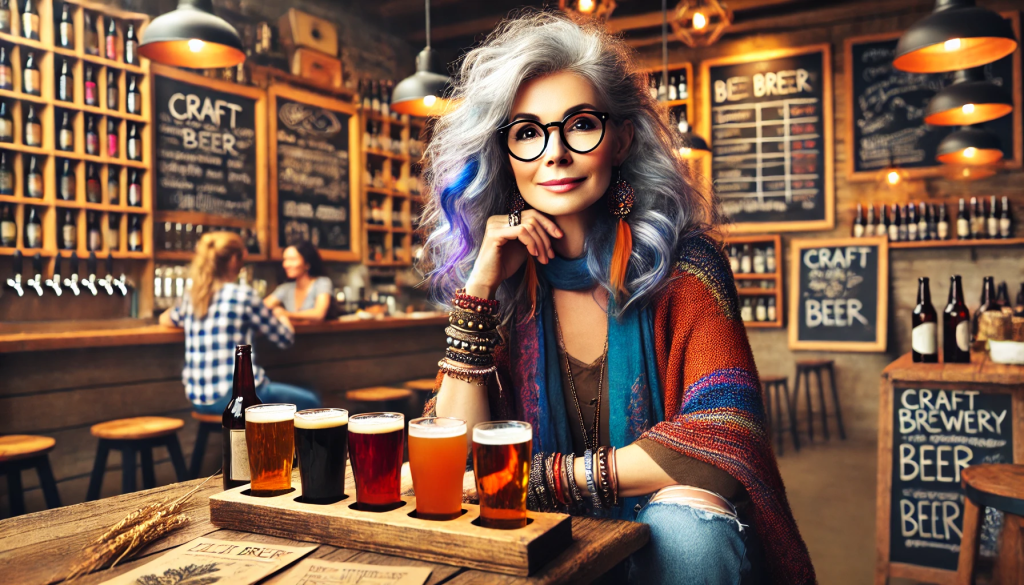
Dating a 60 year old, grey-haired grandma with bold blue and purple streaks is like sipping a craft beer flight; unexpected, full of flavor, and just the right amount of fizz! She’s not your average semi-retiree. She’s an artist and crafter, forever turning everyday items into masterpieces. A walk with her through a thrift shop feels like wandering through the Louvre, as she marvels at the potential in old buttons, battered picture frames, and yarns in colors you didn’t even know existed.
Her sense of humor? Sharp and sparkling, much like the IPA she insists you try (even if you’re feeling like a stout). She doesn’t just drink craft beer; she lives it, savoring every sip while recounting stories of road trips to microbreweries, where she once debated hops with a bearded brewer half her age. Spoiler: She won the argument!
And let’s not forget the adventures – oh, the adventures! When she says, “Let’s go on a road trip,” she doesn’t mean a simple weekend getaway. No, no, she’s planning a pilgrimage to every quirky art gallery and secret beer garden she’s bookmarked over the years. You’ll find yourself lost in a small town you’ve never heard of, surrounded by nothing but cows, and the distant hum of a local jazz band, all because she read about it in an obscure art magazine from 1982. You’ll try to keep track of her “I have an idea” moments, but with her creativity, you’ll likely end up in a pottery class at midnight, shaping clay while sipping on a hopped cider she personally picked out, because she knows you’ll love it. It’s an unexpected, whirlwind romance, and every minute is a colorful surprise you’ll never forget. Just don’t ask about the glitter, it gets everywhere.
This grandma doesn’t just have stories; she is a story. She’ll teach you the art of weaving one minute, and how to bake gingerbread the next. Dating her is like being with a vibrant human kaleidoscope; colorful, surprising, and endlessly fascinating. Sure, you might struggle to keep up as she paints landscapes by day and hosts beer tastings by night, while cooking a North African meal, but isn’t that the fun of it? She’s proof that life, love, and art only get better with age, especially with a splash of teal. If you’re lucky enough to be dating her, cheers to you! Just remember, don’t touch her yarn stash without asking.
In the age of digital connectivity, dating has been revolutionized by community websites, social media, and a growing number of dating apps. While the convenience and access these platforms provide are undeniable, they’ve also redefined romance in ways that feel increasingly transactional. The pursuit of meaningful relationships has often been reduced to a series of swipes, clicks, and algorithm-driven decisions—shifting the way people view love, intimacy, and human connection.
Dating apps such as Tinder, Bumble, and Hinge have adopted a gamified approach to romance. Their swipe-based mechanics mimic the reward systems of video games, offering quick hits of validation or rejection with every right or left swipe. Like pulling the lever of a slot machine, the instant gratification these apps deliver often prioritizes surface-level judgments, such as physical appearance, over meaningful compatibility. Finding a partner becomes a numbers game, where the goal is less about connection and more about who can “win” the next match.
This gamification feeds into a consumer-market mindset, where potential partners are treated as products to browse, evaluate, and discard. Profiles are carefully curated advertisements, each bio or photo a sales pitch for attention. Users scroll through these digital shelves, comparing options and weighing perceived value, much like shopping for goods. This commodification of dating fosters a transactional approach—relationships are often pursued based on what someone offers, rather than a foundation of mutual emotional investment.
Behind the scenes, the algorithms that drive dating apps reinforce this dynamic. Designed to prioritize efficiency, they aim to generate quick matches at scale. The sheer volume of options, while seemingly beneficial, creates the illusion of endless possibilities. For many, this fuels the “paradox of choice,” a phenomenon where too many options lead to indecision and dissatisfaction. A lingering sense that someone “better” might be just one swipe away can prevent users from committing, encouraging them to chase an ideal match rather than nurture real, imperfect relationships.
Adding to this transactional nature are the apps’ monetized features—premium subscriptions that promise greater visibility, unlimited swipes, or the ability to filter matches with precision. Dating, in many cases, has literally become pay-to-play. Users can boost their profiles to gain attention or unlock exclusive tools to “optimize” their romantic prospects. These features further commodify dating, making connections feel like purchases rather than organic discoveries.
Beyond the structural elements of these platforms, dating apps have also reshaped cultural attitudes toward intimacy. While they have opened doors to more diverse forms of relationships, they’ve also normalized casual connections and short-term encounters. In many cases, relationships are treated as temporary exchanges—sources of companionship, validation, or physical intimacy with little emphasis on long-term commitment. This casualization aligns perfectly with a transactional mindset: relationships are only as valuable as what they provide in the moment.
The consequences of this shift are significant. Emotional detachment has become more common, as relationships are often viewed as fleeting and disposable. Genuine effort and emotional depth can take a backseat when a quick match requires less investment. Treating people as profiles to be judged can lead to objectification, reducing empathy and human connection. Meanwhile, the impersonal and competitive nature of dating apps can take a toll on mental health. Users may experience burnout, rejection, or feelings of inadequacy as they navigate an endless cycle of swipes and shallow interactions.
Still, dating apps are not inherently harmful—they are tools that reflect and amplify existing cultural values. They have made meeting new people easier than ever and have connected individuals across geography, lifestyles, and interests. Yet their emphasis on efficiency and superficial traits has undeniably shaped modern relationships into transactional exchanges.
If dating is to become more meaningful again, it will require intention—both from the platforms and their users. Rather than surrendering to the gamified, commodified nature of these apps, individuals must approach them with mindfulness, prioritizing depth and authenticity over convenience and quantity. In doing so, there may still be hope to restore romance to something deeper than just another transaction.
In my world, there is a strong push towards total interpersonal transparency these days. It’s a hard marketing sell by the “authentic living” leadership and coaching community – “Tell it all, be proactive, share everything, spare no detail, be vulnerable”. As you can imagine, this doesn’t sit well with me, and while I am all for honest, open, clear and direct communication, I am also for keeping parts of my life private, and the lives of my close intimate friends and partners too.
As I evolve and mature, it’s becoming easier to maintain my personal boundaries, although they are often seen by the uninitiated as rules, and please remember this is my social circle, not necessarily my close or particular friends, and yes, there is a difference. Before moving on to exploring the difference between honesty and transparency, let’s do a quick side bar, and clear up personal boundaries vs rules.
My Personal Boundaries are empowering and enforceable because they are all about my actions, my choices, and there are consequences for others; whereas Rules are disempowering and often unenforceable, because they are about you and therefore out of my control. Perhaps I need to write a dedicated post of this subject. I will think more!
As I have said, my privacy is very important to me, as is the privacy of my partners and particular friends, so for me the difference between honesty and transparency is that honesty is what I share with people as my perceived truth, whereas transparency is what others feel they need to know about me. A good example of this would be how we share our tombstone data. I like to share the minimum possible such a name, address, email and perhaps phone number (this is honesty), whereas many social media apps want all of the above plus DoB, hair colour, gender and inside leg measurement (for sake of transparency). For me, the issue is that, if you’re transparent, you may not succeed in educating people as to what they really need to learn about you, whereas my truth is my truth and it informs people about my reality. When I am accused of being secretive, I am often simply exercising my right to privacy. People frequently dress up their invasive demands for information about my life as a need for “full transparency and disclosure”.
This happened this week, when someone asked me why I wasn’t willing to attend a social event? I had already answered that I wasn’t available, and yet they pushed for full transparency demanding more disclosure, including what exactly I was doing with my time and with whom? My honesty was that I wasn’t available, and that’s a hard “No”, which is all they really needed to understand to access my truth; whereas if I had fully disclosed how I was engaged during that time, this information would have opened up a conversation about social and friendship priorities, which I wasn’t prepared to explore. My choices are my choices!
There is a concept called a Disclosure Agreement that can be made with partners and particular friends about what we will and will not disclose about our relationships with other people. Perhaps it’s time for this concept to become a more common practice, especially in the days of megacorporation-controlled social media where anything and everything can be disclosed and shared on the InterWeb in an instant?






 The Rowanwood Chronicles