Five Things We Learned This Week

Week of November 8–14, 2025

This week the headlines were shaped by climate urgency, geopolitical shifts and a little cosmic wonder. Below are five carefully date-checked items from Saturday November 8 through Friday November 14, 2025, each with a short note on why it matters and links to the primary reporting.


🌡️ WMO warns that 2023–2025 may be the three hottest years on record

The World Meteorological Organization indicated that the period 2023 through 2025 is on track to be the hottest three-year run in recorded history, raising the risk of climate tipping points and long-term ecological harm. Why it matters: This milestone underlines how far emissions trajectories remain from the 1.5°C goal and increases pressure for urgent action at COP30.

Source: The Guardian coverage of WMO statements, November 6 2025. Read the report

💬 Guterres calls missing 1.5°C a “moral failure” at COP30

U.N. Secretary-General António Guterres used the opening of COP30 in Belém to label the world’s shortfall on the 1.5°C target as a moral failure, urging leaders to treat climate targets as ethical obligations not just technical goals. Why it matters: Framing the target in moral terms aims to push diplomacy beyond incrementalism and into commitments that protect the most vulnerable.

Source: The Guardian reporting from COP30, November 6 2025. Read the coverage

🧲 Putin orders a roadmap to expand rare-earths extraction in Russia

President Vladimir Putin instructed his government to produce a roadmap by December 1 for ramping up rare-earth mineral extraction and building logistics hubs near the Chinese and North Korean borders. The order was reported in early November. Why it matters: Rare earths are essential for electric vehicles, batteries and advanced electronics, so this plan could reshape supply chains and geopolitical leverage.

Source: Reuters, November 4 2025. Read the report

🔭 Interstellar comet 3I/ATLAS shows complex multi-jet activity

Astronomers released post-perihelion images showing that the interstellar comet 3I/ATLAS displays multiple jets in its coma, offering detailed clues about the composition and behaviour of material from another star system. Why it matters: Detailed observations of an interstellar visitor provide rare insights into the make-up and dynamics of material formed around other stars.

Source: sci.news astronomy notes, November 2025. See the images and analysis

🧬 Small island states demand rich nations “honour” the 1.5°C limit

Leaders from small island and vulnerable states used COP30 platforms to urge wealthier nations to honour commitments around the 1.5°C goal, arguing that temporary overshoots could trigger irreversible harm for their communities. Why it matters: The equity argument is central to negotiations because the countries least responsible for emissions face the gravest consequences.

Source: The Guardian COP30 live reporting, November 11 2025. Follow the live coverage


Closing thoughts: Climate dominated this week in substance and tone. Scientific warnings, moral appeals, and equity demands were front and centre at COP30, while geopolitics and frontier astronomy added texture to the news. These five items remind us that the technical details of policy are inseparable from ethical and strategic choices.

Primary sources and further reading

A Comparative Analysis of Global Space Technology Capabilities 

The space sector has changed dramatically in recent decades, with nations advancing human exploration, satellite technology, and commercial ventures beyond Earth. As more players enter this evolving arena, it is helpful to look at the capabilities of different countries to see how their strengths, challenges, and ambitions shape the future of space. This overview offers a comparative look at several leading spacefaring nations, highlighting their key achievements and ongoing projects.

United States: A Leader in Innovation and Commercialization
The United States remains a dominant force in space technology, driven by the synergy between governmental and private sector endeavors. NASA, the nation’s flagship space agency, has historically led human space exploration, most notably with the Apollo program that landed astronauts on the Moon. Today, NASA’s Artemis program aims to return humans to the lunar surface and eventually establish a sustainable lunar presence. Furthermore, NASA’s ongoing Mars missions, including the Perseverance rover and the upcoming sample return initiative, are paving the way for future human exploration of the Red Planet.

However, it is the rise of private companies like SpaceX and Blue Origin that has revolutionized U.S. space capabilities. SpaceX, with its reusable Falcon rockets and ambitious Starship program, has drastically reduced launch costs and increased mission cadence, while also contributing to global satellite broadband via the Starlink constellation. Blue Origin, although more focused on suborbital space tourism and future lunar exploration, is also playing a key role in shaping the future of space. The integration of private players into the space ecosystem has created a competitive environment that fosters innovation, with an eye on deep space exploration, asteroid mining, and even space tourism.

Despite its successes, the U.S. faces significant challenges in terms of cost and over-reliance on private entities for crewed space missions, a gap that is being gradually filled by NASA’s own projects and partnerships. The balance between government-funded exploration and private sector innovation will define the future of U.S. space ambitions.

China: A Rising Space Power with Ambitious Goals
China has emerged as a major player in the space domain, with the China National Space Administration (CNSA) spearheading the country’s space ambitions. Unlike the United States, China’s space program is largely state-driven, with a clear, long-term vision focused on becoming a dominant spacefaring nation. One of China’s most notable achievements has been its successful lunar exploration programs. The Chang’e missions, including the first-ever soft landing on the far side of the Moon and the recent lunar sample return, demonstrate China’s growing expertise in deep space exploration.

China has also made significant strides in human spaceflight, with the establishment of the Tiangong space station, which serves as a platform for long-term orbital missions and scientific research. The country’s Mars exploration capabilities were proven with the Tianwen-1 mission, which included the successful deployment of the Zhurong rover on the Martian surface. These achievements are indicative of China’s ability to master complex space technologies and execute large-scale missions.

On the military front, China has developed advanced space surveillance systems and anti-satellite capabilities, which highlight the strategic importance of space in national defense. Looking forward, China is planning ambitious missions, including Mars sample return, the construction of a lunar base, and the exploration of asteroids. However, China’s space program is also hindered by its relative isolation from international collaboration due to geopolitical tensions, limiting its ability to share and exchange knowledge with other spacefaring nations.

Russia: A Storied Legacy with Modern Challenges
Russia, as the inheritor of the Soviet Union’s space legacy, remains an important player in global space technology. The Russian space agency, Roscosmos, is renowned for its expertise in human spaceflight, dating back to the launch of Sputnik, the first artificial satellite, and the first human spaceflight by Yuri Gagarin. Today, Russia continues to provide critical crewed spaceflight capabilities to the International Space Station (ISS) through its Soyuz program, which remains a workhorse for transporting astronauts to and from orbit.

Russia’s space program also emphasizes military applications, with advanced satellite systems for navigation, reconnaissance, and surveillance. Despite this, Russia faces several challenges, including aging infrastructure, a shrinking budget, and increasing competition from private companies and international partners. While the country remains a key participant in the ISS, it is increasingly at risk of being overshadowed by more technologically advanced nations.

Looking to the future, Russia has outlined plans for lunar exploration, including its Luna 25 mission, and continues to develop advanced space propulsion systems. However, for Russia to maintain its standing as a space power, it will need to modernize its space technologies and address the structural inefficiencies that have plagued its space industry in recent years.

European Union: Collaborative Strength and Scientific Prowess
The European Space Agency (ESA) represents a collaborative effort between multiple European nations, and this collaboration is one of its greatest strengths. The ESA has made significant contributions to global space efforts, particularly in satellite technology and space science. The Ariane family of rockets has been a reliable workhorse for launching satellites into orbit, while the Galileo satellite constellation is Europe’s answer to the U.S. Global Positioning System (GPS), providing high-precision navigation services to users around the world.

The ESA has also played a pivotal role in scientific exploration, collaborating on high-profile projects such as the James Webb Space Telescope and the Rosetta comet mission. Through these efforts, European scientists have contributed to major discoveries in space science, deepening our understanding of the cosmos.

Despite its many achievements, Europe faces challenges, particularly in human spaceflight. While the ESA has been an integral partner in the ISS program, it is still dependent on the United States and Russia for crewed missions. Future plans include greater involvement in the Artemis lunar program, advanced space telescopes, and participation in deep-space exploration, but Europe will need to further develop its own crewed space capabilities to fully compete on the global stage.

India: Cost-Effective Innovation and Expanding Capabilities
India, through its space agency ISRO, has made significant strides in space exploration, often achieving impressive feats with a fraction of the budget of other spacefaring nations. India’s Mars Orbiter Mission (Mangalyaan) made history as the first Asian nation to reach Mars orbit, and it did so with a remarkably low-cost mission. Similarly, the Chandrayaan missions have contributed to our understanding of the Moon, with Chandrayaan-2’s orbiter continuing to provide valuable data.

ISRO’s cost-effective approach has also made it a key player in the commercial launch sector, with its Polar Satellite Launch Vehicle (PSLV) known for its reliability and affordability. India’s growing focus on space-based applications—such as satellite navigation, weather forecasting, and rural connectivity—demonstrates the country’s commitment to leveraging space technology for societal benefit.

Looking ahead, India has ambitious plans, including the Gaganyaan crewed mission, reusable rocket technologies, and deep-space exploration missions. However, the country still faces challenges in terms of budget constraints and technological limitations compared to global leaders. Despite these challenges, ISRO’s successes in low-cost, high-impact missions have made it a model for emerging space nations.

Japan: Precision Engineering and Collaborative Excellence
Japan’s space agency, JAXA, is known for its precision engineering and innovative approach to space exploration. One of Japan’s most notable achievements is its Hayabusa mission, which successfully returned samples from the asteroid Itokawa, and the subsequent Hayabusa2 mission, which collected samples from the asteroid Ryugu. These missions have placed Japan at the forefront of asteroid exploration, providing valuable insights into the origins of the solar system.

JAXA also plays an important role in international collaborations, contributing to the ISS and working on future lunar missions in partnership with NASA. Japan’s space technology is particularly focused on robotics, with the development of autonomous systems for space exploration and satellite servicing.

While Japan excels in scientific exploration and technological development, it faces challenges in scaling its space ambitions beyond its current focus on research and development. Japan’s private sector has not yet reached the scale of space commercialization seen in the United States, but the country’s ongoing advancements in space science and engineering position it as a key player in the global space arena.

Emerging Space Nations: Niche Players with Growing Influence
In addition to the major space powers, a growing number of emerging nations are making significant strides in space technology. The United Arab Emirates (UAE), for example, successfully launched its Mars mission, Hope, in 2020, marking a historic achievement for the Arab world. South Korea is also making progress with its lunar missions, while Israel’s Beresheet lander, though unsuccessful, demonstrated the country’s determination to establish a presence in space.

These emerging spacefaring nations are focusing on niche areas such as planetary exploration, small satellite development, and indigenous launch capabilities. While they face challenges such as limited funding and technological dependencies, their growing interest in space technology will likely contribute to the diversification of the global space landscape in the coming years.

A Global Space Race with Diverse Players
The global space race is no longer defined solely by the superpowers of the past; it is now a diverse and competitive landscape where nations of all sizes are making their mark. The United States, China, Russia, and Europe remain at the forefront of human exploration and satellite technology, while emerging nations like India, Japan, and the UAE are increasingly contributing to scientific discovery and space commercialization. As technological advancements continue and the boundaries of space exploration expand, the future of space will be shaped by the unique capabilities and ambitions of these diverse players.

The Lost Diversity of Humanity 

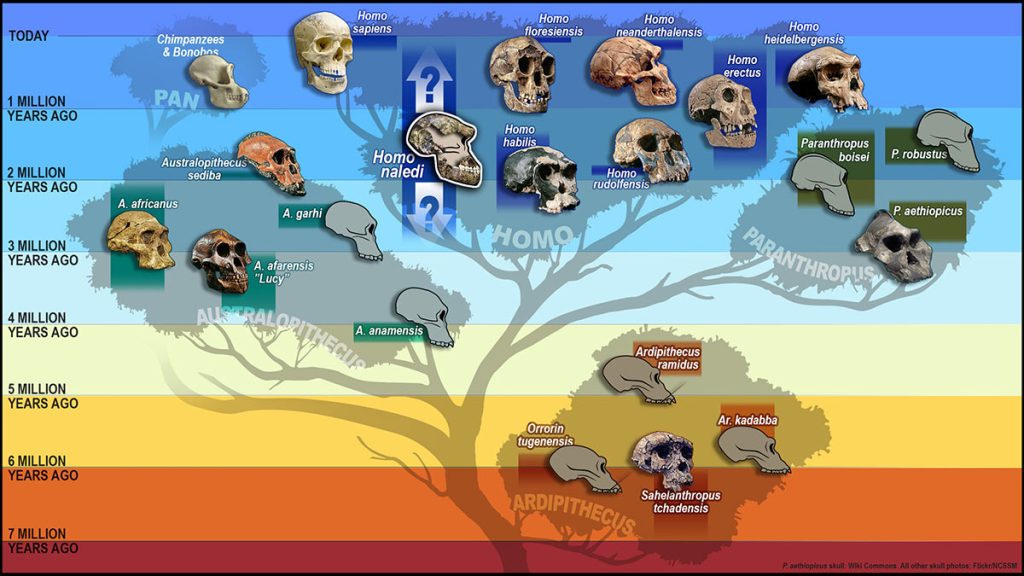
Roughly one hundred thousand years ago, the world was home to a remarkable diversity of human species. Modern humans were only beginning their first tentative steps beyond Africa, but they were not alone. Several other lineages thrived, each adapted to its own landscapes, climates, and ways of life. These were not different “races” of a single species but distinct human branches, separated by hundreds of thousands of years of evolution, yet sometimes still close enough to interbreed.

Neanderthals were the best known of these relatives. They occupied Europe and western Asia, building tools, hunting in coordinated groups, and surviving in some of the harshest Ice Age environments. To the east, Denisovans spread widely across Asia. Although only a handful of their bones and teeth have been recovered, genetic studies show that Denisovans were a major lineage, leaving traces of their DNA in modern populations from Tibet to Oceania. On the island of Java, the last populations of Homo erectus endured. This species had been extraordinarily successful, spreading out of Africa nearly two million years earlier, and fossils suggest they survived until at least 117,000 years ago.

Other species thrived in more isolated environments. On the island of Flores in Indonesia lived Homo floresiensis, often nicknamed the “hobbit” because of its small stature. Despite its diminutive size, this species produced stone tools and likely controlled fire, persisting until around 60,000 years ago. In the Philippines, another small-bodied species, Homo luzonensis, has been identified from remains dating between 67,000 and 50,000 years ago. These island species highlight how isolation could produce unique evolutionary experiments within the genus Homo.

In Africa, earlier lineages had already left their mark. Homo naledi, known from the Rising Star cave system in South Africa, lived between 335,000 and 236,000 years ago. Their remains show an unusual mix of primitive and modern features, alongside evidence suggesting deliberate placement of bodies in cave chambers. Although not contemporaneous with Neanderthals or Denisovans, Homo naledi demonstrates that the human family tree was even more diverse than the late-surviving species of the Pleistocene.

These populations were not fully isolated from one another. Modern genetic evidence shows that Neanderthals and Denisovans interbred with Homo sapiens, and a few individuals even carry ancestry from both. Today, people of non-African descent typically have about 1–2 percent Neanderthal DNA, while some Oceanian groups carry up to 4–6 percent Denisovan DNA. Our genomes are a living archive of those encounters.

Why so many human lineages disappeared remains an open question. Climate fluctuations would have stressed small, scattered populations. Competition for resources may have sharpened between overlapping groups. New pathogens could have devastated communities without immunity. In some cases, Homo sapiens likely held advantages in technology, social organization, or long-distance networks of exchange. But randomness also played a role: survival at evolutionary bottlenecks is often as much about chance as about superiority.

By about 32,000 years ago, only one human species remained – Homo sapiens. Neanderthals had vanished from their European strongholds, Denisovans disappeared from the high plateaus of Asia, and the island species had long gone extinct. What survives of this lost diversity are fragments of bone, stone tools, and strands of DNA that remind us of a time when humanity was not a single lineage but a family of experiments in survival.

Far from a story of inevitable triumph, the rise of Homo sapiens is a reminder of how precarious our own existence once was. The fact that we endure may owe less to strength or intelligence than to timing, adaptability, and the accidents of evolutionary history.

Sources
• Dirks, P. H. G. M., et al. “The age of Homo naledi and associated sediments in the Rising Star Cave, South Africa.” eLife, 2017.
• Smithsonian National Museum of Natural History. “Homo naledi.” Updated January 3, 2024.
• Détroit, F., et al. “A new species of Homo from the Late Pleistocene of the Philippines.” Nature, 2019.
• Brumm, A., et al. “Age and context of Homo floresiensis remains from Liang Bua, Flores.” Nature, 2016.
• Antón, S. C., et al. “Redating Homo erectus at Ngandong, Java, Indonesia.” Nature, 2019.
• Higham, T., et al. “The timing and spatiotemporal patterning of Neanderthal disappearance.” Nature, 2014.
• Chen, F., et al. “A late Middle Pleistocene Denisovan mandible from the Tibetan Plateau.” Nature, 2019.
• Huerta-Sánchez, E., et al. “Altitude adaptation in Tibetans caused by introgression of Denisovan-like DNA.” Nature, 2014.
• Green, R. E., et al. “A draft sequence of the Neandertal genome.” Science, 2010.
• Reich, D., et al. “Denisova admixture and the first modern human dispersals into Southeast Asia and Oceania.” American Journal of Human Genetics, 2011.
• Slon, V., et al. “The genome of the offspring of a Neanderthal mother and a Denisovan father.” Nature, 2018.

The Tintina Fault: Canada’s Overlooked Seismic Time Bomb

For decades, the Tintina Fault, a massive geological feature stretching over 1,000 kilometers from northeastern British Columbia through the Yukon to central Alaska, was considered a dormant relic of Earth’s tectonic past. However, recent studies have revealed that this once-quiet fault line is far from inactive. Instead, it’s quietly accumulating strain, potentially setting the stage for a significant seismic event in the near future.  

A Long-Dormant Fault Awakens
Historically, the Tintina Fault was thought to have been inactive for millions of years. This perception was based on the absence of significant earthquake activity, and the lack of obvious surface ruptures. However, advancements in geophysical research have challenged this assumption. Using high-resolution LiDAR imaging and satellite data, researchers have identified fault scarps, surface ruptures indicating past seismic activity, along a 130-kilometer segment near Dawson City, Yukon. These findings suggest that the fault has experienced significant movement in the past 2.6 million years, with the most recent major event occurring approximately 132,000 years ago .  

Accumulating Strain: A Recipe for Disaster
One of the most concerning aspects of the Tintina Fault is the strain it’s accumulating. Over the past 12,000 years, the fault has been slowly building up tectonic pressure at a rate of 0.2 to 0.8 millimeters per year. This seemingly insignificant rate translates to a substantial slip deficit of approximately six meters. If this accumulated strain is released suddenly, it could result in an earthquake with a magnitude exceeding 7.5 – comparable in size to the devastating 2010 Haiti earthquake .  

Potential Impacts on Northern Communities
While the Yukon is sparsely populated, communities like Dawson City could face significant challenges if the Tintina Fault were to rupture. The region’s infrastructure, including roads and buildings, may not be designed to withstand such a powerful earthquake. Additionally, the area’s susceptibility to landslides could exacerbate the situation, leading to further damage and potential loss of life.  

Reevaluating Seismic Risk Models
The newfound activity along the Tintina Fault has prompted scientists to reassess Canada’s National Seismic Hazard Model. Previously, the fault was not considered a significant earthquake source. However, the recent findings indicate that it may pose a more substantial risk than previously thought. As a result, researchers are advocating for updates to hazard models and increased preparedness in the region. 

The Tintina Fault serves as a stark reminder that even seemingly dormant geological features can harbor significant seismic potential. As our understanding of Earth’s tectonic processes deepens, it’s crucial to remain vigilant and proactive in assessing and mitigating natural hazards. The recent revelations about the Tintina Fault underscore the importance of continuous research and preparedness in safeguarding communities against the unpredictable forces of nature.

Mass as Delay: Rethinking the Universe’s Clockwork

Every once in a while, a new idea comes along that doesn’t just tweak the edges of our understanding, but tries to redraw the map entirely. John C. W. McKinley’s Mass Imposes Delay principle is one such idea. Published in mid-2025 and still sitting at the intersection of speculation and serious theoretical intrigue, this deceptively simple thesis – that mass is not just an object of gravity, but an agent of temporal delay – invites us to reconsider what we think space, time, and matter are really doing.

What if mass is not a thing, but a tempo? What if the cosmos is not a machine, but a performance – its rhythms set not by ticking clocks, but by the gravitational drag of being itself?

At its heart, McKinley proposes that mass structures time by imposing delays on how photons, and by extension, all information, resolves into physical experience. Rather than viewing mass merely as the cause of curvature in spacetime (as in general relativity), or as a Higgs-bestowed quality of particles (as in the Standard Model), this theory suggests something more metaphysical and yet startlingly concrete: mass sets the timing of reality’s unfolding.

Delay × Mechanics = Observed Physics

This is McKinley’s governing equation. Delay, introduced by mass, interacts with basic mechanical instructions, what he calls “photon-coded instructions”, to produce the physical phenomena we observe. It’s a view that doesn’t discard quantum field theory or general relativity but reframes them as emergent from an underlying informational pacing system.

In the Shapiro delay, light signals passing near a massive object take slightly longer to reach us. Traditionally explained as curved spacetime, McKinley reframes it: mass itself introduces a resolution delay.

This subtle shift moves the focus from where things happen to when they are allowed to happen.

A Delayed Universe: From Quantum Collapse to Cosmic Expansion

In quantum mechanics, the collapse of a wavefunction – the moment when a system’s potential resolves into a definite outcome – has long baffled philosophers and physicists alike. It’s not the math that confuses us; it’s the implication that reality is, in some sense, probabilistic until someone, or something, causes it to resolve.

McKinley’s theory offers an elegant twist: mass itself acts as a selector. By introducing delay, it filters and sequences quantum outcomes into coherent, observed experience. This bridges relativity and quantum theory by offering a common denominator: timing control.

It also touches cosmology. In a universe where mass determines delay, and delay governs resolution, cosmic time itself becomes pliable. The early universe might have operated under very different delay patterns – suggesting that the laws we observe today could be the outcome of an evolving cosmic schedule. Inflation, dark energy, and even the cosmological constant could be reframed as manifestations of shifting delay regimes.

A Two-Filter Reality

McKinley envisions reality as filtered twice: first by wavefunction possibility and again by mass-governed delay. Picture a vast quantum landscape filled with all possible outcomes, then imagine a “mass curtain” that slows and sequences how those potentials crystallize into reality.

This recalls Mach’s principle, which links inertia to the gravitational influence of distant matter. McKinley extends it: not only inertia, but the timing of reality’s unfolding depends on the universe’s mass distribution.

No exotic particles, no extra dimensions – just a new lens on familiar physics. The photon’s instructions may be timeless, but when they’re read depends on the local mass environment.

Challenges and Promise

Is it testable? Not yet, but in principle yes. If mass imposes resolution timing, high-precision quantum timing experiments might detect non-local delays, or gravitational lensing could show subtle deviations from purely geometric predictions. Such tests could turn this elegant speculation into empirical science.

The biggest contribution may be conceptual: replacing the image of a universe as a stage with actors, with that of a performance unfolding according to a mass-driven tempo.

Final Thoughts

McKinley’s work, still awaiting rigorous peer review, is worth attention. It asks us to imagine mass not as the glue holding the universe together, but as the metronome pacing its unfolding.

We may be on the cusp of a physics that is not only about what exists, but about when it happens. If he’s right, mass isn’t what keeps the universe in place – it’s what slows it down, just enough for reality to make sense.

Sources

  • McKinley, J.C.W. (2025). The Principle of Delayed Resolution. SSRN. Read here
  • Shapiro, I. I. (1964). Fourth Test of General Relativity. Physical Review Letters.
  • SciTechDaily. (2025). “New Physics Framework Suggests Mass Isn’t What You Think It Is.”
  • Wikipedia. Mach’s Principle. Read here

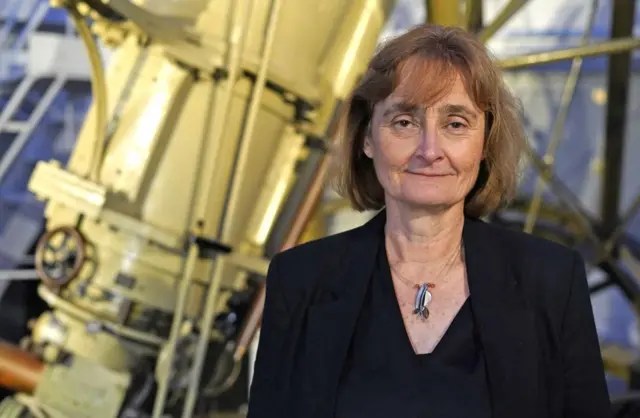
Professor Michele Dougherty: Breaking a 350‑Year Barrier in British Astronomy

When King Charles II created the post of Astronomer Royal in 1675, alongside the founding of the Royal Observatory at Greenwich, it was more than just a courtly appointment. The role was charged with solving one of the most pressing scientific problems of the age: finding longitude at sea. Over the centuries, its holders have included some of the most brilliant minds in science. John Flamsteed, the first Astronomer Royal, painstakingly mapped the stars to guide navigation. Edmond Halley predicted the return of his famous comet. Nevil Maskelyne brought precision to seafaring with The Nautical Almanac. Sir George Biddell Airy fixed Greenwich as the Prime Meridian. In the 20th century, Sir Frank Watson Dyson’s solar eclipse observations confirmed Einstein’s General Relativity, and Martin Rees became one of the world’s most eloquent science communicators.

For 350 years, however, the title, one of the most prestigious in British science, was held only by men. That changed on 30 July 2025, when His Majesty King Charles III appointed Professor Michele Dougherty as the 16th Astronomer Royal, making her the first woman ever to hold the office.

Dougherty’s appointment was no token gesture. Born in South Africa and now Professor of Space Physics at Imperial College London, she has built an extraordinary scientific career. She led the magnetometer team on NASA’s Cassini–Huygens mission, which revealed towering plumes of water erupting from Saturn’s icy moon Enceladus; findings that ignited the search for life beyond Earth. Today, she leads the magnetometer investigation for ESA’s JUICE mission to Jupiter’s moons, launched in 2023, and bound for Ganymede to probe its suspected subsurface ocean.

Her leadership extends well beyond planetary science. Dougherty is Executive Chair of the UK’s Science and Technology Facilities Council, overseeing major research infrastructure and funding. She is also the President‑elect of the Institute of Physics. In each of these roles, she has championed ambitious science, argued for investment in research, and worked to make science accessible to the public.

Asked about her appointment, Dougherty expressed both surprise and pride. She acknowledged the symbolic significance of being the first woman in a position historically reserved for men, while insisting her selection was based on the strength of her record, not her gender. Still, she hopes her visibility in such a revered role will inspire girls and young women to pursue careers in STEM.

The Astronomer Royal no longer runs an observatory; the role is now honorary, a recognition of exceptional achievement and a platform for public engagement. Holders advise the monarch on astronomical matters and serve as ambassadors for British science. It is a role steeped in history and weighted with symbolic gravitas.

In that context, Dougherty’s appointment is more than a personal accolade. It signals the enduring relevance of astronomy in the 21st century and Britain’s commitment to scientific leadership. She inherits a legacy stretching from the age of sail to the age of space exploration. As she takes up the mantle, she has said her mission is clear: to enthuse the public about the wonders of the universe and to show how space science enriches life here on Earth.

Retreat from the Final Frontier: The Cost of Cutting NASA’s Core

A sweeping wave of senior personnel departures at NASA, triggered by a White House, mandated austerity campaign, has raised deep concern across the U.S. space community. According to documents obtained by Politico, 2,145 employees in GS-13 through GS-15 roles have accepted early retirement, buyouts, or agreed to leave within the year. These roles include scientists, engineers, policy professionals, and program managers. The departures are concentrated in mission-critical areas and threaten to erode NASA’s ability to deliver on its bold human spaceflight agenda.

The cuts affect all ten of NASA’s major centers. Goddard Space Flight Center is taking the hardest hit, losing 607 senior staff. Johnson Space Center, which manages astronaut operations, will lose 366. Kennedy Space Center in Florida is losing 311. The pattern reflects a widespread drawdown of institutional leadership and technical depth at a time when the agency is navigating some of its most ambitious objectives since Apollo.

NASA spokesperson Bethany Stevens has maintained that the agency remains committed to its mission while adapting to a more streamlined budget. However, the White House’s proposed FY 2026 budget includes a 25 percent cut and envisions the elimination of more than 5,000 total positions across the agency. If implemented, the reductions would return NASA’s staffing levels to those of the early 1960s, a time when the agency had a far smaller mandate and fewer active programs.

The loss of senior talent poses a direct threat to several cornerstone programs. NASA is aiming to return humans to the Moon by mid-2027, followed by a crewed mission to Mars. Both missions rely on deep systems knowledge, inter-agency coordination, and seamless execution. The departure of experienced staff, especially from the Artemis and Gateway teams, could delay or destabilize these plans. Casey Dreier, chief of space policy at The Planetary Society, has warned that losing the managerial and technical expertise of this magnitude undermines execution across the board.

One particularly alarming detail in the Politico reporting is the loss of five of 35 employees in NASA’s legislative affairs office. This unit handles critical interactions with Congress and federal appropriators. Reducing its capacity at this moment could damage NASA’s ability to secure future funding and defend its strategic priorities. Even if Congress acts to restore some of the proposed funding cuts, the loss of institutional knowledge and political navigation skills cannot be replaced overnight.

Leadership instability compounds the challenge. Janet Petro, director of Kennedy Space Center and the first woman to serve as acting NASA Administrator, stepped down on July 9. The Trump administration appointed Transportation Secretary Sean Duffy to serve concurrently as acting head of NASA. Duffy, known for his background in reality television and conservative media, lacks direct aerospace or scientific experience. His appointment follows the White House’s withdrawal of Jared Isaacman’s nomination for the permanent role, reportedly due to tensions between Trump and SpaceX founder Elon Musk.

Duffy’s tenure at the Department of Transportation has already been marked by disputes with Musk, particularly over aviation safety concerns tied to SpaceX’s Starlink network. His assumption of the top NASA post may deepen those conflicts. Critics are skeptical that Duffy can effectively lead NASA through this period of transformation and retrenchment while also fulfilling his duties as Secretary of Transportation.

This leadership vacuum arrives as the Trump administration implements a broader program of federal workforce reduction. Earlier efforts to force mass departures at NASA were temporarily stalled after a court challenge. The current wave, conducted through buyouts and early retirements, has proven more effective and legally resilient. But the long-term damage may be even greater. NASA is losing not only numbers but also wisdom, mentorship, and the kind of tacit knowledge that cannot be replaced by hiring alone.

There is a real risk that these departures will permanently weaken NASA’s capacity. As staff leave, many are likely to be absorbed by the commercial space sector, which offers more competitive compensation and greater job security. NASA’s ability to attract top-tier scientific and engineering talent could be undermined for years. Even if the political winds shift, rebuilding the internal expertise lost during this period will be a generational task.

International competitors stand to benefit. China’s space program continues to grow rapidly and with clear state support. While NASA retrenches, China has announced new plans for lunar bases and expanded operations on Mars. If the United States chooses to scale back its space ambitions, other nations will fill the void. The result could be a rebalancing of global leadership in space exploration and innovation.

Key milestones loom ahead. The FY 2026 budget process will reveal whether Congress is willing to override the White House’s cuts. NASA center directors must now adjust internal plans to account for shrinking staff and shifting leadership. The deferred resignation program runs through July 25. Whether those numbers hold or expand will be an early signal of just how deep this institutional rupture goes.

What is at stake is not just one agency’s future. NASA remains a cornerstone of American scientific achievement and global leadership. A loss of this scale, at this moment, could push the agency into long-term decline. The damage may not be visible immediately, but it will be felt acutely in missed missions, cancelled programs, and a reduced national presence in space. These are not just retirements. They are resignations from the frontier.

Sources
• Politico: https://www.politico.com/news/2025/07/09/nasa-staff-departures-00444674
• Reuters: https://www.reuters.com/sustainability/sustainable-finance-reporting/more-than-2000-senior-employees-expected-depart-nasa-politico-reports-2025-07-09
• The Daily Beast: https://www.thedailybeast.com/trump-hands-musk-nemesis-sean-duffy-big-new-interim-job-in-charge-of-nasa
• The Planetary Society
• Eos: https://eos.org/research-and-developments/2145-senior-level-staff-to-leave-nasa
• Indian Narrative: https://www.indianarrative.com/world-news/nasa-set-to-lose-2100-senior-staff-members-as-trump-looks-to-slash-agencys-fund-report-172472.html