The Language of Trust: Decoding the Atreides Battle Tongue

Every culture in Dune speaks a language of power. The Bene Gesserit command with tone, the Fremen bind their tribes with oath and chant, and the Spacing Guild negotiates in silence and shadow. Yet among the great Houses, no language is more intimate, or more revealing of Frank Herbert’s ideas about information and control, than the Atreides battle language. Unlike the grandiose tongues of religion or empire, it is not meant for ceremony or persuasion. It is meant for survival, and for the quiet coordination of people who trust each other enough to speak without words.

Herbert never gives us a full lexicon or grammar. The battle language is not a “constructed language” like Tolkien’s Quenya or the Klingon of Star Trek. Instead, it is a tactical code, a system of micro-communication rooted in the fusion of military discipline and Bene Gesserit precision. It is as much muscle memory as speech. The Atreides use it to share orders under enemy watch, to signal in the dark, to compress entire strategies into a blink or the brush of a hand. Its existence hints at an entire dimension of human language that operates beneath conscious sound: the level of tone, rhythm, and gesture that Herbert, with his background in psychology and semantics, understood as the real field of control.

The first Dune novel treats the battle language like an invisible character. We never hear it directly, but we see its effect: a wordless exchange between Paul and Jessica as they flee into the desert; a silent understanding between Duncan Idaho and his troops in Arrakeen; a private bond between family members that even the Sardaukar cannot crack. Each moment underscores the difference between the Atreides and their enemies. The Harkonnens rely on fear and brute force; the Atreides rely on discipline and trust. Their language becomes the purest expression of that trust; a shared code that only functions when the users believe utterly in each other.

Herbert’s decision not to translate it is what gives the battle language its power. Readers sense that it exists in full but are never allowed to enter it. This mirrors how communication actually works in tight human groups. Soldiers, families, and lovers all develop shorthand that outsiders can’t decode. Herbert turns this natural phenomenon into a literary device: we understand that Paul and Jessica are communicating, but the details stay behind the curtain. The secrecy itself becomes world-building.

It is also a commentary on the politics of language. Dune constantly reminds us that words are weapons. The Bene Gesserit Voice manipulates obedience; the imperial court twists prophecy and bureaucracy into control systems. The Atreides battle language resists that. It is not designed to dominate others, but to coordinate equals. Within it there is no hierarchy, only mutual comprehension. When Jessica and Paul use it, the moment transcends rank; mother and son become co-conspirators in survival. That equality is what makes it dangerous in the feudal universe of Dune.

Modern readers might see parallels to real-world codes: the silent hand signals of special forces, the Navajo code talkers of World War II, or even the private gestures of people who have spent a lifetime together. In information-theory terms, it is a high-efficiency, low-bandwidth communication system; dense with meaning, resistant to interception, optimized for trust rather than volume. Herbert understood long before the digital age that the most powerful communications are not the loudest, but the most exclusive.

There’s also something profoundly spiritual about it. The battle language, like the Bene Gesserit Voice, reveals Herbert’s fascination with consciousness itself. To master it is to master attention, to choose every breath and movement deliberately. In a universe where empires fall to propaganda and faith, the Atreides preserve a private domain of meaning. They speak the language of intent, not ideology. Each signal, each inflection, is a small act of autonomy against the cacophony of the Imperium.

Later novels let the concept fade, but its DNA survives. The God Emperor’s measured speech, the Fremen’s ritual silence, even Leto II’s cryptic pronouncements all echo the idea that communication is the true battlefield. When Leto says, “I am not speaking to you, I am teaching your descendants,” he is still practicing the same philosophy, language as strategy, encoded for a specific audience. The Atreides battle language is simply the most literal form of that philosophy.

Science-fiction often builds worlds through grand architecture and invented vocabularies, but Herbert builds his through silence. The battle language is world-building by omission. We never learn its words because, like any code of loyalty, it only exists between those who earned it. Readers remain outside its circle, and that distance is part of its allure.

To understand the Atreides battle language is to see what Dune is really about. Beneath the sandworms, the spice, and the politics, it is a study of communication; how words, gestures, and even pauses can shape civilizations. The Atreides spoke with efficiency, empathy, and purpose. In a universe addicted to domination, that was their real heresy.

Sources:
Herbert, Frank. Dune. Chilton Books, 1965.
Herbert, Frank. Children of Dune. Putnam, 1976.
Herbert, Brian, and Kevin J. Anderson. Prelude to Dune series. Bantam Spectra, 1999–2001.
Platt, R. “Semiotics of Control in the Dune Universe.” Speculative Linguistics Review, 2017.
“Language and Power in Frank Herbert’s Dune.” Science Fiction Studies, vol. 28, no. 1, 2001.
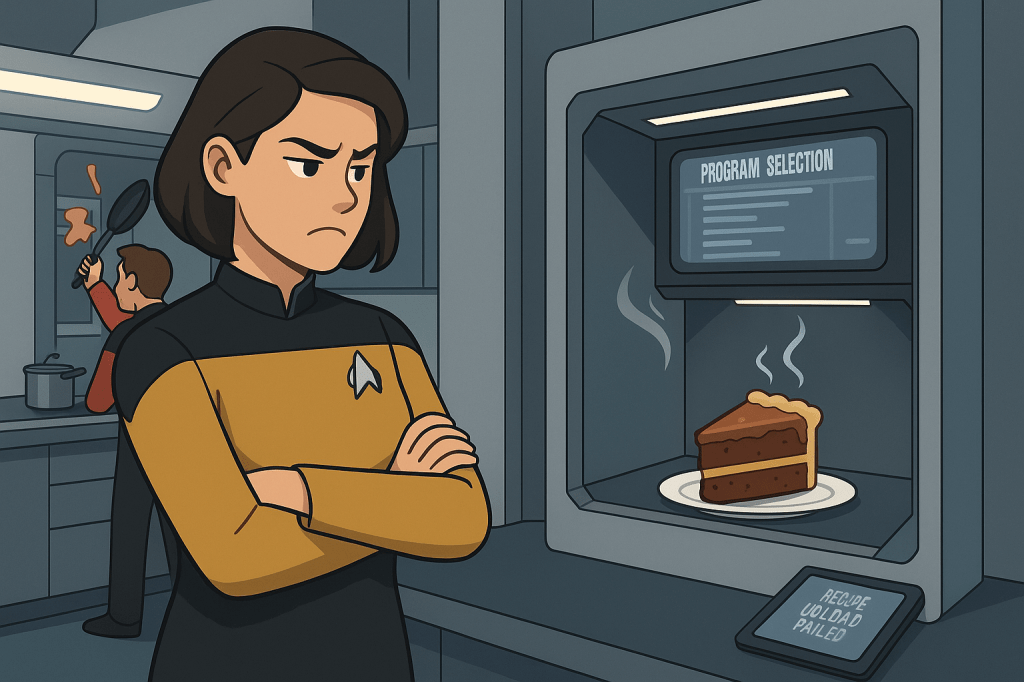
Why Can’t the Replicator Just Scan the Damn Cake?”: A Senior Trekker’s Rant, Expanded Edition

In the grand pantheon of Star Trek mysteries; why redshirts never survive, why Klingon foreheads changed mid-century, why nobody uses seatbelts on the bridge, one lesser-discussed, but utterly maddening question remains: Why is programming new food into the replicator such a colossal pain in the nacelles?

I mean, come on. This is a civilization that can fold space, beam people across hostile terrain, and host full Victorian murder mysteries in the holodeck with better lighting than a BBC costume drama. And yet, when someone wants to add their grandmother’s secret tomato sauce recipe to the replicator, it’s a whole saga. Suddenly you need a molecular biologist, a culinary technician, and probably Counselor Troi to help you process your feelings about spice levels.

Let’s break this down. Replicators are based on the same matter-energy conversion technology that powers transporters. They take raw matter, usually stored in massive energy buffers, and rearrange it into whatever pattern you’ve requested, be it a banana, a baseball bat, or a bust of Kahless the Unforgettable. On paper, it’s magical. Infinite possibilities. Want a rare Ferengi dessert that was outlawed in six systems? No problem, if it’s in the database.

But here’s the catch: the database. That’s the real villain of the piece. Everything has to be pre-programmed. And programming something new isn’t as simple as chucking a muffin into the transporter and yelling “Make it so.” Why not? Because food is astonishingly complex.

Sure, from a chemical standpoint, you can break a slice of chocolate cake down into carbon, hydrogen, oxygen, and nitrogen, the same building blocks the replicator can access, but that’s like saying Shakespeare’s Hamlet is just twenty-six letters arranged in a particular order. The cake is more than its ingredients. It’s texture, mouthfeel, flavor balance, aroma. It’s how the icing melts just slightly faster than the sponge in your mouth. It’s memory, emotion – it’s nostalgia on a fork.

And the replicator, bless it, just doesn’t do nuance.

In-universe, we’ve seen Starfleet crews struggle with this time and again. Captain Sisko flatly refuses to eat replicated food, relying instead on traditional cooking, partly because he loves the craft, but also because the replicator’s version of jambalaya “tastes like it was programmed by someone who’s never even seen a shrimp.” Over on Voyager, Neelix throws himself into galley work precisely because replicated food gets old fast, especially when you’re lost in the Delta Quadrant with no fresh supplies, and morale hanging by a thread.

Programming a new recipe means getting the proportions right, inputting molecular structures, and testing the end result, again and again, for taste, safety, and cultural appropriateness. You want Klingon bloodwine that doesn’t melt the replicator coils? Better spend a few days in the ship’s chem lab. There’s no “scan dish” function, because full transporter-level molecular scans are expensive, dangerous, and, frankly, overkill for your aunt’s chicken pot pie.

Not to mention the ethical implications. Transporters work by disassembling matter at the subatomic level and reassembling it elsewhere. That’s fine when you’re moving Lieutenant Barclay to Engineering (again), but doing a transporter-level scan of organic matter for replication purposes raises thorny questions: if you scan and replicate a living steak, is it alive? Is it conscious? Does it have legal rights under Federation bioethics law? You laugh, but remember, this is the same universe where holograms occasionally demand civil liberties.

So Starfleet plays it safe. Replicators are deliberately limited to lower-resolution blueprints, safe patterns, and tried-and-tested food profiles. They’re designed to be efficient, not perfect. And while that keeps the ship’s energy budget in check and prevents any Frankensteinian chowder accidents, it also means the food sometimes tastes like packing peanuts soaked in nostalgia.

Yet, maybe that’s the beauty of it. In a post-scarcity world where you can have anything at the touch of a button, authenticity becomes the rare commodity. Cooking, real cooking, becomes an act of love, tradition, identity. When Picard orders “tea, Earl Grey, hot,” he’s not looking for a proper British brew; he’s summoning comfort, consistency, something almost ritual. When Riker burns an omelet trying to impress a crewmate, it’s not because he lacks tech, it’s because he values the experience, the attempt.

So no, the replicator can’t just scan the damn cake. And maybe that’s a good thing. Because in a galaxy of warp drives and wormholes, the things that make us human: taste, culture, connection, still require effort. A pinch of spice. A dash of imperfection, and maybe, just maybe, a reminder that sometimes the best things can’t be replicated.

At least not without a food fight in the galley.

🔥 Billie Piper Is (Possibly) the Doctor, and the Whoniverse Will Never Be the Same 🔥

As I wrote a month ago, I was ready to move on from this show, and then Davies throws us a huge twisted surprise in the form of Billie Piper! 

The Doctor Who fandom is on fire following the explosive twist in the Season 2 finale, The Reality War. Just when we thought we had a grasp on where Russell T Davies was taking us, Ncuti Gatwa’s Fifteenth Doctor regenerated… into Billie Piper. Yes, that Billie Piper. The Rose Tyler. The Bad Wolf. The Moment. And now, potentially, the Doctor herself.

This isn’t just a stunt, it’s a paradigm shift. Never before in the show’s 60+ year history has a former companion become the Doctor. And Piper’s return, announced with a cheeky “Introducing Billie Piper” credit, has launched Doctor Who into completely uncharted territory.

🌀 So What Could This Mean?

  • She’s the actual Sixteenth Doctor. The regeneration was legit, the torch has been passed, and Billie Piper now holds the keys to the TARDIS. Her earlier role as The Moment in The Day of the Doctor showed she can embody Time Lord gravitas with ease — now we get the full dose.
  • She’s a Doctor from an alternate universe or timeline. We’ve seen how messy reality can get when timelines converge (hello, Reality War), and this could be a brilliant multiversal twist.
  • She’s a projection, interface, or psychic echo. Could the Doctor have splintered himself across reality, creating a version that looks like his most iconic companion? The symbolism would be rich and emotionally resonant.
  • A new regeneration cycle entirely. With the lore expanding since The Timeless Child, the idea of new rules, new forms, and new faces makes Billie Piper’s presence feel like the launch of a bold new era, not just a casting surprise.

❤️ Fans Are Loving It

Across Reddit, Twitter, and fan forums, the excitement is electric. Longtime fans see this as a poetic full-circle moment: the return of one of NuWho’s founding stars, not as a memory, but as the next incarnation of the Doctor. New viewers get a twist that redefines the show’s boundaries and potential. And Billie? She’s clearly thrilled to be back, calling the role “irresistible” and promising something unlike anything we’ve seen before.

✨ Final Take

This move by Davies is genius-level showrunning: nostalgic, surprising, and bold. Billie Piper as the Doctor could mean a full season of unpredictable energy, cosmic-scale storytelling, and emotional depth, all anchored by one of Doctor Who’s most beloved performers.

The TARDIS has never felt so wide open.


📚 Sources

Echoes of Gallifrey: A Whovian’s Reflection

To paraphrase that wise old Vulcan from across the science fiction aisle: “Perhaps new Who is for new fans.”

I’ve been around long enough to remember the flickering black and white glow of the first Doctor Who episode on my family’s wood-paneled television, and yes, I did watch from behind the sofa. I was five, and the grindy, wheezing, whooshing sound of the TARDIS stuck with me, a sound I’d recognize decades later with the same thrill that accompanied my first kiss, or the moment Armstrong stepped onto the Moon.

I grew up with the Doctor, through all their faces and foibles, from the gentleness of Troughton to the whimsy of Tom Baker’s scarfed silhouette. The show wasn’t perfect, never has been, but it had a sort of ramshackle brilliance that made it feel like ours. British. Imaginative. A little cheap, I mean it was the BBC, but so full of heart.

When the classic series ended in the ’80s, I mourned. Like losing an eccentric uncle, strange, inconsistent, but dearly beloved. Then, in 2005, Russell T Davies brought it back with Eccleston, and by the stars, what a revival! It had teeth, wit, charm, and it remembered where it came from too. I danced through the Tenth and Eleventh Doctors. Tennant’s tragic hero. Smith’s madman with a box. River Song’s tangled timeline, that was poetry. It all mattered to me.

But time is merciless. Like the Doctor, the show changed, and perhaps, like the Doctor, I did too. Capaldi was brilliant on paper, but the writing lost its way. Companions died too easily, too cruelly, as if the writers were punishing us for caring. The warmth faded.

And then came Jodie Whittaker. I wanted to like her, truly! Yet, the spark wasn’t there for me. The stories felt like sermons, and not the good kind, not the “what does it mean to be human?” kind. More like being scolded during Saturday tea.

With Ncuti Gatwa, I had hope again. Charismatic, dynamic, full of promise, but so far, the stories seem more interested in the symbolism of who the Doctor is than in what the Doctor does. Maybe that’s necessary. Maybe that’s what this era needs, but it doesn’t grab me the way it once did.

I questioned myself. Was this discomfort rooted in something ugly? Was I turning into the kind of bitter old fan who snarls at change? A dinosaur, roaring into extinction? Was I being sexist? Even racist?

No. I don’t think so.

I think Doctor Who is evolving for a new generation. New voices, new faces, new visions. It’s becoming something that maybe, just maybe, isn’t for me anymore, and that’s okay. I had my Doctors. I had my adventures in time and space, and now it’s someone else’s turn to run down corridors, face impossible odds, and save the universe with a grin and a screwdriver.

And so I say, sincerely: long live Doctor Who. Even if the TARDIS no longer comes for me.

Endnote 
The first episode of Doctor Who was broadcast on November 23, 1963 by the BBC. The episode, titled An Unearthly Child”, introduced viewers to the First Doctor, played by William Hartnell.

Interestingly, the broadcast was slightly overshadowed by news coverage of the assassination of U.S. President John F. Kennedy, which had occurred the day before. As a result, the BBC repeated the first episode the following week before continuing with the rest of the serial.

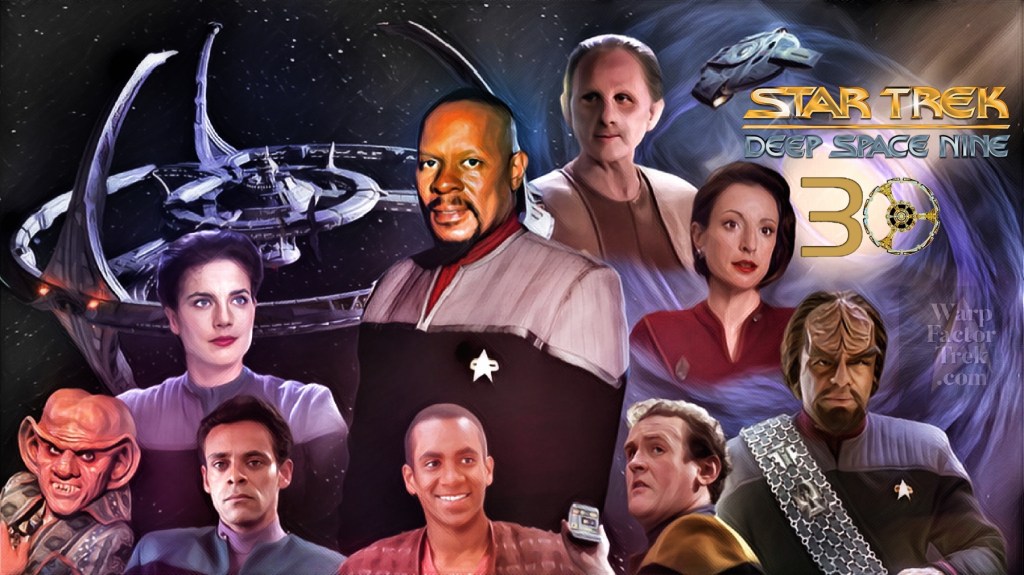
Elim Garak: The Enigmatic Thread of Deep Space Nine

Elim Garak, the exiled Cardassian spy-turned-tailor, is one of Star Trek: Deep Space Nine’s most compelling characters. Portrayed masterfully by Andrew Robinson, Garak’s role in the series transcends mere espionage or political intrigue – he embodies the moral complexity of DS9, offering a unique perspective on war, loyalty, and redemption. Throughout the series, Garak’s shifting allegiances and cryptic motivations make him a wildcard whose actions often shape the larger conflicts at play.

Garak is introduced as a seemingly harmless tailor on the space station, a remnant of Cardassia’s former occupation of Bajor. His past as an operative for the infamous Obsidian Order is hinted at, but never fully revealed, a mystery he cultivates with half-truths and deflections. His interactions with Dr. Julian Bashir, in particular, serve as an early means of peeling back his layers. Through their friendship, Garak becomes a guide for Bashir’s, and the audience’s, understanding of the murky realities of espionage, politics, and morality. While Bashir initially sees the world in stark terms of good and evil, Garak teaches him that survival often requires moral compromise.

As the series progresses, Garak’s importance in the DS9 arc deepens. His role in the war against the Dominion, particularly in shaping the Federation’s alliance with the Romulans, is one of the show’s defining moments. In “In the Pale Moonlight”, Captain Sisko turns to Garak to forge a deception that will bring the Romulans into the war. Garak, understanding that manipulation and subterfuge are sometimes necessary, orchestrates the murder of a Romulan senator and plants fabricated evidence to implicate the Dominion. His chilling pragmatism, accepting assassination as the necessary price of victory, forces Sisko to confront the harsh realities of wartime leadership.

Garak’s return to Cardassia in the series’ final arc is equally pivotal. Once a pariah, he finds himself in the heart of a resistance movement against the Dominion and the puppet Cardassian government. His knowledge of covert operations, combined with his deep (if complicated) love for his people, makes him instrumental in the fall of the Dominion-aligned regime. However, Garak’s triumph is bittersweet – by the war’s end, Cardassia is devastated, its cities in ruins, and its people broken. In “What You Leave Behind”, Garak acknowledges that while he fought to liberate his homeworld, he may never truly belong there again.

Garak’s arc is one of self-discovery and tragic inevitability. He begins as an outcast and ends as a reluctant hero, yet he remains a man without a home. His story reflects DS9’s larger themes; gray morality, the cost of war, and the weight of history. Whether acting as a loyalist, a dissident, or an ally of convenience, Garak remains true to himself: a survivor who understands that sometimes, the dirtiest work must be done for the greater good.

The Problematic Legacy of Geordi La Forge and Leah Brahms in Star Trek: The Next Generation

The dynamic between Geordi La Forge and Dr. Leah Brahms in “Star Trek: The Next Generation” (TNG) serves as an uncomfortable reflection of deeper issues surrounding privacy, consent, and the portrayal of male-female relationships in media. Examining the episodes “Booby Trap” and “Galaxy’s Child” reveals not just problematic interactions, but also the limitations of the show’s ethical imagination.

In “Booby Trap”, Geordi creates a holographic version of Leah Brahms to solve a crisis aboard the USS Enterprise. What begins as a technical necessity quickly veers into murky territory when Geordi develops personal feelings for the hologram. This digital Leah, designed to assist with engineering challenges, is imbued with enough personality to simulate human connection, but she’s still a tool, incapable of true agency or consent. Geordi’s affection for the hologram reflects an unsettling fantasy: a world where one can mold a perfect partner without regard for the autonomy of the real person behind the likeness.

This tension explodes in “Galaxy’s Child”, when the actual Dr. Brahms arrives on the Enterprise. Geordi, buoyed by his prior “relationship” with the hologram, anticipates a warm connection. Instead, Leah discovers the simulation, sparking an understandable sense of violation. The holographic version was created – and romanticized – without her consent, raising significant ethical concerns. The show sidesteps the gravity of Leah’s discomfort by centering on Geordi’s good intentions and admiration for her work, failing to grapple with the invasive nature of his actions.

This storyline taps into a broader cultural trope: the “nice guy” who feels entitled to affection because his intentions are pure. Geordi’s well-meaning persona becomes a shield against accountability, excusing behaviors that breach personal boundaries. Meanwhile, Leah’s autonomy and emotional response are marginalized, her discomfort framed as an obstacle to Geordi’s emotional growth.

Even the resolution falls flat. Leah’s justified anger dissipates far too quickly, subsumed by a focus on professional collaboration. The narrative ultimately suggests that personal boundaries are secondary to technical expertise, a troubling message that undermines the importance of respect and accountability in relationships.

The implications extend beyond TNG. Later portrayals of Geordi in “Star Trek: Picard” position him as a family man, with daughters Sidney and Alandra. While the identity of his wife is left ambiguous, non-canon sources such as “Engines of Destiny” imagine Geordi and Leah eventually marrying, a conclusion that feels jarring given the unresolved ethical breaches in their earlier interactions. The novels frame their relationship as one of mutual respect and shared passion for engineering, but this idealized progression sidesteps the critical flaws in its foundation.

The Geordi-Leah dynamic exemplifies a recurring issue in media: the prioritization of male character arcs over the agency of female characters. TNG’s treatment of their interactions reflects outdated attitudes about privacy, consent, and the consequences of male entitlement. It’s a narrative that not only diminishes Leah’s humanity but also leaves viewers with unresolved questions about the ethics of their bond.

If Star Trek is to live up to its ideals of exploration and progress, it must interrogate these missteps, offering more nuanced and respectful portrayals of relationships. Only then can it boldly go where it’s never gone before: toward a future of genuine equality and respect.

DS9 is Simply the Best Star Trek to Date

Star Trek: Deep Space Nine (DS9) is widely regarded as the most complex and compelling series in the Star Trek franchise, setting itself apart through its intricate storytelling, morally gray characters, and bold exploration of themes that challenge traditional Star Trek optimism. Unlike the more episodic nature of The Original Series and The Next Generation, DS9 adopts a serialized approach, allowing for deeply interconnected story arcs that resonate on a larger scale. The Dominion War, a centerpiece of the series, stands as a testament to this approach, offering a gritty, multi-season exploration of warfare, diplomacy, and the ethical dilemmas faced by individuals and governments during times of crisis.

One of DS9’s greatest strengths is its cast of richly developed characters. Benjamin Sisko, played masterfully by Avery Brooks, is a layered protagonist who balances the responsibilities of a Starfleet officer with his personal struggles as a father, widower, and religious figure to the Bajoran people. Sisko’s arc as the Emissary of the Prophets adds a spiritual dimension to his leadership, making him one of the most complex captains in the franchise. Characters like Kira Nerys, a former Bajoran resistance fighter, and Garak, a Cardassian tailor and ex-spy, further highlight DS9’s ability to delve into morally ambiguous territories. Kira’s journey from hardened freedom fighter to a diplomat striving for peace underscores the personal cost of resistance and rebuilding, while Garak’s layers of deceit and loyalty make him one of the most fascinating secondary characters in Star Trek history.

The series also excels in its exploration of darker and more controversial themes. For instance, the occupation of Bajor by the Cardassians serves as a thinly veiled allegory for real-world historical atrocities, such as colonialism and genocide. Episodes like “Duet” and “The Siege of AR-558” confront the horrors of war and occupation head-on, forcing both the characters and viewers to grapple with uncomfortable truths about morality and justice. The Dominion War arc, spanning multiple seasons, brings these themes to a head, portraying the Federation in its most vulnerable state. Through this, DS9 challenges the idealism that defined earlier Star Trek series, asking whether the Federation’s values can endure in the face of existential threats.

DS9’s stationary setting on a space station near a strategic wormhole allows it to explore interpersonal dynamics and long-term political relationships more deeply than its predecessors. The station serves as a cultural melting pot, fostering interaction between species like the Bajorans, Cardassians, Ferengi, and Dominion. This unique setup creates a backdrop for stories that delve into diplomacy, trade, and cultural tensions. Episodes such as “In the Pale Moonlight”, where Sisko manipulates events to bring the Romulans into the Dominion War, exemplify the show’s willingness to confront moral ambiguity.

Moreover, DS9 embraces diversity and representation. It features one of the first Black leads in sci-fi television and presents LGBTQ+ themes subtly through characters like Jadzia Dax, whose experiences challenge traditional notions of identity and love.

By combining rich storytelling, profound character arcs, and a willingness to push boundaries, Deep Space Nine remains not only the best Star Trek series, but also one of the most thoughtful and impactful sci-fi shows ever created.

I wrote this piece almost two years ago, and I have been holding off publishing. Why? Strange New Worlds, that’s why! I have been totally taken with this series, and yet for me, it’s needs a little more longevity before I am going to change my mind – just saying! 

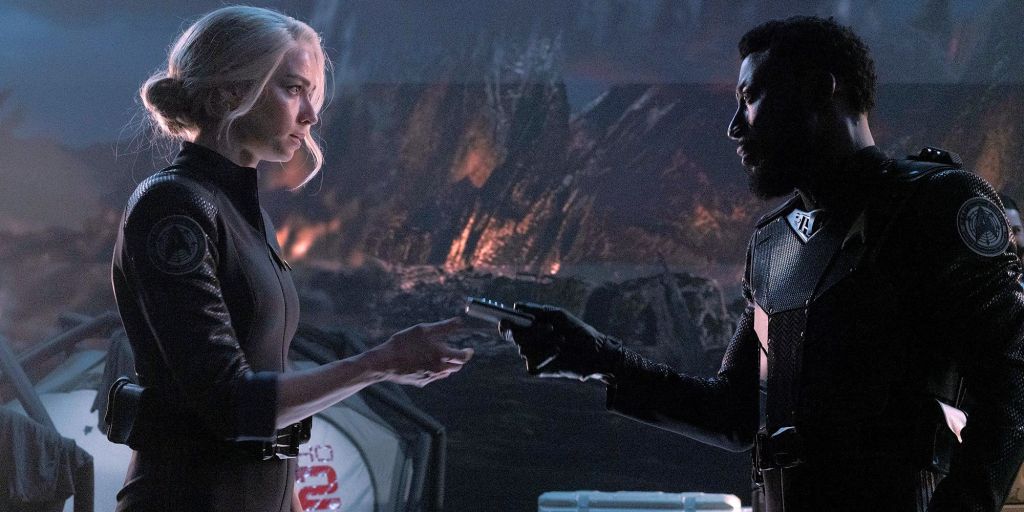
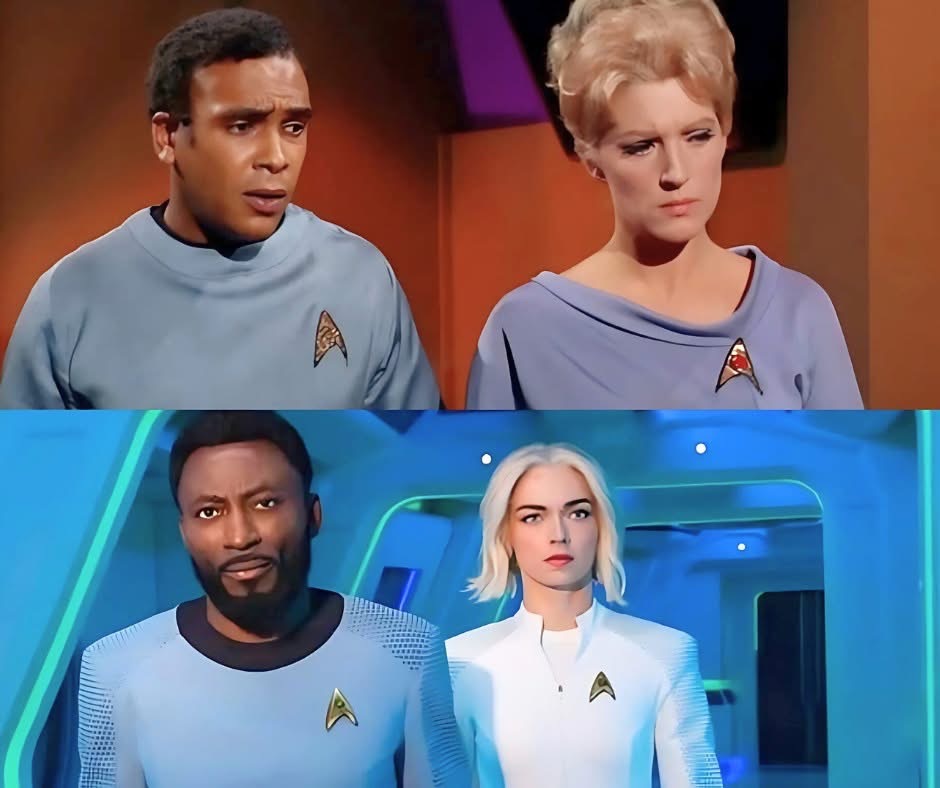
The Duality of Dr Joseph M’Benga 

I’ve noticed a recurring theme in my posts about Star Trek: the pivotal role of the ship’s doctors. These characters aren’t merely healers; they are often the moral compass of the crew, embodying the Federation’s ideals while wrestling with their own internal conflicts. Among these remarkable figures, Dr. Joseph M’Benga stands out as one of the most compelling. His story is one of contrasts – a brilliant healer haunted by the scars of war, a scientist navigating the grey areas of survival, and a father whose love transcends the boundaries of science.

M’Benga’s medical expertise, especially his unparalleled understanding of Vulcan physiology, was forged during his internship on Vulcan; a testament to his dedication and intellect. As one of Starfleet’s most capable physicians, he saved countless lives aboard the USS Enterprise. But beneath this exterior of clinical precision lay a darker, more complex history. During the Klingon War, M’Benga served as a covert operative. His prowess in combat earned him the chilling nickname “the Ghost,” reflecting a lethal efficiency that starkly contrasted with his mission to preserve life. The brutal Battle of J’Gal left him grappling with the weight of his actions, and the moral compromises he was forced to make.

Amid his wartime trauma, M’Benga faced a deeply personal battle: his daughter Rukiya’s terminal illness. In a desperate bid to save her, he used the transporter buffer to hold her in stasis, preserving her life while searching for a cure. This act was not just an expression of his medical ingenuity, but also of his boundless love as a father. When the time came to release her into the care of a sentient nebula being, a decision that symbolized profound sacrifice, it underscored the depth of his humanity. M’Benga’s choice was not merely a scientific solution, but an emotional resolution, allowing Rukiya to transcend her suffering in a way that was both heartbreaking and hopeful.

Aboard the USS Enterprise, M’Benga’s dual roles as healer and soldier were constantly at play. Under Captain Pike’s leadership, and later Captain Kirk’s, he treated everything from routine injuries to the aftermath of violent battles. Whether guiding Spock through the complexities of Vulcan healing trances or wrestling with the moral dilemmas of triage in wartime, M’Benga embodied resilience and compassion. His quiet strength anchored the crew during moments of crisis, even as his personal burdens weighed heavily on him.

Though eventually succeeded by the iconic Dr. Leonard McCoy as Chief Medical Officer, M’Benga remained a vital figure in Starfleet’s medical corps throughout the 2260s. His later years saw him move to Stanford Medical Center, where he continued his medical practice before retiring to Vulcan. On the tranquil Vulcan plains, far from the chaos of starships and battles, M’Benga embraced a simpler existence as a plomeek farmer. This peaceful conclusion to his journey provided a stark contrast to his earlier life, symbolizing his desire to heal not only others but also himself.

Dr. Joseph M’Benga’s legacy in Star Trek is a testament to the duality of the human experience. Healer and warrior, scientist and survivor, his story is one of navigating trauma, moral ambiguity, and the unyielding tension between the preservation of life and the necessity of taking it. In the vast expanse of the Star Trek universe, M’Benga stands as a nuanced and deeply human reminder of the struggles and sacrifices that define us all – both on Earth and among the stars.

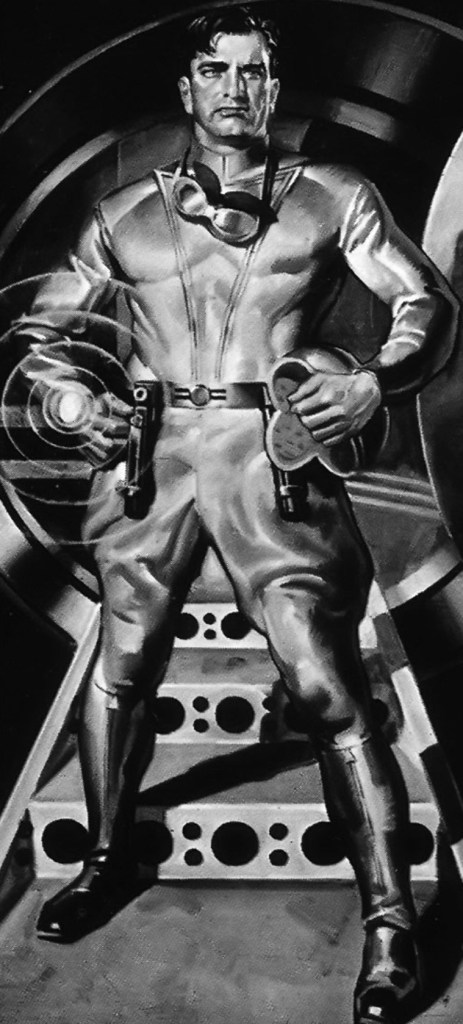
Placing the works of EE “Doc” Smith into its Societal Context

I read a fair amount of science fiction, as can clearly be seen from the content of this blog.  My first introduction to speculative fiction, beyond C.S. Lewis, was the works of E.E. “Doc” Smith, loaned to me by a fellow classmate during my early teens. I devoured every book by this author I could find, reading without judgement, just enjoying the galactic adventure. Like I have said many times about my annual reading of Frank Herbert’s Dune, it’s not the story that changes, but the perspective that the additional year gives me.  

E.E. “Doc” Smith is an undeniable cornerstone of science fiction, particularly in shaping the grand, sweeping narratives of the space opera subgenre. His works, from the Lensman to the Skylark series, established many of the storytelling conventions that would define science fiction for generations. Yet, these same works are deeply entwined with the patriarchal and often misogynistic norms of their time, offering a fascinating lens through which to examine the cultural attitudes of the early-to-mid 20th century. Smith’s legacy is both a celebration of speculative ambition, and a study in the limitations of its era.

The Lensman series, perhaps Smith’s most iconic work, epitomizes the space opera’s blend of high-stakes interstellar conflict and moral idealism. Published between 1934 and 1950, these novels follow the genetically perfected heroes of the Galactic Patrol, led by the stalwart Kimball Kinnison, in their battle against the shadowy forces of Boskone. While the series broke ground in envisioning a universe of sprawling galactic civilizations, its treatment of gender roles reveals a narrower imagination. Female characters, such as Clarissa MacDougall, are largely confined to nurturing or supportive roles, their significance often framed in relation to male protagonists. Even Clarissa’s ascension to the ranks of the Lensmen – a notable exception – feels more like a narrative anomaly than a redefinition of gender dynamics. The series reflects its time, portraying men as protectors and leaders while relegating women to emotional or domestic spheres.

Similarly, the Skylark series, begun in 1928, offers an early blueprint for the modern space opera, chronicling the scientific and exploratory exploits of Richard Seaton and his morally ambiguous rival, Marc “Blackie” DuQuesne. Once again, women – characters like Dorothy Seaton and Margaret Spencer – are predominantly relegated to roles as love interests, hostages, or secondary figures. Though occasionally resourceful or intelligent, their contributions are overshadowed by the male protagonists’ heroics. These dynamics reinforce traditional gender hierarchies, with men as agents of innovation and action while women serve as symbols of emotional stability or moral guidance.

In the Family d’Alembert series, co-written with Stephen Goldin during the 1960s and 1970s, there is a slight shift in representation. Yvette d’Alembert, part of a circus-trained secret agent duo, emerges as a rare competent female protagonist. Yet even her capabilities are often contextualized by her physical appeal and partnership with her brother Jules. By this time, feminist movements were beginning to reshape societal norms, but science fiction, especially that rooted in the pulp tradition, lagged in reflecting these changes. Yvette’s portrayal, while an improvement, still clings to the vestiges of earlier patriarchal frameworks.

Smith’s later works, such as Subspace Explorers (1965), continue to explore grand themes like telepathy, space exploration, and societal advancement, but the underlying gender dynamics remain unchanged. Female characters with psychic abilities feature in the narrative, yet their roles are secondary, reinforcing the notion that leadership and innovation are male domains.

These patterns are not mere quirks of individual stories but reflections of a broader societal framework. Smith’s fiction mirrors the rigid gender roles of early-to-mid 20th-century society, a time when women were often confined to domestic or secondary positions. His male protagonists, embodying traits of strength, rationality, and dominance, contrast sharply with the nurturing and emotional roles assigned to women. While Smith does not explicitly demean women, the systemic sidelining of female characters speaks to the cultural misogyny of the era. His works helped establish many tropes that would define space opera, but they also reinforced a male-centric vision of the genre that took decades to challenge.

Despite these limitations, Smith’s influence on science fiction is profound. His imaginative depictions of intergalactic civilizations, advanced technologies, and epic storytelling inspired luminaries such as Isaac Asimov, Arthur C. Clarke, and even George Lucas. Modern readers, however, often critique his works for their outdated gender dynamics and lack of diversity. These critiques, while valid, do not diminish the historical significance of his contributions. Instead, they offer an opportunity to reevaluate his legacy in light of the genre’s ongoing evolution.

E.E. “Doc” Smith’s works remain a double-edged artifact of science fiction history: a testament to the boundless creativity of speculative fiction, and a reminder of the cultural constraints of its time. By recognizing these dual aspects, we can celebrate his role in shaping the genre while continuing to push for more inclusive and equitable narratives in speculative storytelling.

The Politics and Culture of the United Federation of Planets

The United Federation of Planets (UFP) in Star Trek is more than just a fictional interstellar government, it’s a lens through which we can explore the complexities of governance, culture, and morality. As an amalgamation of over 150 member planets, each with distinct identities, the Federation represents humanity’s highest aspirations: unity, cooperation, and progress. However, beneath its utopian veneer lies a tapestry of contradictions, challenges, and ethical dilemmas that reflect the very nature of politics and society.

Culturally, the Federation embodies a post-scarcity society where poverty, hunger, and economic inequality have been eradicated. This transformation, driven by technologies like replicators, allows individuals to pursue self-fulfillment rather than survival. Captain Picard famously encapsulates this ethos in Star Trek: First Contact, stating that humanity works to “better ourselves and the rest of humanity.” Yet, this idealism is not without critique. Characters like Quark, the ever-pragmatic Ferengi bartender from Deep Space Nine (DS9), often mock Federation citizens as naive and soft, sheltered by their comfortable post-scarcity lives, and ignorant of the struggles faced by more commerce-driven cultures, or from living within the hierarchical Dominion. 

The Federation’s diversity and multiculturalism are central to its identity. As a multi-species alliance, it strives to respect and integrate a variety of cultural traditions. Vulcan logic, Klingon honor, Bajoran spirituality – these are just a few examples of the unique perspectives that coexist within the Federation. Yet, this inclusivity is not without tension. The Next Generation episode “The Measure of a Man” highlights the Federation’s struggle to define universal principles in a diverse galaxy, as it debates whether the android Data qualifies as a sentient being. Similarly, DS9 delves into the cultural friction between the Federation’s secular humanism and Bajoran spiritualism, particularly during Bajor’s efforts to join the Federation. While the Federation promotes unity, it sometimes risks imposing its ideals, creating an undercurrent of what some might call “soft imperialism.”

Politically, the Federation operates as a parliamentary democracy, with the Federation Council serving as its legislative body. Member planets retain autonomy over their internal affairs, while the Council oversees interplanetary law and diplomacy. The President, based in Paris on Earth, functions as the head of state. This balance between centralized governance and local autonomy is a strength, but it also leads to conflict. In Deep Space Nine, Bajor’s hesitation to join the Federation stems from fears of losing cultural identity to Earth-centric norms, a recurring critique that the Federation, despite its claims of equality, often reflects Earth’s values more than those of its alien members.

Ethics play a central role in Federation politics, often taking precedence over realpolitik. The Prime Directive, which prohibits interference with the natural development of pre-warp civilizations, exemplifies this commitment to morality. However, its strict application frequently leads to moral quandaries. In the Next Generation episode “Pen Pals,” Captain Picard grapples with whether to save a planet facing natural destruction, knowing that intervention would violate the Directive. These dilemmas reveal the challenges of maintaining an ethical stance in an imperfect galaxy.

Yet, the Federation’s ideals are not invulnerable. Darker elements, such as Section 31, a covert intelligence agency introduced in DS9, operate outside the bounds of Federation law to protect its interests. This shadowy organization embodies the tension between the Federation’s noble aspirations and the harsh realities of interstellar politics. Similarly, the Dominion War in DS9 exposes the Federation’s capacity for militarization, challenging the perception of Starfleet as a purely exploratory and diplomatic force.

What makes the Federation compelling is its dual nature: it is both a beacon of hope and a reflection of humanity’s flaws. In Star Trek VI: The Undiscovered Country, the Federation negotiates peace with the Klingon Empire, showcasing its dedication to diplomacy even after decades of hostility. Yet, this same Federation harbors internal threats, as seen in the DS9 episodes “Homefront” and “Paradise Lost,” where a Starfleet admiral attempts a coup in response to Changeling infiltration. These stories remind us that even the most enlightened institutions are vulnerable to fear and corruption.

Ultimately, the Federation is not just a backdrop for Star Trek’s adventures; it is a character in its own right, embodying the complexities of governance, diversity, and ethical leadership. Its triumphs inspire us to imagine a better future, while its flaws remind us that such a future is not achieved without struggle. By exploring these themes, Star Trek offers not just escapism, but a profound commentary on the challenges and possibilities of building a just and inclusive society.