
The Billion-Dollar Bonk: A Light-Hearted Look at How Much Men Spend Chasing the Booty

Let’s face it, men across the globe, are hopelessly, hilariously, and historically committed to spending absurd amounts of money trying to see, touch, or vaguely interact with sex. Whether it’s through in-person escapades, premium subscriptions to people named “CandyHearts69,” or an emotional relationship with a chatbot named “Mia the Naughty Elf,” men have collectively built a sexual spending empire that could probably fund world peace, colonize Mars, and still leave room for snacks.

Sex Work Is Work… and Business Is Booming
According to a 2023 report by Statista, the global commercial sex industry (we’re talking in-person, real-world sex work here) rakes in over $180 billion USD annually. That’s “billion” with a “B,” as in “Bonkers.” To put that in perspective, that’s more than the GDP of Hungary. That’s more than people spend on coffee. More than on Netflix. More than on avocado toast. Basically, if sex work were a country, it’d be hosting the Olympics by now.

Of that amount, it’s estimated that 90–95% of clients are male, making men the financial backbone of the world’s oldest profession. In other words, if the sex economy were a chair, men would be all four legs, the cushion, and probably the wobbly bit under the seat nobody can tighten.

Porn – The Only Subscription Men Never Cancel
Now, onto the virtual wonderland that is online porn. This is where the numbers get truly pants-down ridiculous.

According to a 2022 report from the University of Nevada, the online pornography industry brings in about $15 billion USD per year. That includes everything from subscriptions to OnlyFans, cam sites, custom videos, and, yes, that one guy still buying DVDs in 2025.

OnlyFans alone had 190 million users as of 2023 and paid out over $5 billion to creators in a single year. The majority of subscribers? You guessed it – men. The platform is less “OnlyFans” and more “OnlyDudes-Willing-To-Pay-$12.95-a-Month-To-Be-Called-Baby.”

Cam sites like Chaturbate and Stripchat bring in hundreds of millions annually, where men tip tokens for things like “wiggle,” “bounce,” “moan,” or the sacred “ask-me-about-my-feet” tier. For some reason, knowing it’s live makes it feel more “authentic,” like artisan cheese or handcrafted bread, but much sweatier.

Let’s Not Forget the Analog Guys
There’s a whole other demographic of men still spending money in more traditional ways: strip clubs, bachelor party dancers, and sketchy motel rooms with plastic plants and a mirror on the ceiling. While harder to quantify, strip clubs in the U.S. alone generate over $6 billion a year (IBISWorld, 2023). That’s just men throwing cash into the air to temporarily feel like a 2003 rap video.

Don’t get us started on massage parlors with “happy endings,” where the happiness is subjective and the endings are suspiciously pricey.

A Global Brotherhood of Bonkonomics
Let’s break it down globally, shall we?
Japan: Home of the “soapland” and cosplay cafes, Japanese men drop $24 billion USD a year on the adult entertainment industry (Deloitte Japan, 2022).
Germany: Legal sex work contributes $20 billion USD annually, making it both efficient and very, very naked.
United States: Between porn, sex work (legal and not-so-much), and clubs, American men alone contribute $35–50 billion to the sex economy.
United Kingdom: British men spend about £5 billion (≈$6.3 billion USD) annually, presumably while apologizing and calling everyone “love.”

Everywhere, men are paying for sex in some form like it’s a gym membership: full of guilt, poorly hidden, and rarely used to its full potential.

What Could That Money Buy?
So, what could men have done instead?
• Bought every citizen on Earth a decent sandwich.
• Rebuilt Notre Dame in solid gold.
• Cloned David Beckham 48,000 times.
• Paid off the student debt of every art history major in North America – twice.

But no. We have chosen nipples over Nobel Prizes. We live in a world where men will argue over who pays for dinner, then quietly drop $300 a month on a cam girl who once said “hi” with a winky face.

A Round of Applause (and Possibly Penicillin)
Let’s not judge too harshly. After all, sex, paid or not, is part of being human. Yet the sheer economic scale of men’s pursuit of orgasms is an impressive, bewildering testament to male dedication, desire, and sheer… enthusiasm. Whether through a screen or in person, whether it’s emotional support from an AI waifu or a dancer named Sapphire who knows how to make eye contact feel like a confessional, men will continue to spend.

Because in the end, some things are eternal: death, taxes, and a man handing over his credit card to see some booty.

Sources
• Statista, “Size of the global commercial sex industry,” 2023.
• University of Nevada, “Pornography Industry Report,” 2022.
• IBISWorld, “Strip Clubs in the US – Market Size 2023.”
• Deloitte Japan, “Adult Industry Revenue Report,” 2022.
• The Independent (UK), “Britons Spend £5 Billion a Year on Adult Services,” 2023.
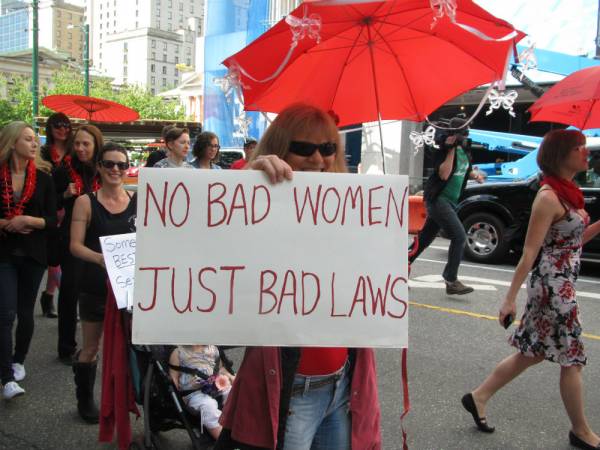

When a Sex Worker Calls a Lawyer a Whore: Feminism, Hypocrisy, and the Weight of Words

I recently witnessed a moment that was, in equal measure, jarring, ironic, and deeply revealing: a sex worker called a lawyer a whore. The word hit the air like a slap, not just because of who said it, but because of what it exposed. This wasn’t just a spat. It was a cultural moment that pulled back the curtain on how we still weaponize language soaked in misogyny, even among those who should, by all rights, know better.

Now, let’s pause here. The term whore has long been used to shame, control, and degrade women, especially those who dare to transgress sexual norms. Yet, in recent years, many sex workers have reclaimed it, asserting their agency and challenging the stigma. To hear someone from within that world hurl it as an insult is, on the surface, ironic. But beneath that irony lies something far more complex: a commentary on respectability, power, and the hypocrisy that still riddles both feminist and professional spaces.

When a sex worker calls a lawyer a whore, they’re not talking about sex. They’re talking about compromise, about selling out, about being willing to do anything for money or power while cloaking it in the illusion of respectability. It’s a sharp dig at the moral contradictions we tolerate in professional life. After all, lawyers and especially those in corporate or political circles, are often paid handsomely to defend the indefensible. They play the game in tailored suits and courtrooms, while sex workers do it in ways society still deems unacceptable. Yet only one of them gets a LinkedIn profile and a pension.

This, to me, is the hypocrisy at the heart of modern feminism. Too often, it uplifts professional women while distancing itself from those who work outside “respectable” labour categories. Mainstream feminism has made great strides, but it still struggles to make room for those whose empowerment doesn’t come with a university degree or a boardroom badge. Sex workers, domestic labourers, and other marginalized women are too often left out of the conversation, unless they serve as cautionary tales or symbols to be rescued.

And this is why the insult stung so sharply. The word “whore” still holds power, not because of what it means, but because of the shame we still attach to it. When used against a lawyer, it highlights the deep discomfort we have with the idea that all labour, whether it involves a courtroom or a bedroom, is transactional. That both women may be “selling themselves” in some fashion, but only one gets to pretend it’s noble.

Feminism, if it means anything today, must confront this hypocrisy head-on. It must stop drawing lines between the respectable and the reviled, the educated and the erotic. It must challenge the systems that make one woman a whore and another a hero, when both may be navigating the same capitalist dance – just with different music.

In that sense, maybe the insult wasn’t ironic at all. Maybe it was deadly accurate.

The Problem with TNG Groups: Why We Can’t Afford to Ignore the Elders (Updated)

The update is because apparently I wasn’t clear enough around the distinction between BDSM play and sex, while making the case for intergenerational mentorship, without diluting the importance of age-specific spaces. 

By now, most of us active in the kink world have heard of TNG groups – short for The Next Generation. These are community spaces, usually restricted to members aged 18 to 35, designed to provide younger people with opportunities to explore BDSM among peers, free from what some see as the social and sexual pressures of older participants.

I understand the motivation. For younger people, entering a kink space for the first time can be daunting, especially when it’s populated by people who are decades older. There’s a very real concern about predatory behaviour, especially in communities where power exchange is already a central theme. Boundaries matter. And spaces where younger kinksters can build confidence, self-knowledge, and friendships without fear of being “creeped on” are valid and valuable.

Yet, somewhere along the way, the well-intentioned effort to protect and empower young people has hardened into something less healthy: exclusion. What began as a way to create peer-based support networks has too often become a wall that blocks essential mentorship, skill transmission, and historical continuity, elements that BDSM, as both a practice and a culture, can’t afford to lose.

BDSM Is Not Sex – But Sex Has Muddied the Water
We need to start by untangling a key confusion that’s quietly undermining both sides of this debate: BDSM play is not inherently sexual. The popularization of kink through mainstream media and online platforms like FetLife and Reddit has brought in a wave of newcomers, many from swinger or sex-positive backgrounds, who conflate BDSM with sex, and especially with casual sex.

To be clear, there is nothing wrong with mixing sex and kink when it’s negotiated. But BDSM is, at its core, about power exchange, control, sensation, trust, and often intense emotional experiences. For many long-time practitioners, myself included, it’s not about genitals or orgasms. It’s about precision, discipline, psychological connection, and often an aesthetic rooted in service, restraint, and deep consent.

When younger kinksters say, “We don’t want to be hit on by older members,” they are absolutely within their rights, but when that discomfort is extended to include exclusion from educational play parties, skill shares, or mentoring scenes simply because someone is over 40, we are no longer talking about safety, we’re talking about ageism. And in doing so, we risk throwing out the very scaffolding that makes BDSM sustainable.

The Value of Mentorship in BDSM
Unlike sex, which most people figure out through personal experimentation, BDSM carries real physical, psychological, and ethical risks. There are tools that can break skin, restrict breathing, or trigger trauma. There are dynamics that mimic abuse but rely on deep consent, mutual care, and communication. These things are not intuitive. They are learned.

Much of what we know today about safety, negotiation, aftercare, trauma-informed practice, and even how to structure a D/s relationship, was developed by earlier generations of kinksters who often learned the hard way. There is a lineage of knowledge that deserves to be passed down, not cut off.

I’ve seen firsthand what happens when younger players are left to figure things out on their own. I’ve watched scenes falter because no one recognized emotional drop. I’ve seen harm escalate because boundaries were not clearly discussed. I’ve witnessed newer Dominants imitate porn-inspired dynamics with no understanding of service, responsibility, or care. And I’ve seen submissives pushed beyond their limits by equally inexperienced peers, not out of cruelty, but out of ignorance.

This is not a matter of policing young people. It’s a call to enrich their experience with the depth of collective wisdom that already exists.

Let TNG Stay Social – But Open the Gates for Skill-Building
To be clear, I’m not against TNG spaces. The desire to socialize with peers is entirely valid. Younger folks deserve spaces where they can be themselves, flirt freely, and build community without feeling objectified by older members, but BDSM play spaces and skill-sharing events are not the same thing as social mixers. When TNG policies extend to the full exclusion of older, experienced practitioners from education-focused events, we lose the very thing that makes kink community valuable.

The solution isn’t to abandon age-based spaces, it’s to differentiate between social comfort and educational necessity. TNG groups can and should host age-restricted munches, parties, and discussion groups, but when it comes to workshops, play parties focused on learning, mentorship programs, and community leadership, older kinksters still have a vital role to play.

That role isn’t about control or dominance over the group. It’s about availability, humility, and stewardship. The job of an elder isn’t to run the show, but to help others run their own shows safely and meaningfully.

Safer Communities Require Bridges, Not Walls
We don’t build safer communities by locking people out. We build them by teaching people how to assess risk, how to spot manipulation, how to say no and how to hear no. These are not age-bound skills, they are community-bound ones, and community can’t thrive without cross-generational dialogue.

We also need to reject the simplistic framing that younger equals safe and older equals predatory. Harmful behaviour exists across all ages, genders, and orientations. What matters is ethics, accountability, and communication, not the date on someone’s birth certificate.

Toward a New Kind of TNG – One Rooted in Collaboration
Imagine a model where TNG groups maintain social autonomy, but invite older members to run skill-based workshops, offer scene coaching, or mentor newer Dominants and submissives. Where events have posted boundaries, vetting, and safety teams, but also include intergenerational wisdom. Where “creepy” behaviour is called out and dealt with directly, not just filtered out through blanket age bans. Where learning is prioritized, not sanitized.

TNG spaces could become crucibles for a new kind of kink culture, one that’s trauma-informed, neurodivergence-aware, inclusive, and intersectional, but only if they also embrace the old lessons that still matter. We don’t need elders to dominate the room, but we do need them to be in the room.

Don’t Lose the Map
No one climbs a mountain without a guide. And no one should be expected to navigate the emotional, psychological, and physical terrain of BDSM without access to experienced support. If you’re 22 and just stepping into kink, you deserve better than a social group with no elders, and a YouTube playlist. You deserve mentorship, safety, and tradition alongside your peer group.

At the time of writing, my regular BDSM play partners range in age from their early 30s to mid 60s, and I’m currently mentoring a newcomer to the community in her early 40s. Because we’ve taken the time to communicate clearly, set expectations, and build trust, age fades into the background. What truly matters are knowledge, skill, and lived experience.

It’s time we stopped treating age as the enemy and started treating community as the goal. Let the TNG groups flourish, but let the wisdom flow.

Sources
• Barker, M., & Langdridge, D. (2010). Understanding Non-Monogamies. Routledge.
• Newmahr, S. (2011). Playing on the Edge: Sadomasochism, Risk, and Intimacy. Indiana University Press.
• Easton, D., & Hardy, J. W. (2017). The Ethical Slut (3rd ed.). Ten Speed Press.
• Rubel, D. J. (2014). “Kink and the Problem of Nonsexual Intimacy.” Journal of Positive Sexuality, 1(1), 16–19.
• Martinez, T. (2022). “The Rise and Limits of TNG Spaces in the Kink Community.” Leatherati Archive.

Shared Spaces, Different Rules: When BDSM, Swinging, and Polyamory Collide

This has been an ongoing topic of conversation among a number of my friends and community members over the last year. While this post is not the definitive answer, I hope it helps continue the discussion.

Merged doesn’t have to mean blurred

More and more, those of us in the BDSM, polyamory, and swinger communities are finding ourselves in overlapping spaces: at events, online, and even in our relationships. What used to be distinct subcultures with their own values and norms is starting to feel like one big, blended scene.

For some, this is energizing. For others, it’s disorienting.

The truth is, we don’t all approach relationships, power, or sex the same way. And while there’s room for overlap, there’s also the risk of misunderstanding, boundary friction, or even cultural erasure if we don’t approach this merger with care.

So let’s talk about what we’re gaining, and what we could lose, when our communities start to share the same space.

Why the Overlap is Happening

The convergence of these communities isn’t random. We all operate outside traditional relationship structures and sexual expectations. We value consent, self-determination, and authenticity.

And let’s be honest; finding safe, welcoming spaces can be hard. It makes sense that events and groups are becoming more collaborative and open to cross-community participation.

Many people don’t want to pick just one label. A polyamorous submissive might enjoy occasional swinger parties. A Dominant may explore romantic non-monogamy. Shared spaces let people experiment and connect without feeling boxed in.

On a practical level, venue access, costs, and organizers’ energy also drive collaboration, yet collaboration only works when we recognize how different our needs and expectations can be.

What We Gain by Coming Together

💬 Bigger, Stronger Communities
Merging creates larger, more resilient networks. Whether we’re sharing resources, building friendships, or pushing for social recognition, we’re stronger together.

📚 Learning Across Lifestyles
Each community has something to teach. BDSM offers detailed consent frameworks and boundary-setting. Polyamory brings emotional literacy and communication models. Swingers know how to host low-pressure sexual spaces. Shared wisdom benefits us all.

🎉 More Inclusive Events
Workshops, discussion nights, and play parties with room for cross-community participation give people a chance to explore without committing to a label.

📢 Amplified Visibility
Speaking together helps shift the narrative about non-normative relationships and sexualities. We challenge stereotypes more effectively when our voices are united.

But There Are Real Risks, Too

⚠️ Different Cultures, Different Norms
Each community operates on its own foundation:

  • BDSM: Structured power dynamics, not necessarily tied to sex or romance.
  • Swinging: Primarily recreational sex, often in couple-based social networks.
  • Polyamory: Emotional intimacy, often with long-term relational goals.

These are more than an orientation or styles, they’re cultural languages. Colliding without translation causes friction.

🚧 Consent and Boundary Confusion
In BDSM, consent is explicit and often negotiated in advance. In swinger circles, casual physicality may be expected. Poly meetups might center on emotional connection, not touch. If expectations aren’t clear, people get hurt, even unintentionally.

🏠 Loss of Dedicated Spaces
Some BDSM dungeons now carry sexual expectations introduced through swinger norms. For those who use BDSM as a non-sexual, power-centered expression, that shift can feel deeply alienating.

🧩 Risk of Exclusion
When merged spaces cater mostly to those who fit all three categories, others get pushed to the edge. An asexual Dominant, or a solo polyamorous person uninterested in parties, may not find what they need in these new environments.

🤷‍♂️ Public Misunderstanding
Outsiders already conflate BDSM, polyamory, and swinging. Merged visibility can increase confusion: polyamory gets reduced to casual sex, BDSM gets sexualized, swinging gets dismissed. Nuance is lost.

So How Do We Do It Right?

Clarity Above All
Be transparent. Is this a BDSM workshop with room for poly topics? A swinger party with structured scenes? People need to know what they’re walking into.

Consent Is More Than a Buzzword
It’s not just about sex or play – it’s about everything. Don’t assume touch, energy, or conversation is welcome without agreement.

Shared Events, Distinct Zones
Merged doesn’t have to mean blurred. Offer spaces within events that honor BDSM protocol, support poly dialogue, or provide swinger-friendly play. Let people choose their comfort zones.

Center Marginalized Voices
Make space for the folks who get overlooked – queer, trans, neurodivergent, BIPOC, disabled, and asexual folks deserve to feel included in merged scenes, too.

Final Thoughts

The blending of BDSM, swinging, and polyamory is happening, whether we plan for it or not. The question is: will we do it with care?

We don’t need to erase our boundaries to share space. We just need to see each other clearly, communicate well, and build with intention.

If we do that, we create a community that’s not only broader; but deeper, richer, and more resilient than any of us could build alone.


Suggested Tags

#BDSM #Polyamory #Swingers #Community #ConsentCulture #NonMonogamy #EthicalNonMonogamy #PowerExchange #RelationshipAnarchy #RespectTheDifferences #MergedSpaces #AltSexualities #NavigatingBoundaries #FetLifeVoices