
Food prices in Canada are now so high that a growing share of households are skipping meals or relying on food banks, yet the country’s dominant grocery chains continue to post record profits. It’s an economic contradiction that Canadians are no longer willing to ignore. After years of voluntary codes, polite meetings with industry leaders, and vague promises of self-regulation, the time has come for Parliament to act. Canada needs a Grocery Fairness and Anti-Cartel Act to restore competition, transparency, and trust in the food supply.
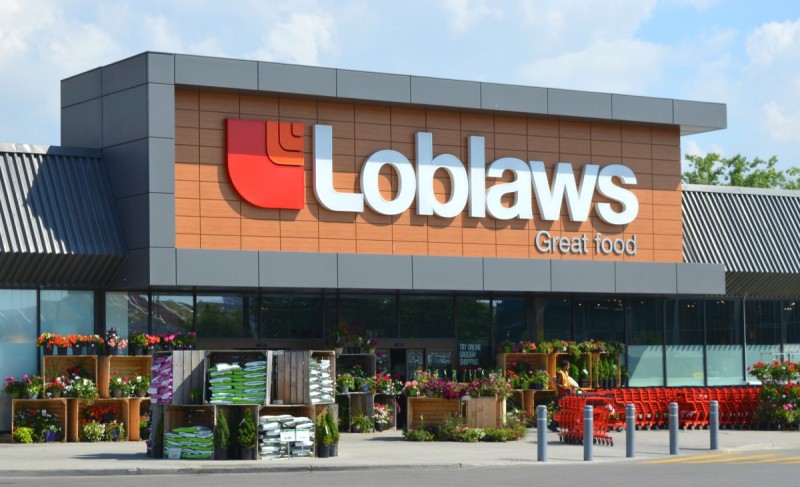
The data are damning. Between 2019 and 2024, grocery prices rose by more than 25 percent, outpacing both wages and overall inflation. Meanwhile, profit margins at the country’s three dominant players, Loblaw, Sobeys’ parent company Empire, and Metro, reached their highest levels in decades. These three corporations control nearly 60 percent of the national grocery market and, in some provinces, more than 75 percent. Despite the removal of gas taxes and a slowdown in supply chain costs, prices have not come down. The explanation is simple: the grocery sector operates as a de facto cartel.
Canadians have seen evidence of this before. In 2018, a major bread price-fixing scandal revealed collusion among suppliers and retailers that spanned more than a decade. The Competition Bureau’s investigation led to fines and admissions of wrongdoing, but no lasting structural change. The same corporate families and alliances continue to dominate shelf space, dictate supplier terms, and shape consumer prices. Voluntary codes have done little to curb their power. When a handful of companies can quietly move in lockstep on pricing, even without explicit collusion, the outcome is the same: higher costs for everyone else.
A Grocery Fairness Act would not be radical. It would simply align Canada with the kind of market safeguards that already exist in other developed economies. The United Kingdom established a Groceries Code Adjudicator in 2013 to oversee fair dealing between supermarkets and suppliers. The European Union enforces strict competition rules that prevent excessive market dominance and punish “tacit collusion.” Canada, by contrast, still relies on a Competition Act designed for a different era, one that assumes the threat to markets comes from explicit conspiracies rather than structural concentration.
The model law proposed by several economists and policy experts would impose a national market-share limit of 15 percent per grocery chain, and 25 percent in any province. Companies that exceed those thresholds would be required to divest stores or brands until the market is more balanced. It would also make the existing Grocery Code of Conduct legally binding rather than voluntary, ensuring that farmers and small suppliers are protected from arbitrary fees, delisting threats, and other coercive practices.
Most importantly, the law would require large grocers to publish detailed pricing and profit data by category, showing whether retail increases are justified by rising costs. If a chain’s margins expand while input costs stay flat, the public deserves to know. Transparency alone would discourage the kind of quiet, parallel pricing behaviour that has become the norm.
Critics will call this “interference in the market,” but the truth is that Canada no longer has a functioning grocery market in the classical sense. When three firms dominate distribution, logistics, and supply contracts, the market’s self-correcting mechanisms are broken. Economists call it “oligopolistic coordination”; ordinary Canadians call it being gouged at the checkout.
Breaking up concentration would also open the door to regional cooperatives, independent grocers, and Indigenous food enterprises that have been squeezed out of distribution networks. Local ownership builds resilience, especially in rural and northern communities where dependence on a single chain often leads to higher costs and poorer food access.
There is also a broader principle at stake: when corporations profit from a basic human necessity, government has a duty to ensure that profit is earned through efficiency, not exploitation. If the banking sector can be regulated for systemic risk and telecommunications companies for fair access, surely food, the most essential of goods, deserves the same scrutiny.
Canada’s political establishment has been slow to move. The federal government has encouraged the large chains to sign a voluntary code, but participation remains partial and unenforced. Provinces have little power to act independently. The result is a cycle of press releases, hearings, and photo opportunities, while the price of a loaf of bread continues to climb.
A Grocery Fairness and Anti-Cartel Act would mark a decisive shift. It would give the Competition Bureau real structural tools rather than case-by-case investigations. It would make transparency mandatory and collusion punishable by substantial fines or even criminal liability for executives. Most importantly, it would restore the principle that essential markets exist to serve citizens, not to enrich monopolies.
Canada prides itself on fairness. Yet fairness in the grocery aisle has become an illusion. If Parliament wants to restore public confidence and make life affordable again, it should begin not with subsidies or rebates, but with the courage to challenge the corporate concentration that underlies the problem. The country needs a real grocery market, competitive, transparent, and accountable. Anything less is a betrayal of every Canadian who still believes that food should be priced by cost, not by cartel.
Sources:
Statistics Canada, Consumer Price Index data 2019–2024;
Competition Bureau of Canada, Bread Price-Fixing Investigation Report (2018);
Office for National Statistics (UK), Groceries Code Adjudicator Review 2023;
European Commission, Competition Regulation 1/2003.
 The Rowanwood Chronicles