Empowering Homeowners for a Resilient, Clean Energy Future

As climate change accelerates, extreme weather events are no longer a distant threat, they are a pressing reality affecting our homes, our communities, and our energy systems. Power outages during heat waves, ice storms, or high winds are becoming more frequent and severe. In response, it is time for local government to actively encourage homeowners and cottage owners to take control of their energy future by installing solar panels, small wind turbines, and battery storage.

Distributed generation, the ability for households to produce and store their own electricity, is not just an environmental choice. It is a resilience strategy. When power lines fail during storms, homes with solar panels and batteries can maintain critical functions and even contribute power back to the grid. This reduces stress on centralized utilities and helps keep neighborhoods safe and functional during emergencies. Communities that embrace decentralized energy are less vulnerable and more self-sufficient.

Critics often argue that increasing local generation threatens the revenue of traditional utility companies. While it is true that utilities rely on steady consumption to fund infrastructure, this concern overlooks an opportunity: utilities can evolve by integrating distributed energy into their business models. Programs that pay homeowners for excess energy exported to the grid, time-of-use pricing, and community battery projects all allow utilities to remain profitable while supporting a more resilient and cleaner energy system. Resistance rooted in short-term financial interests should not stand in the way of long-term public benefit.

Encouraging household renewable energy is also an economic investment in our communities. Solar panel and small wind turbine installations create local jobs in manufacturing, installation, and maintenance. Money saved on electricity bills stays in the local economy, supporting small businesses and families. Municipal incentives, such as property tax credits, grants, or low-interest loans, can lower the initial cost barrier, making clean energy accessible to more residents. Over time, these measures pay for themselves in reduced infrastructure strain and a healthier, more sustainable environment.

Practical policy steps can make this vision a reality. Local governments can streamline permitting processes for solar and wind installations, adopt bylaws that encourage battery storage, and explore bulk purchase programs to reduce costs. Public education campaigns can inform residents about how to safely integrate renewable technologies into their homes. Together, these measures signal that the municipality is committed to both climate action and community resilience.

The transition to clean, distributed energy is not optional; it is necessary. By supporting homeowners and cottage owners in adopting solar, small wind, and battery storage, local governments can protect communities, strengthen the economy, and reduce greenhouse gas emissions. The tools are available, the climate urgency is clear, and the time to act is now. Empowering residents to generate and store their own electricity is one of the most effective steps a municipality can take toward a safer, cleaner, and more resilient future.

Quebec’s Agrifood Strategy: A National Lesson in Food Security

Quebec has quietly become a national leader in agrifood planning and food security. At a time when global food systems are increasingly fragile, the province offers a clear and pragmatic model for how public policy, local investment, and social equity can combine to build a more resilient, sustainable food system. The rest of Canada would do well to take note.

Central to Quebec’s approach is its comprehensive provincial framework, Politique bioalimentaire 2018–2025: Alimenter notre monde. This policy articulates a long-term vision for food sovereignty and ecological stewardship. It promotes value-added processing, regional production, and stronger local supply chains. What sets Quebec apart is not simply the breadth of the strategy, but the coordination behind it. Provincial and federal funds are deployed in tandem, targeting greenhouse expansion, food transformation infrastructure, agri-environmental practices, and innovation. In 2023, Quebec committed $175 million toward increasing regional food self-sufficiency, a move that signaled a shift away from dependence on volatile global supply chains.

This funding strategy has been reinforced by the Canada–Quebec Sustainable Canadian Agricultural Partnership agreement, which committed $955 million over five years to support producers across the province. The agreement includes enhanced compensation under AgriStability, infrastructure renewal programs, and expanded support for environmental and climate-smart practices. With a 25 percent increase over the previous five-year framework, this is one of the most ambitious agrifood investments in the country.

Quebec’s focus on food processing has also paid dividends. In Saguenay–Lac-Saint-Jean, for example, Céréales Normandin received over $3.5 million in combined provincial and federal support to expand its grain-processing capacity. By transforming local cereals into flour, semolina, and plant-based protein concentrates, the facility strengthens Quebec’s ability to retain value within the province. It also reduces dependency on long-haul transportation and foreign inputs. This kind of investment represents a structural shift toward field-to-fork sovereignty.

But production and processing are only part of the story. Quebec integrates food security into its broader public health and education agenda. The province supports farm-to-school programs that connect children directly with local farms, using classroom engagement and institutional procurement to build food literacy and sustainable eating habits. Programs like AgrÉcoles and Farm to School Québec are designed not as symbolic gestures, but as long-term educational investments. They are complemented by robust health policy measures, including proposed front-of-package nutrition labels and consideration of a sugary drinks tax. While other provinces rely on voluntary industry commitments, Quebec has shown a willingness to legislate for public health.

Climate adaptation is another defining element. Quebec has made significant advances in controlled-environment agriculture, particularly hydro-powered greenhouses. These facilities now supply roughly half of the province’s fruits and vegetables year-round. This model aligns well with Quebec’s decarbonization goals and offers a buffer against supply chain disruptions caused by weather, wildfires, or border issues. The greenhouse sector also creates jobs in rural regions, adding social and economic depth to what might otherwise be seen as technical infrastructure.

Quebec’s broader social policy reinforces its food security efforts. The province maintains Canada’s most generous child benefits and has indexed income supports to inflation, resulting in lower levels of food insecurity compared to most other provinces. By recognizing that hunger is not just a supply issue but a matter of income and social policy, Quebec links its agrifood system to social resilience. This integrated approach provides not only food, but dignity and stability.

Cultural identity plays a role as well. Quebec has long embraced supply management in sectors like dairy and maple syrup, not as a form of protectionism, but as a tool for supporting regional producers and maintaining quality standards. This model may not translate directly across all of Canada, but it offers a reminder that local economies thrive when policy reflects place-based values.

Perhaps the most compelling lesson from Quebec is its refusal to silo food policy. Instead, it has created a system where agriculture, health, education, environment, and social equity intersect. The result is not just a stronger food system, but a stronger society. In an era of climate disruption, geopolitical instability, and growing inequality, Quebec is showing how to build something that is local, resilient, and future-ready.

Canada as a whole will face increasing pressure in the years ahead to secure its food systems. If policy-makers are serious about ensuring affordability, sustainability, and sovereignty, they would be wise to study what Quebec has already built.

Sources
• Government of Canada. “Canada and Quebec sign a new $955 million agreement over five years to support Quebec’s agricultural sector.” March 2023. https://www.canada.ca/en/agriculture-agri-food/news/2023/03/canada-and-quebec-sign-a-new-955-million-agreement-over-5-years-to-support-quebecs-agricultural-sector.html
• Government of Canada. “Over $3.5 million for Céréales Normandin to expand its product range.” March 2024. https://www.canada.ca/en/economic-development-quebec-regions/news/2024/03/increasing-quebecs-food-selfsufficiency-over-35m-for-cereales-normandin-to-expand-its-product-range.html
• Equiterre. “Farm to School Québec.” https://www.equiterre.org/en/articles/project-local-food-procurement-farm-to-school-quebec
• The 14. “Reinforcing policies to improve Quebec’s food supply.” https://the-14.com/reinforcing-policies-to-improve-quebecs-food-supply
• West Quebec Post. “Quebec to invest $175 million over five years to increase food self-sufficiency.” https://www.westquebecpost.com/quebec-to-invest-175-million-over-five-years-to-increase-food-self-sufficiency

The Fragile Independence of NGOs: Funding, Mission, and the Cost of Survival

After more than 25 years advising organizations across sectors, I’ve come to appreciate the vital role NGOs play in filling the gaps governments can’t, or won’t, address. From frontline social services to environmental stewardship to global health and education, their work is often visionary, community-led, and deeply human. But I’ve also seen behind the curtain. And one uncomfortable truth emerges time and again: far too many NGOs are built on a financial foundation so narrow that one funding shift, often from a single government department, can bring the entire structure down.

This doesn’t mean these organizations lack heart or competence. Quite the opposite, but when 60 to 80 percent of their time and energy is spent chasing the next tranche of funding just to pay rent or keep skeleton staff employed, something is clearly out of balance. I’ve worked with executive directors who are more skilled in crafting grant proposals than in delivering the programs they were trained to lead. I’ve seen staff burn out, not from the intensity of service delivery, but from the treadmill of fundraising cycles that reward persistence over purpose.

The tension is most pronounced when a single government agency becomes the main or only funder. In those cases, the NGO may retain its legal independence, but it quickly becomes functionally dependent, unable to challenge policy, adapt freely, or pivot when the community’s needs shift. I’ve often told boards in strategic planning sessions: “If your NGO would cease to exist tomorrow without that one government grant, then you don’t have a sustainable organization, you have an outsourced program.”

This is not a call for cynicism. It’s a call for structural realism. NGOs need funding. Governments have a legitimate role in supporting social initiatives. But the risk lies in overconcentration. With no diversified base of support, whether from individual donors, private philanthropy, earned income, or even modest membership models, NGOs are vulnerable not only to budget cuts, but to shifts in political ideology. A change in government should not spell the end of essential community services. And yet, it too often does.

What’s the solution? It starts with transparency and strategy. Boards must get serious about income diversity, even if that means reimagining their business model. Funders, including governments, should fund core operations, not just shiny new projects, and do so on multi-year terms to allow for proper planning. And NGO leaders need to communicate their value clearly, not just to funders, but to the communities they serve and the public at large. You can’t build resilience without buy-in.

Supporting NGOs doesn’t mean ignoring their structural weaknesses. In fact, the best way to support them is to help them confront those weaknesses head-on. Mission matters. But so does the means of sustaining it. And in today’s volatile funding landscape, the most mission-driven thing an NGO can do might just be to get smart about its money.

Reshaping Watershed Governance: Evaluating Ontario’s Plan to Merge Conservation Authorities

Background updated to reflect the government announcement of October 31, 2025.

🔎 Background

On October 31, 2025 the Ministry of the Environment, Conservation and Parks announced its intention to introduce legislation to create a new Ontario Provincial Conservation Agency to provide province-wide leadership and oversight of conservation authorities. At the same time the government released a public consultation proposing to consolidate Ontario’s 36 conservation authorities into seven regional, watershed-based authorities.

The stated aims are reducing fragmentation, improving consistency in permitting and services, freeing up resources for front-line conservation work and aligning watershed management with provincial priorities in housing, infrastructure, economic growth and climate resilience.

Note — The proposal retains watershed-based boundaries and envisions seven regional conservation authorities aligned with major watershed systems. Implementation would follow further legislation, regulation and a formal transition period.

✅ Advantages (Pros)

⚖️Consistency and Standardization

  • The current 36-authority system shows significant variation in policies, fees, processes and technical capacity. Consolidation seeks to standardize permitting and reduce duplication.
  • A more consistent system may speed approvals, improve service delivery and align permitting with broader provincial housing and infrastructure goals.

🛠️Scale and Capacity Building

  • Larger regional authorities can pool technical specialists in hydrology, ecology, GIS, modelling and flood forecasting.
  • A single digital permitting platform, improved data management and updated floodplain mapping could strengthen operational efficiency.

🧭Watershed-Scale Management

  • Environmental issues such as flood risk and source protection cross municipal boundaries; watershed-level jurisdictions better reflect ecological realities.
  • Regional governance may improve coordination between upstream and downstream communities and enable restoration at appropriate scales.

📈Uplift in Minimum Service Standards

  • Province-wide minimum standards could reduce disparities between well-resourced and under-resourced conservation authorities.
  • Improved mapping, monitoring and data systems may enhance hazard warnings and risk reduction for communities.

⚠️ Disadvantages (Cons)

🌾Loss of Local Knowledge and Relationships

  • Local conservation authorities often maintain deep, place-based knowledge and long-standing relationships with municipalities, landowners, volunteers and Indigenous communities.
  • Centralization may weaken local responsiveness and reduce the fine-grained understanding needed for small watershed issues.

👥Governance and Accountability Dilution

  • Shifting authority to regional boards or a provincial agency risks reducing municipal voice and local accountability.
  • Changes to levy systems, board appointments or decision-making structures could alter how closely governance reflects community priorities.

🔄Transition Risk, Disruption and Cost

  • Merging organizations requires complicated alignment of IT systems, budgets, staffing, policies and permitting processes.
  • Short-term disruption, backlog growth or staff uncertainty may affect performance even if long-term efficiencies are possible.

🏞️Threat to Locally-Tailored Programs

  • Education programs, stewardship initiatives, volunteer groups and recreation programming may be deprioritized in a larger regional authority.
  • Locally raised funds may be redistributed toward broader regional priorities, limiting community-specific flexibility.

🪶Indigenous Consultation and Place-Based Considerations

  • The restructuring spans multiple Indigenous territories; a one-size-fits-all model risks overlooking local priorities and cultural site protection.
  • Strong Indigenous partnerships are increasingly recognized as essential to watershed management and must be protected during transition.

❓ Key Uncertainties and Implementation Risks

  • How governance structures will be designed, including board composition and municipal representation.
  • How locally-generated funding will be treated and whether it will remain local during and after transition.
  • How IT migration, mapping, staffing and permitting backlogs will be managed to maintain service continuity.
  • How performance standards will be enforced and how regional authorities will be monitored.
  • How Indigenous and local stakeholder engagement will be maintained throughout the transition process.

🛡️ Recommendations and Mitigation Measures

  • Maintain local field offices, technical staff and advisory committees to preserve place-specific knowledge.
  • Ensure meaningful municipal representation on regional boards, including mechanisms for smaller communities’ voices.
  • Protect locally-generated revenues for an initial transition period to safeguard community programs.
  • Publish a transition plan with clear timelines, role protections and service-level guarantees.
  • Establish Indigenous participation protocols and co-governance options where desired.
  • Create province-wide standards with room for regional adaptation based on watershed differences.

🧾 Conclusion

The proposed consolidation provides opportunities to modernize Ontario’s conservation authority system, build technical capacity, improve consistency and align watershed management with provincial priorities. At the same time, the risks are substantial: loss of local stewardship, weakened accountability, transitional disruption and potential erosion of long-standing municipal and Indigenous partnerships.

The outcome will depend on governance design, funding arrangements, transition planning and the strength of public and Indigenous engagement. With appropriate safeguards, the reforms could enhance watershed resilience and public service; without them, consolidation could undermine decades of community-led conservation work and trust.

References

  1. “Proposed boundaries for the regional consolidation of Ontario’s conservation authorities” (ERO 025-1257), Environmental Registry of Ontario.
  2. Ontario Government announcement on conservation authority restructuring, October 31, 2025.
  3. McMillan LLP analysis of proposed consolidation.
  4. Dentons LLP overview of amalgamation and the creation of the Ontario Provincial Conservation Agency.
  5. Reporting and analysis from conservation organizations and independent media regarding risks to local stewardship and watershed management.

Tewin and the Shape of Ottawa’s Future

At the moment, I don’t feel I know enough about this developing issue to take a position, so I plan on monitoring the situation and perhaps look at the bigger picture.  

Four years ago, Ottawa city council voted to expand the urban boundary into lands southeast of the city to create a massive new suburban community called Tewin. The project, a partnership between the Algonquins of Ontario (AOO) and Taggart Group, envisions housing for up to 45,000 people on 445 hectares of land. This expansion was one of the most controversial planning decisions of the last decade, both for its symbolic weight and its long-term implications. Today, councillor Theresa Kavanagh has re-opened the debate, proposing that Tewin be stripped from Ottawa’s Official Plan. Her efforts highlight the difficult choices cities face between growth, climate goals, and Indigenous reconciliation.

The Promise of Tewin
Supporters of Tewin present it as a once-in-a-generation opportunity. For the Algonquins of Ontario, the project represents an unprecedented role in shaping Ottawa’s future. After centuries of dispossession, Tewin offers not only revenue streams and jobs but also visibility in the city’s urban fabric. This symbolic dimension, land not merely ceded or lost, but built upon in partnership, is difficult to dismiss.

Developers and some councillors also argue that Ottawa must accommodate population growth. With Canada’s immigration targets rising, pressure on housing supply is intense. Tewin promises tens of thousands of new homes, potentially designed with modern sustainability standards. Proponents emphasize that large master-planned communities can integrate parks, schools, and infrastructure in ways that piecemeal infill cannot. In this vision, Tewin is not sprawl, but a carefully designed city-within-a-city.

The Cost of Sprawl
Yet the critiques are no less powerful. City staff initially ranked the Tewin lands poorly during their 2020 evaluations, citing soil unsuitability, distance from infrastructure, and limited transit access. Servicing the site: extending water, sewers, and roads will cost nearly $600 million, much of it beyond the city’s 2046 planning horizon. These are funds that could otherwise reinforce existing communities, transit networks, and climate-resilient infrastructure.

Urban sprawl carries environmental and social costs. Tewin sits far from rail lines and job centres, ensuring that most residents will be dependent on cars. This contradicts Ottawa’s stated climate action commitments, which emphasize compact growth and reduced vehicle emissions. Critics also note that adding a massive suburb undermines efforts to intensify existing neighbourhoods, where transit and services are already in place.

Indigenous Voices, Indigenous Divisions
The Indigenous dimension of Tewin complicates the debate. On the one hand, the Algonquins of Ontario have secured a rare position as development partners, advancing reconciliation through economic participation. On the other hand, not all Algonquin communities recognize AOO’s legitimacy, and some argue that consultation has been narrow and exclusionary. The project thus embodies both progress and tension in the city’s relationship with Indigenous peoples. To reject Tewin outright risks appearing to dismiss Indigenous economic aspirations; to proceed with it risks deepening divisions and ignoring long-standing calls for more inclusive engagement.

A City at the Crossroads
Councillor Kavanagh’s push to remove Tewin from the Official Plan is more than a single motion. It reopens a philosophical question: what kind of city does Ottawa wish to become? If it seeks to embody climate leadership, resilient infrastructure, and walkable communities, Tewin appears to be a step backward. If it seeks to honour Indigenous partnership and ensure abundant housing supply, the project has undeniable appeal.

Ultimately, Tewin forces Ottawa to confront a contradiction at the heart of Canadian urbanism. We are a country that has promised climate action, but remains tethered to car-dependent suburbs. We are a nation that aspires to reconciliation, but often struggles to reconcile competing Indigenous voices. To move forward, Ottawa must do more than weigh costs and benefits; it must articulate a vision of growth that is both just and sustainable.

In this sense, Tewin is not merely a development proposal. It is a mirror held up to the city itself, reflecting both its aspirations and its unfinished work.

Sources:
• CTV News Ottawa. “Tewin development project passes latest hurdle but some say it still doesn’t belong.” August 2024. Link
• Ontario Construction News. “Ottawa councillor sparks renewed debate over controversial Tewin development.” April 2025. Link
• CTV News Ottawa. “Councillor withdraws motion to remove 15,000-home development from Ottawa’s Official Plan until after byelection.” April 2025. Link
• Horizon Ottawa. “Stop the Tewin Development.” Accessed October 2025. Link

Building Home and Sovereignty: Indigenous-Led Modular Housing Across Canada

Indigenous-led housing initiatives across Canada are demonstrating how culturally rooted design, workforce development and modular building technology can be combined to produce durable, energy-efficient homes while returning economic agency to Indigenous communities. A clear example is the Keepers of the Circle project in Kirkland Lake, a women-led social enterprise building a 24,000 square foot modular factory to produce prefabricated panels and whole homes for northern communities. The project positions the facility as a year-round training centre focused on Indigenous women and 2SLGBTQQIA+ people and aims to deliver passive, off-grid capable homes that reduce mould, overcrowding and winter construction constraints.  

Modular construction matters in the North because it shifts much of the work indoors, shortens on-site assembly time and allows for higher quality control and better insulation choices than conventional stick-built homes. Projects that couple those technical advantages with local control multiply the social return. For example, NUQO and other Indigenous-owned modular firms emphasize culturally informed design and female leadership in construction, showing that modularity can be adapted to Indigenous aesthetics and community needs rather than imposed as a one-size-fits-all solution.  

At a larger urban scale, the Squamish Nation’s Sen̓áḵw development shows another side of Indigenous-led housing. Sen̓áḵw is an unprecedented City-building project on reserve land in Vancouver that will deliver thousands of rental units while generating long-term revenue for the Nation and reserving units for community members. It signals how Indigenous land stewardship paired with contemporary development can both address housing supply and shift municipal relationships with Nations.

Innovation is not limited to factory scale or towers. Community-driven designs such as Skeetchestn Dodeca-Homes merge Secwepemc cultural principles with modular technology to create homes tailored for rural and on-reserve realities. These initiatives highlight the importance of design sovereignty, where communities set performance, materials and spatial priorities that reflect family structures and cultural practice.  

Practical collaborations are emerging to accelerate delivery. Rapid-response modular programs and partnerships with existing manufacturers have been used to deploy units quickly to remote communities, showing a template for scale if funding, transportation and on-reserve financing barriers are addressed. Yet systemic obstacles remain, including the complex financing rules for on-reserve mortgages, patchwork funding across provinces and the logistics of shipping large components into remote regions.  

Taken together, the landscape suggests a pragmatic pathway: support Indigenous-led factories and design teams to ensure cultural fit and local jobs, expand funding mechanisms and credit products tailored to on-reserve realities, and prioritize modular, high-performance assemblies that cut costs over a building’s life. When Indigenous governance, training and technical innovation work in tandem the result is not just more housing but a model of reconciliation that builds capacity, preserves culture and produces homes that last.

Sources
Keepers of the Circle modular factory page.
NUQO modular housing company.
Squamish Nation Sen̓áḵw project page.
Skeetchestn Dodeca-Homes project page.
ROC Modular rapid-response and modular housing examples.  

When 10 Meters Isn’t Enough: Understanding AlphaEarth’s Limits in Operational Contexts

In the operational world, data is only as valuable as the decisions it enables, and as timely as the missions it supports. I’ve worked with geospatial intelligence in contexts where every meter mattered and every day lost could change the outcome. AlphaEarth Foundations is not the sensor that will tell you which vehicle just pulled into a compound or how a flood has shifted in the last 48 hours, but it may be the tool that tells you exactly where to point the sensors that can. That distinction is everything in operational geomatics.

With the public release of AlphaEarth Foundations, Google DeepMind has placed a new analytical tool into the hands of the global geospatial community. It is a compelling mid-tier dataset – broad in coverage, high in thematic accuracy, and computationally efficient. But in operational contexts, where missions hinge on timelines, revisit rates, and detail down to the meter, knowing exactly where AlphaEarth fits, and where it does not, is essential.

Operationally, AlphaEarth is best understood as a strategic reconnaissance layer. Its 10 m spatial resolution makes it ideal for detecting patterns and changes at the meso‑scale: agricultural zones, industrial developments, forest stands, large infrastructure footprints, and broad hydrological changes. It can rapidly scan an area of operations for emerging anomalies and guide where scarce high‑resolution collection assets should be deployed. In intelligence terms, it functions like a wide-area search radar, identifying sectors of interest, but not resolving the individual objects within them.

The strengths are clear. In broad-area environmental monitoring, AlphaEarth can reveal where deforestation is expanding most rapidly or where wetlands are shrinking. In agricultural intelligence, it can detect shifts in cultivation boundaries, large-scale irrigation projects, or conversion of rangeland to cropland. In infrastructure analysis, it can track new highway corridors, airport expansions, or urban sprawl. Because it operates from annual composites, these changes can be measured consistently year-over-year, providing reliable trend data for long-term planning and resource allocation.

In the humanitarian and disaster-response arena, AlphaEarth offers a quick way to establish pre‑event baselines. When a cyclone strikes, analysts can compare the latest annual composite to prior years to understand how the landscape has evolved, information that can guide relief planning and longer‑term resilience efforts. In climate-change adaptation, it can help identify landscapes under stress, informing where to target mitigation measures.

But operational users quickly run into resolution‑driven limitations. At 10 m GSD, AlphaEarth cannot identify individual vehicles, small boats, rooftop solar installations, or artisanal mining pits. Narrow features – rural roads, irrigation ditches, hedgerows – disappear into the generalised pixel. In urban ISR (urban Intelligence, Surveillance, and Reconnaissance), this makes it impossible to monitor fine‑scale changes like new rooftop construction, encroachment on vacant lots, or the addition of temporary structures. For these tasks, commercial very high resolution (VHR) satellites, crewed aerial imagery, or drones are mandatory.

Another constraint is temporal granularity. The public AlphaEarth dataset is annual. This works well for detecting multi‑year shifts in land cover but is too coarse for short-lived events or rapidly evolving situations. A military deployment lasting two months, a flash‑flood event, or seasonal agricultural practices will not be visible. For operational missions requiring weekly or daily updates, sensors like PlanetScope’s daily 3–5 m imagery or commercial tasking from Maxar’s WorldView fleet are essential.

There is also the mixed‑pixel effect, particularly problematic in heterogeneous environments. Each embedding is a statistical blend of everything inside that 100 m² tile. In a peri‑urban setting, a pixel might include rooftops, vegetation, and bare soil. The dominant surface type will bias the model’s classification, potentially misrepresenting reality in high‑entropy zones. This limits AlphaEarth’s utility for precise land‑use delineation in complex landscapes.

In operational geospatial workflows, AlphaEarth is therefore most effective as a triage tool. Analysts can ingest AlphaEarth embeddings into their GIS or mission‑planning system to highlight AOIs where significant year‑on‑year change is likely. These areas can then be queued for tasking with higher‑resolution, higher‑frequency assets. In resource-constrained environments, this can dramatically reduce unnecessary collection, storage, and analysis – focusing effort where it matters most.

A second valuable operational role is in baseline mapping. AlphaEarth can provide the reference layer against which other sources are compared. For instance, a national agriculture ministry might use AlphaEarth to maintain a rolling national crop‑type map, then overlay drone or VHR imagery for detailed inspections in priority regions. Intelligence analysts might use it to maintain a macro‑level picture of land‑cover change across an entire theatre, ensuring no sector is overlooked.

It’s important to stress that AlphaEarth is not a targeting tool in the military sense. It does not replace synthetic aperture radar for all-weather monitoring, nor does it substitute for daily revisit constellations in time-sensitive missions. It cannot replace the interpretive clarity of high‑resolution optical imagery for damage assessment, facility monitoring, or urban mapping. Its strength lies in scope, consistency, and analytical efficiency – not in tactical precision.

The most successful operational use cases will integrate AlphaEarth into a tiered collection strategy. At the top tier, high‑resolution sensors deliver tactical detail. At the mid‑tier, AlphaEarth covers the wide‑area search and pattern detection mission. At the base, raw satellite archives remain available for custom analyses when needed. This layered approach ensures that each sensor type is used where it is strongest, and AlphaEarth becomes the connective tissue between broad‑area awareness and fine‑scale intelligence.

Ultimately, AlphaEarth’s operational value comes down to how it’s positioned in the workflow. Used to guide, prioritize, and contextualize other intelligence sources, it can save time, reduce costs, and expand analytical reach. Used as a standalone decision tool in missions that demand high spatial or temporal resolution, it will disappoint. But as a mid‑tier, strategic reconnaissance layer, it offers an elegant solution to a long-standing operational challenge: how to maintain global awareness without drowning in raw data.

For geomatics professionals, especially those in the intelligence and commercial mapping sectors, AlphaEarth is less a silver bullet than a force multiplier. It can’t tell you everything, but it can tell you where to look, and in operational contexts, knowing where to look is often the difference between success and failure.

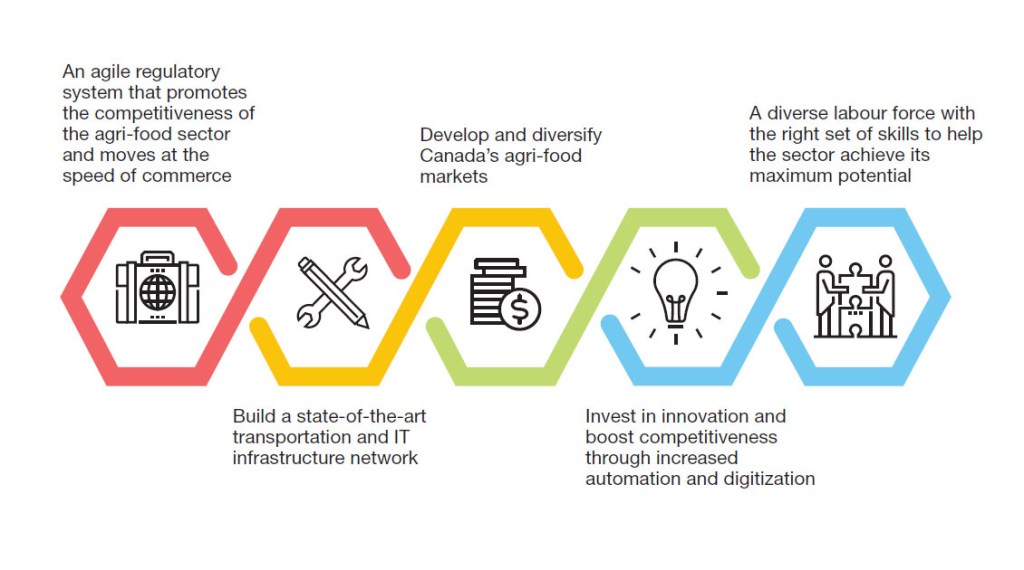
The Global Food Supply Chain Is Shifting – And Canada Must Be Ready

The global food supply chain is undergoing a period of extraordinary change, driven by a volatile blend of climate instability, geopolitical realignment, digital transformation, and shifting consumer expectations. For Canada, a country both reliant on agricultural exports and dependent on imports to feed its population, these changes represent both a serious threat and a historic opportunity.

The most immediate and destabilizing force is climate change. Across the globe, extreme weather events are disrupting food production and transportation infrastructure. Prolonged droughts in the United States and Brazil, floods in South Asia, and wildfires across the Mediterranean have all contributed to rising food prices and shortages of staple goods. In 2024 and early 2025, the prices of cocoa, coffee, and vegetable oils more than doubled in global markets, illustrating how climate-linked shocks in one region can rapidly ripple across supply networks. Analysts expect this volatility to become the new normal, not an exception.

Geopolitical tensions are compounding these risks. The ongoing consequences of the Russia–Ukraine war continue to affect global grain and seed oil availability, particularly in Africa and the Middle East. Meanwhile, China’s imposition of new tariffs on Canadian agricultural products – part of a tit-for-tat trade war triggered by Canadian duties on Chinese electric vehicles and steel, has jeopardized billions in exports. Canadian pork and canola producers are among the hardest hit. In a trade landscape increasingly shaped by protectionism, food is becoming both a diplomatic tool and a strategic vulnerability.

At the same time, the global food system is entering a period of accelerated digitalization. Technologies such as blockchain, artificial intelligence, and real-time logistics platforms are now being deployed to manage traceability, reduce waste, and predict bottlenecks. From major logistics hubs in Rotterdam and Singapore to field trials in Alberta and Manitoba, data is becoming as essential as soil and seed. For Canada, which has long relied on traditional supply chain models and seasonal rhythms, there is growing pressure to integrate these tools more aggressively.

This digital shift is mirrored by a rising emphasis on sustainability. Multinational retailers and food companies are increasingly turning to regenerative agriculture and eco-friendly logistics. In North America, McDonald’s has begun pilot programs supporting rotational grazing and soil health restoration across its supply network, including with Canadian producers. Meanwhile, packaging waste, energy usage, and transportation emissions are now key metrics for investors, regulators, and consumers alike.

All of these shifts have profound implications for Canada’s agri-food sector. In the face of increasingly fragile international supply routes, there is a renewed focus on domestic resilience. A recent report from KPMG Canada recommends a more self-sufficient food system built around regional logistics hubs, shared storage infrastructure, and enhanced collaboration between producers, distributors, and retailers. The goal is not isolationism, but redundancy – a system better able to absorb shocks without collapsing.

This necessity for resilience also aligns with an emerging opportunity. As supply routes between Asia and the United States become less predictable, Canadian ports, particularly in British Columbia and Atlantic Canada, stand to gain. Shipping rerouted to avoid U.S. tariffs or congestion may open new pathways for Canadian grain, seafood, and value-added agri-food exports. However, capitalizing on this requires investment in cold chain logistics, port capacity, and integrated digital customs processes.

There is also a growing consensus that Canada must move up the value chain. For too long, the country has exported raw commodities – wheat, canola, pulses, only to buy back processed goods at higher prices. In a more competitive and unstable global market, the future lies in branding, processing, and differentiated products. Whether it is high-protein pasta made from prairie durum or oat beverages from Manitoba, value-added agri-food is increasingly seen as the path to long-term competitiveness and economic security.

Another critical challenge is food waste. Canada loses an estimated 35 million tonnes of food annually, roughly 58 percent of all produced, with a combined value of $21 billion. Much of this is the result of poor cold chain management, especially in the face of climate disruption. Heatwaves and floods damage infrastructure, interrupt power supply, and compromise the safety of perishable goods. Strengthening the cold chain, from rural harvest sites to urban distribution centres, will be essential in adapting to a warming climate and preventing unnecessary losses.

At the consumer level, expectations are changing quickly. Demand for traceable, ethically produced, and environmentally sustainable food is no longer limited to niche markets. From compostable packaging to plant-based proteins, Canadian shoppers are pushing producers and retailers to adopt new standards. In response, supply chain managers are planning major shifts toward sustainable logistics, predictive inventory systems, and just-in-time models that minimize waste and maximize transparency.

Taken together, these global supply chain shifts mark a turning point. Canada can either cling to legacy systems and find itself squeezed by rising volatility, or it can invest boldly in infrastructure, innovation, and regional self-sufficiency. The case for action is clear. A resilient, technologically advanced, and sustainable food system is not only possible, it is becoming necessary for the country’s economic and social well-being.

Sources:
• KPMG Canada, Building a More Resilient Food System in Canada (June 2025): https://kpmg.com/ca/en/home/insights/2025/06/building-a-more-resilient-food-system-in-canada.html
The Guardian, “Extreme Weather to Cause Further Food Price Volatility,” (Feb 2025): https://www.theguardian.com/environment/2025/feb/15/extreme-weather-likely-to-cause-further-food-price-volatility-analysts-say
Business Insider, “Fresh Chinese Tariffs on Canadian Agricultural Products,” (Mar 2025): https://www.businessinsider.com/fresh-chinese-tariffs-canada-open-new-front-trade-war-2025-3
Reuters, “McDonald’s Shifts to Regenerative Agriculture,” (Apr 2025): https://www.reuters.com/sustainability/land-use-biodiversity/no-lettuce-no-big-mac-why-beth-hart-is-steering-mcdonalds-towards-regenerative-2025-04-14
• National Collaborating Centre for Environmental Health, Climate Change Impacts on Canada’s Food Cold Chain: https://ncceh.ca/resources/evidence-reviews/climate-change-impacts-canadas-food-supply-cold-chain
• Eastern College, “Supply Chain Trends in 2025”: https://easterncollege.ca/blog/supply-chain-trends-in-2025-what-canada-needs-to-know

Why I Always Start With Quebec When Researching Canadian Federal Projects

After decades of consulting across Canada on everything from agri-food frameworks to integrating geomatics into healthcare systems, I’ve developed a habit: whenever I’m tasked with researching a new federal project, my first instinct is to see what Quebec is doing. It’s not just a reflex; it’s a practical strategy. Time and again, Quebec has shown itself to be a few steps ahead of the rest of the country, not by accident, but because of how it approaches policy, innovation, and institutional design.

Let me explain why, using a few concrete examples that illustrate how Quebec’s leadership offers valuable lessons for any serious federal undertaking.

A Culture of Long-Term Planning and Strong Public Institutions
One of Quebec’s greatest strengths lies in its culture of policy sovereignty combined with a deep commitment to long-term planning. Unlike the often reactive or fragmented approaches seen elsewhere, Quebec’s government institutions are built with foresight. Their mandates encourage anticipating future challenges, not just responding to current problems.

Take water management, for instance. When federal policymakers started talking about a national water agency, Quebec already had a robust system in place, the Centrale de Suivi Hydrologique. This province-wide network connects sensors, real-time data, and forecasting tools to monitor freshwater systems. It’s a sophisticated marriage of geomatics, technology, and environmental science that functions as an operational model rather than a concept.

For consultants or project managers tasked with building a national water infrastructure or climate resilience framework, Quebec’s example isn’t just inspirational; it’s foundational. You start there because it shows you what is possible when policy vision meets institutional commitment.

Integration Across Sectors: Health, Geography, and Data
Quebec’s approach goes beyond individual projects. It’s about integration, the seamless connection between government ministries, academia, and industry research. This “triple helix” collaboration model is well developed in Quebec and is crucial when addressing complex, cross-sectoral challenges.

A case in point is CartoSanté, Quebec’s health geography initiative. By linking demographic data with healthcare service delivery, spatial planning, and public health metrics, this platform creates a living map of healthcare needs and capacities. It is precisely this kind of data integration that federal agencies seek today as they try to bring geomatics and health information systems together at scale.

Starting a federal health-geomatics project without examining CartoSantéwould be like trying to build a house without a foundation. Quebec’s work offers a tested blueprint on data interoperability, system architecture, and stakeholder coordination.

Agri-Food Resilience as a Model of Regional Sovereignty
While Canada has traditionally focused on food safety and quality, Quebec has been pioneering food security and sovereignty strategies for years. Its Politique bioalimentaire 2018–2025 is a comprehensive framework that stretches beyond farming techniques to include local processing, distribution, and regional branding.

During the COVID-19 pandemic, the federal government’s interest in “food sovereignty” suddenly became a priority. Quebec was already there, with initiatives like Zone Agtech that connect innovation hubs, farmers, and distributors to strengthen local food systems. Their experience provides invaluable insight into how to balance global markets with local resilience.

For any consultant or policymaker working on national agri-food strategies, Quebec offers a real-world laboratory of what works, from land-use policy to market development, rather than abstract policy drafts.

An Intellectual Independence That Drives Innovation
One factor often overlooked is Quebec’s distinct intellectual culture shaped by its French language and European influences. This has fostered a different approach to systems-thinking, less tied to U.S.-centric models and more open to integrated, interdisciplinary frameworks.

The Ouranos Consortium is a prime example. Long before climate adaptation became a nationwide buzzword, Ouranos was advancing applied climate services by blending meteorology, municipal planning, and risk insurance. Their work has influenced not just provincial but global climate resilience strategies.

This intellectual independence means Quebec often anticipates emerging challenges and responds with unique, well-rounded solutions. When federal agencies look for tested climate data platforms or governance models, Ouranos is frequently the starting point.

Institutional Continuity and Data Stewardship
Finally, Quebec benefits from a more stable and professionalized civil service in key areas like environmental monitoring and statistical data management. This continuity allows Quebec to maintain extensive, clean, and spatially tagged historical data sets, a rarity in many jurisdictions.

For example, when Meteorological Service of Canada sought to modernize weather station instruments metadata standards, Quebec’s Centre d’Expertise Hydrique stood out for its meticulously curated archives and consistent protocols. This institutional memory isn’t just a bureaucratic nicety; it’s critical infrastructure for evidence-based policy.

Starting federal projects by engaging with Quebec’s institutional frameworks means tapping into decades of disciplined data stewardship and knowledge management.

Quebec’s leadership in areas like agri-food resilience, climate and water data, and health geomatics is no accident. It’s the product of a distinct political culture, strong public institutions, integrated knowledge networks, and intellectual independence. When you’re consulting or managing complex federal projects, recognizing this is key.

By beginning your research with Quebec’s frameworks and models, you gain access to tested strategies, operational systems, and a vision for long-term resilience. While other regions may still be drafting proposals or testing pilots, Quebec is often already producing data and outcomes.

So the next time you embark on a new federal initiative, whether it’s improving food security, building climate-adaptive infrastructure, or integrating spatial data into healthcare, remember this: start with Quebec. It’s where the future of Canadian innovation often begins.

The Promise of Sand Batteries: A New Frontier in Thermal Energy Storage

In the global push toward a clean energy future, battery technology has taken centre stage. Yet not all energy needs to be stored as electricity. Enter the sand battery: a simple, scalable, and surprisingly elegant solution to the problem of storing renewable energy as heat. While lithium and flow batteries dominate headlines, sand-based thermal storage may quietly become one of the most important tools in the transition to net zero, especially in colder climates and industrial sectors.

At its heart, a sand battery is a thermal energy storage system. It uses resistive heating elements to convert surplus renewable electricity into heat, which is then stored in a large mass of sand. Sand is cheap, abundant, non-toxic, and capable of withstanding extremely high temperatures – up to 1000°C in some designs. Once heated, the sand is housed in a well-insulated steel or concrete silo, where it can retain thermal energy for days, weeks, or even months. The stored heat can later be extracted and used directly in heating systems or, in some cases, converted back into electricity.

The real beauty of sand batteries lies in their efficiency and affordability. When used for heating applications, such as district heating networks or industrial processes, they achieve thermal round-trip efficiencies of 80 to 95 percent. This puts them in a strong position compared to chemical batteries, especially where the end-use is heat rather than electricity. Converting heat back into electricity is less efficient, often below 40 percent, which limits their utility as pure power storage. Yet, for countries with long, cold winters, and industries dependent on high-temperature heat, sand batteries could be revolutionary.

In Finland, the town of Kankaanpää is already home to the world’s first commercial sand battery, developed by startup Polar Night Energy. The battery stores excess wind and solar power during the summer and discharges it in winter to supply district heat. It’s a practical, real-world demonstration of what this technology can do: provide seasonal storage at a fraction of the cost of chemical alternatives. Think of Canada’s northern and remote coastal communities storing wind and solar energy during the summer, then operating their community heating facilities using sand batteries throughout the winter.  

The potential applications extend well beyond district heating. Many industrial processes: textiles, paper, chemicals, and food production, rely heavily on thermal energy. Today, most of that heat comes from burning fossil fuels. Sand batteries offer a clean alternative, especially when paired with renewables. They’re also ideal for off-grid and remote locations, where reliable heat can be hard to come by.

Compared to other storage technologies, sand batteries stand out for their low cost and long-duration potential. They’re not a replacement for lithium batteries or pumped hydro, but are a crucial complement. As more nations seek to decarbonize not just electricity, but also heating and industry, sand batteries will likely find a permanent place in the energy landscape.

Simple, scalable, and rooted in abundant natural materials, sand batteries remind us that sometimes the most advanced solutions are also the most grounded. In the race toward a sustainable energy future, this humble pile of sand might just be one of our best bets.