We Are “So Fucked”: Suzuki’s Stark Warning and What Comes Next

David Suzuki, Canada’s most revered environmental voice, has issued a warning with unusual bluntness and finality: “We are so fucked.” Speaking in recent weeks, Suzuki declared that “it’s too late,” stating that the global fight to halt climate catastrophe is effectively lost. His comments have rippled through climate policy circles, activist communities, and public discourse alike, not because the science has changed, but because the candour of the message has stripped away any remaining illusions of gradualism or incremental change.

The context is clear. Extreme weather events are no longer exceptions, they are becoming the rule. July 2024 was the hottest month in recorded human history, and 2025 is on track to exceed it. Wildfires, floods, droughts, and mass displacement now dominate the headlines with increasing regularity. Against this backdrop, Suzuki’s declaration is not a shock, it is confirmation of what many already fear: that mitigation may no longer be enough.

Beyond Optimism: A Shift to Resilience
Suzuki’s words – “we are so fucked” – were not made in jest or despair, but as an urgent call to face reality. He argued that society must now “hunker down”, a phrase that signals a strategic pivot from prevention to adaptation. The idea is not to give up, but to regroup, reorganize, and prepare. In doing so, he joins a growing body of thinkers who have moved past the assumption that global climate agreements or consumer-level behavior changes will be enough to stave off the worst.

Suzuki pointed to places like Finland as examples of what adaptive resilience might look like. Communities there are being asked to prepare for regular power outages, floods, and food shortages by mapping vulnerable neighbours, sharing equipment, and establishing local escape routes and resource stockpiles. In Suzuki’s view, this is no longer the work of fringe preppers, but essential civil preparedness.

Systemic Failure, Not Personal Blame
Central to Suzuki’s critique is the idea that responsibility has been wrongly placed on individuals, rather than on systems. “The debate about climate change is over,” he has said repeatedly. “The science is clear that it’s happening and that humans are causing it.” But rather than empower collective transformation, that clarity has been dulled by decades of delay and deflection. The culprits, he asserts, are fossil fuel companies and the political classes that have shielded them.

These industries, Suzuki argues, have spent years spreading misinformation, lobbying against meaningful legislation, and greenwashing their activities to appear sustainable. The result is a global response that has been far too slow, too fragmented, and too compromised by economic interests to meet the scale of the challenge. While citizens have been urged to recycle and reduce air travel, oil and gas production continues to expand in many countries.

This misdirection has helped create a false narrative that consumer choices alone can avert disaster. Suzuki, echoing many climate scientists and activists, argues that such messaging amounts to a deliberate “psy-op”, a strategic effort to protect entrenched power and profit by scapegoating the individual.

Hunkering Down Is Not Surrender
To “hunker down,” in this context, means to accept what is now inevitable while fighting to minimize further harm. It is a call to prepare for climate impacts that will affect infrastructure, food systems, migration, and public health. This includes planning for power disruptions, ensuring access to potable water, decentralizing food systems, and rebuilding communities to be less reliant on fragile supply chains.

Resilience at the local level becomes critical: communities need to inventory their own vulnerabilities, understand who is most at risk, and develop coordinated mutual-aid structures. Governments will need to lead this transition by investing in renewable grids, disaster planning, urban cooling infrastructure, and community-based health services. And crucially, they must stop subsidizing the very industries responsible for the crisis.

From Climate Denial to Climate Delay
One of the more insidious barriers to action today is not outright denial, but climate delay, a subtle but pervasive tactic that gives the appearance of action while deferring the difficult decisions. Suzuki has long warned against this. The danger now lies not in ignorance, but in political cowardice and corporate co-option. Net-zero pledges decades into the future are meaningless without immediate action. What’s needed is not just a plan, but a reckoning.

Brutal Clarity, Not Despair
Suzuki’s warning may sound like defeat, but it is more accurately described as a turning point. When he says, “We are so fucked,” it is not an invitation to despair, but a demand to confront reality without euphemism or illusion. Hope remains, but it must be grounded in preparedness, in systemic change, and in solidarity. Communities, governments, and institutions must move with the urgency that this moment demands.

The time for optimism as a communications strategy has passed. What remains is action, rooted in clear-eyed honesty and collective survival.

Sources
·      Suzuki, David. “We are so fucked.” Comment posted to X (formerly Twitter), June 2025. https://x.com/mmofcan/status/194218398403468527
·      Reddit Discussion Thread: “It’s too late: David Suzuki says the fight against climate change is lost.” r/CanadaPolitics. July 2025. https://www.reddit.com/r/CanadaPolitics/comments/1lr0xxj
·      David Suzuki Foundation Facebook Page: “The science is clear that it’s happening and that humans are causing it.” https://www.facebook.com/DavidSuzukiFoundation/posts/1157838186389129
·      CBC News. “Climate crisis beyond tipping point? David Suzuki warns of need for local survival plans.” June 2025.
·      IPCC Sixth Assessment Report. Intergovernmental Panel on Climate Change. 2021–2023. https://www.ipcc.ch/ar6/

Harvesting the Sun Twice: The Rise of Agrivoltaics in Canada

In the ever-evolving landscape of Canadian agriculture, a quiet revolution is taking place; one that blends innovation, resilience, and sustainability. At the heart of this shift is agrivoltaics, the practice of integrating solar energy production with agricultural activities on the same land. In a country where arable land is precious and climate resilience is no longer optional, agrivoltaics offers a compelling vision of how farmers can feed both people and power grids. And unlike many experimental technologies, agrivoltaics is already proving itself on the ground, from Alberta’s prairies to Ontario’s rolling farmland.

The principle behind agrivoltaics is deceptively simple. Instead of choosing between land for crops or solar panels, farmers are using both, strategically placing elevated or spaced-out solar panels to allow for the continued cultivation of crops or the grazing of livestock beneath them. The benefits are multifaceted: improved land-use efficiency, supplemental income from energy generation, lower evaporation rates, enhanced biodiversity, and in some cases, even better crop yields. What once might have seemed like a fringe idea is now a serious pillar in the conversation about Canada’s agricultural and energy future.

Alberta, often associated with its energy sector, has become a surprising hotspot for agrivoltaic innovation. In Strathmore, east of Calgary, a project involving Beecube, UKKO, and local landowners demonstrates how solar farms can coexist harmoniously with apiculture. Here, solar panels provide shelter for bees while the surrounding wildflowers benefit from reduced water loss thanks to the panel shade. This model is not only sustainable but financially shrewd; the land generates solar income while continuing to support honey production, which in turn supports pollination in surrounding agricultural operations.

Meanwhile, in Bon Accord, Alberta, sheep graze under solar panels installed by the municipality. This partnership reduces the need for mechanical mowing, cutting emissions and maintenance costs, while simultaneously supporting local agriculture. Although challenges such as predator management and animal health persist, the project has shown that dual land-use can be both productive and community-minded.

Further south in Lethbridge, the Davidson family farm installed a 2 MW solar array over four hectares of their land. Their early results are promising: water use decreased, yields of shade-tolerant crops like lettuce and spinach improved, and the system helped buffer temperature extremes; an increasingly important advantage as Alberta experiences hotter, drier summers. The financial returns from the energy production are steady and predictable, offering farmers some insulation from commodity price swings.

Ontario has also emerged as a stronghold of agrivoltaic leadership, particularly in the east of the province. At Kinghaven Farms, a thoroughbred horse breeding operation near King City, solar panels quietly generate over 1.8 MW of energy across five different installations. Yet the land remains active agriculturally, supporting bees and pasture for livestock. This is no boutique operation, it’s a model of scalable, pragmatic sustainability, supported in part by Ontario’s long-standing feed-in-tariff and net metering frameworks.

Arnprior’s solar project, spearheaded by EDF Renewables, adds another layer of ecological complexity. The site combines solar power generation with pollinator-friendly vegetation and sheep grazing. With over 50 sheep maintained on-site, the project saves upwards of $30,000 annually on vegetation management. Moreover, the carefully chosen native flora creates a haven for butterflies, bees, and other beneficial insects, turning what could have been a sterile industrial site into a vibrant ecosystem.

The push for agrivoltaics has even begun to intersect with reconciliation and Indigenous economic development. In Perth, Ontario, Golden Leaf Agrivoltaics has launched a partnership with local Indigenous communities to design systems that blend traditional agricultural knowledge with renewable energy. This initiative is as much about cultural renewal as it is about sustainability, offering a space where land stewardship and technological advancement meet on equal footing.

Across these projects, several themes emerge. First, agrivoltaics is not a one-size-fits-all solution. What works in the dry expanses of southern Alberta may not translate directly to the wetter, colder climates of northern Ontario or Quebec. The underlying philosophy, making land work smarter, not harder, holds universal appeal. Second, success depends on collaboration: between farmers and engineers, municipalities and private firms, and, increasingly, energy utilities and Indigenous governments. Agrivoltaics is as much about social innovation as it is about technical design.

Critically, agrivoltaics helps solve one of the thorniest problems in modern planning: land-use conflict. As pressure mounts to deploy renewable energy at scale, particularly in provinces phasing out coal or expanding electric vehicle infrastructure, prime farmland is at risk of being repurposed for solar and wind farms. Agrivoltaics offers a middle ground, enabling land to serve multiple purposes without sacrificing food security.

There are challenges, of course. Start-up costs can be high, regulatory frameworks inconsistent, and skepticism remains among some traditional growers. Yet as demonstration projects continue to yield data, and dollars, those barriers are gradually eroding. Agrivoltaics is no longer a theoretical solution; it is a practical, proven tool for a climate-challenged, energy-hungry world.

In Canada, where vast geography too often isolates best practices, agrivoltaics represents a unifying opportunity. It merges rural and urban priorities, economic pragmatism with ecological restoration. With the right policies, education, and incentives, Canada could lead the world in this field, not just in acreage, but in imagination.

Sources
CBC News – BeeCube/UKKO agrivoltaics project
Organic Agriculture Centre of Canada – Renewable Energy Integration
Compass Energy Consulting – Agrivoltaics in Ontario
Sun Cycle Farms – Agrivoltaic Demonstration Projects
Golden Leaf Agrivoltaics – Community and Indigenous Engagement

Lansdowne Park: A Case Study in Public-Private Partnership Failure

In the heart of Ottawa lies Lansdowne Park, a public asset that has undergone over a decade of controversial redevelopment under the banner of public-private partnerships (P3). Initially hailed as a visionary collaboration between the City of Ottawa and the Ottawa Sports and Entertainment Group (OSEG), Lansdowne has instead become a cautionary tale; an emblem of how private interests can hijack public value, with taxpayers left holding the bill. Despite grand promises of economic revitalization, self-sustaining revenues, and community benefit, the Lansdowne project has consistently failed to deliver on its core goals.

The Origins: Lansdowne 1.0 and the Rise of the P3 Model
The current saga began in 2007, when structural concerns forced the closure of Frank Clair Stadium. In response, the City sought partners to reimagine Lansdowne as a revitalized hub for sports, entertainment, and urban life. The resulting Lansdowne Partnership Plan (LPP), approved in 2010, was a no-bid, sole-source agreement with OSEG. It created a 30-year limited partnership through which OSEG would refurbish the stadium, build retail and residential developments, and share profits with the City through a revenue “waterfall” model.

The City’s share of the original $362 million redevelopment was around $210 million, used for stadium upgrades, a new urban park, parking facilities, and relocating the historic Horticulture Building. OSEG contributed roughly $152 million, not as direct capital, but largely through operational losses rolled back into the project in exchange for an 8% return on equity. The land remained public, but OSEG was granted long-term leases for commercial components, at just $1 per year.

A Financial Model Built on Sand
The P3 structure was sold to the public with the assurance that Lansdowne would eventually pay for itself. Early forecasts predicted a $22.6 million net return to the City. In reality, those profits never materialized. Retail revenues rose steadily, but so did costs. By 2016, OSEG was reporting $14.4 million in losses. As of 2023, the partnership had not returned a cent to municipal coffers. The revenue waterfall prioritized OSEG’s return on equity before any surplus could flow to the City, meaning taxpayers bore the financial risk, while private partners had guaranteed returns.

Worse, the project locked the City into a complex financial structure that made renegotiation difficult. The Auditor General of Ottawa has since criticized the model, citing opaque accounting and a lack of oversight over cost estimates and projections.

Lansdowne 2.0: Doubling Down on a Broken System
Rather than reassess the underlying flaws of Lansdowne 1.0, the City has pressed forward with an even more ambitious sequel: Lansdowne 2.0. Approved by Council in 2023, this next phase proposes to demolish and rebuild the north-side stadium stands, construct a 5,500-seat event centre, and erect two residential towers atop a retail podium. The estimated cost is $419 million, with over $300 million of that funded by the City through new debt.

Despite lessons from the past, the same P3 framework persists. The City continues to rely on OSEG’s management and forecasts, despite repeated underperformance. Recent findings from the Auditor General suggest that construction costs may be underestimated by as much as $74.3 million, bringing the actual cost closer to half a billion dollars.

Community Concerns Ignored
One of the most damning aspects of the Lansdowne saga has been its consistent disregard for community needs. Neither Lansdowne 1.0 nor 2.0 includes affordable housing. This, in the midst of a housing crisis, is a glaring omission. Public green space will be reduced by more than 50,000 square feet in Lansdowne 2.0. Traffic and parking concerns persist, especially given the site’s poor access to Ottawa’s light rail system.

Environmental groups have flagged the project for increasing the urban heat island effect and ignoring climate resilience standards. Ecology Ottawa and other watchdogs note that the loss of mature trees, additional hard surfaces, and energy-intensive stadium lighting run counter to the City’s own climate goals.

Public feedback has been overwhelmingly negative. A survey by the advocacy group Better Lansdowne found that 77% of respondents opposed the new plan. Critics have called for a full reassessment, independent cost-benefit analysis, and alternative development models that prioritize public use and affordability.

The Broader P3 Problem
The Lansdowne project exemplifies the risks inherent in the P3 model. When private partners are guaranteed returns and public entities assume the risk, the result is rarely equitable or efficient. While the private sector pursues profit, as it must, government has a duty to prioritize public interest. In this case, the lines blurred, and profit came first.

Public-private partnerships are often promoted as a way to leverage private investment for public good. Yet in practice, they can enable private actors to extract value from public land and public funds, with minimal accountability. Lansdowne is a textbook case of this imbalance.

Time to Reclaim Public Space
As Ottawa moves forward, the Lansdowne experience should serve as a clear lesson: public infrastructure must be publicly driven. The City needs to step back, reassess its relationship with OSEG, and consider alternative models that place public interest at the centre. This could include establishing a municipal development corporation, returning retail management to the City, and mandating affordable housing in all new residential builds.

If Lansdowne Park is truly to be the “people’s place” as once envisioned, it must serve the city, not subsidize private profit. The future of Ottawa’s public assets depends on getting this right.

Sources
• Ottawa City Council Reports, 2023–2025 – ottawa.ca
• Ottawa Auditor General Report, June 2025 – link2build.ca
• Better Lansdowne Community Survey – betterlansdowne.ca
• Ecology Ottawa – ecologyottawa.ca
• Ottawa Business Journal Archives – obj.ca
• Lansdowne Park Redevelopment History – en.wikipedia.org

How a 15-Acre Hobby Farm Near Ottawa Is Helping To Save the World

Tucked into the gently rolling landscape near Ottawa, where Canadian Hardiness Zone 5 cradles forests through cold winters and warm, green summers, a 15-acre hobby farm hums with quiet purpose. At first glance, it seems like a peaceful retreat, 11 acres of mixed forest, 4 acres of open land, but beneath the stillness lies a powerful, invisible engine of climate action.

This isn’t just a hobby farm. It’s a carbon sink, a micro-forest sanctuary, and a quietly defiant response to the global climate crisis.

The land is a mosaic of native species, maple, black cherry, beech, oak, and poplar stand shoulder to shoulder with pine, fir, and spruce. Half the forest is allowed to run wild, a dense tangle of trees and undergrowth where time and nature make their own rules. The other half is gently managed with selective thinning and nurturing to promote health and resilience. Together, they form a thriving biome that plays a vital role in absorbing and storing carbon dioxide from the atmosphere.

In a world scrambling to limit greenhouse gas emissions, this modest forest is making a real difference.

Tree Math: Carbon Accounting for a Better Future
According to forest carbon research by Natural Resources Canada and other experts, mixed temperate forests like this one can sequester between 2.5 and 6.0 tonnes of CO₂ per acre per year, depending on age, species, and management.

Here, the forest has been evaluated more precisely:
• The 5.5 acres of managed forest, with its encouraged regrowth and carefully tended canopy, sequesters an estimated 5.5 tonnes of CO₂ per acre per year.
• The 5.5 acres of wild, dense forest, with its thick stands of aging trees and self-regulating ecosystems, sequesters a more modest, but still powerful 3.5 tonnes of CO₂ per acre.

Together, that means this forest is pulling approximately 49.5 tonnes of CO₂ out of the atmosphere every year. That’s not just a number – it’s a force.

It’s the equivalent of:
• Offsetting the annual carbon emissions of 10 passenger vehicles
• Neutralizing the electricity use of about 7 Canadian homes
• Canceling out the emissions of nearly 250 propane BBQ tanks or over 110,000 smartphone charges

Each year, the trees breathe in carbon, storing it in wood, roots, and soil. They do this without fanfare. They don’t ask for credit, but they are doing the slow, essential work of saving the planet – tree by tree.

Rooted in Regeneration: Permaculture and Agroforestry
Beyond the forest, the remaining four acres of the property form a living laboratory for regenerative land use, guided by the principles of permacultureand agroforestry.

Here, perennial fruit and vegetable beds are woven through flowering hedgerows and small windbreaks of nut and berry trees. Apple, plum, and pear trees grow beside hardy perennial crops like rhubarb, asparagus, and sun chokes. Herbs spiral outward in patterns that mimic natural ecosystems, encouraging pollinators and providing continuous yield with minimal intervention.

This is no ordinary garden, it’s a climate-positive food forest in the making. Carefully designed guilds of plants mimic the structure of natural woodland ecologies. Deep-rooted plants draw nutrients from the subsoil. Groundcovers protect against erosion. Legumes fix nitrogen. Every element supports another. Even fallen branches and leaf mulch are repurposed into hugelkultur mounds, which retain water and build soil carbon over time.

Together, the forest and farm create a system that captures carbon, regenerates soil, and produces food, not in spite of nature, but in deep collaboration with it.

A Local Action With Global Implications
Climate action often feels like something that happens elsewhere, in government chambers, UN conferences, or corporate boardrooms. But on this hobby farm, the frontlines are right here, in bark and branches, under loamy soil and perennial cover. While politicians debate net-zero goals and global emissions caps, these 15 acres are already doing their part.

And the story doesn’t end with sequestration. The whole property becomes a model, not of scale, but of intentionality. It proves that one person, on one piece of land, can be part of the solution.

A Blueprint for the Future
If every small landowner in Ontario set aside just part of their land for forest preservation, regenerative farming, or agroecological food production, the collective carbon sink would grow exponentially. The 49.5 tonnes of CO₂ absorbed here could be multiplied by thousands of similar efforts. This hobby farm is not just saving the world, it’s showing others how to do it too.

So next time someone says the climate crisis is too big for individuals to affect, point them to this patch of trees and garden beds outside Ottawa. Tell them about the forest that quietly pulls nearly 50 tonnes of CO₂ from the sky every year. Tell them about the permaculture orchard that feeds people and soil alike. Tell them about the hobby farm that’s making a difference.

Because real change doesn’t always look like a protest march or a giant wind turbine. Sometimes, it looks like a sapling taking root in Zone 5, and being given the time and space to grow.

Public Consultation or Box-Ticking Exercise? A Critical Look at a Local Battery Storage Project

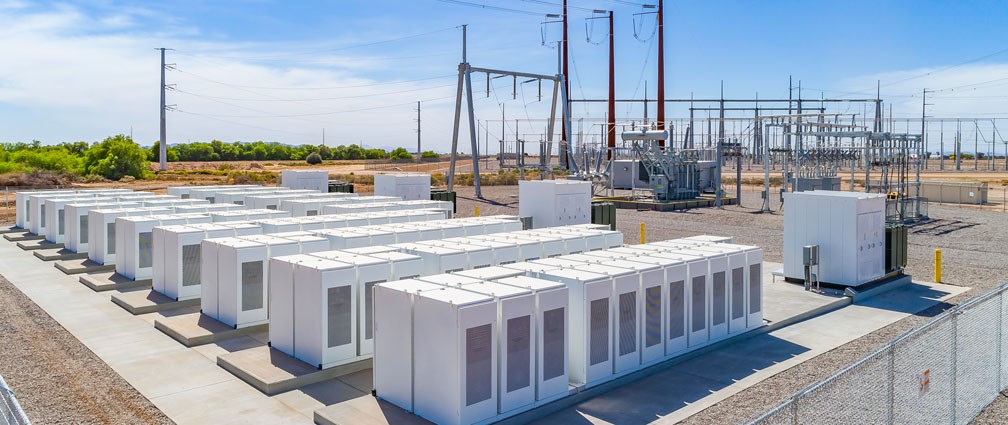
Last week, I attended a public consultation in my township concerning the proposed development and operation of a battery storage facility. While I support the idea of more distributed energy systems; including local generation, storage, and distribution, I left the session with more concerns than confidence.

The generational divide in the room was striking. The corporate representatives were mostly in their late 20s or early 30s, while the attending community members were primarily in their 50s and 60s. That’s not a critique of age, but it did highlight a gap in understanding and communication. One representative I spoke with didn’t even know the name of our village or the township they were in, and confused our location with the nearest city. That lack of local awareness is troubling.

When it came to questions about employment, the answers were just as vague. There are no local jobs being created by this facility. Pressed on this point, the company conceded that construction would likely be contracted out to a large regional firm. So much for community economic development.

Technically, this consultation was part of the process required to secure project approval. But calling it a “consultation” is generous. In practice, it was an information session for a project that already has funding and, by all appearances, a green light, once the required Environmental Assessment has been completed and approved. Input from residents was neither requested nor meaningfully incorporated. That’s not consultation—that’s optics.

There was discussion of the township gaining a $300,000 gift from the business, yet when this was explored further, it turns out that the gift is over the 20 year projected life of the facility; so by my calculations that’s $15,000/year for a township with an annual budget of around $4.5 million. 

I also learned that the company developing this project, which is ultimately owned by a private corporation through a series of businesses, partnered with a local First Nation to qualify for the contract. On paper, this is a positive step. I strongly support Indigenous involvement in provincial development, but I couldn’t help but ask: beyond a share of the profits, what is the First Nation partner actually gaining from this deal? Meaningful involvement? Job creation? Capacity building? Those questions went largely unanswered.

Many of the company reps struggled to answer even basic questions. When challenged, they became defensive, admitting they were not properly briefed or that statements about local benefits were merely “possibilities.” That kind of unpreparedness doesn’t inspire public trust.

Let me be clear: I’m not opposed to the project itself. I believe in the need for renewable energy infrastructure, and support the transition to a more decentralized grid. I have no “Not In My Backyard” objections here. My issue is with the process, and with the privatization of what should be a public utility. This kind of infrastructure should be owned and operated by the province for the benefit of its citizens, not by private firms whose primary accountability is to shareholders.

If this is the future of our energy system, we need a better framework, one rooted in public ownership, transparent processes, and genuine community engagement.

Ottawa’s Quiet Revolution: The 15-Minute City and the Rise of Local Commerce on Residential Lots

The City of Ottawa is in the midst of a bold, transformative journey; one that’s reshaping how we live, move, and connect. It’s called the “15-minute neighbourhood,” a simple idea with radical potential.  What if everything you need; groceries, a decent cup of coffee, childcare, your barber, a pharmacy, were just a short walk from your front door? No car required. No long bus rides, just a neighbourhood that works for you.

Ottawa’s New Official Plan, approved in 2021, plants the seeds for this future. At its heart is a commitment to building inclusive, sustainable, and healthy communities. The plan explicitly prioritizes 15-minute neighbourhoods across urban areas, and even pushes for better access to local services in suburban and rural villages. That’s right, this isn’t just a downtown pipe dream. This is city-wide policy.

What’s especially exciting is the quiet, determined push to overhaul the zoning rules that have long governed what can (and can’t) exist in our neighbourhoods. The city is in the thick of writing a new Zoning By-law, and the early drafts reveal a big shift. Residents may soon be able to host small-scale businesses on their own properties. Imagine that, a ground-floor bakery under your neighbour’s apartment, a tiny yoga studio two blocks over, a tailor or vintage shop tucked into a backyard laneway suite. This is no longer just theoretical, it’s in the works.

Ottawa planners are calling these new “Neighbourhood Zones,” and they reflect a sea change in how we think about land use. Rather than rigidly separating residential, commercial, and institutional uses, the city is beginning to embrace a more flexible, mixed-use vision; one that makes space for life to happen more organically. And yes, that means you might be able to open that little business you’ve always dreamed of, without needing to rent expensive storefront space on a commercial strip.

It’s not all roses yet. The first draft of the new by-law has been published, and city staff are collecting public feedback. A second draft is expected in spring 2025, with final council approval tentatively set for fall of the same year. Until then, existing zoning remains in place, but if the final version holds true to its promise, we’ll see the biggest zoning reform Ottawa has seen in decades.

Of course, this kind of change raises questions. Will small businesses in residential zones create noise or traffic? How will parking be handled? Will local character be preserved or diluted? These are fair concerns—and ones the city must address carefully. But the potential benefits are enormous: stronger local economies, reduced car dependency, and vibrant, human-scaled communities.

My regular readers will know that I am a supporter of the 15-minute community. I grew up in NE England where nearly everything we needed on a daily basis was within a 15 min walk, and so I am happy to see that for Ottawa this isn’t just a slogan here, it’s becoming real. And if we get this zoning update right, we may just find ourselves living in a more neighbourly, resilient, and walkable city than we ever imagined.

Urban Agriculture: A Practical Solution for Food Security in Uncertain Times

While I am extremely fortunate to live on a small hobby farm, I started learning about growing my own food as a pre-teen living in an apartment with a concrete yard using containers. My grandparents lived on a half acre with a greenhouse and cold frames, and this expanded my learning opportunities until I could get my own space.  Wherever I have settled in the world, I have grow some level of my food, whether it’s been window sill herb gardens, raised beds on a small city lot, or a few acres of orchards, perennial fruit and veg, with rows of annual harvests. 

There was a time when backyard gardening was seen as a hobby, something for retirees with time on their hands, or for children learning about where their food comes from, but in recent years, urban agriculture has become much more than a pastime. As food prices continue to rise and supply chains face disruptions, more people are turning whatever outdoor space they have – balconies, patios, backyards, and even front lawns – into productive gardens. The shift isn’t just about saving money; it’s about taking control of food security in an increasingly uncertain world.

The past few years have revealed vulnerabilities in the global food system. The pandemic exposed just how fragile supply chains can be, with empty grocery store shelves becoming a common sight. At the same time, extreme weather events linked to climate change have devastated farmland, reducing crop yields and further driving up prices. For many families, fresh, nutritious food has become harder to afford. The solution, in part, lies closer to home. Urban agriculture, even on a small scale, can help reduce dependence on imported produce while ensuring access to healthy food.

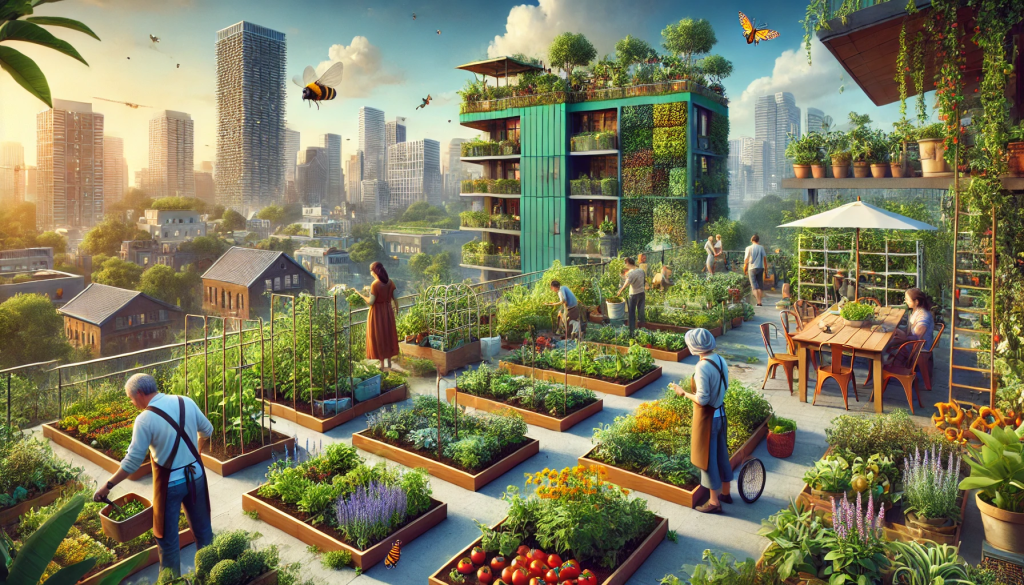
One of the biggest misconceptions about growing food is that it requires a large plot of land. In reality, a surprising amount can be harvested from small spaces. Balconies and patios can support potted herbs, tomatoes, and peppers. Small backyards can accommodate raised beds, which improve soil quality and provide better growing conditions. In denser urban areas, community gardens have emerged as a way for neighbors to grow food together, share resources, and build a sense of connection. Some residents are even experimenting with hydroponic systems, allowing them to grow fresh greens indoors year-round.

Beyond the personal benefits, urban agriculture plays a vital role in strengthening communities. When people grow food together, they build relationships and foster a shared sense of responsibility for local food production. Many community gardens serve as educational spaces where people learn about sustainability, organic farming techniques, and seasonal eating. Some initiatives even donate surplus produce to local food banks, ensuring that those in need have access to fresh, healthy food.

The environmental benefits are equally compelling. Green spaces in urban areas help reduce heat, mitigate stormwater runoff, and provide much-needed habitats for pollinators like bees and butterflies. Growing food locally also reduces the environmental impact of transportation, cutting down on emissions associated with long-distance shipping.

While urban agriculture isn’t a replacement for large-scale farming, it is an essential piece of the puzzle when it comes to food resilience. As more people recognize the value of growing their own food – whether for economic reasons, environmental concerns, or simply the satisfaction of harvesting something fresh from their own backyard – cities are beginning to adapt. Local governments are easing zoning restrictions, supporting community garden initiatives, and encouraging green infrastructure.

The future of food may be more localized than ever before. Urban agriculture is proving that solutions don’t have to come from massive farms or distant suppliers. Sometimes, they start with a single tomato plant growing just outside the door.

The Financial Balancing Act of Cities 

Having lived on four continents, I have always found myself drawn to smaller and smaller communities for my home. Although I currently reside just 45 minutes from a capital city of one million, my daily life unfolds in a town of fewer than 15,000, where infrastructure is well maintained, and population growth remains manageable. However, the same cannot be said for the world’s larger cities, which struggle to keep pace with rapid urbanization, strained public services, and crumbling infrastructure. As populations surge, these cities face mounting challenges in housing affordability, traffic congestion, environmental sustainability, and social inequality. The pressure to expand services while maintaining quality of life grows ever more daunting, forcing urban planners to grapple with complex solutions that balance progress with livability.

As I said, major cities face persistent challenges in maintaining infrastructure, particularly transportation networks. The costs of managing traffic, repairing roads, and ensuring safe mobility place heavy demands on municipal budgets. However, cities also generate significant financial returns, primarily through commercial property taxes. Businesses cluster in urban centers to take advantage of high foot traffic and workforce access, providing a steady revenue stream that supports public services and infrastructure.

Commuters further strengthen this economic engine. While they may reside in surrounding suburbs, their workdays are spent in the city—eating at restaurants, shopping, and using local services. Their daily spending injects revenue into businesses, which in turn contributes to the city’s tax base. This dynamic allows large cities to maintain economic vitality without solely depending on residential tax revenue. The cycle of investment and reinvestment enables cities to expand and modernize infrastructure, accommodating growing populations and business activity.

What Is the Ideal City Size?
There is no universal “optimal” city size, as a community’s efficiency depends on geography, economic function, and resident needs. However, research suggests that mid-sized cities (50,000–100,000 residents) often strike the best balance between economic diversity and infrastructure manageability. They offer a strong mix of job opportunities, public services, and cultural amenities while avoiding the congestion and financial strain of major metropolitan areas. Additionally, studies have linked this population range to higher rates of civic engagement and even better athletic development, as mid-sized towns tend to produce more professional athletes per capita than larger cities.

Smaller-scale planning models, such as New Urbanism, advocate for compact, walkable neighborhoods of 10,000–30,000 residents. These communities emphasize mixed-use development, local amenities, and reduced car dependency—design elements that promote both economic activity and social cohesion. At an even smaller scale, research on human social networks suggests that communities of around 150 people optimize social bonds, creating close-knit environments where personal relationships thrive.

Ultimately, sustainable urban planning requires balancing economic opportunities with infrastructure capacity. While larger cities offer broa job markets and cultural diversity, mid-sized and smaller communities often provide a stronger sense of connection, lower living costs, and a more manageable scale of development.

When Big Cities Outgrow Their Tax Base
As major cities expand, their infrastructure demands often surpass what local tax revenues can support. Even in high-tax environments like New York, Los Angeles, and Chicago, the financial burden of maintaining transit systems, utilities, and social services outstrips property and business tax income. The situation is further complicated by the growing demand for affordable housing, healthcare, and education, which places additional strain on municipal budgets.

This challenge is not unique to North America. Global cities such as London and Tokyo face similar struggles, often resorting to controversial funding measures like congestion pricing, privatization of public services, or reliance on state and federal subsidies. The result is an ongoing cycle of deferred maintenance, rising public debt, and political pressure to either cut services or increase taxation.

To address this imbalance, urban planners increasingly advocate for decentralization—shifting growth toward smaller regional centers to distribute population and economic activity more evenly. Encouraging mid-sized cities to absorb a greater share of development could relieve pressure on overstretched metropolitan areas while fostering more sustainable and resilient urban landscapes. By investing in infrastructure and economic incentives outside major cities, governments can create a more balanced and efficient urban network that benefits a broader population.

Bridging the Water Divide: Inequality in Access to Potable Water

In this second of four articles on water, I want to explore the social inequalities that surround access to potable water. 

Access to clean drinking water should be a given, not a privilege. Yet across the world, millions are denied this most basic human right. The problem isn’t simply about scarcity—there’s enough water on the planet to sustain everyone. The real issue lies in the deep-seated inequalities that dictate who gets reliable access and who doesn’t. Socioeconomic status, geography, and government priorities all play a role in determining whether a community has safe drinking water or must rely on unsafe sources. These disparities create ripple effects, fueling public health crises, widening economic gaps, and deepening gender inequalities.

The divide between urban and rural communities in access to potable water is particularly glaring. In many developing countries, large cities have water infrastructure in place, but those living in informal settlements or on the outskirts often lack access to piped water. Meanwhile, rural populations—especially Indigenous communities and those in remote areas—are frequently left behind due to chronic underfunding and government neglect. In Canada, for example, dozens of First Nations communities have been under long-term boil-water advisories, some for decades. Despite the country’s wealth and technological capacity, these communities remain without the infrastructure needed to ensure safe drinking water. It’s a stark reminder that systemic inequality, not just technical limitations, drives the crisis.

Rapid urbanization is making things even worse. Cities are growing faster than their water infrastructure can keep up, leading to supply shortages, contamination from aging pipes, and increasing pressure on surrounding water sources. In places like Cape Town and Chennai, urban water crises have shown that even major metropolitan areas are vulnerable to running dry when poor planning and climate pressures collide. When water becomes scarce, it’s always the poorest communities that suffer the most—forced to wait in long lines, pay inflated prices, or rely on unsafe alternatives. Meanwhile, industries and wealthier neighborhoods often find ways to secure their supply, reinforcing the divide.

Gender inequality is another hidden consequence of water scarcity. In many parts of the world, the burden of collecting water falls almost entirely on women and girls. This often means walking for hours each day just to fetch a few buckets, time that could be spent in school, at work, or simply resting. The physical toll is immense, leading to long-term health issues, and the journey itself can be dangerous, exposing women to the risk of violence and harassment. The consequences extend far beyond individual hardship. When girls miss out on education because they have to collect water, their future economic opportunities shrink, trapping them—and their families—in cycles of poverty.

Solving these problems isn’t just a matter of engineering better water systems; it’s about rethinking how we value and distribute water. Governments and international organizations must prioritize investment in water infrastructure, not just in major cities but in the rural and marginalized communities that have been neglected for too long. Local communities need to be empowered to manage their own water resources, with access to the funding and technology necessary to implement sustainable solutions. At the policy level, water governance needs to be strengthened to prevent exploitation by corporations that see water as a commodity rather than a human right. And if we’re serious about addressing gender inequality, ensuring closer access to safe water sources must be a top priority.

At its core, the water crisis is a justice issue. It’s not just about pipes and treatment plants—it’s about power, inequality, and whose needs are prioritized. The good news is that solutions exist, and they’re entirely within our reach. The question is whether we have the political will and collective determination to make safe water a reality for everyone, not just those fortunate enough to be born in the right place.

Public Utilities in Public Hands: The Case Against Privatization in Ontario

The privatization of public utilities is one of the most serious threats to the well-being of Ontario’s citizens. Essential services such as electricity, natural gas, and potable water are not mere commodities; they are fundamental to public health, economic stability, and social equity. Yet, time and again, privatization has proven to be a short-sighted policy that prioritizes corporate profit over public interest, leading to rising costs, reduced accountability, and degraded service quality.

Ontario has already had a taste of these consequences. The partial privatization of Hydro One in 2015, sold as a way to fund infrastructure projects, stripped the public of full control over a critical utility. The result? Electricity rates surged while executive salaries ballooned, all while Ontarians faced an affordability crisis. Now, the same logic is being applied to water infrastructure, with growing interest in public-private partnerships (P3s) that risk putting a basic human right in the hands of profit-driven corporations.

The United Kingdom serves as a cautionary tale. Margaret Thatcher’s aggressive privatization agenda in the 1980s dismantled public control over water, gas, and electricity. Decades later, the consequences are glaringly evident—privatized water companies have failed to maintain infrastructure, leading to widespread sewage pollution in rivers and skyrocketing utility bills. In 2023, public outrage reached a boiling point as UK citizens demanded renationalization, fed up with a system that prioritized shareholder dividends over basic service quality.

Ontario does not need to look across the Atlantic to see privatization’s dangers. The sale of Highway 407 in the late 1990s remains one of the most infamous examples. Originally built with public funds, the highway was sold to a private consortium, which promptly implemented steep toll increases. Now, it is one of the most expensive toll roads in North America, generating billions in private profits while Ontario drivers pay the price.

Similarly, in the 1990s, Premier Mike Harris’s government moved to privatize parts of Ontario’s water services, leading to deregulation that contributed to the Walkerton tragedy in 2000. E. coli contamination in the town’s water supply led to seven deaths and thousands of illnesses. A key lesson from Walkerton was that water safety should never be compromised for cost-cutting measures—yet renewed interest in water privatization suggests that this lesson is being ignored.

Proponents of privatization often push P3s as a supposed middle ground, but the reality is that these arrangements often result in long-term financial burdens for taxpayers and reduced service quality. In Ontario, numerous P3 infrastructure projects, including hospitals and transit systems, have faced cost overruns, delays, and contract disputes that leave the public footing the bill. The Brampton Civic Hospital, one of Ontario’s earliest P3 healthcare projects, ended up costing nearly $200 million more than a traditional public model, demonstrating how these deals frequently benefit corporate interests at the public’s expense.

When it comes to water and electricity, the risks are even greater. Private firms operating under P3 models have strong incentives to minimize costs, which can lead to deferred maintenance, staff reductions, and lower service quality. Meanwhile, the public remains on the hook for any failures, as companies structure contracts to shield themselves from financial risk while reaping the profits.

Once essential services are privatized, reversing the decision becomes extremely difficult. Private companies, armed with deep lobbying power, fight fiercely to protect their revenue streams. In the case of Hydro One, the Ontario government now owns less than 50% of the company, making it virtually impossible to fully reassert public control without an expensive and politically complex buyback.

The simple truth is that profit should never be the primary driver in the management of public utilities. Roads, water, electricity, and natural gas are the backbone of a functioning society, and their operation must be based on public interest, environmental sustainability, and affordability—not corporate greed.

Ontario must resist further privatization and instead strengthen public ownership of essential services. This means investing in infrastructure, enforcing transparency, and ensuring that these utilities serve the people rather than the pockets of a few wealthy shareholders. The province has seen the consequences of privatization firsthand, and the path forward is clear: protect public utilities, prioritize public well-being, and reject the false promises of privatization before it’s too late.