Balancing High-Speed Rail and Regional Connectivity: The Case for a Northern Altos Corridor

Canada faces a pivotal moment in defining the future of intercity rail. The introduction of a high-speed Altos service presents an opportunity to transform long-distance travel between major metropolitan centers, but its success hinges on the careful delineation of its corridor. Too often, proposals conflate high-speed ambitions with the realities of existing rail service, risking operational compromise. A northern alignment for Altos, distinct from the established southern VIA Rail corridor, represents the most effective solution for both speed and regional accessibility.

High-speed rail and conventional intercity service serve fundamentally different purposes. Altos is designed to connect major urban anchors directly, minimizing travel time through long, straight alignments, gentle curves, and full grade separation. Introducing intermediate stops at towns such as Belleville, Kingston, or Brockville would impose braking and acceleration penalties, schedule complexity, and infrastructure constraints that erode the system’s core value proposition. High-speed rail cannot achieve transformative travel times if it is forced to behave like conventional regional service.

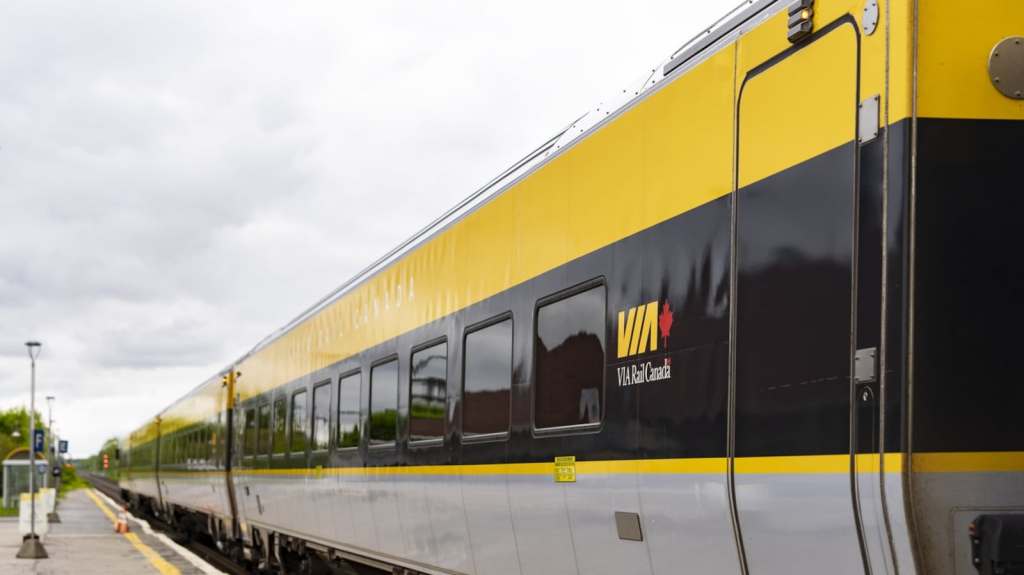
The southern VIA Rail corridor, by contrast, exists to serve the communities that rely on rail for connectivity rather than speed. VIA Rail’s mandate is not to compete with high-speed intercity travel, but to provide reliable, frequent service linking smaller towns and cities to major urban centers. Belleville, Kingston, Brockville, and other communities depend on these connections for economic, social, and educational purposes. By maintaining the southern corridor for VIA, the service can focus on its core function: ensuring that smaller communities remain linked to metropolitan hubs, rather than attempting to serve as a high-speed through-route that would compromise both speed and accessibility.

Quantitative projections reinforce the strategic logic of a dedicated high-speed alignment. The planned Alto network between Toronto and Quebec City is expected to reach speeds up to 300 km/h, potentially reducing the current Montreal–Toronto rail journey from more than five hours to approximately three hours on high-speed track, a reduction of over 40 percent in travel time. Such reductions are a key driver of modal shift, since international evidence finds that high-speed rail that cuts travel times can attract a large share of travelers from road and air, significantly boosting ridership compared with conventional rail. In Canada’s case, future high-speed service could carry tens of millions of passengers annually, far exceeding the ridership of existing VIA Rail services, while generating an estimated $15 billion to $27 billion in economic value over decades through time savings, productivity gains, and reduced congestion. These figures underscore the economic rationale for building a system capable of truly high-speed operation rather than one constrained by mixed-traffic regional service.(altotrain.ca)

Routing Altos along a northern corridor also presents broader economic and developmental opportunities. A dedicated alignment can open new nodes of growth, stimulate investment in previously underserved areas, and create jobs in planning, construction, and operations. At the same time, VIA Rail can concentrate on fulfilling its statutory mandate: providing essential rail service to smaller communities, improving reliability, frequency, and accessibility along the southern corridor without interference from high-speed trains. This dual approach maximizes the overall utility of Canada’s rail network, ensuring that both large and small communities benefit.

Ultimately, the future balance of intercity rail depends on recognizing the distinct roles of each service. Altos should focus on moving cities closer together, achieving rapid, reliable intercity travel. VIA Rail should remain the backbone of regional connectivity, serving intermediate towns with frequent, accessible service that links them effectively to major urban centers. By allowing each system to fulfill its intended function, Canada can achieve a rail network that is both fast and inclusive, transformative yet equitable.

Ottawa’s Line One and the Cost of Normalized Failure

Ottawa’s Confederation Line was meant to be the spine of a growing capital. Instead, it has become a case study in how complex systems fail slowly, publicly, and expensively when accountability is diluted and warning signs are treated as inconveniences rather than alarms.

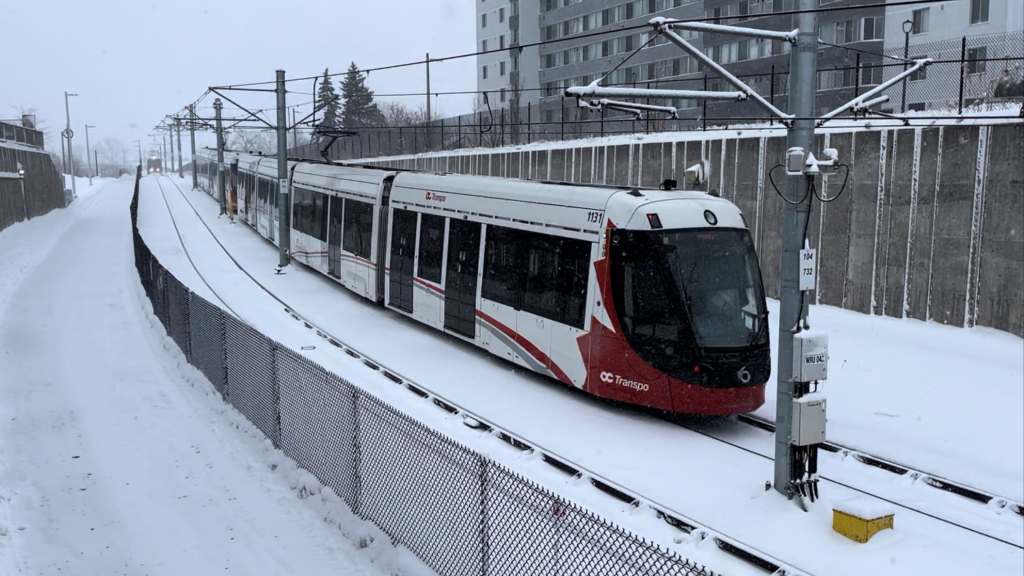
The most recent episode is stark even by Line One standards. Roughly 70 percent of the train car fleet has been removed from service due to wheel bearing failures, leaving the system operating with dramatically reduced capacity. This is not a cosmetic defect or a comfort issue. Wheel bearing assemblies are fundamental safety components. When they degrade, trains are pulled not because service standards slip, but because continued operation becomes unsafe.

That distinction matters.

A Fleet Designed at the Margins
The Alstom Citadis Spirit trains operating on Line One were marketed as adaptable to Ottawa’s climate and operational demands. In practice, they appear to have been designed and procured with little margin for error. Investigations following earlier derailments already identified problems with wheel, axle, and bearing interactions under real-world conditions. The current bearing crisis suggests those lessons were not fully integrated into either design revisions or maintenance regimes.

OC Transpo’s decision to remove all cars that have exceeded approximately 100,000 kilometres of service is telling. That threshold is not a natural lifecycle limit for modern rail equipment. It is an emergency line drawn after degradation was discovered, not a planned overhaul interval. When preventive maintenance becomes reactive withdrawal, the system is already in trouble.

When Reliability Becomes Optional
What riders experience as “unreliability” is, at the system level, something more troubling: normalized failure.

Short trains. Crowded platforms. Sudden slow orders. Unplanned single tracking. Bus bridges that appear with little notice. Each disruption is explained in isolation, yet they form a continuous pattern. The city has become accustomed to managing failure rather than preventing it.

This matters because transit is not a luxury service. It is civic infrastructure. When reliability drops below a certain threshold, riders do not simply complain. They adapt by abandoning the system where they can, which in turn undermines fare revenue, political support, and long-term mode shift goals. The system enters a feedback loop where declining confidence justifies lowered expectations.

Governance Without Ownership
One of Line One’s enduring problems is that responsibility is everywhere and nowhere at once. The public owner is the City of Ottawa. Operations are contracted. Vehicles were procured through a public-private partnership. Maintenance responsibilities are split. Oversight relies heavily on assurances rather than adversarial verification.

When failures occur, no single actor clearly owns the outcome. This is efficient for risk transfer on paper, but disastrous for learning. Complex systems improve when failures are interrogated deeply and uncomfortably. Ottawa’s LRT has instead produced a culture of incremental fixes and carefully worded briefings.

The wheel bearing crisis did not appear overnight. It emerged from cumulative stress, design assumptions, and operational realities interacting over time. That is precisely the kind of problem P3 governance structures are worst at confronting.

The Broader System Cost
The immediate impact is crowding and inconvenience. The deeper cost is strategic.

Ottawa is expanding Line One east and west while the core remains fragile. New track and stations extend a system whose reliability is still unresolved at its heart. Each extension increases operational complexity and maintenance demand, yet the base fleet is already struggling to meet existing service levels.

This is not an argument against rail. It is an argument against pretending that infrastructure can compensate for unresolved engineering and governance failures.

What Recovery Would Actually Require
Recovery will not come from communications plans or incremental tuning. It requires three uncomfortable shifts.

First, independent technical authority with the power to halt service, mandate redesigns, and override contractual niceties. Not advisory panels. Authority.

Second, transparent lifecycle accounting. Riders and taxpayers should know what these vehicles were expected to deliver, what they are delivering, and what it will cost to bring reality back into alignment with promises.

Third, political honesty. Reliability will not improve without sustained investment, possible fleet redesign, and service compromises during remediation. The public can handle bad news. What it cannot handle indefinitely is spin.

A Spine, or a Lesson
Ottawa’s Line One still has the potential to be what it was meant to be. The alignment is sound. The ridership demand exists. The city needs it.

But infrastructure does not fail because of a single bad component. It fails when systems tolerate weakness until weakness becomes normal. The wheel bearing crisis is not an anomaly. It is a signal.

The question now is whether Ottawa treats it as another incident to manage, or as the moment to finally confront the deeper architecture of failure that has defined Line One since its opening.

Sources: 

CityNews Ottawa. “OC Transpo forced to remove trains from Line 1 due to wheel bearing issue.” January 2026.
https://ottawa.citynews.ca
Yahoo News Canada. “70% of Ottawa’s Line 1 trains out of service amid bearing problems.” January 2026.
https://ca.news.yahoo.com
Transportation Safety Board of Canada. “Rail transportation safety investigation reports related to Ottawa LRT derailments.” 2022–2024.
https://www.tsb.gc.ca
OC Transpo. “O-Train Line 1 service updates and maintenance notices.”
https://www.octranspo.com

Ottawa Amalgamation Failures: A Critical Reassessment  

Bigger is not always beautiful, especially when it comes to communities or, more specifically, municipalities. The 2001 amalgamation of Ottawa and its surrounding municipalities was sold as a transformation: a streamlined government delivering better services, greater efficiency, and lower taxes. In practice the results have been far more ambiguous.

Background: What Was Amalgamated – And What Was Promised
On January 1, 2001, the former municipalities that made up the Regional Municipality of Ottawa–Carleton – 11 lower-tier municipalities plus the former City of Ottawa, were merged into a single-tier municipality: the modern City of Ottawa.  

The rationale was that this consolidation would reduce duplication, unify planning and services, and deliver cost efficiencies through economies of scale. The transition cost was estimated at about $189 million, with the province covering $142 million and the City paying roughly $47 million. The projection for savings from personnel reductions was substantial: roughly $30.7 million in the first year, rising to $84 million by 2003.  

Despite these savings projections, the Transition Board did not promise any tax reductions.  

Mixed Outcomes: Services – Gains, Losses, and Uneven Distribution
One of the primary promises was standardized and enhanced municipal services across the entire new city. In many respects there were improvements, but the benefits have been uneven, and in some rural/suburban zones residents still feel left behind.

What improved
• Services such as recreation programming and library access were expanded. After amalgamation, rural areas enjoyed a jump in activity: for example, by 2007 the rural recreation program catalogue offered 444 programs (up from 62 in 2002).
• The unified municipal structure also enabled coordinated economic development efforts. For example, rural-tourism initiatives (like “Ottawa’s Countryside”) and a “Directional Farm Signage Program” helped rural businesses and agriculture get city-wide support.
• In terms of per-household spending, in its early years the amalgamated city kept overall operating spending roughly on par with a seven-city average of Ontario municipalities; only about 4% higher. And compared with a large city like City of Toronto, Ottawa’s spending was about 30% lower.  

But many promises – Especially in rural and suburban zones, fell short
• Rural residents have repeatedly voiced that core municipal services (road maintenance, snow clearing, local transit, policing) received lower priority compared to urban wards. A longstanding sense of alienation persists among many rural communities toward City Hall.
• The transition diluted local, community-by-community decision-making. Individual municipalities had previously tailored services to local needs; under the amalgamated governance many rural or semi-rural concerns are subsumed under city-wide priorities. This resulted in delays and bureaucratic inefficiencies for issues that once had local responsiveness.
• Perhaps most glaring: the city’s signature transit project, the O‑Train / Ottawa LRT system, has been plagued by cost overruns, operational problems and service reliability issues – undermining its value as a major public-transit asset. A public inquiry’s recent report pointed out serious failures in municipal oversight and transparency around the LRT project.

That failure has broader consequences because many suburban and rural residents rely on a single bus line or intermittent routes, but see a disproportionate share of taxes diverted to an increasingly controversial urban rail system.

Taxes and Finances: Savings Promised – But Higher Costs and New Burdens
One of the largest expectations was that amalgamation would lower costs for taxpayers. That premise has proven questionable.
• Although the transition plan forecast substantial savings from staff reductions, the resulting efficiencies did not translate into widespread tax reductions. None were promised.
• From 2001 to 2005, Ottawa’s property-assessment base grew by 11.1%. Over the same period, education-tax levies on residential properties increased by 33.7%, costing Ottawa homeowners roughly $28 million more than in other Ontario municipalities.
• The uniform tax regime (rather than multiple municipal rates) had disproportionate impacts on suburban and rural homeowners. In many cases they faced tax hikes without corresponding improvements to local services.
• Meanwhile, certain structural costs increased: for instance, the cost share owed to the provincial property-assessment authority (Municipal Property Assessment Corporation or MPAC) rose by 25% since amalgamation, about 5% annually, outpacing inflation and municipal tax increases. That cost is borne by taxpayers.
• In more recent years, the city faces major financial stress. The municipal transit system alone is projected to run an annual operating shortfall of $140 million. Policing, infrastructure maintenance and other capital demands contribute to mounting city-wide debt burdens. As one commentary put it, “there was no tangible, financial benefit from amalgamation.”

These fiscal pressures undercut the core argument for amalgamation — that centralization would lead to stable or lower taxes with better services.

Loss of Local Representation and Identity
Amalgamation replaced dozens of municipal councils and local governance structures with a centralized city council responsible for a vastly larger and more diverse geography and population. That shift came with trade-offs.
• Rural and semi-rural communities lost significant political influence once they became part of a larger ward-based structure. Special “area” or “service” rates were introduced for rural areas, reflecting recognition that service needs differed, but also institutionalizing a two-tier system within the same city.
• Local identity and “small-town” character in villages such as Manotick was diluted. For example, development proposals in Manotick in the mid-2000s (for thousands of new homes) sparked strong concern among local residents that the community’s character would disappear under city-wide policies.
• According to early post-amalgamation polling (2002), many rural respondents rated the new city structure poorly. Among rural residents, 38% said services “need improvement” or rated city performance “terrible,” 43% said “OK,” and only 17% rated things “good” or “excellent.”

The sense of local alienation persists decades later: many rural residents still regard themselves as under-represented and overlooked by City Hall. 

Infrastructure, Planning and Transit: Centralization Meets Complexity – And Breakdown
One of the biggest undertakings after amalgamation has been transit and infrastructure. But the centralized city structure has struggled under the weight of that complexity.
• The O-Train / Ottawa LRT project was to be a flagship symbol of a modernized, unified city-wide transit network. Instead it has become a cautionary tale. A recent public inquiry blamed both the managing company and the city’s leadership for “repeated failures and an abrogation of municipal oversight.”
• Financial burdens from large capital projects like LRT expansion have stressed city budgets. After cost overruns for Stage 1 and 2 of the O-Train project, the burden has fallen heavily on Ottawa taxpayers – unlike comparable projects in the Greater Toronto Area, where provincial or federal funding covers a larger share.
• Meanwhile, suburban sprawl and rural-suburban developments, once under small local municipalities, now stretch the city’s infrastructure capacity. Roads, snow clearing, policing and transit are far more challenging to deliver equitably in a sprawling city than in smaller, more compact municipalities.

The core problem is scale: centralizing everything in a single administration has made it difficult to provide suitable, tailored services across widely different communities, from dense downtown to rural farmland.

Governance and Democratic Legitimacy: Promises of Efficiency at the Cost of Democratic Depth
The transition to a mega-city altered not just service delivery but democratic engagement.
•  Pre-amalgamation, many local decisions:  planning, development, budget priorities were made by small municipal councils familiar with the needs of their residents. Post-amalgamation, those decisions occur within a larger, more remote bureaucracy. Many rural residents feel they no longer have a meaningful political voice.
• The centralization also introduced a complexity of governance that can hamper accountability. As seen with the LRT fiasco, oversight over massive capital projects can become diffuse and abstract, weakening the ability of residents to hold decision-makers to account.
• The uniform tax and service model – despite the wildly different needs of urban, suburban, and rural zones, reflects what critics call “one-size-fits-all governance.” That rarely serves any locality optimally, and often disadvantages those outside the urban core.

A Complicated Legacy – Not an Unqualified Disaster, But Far From the Hopes
It would be unfair to paint the amalgamation as an unmitigated catastrophe. Some benefits have accrued: coordinated planning, a unified transit vision (even if imperfect), expanded recreation and library services, economic development strategies that support rural businesses and agriculture, and, in the early years, per-household spending relatively comparable to peer municipalities.

The long-term trade-offs have been steep: higher taxes (particularly education taxes), rising costs for essential services like property-assessment operations beyond inflation, growing debt burdens, inequitable distribution of services across geography, and a weakened sense of local representation, especially in rural and semi-rural areas.

The classic promise of “efficiency through scale” has often collided with the messy reality of delivering diverse, place-specific services across a vast and varied territory.

Centralization as Compromise
The 2001 amalgamation of Ottawa was a bold gamble: a bet that centralization would bring coherence, cost savings, and improved service delivery. Four decades of experience show that the outcome is deeply mixed.

For some residents the transition delivered real benefits: greater access to recreation, library services, coordinated economic strategies, and the possibility of a unified urban vision. For many others, especially outside the downtown core, it meant increased taxes, loss of local autonomy, and a sense of being perpetually overlooked as part of a sprawling bureaucracy.

In the end, amalgamation delivered some of its promises, but at a cost that, for many, outweighs the benefits. Ultimately the experiment reveals a fundamental truth: size and scale alone do not guarantee better governance. Without careful attention to representation, equity, diverse local needs and transparent oversight, centralization too often becomes a compromise, not a solution.

VIA Rail Misses the Train on Serving Canadians

VIA Rail recently trumpeted a new “pilot project” meant to shave half an hour off the Montréal–Toronto run. The idea was to run nonstop trains between the two big cities, bypassing Cornwall, Brockville, Kingston, and Belleville. The announcement was pitched as a bold experiment in “efficiency,” a nod to the 70 percent of surveyed passengers who supposedly wanted quicker travel between downtown cores.

But almost immediately, the wheels came off. Citing “operational constraints” with their partner CN, VIA Rail suspended the project before it even left the station. On paper, this looks like a technical hiccup, another example of Canada’s fragile rail system bending to the priorities of freight traffic. But in reality, the plan itself was the problem. It was never about serving Canadians, it was about copying European or Japanese rail gloss without any of the context, backbone, or infrastructure investment those systems require.

For decades, communities along the corridor have depended on trains as lifelines. Students in Kingston, retirees in Belleville, families in Cornwall – these aren’t “optional” stops. They’re the heart of what passenger rail is supposed to do: connect Canadians, not just shuttle executives between two large metro centres. The whole point of a public Crown corporation like VIA Rail is to balance speed with accessibility, ensuring that smaller communities aren’t stranded in the name of shaving 30 minutes off a trip for a select few.

Even politicians, often slow to notice transit tweaks, raised red flags. Brockville’s mayor called the nonstop plan “concerning” and Conservative MP Michel Barrett branded it “unacceptable.” They weren’t wrong. Stripping out regional stops would have meant sidelining thousands of riders, effectively telling entire towns they were expendable in the rush to serve big-city commuters.

The irony is that the project was marketed as modernization. But modernization, in a Canadian context, should mean strengthening regional ties, upgrading track infrastructure, and finally breaking free of freight’s stranglehold on passenger rail, not copying a TGV fantasy while underfunding the very communities that give the corridor its economic and social weight.

Instead, VIA Rail now looks like it tried to leap forward without noticing the tracks were missing. Worse, its apology to passengers rings hollow. The real apology is owed to the communities it dismissed as speed bumps, to the Canadians who still believe public transportation is about more than corporate surveys and flashy PR lines.

In the end, the scrapped nonstop pilot is a lesson: if VIA Rail wants to serve Canadians, it needs to remember who those Canadians are. They’re not just the 70 percent who want to get to Bay Street faster. They’re also the people in eastern Ontario whose taxes help keep VIA afloat, and who deserve not to be treated as collateral damage in a misguided chase for efficiency.

Sometimes slowing down isn’t failure, it’s service. VIA Rail might want to remember that before the next “pilot project” takes off.

OC Transpo: A Two-Decade Decline in Rider-Centric Service

As a long-time Ottawa resident and observer of our city’s public utilities, I’ve witnessed firsthand the transformation of OC Transpo from a model of efficient public transit to a system riddled with challenges. Over the past two decades, a series of missteps, underinvestment, and a departure from rider-focused planning have led to a decline in service quality, reliability, and public trust.

From Transitway Triumph to LRT Troubles
In the 1980s, Ottawa’s Transitway was lauded as a pioneering bus rapid transit system, setting a benchmark for cities worldwide. Its dedicated bus lanes and efficient service made public transit a viable option for many residents. However, the shift towards the Light Rail Transit (LRT) system, particularly the Confederation Line, marked the beginning of a tumultuous era. 

Launched in 2019, the Confederation Line was plagued with issues from the outset. Frequent service disruptions due to door malfunctions, electrical failures, and even derailments became commonplace. These problems not only inconvenienced riders but also necessitated the reallocation of buses to cover LRT routes, further straining the bus network .

Service Cuts and Declining Reliability
In recent years, OC Transpo has implemented significant service reductions, often without adequate public consultation. For instance, in 2021, the agency planned service cuts without seeking rider input, leading to widespread criticism . By 2024, the city had cut $47 million from OC Transpo’s capital budget, removing 117 aging buses without replacements, resulting in a 3.5% reduction in bus service hours . 

These cuts have had tangible impacts on riders. Students, for example, have reported overcrowded trains, erratic service, and high fares, leading to dissatisfaction and calls for meaningful reforms . Community feedback has consistently highlighted issues with reliability and a lack of focus on the city core .   

Financial Strains and Leadership Challenges
The COVID-19 pandemic exacerbated OC Transpo’s challenges. A 38% drop in ridership since 2019 led to a $36 million revenue shortfall . Despite these financial strains, the agency increased fares in 2024, disproportionately affecting seniors and youth riders .  

Leadership changes have also marked this period. The recent departure of General Manager Renée Amilcar underscores the need for a strategic reevaluation of OC Transpo’s direction. Transit advocates have called for a “serious, honest” review of the system to address its myriad issues . 

A Call for a Rider-Centric Vision
To restore public trust and improve service quality, OC Transpo must adopt a rider-centric approach. This includes engaging with the community to understand diverse transit needs, investing in infrastructure to ensure reliability, and providing transparent communication about service changes. Equitable access must be prioritized, ensuring that transit services are affordable and accessible for all demographics.

The challenges facing OC Transpo are significant, but not insurmountable. By focusing on the needs of riders and committing to transparency and accountability, Ottawa can rebuild a public transportation system that serves its citizens effectively and efficiently.

The Northlander Returns: A New Era for Rail in Northern Ontario

The vast majority of my readers know how enthusiastic I am about the continued development of public transportation capacity, and especially trains for regional services.  

After more than a decade of absence, the Ontario Northlander train is poised to make its triumphant return, and for many in Northern Ontario, it couldn’t come soon enough. This isn’t just a story about a train line being revived. It’s about equity, connectivity, environmental sustainability, and economic renewal. As someone who has spent the better part of my career analyzing and advocating for robust public transit solutions, I see the Northlander’s revival as a long-overdue correction to a critical transportation misstep.

The Ontario Northlander was first launched in 1976, operated by Ontario Northland Railway (ONR), as a passenger rail service running between Toronto and Cochrane. For decades, the train was a vital artery, an essential link between rural northern communities and the political, economic, and cultural hub of Southern Ontario. Students rode it to university. Seniors depended on it for healthcare visits in the city. Tourists boarded it in search of pristine lakes and forests. And entire communities built their sense of connection around it.

Then, in 2012, the service was cancelled. The provincial government at the time pointed to financial unsustainability and declining ridership, replacing the train with bus service. But buses, while useful, were never an adequate substitute for the comfort, reliability, and year-round stability of rail. For the people of the North, many of whom already feel excluded from Queen’s Park’s decision-making, the cancellation was a bitter pill. And so, for over a decade, the memory of the Northlander lived on not as a nostalgic curiosity, but as a symbol of something lost and needed again.

Fast-forward to 2021, when the Ontario government formally announced that it would restore Northlander rail service. The new plan is far more ambitious than a simple restart of the old route. This time, the train will run between Toronto and Timmins, with a continuation to Cochrane, and it will serve up to 16 stops along the way. North Bay, Temiskaming Shores, Kirkland Lake; these are not just waypoints, but communities that have long been underserved by modern transportation infrastructure. The revival is no half-measure. It’s a $139.5 million commitment, involving track upgrades, station refurbishments, and the acquisition of three brand-new Siemens Venture trainsets. These aren’t your grandfather’s rail cars. They’ll feature accessible washrooms, Wi-Fi, wider seating, power outlets, and onboard storage for mobility aids, meeting the full range of needs for modern travellers.

One of the most exciting aspects of the Northlander’s return is the attention being paid to operational timing and scheduling. Service is expected to begin by the end of 2026, with trains running between four and seven days per week, depending on demand and seasonal needs. The journey from Toronto to Timmins will take about 10 to 11 hours, and both daytime and overnight departures are being considered to best accommodate passengers. This scheduling approach reflects a deeper understanding of how people in the North actually travel, whether they’re making medical trips, visiting family, or commuting for work. It’s not just about frequency; it’s about relevance and reliability.

There are several layers of benefit to this project, each more meaningful than the last. First and foremost, it’s about connectivity. For too long, Northern Ontario has been left behind in the transportation conversation, despite its immense contributions to the provincial economy through mining, forestry, and tourism. Reconnecting the North to the South by train helps bridge not only physical distances but economic and cultural divides as well. Trains don’t just move people, they move opportunity.

Economically, this revival is a catalyst. Local businesses will benefit from improved mobility for both workers and customers. Tourism operators can expect a boost as more visitors opt for the scenic, stress-free route north. And for municipalities along the route, the return of passenger rail service is a magnet for investment in everything from hospitality to infrastructure. The Northlander isn’t just arriving—it’s bringing momentum with it.

There’s also a compelling environmental case. In a province increasingly focused on climate resilience, rail offers a significantly greener alternative to individual car travel and regional flights. Each trainload of passengers represents dozens of vehicles off the road, translating into measurable reductions in greenhouse gas emissions. For Ontario to meet its long-term sustainability goals, projects like the Northlander aren’t just helpful, they’re necessary.

Perhaps most importantly, though, this train is about accessibility and inclusion. Whether you’re a senior with limited mobility, a student on a tight budget, or a resident of a remote community without a driver’s license, the Northlander offers something invaluable: freedom. The freedom to travel without dependence on a car. The freedom to access services and opportunities that would otherwise be out of reach. And the freedom to feel seen and served by the systems meant to support you.

The Northlander’s return is not a silver bullet, and challenges will remain. Ridership must be cultivated through thoughtful marketing and community outreach. Service quality must be maintained. And long-term funding must remain a political priority, no matter who holds office. But none of these challenges are insurmountable. What matters most is that the train is coming back, new, improved, and loaded with promise.

For too long, the Northlander was a missing piece of the provincial puzzle. Its return is not only an act of restoration but of renewal. It affirms that every corner of this province matters, and that no community should be cut off from the future by virtue of its geography. So, all aboard. The North is on track once again.

Sources
Ontario Northland: The Northlander
Ontario Government Announcement: Passenger Rail in the North
BayToday: All Aboard for the New Era of the Northlander
Wikipedia: Ontario Northlander
Northern Policy Institute: Passenger Rail and Northern Access

Beyond Alto: The Ripple Effect of High-Speed Rail on Local Transit and Business

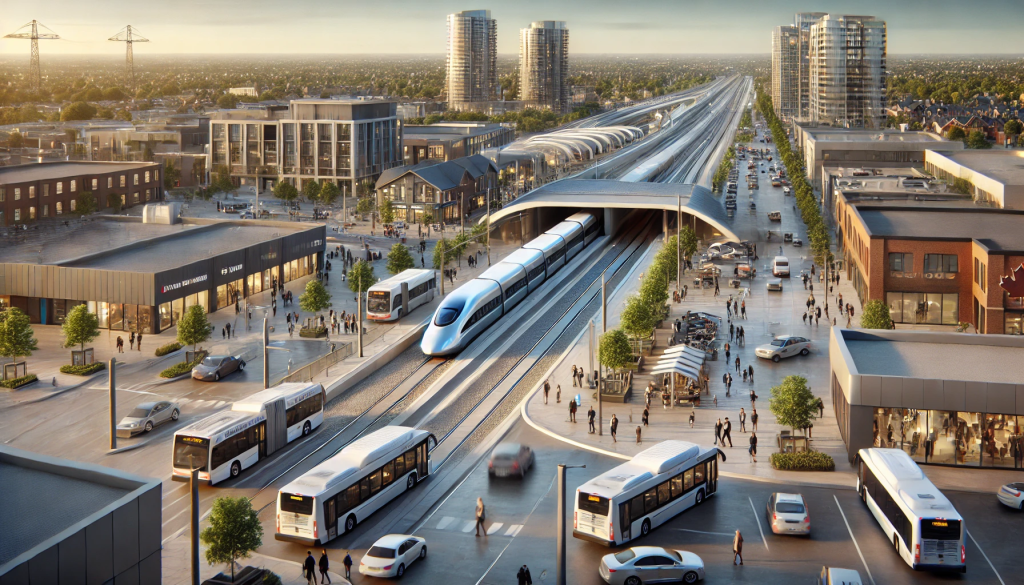
The Alto high-speed rail project is poised to do more than just transform intercity travel—it will also act as a catalyst for expanded local public transportation networks and economic growth in smaller communities along the corridor. High-speed rail doesn’t exist in isolation; it requires efficient first- and last-mile connections to ensure that travelers can seamlessly reach their final destinations. As Alto stations are developed in cities like Peterborough and Trois-Rivières, there will be a natural demand for increased bus services, light rail connections, and other forms of public transit to serve passengers arriving and departing from these hubs.

In cities like Ottawa and Montreal, where light rail transit (LRT) networks are already in place or under development, Alto will likely drive additional investment in urban transit expansion. Commuters traveling into these cities will need efficient ways to connect from high-speed rail stations to workplaces, universities, and residential areas. This could lead to the creation of new LRT lines, expanded bus routes, and improved transit hubs that integrate multiple modes of transportation under a single, seamless system. Toronto, for instance, may see an expansion of its GO Transit network or additional streetcar service to accommodate increased passenger flow from the high-speed rail station.

Smaller communities like Peterborough, which has long suffered from limited transit options, stand to benefit significantly. With an Alto station positioned in the city, businesses catering to travelers—hotels, restaurants, and retail establishments—will likely see increased activity. At the same time, local governments may prioritize the development of new transit services, such as regional bus routes that connect surrounding rural areas to the high-speed rail station. This increased connectivity could make Peterborough a more attractive destination for commuters who work in Toronto or Ottawa but prefer the affordability and quality of life found in a smaller city.

The economic ripple effects extend beyond just transit and business development. High-speed rail has been shown in other countries to attract new industries, create demand for office space near stations, and encourage residential development in previously overlooked areas. With Alto, towns along the route could see a surge in interest from businesses looking to take advantage of the improved connectivity. Real estate markets may also experience a boost as professionals and families consider relocating to these areas, knowing they can quickly access larger cities for work or leisure.

Ultimately, Alto is not just about linking major urban centers—it’s about reshaping the broader transportation ecosystem. By creating a high-speed backbone, it encourages cities and towns to rethink their own transit strategies, leading to improved local services that benefit both residents and visitors. If properly managed, this project has the potential to generate a more interconnected and accessible transportation network across Ontario and Quebec, fostering economic growth and enhanced mobility for generations to come.

The Alto Project: A New Era for Canadian Public Transportation

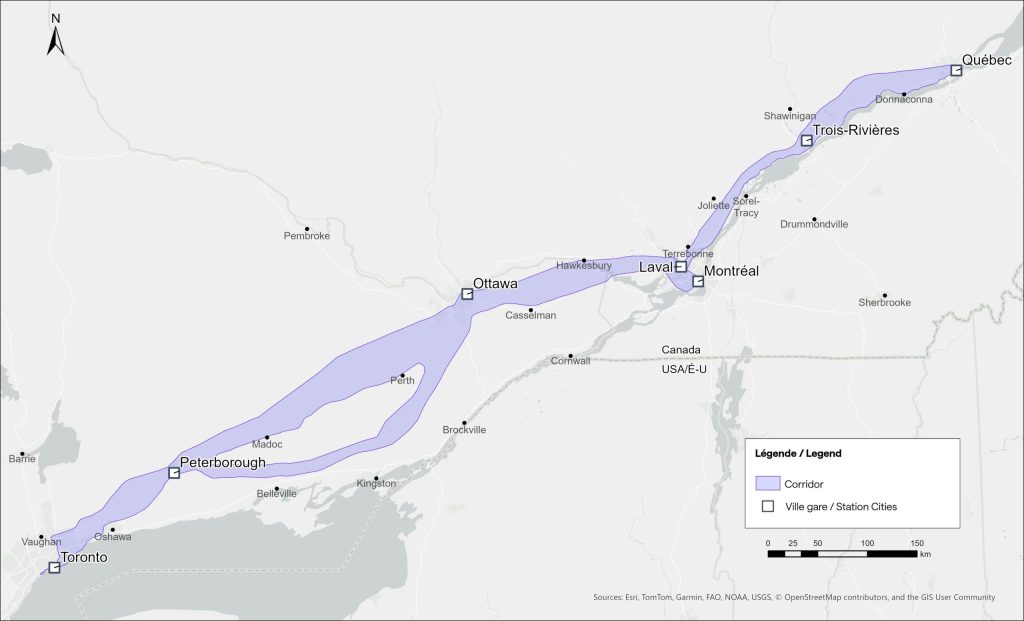
The Canadian government’s announcement of Alto, a new high-speed rail network linking Toronto and Quebec City, marks a watershed moment in the nation’s transportation history. This 1,000-kilometer electrified corridor will connect major urban centers while slashing travel times, with trains reaching speeds of up to 300 km/h. The journey from Toronto to Montreal, currently a grueling five-hour trip by rail, will be cut to just three hours, making it a direct competitor to short-haul flights. More than just a transportation project, Alto represents a long-overdue commitment to sustainable, efficient public infrastructure—one that could reshape how Canadians move between their largest cities.

Canada has been here before, at least in theory. The dream of high-speed rail has surfaced repeatedly over the decades, only to be shelved due to shifting political priorities, economic downturns, or a lack of public and private investment. In the 1960s, CN’s TurboTrain attempted to bring high-speed service to the Montreal-Toronto corridor, but despite its impressive top speed of 225 km/h, it was plagued by technical challenges and ultimately discontinued. Later, in the 1980s, Bombardier proposed a high-speed link between Quebec City and Windsor, but enthusiasm waned in the face of funding concerns and political inertia. Meanwhile, other nations surged ahead. France launched the TGV in 1981, Japan’s Shinkansen had already been running since 1964, and China rapidly built the world’s most extensive high-speed rail network. Canada, with its vast geography and car-dependent culture, lagged behind, leaving VIA Rail to struggle with aging rolling stock and shared freight tracks that made reliable service nearly impossible.

The Alto project signals a long-overdue course correction. The government has committed $3.9 billion over six years to develop the project, covering environmental assessments, land acquisition, Indigenous consultations, and detailed engineering work. The project’s scale makes it the largest infrastructure investment in Canadian history, with an estimated 51,000 jobs created during construction and a projected annual boost of $35 billion to the national GDP. The selected consortium, Cadence, brings together some of the most experienced transportation and infrastructure firms in the world, including CDPQ Infra, AtkinsRéalis, Keolis Canada, SYSTRA Canada, SNCF Voyageurs, and, notably, Air Canada. With SNCF’s involvement, Alto benefits from France’s decades of expertise operating one of the world’s most successful high-speed rail networks.

Air Canada’s participation in the Alto consortium is a strategic move that acknowledges the inevitable disruption high-speed rail will bring to the lucrative Toronto-Montreal air corridor. As one of the busiest short-haul routes in North America, this segment has long been a key profit driver for the airline, particularly in the premium business travel market. However, with Alto set to offer a three-hour city-center-to-city-center journey—eliminating the hassles of airport security, boarding delays, and weather disruptions—many travelers, especially corporate clients, may shift their loyalty to rail. Rather than resisting this change, Air Canada is positioning itself within the Alto project to maintain influence over intercity travel dynamics, potentially leveraging its expertise in ticketing, loyalty programs, and intermodal connectivity. By integrating rail service into its broader network, Air Canada can remain a key player in the evolving transportation landscape, offering seamless connections between domestic, international, and rail-based travel. This approach mirrors strategies seen in Europe and Asia, where major airlines partner with high-speed rail operators rather than compete head-on, ensuring they remain relevant as travel preferences evolve.

Beyond the economic and technical aspects, Alto represents a fundamental shift in how Canada approaches public transit. For decades, intercity travel has been dominated by cars and airplanes, both of which contribute heavily to congestion and carbon emissions. The Toronto-Ottawa-Montreal corridor is one of the busiest in North America, yet for years, travelers have been forced to endure overcrowded highways, unreliable train schedules, or expensive, inconvenient air travel. High-speed rail changes the equation. Electrified trains eliminate the carbon footprint of regional flights, reducing overall transportation emissions in line with Canada’s climate goals. At the same time, by shifting travelers from cars to rail, Alto can alleviate highway congestion, making regional mobility smoother for everyone.

Connectivity is another major advantage. The Alto corridor isn’t just about linking Toronto, Ottawa, Montreal, and Quebec City—it’s also about providing a reliable transit spine for smaller communities like Peterborough and Trois-Rivières. For decades, these towns have struggled with limited or non-existent rail service, forcing residents to rely on personal vehicles or slow, infrequent buses. With high-speed rail, these regions stand to gain new economic opportunities, easier access to larger job markets, and increased tourism. Countries like France, Spain, and Japan have seen firsthand how high-speed rail can transform regional economies, bringing prosperity to areas once considered too remote to thrive.

At its core, the Alto project is a declaration that public transit is not just an afterthought, but a national priority. Efficient, well-funded public transportation is a hallmark of modern, forward-thinking societies, reducing economic inequality by making mobility accessible to everyone, not just those who can afford cars or flights. It also offers a more comfortable, humane travel experience—one where passengers can relax, work, or enjoy the scenery instead of navigating traffic or enduring the frustrations of airport line ups, and security checks. 

Of course, the road ahead is not without obstacles. As my regular readers will know, I am not a fan of Public-Private Partnerships.  Large-scale infrastructure projects in Canada have a history of delays, cost overruns, and political roadblocks. Public support, political will, and careful management will be critical in ensuring that Alto doesn’t become another shelved idea. If the government and its private-sector partners can deliver on their promises, however, Alto has the potential to redefine travel in Canada for generations to come.

For too long, Canadians have watched as other countries invested in the kind of fast, efficient, and sustainable transportation systems that make daily life easier. Now, with Alto, Canada finally has the chance to catch up. If done right, this project could mark the beginning of a new era—one where public transportation is recognized not just as a necessity, but as an engine of economic growth, environmental responsibility, and national connectivity.