
The Ontario government has introduced a proposal that would fundamentally alter the province’s access to information regime. The amendments under consideration would exclude records held by the premier, cabinet ministers, and their political offices from the scope of the province’s Freedom of Information law. At the same time, the proposal would lengthen the time government institutions have to respond to information requests and apply the new rules retroactively to requests already in the system. Taken together, these measures would mark a sharp departure from the principles that have guided public access to government records in Ontario for more than three decades.
Access to information legislation exists for a simple reason. Democratic governments exercise power on behalf of the public, and the public therefore has a right to understand how decisions are made. Ontario’s Freedom of Information and Protection of Privacy Act was built around that principle. While certain categories of information have always been protected, particularly cabinet deliberations and personal privacy, the general premise has remained clear: records created in the conduct of public business belong, ultimately, to the public.
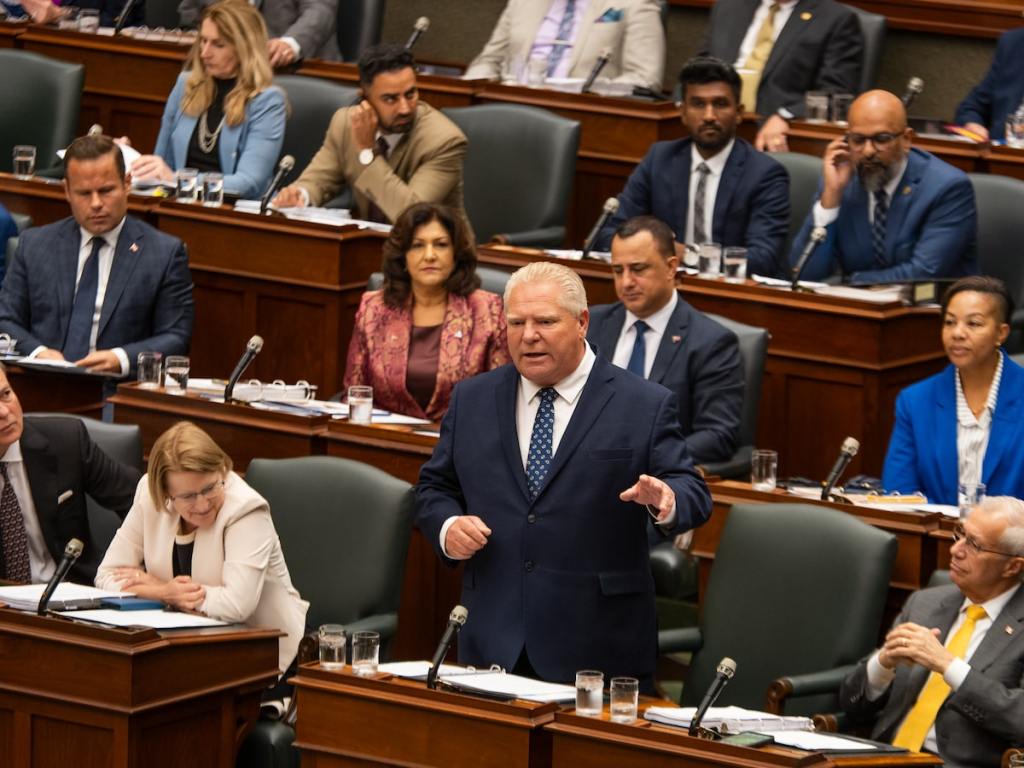
The proposed amendments would carve out a new and sweeping exception. Records located in the offices of the premier and cabinet ministers would no longer be subject to access requests. In practical terms, that means that political offices at the centre of provincial decision making could become zones of administrative opacity. Documents relating to policy discussions, communications with stakeholders, or advice provided by political staff could simply fall outside the reach of the law.
The implications are not merely theoretical. Many of the most significant investigative revelations in Ontario politics have emerged through freedom of information requests directed at ministerial offices and related records. Journalists and public interest groups have relied on those requests to understand how decisions were shaped, who was consulted, and what information was available to decision makers at critical moments. Removing political offices from that framework would inevitably narrow the public record.
The proposal’s retroactive component raises an additional concern. Retroactive secrecy sits uneasily within a legal framework designed to promote transparency. When governments change the rules governing access to information after requests have already been filed, the effect is not merely administrative. It risks creating the perception that the rules are being rewritten to shield particular controversies or decisions from scrutiny.
The extension of response timelines from thirty days to forty five business days may appear modest by comparison, yet it reinforces the same broader trend. Access delayed is frequently access denied, particularly in an environment where timely disclosure is essential for public debate. Journalists working to inform citizens about active political controversies depend on the timely release of records. Lengthening the process reduces the practical value of the information that is eventually disclosed.
Governments routinely argue that greater confidentiality is necessary for effective decision making. Cabinet discussions require a degree of privacy. Political staff must be able to offer candid advice. Those principles have long been recognized within the existing law. The problem arises when the zone of confidentiality expands so far that it begins to swallow the principle of public accountability itself.
Ontario’s access to information system has never been perfect. Delays, redactions, and bureaucratic caution have always limited the flow of records. Yet the framework established a basic expectation that the machinery of government would operate under a presumption of openness. The proposed amendments would move the province in the opposite direction, concentrating greater informational power within the political executive while reducing the public’s ability to examine how decisions are made.
Transparency laws are not technical administrative instruments. They are structural features of democratic governance. When access to information narrows, the distance between citizens and the institutions that govern them inevitably grows. The current proposal therefore represents more than a routine legislative adjustment. It signals a shift in the balance between political authority and public oversight, one that risks weakening a cornerstone of democratic accountability in Ontario.
 The Rowanwood Chronicles