From Vision to Momentum: Alto Enters Its Defining Phase

For years, Canada’s ambitious dream of linking its greatest cities with true high-speed rail has hovered in the realm of feasibility studies and future pipe dreams. Now, in the closing weeks of 2025, that dream has shifted decidedly toward reality; not because steel is yet being laid, but because the Alto high-speed rail initiative has crossed a crucial threshold from concept to concerted preparation and public engagement.

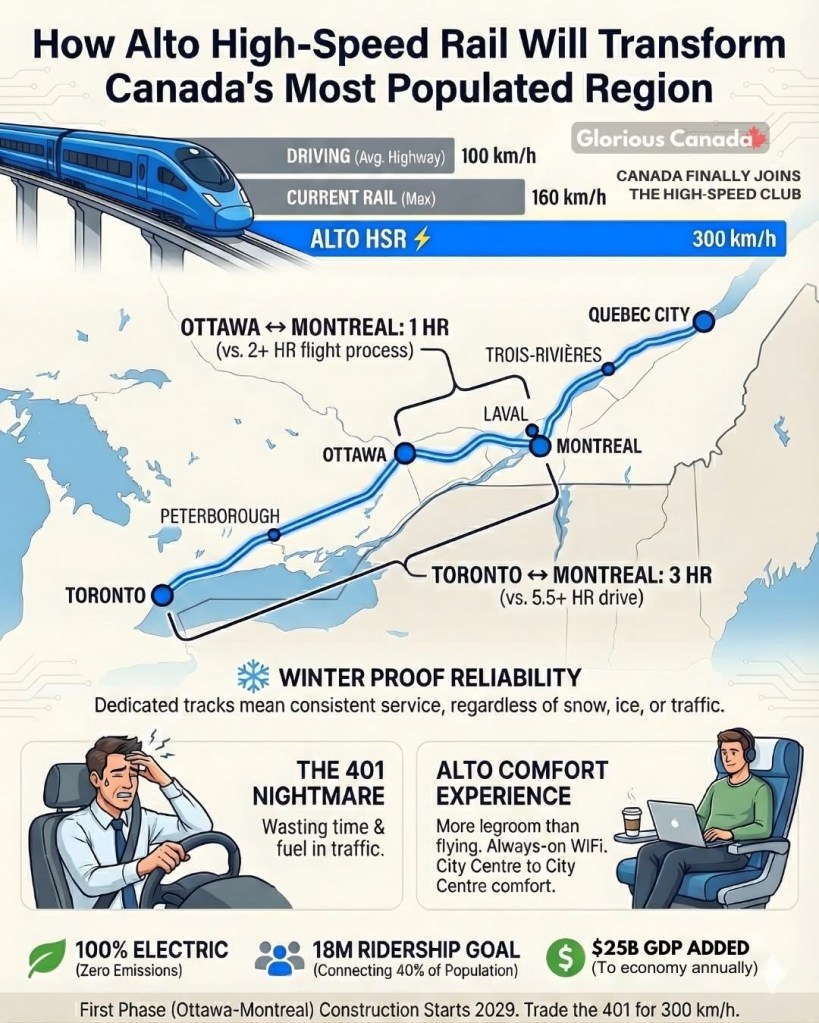
At its core, Alto is a transformative infrastructure vision: a 1,000-kilometre electrified passenger rail network connecting Toronto to Québec City with trains capable of 300 km/h speeds, slicing travel times compared to what today’s intercity rail offers and binding half the nation’s population into a single, rapid mobility corridor. The design phase, backed by a multi-billion-dollar co-development agreement with the Cadence consortium, is well underway, and the federal government has signaled its intent to see this project delivered as one of the largest infrastructure investments in decades.  

The most noteworthy milestone in recent weeks has been a strategic decision about where Alto will begin to take physical shape. On December 12, officials announced that the Ottawa–Montreal segment – roughly 200 km – will be the first portion of the network to advance toward construction, with work slated to begin in 2029. This choice reflects a practical staging strategy: by starting with a shorter, clearly defined corridor that spans two provinces, engineering and construction teams can mobilize simultaneously in Ontario and Québec and begin delivering economic and skills-development benefits sooner rather than later.  

This announcement isn’t just about geography; it marks a shift in Alto’s progression from broad planning to community-level engagement. Beginning in January 2026, Alto will launch a comprehensive three-month consultation process that includes open houses, virtual sessions, and online feedback opportunities for Canadians along the corridor. These sessions will inform critical decisions about alignment, station locations, and mitigation of environmental and community impacts. Indigenous communities, municipalities, and public institutions will be active participants in these discussions as part of Alto’s ongoing commitment to consultation and reconciliation, a recognition that this project’s success hinges not only on engineering prowess, but on thoughtful, inclusive planning.  

Beyond route planning, Alto and Cadence are also turning to Canada’s industrial capacity, particularly the steel sector, to gauge the domestic supply chain’s readiness for what will undeniably be a massive procurement exercise. With thousands of kilometres of rail and related infrastructure components needed, early outreach to the steel industry is intended not just to assess production capacity, but to maximize Canadian content and economic benefit from the outset.  

Yet not every question has a definitive answer. Strategic discussions continue over the optimal location for Alto’s eventual Toronto station, with the CEO publicly acknowledging that a direct connection to Union Station may not be guaranteed; a decision that could shape ridership patterns and integration with existing transit networks across the Greater Toronto Area.  

As the calendar turns toward 2026, the Alto project sits at an inflection point: one foot firmly planted in detailed design and consultation, the other inching closer to the realm of shovels and steel rails. Political support appears robust, and fiscal planning, including major project acceleration initiatives and supportive legislation, has built momentum. Yet, as any transportation planner will tell you, the distance between planning and construction is long, often winding, and frequently subject to political, economic, and community pressures.

Still, for advocates and observers alike, the significance of the latest developments cannot be overstated. Alto has graduated from “what if?” to “when and how,” and that alone marks a major step forward in Canada’s transportation evolution.
The Return of Britain’s Railways: A Justified Journey Back to Public Hands

Few issues in the United Kingdom’s domestic infrastructure provoke as much consistent frustration, and cautious optimism, as the performance of the national railway system. After more than three decades of privatized operation, mounting failures in service quality, rising costs, and structural inefficiencies have prompted a significant policy shift. The renationalization of Britain’s train services marks the gradual undoing of a deeply ideological experiment that has fallen short of its promises.

This shift is not driven by nostalgia, but by necessity.

Background and Rationale for Renationalization
The privatization of British Rail in the mid-1990s was framed as a path to modernity. Proponents argued that market competition would drive efficiency, reduce government spending, and improve customer service. Instead, the result was a fragmented system comprised of multiple Train Operating Companies (TOCs), overseen by various regulatory bodies, while infrastructure was handed to a separate private firm, Railtrack—an entity whose eventual failure and replacement by Network Rail in 2002 was an early indicator of deeper systemic flaws.

Despite significant taxpayer subsidies, performance metrics across the privatized rail network began to deteriorate by the 2010s. Delays, overcrowding, high fares, and poor coordination became routine issues. Government spending on the sector did not decline; instead, public funds increasingly subsidized private profits. By 2020, annual state support exceeded £7 billion.

The COVID-19 pandemic laid bare the system’s fragility. As passenger numbers collapsed, the government assumed emergency control over all franchises, effectively nationalizing operations under temporary measures. This moment of crisis exposed the private sector’s dependence on public backing and underscored the need for structural reform.

Recent Developments and Implementation
Renationalization in Britain has proceeded in stages, marked by pragmatism rather than ideological confrontation. Several poorly performing franchises, such as Northern, Southeastern, and the East Coast Main Line, were brought under the control of the government’s Operator of Last Resort (OLR). This allowed continuity of service while avoiding legal entanglements with private firms.

A formal framework was introduced with the Passenger Railway Services (Public Ownership) Act 2024, passed under the Labour government. This legislation allows passenger services to be brought under public control as contracts with private operators expire. In May 2025, South Western Railway (SWR) became the first operator transitioned under this new legal mechanism. Other operators, including Greater Anglia and c2c, are expected to follow before the end of the year.

This incremental approach avoids costly buyouts and is designed to be financially and administratively sustainable. Most passenger services in England are projected to return to public ownership by 2027.

The Role of Great British Railways
A central element of the reform effort is the establishment of Great British Railways (GBR), a single public entity that will unify track and train operations, long-term planning, fare structures, and accountability. The GBR model replaces the franchising system with a concession-based framework, where the state retains fare revenue and strategic control while outsourcing operations under tightly managed contracts.

GBR is not intended to replicate the British Rail of the past. It reflects modern best practices, taking cues from integrated public systems in Germany, Japan, and other high-performing countries. The goal is to streamline operations, enable through-ticketing, and restore strategic coherence to rail governance.

Implementation, however, has encountered delays. Structural changes, legislative hurdles, and coordination challenges have slowed GBR’s rollout. Industry stakeholders continue to press for greater clarity and faster progress.

Challenges and Caveats
While the rationale for public control is widely supported, several challenges remain. Technical difficulties have marred the rollout of SWR’s new Arterio fleet, due to manufacturing delays and labour disputes. Industrial relations require careful management to avoid disruption and foster long-term cooperation.

Fares remain a sensitive issue. Although public ownership may improve value for money, there is as yet no guarantee of fare reductions. Without visible improvements in affordability and service reliability, public support, though currently strong, may erode.

Operational excellence will be critical. Renationalization removes profit motives but does not in itself guarantee efficiency, innovation, or customer satisfaction. Robust governance, sustained investment, and clear performance targets are essential for long-term success.

Public and Political Sentiment
Public opinion has consistently favoured renationalization. A 2024 Ipsos poll found that 54% of Britons support the return of rail services to public ownership. The policy aligns with broader desires for a reliable, affordable, and accountable public transport system, particularly in the context of climate commitments and regional economic development.

Politically, the approach adopted avoids the pitfalls of abrupt, combative state intervention. By allowing contracts to expire and absorbing operations through established legal mechanisms, the process has proceeded with minimal disruption.

A Measured Return to Public Responsibility
The renationalization of Britain’s railways represents a strategic recalibration of transport policy. After decades of dysfunction under fragmented private control, the reassertion of public oversight is both justified and overdue.

This is not a reversal for its own sake, nor a rejection of innovation or partnership. It is a reassertion of the principle that essential public infrastructure should serve the common good, not the balance sheets of corporate shareholders.

The coming years will determine whether this vision can be translated into a rail system that is reliable, integrated, and equitable. If managed well, the return to public ownership may yet become one of the most important and popular infrastructure reforms in modern British history.

Sources:
• “New dawn for rail as South Western services return to public hands,” GOV.UK, May 25, 2025. Link
• “Great British Railways and the public ownership programme,” GOV.UK, May 25, 2025. Link
• “Passenger Railway Services (Public Ownership) Act 2024,” GOV.UK, November 28, 2024. Link
• “Public Attitudes towards rail nationalisation and strike action,” Ipsos, May 2, 2024. Link
• “SWR to be first train UK operator to be renationalised under Labour plan,” Reuters, December 4, 2024. Link
• “Great British Railways Takes Major Step Forward: 2025,” Rail Industry Connect, May 29, 2025. Link

Starline Rising: Europe’s Bold Bid for a Unified Rail Future

The proposed European Starline network is one of the most ambitious public transit visions in recent memory, something akin to a “metro for Europe.” Spearheaded by the Copenhagen-based think tank 21st Europe, Starline aims to stitch together the continent with a seamless, high-speed rail system connecting 39 major cities from Lisbon to Kyiv and from Naples to Helsinki. This isn’t just about faster travel; it’s about redefining the European journey altogether, and it’s rooted in a bold reimagining of what pan-European mobility can look like by 2040.

At the heart of the proposal is a network spanning some 22,000 kilometers, linking major hubs across western, central, eastern, and southeastern Europe. It would include lines reaching into the UK, Turkey, and Ukraine, signaling an inclusive and forward-looking approach that consciously resists narrow political borders. The idea is to create a truly integrated space where high-speed train travel is the norm, not the exception, where rail becomes the obvious choice over short-haul flights and intercity car travel.

Unlike fragmented current systems with varying standards and operating procedures, Starline envisions a unified travel experience. All trains would operate at speeds between 300 and 400 km/h, offering significant reductions in travel time and presenting a credible challenge to regional air traffic. The service concept is refreshingly egalitarian, with no first-class carriages, a commitment to accessibility, and a shared passenger experience across the board. Trains will include quiet zones, family-friendly areas, and social lounges, and even the design language, the distinctive deep blue exterior, is meant to invoke a sense of unity and calm.

Sustainability is not an afterthought here; it’s central. The project is committed to using 100% renewable energy, aligning with Europe’s broader decarbonization goals. This kind of modal shift, enticing millions of travelers out of planes and cars and into sleek, silent electric trains, could be transformative in reducing carbon emissions across the continent. It positions Starline not only as a transportation solution, but as a climate policy instrument, a concrete answer to many of the EU’s lofty green commitments.

The governance model proposed is equally forward-thinking. A new European Railway Authority would oversee everything from scheduling and ticketing to safety and security standards, providing a single-point authority for what is now a patchwork of national rail operators. The financing model would rely on a blend of public investment and private-sector partnerships, a necessity for infrastructure of this scale and ambition.

To be clear, Starline is still a proposal. The target date for launch is 2040, and the path to realization is strewn with political, technical, and financial hurdles, but as a vision, it is breathtaking. It offers not just improved travel times, but a new way of thinking about European identity and connectivity. For public transportation advocates, it’s a blueprint worth championing, and watching closely.

The Return of the Northumberland Line 

After more than 60 years, passenger services have returned to the Northumberland Line, reconnecting rural Northumberland to Newcastle and the wider UK rail network. Officially reopened on December 11, 2024, this project represents a significant milestone in North East England’s transport history, reversing the cuts of the Beeching era and reigniting the economic and social potential of the region.

A History Restored
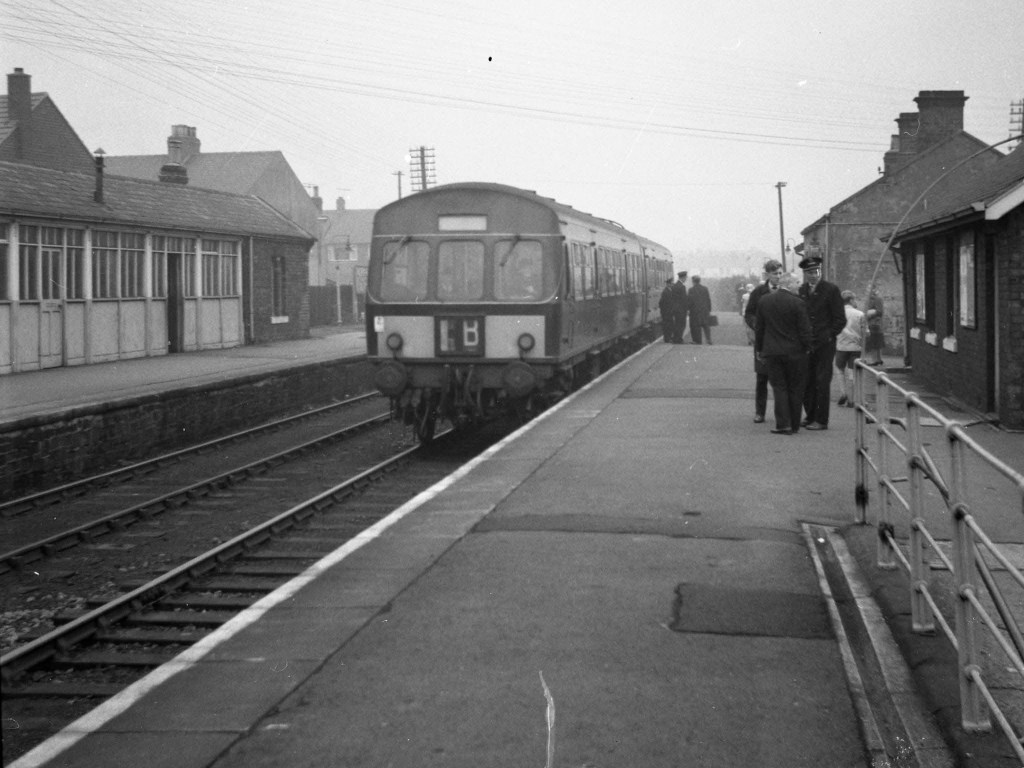
The Northumberland Line was once part of the Blyth and Tyne railway network, integral to the industrial heartland of the region. However, passenger services ceased in 1964 due to the sweeping Beeching cuts, which prioritized cost-saving over connectivity. For decades, residents of towns like Ashington and Bedlington, which were once mining hubs, were left reliant on buses and cars for transportation.

Last passenger train 1964

Calls to reopen the line grew over the years, driven by the decline of local industries and increasing traffic congestion. Recognizing the need for improved transport infrastructure, a coalition of local councils, regional transport bodies, and the UK government invested £298.5 million to make the project a reality.

Rebuilding the Connection
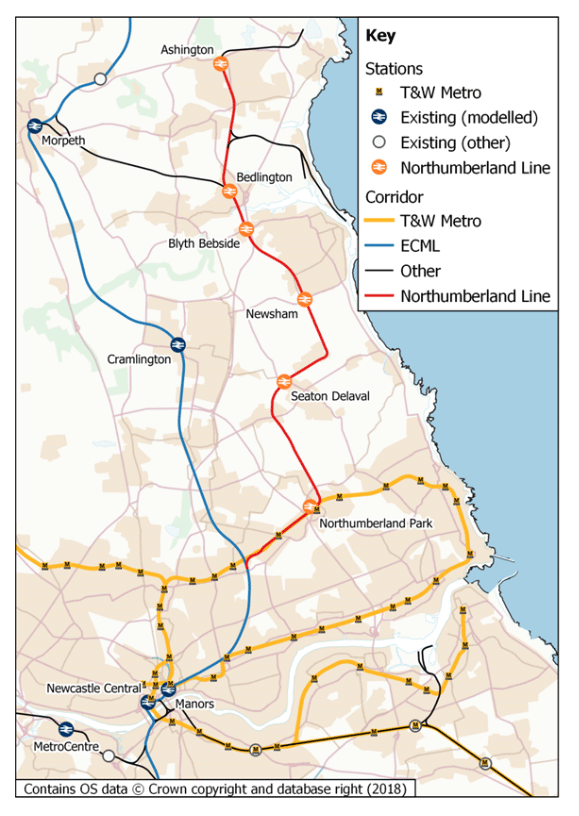
The reopened line stretches 12 miles, linking six newly constructed or refurbished stations, including Ashington, Bedlington, Blyth Bebside, and Seaton Delaval, with Newcastle Central Station. Modern amenities, such as accessible platforms, onboard Wi-Fi, and spaces for bicycles and wheelchairs, make it a 21st-century solution tailored to today’s commuters.

Trains, operated by Northern Rail, run every 30 minutes during weekdays and hourly on evenings and Sundays. Notably, travel is priced affordably, with fares from just £1 for under-21s and a maximum of £3 for peak journeys between Ashington and Newcastle.

Integrated into the Wider Network
The Northumberland Line is seamlessly integrated into the Tyne and Wear Metro via Newcastle Central Station, giving passengers direct access to destinations across Tyneside, Sunderland, and Newcastle International Airport. This connectivity makes it easier for commuters, students, and tourists to move between rural Northumberland and urban centers, reducing reliance on car travel and alleviating congestion on major roadways.

The historical Newcastle Central Station is a vital hub on the East Coast Main Line, linking Northumberland Line passengers to long-distance services to London, Edinburgh, and beyond. This integration with both regional and national networks transforms the reopened line into a bridge between local communities and broader economic opportunities.

A Catalyst for Regional Growth
The project’s goals extend beyond transport. By improving access to education, employment, and leisure, it aims to stimulate economic development in towns along the line. For example, easier commutes to Newcastle could attract new businesses to Ashington and Blyth, while better transport links are expected to boost tourism in the region. The line also supports the region’s climate goals by encouraging a shift from cars to public transport, reducing congestion and emissions.

A Model for the Future
The Northumberland Line reflects a growing recognition of the value of rail in reconnecting underserved communities. It is part of the UK government’s Restoring Your Railway initiative, which seeks to reverse decades of cuts and restore lines that once served as lifelines for rural and industrial areas.

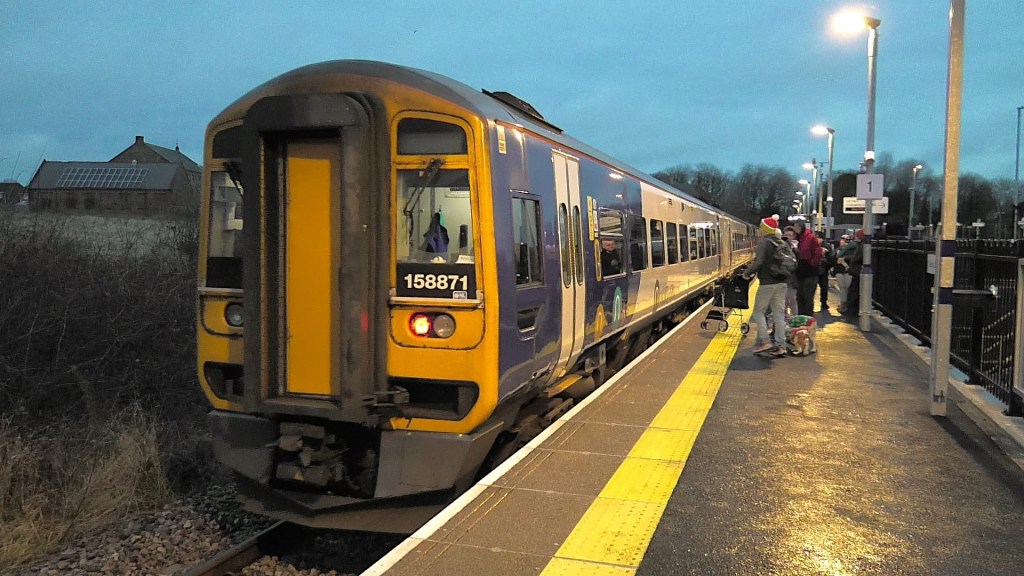
First train of the new era

As the first passenger train in over six decades pulled into Ashington Station on opening day, it symbolized more than just the return of a rail service. It marked the renewal of hope, opportunity, and a commitment to sustainable transport. The Northumberland Line is not just a revival of a forgotten route—it is a promise of what thoughtful investment in public infrastructure can achieve..