When Crown Corporations Forget Their Purpose

Two of Canada’s most visible Crown corporations, Canada Post and VIA Rail, seem to have lost their way. Both were created to knit together a vast and sparsely populated country, ensuring that every Canadian, no matter how remote, had access to essential services. Yet today, both have turned their gaze inward toward big-city markets, downgrading or abandoning the rural, northern, and remote communities they were meant to serve.

The problem is not simply poor management. It is a deeper contradiction in how we think about these federal institutions. Are they public services, funded and guaranteed by the government for the benefit of all? Or are they commercial enterprises expected to operate like businesses, focusing on profitability and efficiency?

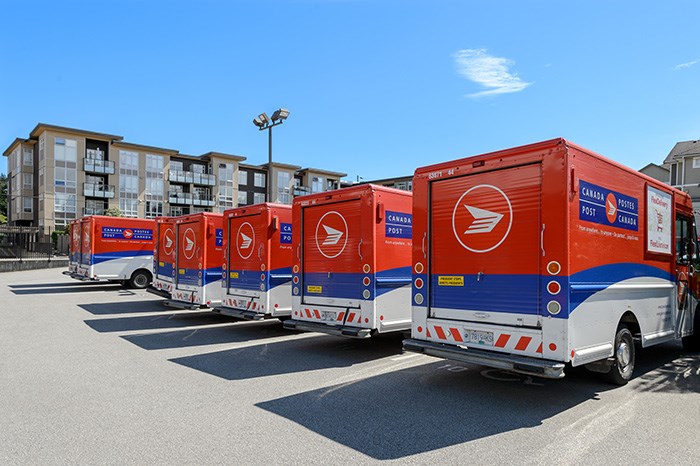
Canada Post was once the backbone of national communication. Its universal service obligation was understood as a cornerstone of Canadian citizenship: every town and hamlet deserved a post office, and every address would receive mail. But with letter volumes collapsing and courier giants competing for parcels, Canada Post has shifted its focus to the most profitable markets. Rural post offices are shuttered or reduced to part-time counters in retail stores, and delivery standards in remote regions are steadily eroded.

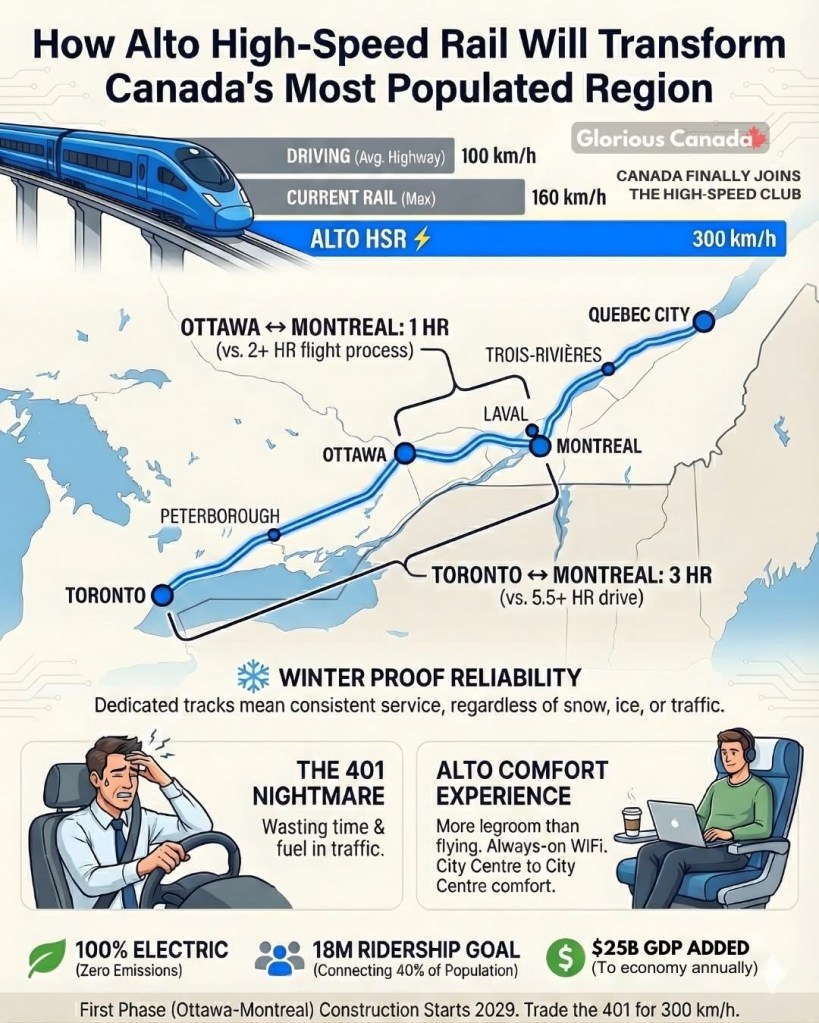
VIA Rail’s story follows the same pattern. Founded in the late 1970s to preserve passenger trains when private railways abandoned them, it was meant to provide Canadians with a reliable and accessible alternative to highways and airlines. Instead, successive governments have treated VIA as a subsidy-dependent business rather than a national service. The Québec–Windsor corridor receives ever more investment, while iconic transcontinental and regional services limp along on political life support. Communities once promised rail access now watch the trains roll past them, or disappear entirely.

This retreat from universal service runs against the spirit of equality that Canadians expect from their public institutions. The Charter of Rights may not explicitly guarantee access to mail or transportation, but the principle of equal citizenship surely demands more than a market-driven approach that privileges Toronto and Montréal while ignoring Thompson or Whitehorse.

What’s going wrong is simple: Crown corporations are being managed as if they were private companies, not public trusts. Efficiency metrics and financial self-sufficiency dominate decision-making. National obligations are left vague, unenforced, or quietly abandoned. Governments praise the rhetoric of service while starving these corporations of the dedicated funding that would allow them to fulfill it.

Canada is not a compact, densely settled country where commercial logic alone can sustain public goods. It is a nation stitched together across vast geography by institutions that recognize service as a right, not a privilege. If we want Canada Post and VIA Rail to serve all Canadians, we need to stop pretending they can behave like for-profit businesses and still fulfill their mandates.

That choice is ultimately political. Parliament must decide: either redefine these corporations as genuine public services with modern mandates and stable funding, or admit that rural and northern Canadians will always be left behind.

Until then, our Crown corporations will continue to forget their purpose, and with it, a piece of the Canadian promise.

The Return of Britain’s Railways: A Justified Journey Back to Public Hands

Few issues in the United Kingdom’s domestic infrastructure provoke as much consistent frustration, and cautious optimism, as the performance of the national railway system. After more than three decades of privatized operation, mounting failures in service quality, rising costs, and structural inefficiencies have prompted a significant policy shift. The renationalization of Britain’s train services marks the gradual undoing of a deeply ideological experiment that has fallen short of its promises.

This shift is not driven by nostalgia, but by necessity.

Background and Rationale for Renationalization
The privatization of British Rail in the mid-1990s was framed as a path to modernity. Proponents argued that market competition would drive efficiency, reduce government spending, and improve customer service. Instead, the result was a fragmented system comprised of multiple Train Operating Companies (TOCs), overseen by various regulatory bodies, while infrastructure was handed to a separate private firm, Railtrack—an entity whose eventual failure and replacement by Network Rail in 2002 was an early indicator of deeper systemic flaws.

Despite significant taxpayer subsidies, performance metrics across the privatized rail network began to deteriorate by the 2010s. Delays, overcrowding, high fares, and poor coordination became routine issues. Government spending on the sector did not decline; instead, public funds increasingly subsidized private profits. By 2020, annual state support exceeded £7 billion.

The COVID-19 pandemic laid bare the system’s fragility. As passenger numbers collapsed, the government assumed emergency control over all franchises, effectively nationalizing operations under temporary measures. This moment of crisis exposed the private sector’s dependence on public backing and underscored the need for structural reform.

Recent Developments and Implementation
Renationalization in Britain has proceeded in stages, marked by pragmatism rather than ideological confrontation. Several poorly performing franchises, such as Northern, Southeastern, and the East Coast Main Line, were brought under the control of the government’s Operator of Last Resort (OLR). This allowed continuity of service while avoiding legal entanglements with private firms.

A formal framework was introduced with the Passenger Railway Services (Public Ownership) Act 2024, passed under the Labour government. This legislation allows passenger services to be brought under public control as contracts with private operators expire. In May 2025, South Western Railway (SWR) became the first operator transitioned under this new legal mechanism. Other operators, including Greater Anglia and c2c, are expected to follow before the end of the year.

This incremental approach avoids costly buyouts and is designed to be financially and administratively sustainable. Most passenger services in England are projected to return to public ownership by 2027.

The Role of Great British Railways
A central element of the reform effort is the establishment of Great British Railways (GBR), a single public entity that will unify track and train operations, long-term planning, fare structures, and accountability. The GBR model replaces the franchising system with a concession-based framework, where the state retains fare revenue and strategic control while outsourcing operations under tightly managed contracts.

GBR is not intended to replicate the British Rail of the past. It reflects modern best practices, taking cues from integrated public systems in Germany, Japan, and other high-performing countries. The goal is to streamline operations, enable through-ticketing, and restore strategic coherence to rail governance.

Implementation, however, has encountered delays. Structural changes, legislative hurdles, and coordination challenges have slowed GBR’s rollout. Industry stakeholders continue to press for greater clarity and faster progress.

Challenges and Caveats
While the rationale for public control is widely supported, several challenges remain. Technical difficulties have marred the rollout of SWR’s new Arterio fleet, due to manufacturing delays and labour disputes. Industrial relations require careful management to avoid disruption and foster long-term cooperation.

Fares remain a sensitive issue. Although public ownership may improve value for money, there is as yet no guarantee of fare reductions. Without visible improvements in affordability and service reliability, public support, though currently strong, may erode.

Operational excellence will be critical. Renationalization removes profit motives but does not in itself guarantee efficiency, innovation, or customer satisfaction. Robust governance, sustained investment, and clear performance targets are essential for long-term success.

Public and Political Sentiment
Public opinion has consistently favoured renationalization. A 2024 Ipsos poll found that 54% of Britons support the return of rail services to public ownership. The policy aligns with broader desires for a reliable, affordable, and accountable public transport system, particularly in the context of climate commitments and regional economic development.

Politically, the approach adopted avoids the pitfalls of abrupt, combative state intervention. By allowing contracts to expire and absorbing operations through established legal mechanisms, the process has proceeded with minimal disruption.

A Measured Return to Public Responsibility
The renationalization of Britain’s railways represents a strategic recalibration of transport policy. After decades of dysfunction under fragmented private control, the reassertion of public oversight is both justified and overdue.

This is not a reversal for its own sake, nor a rejection of innovation or partnership. It is a reassertion of the principle that essential public infrastructure should serve the common good, not the balance sheets of corporate shareholders.

The coming years will determine whether this vision can be translated into a rail system that is reliable, integrated, and equitable. If managed well, the return to public ownership may yet become one of the most important and popular infrastructure reforms in modern British history.

Sources:
• “New dawn for rail as South Western services return to public hands,” GOV.UK, May 25, 2025. Link
• “Great British Railways and the public ownership programme,” GOV.UK, May 25, 2025. Link
• “Passenger Railway Services (Public Ownership) Act 2024,” GOV.UK, November 28, 2024. Link
• “Public Attitudes towards rail nationalisation and strike action,” Ipsos, May 2, 2024. Link
• “SWR to be first train UK operator to be renationalised under Labour plan,” Reuters, December 4, 2024. Link
• “Great British Railways Takes Major Step Forward: 2025,” Rail Industry Connect, May 29, 2025. Link

The Future of Museums, Part Two: Digitization, Repatriation, and the New Cultural Commons

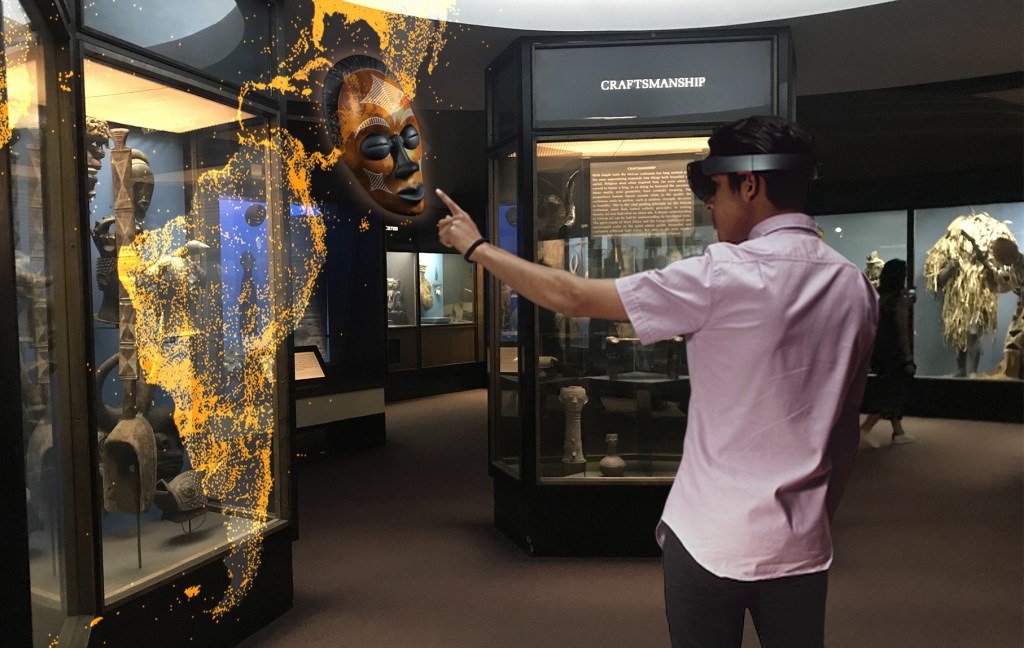
If the first step in the ethical evolution of museums is reckoning with the origins of their collections, the second must be reimagining how cultural treasures can be shared, studied, and celebrated without being hoarded. Fortunately, the 21st century offers tools our forebears could only dream of. Digital technology, particularly high-resolution 3D scanning, modeling, and immersive virtual platforms, is rewriting the rules of preservation and access. When used with cultural sensitivity and ethical intention, these tools allow us to honour ownership, facilitate repatriation, and still nourish a global commons of cultural knowledge.

Take 3D scanning: what was once an expensive novelty is now a powerful instrument of restitution and democratization. Museums can now create hyper-detailed digital replicas of artifacts, capturing every chisel mark, brushstroke, or weave of fabric. These models can be studied, shared online, integrated into augmented or virtual reality tools, or even 3D printed, all without requiring the physical artifact to remain on display in a distant capital city. This changes the equation. The original object can go home, back to the community or country from which it was taken, while its likeness continues to serve educational and scientific purposes worldwide.

There is a quiet but profound dignity in this digital compromise. It allows for the physical return of heritage to those to whom it belongs, not just legally, but spiritually and historically, while also supporting the broader mission of museums to educate and inspire. And in many cases, the digital version can do things the original never could. Scholars can examine its dimensions in microscopic detail. Teachers can beam it into classrooms. Visitors can manipulate it, interact with it, and even walk through the worlds from which it came.

Yet let’s not pretend digital tools are a panacea. A scan cannot replicate the scent of parchment, the weight of a carved idol, or the sacredness of a funerary mask imbued with ancestral memory. Creating these models demands money, time, and skilled technicians, resources that smaller institutions may lack. But for those who can muster them, the return is substantial: ethical legitimacy, global engagement, and future-proof access to cultural heritage.

Enter the virtual museum, a concept whose time has truly come. With internet access now ubiquitous in much of the world, online museum platforms are exploding. Whether it’s the British Museum’s virtual galleries or the immersive tours of the Louvre, these digital spaces offer a new kind of cultural experience: borderless, accessible, and unconstrained by bricks, mortar, or geopolitics. For those unable to travel, due to distance, disability, or cost, virtual museums are not just convenient; they are transformational.

These platforms do more than display scanned objects. They weave in video, sound, oral histories, and expert commentary. They let users “handle” objects virtually, walk through reconstructions of lost cities, or compare artworks from across time zones and traditions. And crucially, they offer a space where repatriated artifacts can remain visible to the world. A sculpture returned to Nigeria or a mask restored to a Pacific island doesn’t need to vanish from global consciousness. Its story, and its scanned image, can be co-curated with local voices, shared respectfully, and kept safe in the digital domain.

This co-curation is vital. A truly decolonized digital strategy doesn’t just upload images, it shares authority. It ensures that the descendants of artifact-makers help decide how those objects are described, displayed, and interpreted. Digital museums can become sites of collaboration, not appropriation; places where cultural equity is baked into the code.

And then there’s the sustainability argument. Virtual museums dramatically reduce the environmental costs of international exhibitions, staff travel, and artifact shipping. They offer resilience against disaster, a fire, flood, or war may destroy a gallery, but not its digital twin. In a world of increasing instability, that matters.

So where does this leave us? It leaves us at the edge of something hopeful. The combination of digital modeling and virtual museums does not replace the need for physical repatriation, it complements and strengthens it. It allows us to move beyond the binary of “ours” versus “theirs,” and into a more nuanced, shared stewardship of humanity’s treasures.

The museum of the future is not a fortress. It is a node in a network, a partner in a dialogue, and a bridge across histories. If museums can embrace this vision, ethical, inclusive, and digitally empowered, they can transform from institutions of possession to institutions of connection. And that, perhaps, is the most valuable exhibit of all.

The Future of Museums, Part One: Reckoning with the Past

Museums occupy a cherished yet complicated place in our cultural landscape. They are, at their best, sanctuaries of human achievement and memory; places where we marvel, learn, and connect. They are guardians of our collective stories, offering glimpses into lives, ideas, and aesthetics across time and geography. Yet increasingly, those guardianship roles are being scrutinized. In this post, the first of a two-part reflection, I want to explore how museums must reckon with their past in order to remain relevant, ethical, and inspirational institutions in a post-colonial world.

Modern museums serve multiple purposes. They are educators, preserving and interpreting both natural and human histories. Through exhibitions, talks, and online media, they help us understand not only what came before us, but also how those pasts continue to shape the present. They are also preservers of culture, entrusted with tangible and intangible heritage, from tools and textiles to oral traditions and sacred rites. Increasingly, they are also spaces of community engagement and social inclusion. The best of today’s museums are no longer content to speak about people; they strive to speak with them, creating room for conversations around identity, migration, environment, and justice. And let’s not forget their economic impact: museums draw visitors, support local artisans, and boost cultural tourism. Their value is not only educational, but civic and economic.

And yet, many of the very objects that give museums their gravitas are also at the heart of a profound ethical challenge. Too many were acquired in contexts of coercion, extraction, or outright theft during the height of imperial expansion. The British Museum’s possession of the Elgin Marbles or the Rosetta Stone, icons of antiquity mired in controversy, is not exceptional; it is emblematic. These artifacts, however artfully displayed, carry the invisible weight of colonial conquest. For many communities of origin, their removal constitutes not just a historical grievance, but an ongoing erasure of identity.

Western museums often point to their capacity to conserve, study, and exhibit these artifacts responsibly. They argue, sometimes sincerely, that global access to human history is a noble goal. But this defense rings hollow in a world where digital preservation is commonplace and where the moral imperative to return stolen cultural property grows louder each year. The question isn’t simply who can care for these artefacts, it’s who should.

Repatriation, the return of cultural property to its place of origin, has shifted from a theoretical debate to a global movement. France’s pledge to return looted artifacts to Benin, Germany’s restitution of the Benin Bronzes, and the Smithsonian’s newly developed ethical return policies are not fringe gestures. They are signals of a deeper cultural shift. Repatriation, after all, is not just about boxes being shipped back across oceans. It’s about truth-telling. It’s about nations acknowledging histories of violence and dispossession, and about institutions committing to restorative justice.

This new ethical landscape demands changes in practice. Provenance research, once an obscure archival task, must now be a public commitment. Shared custodianship models, where institutions collaborate with origin communities to co-curate, rotate, or jointly own artifacts, offer ways forward that don’t sacrifice conservation. And above all, museums must embrace the decolonization of their own internal cultures: rethinking who gets to tell the stories, who sits on the boards, and whose voices shape the narrative.

Museums can still be temples of learning and wonder. But for them to truly serve society in the 21st century, they must relinquish their roles as colonial trophy cases. The future lies in humility, transparency, and cooperation. In part two of this series, I’ll look at how new technologies and evolving curatorial philosophies are helping museums reinvent themselves for the world to come.

The Regressive Weight of Road and Bridge Tolls

Tolls on bridges and highways are often presented as pragmatic tools of modern infrastructure finance. They provide a clear user-pay model, in which those who drive the road or cross the bridge contribute directly to its upkeep. Yet beneath the tidy arithmetic lies a deeper inequity. Tolling is inherently regressive, disproportionately affecting those least able to shoulder the burden, while leaving the wealthy relatively untouched. In the Canadian context, with a geography that frequently demands travel over water or long stretches of road, tolls create a system where access is rationed by income rather than need.

The Confederation Bridge linking Prince Edward Island to the mainland is an instructive example. Until this summer, Islanders and visitors alike were charged more than $50 per vehicle for the right to leave the province. For many families and small businesses, this was not a casual expense but a recurring cost that shaped economic opportunity and even the rhythm of daily life. Following recent political attention, the toll has been reduced to $20, but the principle remains unchanged. Crossing a bridge that connects one part of the country to another still requires a fee that weighs more heavily on working families than on tourists or affluent professionals. It is not simply a question of price but of fairness in access to mobility. 

Ontario’s Highway 407 tells a similar story, albeit in a different register. Originally built as a public project, the highway was privatized under a 99-year lease in the late 1990s. Since then, tolls have risen sharply, far outpacing inflation, with profits flowing to private shareholders rather than to the public purse. The highway’s users include commuters with little choice but to pay for faster access into Toronto. For higher-income households, the fee is a convenience. For those on modest wages, it can become a recurring penalty that extracts a significant portion of their income simply to get to work on time. The toll structure reinforces a two-tier mobility system, in which efficiency is a privilege purchased rather than a public good ensured. 

Beyond inequity, tolling is also an inefficient means of raising revenue. Collection and enforcement systems consume a substantial share of funds, with studies showing that administrative costs can swallow up to a third of toll revenues. The very act of charging per crossing introduces distortions, encouraging some drivers to divert onto untolled secondary routes, which increases congestion and emissions elsewhere. The costs, both financial and social, ripple outward in ways rarely accounted for in the fiscal logic of tolling schemes. 

If the objective is to ensure that those who benefit from road systems pay a fair share, there are more equitable instruments available. A progressive licensing system that levies higher annual fees on luxury or high-value vehicles would generate steady, predictable revenue without punishing those who rely on basic mobility. Such a measure would align responsibility with capacity to pay, ensuring that the wealthiest drivers contribute more to infrastructure upkeep. At the same time, it would leave ordinary workers and families free from the arbitrary impositions of per-trip tolls.

Canada’s transportation network binds communities, sustains commerce, and enables social life. It should not be carved into segments where access is contingent on one’s bank account. Tolls, whether on bridges or highways, undermine the principle of equitable mobility. A system of progressive licensing fees offers a better path, one that respects both fairness and fiscal responsibility. The country requires infrastructure policies that do not merely balance budgets, but also balance justice.

Sources
• Global News. “Confederation Bridge tolls lowered.” July 28, 2025. https://globalnews.ca/news/11314912/confederation-bridge-tolls-lowered
• Government of Canada. “Canada’s new government cuts transportation costs in Atlantic Canada.” July 28, 2025. https://www.pm.gc.ca/en/news/news-releases/2025/07/28/canada-s-new-government-cuts-transportation-costs-in-atlantic-canada
• Wikipedia. “Ontario Highway 407.” Accessed August 2025. https://en.wikipedia.org/wiki/Ontario_Highway_407
• Institute for Research on Poverty (University of Wisconsin). “Equity Implications of Tolling.” Working Paper 1378-10. https://www.irp.wisc.edu/publications/dps/pdfs/dp137810.pdf

🔬 Yellowstone Supervolcano: What the Science Really Says in July 2025 🔬

Over the past few weeks, social media has once again erupted (pun intended) with dire warnings that Yellowstone’s “supervolcano” is about to blow. TikTok doomsayers cite minor earthquakes, thermal features, and even routine geyser activity as harbingers of catastrophe. But is there any truth to these claims?

The short answer is no. The United States Geological Survey (USGS), which monitors Yellowstone around the clock with some of the most sophisticated volcanic surveillance equipment in the world, has stated plainly: there is no sign of impending volcanic eruption.

Let’s break down the facts.

🌋 Current Volcano Status (July 2025)

According to the latest monthly update from the USGS Yellowstone Volcano Observatory (YVO), the volcano alert level remains at “NORMAL”, and the aviation color code is GREEN. These are the lowest possible threat levels.

  • In June 2025, a total of 60 small earthquakes were recorded in the Yellowstone region – the largest being magnitude 2.7. These are not unusual for the region, which experiences 1,000–3,000 small quakes annually due to tectonic and hydrothermal activity.
  • Ground deformation – which could suggest underground magma movement – has followed seasonal patterns, with about 3 cm of gradual subsidence (sinking) since October. This is a normal process that’s been ongoing for years and shows no signs of new magma intrusion.
  • No earthquake swarms or unusual uplift patterns have been detected.

Source: USGS Yellowstone Volcano Updates

🔥 What About the Geysers and Hydrothermal Eruptions?

Much of the alarm online stems from a webcam video of a minor hydrothermal “eruption” at Black Diamond Pool, which occurred at 6:25 a.m. MDT on June 12, 2025. While visually striking, this was not a volcanic eruption. Hydrothermal explosions are steam-driven events caused by water heating rapidly beneath the surface – common in geyser basins like Biscuit Basin, where this event occurred.

These events do not indicate magma movement or increase the likelihood of a super-eruption.

Even the famed Steamboat Geyser, the world’s tallest active geyser, has had a busy year. But again, this activity is part of Yellowstone’s normal hydrothermal behaviour, which is separate from the volcanic system.

🧠 What the Science Says About Risk

New research published in 2025 using advanced imaging techniques (seismic tomography and magnetotellurics) has provided a more detailed look at Yellowstone’s subsurface magma system. Key findings include:

  • Four distinct magma bodies exist under Yellowstone, but they are mostly solidified (less than 15% melt), meaning they are not capable of producing a super-eruption.
  • A magma cap – a pressurized layer around 3.8 km deep – acts like a pressure relief valve, venting volcanic gases and preventing pressure buildup.
  • The risk of a major eruption is extremely low. The USGS estimates the annual probability of a super-eruption at 0.00014% – or 1 in 700,000.

Sources:

📡 Constant Monitoring and Global Attention

Yellowstone is not some forgotten natural hazard. It is among the most heavily monitored volcanic systems on Earth, with:

  • Over 40 seismic stations
  • Ground deformation sensors (GPS and InSAR)
  • Real-time gas emission detectors
  • Remote thermal imaging and high-resolution webcams

Additionally, new sensors were installed in 2024 in Biscuit Basin and Slough Creek to monitor hydrothermal features more precisely. Any significant change would be detected within minutes and shared widely by USGS, NOAA, and international volcanic monitoring organizations.

✅ Final Word

The truth is less dramatic than a TikTok clip, but far more reassuring. Yellowstone is a living, breathing volcanic and hydrothermal system, and minor earthquakes, geyser bursts, and steam explosions are all part of its normal geological rhythm.

The scientific consensus remains solid: there is no indication of any imminent eruption, let alone a catastrophic one. So while the Yellowstone landscape may be thrilling, the science is calm and clear.

If you want to stay informed without falling down conspiracy rabbit holes, bookmark the USGS Yellowstone Volcano Observatory or follow their official Twitter/X.

Don’t let fear hijack facts.

Duddo Five Stones: Northumberland’s Sacred Circle in the Shadow of Giants

The Duddo Five Stones, nestled atop a gentle rise in north Northumberland, are a compelling testament to prehistoric endeavours in the British Isles. Erected during the Early Bronze Age, roughly 4,000 years ago, these stones comprise five extant monoliths, though archaeological surveys from the 1890s revealed empty sockets for two additional stones and confirmed an original complement of seven. Inhabitants of that period fashioned these curious markers from local soft sandstone, now distinguished by deep vertical grooves, so pronounced that the stones are sometimes spoken of as the “Singing Stones,” a nod to the haunting whistles that breeze through their fissures. 

Despite their modest size compared to the monumental rings of Wiltshire, the Duddo Stones rise to heights between 1.5 m and 2.3 m and form a circle approximately 10 m in diameter. The largest stone, over two metres tall, has been likened to “a clenched fist rising menacingly out of the rough turf,” while others resemble giant decaying teeth. Weathered both by time and legend, the stones bear cup-marks and grooves that spark speculation, were these carved by ritual, or simply products of centuries of erosion?

In the heart of the circle lies evidence of its most solemn function: a central pit, excavated in the late 19th century, that contained charcoal and cremated human bone, suggesting funerary or ritual use. A later investigation unearthed fragments of pottery, perhaps a cremation vessel, further hinting at ancient rites performed upon this exposed Northumbrian hill. Such findings align with the broader traditions of Bronze Age Britain, where stones were placed to commemorate the dead, mark sacred boundaries, and orient events within a celestial calendar.

Indeed, solar and lunar alignments are often proposed for stone circles. In Duddo’s case, the stones occupy an eminence offering sweeping views of the Cheviot Hills to the south and Lammermuir Hills to the north, and may well align with midwinter sunrises or solstitial events. This deliberate positioning underlines a shared cosmological purpose with contemporaneous sites such as Stonehenge and Avebury, where built environments reflect ancient understandings of the cosmos. 

Any comparison to Stonehenge or Avebury must acknowledge scale. Those iconic sites, part of a UNESCO World Heritage complex, were grand ceremonial landscapes, featuring massive sarsen lintels, henges, and extensive rituals spanning centuries. Yet Duddo’s significance should not be measured in tonnage alone. The world of early Bronze Age Northumberland had its own spiritual horizons. Stone placement here demonstrates ingenuity in local engineering, community organisation, and a relationship with the landscape that mirrored the aims of their southern counterparts.

Moreover, Duddo may be Northumberland’s best‑preserved stone circle, admired by archaeologists for its dramatic hill‑top setting and intact character. Accessibility is simple: a short permissive path from the B6354 guides visitors to this serene site, free to all, but weather and muddy fields. The site evokes reverence and reflection, a place where wind and sky merge timelessly with carved stone.

In a cultural landscape often dominated by southern giants, the Duddo Five Stones deserve equal attention. They speak of regional expressions of Bronze Age spirituality, mortuary practice, and astronomical concern. While lacking the architectural complexity of Stonehenge or the vast scale of Avebury, they nonetheless resonate with ancestral agency, standing quietly yet powerfully within a broader tapestry of prehistoric monumentality. To relegate Duddo to a mere footnote is to impoverish the understanding of Britain’s Bronze Age mosaic. It is no lesser these many millennia later, just more intimate, more quietly potent, and every bit as integral to prehistoric Britain’s story.

OC Transpo: A Two-Decade Decline in Rider-Centric Service

As a long-time Ottawa resident and observer of our city’s public utilities, I’ve witnessed firsthand the transformation of OC Transpo from a model of efficient public transit to a system riddled with challenges. Over the past two decades, a series of missteps, underinvestment, and a departure from rider-focused planning have led to a decline in service quality, reliability, and public trust.

From Transitway Triumph to LRT Troubles
In the 1980s, Ottawa’s Transitway was lauded as a pioneering bus rapid transit system, setting a benchmark for cities worldwide. Its dedicated bus lanes and efficient service made public transit a viable option for many residents. However, the shift towards the Light Rail Transit (LRT) system, particularly the Confederation Line, marked the beginning of a tumultuous era. 

Launched in 2019, the Confederation Line was plagued with issues from the outset. Frequent service disruptions due to door malfunctions, electrical failures, and even derailments became commonplace. These problems not only inconvenienced riders but also necessitated the reallocation of buses to cover LRT routes, further straining the bus network .

Service Cuts and Declining Reliability
In recent years, OC Transpo has implemented significant service reductions, often without adequate public consultation. For instance, in 2021, the agency planned service cuts without seeking rider input, leading to widespread criticism . By 2024, the city had cut $47 million from OC Transpo’s capital budget, removing 117 aging buses without replacements, resulting in a 3.5% reduction in bus service hours . 

These cuts have had tangible impacts on riders. Students, for example, have reported overcrowded trains, erratic service, and high fares, leading to dissatisfaction and calls for meaningful reforms . Community feedback has consistently highlighted issues with reliability and a lack of focus on the city core .   

Financial Strains and Leadership Challenges
The COVID-19 pandemic exacerbated OC Transpo’s challenges. A 38% drop in ridership since 2019 led to a $36 million revenue shortfall . Despite these financial strains, the agency increased fares in 2024, disproportionately affecting seniors and youth riders .  

Leadership changes have also marked this period. The recent departure of General Manager Renée Amilcar underscores the need for a strategic reevaluation of OC Transpo’s direction. Transit advocates have called for a “serious, honest” review of the system to address its myriad issues . 

A Call for a Rider-Centric Vision
To restore public trust and improve service quality, OC Transpo must adopt a rider-centric approach. This includes engaging with the community to understand diverse transit needs, investing in infrastructure to ensure reliability, and providing transparent communication about service changes. Equitable access must be prioritized, ensuring that transit services are affordable and accessible for all demographics.

The challenges facing OC Transpo are significant, but not insurmountable. By focusing on the needs of riders and committing to transparency and accountability, Ottawa can rebuild a public transportation system that serves its citizens effectively and efficiently.

The Family Tradition of Rhubarb and Ginger Jam

I first published a version of this post back in June 2011. Sadly, Grandpa is no longer with us, but we are still making this delicious condiment, while the rhubarb patch continues to give generously. 

As a Brit, I’ll admit my palate is rather different from that of many North American friends and family; think Marmite, fish and chips, black pudding, and Indian cuisine, to name a few essential food groups. Over time, some of these traditional flavours have been happily adopted by my Canadian household. The clearest example? A proper roast beef dinner with Yorkshire pudding.

But this time of year brings a particular delight for many Brits: rhubarb season.

It’s the first week of June, and we’re already onto our second, or is it third? rhubarb crumble of the year. The twenty or so crowns in our perennial vegetable and fruit garden just keep on giving. So, as tradition dictates, it’s time to make rhubarb and ginger jam.

Ever since moving into my first flat (that’s “apartment” for my North American readers), I’ve been making preserves of one sort or another. Given my love of Indian food, pickles and chutneys have always topped the list, but when fruit is abundant: strawberries, blackcurrants, rhubarb, out comes the jamming pan.

Yes, I do freeze plenty for later, but there’s something deeply satisfying about having your morning toast slathered in jam you made with your own hands. That simple pleasure, paired with a cup of coffee, is hard to beat.

My all-time favourite preserve book remains The Penguin Book of Jams, Pickles & Chutneys by David and Rose Mabey, first published in 1976. I’ve acquired many others over the years, but this was my first – and I return to it again and again.

One notable difference between UK and North American cookbooks is the way ingredients are measured. North American books use volume – cups, tablespoons, etc., while British texts rely on weight. When I first moved to California, this forced me to buy a set of measuring cups and introduced all sorts of anxiety about measuring chunky foods like beans or cut rhubarb by volume. I’ve since adapted, but my kitchen scales remain front and centre. I still find myself drifting back to the traditional recipes of my twenties.

The Mabeys’ rhubarb and ginger jam recipe is simple and elegant: just rhubarb, sugar, lemon juice, and a muslin bag of bruised root ginger. Over the years, though, my love of that spicy root has led me to make some adjustments. I now chop the fresh ginger directly into the jam and toss in a generous handful of crystallized ginger as well.

The process is straightforward. I layer the rhubarb and sugar in a large ceramic bowl, that once belonged to my grandmother, pour over the lemon juice, and let the mixture sit overnight. The next day, I transfer the resultant syrupy and fruit into my preserving pan, add the fresh and crystallized ginger, and bring it all to a rolling boil. The setting point usually arrives quickly, and the result is twelve 250 ml jars of thick, tart, spicy jam with a texture and flavour unlike anything else.

This family tradition of making and devouring rhubarb and ginger jam may only go back thirty-odd years, but it now spans three generations. Each spring, someone inevitably exclaims, “We have to keep a jar or two back for Grandpa’s visit!” as the breakfast jars begin to empty.

Looks like it’s time to plan a second batch.

I learned over the years to fill a number of 125 ml jars for guests as gifting 250 ml of this delicious manna from the heavens is just too generous, even for visiting family. I was also lucky enough to acquire a hardback copy of the Mabey book a few years ago, and it’s never far from my side.

The Northlander Returns: A New Era for Rail in Northern Ontario

The vast majority of my readers know how enthusiastic I am about the continued development of public transportation capacity, and especially trains for regional services.  

After more than a decade of absence, the Ontario Northlander train is poised to make its triumphant return, and for many in Northern Ontario, it couldn’t come soon enough. This isn’t just a story about a train line being revived. It’s about equity, connectivity, environmental sustainability, and economic renewal. As someone who has spent the better part of my career analyzing and advocating for robust public transit solutions, I see the Northlander’s revival as a long-overdue correction to a critical transportation misstep.

The Ontario Northlander was first launched in 1976, operated by Ontario Northland Railway (ONR), as a passenger rail service running between Toronto and Cochrane. For decades, the train was a vital artery, an essential link between rural northern communities and the political, economic, and cultural hub of Southern Ontario. Students rode it to university. Seniors depended on it for healthcare visits in the city. Tourists boarded it in search of pristine lakes and forests. And entire communities built their sense of connection around it.

Then, in 2012, the service was cancelled. The provincial government at the time pointed to financial unsustainability and declining ridership, replacing the train with bus service. But buses, while useful, were never an adequate substitute for the comfort, reliability, and year-round stability of rail. For the people of the North, many of whom already feel excluded from Queen’s Park’s decision-making, the cancellation was a bitter pill. And so, for over a decade, the memory of the Northlander lived on not as a nostalgic curiosity, but as a symbol of something lost and needed again.

Fast-forward to 2021, when the Ontario government formally announced that it would restore Northlander rail service. The new plan is far more ambitious than a simple restart of the old route. This time, the train will run between Toronto and Timmins, with a continuation to Cochrane, and it will serve up to 16 stops along the way. North Bay, Temiskaming Shores, Kirkland Lake; these are not just waypoints, but communities that have long been underserved by modern transportation infrastructure. The revival is no half-measure. It’s a $139.5 million commitment, involving track upgrades, station refurbishments, and the acquisition of three brand-new Siemens Venture trainsets. These aren’t your grandfather’s rail cars. They’ll feature accessible washrooms, Wi-Fi, wider seating, power outlets, and onboard storage for mobility aids, meeting the full range of needs for modern travellers.

One of the most exciting aspects of the Northlander’s return is the attention being paid to operational timing and scheduling. Service is expected to begin by the end of 2026, with trains running between four and seven days per week, depending on demand and seasonal needs. The journey from Toronto to Timmins will take about 10 to 11 hours, and both daytime and overnight departures are being considered to best accommodate passengers. This scheduling approach reflects a deeper understanding of how people in the North actually travel, whether they’re making medical trips, visiting family, or commuting for work. It’s not just about frequency; it’s about relevance and reliability.

There are several layers of benefit to this project, each more meaningful than the last. First and foremost, it’s about connectivity. For too long, Northern Ontario has been left behind in the transportation conversation, despite its immense contributions to the provincial economy through mining, forestry, and tourism. Reconnecting the North to the South by train helps bridge not only physical distances but economic and cultural divides as well. Trains don’t just move people, they move opportunity.

Economically, this revival is a catalyst. Local businesses will benefit from improved mobility for both workers and customers. Tourism operators can expect a boost as more visitors opt for the scenic, stress-free route north. And for municipalities along the route, the return of passenger rail service is a magnet for investment in everything from hospitality to infrastructure. The Northlander isn’t just arriving—it’s bringing momentum with it.

There’s also a compelling environmental case. In a province increasingly focused on climate resilience, rail offers a significantly greener alternative to individual car travel and regional flights. Each trainload of passengers represents dozens of vehicles off the road, translating into measurable reductions in greenhouse gas emissions. For Ontario to meet its long-term sustainability goals, projects like the Northlander aren’t just helpful, they’re necessary.

Perhaps most importantly, though, this train is about accessibility and inclusion. Whether you’re a senior with limited mobility, a student on a tight budget, or a resident of a remote community without a driver’s license, the Northlander offers something invaluable: freedom. The freedom to travel without dependence on a car. The freedom to access services and opportunities that would otherwise be out of reach. And the freedom to feel seen and served by the systems meant to support you.

The Northlander’s return is not a silver bullet, and challenges will remain. Ridership must be cultivated through thoughtful marketing and community outreach. Service quality must be maintained. And long-term funding must remain a political priority, no matter who holds office. But none of these challenges are insurmountable. What matters most is that the train is coming back, new, improved, and loaded with promise.

For too long, the Northlander was a missing piece of the provincial puzzle. Its return is not only an act of restoration but of renewal. It affirms that every corner of this province matters, and that no community should be cut off from the future by virtue of its geography. So, all aboard. The North is on track once again.

Sources
Ontario Northland: The Northlander
Ontario Government Announcement: Passenger Rail in the North
BayToday: All Aboard for the New Era of the Northlander
Wikipedia: Ontario Northlander
Northern Policy Institute: Passenger Rail and Northern Access