Brewing Success: How Supporting SMEs Can Fuel Ontario’s Economic Growth

In support of my recent posts on Canadian economic sustainability and growth, in the presence of a Trump America, here is a piece about an industry close to my heart. 

The story of craft brewing in Ontario is one of evolution, passion, and the persistent balancing act between government support and industry challenges. What began as a niche market for independent brewers has grown into a thriving sector that contributes significantly to the province’s economy. In 2023, Ontario’s craft brewing industry was estimated to be worth over $2 billion annually, with more than 270 craft breweries operating across the province. Despite already capturing approximately 10% of Ontario’s beer market, analysts suggest the industry has the potential to grow even further as consumers increasingly prioritize local, high-quality, and innovative products.

Ontario’s journey with craft beer began in the early 2000s when the government recognized the potential of small breweries to contribute to local economies and create jobs. The establishment of the Ontario Craft Brewers (OCB) association in 2003 marked a turning point. It provided a collective voice for independent brewers, allowing them to advocate for policies and resources that could help them compete with multinational corporations dominating the beer market. A few years later, the provincial government launched the Ontario Craft Brewers Opportunity Fund, a bold $8 million investment aimed at giving small breweries a much-needed leg up. This fund allowed many breweries to upgrade their equipment, improve packaging, and expand their marketing efforts. For many brewers just starting out, these investments were not only helpful; they were essential.
Beyond direct funding, tax incentives played an important role in shaping the industry’s early years. Breweries producing under a certain volume threshold benefitted from reduced excise duties, enabling them to reinvest savings into their operations. These measures helped level the playing field, allowing smaller breweries to compete in a market dominated by large-scale producers.

As the industry grew, so too did the government’s approach to supporting it. By the 2010s, Ontario’s craft beer market was booming, and policies shifted to focus on accessibility and expansion. One of the most significant changes came in 2015, when the province modernized beer retailing laws to allow sales in grocery stores. This move not only increased consumer access to craft beer, but also mandated that 20% of shelf space in participating stores be reserved for Ontario’s craft brewers. This was a game-changer for visibility, allowing small brewers to reach a broader audience, and compete more directly with large brands.

The government’s involvement didn’t stop there. In 2019, as part of the Canadian Agricultural Partnership (CAP), federal and provincial governments allocated over $1 million to help craft brewers adopt cutting-edge technologies, expand their production facilities, and tap into international markets. Rural breweries in particular benefitted from these programs, which often included support for tourism development, event spaces, and collaborations with local farmers. By emphasizing sustainable growth, these initiatives also supported environmental goals, such as reducing energy consumption and waste during brewing.

Despite these successes, government policies have not always aligned with the realities of small breweries. The “Buck-a-Beer” initiative introduced in 2018 is a prime example. While the program aimed to make beer more affordable for consumers by encouraging brewers to sell bottles for $1, it was widely criticized by craft brewers. For most, the economics simply didn’t work: producing high-quality beer at that price point would mean sacrificing either their profits or their standards. Instead, many brewers pushed for continued support in the form of grants and investments that prioritized long-term sustainability over short-term cost-cutting.

Today, Ontario’s craft beer industry is at an exciting crossroads. It has firmly established itself as a key economic driver, employing thousands of people and supporting local supply chains, from hop growers to independent retailers. With its current market size valued at over $2 billion, the sector has significant room to grow. Export programs are helping brewers break into international markets, while domestic consumers continue to seek out innovative, locally-produced beers. There’s also increasing interest in sustainable brewing practices, which could open up new opportunities for breweries willing to invest in eco-friendly technologies.

Still, challenges remain. Many small brewers are calling for expanded distribution infrastructure, particularly in rural areas, and more funding to support water conservation and waste management in brewing processes. Others advocate for greater access to affordable financing for equipment upgrades and facility expansions, arguing that these investments are critical to scaling up production to meet demand.

Ontario’s craft beer industry is a testament to what can be achieved when passion meets strategic support. From humble beginnings to a multi-billion dollar sector, it has proven its resilience and capacity for innovation. With thoughtful policies, ongoing investments, and a continued emphasis on quality and sustainability, the potential for future growth is as bright as the golden ales lining the shelves of Ontario’s breweries.

We Need to Update the Ontario Cider Regulations

I thoroughly enjoy a good glass of cider, and while I am open to exploring the unknown, I do prefer to imbibe drier beverages, yet I have learned that marketing labels do nothing to differentiate these alcoholic products. The word ‘Dry’ on a can of cider is currently meaningless in Ontario, and the amber liquid contained within can have any amount of sweetness. 

Ontario’s cider industry has seen significant growth in recent years, reflecting an increasing interest among consumers. By 2030, the Ontario Craft Cider Association (OCCA) aims to increase production from the current 6 million to 30 million liters annually, with a projected economic impact of $115 million and the creation of 1,720 jobs. As more Ontarians turn to craft cider, consumers are pushing for greater transparency on what’s inside their favorite cans.

By mandating the inclusion of grams per liter (g/l) sugar content on cider labels, consumers gain valuable insights into the flavor profiles of different ciders. This information allows individuals to select beverages that align with their taste preferences, whether they prefer a drier, more tart cider or one with a sweeter, fruitier profile. Wine sold in Ontario already includes sugar content in the g/l format so with this precedent, all we need is an update to the current provincial labeling regulations. 

Promoting product transparency, while supporting branding efforts, sugar content labeling contributes to the continued growth and diversification of Ontario’s vibrant cider industry.

Sources.
https://thegrower.org/news/ontario-craft-cider-industry-looks-bright-future

Oman – the Land of Mountains, Seas, and Mist

Oman, situated on the southeastern coast of the Arabian Peninsula, is a nation with a rich history, and distinctive culture shaped by its geography, strategic location, and traditions.

I was fortunate enough to spend many months working in Oman during the ‘80s at part of a multi-disciplinary scientific project run by the Royal Geographical Society.  I will probably write more about this interesting time in my life, and for now I want to talk about Oman. 

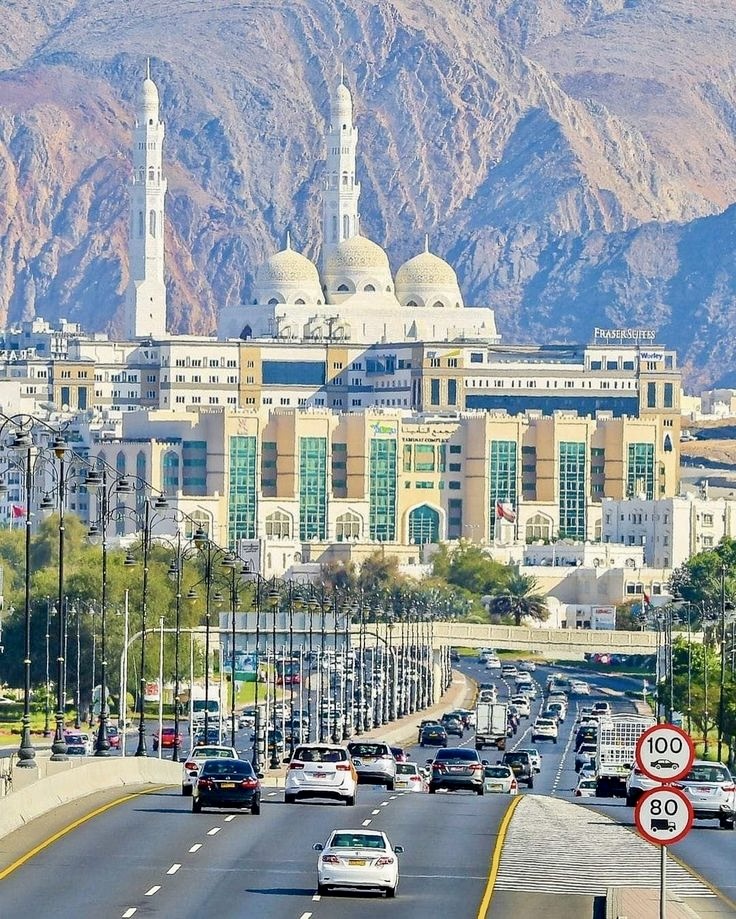
The first thing that strikes you about Oman is its profound serenity. Arriving in Muscat, the capital, you are greeted by a landscape unlike the glittering skyscrapers of its Gulf neighbors. Instead, Oman embraces you with its ochre-hued forts, low-rise whitewashed buildings, and mountains that seem to cradle the city. It’s a country that whispers its charm rather than shouts it, and as you explore, you realize Oman’s uniqueness lies in its unhurried blend of history, culture, and the gentle hospitality of its people.

Oman has been inhabited since prehistoric times, with archaeological evidence of early settlements dating back to the Stone Age. It was an important center for the production and trade of frankincense, a commodity highly prized in the ancient world. Oman’s strategic location at the mouth of the Persian Gulf established it as a significant maritime power. During the 17th and 18th centuries, the Omani Empire controlled parts of East Africa, including Zanzibar, as well as key trade routes in the Indian Ocean. Oman maintained a degree of autonomy throughout history, resisting colonization by European powers. Its ability to preserve sovereignty has contributed to its unique identity in the Arab world.

Omani architecture reflects a blend of Islamic, African, and indigenous styles. The country is home to many forts, castles, and watchtowers, such as the Bahla Fort, a UNESCO World Heritage Site. Omani food blends Arabian, African, and Indian influences, reflecting its role in ancient trade networks. Signature dishes include shuwa (slow-cooked lamb) and majboos (spiced rice with meat). Omani music and dance are deeply tied to its history and geography. Traditional genres like al-bar’ah and razha often feature drums and chanting. The art of silverwork, especially the crafting of khanjars (traditional curved daggers), is also emblematic of Omani culture.

Venturing into the interior, you find Nizwa, a city crowned by a fortress that once served as a stronghold of the Imamate. Standing atop the fort’s towers, you see the palm-fringed oases of date plantations, the lifeblood of this desert nation. Here, the centuries-old aflaj irrigation systems, recognized by UNESCO, snake through the earth, embodying the ingenuity of Oman’s ancestors. At the Friday livestock market in Nizwa, you see another side of Oman. Farmers, clad in traditional attire, auction goats and cattle with a practiced rhythm that has remained unchanged for generations. It’s a scene vibrant with life, blending practicality with the rituals of community.  

Omanis are known for their hospitality and religious tolerance. While the majority practice Ibadism, an Islamic sect known for its moderation, Oman has significant Sunni and Shia populations, as well as expatriate communities from South Asia and East Africa.

The country’s landscapes mirror its cultural diversity. In Dhofar, the southern province, the monsoon season transforms the arid desert into a lush, green paradise—a phenomenon locals call khareef. This region, home to the fabled Land of Frankincense, feels like a world apart, with mist-shrouded hills and a coastline where waves crash dramatically against cliffs.

Oman is unique in the Arab world for its diplomatic neutrality, and its dedication to preserving its identity amidst modernity. Sultan Qaboos, who ruled Oman for half a century, transformed the nation with thoughtful modernization, emphasizing education and infrastructure while retaining cultural authenticity.

As I reflect on my time in Oman, I am reminded not only of its serene landscapes and warm hospitality, but also of the enduring spirit of a country that remains steadfast in its identity, offering an experience unlike any other in the Arab world. Oman is not merely a place—it is a living testament to the harmony between the past and the present.

My Love for Indian Sub-Continent Cuisine

Last week, I discovered a new curry house in the Ottawa suburbs where the food is extraordinary with its unique blend of spices, and its offerings of Indo-Chinese cuisine. My experience at Rang De Indian on Terry Fox Dr reminded me so much of another curry-based phenomenon from my past.

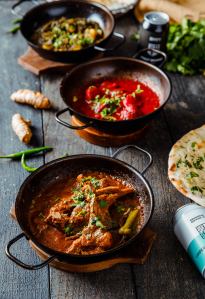
Balti curries, a beloved British dish, trace their origins to Birmingham in the 1970s. Though the word balti comes from the Urdu word for “bucket” or “pot,” referring to the round, flat-bottomed steel dish in which the curry is traditionally cooked and served, it wasn’t directly imported from the Indian subcontinent. Instead, balti was born out of culinary innovation by Pakistani and Bangladeshi immigrants who combined their traditional cooking methods with British ingredients and tastes.

As an undergrad Earth Sciences student in Birmingham during the 1980s, going for “a balti” on a Saturday night after few beers might just have been the highlight of the month. The hallmark of a balti curry is its quick cooking time over high heat, often with marinated meats, vegetables, and a spice mix of cumin, coriander, turmeric, and ginger. Everything is prepared in the same dish, intensifying the flavors. What sets it apart even more is the way it’s eaten; served with naan rather than rice, making the experience more communal and tactile, as diners scoop up the rich sauce directly from the cooking pot with the bread.

During my time at Aston, Birmingham’s Balti Triangle was the epicenter of this culinary explosion. Famous restaurants like Adil’s, often credited as the first Balti house, Shababs, and Imran’s became go-to spots for anyone seeking this aromatic, flavorful dish. These restaurants were pioneers, turning balti into a British institution. The unpretentious, communal style of eating and the vibrant, spice-laden dishes quickly captured the hearts of locals and students alike.

While balti curries have spread far beyond the West Midlands, I have fond memories of a uniquely British take on curry, which continues to thrive in UK food culture. With this latest discovery, I now have yet another opportunity to explore the sub-continent cuisine, right here in Ottawa.