Mark Carney, One Year In: From Appointment to Authority

When I wrote Please, Not Another Old White Male Academic just over a year ago, my concern was not personal. It was structural. Canada has a long and slightly embarrassing habit of confusing résumé gravity with political imagination. We import seriousness, assume competence, and hope charisma follows later.

Mark Carney, at that moment, looked like the distilled essence of that habit.

Former Governor of the Bank of Canada. Former Governor of the Bank of England. A man fluent in balance sheets, risk curves, and global capital flows. Almost entirely untested in the messy, adversarial, human business of electoral politics.

And yet, what followed matters.
Carney did not simply arrive in the Prime Minister’s Office as a caretaker technocrat. He won the Liberal leadership race, became Prime Minister as leader of the governing party, and then did the one thing that ultimately separates legitimacy from convenience in a parliamentary democracy.

He went to the country.

And he won.

That sequence, leadership first and electoral endorsement second, has shaped everything that followed.

From Leadership to Mandate
Leadership races create prime ministers. Elections create authority.

Carney’s leadership victory gave him the keys. The federal election that followed gave him something far more important: permission. Permission to act, to break with inherited orthodoxies, and to absorb political damage without immediately losing his footing.

This matters because much of what Carney has done in his first year would have been politically untenable without a fresh mandate.

Ending the consumer carbon pricing regime, for example, was not a technocratic adjustment. It was a cultural intervention in a debate that had become symbolic rather than functional. That decision would have been framed as betrayal had it come from an unelected interim leader. Coming from a Prime Minister who had just won an election, it landed differently.

Not quietly. Not universally. But legitimately.

The First Act: Clearing the Political Air
Within weeks of taking office following the election, Carney’s government dismantled the consumer-facing carbon tax. He did not do so by denying climate change or disavowing past commitments. He did it by acknowledging an uncomfortable truth: the policy had stopped working politically, and therefore had stopped working at all.

Carbon pricing had become a proxy war for identity, region, and class. Carney chose to remove it from the centre of the national argument, not because it was elegant, but because it was paralysing.

Shortly thereafter came the One Canadian Economy Act, a legislative attempt to dismantle internal trade barriers and accelerate nationally significant infrastructure by streamlining regulatory approvals. Supporters called it overdue modernization. Critics warned of environmental dilution and federal overreach.

Both readings were accurate.

What distinguished this moment was not the policy itself, but the confidence behind it. Carney was governing like a man who believed the election had granted him room to manoeuvre.

Trade Policy and the Post-Deference Canada
The same pattern appeared in foreign and trade policy.

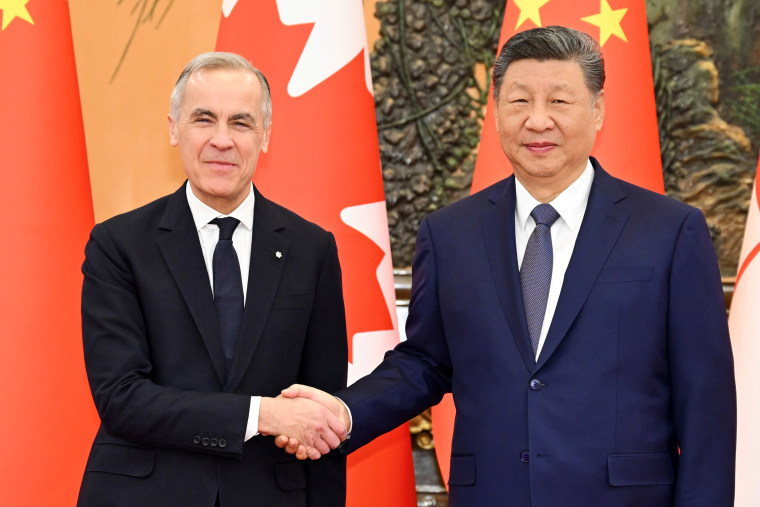
The tariff reset with China, including reduced duties on electric vehicles and reciprocal relief for Canadian agricultural exports, signaled a meaningful shift. Canada under Carney is less deferential, less reactive, and more openly strategic.

This was not an abandonment of allies. It was an acknowledgment of vulnerability.

Carney understands that Canada’s economic exposure to U.S. political volatility is no longer theoretical. Trade diversification, even when uncomfortable, has become a national security issue. That logic is straight out of central banking, but it now animates Canadian diplomacy.

Again, this is where the election mattered. A Prime Minister who had just won a national contest could afford to irritate orthodoxies that an unelected leader could not.

Climate Policy Without Rituals
Perhaps the most jarring shift for longtime observers has been Carney’s approach to climate.

This is a man who helped embed climate risk into global financial systems. His retreat from consumer-facing climate rituals has therefore confused many who expected moral consistency rather than strategic recalibration.

But Carney is not governing as an activist. He is governing as a systems thinker.

Industrial emissions, supply chains, energy infrastructure, and capital allocation matter more than behavioural nudges. He appears willing to trade rhetorical clarity for structural leverage, even at the cost of alienating parts of the environmental movement.

His cautious thaw with Alberta, including openness to regulatory reform and transitional infrastructure, reflects this same calculus. Climate transition, in Carney’s view, cannot be imposed against the grain of the federation. It must be engineered through it.

That is not inspiring. It may be effective.

Domestic Governance: Quiet by Design
Domestically, Carney’s first year has been notably untheatrical.

There have been targeted tax changes, a more disciplined capital budgeting framework, industrial protections in politically sensitive sectors, and modest expansions of labour-linked social supports. None of this screams transformation.

That restraint is intentional.

Carney governs like a man who believes volatility is the enemy. He does not seek to dominate the news cycle. He seeks to stabilize the operating environment. For supporters craving vision and opponents hunting scandal, this has been unsatisfying.

For a country exhausted by performative politics, it may be precisely the point.

Switzerland, the G7, and a Doctrine Emerges
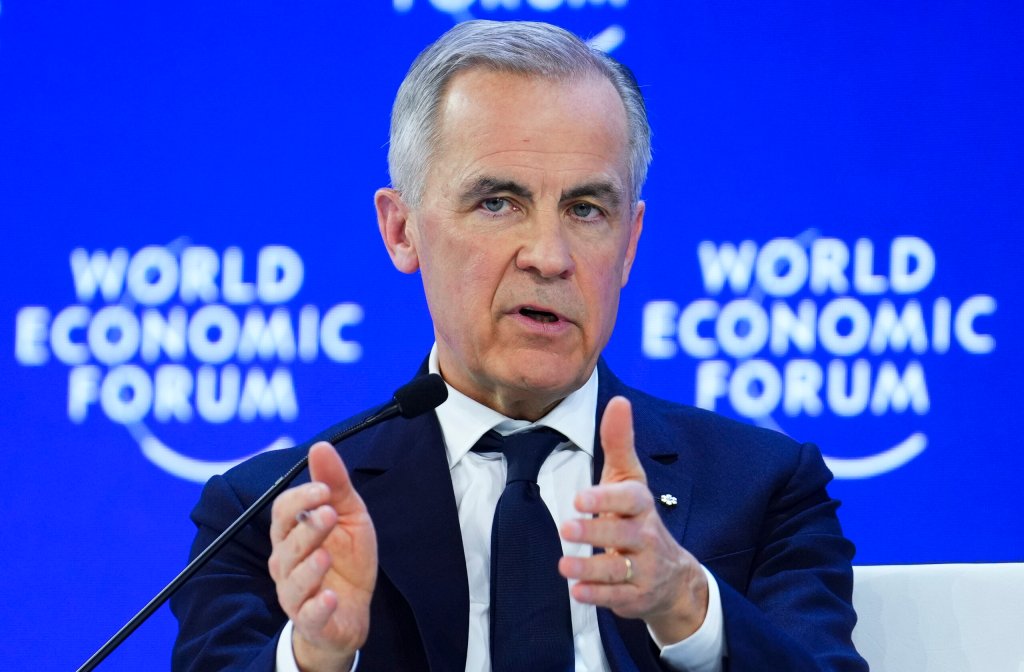
Carney’s remarks in Switzerland this week and Canada’s hosting of the G7 crystallized what has been quietly forming all year.

Canada now has a governing doctrine.

It assumes a fragmented world. It rejects nostalgia for a rules-based order that no longer functions as advertised. It prioritizes resilience, diversification, and coordination among middle powers.

This is not moral leadership. It is strategic adulthood.

And again, it is enabled by the fact that Carney is not merely a party leader elevated by caucus arithmetic. He is a Prime Minister endorsed by voters, however imperfectly and however provisionally.

What I Got Wrong, and What Still Worries Me
I was wrong to assume Mark Carney would be inert.

But I remain uncertain that technocratic competence alone can sustain democratic consent. Systems thinkers often underestimate the emotional dimensions of legitimacy. Elections grant authority once. Narratives sustain it over time.

Carney has the former. He is still building the latter.

A year in, it is clear that he is not another placeholder academic passing through politics. He is attempting something more difficult and more dangerous: governing Canada as it actually exists, not as it nostalgically imagines itself to be.

Whether that earns him longevity will depend less on markets or multilateral forums, and more on whether Canadians come to see themselves reflected in his project.

Competence opened the door.
Winning the leadership gave him power.
Winning the election gave him permission.

What he does with that permission is the real story now.
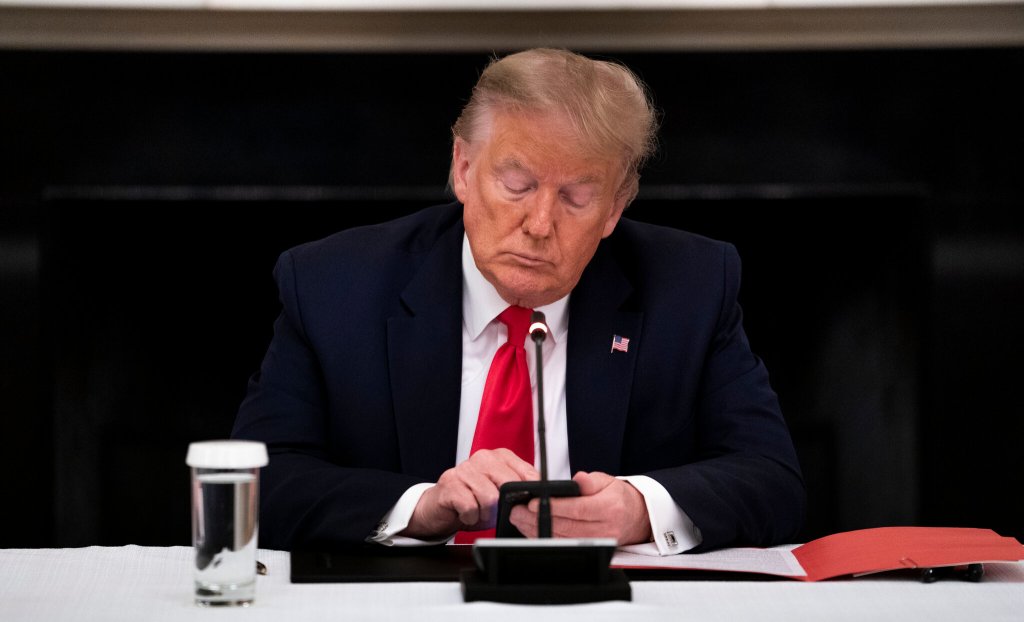
The Text Message That Wasn’t a Joke

There are moments in politics when the medium matters as much as the message. This was one of them.

A sitting U.S. president, responding not through a press conference or diplomatic channel but via text message, reportedly informed the Prime Minister of Norway that because “his country” had not awarded him a Nobel Peace Prize, he no longer felt bound to think purely in terms of peace. Peace would remain “predominant,” he said, but other considerations were now on the table. Among them, the assertion that the world could not be secure without complete and total U.S. control of Greenland.

This was not satire. It was not a leak from a fringe source. It was confirmed by Norway’s prime minister himself.

There are several layers of gravity here, and none of them are comforting.

First, the Nobel Peace Prize is not awarded by the Norwegian government. This is not an obscure constitutional detail. It is basic diplomatic knowledge. The fact that this distinction was either ignored or weaponized tells us something important about how grievance is being framed as justification.

Second, the framing is transactional. Peace is no longer presented as a principle but as a conditional behavior. Reward me, or I will revise my obligations. That is not how stable international order works. It is, however, how protection rackets work.

Third, Greenland. Again.

The fixation is not new, but the escalation is. To move from “strategic interest” to “complete and total control” is to abandon the language of alliances and adopt the language of possession. It implicitly reframes sovereignty as negotiable under pressure, and security as something that flows from dominance rather than cooperation.

And finally, the medium. A text message.

In diplomacy, texts are casual, deniable, and easily leaked. They are the opposite of deliberate statecraft. When world-shaping claims are made this way, it suggests either a profound disregard for process or a calculated attempt to bypass it.

Neither interpretation is reassuring.

What matters most is not whether this message was intended to shock. What matters is that it normalizes the idea that peace is optional, sovereignty is conditional, and grievance can be elevated to doctrine.

Senior statesmen are meant to cool systems, not destabilize them. When texts like this become part of the public record, they do not just strain alliances. They recalibrate expectations about how power speaks.

And once expectations shift, history tends to follow.

Sources:

Official confirmation of receipt and diplomatic context
• Government statement from Norway’s prime minister confirming he received the message and its context (reply to Norway and Finland, tariff/de-escalation request).
Major international reporting on the message’s contents

• PBS NewsHour/Norwegian message reporting including the Nobel Peace Prize and Greenland quotes as first reported by PBS and confirmed by Støre.
• Reports linking Trump’s message to the Nobel Peace Prize snub and Greenland discussion from CBS News.
• The Guardian coverage describing Trump’s linkage between not winning the Nobel Prize and his policy stance toward Greenland.
• Financial Times summary of the same developments (Trump note on Nobel and Greenland).
• AP News reporting on European officials confirming Trump tied his stance on Greenland to the Nobel Peace Prize snub and escalating tensions with NATO allies.
Additional corroboration from independent news outlets

• ABC News detailed summary including parts of the text and Norway’s response that the Nobel is awarded by an independent committee.
• Jagonews24 summary confirming exact phrasing attributed to Trump’s text and the diplomatic context.  

Canada’s Strategic Realignment in a Fragmenting Trade Order

The announcement of a preliminary trade agreement between Canada and the People’s Republic of China marks a consequential inflection point in the global economic architecture. After years of diplomatic estrangement rooted in the 2018 detention of Huawei’s chief financial officer and attendant reprisals, Ottawa and Beijing have agreed to reduce bilateral trade barriers through a calibrated package of tariff concessions. Canada will permit up to 49,000 Chinese-made electric vehicles to enter its market annually at a reduced tariff of 6.1 percent, a return to pre-friction levels from the 2020s. In exchange, China will sharply cut its punitive tariffs on Canadian canola seed from combined rates near 85 percent down to about 15 percent, while lifting discriminatory levies on key exports such as canola meal, lobsters, crabs, and peas. These changes are expected to unlock roughly $3 billion in new Canadian export orders and signal a thaw in a protracted trade dispute.  

This agreement emerges against a backdrop of intensifying US-China economic competition and a United States increasingly inclined toward protectionist measures. The United States maintains significant tariffs on Chinese electric vehicles and other strategically sensitive sectors, rooted in concerns about industrial policy, technological transfer, and national security. Canada’s decision to diverge from a more restrictive approach reflects both structural economic imperatives and evolving geopolitical realities. With roughly three-quarters of Canadian exports traditionally destined for the United States and less than four percent for China, Ottawa’s longstanding dependence on the US market has been a defining feature of its trade strategy. The latest negotiation illustrates a deliberate pursuit of diversification in the face of unpredictable US policy shifts.  

At the heart of this emerging alignment is a sober recognition of China’s dominant position in the global electric-vehicle and clean-technology ecosystem. China accounts for a majority share of global EV production, lithium-ion battery cell manufacturing, and solar panel capacity, a lead that Western policymakers have struggled to counteract through subsidies or industrial policy alone. By integrating Chinese EVs into the Canadian market through a regulated tariff-quota system, Ottawa positions itself to benefit from more competitive prices and accelerated adoption of low-emission vehicles, even as domestic industry voices warn of competitive displacement.  

The divergence between Ottawa and Washington on trade policy toward China carries deeper strategic significance. Historically, Canada has aligned closely with US economic and security policy, particularly within the framework of the United States–Mexico–Canada Agreement (USMCA). Canada’s recalibration suggests a growing willingness among middle powers to pursue “interest-based” engagement with Beijing that does not hew strictly to US strategic preferences. This trend is symptomatic of a broader fracturing in the global trade order, in which rising geopolitical competition has weakened the coherence of multilateral frameworks once anchored by US leadership. According to recent geopolitical scholarship, trade flows and global value chains increasingly reflect shifting alignments, with countries navigating between competing spheres of influence amid overlapping crises and supply chain stresses.  

For the United States, this development presents a diplomatic quandary. A unified North American stance on trade with China amplified US leverage in negotiations with Beijing. Canada’s independent course potentially dilutes that leverage and underscores the limits of expectation that allied economies will subordinate their economic interests to US strategic imperatives. Washington’s initial reaction has been measured but critical, framing Canada’s move as “problematic” even as it acknowledges Ottawa’s sovereign right to pursue its own agreements. Such rhetoric highlights the tension between aligning with US China-policy goals and defending national economic interests in a volatile global environment.  

At a structural level, the Canada–China deal exemplifies a broader reconfiguration of global trade relationships in an era of geopolitical competition. The traditional model of a US-centric trade order is giving way to a more multipolar economic landscape in which regional power centers and bilateral arrangements exert greater influence. Emerging trade partnerships, whether in clean technology, agriculture, or energy cooperation, reflect pragmatic calculations by states seeking stability, market access, and technological advantage. The interplay between geopolitical alignment and economic policy suggests that future trade patterns will be shaped less by universal norms and more by strategic hedging, selective engagement, and competitive statecraft.

In this context, the Canada–China agreement serves as both a practical economic arrangement and a geopolitical signal. It indicates an era in which middle powers aspire to greater autonomy in foreign economic policy, navigating between competing great powers and recalibrating long-standing alliances to safeguard national interests within a fragmented system of global trade.

Containment Without War: Ending Alliance Impunity in the Twenty First Century – Reshaping the West (Part 2) 

If Part One exposes the fiction of automatic alliance protection, Part Two must confront a harder truth. The absence of a military response does not require submission. This is not 1938, and restraint need not mean appeasement.

A United States move against Greenland under a Trump administration would demand a response designed not to soothe Washington, but to constrain it. The tools exist. What has been lacking is the willingness to use them against an ally that behaves as though alliance membership confers impunity.

The first step would be political isolation, executed collectively and without ambiguity.

NATO members, alongside key non NATO partners, would need to suspend routine diplomatic engagement with the US administration itself. Not the American state. Not American civil society. The administration. This distinction matters. Ambassadors would be recalled for consultations. High level bilateral visits would cease. Joint communiqués would be frozen. Washington would find itself formally present in institutions, but substantively sidelined.

This is not symbolic. Modern power depends on access, legitimacy, and agenda setting. Denying those channels turns raw power into blunt force, costly and inefficient.

The second step would be economic containment, targeted and coordinated.

The mid twentieth century model of blanket sanctions is outdated. Today’s leverage lies in regulatory power, market access, and standards. European states, Canada, and aligned partners would move to restrict US firms closely tied to the administration’s political and financial ecosystem. Defense procurement would be restructured. Technology partnerships would be paused. Financial scrutiny would intensify under existing anti corruption and transparency frameworks.

None of this would require new treaties. It would require resolve.

The message would be clear. Aggression inside the alliance triggers costs that cannot be offset by military dominance alone.

Third, alliance structures themselves would need to adapt in real time.

NATO decision making, already consensus based, would be deliberately narrowed. US participation in strategic planning, intelligence fusion, and Arctic coordination would be curtailed on the grounds of conflict of interest. Parallel European led and transatlantic minus one mechanisms would emerge rapidly, not as an ideological project, but as operational necessity.

This would mark a shift from alliance dependence to alliance resilience.

The fourth pillar would be legal and normative escalation.

Denmark, backed by partners, would pursue coordinated legal action across international forums. Not in the expectation that courts alone would reverse an annexation, but to delegitimize it relentlessly. Every ruling, every advisory opinion, every formal objection would build a cumulative case. The objective would not be immediate reversal, but long term unsustainability.

Occupation without recognition is expensive. Annexation without legitimacy corrodes from within.

Finally, and most critically, allies would need to speak directly to the American public over the head of the administration.

This is not interference. It is alliance preservation. The distinction between a government and a people becomes essential when one diverges sharply from shared norms. Clear, consistent messaging would emphasize that cooperation remains available the moment aggression ceases. The door would not be closed. It would be firmly guarded.

The aim of this strategy is not punishment for its own sake. It is containment without war.

The twentieth century taught the cost of appeasing expansionist behavior. The twenty first century demands something more precise. Not tanks crossing borders, but access withdrawn. Not ultimatums, but coordinated exclusion. Not moral outrage alone, but structural consequences.

A United States that chooses coercion over cooperation cannot be met with nostalgia for past alliances. It must be met with a clear boundary. Power inside a system does not grant license to dismantle it.

The survival of NATO, and of the broader rules based order it claims to defend, would depend on allies finally acting as though that principle applies to everyone. Including the strongest member of the room.

Article Five, Greenland, and the Fiction of Absolute Alliances – Reshaping the West (Part 1) 

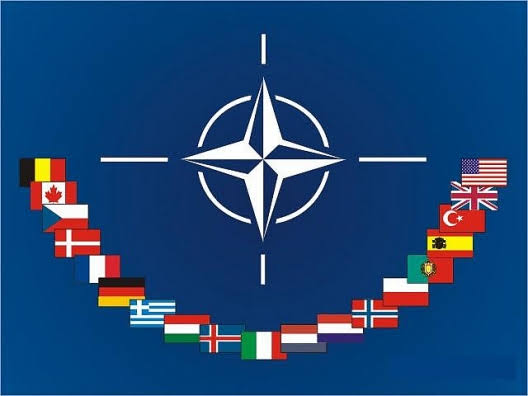
NATO’s Article Five is often spoken of as if it were a law of nature rather than a political agreement. An attack on one is an attack on all. The phrase is repeated so often that it begins to sound automatic, inevitable, even mechanical. In practice, it is none of those things.

The hypothetical invasion or annexation of Greenland by the United States exposes the limits of Article Five with unusual clarity.

Greenland is an autonomous territory within the Kingdom of Denmark. Denmark is a full NATO member, and Greenland falls within NATO’s geographic scope. If a non NATO power were to land forces there, the alliance’s response would be swift and largely predictable. Consultations would be immediate. Article Five would almost certainly be invoked. Military planning would follow.

The situation changes fundamentally when the attacker is not outside the alliance, but at its center.

Article Five was never designed to restrain the most powerful member of NATO. It assumes a clear external adversary and a shared understanding of who constitutes a threat. There is no provision in the treaty that explains how to respond when the guarantor of collective defense becomes the source of aggression. NATO is a collective defense alliance, not a system of internal enforcement.

From a legal standpoint, Denmark’s options within NATO would be limited. Article Four consultations would be triggered at once. Emergency meetings of the North Atlantic Council would follow. Strong political statements would likely be issued. What would not follow is a clear, binding obligation for NATO members to take military action against the United States.

Politically, the outcome is even more constrained.

No NATO member would realistically initiate military action against the United States over Greenland. Major European powers would issue forceful condemnations, pursue emergency diplomacy, and press the matter through the United Nations and other multilateral forums. Canada would find itself in a deeply uncomfortable position, alarmed by the Arctic precedent but unwilling to escalate militarily against its closest ally. Smaller NATO members would be privately alarmed, yet publicly cautious, acutely aware that their security against Russia depends on the credibility of the American guarantee.

This is the reality that alliance theory often avoids stating directly. NATO operates by consensus within a structure of profoundly unequal power. The alliance’s credibility rests not only on legal commitments, but on the assumption that its most powerful member will act as a stabilizing force rather than a disruptive one.

An American annexation of Greenland would not trigger a unified military response under Article Five. It would instead produce a severe political crisis. NATO decision making would likely stall. Trust within the alliance would erode rapidly. European efforts toward strategic autonomy would accelerate, not as an abstract ambition but as a practical necessity.

The greatest damage would be neither territorial nor military. It would be institutional. Article Five would be revealed not as a universal shield, but as a conditional promise shaped by power, politics, and restraint. For NATO, the lesson would be stark. Collective defense works only as long as the strongest actor chooses to defend the system itself.

Arctic Gateways: Why Greenland Matters More Than Maps Suggest

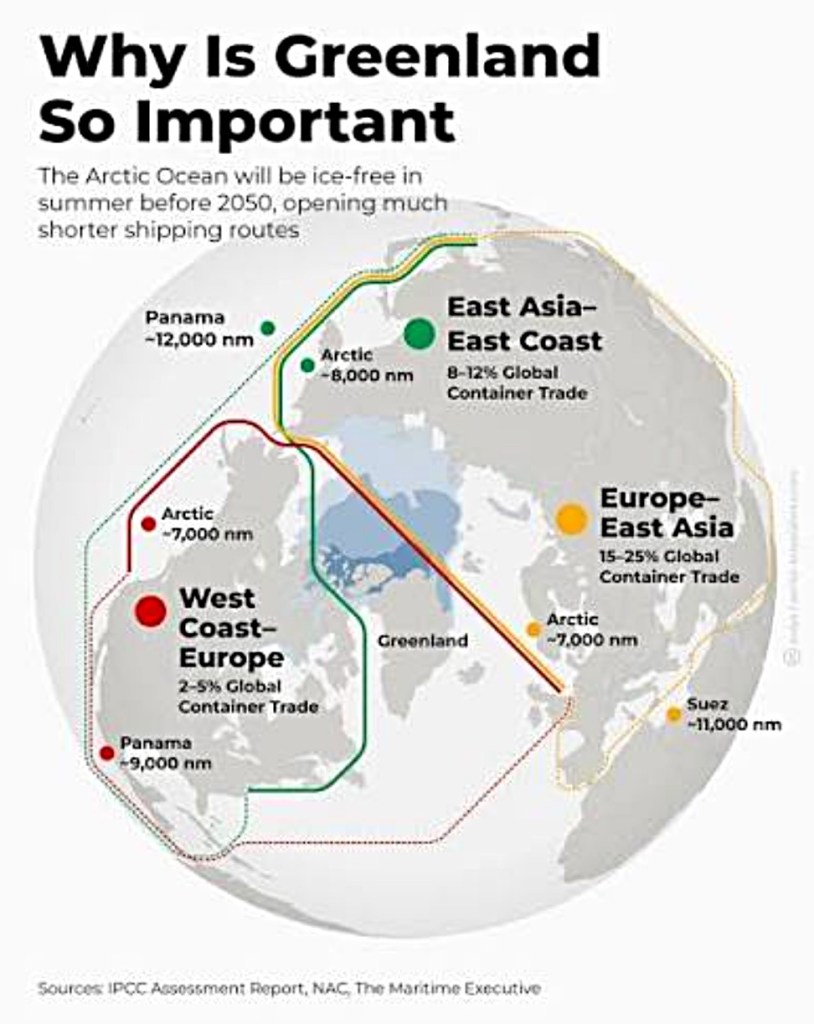
There is a deceptively simple geographic fact that sits quietly beneath much of the current Arctic maneuvering. In the entire Arctic region, there is effectively only one deep-water port that remains reliably ice-free year-round without the benefit of icebreakers, and that port is Nuuk, Greenland. This is not a trivia point. It is a structural constraint that shapes strategy, logistics, and power projection across the high north.

Nuuk’s status is the product of oceanography rather than politics. The West Greenland Current carries relatively warm Atlantic water northward along Greenland’s western coast, keeping the approaches to Nuuk navigable even through winter. By contrast, most other Arctic ports, including those in northern Canada, are either seasonally accessible or require sustained icebreaking support. Russia is often cited as an exception, but ports like Murmansk rely heavily on infrastructure, icebreaker fleets, and state subsidy to maintain year-round access. Nuuk stands apart in that its ice-free condition is natural, persistent, and proximate to the North Atlantic.

From a United States perspective, this matters enormously. American interest in Greenland is not primarily about territory in the nineteenth-century sense. It is about access, logistics, and denial. An ice-free port in the Arctic functions as a fixed node in what is otherwise a hostile operating environment. It enables sustained naval presence, resupply, maintenance, and potentially dual-use civilian and military shipping without the constant friction of ice conditions. In a future where Arctic sea lanes become more commercially viable and militarily contested, control or influence over such a node is strategically priceless.

This helps explain why U.S. engagement with Greenland has intensified well beyond rhetoric. Investments in airports, telecommunications, scientific infrastructure, and diplomatic presence all serve a dual purpose. They embed American interests into Greenland’s development trajectory while ensuring that any future expansion of Arctic activity occurs within a framework friendly to U.S. security priorities. The infamous proposal to “buy” Greenland was widely mocked, but it reflected a blunt articulation of a real strategic anxiety: the United States does not want its primary Arctic foothold to drift politically or economically toward rivals.

Canada’s position is more complex and, in some ways, more constrained. Canada has the longest Arctic coastline of any nation, yet no equivalent year-round ice-free deep-water port in its Arctic territory. This creates a persistent asymmetry. Canadian sovereignty claims rest on presence, governance, and stewardship rather than on continuous maritime access. The North is Canadian not because it is heavily used, but because it is administered, inhabited, and regulated.

As a result, Canada’s northern strategy cannot simply mirror that of the United States. Where Washington focuses on access and power projection, Ottawa must focus on resilience, legitimacy, and long-term habitation. Investments in northern communities, Indigenous governance, search and rescue, environmental monitoring, and seasonal port infrastructure are not secondary to sovereignty. They are sovereignty. Canada’s emphasis on the Northwest Passage as internal waters is inseparable from its need to demonstrate effective control without relying on year-round commercial shipping.

At the same time, the existence of Nuuk as the only naturally ice-free Arctic port creates both a vulnerability and an opportunity for Canada. The vulnerability lies in over-reliance on allied infrastructure. In any future crisis or competition scenario, Canadian Arctic operations would almost certainly depend on U.S. logistics routed through Greenland. The opportunity lies in cooperation. Joint development of northern capabilities, shared situational awareness, and integrated Arctic planning allow Canada to compensate for geographic disadvantages without surrendering policy autonomy.

What this ultimately reveals is that the Arctic is not opening evenly. It is opening selectively, along corridors dictated by currents, ice dynamics, and climate variability. Nuuk sits at the intersection of those forces. It is a reminder that geography still matters, even in an age of satellites and cyber power. For the United States, Greenland is a keystone. For Canada, it is a neighbor whose strategic weight must be acknowledged, managed, and integrated into a broader vision of a stable, governed, and genuinely Canadian North.

In that sense, the conversation about ice-free ports is not really about shipping. It is about who gets to shape the rules of the Arctic as it transitions from a frozen margin to a contested frontier.

U.S. Border Rules: Security Theater at the Expense of the Economy

The United States is poised to implement border-crossing rules that threaten to strangle tourism and business travel under the guise of national security. Under a proposal from U.S. Customs and Border Protection, travelers from Visa Waiver Program countries could soon be required to disclose five years of social media activity, all phone numbers and email addresses used in the past decade, family details, and an array of biometric data including fingerprints, facial scans, iris scans, and potentially DNA. The stated purpose is to prevent threats before travelers set foot on American soil. The practical effect, however, is more likely to be economic self-sabotage than enhanced security.

Officials argue that social media monitoring can identify links to extremist networks and that biometric verification prevents identity fraud. Yet in reality, these measures are deeply flawed. Social media is ambiguous, easily manipulated, and prone to false positives. Connections to flagged accounts are not proof of malicious intent, and online behavior is rarely a reliable predictor of future actions. Biometric data can confirm identity, but it cannot reveal intent, and DNA collection provides little actionable intelligence for border security. What is billed as a comprehensive safety net is, in practice, security theater: a show of vigilance with limited ability to prevent genuine threats.

The economic consequences are far more immediate and measurable. Tourism generates hundreds of billions of dollars annually in the United States, and even modest deterrence can ripple across hotels, restaurants, retail, and transportation. Business travel and conferences may shift overseas to avoid intrusive vetting, while students and skilled professionals may choose alternative destinations for study and employment. The timing is particularly ill-advised: the 2026 FIFA World Cup, expected to bring millions of international visitors, risks diminished attendance and reduced economic activity due to privacy-invading entry requirements.

Beyond lost revenue, the proposal risks damaging the U.S.’s international reputation. Heavy-handed border rules signal that openness and hospitality are subordinate to bureaucratic procedures, potentially discouraging cultural exchange, foreign investment, and global collaboration. In balancing national security and economic vitality, policymakers appear to have prioritized symbolism over substance.

Ultimately, the proposed rules expose a stark imbalance: symbolic security at the expense of tangible economic and diplomatic costs. Public commentary over the next 60 days is the last line of defense against a policy that could chill travel, weaken industries reliant on foreign visitors, and tarnish America’s global image. National security is crucial, but when it comes at the cost of economic self-harm, it ceases to be protection and becomes self-inflicted damage.

Enough Already: Greenland, American Strategy, and an Envoy That Makes No Sense

In December 2025, President Donald Trump announced that he would appoint Louisiana Governor Jeff Landry as the United States special envoy to Greenland. The announcement came with Trump’s customary social-media flourish, framing Greenland as “essential to our national security” and praising Landry’s willingness to advance U.S. interests in the Arctic. Landry himself declared that it was an “honor … to make Greenland a part of the U.S.” even as he would remain governor of Louisiana concurrently. Reuters

1. It’s a Diplomatic Stunt, Not Strategy

Appointing a U.S. special envoy to a territory that is not a U.S. partner or diplomatic interlocutor is, by definition, an odd choice. Greenland is a semi-autonomous territory of the Kingdom of Denmark, and sovereignty over Greenland rests with Copenhagen under international law. Even if Greenland exercises home rule over many internal matters, Denmark retains foreign-affairs authority. Euronews

Denmark reacted accordingly. Its foreign minister denounced the move and summoned the U.S. ambassador in protest, asserting that territorial integrity must be respected. Danish and Greenlandic leaders jointly declared that “you cannot annex another country,” and reinforced that “Greenland belongs to the Greenlanders.” Euronews

2. The People of Greenland Have Spoken—Loudly

Trump and his allies have repeatedly hinted that Greenlanders might welcome U.S. affiliation or even statehood. Yet public opinion data tell a different story: 85% of Greenlanders oppose becoming part of the United States, with only about 6% in favor. A News AMERICAS poll

Ignoring the expressed will of the local population while proclaiming sovereign ambitions isn’t strategic leadership. It’s symbolic posturing that weakens U.S. credibility with the very audiences that Washington claims to want on its side.

3. National Security Strategy vs. Tactical Execution

To be fair, Greenland does matter in the Arctic geostrategic environment. Its geographic position gives control over approaches to North America, and U.S. military assets like Pituffik Space Base have long been elements of continental defense. There is also growing global competition in the Arctic amid climate change and resource access. These realities are consistent with core themes in the U.S. National Security Strategy (NSS): maintaining technological edge, reinforcing alliance structures, and securing critical supply chains. Associated Press

But that strategic framework does not justify appointing a governor as envoy with public remarks about making another country part of the United States. That is a conflation of long-term objectives (strengthening U.S. strategic position in the Arctic) with short-term theatrics that have real diplomatic and legal consequences.

4. Why This Matters Beyond Headlines

A smart Arctic strategy might include genuine cooperative defense partnerships with Greenland and Denmark, investment in shared security infrastructure, climate resilience, and economic collaboration that respects sovereignty. Instead, the current approach:

  • Undermines alliance trust with a NATO member whose cooperation is critical in Europe and the Arctic.
  • Misreads local sentiment, dismissing Greenlanders’ clear preference to determine their own future.
  • Reduces U.S. policy to rhetorical brinkmanship, distracting from substantive cooperation where it matters.

If the NSS is a roadmap for how the U.S. secures its interests in an increasingly competitive world, this envoy appointment reads like a sideshow detour driven by personality rather than policy.

Sources

Canada and the CUSMA Crossroads: Policy Recommendations for Ottawa

As whispers from Washington grow louder about replacing the trilateral CUSMA with two separate bilateral trade agreements, one with the United States, one with Mexico, Canada finds itself at a pivotal moment. How Ottawa responds over the next eighteen months could determine not just near-term economic outcomes, but the resilience and global standing of the Canadian economy for decades to come.

The U.S. sees bilateral deals as a way to tighten rules of origin, enforce labour and environmental standards more aggressively, and gain leverage on regulatory issues. While these measures might appear to offer Canada the chance for a “customized” agreement, they also carry serious risks: fractured supply chains, diminished investment, and reduced bargaining power on the global stage. Canada cannot afford to approach this negotiation as a passive actor.

Policy Recommendations

1. Protect Integrated Supply Chains
Canada should insist on provisions that preserve existing supply-chain networks spanning Canada, the U.S., and Mexico. Standstill clauses and grandfathering mechanisms should ensure that Canadian investments in autos, aerospace, electronics, and agriculture are not penalized under stricter U.S. bilateral rules.

2. Negotiate Realistic Rules of Origin
Ottawa should push for rules that recognize Canada’s production capacities and global sourcing realities. Overly restrictive thresholds would damage competitiveness; instead, the agreement should balance protection of U.S. interests with Canada’s need to remain a hub of North American manufacturing.

3. Secure Trade Policy Autonomy
A bilateral agreement must not lock Canada into U.S.-imposed restrictions on third-party trade. Canada needs the freedom to deepen relationships with the EU, Asia-Pacific, and emerging markets. Ottawa should insist on explicit clauses preserving this sovereignty.

4. Embed Environmental and Labour Standards Strategically
Canada should leverage the negotiation to advance shared values on environmental protection and labour rights. By including enforceable, mutually beneficial standards, Canada can turn compliance obligations into a competitive advantage for Canadian businesses, particularly in clean energy, forestry, and high-value manufacturing.

5. Diversify Market Access
The U.S. will always be Canada’s largest trading partner, but Ottawa must use this moment to accelerate diversification. Strong bilateral terms with the U.S. should complement, not replace, agreements with other regions. This strategy will reduce vulnerability to U.S. policy swings and strengthen Canada’s global economic resilience.

6. Maximize Leverage on Strategic Resources
Canada possesses energy, critical minerals, and clean-tech assets of global significance. Ottawa should use the bilateral framework to secure access to U.S. markets without ceding control or undervaluing these resources, ensuring that Canada retains long-term strategic advantage.

7. Prepare for Transition and Communication
Any shift from CUSMA to bilateral arrangements will create uncertainty for businesses. Ottawa should implement a clear, phased transition plan and communicate proactively with domestic industries. Providing certainty and guidance can prevent disruption, maintain investment confidence, and reinforce Canada’s reputation as a stable, reliable partner.

8. Protect Agricultural Supply Management Sectors as Part of Food Security Strategy
Canada’s supply-managed sectors — dairy, poultry, and eggs — are vital not only to farmers’ livelihoods but to national food security. Any bilateral agreement must safeguard these systems against excessive U.S. pressure or forced liberalization. This will ensure that Canadians maintain stable domestic production, buffer against global market volatility, and preserve a cornerstone of rural economic resilience.

Conclusion
The U.S. drive toward bilateral deals presents both danger and opportunity. Canada must approach negotiations not as a defensive exercise in preservation, but as a chance to reshape its trade strategy for a new global environment. By insisting on supply-chain continuity, flexible rules of origin, strategic autonomy, market diversification, and protection for food security, Ottawa can turn potential disruption into a springboard for long-term economic strength.

Canada’s response will signal whether it remains a reactive participant in North American trade or assumes the role of confident, sovereign actor capable of shaping its own destiny. This is not a time to defer to Washington. It is a time to plan boldly, negotiate shrewdly, and safeguard Canada’s future.

The Strategic Shift Behind the 2025 U.S. National Security Strategy

The newly released 2025 U.S. National Security Strategy signals a significant departure from the traditional principles that defined American foreign policy for decades. Longstanding commitments to collective defense, liberal internationalism, and multilateral cooperation have been replaced with a posture that treats global engagement as a burden and alliances as conditional assets rather than enduring partnerships.

This shift, framed as a necessary rebalancing of national priorities, is being interpreted by analysts and allied governments as a proactive threat. The threat is not overt or kinetic. Instead, it emerges through the document’s language, strategic preferences, and economic positioning. The resulting landscape places NATO allies, especially Canada, in a vulnerable and uncertain position.

A Reimagined Alliance System

The Strategy redefines alliances in transactional terms. Rather than relying on shared values, mutual defense responsibilities, and long-term strategic vision, the document characterizes alliances as fiscal and strategic obligations that must be justified by allies through increased spending and alignment with U.S. interests. Reports highlight the new emphasis on defense burden-sharing and the suggestion that U.S. commitments may be scaled back for countries that do not meet Washington’s expectations.

This reframing undermines the foundational trust of the NATO system. It places countries like Canada, which historically spends below preferred thresholds, in a position where strategic reliability could be questioned, weakening the security guarantees that NATO has long been built upon.

Europe Recast as a Strategic Project

The Strategy’s rhetoric toward Europe marks a sharp departure from conventional diplomatic framing. The document describes Europe as struggling with demographic decline, economic stagnation, and cultural erosion, and it presents the United States as a guardian poised to steer the continent’s political future. Analysts have flagged the Strategy’s explicit support for “patriotic” political movements in Europe, a development interpreted as a willingness to influence or reshape domestic politics within allied states.

Such language introduces profound uncertainty into the transatlantic relationship. Rather than treating allies as sovereign equals, the Strategy positions them as ideological battlegrounds. For Canada, this suggests that allies’ internal affairs may no longer be off-limits to U.S. strategic intervention, further eroding norms of mutual respect.

The Western Hemisphere as Exclusive American Sphere

A revival of a hemispheric dominance doctrine – effectively a twenty-first century interpretation of the Monroe Doctrine – marks one of the most consequential pivots in the document. The Strategy asserts the Western Hemisphere as an exclusive zone of American influence, intended to be economically aligned, politically manageable, and strategically compliant with U.S. goals.

This shift directly affects Canada. Economic interdependence, continental supply chains, and cross-border migration policies are recast as tools of strategic leverage. Analysts warn that this places Canada in a subordinate position in regional planning and policy formation. Canada’s economic autonomy becomes more limited under a framework that prioritizes U.S. control over hemispheric trade, energy, technology, and resource security.

From Partnership to Asset Management

The Strategy’s architecture suggests a broader conceptual change: allies are treated less as partners and more as assets whose value is measured against U.S. priorities. This represents a decisive break from the postwar model of shared responsibility and common purpose. Guarantees once considered automatic – such as the collective defense obligations that underpin NATO – appear increasingly conditional.

Such a shift introduces strategic instability. Allies must now anticipate fluctuating levels of American engagement based on domestic political calculations rather than consistent treaty commitments. This new posture raises questions about the reliability of alliances in moments of crisis.

Why the Strategy Constitutes a Proactive Threat

Several core elements of the document create a proactive threat to NATO partners and particularly to Canada.

  • Erosion of Collective Defense Norms
    By tying U.S. commitments to spending thresholds and ideological alignment, the Strategy weakens the notion of mutual defense and introduces uncertainty into NATO’s core purpose.
  • Weaponization of Economic Interdependence
    The emphasis on economic nationalism transforms North American trade and supply-chain relationships into pressure points that can be exploited for political or strategic gain.
  • Normalization of Political Intervention in Allied States
    The encouragement of “patriotic” European political movements signals a new willingness to involve itself in domestic ideological debates within allied countries.
  • Marginalization of Allies Not Deemed Strategically Essential
    Countries outside Washington’s immediate priorities risk being sidelined, placing Canada at long-term strategic risk.

A New Geopolitical Landscape for Canada

The 2025 National Security Strategy marks a reordering of global priorities that places Canada in a precarious position. The traditional assumptions underlying Canada’s security and economic planning – predictable U.S. leadership, reliable NATO guarantees, and a shared democratic project – are directly challenged by the Strategy’s new direction.

In this emerging landscape, Canada may face a future in which the United States no longer acts as a steady anchor of the transatlantic alliance, but instead as a dominant regional power pursuing unilateral advantage. The resulting realignment may require Canada and other NATO members to rethink foreign policy strategies, diversify partnerships, and strengthen regional autonomy to avoid becoming collateral variables in an American-centered strategic calculus.

This is the environment the new document creates: one where allies must navigate not the threat of abandonment, but the more subtle and destabilizing threat of conditional partnership, shifting expectations, and ideological intervention.