Nuremberg Revisited: A Timely Warning to the Trump Administration

The forthcoming film Nuremberg, slated for release on November 7th, 2025, offers more than just a historical drama, it arrives at a moment in time that invites reflection on the nature of authoritarian power, the fragility of democratic institutions, and the price paid when societies fail to hold tyranny to account. In publishing a cinematic depiction of the post-World-War II trials of Nazi war criminals, the film sends a pointed message, especially to the current U.S. administration, about the consequences of unrestrained power and the urgent need for vigilance in protecting democratic norms.

First, the timing of the release is significant: over eighty years since the original Nuremberg Trials of 1945–46, when the victors of the war sought to ensure that those responsible for crimes against humanity would be held to account. The film’s arrival at this milestone moment suggests that the lessons of that era are not mere relics, but living admonitions. For a present-day administration facing pressures from populist rhetoric, democratic back-sliding, or executive overreach, the film signals that the world remembers what unchecked power is capable of. The very act of dramatizing how the Nazi regime’s leaders were judged and how justice was pursued underscores that history is watching.

Second, by focusing on the moral, psychological and institutional dimensions of tyranny through characters such as Hermann Göring and the American psychiatrist mesmerized by his charisma, the film reminds us that dictators do not always rule by brute force alone, they often wield legitimacy, manipulation and institutional subversion. In a modern context, this is a cautionary tale. When a government begins undermining norms, bypassing checks and balances, or valorizing strong-man tactics, it is not merely a political condition, it echoes the first steps of authoritarianism. The release of this film invites the Trump administration (and by extension any power-consolidating regime) to reflect: the fate of dictatorships is grim, and history does not neglect them.

Third, the timing signals an admonition that accountability matters. The heroes of the film are not the dictators themselves, but the institutions and individuals who insisted on judgment, on due process, on shining light into darkness. That message runs counter to any present-day posture that seeks to evade responsibility or diminish oversight. For the U.S. administration, which holds itself up (and is held up by others) as a model for rule-of-law governance, the film is a reminder that even victors in war cannot sidestep justice: they must build systems that can stand scrutiny. The release date thus communicates that the film is more than entertainment – it is timely commentary.

By arriving in late 2025, a time when global politics are turbulent and the boundaries of democratic norms are under pressure, the film functions as a mirror. It asks: What happens when the “good guys” forget that the preservation of democracy requires constant vigilance? The implication for the Trump administration is subtle but unmistakable: look at the outcome of authoritarianism in the 20th century; learn from the decay of institutional safeguards; and recognize that public memory and moral judgment endure long after the regimes have fallen.

Nuremberg does more than retell a famous trial, it sends a message to the present: authoritarianism isn’t just history’s problem, it is today’s risk. By releasing now, the film invites the Trump administration to see itself in the narrative, one where the rule-of-law must be defended, where power must be constrained, and where the cost of forgetting is steep.


Project Ontario and Project 2025: Parallel Conservative Blueprints

The emergence of Project Ontario marks a new phase in Canadian conservative politics. While Premier Doug Ford’s Progressive Conservatives hold a comfortable majority, a group of policy advocates, commentators, and activists argue that his government has strayed too far from conservative principles. Through Project Ontario, they are pressing for a return to fiscal discipline, smaller government, and freer markets. The initiative is not a political party but a policy and advocacy movement aimed at shaping the direction of Ontario’s right. In many ways, it mirrors the role of Project 2025 in the United States: a blueprint designed to realign governance around more ideologically driven goals.

Project Ontario made its debut with a call for an autumn assembly of conservative thinkers, strategists, and policy experts. Its agenda emphasizes cutting red tape, lowering or reforming taxes, encouraging school choice, and tackling Ontario’s lagging productivity. Health care reform and housing affordability also feature heavily, framed through the lens of efficiency and deregulation. The group’s intellectual backbone comes from figures like Ginny Roth, Josh Dehaas, and Adam Zivo, with ties to institutions such as the Macdonald-Laurier Institute and the National Citizens Coalition. While the initiative presents itself as grassroots, it is clearly embedded within conservative policy networks.

Doug Ford has publicly dismissed Project Ontario, branding its supporters as “radical right” and “yahoos.” His sharp rejection underlines the political tension: while Ford governs from a pragmatic, populist center-right position, Project Ontario represents conservatives dissatisfied with compromise, seeking to tighten the ideological screws.

South of the border, Project 2025 represents the same instinct at a far larger scale. Organized by The Heritage Foundation, it is a sweeping plan to prepare a conservative administration for 2025. The nearly 900-page Mandate for Leadership: The Conservative Promise lays out detailed proposals for reshaping the executive branch, replacing civil servants with political loyalists, rolling back climate regulation, and imposing more conservative positions on education, immigration, and social policy. Its ambition is not merely to influence but to structurally reengineer American governance.

Comparing the two reveals important similarities. Both initiatives arise from frustration within conservative ranks, demanding that governments lean harder into free markets, deregulation, and fiscal restraint. Both set out to pre-write the policy script, defining what conservative governance “should” look like. And both blur the line between advocacy and preparation, building networks of people and ideas ready to be deployed when political openings appear.

Yet the differences are just as telling. Project Ontario is provincial, modest, and reformist. It seeks to push an existing government rather than overturn governing structures. Project 2025 is national, well-funded, and radical in scope, proposing changes that critics argue threaten democratic safeguards. Ontario’s conservatives debate incrementalism versus ideology within the safe confines of provincial policy; the U.S. effort aims at wholesale transformation of federal power.

The rise of Project Ontario highlights the pressures facing conservative parties across democracies. Governing requires compromise, but ideological movements demand purity. Whether Project Ontario grows into a defining force or remains a niche critique will depend on how well it mobilizes supporters, attracts funding, and survives Ford’s dismissive pushback. What is clear is that this is only the opening chapter of a story likely to grow louder in Ontario’s political landscape.

Watchlist: What to Track Next
Leadership: Will Project Ontario name formal leaders or remain a loose network of policy advocates?
Funding: Who finances the initiative, and how transparent will it be about its backers?
• Government Response: Will Ford continue to dismiss them, or be forced to absorb parts of their agenda to maintain support on his right flank?
Media Coverage: Do they gain traction in mainstream debate, or stay confined to policy circles?
Public Reception: Will Ontarians respond positively to their calls for fiscal restraint, or view them as too ideological for provincial politics?

Lines and Shadows: Policing the Border Together

For two centuries, the world’s longest undefended border has stood as both a symbol and a contradiction. Between Canada and the United States lies a line that is deeply cooperative yet fiercely guarded, a frontier where trust and sovereignty meet in uneasy balance. That balance is being tested again with new calls from American legislators to expand the reach of U.S. law enforcement onto Canadian soil.

Republican Congressman Nicholas Langworthy, joined by Rep. Elise Stefanik, introduced the Integrated Cross-Border Law Enforcement Operations Expansion Act in September 2025. The bill directs the U.S. Department of Homeland Security to negotiate agreements allowing more American agents to operate in Canada under joint or integrated frameworks. It explicitly contemplates the stationing of U.S. officers in Canadian territory and the extension of U.S. legal protections to them while engaged in such operations. The proposal builds upon the existing Shiprider program, a bilateral maritime policing arrangement first authorized in 2012 that allows mixed crews of RCMP and U.S. Coast Guard officers to pursue suspects seamlessly across the Great Lakes and coastal waters (Government of Canada, 2012).

At its best, cooperation of this kind can prevent traffickers, smugglers, and violent extremists from exploiting jurisdictional seams. Integrated units already share intelligence, coordinate arrests, and conduct joint investigations on both sides of the line. In a world of fentanyl trafficking, encrypted communications, and drone-borne smuggling, no single agency can claim full visibility. The argument for “shared enforcement” rests on practical necessity.

But there is a deeper question about sovereignty and democratic accountability. Policing power is among the most sensitive expressions of a nation’s authority. Allowing foreign officers to act, even in partnership, raises profound legal and moral concerns. Who answers to whom when something goes wrong? What laws govern a use-of-force incident in Quebec if the officer is wearing an American badge? The existing Shiprider framework attempts to answer this by designating the officer in charge to be of the host nation and requiring all participants to be cross-designated and subject to local law. Any expansion would need to preserve, not erode, that principle.

So far, Ottawa has not publicly commented on the Langworthy-Stefanik proposal. The silence may reflect caution: few Canadian governments wish to appear either obstructionist toward U.S. security interests or complacent about sovereignty. Yet the issue deserves open discussion. Cross-border policing already shapes daily life along the St. Lawrence, the Great Lakes, and the Pacific coast. The next evolution could redefine how nations share force, intelligence, and responsibility.

What is being tested is not merely a policy, but a philosophy, whether two democracies can defend their people without blurring the line that defines them. The border has long been a place where we practice cooperation without surrender. The challenge now is to ensure it remains so as law enforcement grows more integrated, technologically driven, and politically charged.

The shadow of that line may lengthen or lighten, depending on how both nations choose to police it together.

Sources:
• “Stefanik, Langworthy Introduce Bill to Expand Cross-Border Law Enforcement Operations,” Stefanik.house.gov, Sept 19 2025.
• Integrated Cross-Border Law Enforcement Operations Act (S.C. 2012, c. 19, s. 361), Government of Canada.
• Government of Canada backgrounder, “Shiprider: Integrated Cross-Border Maritime Law Enforcement,” Public Safety Canada, 2013

Preclearance, NEXUS, and Nonsense: The Ambassador Who Cried ‘Play Nice’

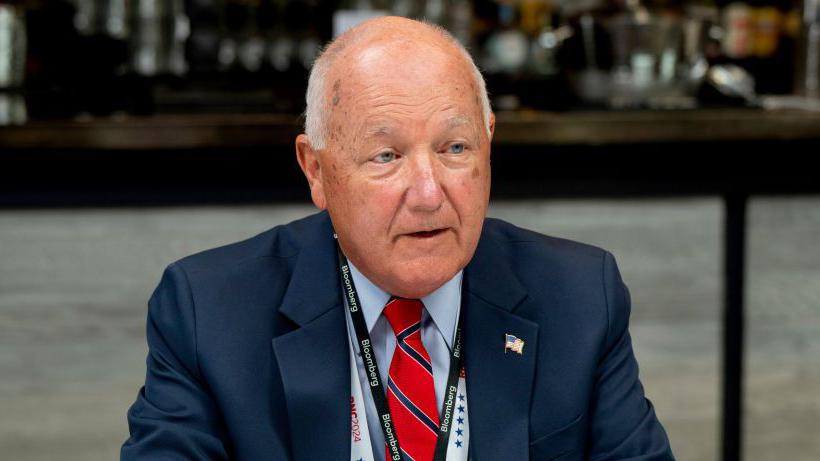
Diplomacy, as the textbooks remind us, is supposed to be the fine art of saying nothing offensive in as many words as possible while drinking bad coffee in conference rooms. But nobody seems to have given that manual to Pete Hoekstra, the newly minted U.S. Ambassador to Canada, who has decided to trade in understatement for a megaphone. In the span of a few short months, Hoekstra has managed to scold Canadians for not being sufficiently pro-American, accuse us of harboring “anti-American” slogans, and downplay Canada’s concerns about border overreach. If he’s aiming for “charm offensive,” he has nailed the second half of the phrase.

This is, of course, not the first time Canada and the U.S. have had words. We’ve bickered over softwood lumber, dairy tariffs, steel quotas, pipelines, and, once upon a time, acid rain. But usually ambassadors play the role of polite go-between, smoothing over disputes while the real political firestorms rage between ministers and presidents. Hoekstra seems to have missed the memo: his preferred strategy is less smooth diplomacy, more bull in a China shop – minus the bull’s natural grace.

His latest theme? Canadians just aren’t playing nice. We apparently spend too much time with “elbows up,” as if the entire country were auditioning for beer league hockey. He’s miffed that Canada has dared to issue travel advisories about U.S. border searches, insisting those reports are “isolated events.” Never mind that Canadian travelers actually experienced them. It’s a bit like telling someone who just got splashed by a passing truck that rain isn’t real.

Nowhere is this attitude more obvious than in the discussions around U.S. preclearance, the system where American border officers operate inside Canadian airports, inspecting passengers before they even board a plane to the United States. For travelers, preclearance is handy: you arrive stateside as a domestic passenger, skip long immigration lines, and make your connections. For the U.S., it’s even better: it lets them enforce their rules on foreign soil, keeping anyone they don’t like from ever boarding. For Canada, it’s…..complicated. Preclearance represents cooperation, yes, but also a certain loss of sovereignty. Not surprisingly, Ottawa sometimes drags its heels on expansion.

To Hoekstra, though, Canada’s reluctance to roll out the red carpet for more American officers in our airports amounts to ingratitude. The U.S. gives us this wonderful gift, he implies, and we respond with suspicion. It’s the diplomatic equivalent of scolding a dinner guest for not raving loudly enough about the casserole. The irony is rich: when Canada recently announced its first landpreclearance operation in the U.S., with Canadian officers screening travelers at a New York border crossing, nobody in Ottawa suggested that Americans were being unfriendly. Apparently only Canadians can be accused of bad manners.

And then there’s NEXUS, the trusted traveler program that makes cross-border trips bearable for frequent fliers. Here, too, Canada and the U.S. cooperate closely, with Canadians now able to use Global Entry kiosks thanks to their NEXUS membership. But you wouldn’t know it from the ambassador’s rhetoric. He talks as if the U.S. is single-handedly shouldering the burden of efficiency while Canada stubbornly blocks progress. The reality is that both sides benefit and both sides foot the bill. Preclearance doesn’t spring fully formed from Washington; Canadian airports build the facilities, Canadian taxpayers share the costs, and Canadian sovereignty bends to make it possible.

So why the sharp elbows from Hoekstra? Partly it’s style, he has never been known as a shrinking violet. But partly it reflects a broader U.S. strategy of leaning harder on Canada. The two countries are already sparring at the World Trade Organization over tariffs that Ottawa calls “unjustified.” Washington wants more Canadian concessions on energy, environment, and defense spending. Ambassadors don’t freelance in these circumstances; they set the tone their bosses in the White House prefer. If that tone is loud, impatient, and dismissive of Canadian sensitivities, then Hoekstra is performing to spec.

Still, it’s worth noting how Canadians are responding. While most don’t object to preclearance itself, after all, we enjoy shorter lines at airports, there is resistance to being lectured about it. Canadians pride themselves on being cooperative partners, not subordinate provinces. When the ambassador claims Canada isn’t “playing nice,” many hear it as “you’re not agreeing quickly enough with U.S. demands.” The fact that Canada has invested in NEXUS expansions, shared intelligence, and even put its own officers on U.S. soil underlines the absurdity of the accusation.

In the end, Hoekstra’s style may generate headlines, but it risks eroding goodwill. Diplomacy works best when it feels like a partnership of equals, not a schoolteacher scolding a roomful of students. Canadians are famously polite, but we’re also famously stubborn when pushed. If the ambassador thinks a little tough talk will get Canada to open every airport door to U.S. preclearance, he may be in for a long wait.

Until then, travelers will keep swiping their NEXUS cards, lining up at preclearance facilities, and quietly rolling their eyes at the spectacle. After all, Canadians know that living next to the United States is a bit like living next to an elephant. When it shifts, you feel it. When it trumpets, you really feel it. And when the ambassador starts lecturing you about your manners, sometimes the most diplomatic response is the Canadian classic: a polite smile, a quiet mutter, and an elbow gently nudged back into his ribs.

Pete Hegseth’s Quantico Meeting: Dissent, Risk, and Resistance

Defense Secretary Pete Hegseth’s decision to convene hundreds of senior military leaders at Marine Corps Base Quantico on September 30, 2025, has generated a remarkable amount of debate inside the Pentagon and across Washington. The meeting, which included the presence of President Trump and was framed as a morale-building rally, combined populist language with concrete policy shifts. It emphasized a return to what Hegseth called a “warrior ethos,” a reduction in the number of four-star commands, and a strategic redirection of defense resources toward homeland security over foreign commitments. While the spectacle of so many generals and admirals gathered in one place caught the public eye, the real story lies in the competing interpretations of what the meeting signified, and how valid the dissent from senior officers truly is.

At its core, the criticism of Hegseth falls into two broad categories. The first category consists of genuine policy and operational concerns. These objections focus on the risks that arise when a new strategy is imposed quickly and without the depth of consultation that military leaders expect. The United States has spent decades building a global presence through NATO, alliances in Asia, and security partnerships in Africa. If those priorities are suddenly reduced or redirected, adversaries may perceive weakness and act opportunistically. The suggestion that homeland defense should take precedence over overseas commitments alarms many planners, who argue that credible deterrence abroad is what ultimately keeps the homeland safe. Just as concerning is the physical risk created by concentrating so many senior leaders in one place. In the age of terrorism and cyber conflict, the idea of creating a single point of failure for military leadership is regarded by many as reckless. These criticisms may reflect institutional conservatism, but they also have clear strategic validity.

The second category of dissent is tied more closely to career prospects, budgets, and organizational prestige. Cuts to four-star commands, for example, reduce opportunities for senior officers to rise to the top. The reallocation of funds away from long-standing overseas headquarters threatens programs that have sustained careers, institutional identities, and congressional ties for decades. Even the cultural objection to Hegseth’s “warrior ethos” rhetoric can be read partly as discomfort with his outsider tone and partisan style. Military leaders accustomed to more technocratic language may find his populist approach off-putting, regardless of whether it improves or harms operational effectiveness. These complaints do not necessarily mean that the officers raising them are wrong, but they reveal how intertwined personal advancement and policy debate can be within the senior ranks.

Where the picture becomes most complicated is in the middle ground, where career concerns and operational risks overlap. Morale and cohesion, for example, are partly about career security but also affect how well units function under stress. Similarly, questions of alliance credibility have both strategic weight and institutional implications, since overseas commands are often the most prestigious assignments available. Resistance to Hegseth’s agenda is therefore not neatly divisible into “valid” and “self-interested” camps. Instead, each issue carries elements of both, and part of the task for civilian leaders is to distinguish which objections point to genuine threats to U.S. security and which reflect the understandable resistance of an entrenched bureaucracy to change.

Taken together, the dissent underscores a deeper tension in American civil-military relations. Civilian control requires that appointed leaders set strategy, even when the uniformed services disagree. Yet history also shows that ignoring the professional judgment of senior officers can lead to miscalculations with high costs. Hegseth’s critics argue that he lacks the operational grounding to make decisions of such magnitude, pointing to his background in politics and media rather than command experience. Supporters counter that his outsider perspective allows him to break through bureaucratic inertia and push reforms that insiders would never accept. Both views contain truth, and the outcome will likely hinge on whether Hegseth can translate his rhetoric into workable policy while maintaining the confidence of enough of the officer corps to keep the system running smoothly.

If we weigh the dissent carefully, perhaps half of it points to genuinely significant strategic risks. The dangers of over-focusing on homeland defense, of weakening alliances, and of creating leadership vulnerabilities are all concerns that would trouble any responsible planner. Roughly another third of the pushback reflects predictable resistance from senior officers whose career trajectories and command prerogatives are being cut short. The remainder, perhaps the most interesting portion, lies in the overlap between institutional interest and national strategy. Issues like morale, cohesion, and alliance credibility matter both for the personal interests of officers and for the effectiveness of the force as a whole.

To clarify the distinction, here is a risk-versus-resistance map that separates concerns into those that are primarily policy/operational risks (valid dissent) and those that are largely career/budget resistance (self-interest). Some issues occupy a middle ground, blending both.

ConcernDescriptionImportance
Strategic de-prioritization of China, Europe, AfricaReducing focus on alliances may embolden adversariesHigh
Homeland defense emphasisOver-focus on domestic security may leave overseas contingencies underpreparedMedium-High
Concentration of leaders in one locationCreates a single point of failure for leadership continuityHigh
Rapid strategy changesAbrupt shifts risk operational gapsMedium
Expertise gapPolitical appointee-led decisions may lack operational groundingMedium
Reduction of four-star positionsCuts limit career progression and prestigeMedium-High
Budget reallocationsFunding shifts threaten existing programsMedium
Cultural pushbackResistance to “warrior ethos” rhetoricLow-Medium
Media restrictionsPress control raises concern about accountabilityMedium
Morale and cohesionImpacts operational effectiveness but also career dynamicsMedium-High
Alliance credibilityAffects U.S. global standing, but objections partly tied to overseas commandsHigh

The Quantico meeting, then, should not be read simply as a populist stunt or a bureaucratic clash. It is a moment when the future of U.S. defense policy is being tested in real time. Hegseth has chosen to frame his reforms in the language of ethos and toughness, signaling a shift toward domestic focus and leaner leadership structures. The officer corps is responding with a blend of genuine strategic caution and predictable institutional resistance. Observers must separate the noise of career frustration from the signal of authentic national security risk. Whether Hegseth can achieve that balance will shape not only his tenure as defense secretary but also the long-term posture of the United States in an increasingly unstable world.

The Promise and Peril of the H-1B Visa

When I first arrived in Silicon Valley in 1991, I did so on an H-1B visa. The program was brand new at the time, created to ensure that highly skilled professionals could move quickly into positions where American companies faced genuine gaps in expertise. My own case reflected that original vision perfectly. The U.S. firm that acquired my UK employer needed continuity and leadership in managing the transition of products and markets. I was the senior person left standing after the American parent stripped away the British management team, and my experience as product manager made me indispensable.

The process worked with remarkable speed, and the offer was more than fair. A $75,000 salary in 1991, equivalent to nearly $180,000 today, was a clear acknowledgment of the skills and responsibilities I brought with me. The system was designed to secure talent, not to undercut wages, and for me it delivered exactly what was promised: a career-defining opportunity and a way for an American company to gain the expertise it needed to thrive.

But what worked so well for me in 1991 has, over the decades, drifted far from that original intent. The H-1B program was meant to bring the best and brightest from abroad to fill roles that were difficult to source domestically. Instead, it has increasingly become a pipeline for large outsourcing firms that import entry-level workers at far lower wages than their American counterparts. Where the original standard was senior-level knowledge and proven skill, many visas now go to contractors whose roles could often be filled within the domestic labor pool.

This misuse creates what one former U.S. immigration official has called a “split personality disorder” for the program. Roughly half the visas still go to companies that genuinely need high-level specialists and can offer long-term careers, but the other half are captured by consulting firms whose business model depends on renting out lower-cost workers. That shift undermines both American workers, who see wages suppressed, and skilled foreign professionals, who are often treated as interchangeable resources rather than valued contributors.

The lottery system has further distorted the program. Once a simple way to fairly distribute a limited number of visas, it has been gamed by firms flooding the system with multiple applications. The recent drop in lottery bids, after the government cracked down on such practices, revealed just how much abuse had taken hold.

If the H-1B visa is to remain credible, it needs to return to its original purpose: rewarding specialized knowledge, proven expertise, and long-term commitment. Proposals to allocate visas based on wage levels rather than random chance would be a step in the right direction. They would align the system once again with its founding principle: bringing in the kind of high-value, hard-to-replace professionals that the U.S. economy truly needs.

My own journey in 1991 demonstrates the potential of the H-1B program when it is used as intended. It was a bridge for talent, a tool for competitiveness, and a life-changing opportunity. But unless it is reformed, the program risks being remembered not for what it enabled, but for how it was exploited.

Allies Reclaiming Autonomy: The Growing Shift Away from U.S.-Made Military Equipment

Across NATO and allied nations, governments are increasingly rejecting U.S. defense options or cancelling long-term contracts, favoring domestic or European alternatives that offer control over manufacturing, maintenance, and upgrades.

For decades, the United States has dominated the global defense market, especially among NATO allies. Its model, sell advanced platforms, then tie buyers into decades of maintenance, upgrades, and proprietary service, has been remarkably profitable and politically influential. But that model is under pressure. Increasingly, U.S. allies are saying no: rejecting American options, cancelling planned contracts, or shifting to alternatives that offer greater operational and industrial autonomy.

Spain provides a recent example. While the country had previously considered U.S.-made platforms to modernize its air force, Madrid has turned toward European options such as the Eurofighter Typhoon and the Future Combat Air System. Officials cited cost, supply chain control, and the desire to retain domestic and European industrial participation as key drivers. Similar reasoning is guiding Portugal, which has reconsidered its replacement programs for aging aircraft, leaning toward European-built fighters rather than committing to U.S.-supplied F-35s.

Denmark illustrates the trend in air defense. In its largest-ever defense procurement, the Danish government opted for the Franco-Italian SAMP-T NG long-range system over the U.S.-made Patriot, citing both cost and delivery time. Denmark is also reviewing medium-range options from European manufacturers, emphasizing local or regional production and maintenance. This choice reflects the dual desire to strengthen European defense capabilities while reducing reliance on U.S.-based service contracts.

Other NATO members are making comparable moves. Switzerland, historically neutral, has expressed reservations about joining long-term U.S. programs, including the F-35, instead evaluating European alternatives that allow for national control over lifecycle management. Norway has similarly emphasized local assembly and domestic sustainment for fighter and patrol aircraft. The Netherlands, Belgium, and Greece have all shown interest in European or domestic solutions for naval, air, and missile systems, explicitly seeking contracts that do not lock them into decades-long U.S. maintenance agreements.

These choices reflect a broader strategic and economic calculation. U.S.-made systems, while technologically advanced, often require buyers to accept a near-perpetual dependency on American contractors for upgrades, parts, and service. Allies are increasingly reluctant to cede that control, recognizing that operational autonomy and local industrial development are critical to national security. European manufacturers, by contrast, are offering co-production, local assembly, and technology transfer that allow countries to maintain both sovereignty and economic benefit from defense programs.

The implications for the U.S. defense industry are substantial. Losing planned contracts or having allies cancel or decline U.S.-made systems threatens billions in revenue, particularly from the lucrative long-term service and maintenance components. Strategically, it reduces Washington’s leverage: allies that control their own equipment are less subject to subtle influence through supply and upgrade dependencies. Over time, the cumulative effect could reshape the defense-industrial landscape in Europe and beyond, challenging the assumption that U.S.-supplied hardware will dominate allied inventories.

Canada, with its submarine program and proposed Swedish fighter deal, stands as the most prominent example, but it is hardly alone. Across Europe and NATO, governments are asking whether reliance on U.S. contractors for decades-long service agreements is compatible with modern defense priorities. The answer increasingly appears to be “no.” Allies want control over manufacturing, maintenance, and upgrades, and they are willing to bypass traditional U.S. options to achieve it.

In short, the U.S. model of “buy once, pay forever” is losing favor. NATO members and other allies are embracing autonomy, local industrial participation, and diversified procurement, signaling a shift that could reverberate across global defense markets for decades. The message is clear: even America’s closest partners are no longer content to surrender operational control and economic benefit for decades-long contracts that primarily serve U.S. industry.

Donald Trump’s Canadian Problem

A new survey released earlier this month offers a revealing glimpse into how Canadians view Donald Trump’s presidency, and the results are as decisive as they are sobering. The polling, conducted September 5–12, 2025 among 1,614 Canadians, asked respondents whether they approve or disapprove of the way Trump is handling his job as President of the United States. The breakdown by party support tells a clear story: Canadians overwhelmingly disapprove of Trump, regardless of partisan affiliation.

Among Liberals, an astonishing 99 percent disapprove, leaving a mere one percent in support. The New Democrats mirror this almost exactly, with 99 percent disapproval and just one percent approval. Green Party supporters follow close behind at 98 percent disapproving and 2 percent approving. Even Bloc Québécois voters, often unpredictable in their alignment, reject Trump by 93 percent to 7 percent.

These numbers show a remarkable national consensus, across progressive and nationalist lines alike, that Trump is fundamentally out of step with Canadian values. With one glaring exception. Among Conservative supporters, 45 percent approve of Trump, while 55 percent disapprove. That means nearly half of Conservative voters in this country are willing to line up behind one of the most polarizing figures in global politics.

This divergence is striking. The data shows a Canada almost united in its rejection of Trumpism, with Conservatives standing as the outliers. If we think of this not as abstract polling but as a snapshot of political culture, it becomes clear that the Conservative Party is grappling with a profound tension.

For the majority of Canadians, Trump represents everything they do not want in a leader: brash nationalism, disdain for institutions, transactional diplomacy, and an open hostility toward climate action. Canada’s self-image is one of consensus, moderation, and multilateralism, and Trump’s style cuts directly against that grain. It is little surprise then that Liberals, New Democrats, Greens, and Bloc voters reject him almost unanimously.

But nearly half of Conservatives see something different in Trump. They see a political figure who fights against what they perceive as “elites,” who speaks in blunt, sometimes brutal terms about immigration, cultural change, and national identity, and who promises to roll back the tide of progressive reform. For these voters, admiration of Trump is less about the technical details of his policy record and more about his role as a cultural symbol. Supporting him signals a desire to push Canadian politics in a harder, more populist direction.

This matters because Canadian Conservatives cannot easily ignore those numbers. A party with nearly half its base aligned sympathetically with Trump is inevitably influenced by that worldview. Yet the same data shows the broader Canadian electorate is not only uninterested in Trumpism, it is actively repulsed by it. When 99 percent of Liberals and New Democrats disapprove, 98 percent of Greens disapprove, and even 93 percent of Bloc voters disapprove, the lesson is clear: any Conservative strategy that tries to import Trump’s politics wholesale will run up against a wall of national resistance.

That leaves Conservatives in a bind. Court the Trump-sympathetic faction too aggressively, and they risk alienating the vast majority of Canadians who will never accept that style of politics. But turn away from it too decisively, and they risk fracturing their own base, where that 45 percent approval rating represents a large, vocal, and motivated bloc. It is the Canadian version of the dilemma Republicans themselves face in the United States: balancing the energy of the Trump base against the broader electorate’s distaste for him.

The deeper implication of this poll is that Canadian political culture is becoming increasingly entangled with the culture wars of the United States. That nearly half of Conservative supporters here look favorably on Trump is not an accident; it is the result of years of shared media consumption, online communities, and ideological cross-pollination. Canadian Conservatives watch Fox News, follow American conservative influencers, and engage in the same debates about “woke politics,” immigration, and freedom as their American counterparts. In that sense, Trump’s shadow stretches across the border, shaping not just U.S. politics but the fault lines within Canada’s right.

For the rest of Canada, this polling is a reminder of just how far apart our political tribes are drifting. On one side, overwhelming consensus against Trumpism, reflecting confidence in Canada’s more moderate, multilateral, and socially inclusive traditions. On the other, a significant portion of Conservatives willing to buck the national consensus in favor of an imported populist model.

The divide is not just about Donald Trump himself, it is about what he represents. For most Canadians, he symbolizes chaos, division, and a brand of politics fundamentally alien to our values. For nearly half of Conservatives, he symbolizes resistance to cultural liberalism, elite consensus, and globalist institutions. That chasm of perception tells us more about Canadian politics in 2025 than any single election poll.

The numbers are clear. Donald Trump may never be on a Canadian ballot, but his influence is already shaping our political landscape. And if this polling is any indication, Canada’s Conservatives are out of alignment with the overwhelming majority of their fellow citizens. The question is whether they double down on that path, or find a way back toward a politics that actually speaks to the broad Canadian mainstream.

Elbows Up: How Canada’s Cooling Ties With America Expose U.S. Insecurity

With Canadian travel, spending, and goodwill toward the United States in steep decline, Washington’s defensive tone reveals a superpower under pressure and struggling to cope.

In recent months, the cross-border relationship between Canada and the United States has come under an unusual strain. What was once seen as one of the closest, most dependable partnerships in the world is now marked by tensions over trade, culture, and public perception. Data shows Canadians are spending less on American goods, traveling less often to the U.S., and expressing rising skepticism about their southern neighbor. Against this backdrop, the American response has been marked not by calm confidence, but by a defensive edge: an insecurity that suggests Washington is feeling the pressure and coping badly.

The tone was set when U.S. Ambassador Pete Hoekstra accused Canadians of harboring an “elbows up” attitude toward his country. Speaking to reporters, Hoekstra complained that Canadian leaders and the media were fanning what he called “anti-American sentiment” and warned against framing ongoing trade disputes as a “war.” His words revealed just how sensitive U.S. officials have become about Canada’s growing assertiveness. Where past American diplomats might have dismissed Canadian criticism as the grumblings of a junior partner, Hoekstra’s defensive language betrayed a sense of vulnerability.

If the rhetoric sounded strained, the economic numbers were even more alarming for Washington. Canadian travel to the United States, long a reliable driver of border-state economies, has fallen sharply. According to industry data, cross-border car trips by Canadians dropped by more than a third year-over-year in August 2025, with similar declines in road travel overall. Air bookings are also down, as Canadians increasingly avoid American destinations. Analysts warn that even a 10 percent fall in Canadian travel represents a loss of over US$2 billion in U.S. tourism spending, affecting thousands of jobs in hotels, restaurants, and retail along the border.

Nor is the pullback limited to tourism. Surveys indicate Canadians are choosing to buy fewer American goods, opting instead for domestic or third-country alternatives whenever possible. Retailers and importers report declining sales of U.S. products in sectors ranging from consumer electronics to clothing. The “buy Canadian” mood, once a marginal theme, has gone mainstream. These choices, multiplied across millions of households, amount to a quiet but powerful act of economic resistance, one that chips away at America’s largest export market.

For the United States, the twin shocks of declining Canadian tourism and shrinking demand for U.S. goods are more than economic nuisances. They strike at the heart of America’s self-image as Canada’s indispensable partner. When Canadians spend less, travel less, and look elsewhere for their needs, it signals a cultural cooling that U.S. officials have little experience confronting. Historically, American policymakers could take for granted that Canadians would continue to flow across the border for shopping trips, vacations, or work, while Canadian governments would swallow irritants in the name of preserving harmony. That assumption no longer holds.

The American response, however, has been reactive rather than reflective. Instead of acknowledging Canadian frustrations, whether over tariffs, trade disputes, or political rhetoric, U.S. officials have scolded Ottawa for being too combative. By objecting to the term “trade war,” by lecturing Canadians about their “attitude,” Washington has reinforced the perception that it neither understands nor respects Canada’s grievances. The tone has become one of deflection: the problem, U.S. diplomats suggest, is not American policy, but Canadian sensitivity.

This defensiveness has left Washington exposed. It reveals that, beneath the rhetoric of confidence, U.S. officials recognize that Canada’s resistance carries real consequences. With fewer Canadians traveling south, U.S. border states lose billions in revenue. With Canadian households buying less from U.S. suppliers, American exporters face measurable losses. And with Canadian leaders willing to frame disputes in sharp terms, U.S. diplomats find themselves on the back foot, struggling to preserve an image of partnership.

For Canada, this shift represents a moment of self-assertion. By spending less in the U.S. and leaning into domestic pride, Canadians are signaling that friendship with America cannot be assumed, it must be earned and respected. For the United States, it represents an uncomfortable reality: even its closest ally is no longer willing to automatically defer.

In the end, the story is less about Canadian hostility than about American fragility. A confident superpower would shrug off criticism, listen carefully, and adjust course. What we see instead is irritation, defensiveness, and rhetorical overreach. By lashing out at Canada’s “elbows up” attitude, Washington has confirmed what the numbers already show: it is under pressure, it is losing ground, and it is coping badly.

When the Bully Yells, He’s Losing: What Navarro’s Rhetoric Really Means for Canada

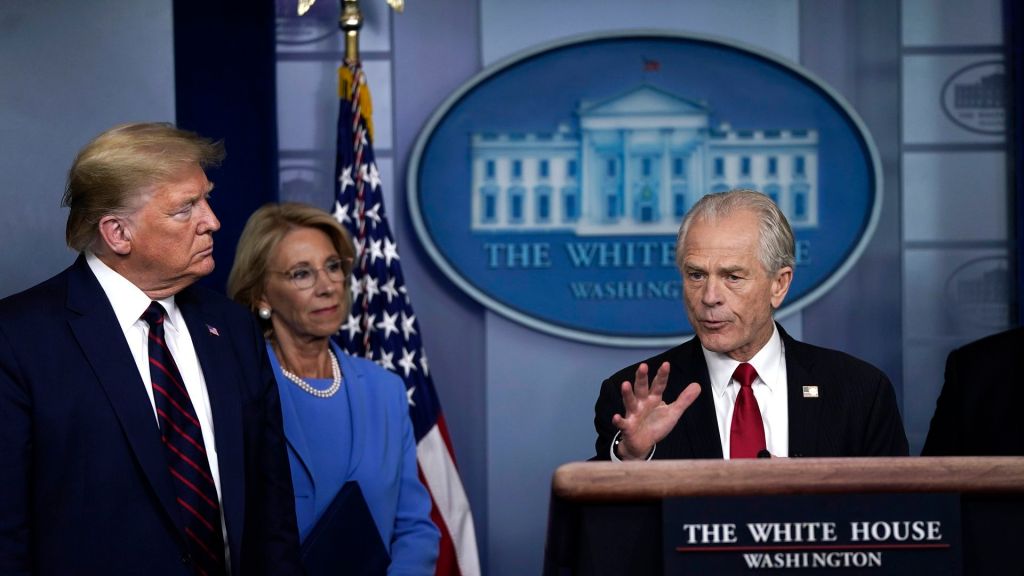
When Peter Navarro, former White House trade adviser and Trump loyalist, publicly urged Canadians to pressure their government into “negotiating fairly” before U.S. tariffs hit on August 1, the message wasn’t strength, it was panic. Navarro’s over-the-top rhetoric, painting Canada as an obstinate, underpowered negotiator, is less about truth and more about fear. If the United States were truly in control of the trade talks, it wouldn’t need to bluster. It wouldn’t need to insult. And it certainly wouldn’t be begging Canadians to do its dirty work.

Let’s be clear: Canada is not on its knees. We’re not some brittle middle power gasping for access to American markets. We’re a G7 economy with sophisticated supply chains, deep global trade ties, and a well-earned reputation for playing the long game. When Washington starts lashing out with threats and playground-level taunts, it’s a sign we’ve landed a punch.

Navarro’s claim that Canada is being “very challenging” at the negotiating table is revealing. It means our team is doing its job. Canadian trade officials, seasoned, careful, and resolute, have held their ground in defense of fair access, environmental standards, and domestic protections. That makes the Americans nervous. And when Americans get nervous in a Trump-style administration, they yell louder, not smarter.

The proposed 35% tariffs, to be imposed on Canadian goods not covered by the USMCA, are intended as a hammer. But even a hammer needs a target that won’t hit back. And this time, Canada has alternatives: deepening trade with the EU and Asia-Pacific, strengthening regional innovation hubs, and leveraging our vast resources in climate-sensitive sectors that the U.S. increasingly needs but doesn’t yet control.

Navarro also made a critical tactical error. By calling on Canadian citizens to push back against their own government, he misunderstands our national character. Canadians don’t take kindly to being told what to do, especially not by foreign officials acting like economic schoolyard bullies. The effect will likely be the opposite: renewed support for Ottawa’s position and a strengthening of political will across party lines to resist being steamrolled.

Historically, Canada has negotiated from the shadows, careful to avoid open confrontation. But this isn’t 1987. Today’s Canada is assertive, strategically patient, and unafraid of outlasting American tantrums. Navarro’s comments, while aggressive on the surface, are deeply revealing underneath. They betray a U.S. trade team that’s frustrated, boxed in, and afraid of losing leverage.

So yes, when the U.S. starts yelling, Canada should listen, but not to obey. To smile, stand tall, and quietly note: we’ve got them worried.

Sources:
• Bloomberg Law, “Navarro Urges Canada to ‘Negotiate Fairly’ Before August Tariff Deadline,” July 11, 2025.
• AInvest, “Trump Announces 35% Tariff on Canadian Goods,” July 11, 2025.
• Government of Canada, Global Affairs briefings on trade diversification (2023–2025).