AUKUS Update: Trump’s Price Hike and the Shadow of a Sovereignty Clause

This post is an update on the AUKUS saga that I wrote about, back in May 2025. Do you think the Australians are wishing they had stuck with their agreement with the French? 

As the ink dries on Australia’s multi-decade submarine commitment under the AUKUS pact, new political winds out of Washington are shaking the foundations of what Canberra once saw as a strategic guarantee. Under the returning Trump administration, the U.S. is pushing to renegotiate the financial terms of the agreement and is reportedly seeking to insert a wartime control clause, raising fresh concerns about Australia’s sovereignty and strategic independence.

The heart of the issue is money. While Australia has already pledged over US$500 million to help expand U.S. submarine production capacity, Trump’s team is now demanding far more, up to US$2 billion in new payments, as a condition to secure delivery of three to five U.S. Virginia-class nuclear submarines from 2032 onward. These funds would be directed to bolster American shipyards, particularly in Virginia and Connecticut, which remain overextended and under pressure to deliver on U.S. Navy contracts.

The financial squeeze isn’t the only concern. Reports have surfaced in The Australian and News.com.au that a so-called “China clause” may be under quiet negotiation. This clause would give the U.S. the right to reclaim or restrict Australian use of the submarines during a major conflict, particularly one involving China. While the Pentagon has not confirmed the existence of such a clause, the possibility alone has ignited alarm among Australian defense experts and former leaders.

Former Prime Minister Malcolm Turnbull, an early critic of the AUKUS pact, warned that the submarine deal risks becoming a one-sided arrangement in which Australia pays heavily to host, maintain, and eventually crew American subs, without ever holding true operational control. Bob Carr, another former senior figure, was blunter: if the clause is real, it would render Australia’s billion-dollar fleet a “rental service” for U.S. war planners.

Current officials, including Defence Minister Richard Marles, have sought to play down the growing controversy. He insists the U.S. review is “routine” and that Australia remains committed to the AUKUS vision. But behind closed doors, pressure is mounting. Canberra must now decide whether to comply with the new financial demands and legal caveats—or begin preparing for a prolonged diplomatic standoff.

Meanwhile, in the U.S. and U.K., the shipyards and surrounding real estate markets continue to benefit from AUKUS-linked investments. The U.S. gains not only geopolitical leverage but a quiet economic windfall, as the influx of Australian capital fuels job creation and property demand in key production zones like Newport News, Virginia and Barrow-in-Furness in the UK.

What began as a trilateral alliance of equals now looks increasingly like a bargain between a landlord and tenant, with Australia footing the bill for the privilege of being an American ally. As the strategic calculations shift and Trump’s transactional style returns to the global stage, Australia’s AUKUS submarines may be powerful, but only if Canberra retains the keys.

Sources:
News.com.au
The Guardian
The Washington Post
The Australian
Economic Times

Five Things We Learned This Week

Here’s the latest edition of “Five Things We Learned This Week” for June 28–July 4, 2025, showcasing five entirely new global developments—each occurring in the past seven days:

🧭 1. Trump Signs Sweeping Tax & Spending Bill

• On July 4, President Trump signed a landmark tax-and-spending package into law, following its narrow passage in Congress  .

• This $3.3 trillion bill includes large tax cuts and federal spending boosts, with analysts warning of significant long-term increases in national debt  .

🌍 2. Japan Warms for Possible Quakes, Authorities Calm Public

• On July 4, Japan’s disaster agency alerted residents of potential strong aftershocks off the southwest coast, though downplaying doomsday fears  .

• Authorities emphasized preparedness over panic, urging early warning systems remain active.

🇨🇳 3. China Signals Investment in Brazil‑Led Forest Fund

• At the end of the week, Reuters reported that China plans to back the “Tropical Forests Forever” fund led by Brazil—marking a strategic shift toward joint environmental efforts  .

• This move is viewed as a rare diplomatic gesture amid global climate partnerships.

📈 4. Global Equity Funds See Largest Inflows in 8 Months

• Global equity funds recorded a massive $43.15 billion inflow for the week ending July 2, driven by U.S. stock highs and surging interest in AI and tech sectors  .

• U.S. equity funds accounted for $31.6 billion, with robust gains also seen in European and Asian markets  .

🇲🇩 5. Moldova Leaders Emphasize EU Integration Ahead of Election

• On July 4, Moldova’s President Maia Sandu declared that citizens hold the future of the EU bid in their own hands as the country nears parliamentary elections  .

• Her appeal underscores Moldova’s ongoing push for formal European Union membership.

These five developments span U.S. fiscal policy, earthquake readiness, international environmental funding, global investment trends, and Eastern European geopolitics—all fresh this week. Want source links or deeper insights? Let me know!

Trump 2028: A Dynasty in the Making

As our southern neighbours celebrate their July 4th Independence Day, I thought I might run a little dystopian thinking by you, just for shits and giggles. 

With President Donald J. Trump firmly ensconced in the White House following his inauguration on January 20, 2025, the political spotlight has already shifted to the 2028 presidential contest. Now that Trump has reclaimed the presidency, serving a second, non‑consecutive term, the future of the Republican Party, and particularly the Trump brand, becomes even more intriguing. He cannot run again in 2028 due to the 22nd Amendment, yet his political influence remains as potent as ever. When Trump hints at “Trump 2028,” is he pointing toward a fading hope for a senior comeback, or planting the seeds for a dynastic succession?

Trump’s dismissal of J.D. Vance as the presumptive 2028 nominee, his blunt “No” in mid-2024, was a calculated move. It conveyed more than personal preference; it signaled that no one outside the Trump orbit, especially outside his own family, should assume control of the MAGA movement. That dismissal keeps the party’s trajectory anchored firmly to his legacy and opens the conversation to another Trump, likely Donald Trump Jr., as a strategic heir.

The Trump phenomenon is less ideology, more brand. It thrives on personality, controversy, and performative loyalty rather than governing philosophy. In this context, succession isn’t about grooming a policy-savvy protégé; it’s about sustaining a brand identity built on defiance, spectacle, and a perceived voice for disenfranchised Americans. The successor needs the name recognition, the meme-worthy charisma, and the combative mindset that defines the brand. Among the Trump offspring, only Don Jr. checks all those boxes.

Donald Trump Jr. has transformed himself into the Trump heir apparent. He is a constant fixture in conservative media, wields substantial pull on social platforms, and echoes the base’s grievances with unapologetic fervor. He didn’t build the MAGA mythos; he inherited and amplified it. That inheritance, and his relationships with influencers and activists in the base, have elevated his profile far above that of other Trump offspring. Ivanka has retreated, Eric remains in the family business, and Tiffany is entirely absent from politics. Don Jr. has emerged not just as a surrogate, but as a potential candidate.

Trump’s strategic ambiguity on “Trump 2028” serves multiple purposes. It flusters rivals, keeps the media’s attention, and maintains his grip on the Republican narrative. It also whets the base’s appetite for continuity. Because Trump remains in power, he commands the stage, and if he cannot hold it past 2028, he may hand it to someone who shares his blood, his message, and his followers’ fervor.

Is Don Jr. ready? The question isn’t about his credentials, he has none in elected office, but about his fit for a movement that prizes authenticity over formality. He is a provocateur, not a policy wonk, but if the base values combativeness and brand loyalty over experience, that could be enough. His candidacy would signal that Trumpism is shifting from a moment to a dynasty.

In essence, Trump’s rejection of Vance, his jesting about “Trump 2028,” and the steady rise of Don Jr. aren’t isolated events, they are pieces of a grander design. It’s a blueprint for a political legacy that goes beyond a single man, one that may redefine how power and influence are planned, and passed on, in American conservatism.

As Trump settles into his second term, the real battle isn’t just in Congress or the 2026 midterms, it’s in the heirs he chooses. Will the Republican Party coalesce around a Vance-or-DeSantis alternative, or will Trump Sr. successfully transfer authority to his son? For the MAGA faithful, the answer could come sooner than we think, and carry the Trump name once again into the White House in 2028.

Sources
• U.S. Constitution, 22nd Amendment.
The Hill, “Trump: Vance Not Default 2028 Nominee,” June 2024.
Axios, “Inside the Trump Family Political Machine,” October 2023.
• Maggie Haberman, Confidence Man: The Making of Donald Trump and the Breaking of America, 2022.
• Pew Research Center, “Trump Voter Demographics and Political Influence,” 2020.

Why Canada’s Digital Services Tax Is Poking the Bear – And Why Australia and New Zealand Are Still Holding the Stick

It was only a matter of time before Canada threw its toque into the ring on the global debate over taxing tech giants. After years of polite patience, Ottawa finally said enough is enough and committed to implementing a Digital Services Tax (DST), retroactively, no less, dating back to January 1, 2022. The goal? To make Big Tech pay its fair share for the billions they earn from Canadians’ online clicks, swipes, and searches. Predictably, this move hasn’t exactly gone down well south of the border, especially with Donald Trump, who’s already threatening retaliatory tariffs faster than you can say “Google it.”

Canada’s DST is a 3% levy on revenues from digital services; think online marketplaces, advertising platforms, and social media, that target Canadian users. The tax only kicks in for companies making over €750 million globally and more than $20 million in Canadian digital revenues. So, yes, this is about Amazon, Google, Meta, and Apple. Not your cousin’s Shopify side hustle.

The reasoning behind the move is, frankly, hard to argue with. For years, digital multinationals have made huge profits in countries where they have lots of users but no physical offices. Since our tax codes were written in the days of rotary phones, these companies have legally side-stepped corporate taxes in places like Canada while hoovering up data and ad dollars with industrial-grade efficiency. The DST is intended as a band-aid solution until a global fix comes together, though that band-aid is now being applied with an increasingly firm hand.

In truth, the global tide may finally be turning on Silicon Valley’s long, tax-free world tour. For over a decade, Big Tech has surfed a wave of international growth, scaling into nearly every market on Earth without paying local dues. Armed with sophisticated tax avoidance schemes, usually routed through Ireland or the Netherlands, the giants of the digital economy have profited handsomely while governments watched domestic retailers struggle to compete. But now, faced with growing public backlash and creaking public coffers, countries from France to India to Canada are drawing a line. The message is clear: if you make money off our citizens, you’re going to help fund the roads, schools, and social programs that keep them clicking.

The global fix in question is the OECD’s “Two-Pillar” solution, a diplomatic marathon attempting to modernize international tax rules. Pillar One aims to reallocate taxing rights to market countries (like Canada), while Pillar Two would establish a global minimum corporate tax of 15%. Canada has said it would delay DST collection if the OECD deal is implemented, but with the U.S. dragging its heels on ratification, Ottawa is preparing to go it alone.

That’s where Trump comes in. Never one to let a perceived slight slide, he’s treating Canada’s DST as a direct assault on U.S. interests. After all, the companies getting dinged are almost entirely American. Trump’s threats to slap retaliatory tariffs on Canadian exports are classic “America First” bluster, but they’re not without precedent. The U.S. already opened Section 301 investigations into several other countries’ DSTs, accusing them of unfairly targeting American firms. Biden’s administration cooled the rhetoric, but the sentiment remains.

Of course, Canada isn’t the only country to stick its neck out on this. France was the pioneer, pushing ahead with a 3% DST despite fierce U.S. pushback. Italy, Spain, and the UK followed suit. Even India got into the act with its “equalisation levy,” predating many Western attempts. Each of these nations, like Canada, grew tired of waiting for multilateral action while Silicon Valley giants dodged their tax nets with Olympic-level agility.

Interestingly, not everyone in the Anglosphere has been quite so bold. Take Australia. A few years back, it flirted with a DST, there were consultations, white papers, and worried glances toward Washington. But ultimately, Canberra decided to give the OECD process a shot and beefed up its anti-avoidance laws instead. Its Multinational Anti-Avoidance Law and Diverted Profits Tax now let the tax office go after digital firms that try to shuffle profits offshore. It’s the equivalent of hiring a tough new accountant rather than inventing a new tax altogether.

New Zealand, meanwhile, has taken a “just in case” approach. Legislation for a 3% DST was passed in 2023, but it’s sitting in a drawer for now, ready to go if the OECD talks collapse. The Kiwis have been clear they don’t want to pull the trigger unless absolutely necessary, probably because they’d prefer not to find themselves on the receiving end of a tweetstorm or tariff tantrum from the next American administration.

So here we are: Canada, gloves off and calculator in hand, is forging ahead, determined to claw back a fair share from the tech titans. Australia and New Zealand, pragmatic as ever, are hedging their bets and keeping trade relationships intact, at least for now. But even their patience has limits. The longer the OECD deal stalls, the more tempting it becomes to follow Canada’s lead.

In the end, this is a fight not about code or commerce, but about fairness in the digital age. The world’s tax systems were built for an era of railroads and oil refineries, not cloud storage and influencer revenue. Until the global rules catch up, expect more countries to test their own digital tax solutions. Whether that means poking the American bear or just poking around in policy drawers remains to be seen. But one thing’s certain: tech giants might finally be running out of places to hide.

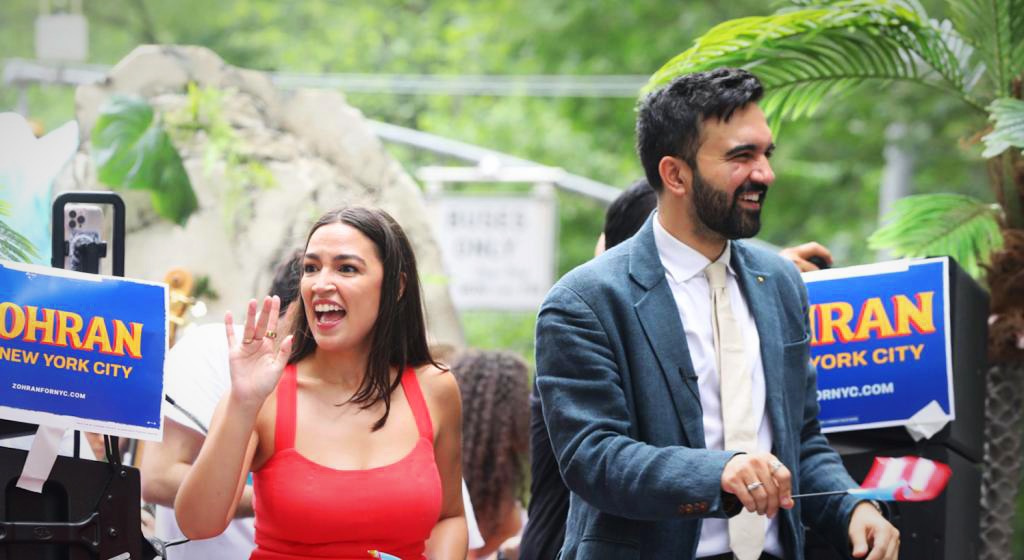
The Right-Wing Assault on Zohran Mamdani: A Case Study in Fear, Faith, and Manufactured Outrage

This week’s Democratic primary win by Zohran Mamdani in New York City has sparked a swift and vitriolic backlash from the American political right. For many progressives, Mamdani represents a fresh, principled voice, an openly socialist, Muslim elected official rooted in grassroots organizing. Yet, to the MAGA-aligned right, he’s become an instant caricature: the bogeyman of “woke” America, Islamic extremism, and anti-capitalist menace rolled into one.

What’s striking is not just the speed or ferocity of the attacks, but their coherence. The American right has launched a well-coordinated, multi-front campaign to delegitimize Mamdani before he’s even secured office. This isn’t just about a single candidate, it’s about creating a chilling example for anyone who dares to combine faith, leftist politics, and immigrant heritage in one political package.

The attacks fall into four clear categories: ideological smears, identity-based vilification, legalistic threats, and strategic political framing. Let’s unpack each in turn.

Ideological Smears: “100% Communist Lunatic”
Leading the charge, unsurprisingly, was Donald Trump himself. In a Truth Social post, Trump called Mamdani a “100% Communist Lunatic,” mocked his appearance (“he looks TERRIBLE”), and dismissed his intelligence. “He has a grating voice and is not very smart,” Trump wrote, using his familiar playground style to frame Mamdani as both alien and absurd.

This wasn’t just personal insult, it was deliberate ideological messaging. Trump’s followers picked up the cues. Fox News commentators immediately recycled the “radical Marxist” label, lumping Mamdani with other left-wing figures like AOC and Ilhan Omar. Charlie Kirk, head of Turning Point USA, accused Mamdani of being “openly hostile to American values,” while Ben Shapiro described him as “a warning shot for every city in America flirting with socialist politics.”

The goal is clear: to equate Mamdani’s democratic socialism with authoritarian communism, hoping the average voter won’t notice the difference, or care.

Identity Attacks: Islamophobia on Full Display
Once the ideological lines were drawn, the right turned to its most reliable weapon: fear of the Other. Mamdani’s Muslim identity has become the centerpiece of a series of ugly, Islamophobic attacks that call back to the darkest days of post-9/11 paranoia.

Right-wing influencer Laura Loomer declared that Mamdani’s win meant “Muslims will start committing jihad all over New York.” Charlie Kirk took a similar route, tweeting, “24 years ago a group of Muslims killed 2,753 people on 9/11. Now a Muslim Socialist is on pace to run New York.”

This isn’t dog-whistling. It’s a blaring siren aimed at reinforcing the idea that no Muslim, especially one on the political left, can ever be truly American. Donald Trump Jr. added fuel to the fire, posting that “NYC has fallen,” linking Mamdani’s faith to the city’s supposed moral and political collapse.

It’s a tactic steeped in the logic of fear. By framing Mamdani as a religious threat, not just a political one, the right seeks to incite suspicion and revulsion in undecided voters, and rally the conservative base with xenophobic energy.

Legal Threats: Revoking Citizenship and Deportation
Perhaps the most extreme tactic has come from fringe legal proposals that are gaining traction in some corners of the Republican ecosystem. The New York Young Republican Club issued a statement urging that Mamdani’s citizenship be revoked and that he be deported under the Cold War–era Communist Control Act.

Joining in were social media accounts linked to campus Republican groups at Notre Dame and elsewhere, who posted memes calling for Mamdani’s removal “before he turns NYC into Gaza.

Of course, Mamdani is a U.S. citizen, and the Communist Control Act has long been rendered toothless, but the mere invocation of such tools shows the level of desperation, and the fantasy of a purer, ideologically homogeneous America that many on the far right still chase. That such rhetoric is being normalized through prominent GOP-aligned accounts is a worrying sign of how authoritarian instincts now animate large swaths of the American right.

Strategic Framing: The New Face of the Democratic Party
Beyond the bluster, there is calculation. Republican strategists are already working Mamdani’s win into their national messaging. Rep. Richard Hudson, chair of the National Republican Congressional Committee, called Mamdani “the new face of the Democratic Party” and warned that he was “anti-police, anti-ICE, and antisemitic.”

Elise Stefanik, a top Trump ally and potential gubernatorial candidate in New York, blasted the state’s Democrats and Governor Kathy Hochul, claiming their “weakness and chaos” enabled Mamdani’s win. “This is what happens when you abandon law and order,” she warned, painting Mamdani’s victory as a symptom of broader Democratic decay.

The GOP’s playbook here is familiar: elevate the most progressive voices within the Democratic coalition and present them as mainstream, thereby frightening moderate voters. It’s the same tactic used against AOC and “The Squad,” now applied to a new, compelling candidate who threatens to expand the progressive tent even further.

A Test of American Pluralism
What we’re witnessing is not just the rejection of a political ideology, it’s an assault on the possibility that someone like Zohran Mamdani can belong in American political life. A socialist. A Muslim. The child of immigrants. A man whose vision of justice includes housing for all, and decarceration as part of a broader push to treat social problems (like addiction, poverty, and mental illness) through public health and community investment, not criminal punishment.

The right’s response is a mixture of panic and performance, yet their firepower is real, and their message is resonating in dark corners of the internet and Fox-friendly swing districts alike.

For Mamdani and others who share his vision, the challenge now is twofold: defend against the smears, and articulate a hopeful, inclusive vision that transcends them; because while the attacks are ugly, they are also revealing. They tell us exactly what the political right fears most: a future where people like Zohran Mamdani don’t just run, they win.

Sources
• Truth Social (Trump posts)
• Charlie Kirk and Donald Trump Jr. tweets, June 2025
• Statements from the NY Young Republican Club
• Fox News broadcast transcripts, June 24–26, 2025
• Public posts by Laura Loomer and Elise Stefanik on X (formerly Twitter)

Five Things We Learned This Week

Here is the latest edition of “Five Things We Learned This Week” for May 17–23, 2025, highlighting significant global developments across various sectors.

🛑 1. UN Warns of Escalating Humanitarian Crisis in Gaza

UN Secretary-General António Guterres described the current stage of the Gaza conflict as possibly its “cruellest phase,” with Palestinians facing immense suffering amid escalating Israeli military operations. He warned that the entire population is at risk of famine and criticized the limited humanitarian aid reaching Gaza, citing that only a fraction of permitted aid trucks have reached those in need due to insecurity. In the past 24 hours, at least 60 people were killed, including strikes on Khan Younis, Deir al-Balah, and Jabaliya, with over 50 people still buried under rubble. UN agencies and aid groups have raised alarms about inadequate food and medical supplies, with over 9,000 children treated for malnutrition and the healthcare system near collapse—94% of hospitals are damaged or destroyed. Israeli airstrikes have also targeted hospitals, further straining emergency services. Despite easing an 11-week blockade, aid remains minimal, far below pre-war levels. International criticism of Israel’s military actions continues, with leaders calling for a ceasefire and increased humanitarian access. Meanwhile, discussions are underway among Western nations about formally recognizing the state of Palestine, adding a new diplomatic dimension to the ongoing crisis. 

💉 2. NHS England Launches World’s First Gonorrhoea Vaccine

On May 21, NHS England introduced the world’s first gonorrhoea vaccine, demonstrating an efficacy of 30–40%. This development aims to combat the rising rates of gonorrhoea infections and represents a significant advancement in public health efforts to control sexually transmitted infections. 

📉 3. Trump’s New Tariff Threats Shake Global Markets

President Donald Trump’s evolving trade policies continue to send shockwaves through global markets. After a brief period of de-escalation in the U.S.-China trade war, markets were rattled on May 23, 2025, when Trump threatened to impose a 25% tariff on Apple iPhones not manufactured in the U.S. and a 50% tariff on EU goods starting June 1. These moves undermined recent optimism following tariff reductions between the U.S. and China, which had reignited S&P 500 gains and stabilized investor sentiment. However, concerns about tariffs resurfaced alongside rising inflation, tepid economic growth, and persistent federal debt nearing 100% of GDP. Despite some temporary relief—such as tariff pauses and incentives for auto and tech firms—Trump’s unpredictable trade tactics, especially his criticism of Apple’s offshore manufacturing and pressure on trading partners like the UK and India, have reintroduced uncertainty. Furthermore, even with promising AI infrastructure investments from the Middle East, the U.S.-China relationship is strained by export restrictions and sanctions tied to Huawei’s semiconductor use. Economists warn these erratic policies could spur stagflation and erode S&P 500 earnings growth, highlighting the risks of Trump’s tariff-heavy strategy amid widening fiscal deficits and global trade tensions. 

🧬 4. Discovery of New Dwarf Planet Candidate in Outer Solar System

Astronomers have reported the discovery of 2017 OF201, a new dwarf planet candidate located in the outer reaches of the Solar System. This celestial body adds to our understanding of the Solar System’s composition and the diversity of objects within it. 

🎭 5. Hay Festival of Literature and Arts Commences in Wales

The Hay Festival of Literature and Arts began on May 22 in Hay-on-Wye, United Kingdom. This annual event is one of the largest literary festivals globally, attracting authors, thinkers, and readers to celebrate literature, arts, and ideas through various talks, readings, and performances. 

Stay tuned for next week’s edition as we continue to explore pivotal global developments.

From Reformist to Foot Soldier: The Political Evolution of Marco Rubio

For a time, Marco Rubio seemed to embody the hope that the Republican Party might modernize without losing its ideological spine. Young, charismatic, and the son of Cuban immigrants, he was hailed in the early 2010s as a conservative who could articulate traditional Republican values in a way that spoke to a broader, more diverse America. When he launched his presidential campaign in 2015, he positioned himself as a candidate of the future, one who could move past the culture wars and appeal to younger voters. To many in the media and even among some Democrats, Rubio seemed reasonable, serious, and, crucially, not dangerous.

This perception was always something of a projection. While Rubio carried himself with more polish and optimism than the emerging populist wing of the party, his actual positions were firmly in line with movement conservatism: staunchly anti-abortion, fiscally hawkish, anti-union, and reflexively interventionist on foreign policy.  Yet, because he wasn’t loud or cruel about it, and because he occasionally flirted with bipartisan gestures, most notably as a member of the 2013 “Gang of Eight” that attempted to pass comprehensive immigration reform, he was miscast as a moderate. The immigration effort was perhaps the high-water mark of his reputation as a bridge-builder, but the vicious backlash from conservative media and grassroots activists forced him into retreat. Rubio didn’t defend the bill; he distanced himself from it. This was an early sign of a pattern that would define his political choices; say the right thing when it’s safe, but retreat when it’s not.

Rubio’s realignment became undeniable with the rise of Donald Trump. In 2016, he famously called Trump a “con artist,” mocking his hands and personal behavior in an unusually caustic exchange; but after dropping out of the presidential race, he quickly endorsed Trump and began the long process of political adaptation. By the time Trump had cemented his control over the GOP, Rubio had made his peace with the new order. He supported Trump through both impeachment trials, echoed his talking points about “election irregularities” in 2020 without directly endorsing false claims, and has steadily absorbed the rhetoric and priorities of the MAGA movement, particularly on issues like “wokeism,” China, and the weaponization of federal institutions.

What surprises many observers now is not so much Rubio’s positions, many of which he has held, if more quietly, for years, but how fully he has embraced the tone and sensibility of the MAGA worldview. The man once billed as a “next-generation Republican” has become another foot soldier in the party’s turn toward grievance politics, culture war maximalism, and a brand of authoritarian-adjacent populism that defines today’s GOP. His evolution is not unique. It mirrors that of a party whose internal incentives now reward loyalty to Trump and punishment for dissent. Rubio is not leading that transformation; he’s adapting to it, and perhaps surviving because of it.

In truth, the notion that Rubio was ever a centrist or a true reformer was a comforting myth told by centrists and pundits who longed for a less chaotic Republican Party, but Rubio was never that man. He was always a disciplined conservative with big ambitions, more fluent in elite political language than many of his peers, but no less ideologically committed. The real shift, then, is not in Rubio’s principles, but in the conditions under which he operates. The surprise people express today is less about his transformation, and more about our own willingness to believe he was something else.

Forget the Third Term—Trump’s True Threat to Democracy Is Happening Now

Donald Trump’s recent statements about serving a third term should not be taken at face value. Instead, they are likely a deliberate red herring, designed to dominate the news cycle and distract the public from the real threats to democracy that his administration and allies are pursuing. This is a classic Trump strategy; make an outrageous claim, provoke an intense reaction, and while everyone is busy debunking it, work quietly in the background to consolidate power.

The reality is that a third term is constitutionally impossible without an amendment, which would require overwhelming congressional and state-level support; something Trump does not have. So why bring it up? Because it forces Democrats, legal scholars, and the media to focus on an imaginary crisis rather than the real one. While everyone is busy arguing about whether he “means it” or if there’s a legal loophole he could exploit, the actual threats to democracy, attacks on voting rights, the erosion of institutional checks and balances, and the installation of loyalists in key positions, go largely unchecked.

We’ve seen this playbook before. Throughout his first presidency, Trump used inflammatory rhetoric to create chaos and dominate media coverage, distracting from the structural changes his administration was making behind the scenes. His lies about a “stolen election” consumed public discourse, but the real story was the groundwork being laid for legal challenges, voter suppression laws, and, ultimately, the violent January 6th insurrection. His latest comments about a third term could serve a similar function, keeping his base engaged and enraged while drawing attention away from his administration’s more immediate moves.

The most dangerous aspect of this tactic is that it works. Every time Trump makes an outrageous claim, it forces his opponents to play defense, scrambling to explain why his idea is unconstitutional or unworkable. Meanwhile, his supporters rally around him, buying into the narrative that he is the only one who can “save” the country. This shift in focus allows him to continue his real mission; undermining democratic institutions to ensure his grip on power extends far beyond 2029, even if he never officially serves a third term.

Democrats and the media must recognize this strategy for what it is. Instead of getting caught up in the spectacle, they must stay laser-focused on what Trump is actually doing. The real story isn’t whether he can serve a third term, it’s how he is working right now to weaken democracy so that he won’t have to leave power in the first place.

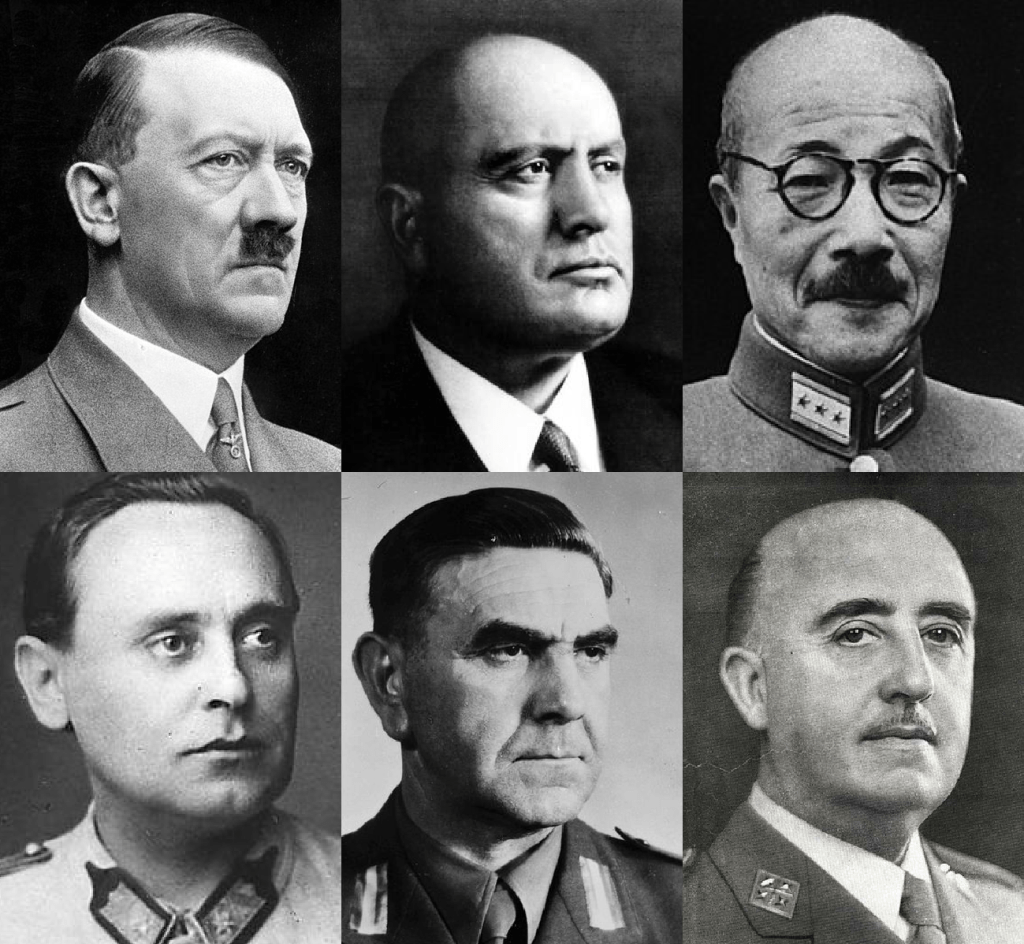
The Delusions of Authoritarians: Why it never ends well for Fascist Leaders

Fascist and authoritarian leaders rarely see themselves as doomed figures in history. On the contrary, they often believe they are exceptional – capable of bending the course of history to their will. Whether through the cult of personality, the rewriting of historical narratives, or sheer force, they assume they can control how they will be remembered. This delusion has led many to catastrophic ends, yet new generations of authoritarians seem undeterred, convinced that they will be the ones to succeed where others failed. Trump and his allies fit squarely into this pattern, refusing to believe that history might judge them harshly or that their actions could lead to their own downfall.

Mussolini provides one of the most vivid examples of this phenomenon. He envisioned himself as a modern-day Caesar, reviving the grandeur of the Roman Empire through Fascism. His brutal repression of dissent, his alliance with Hitler, and his reckless military ambitions ultimately led to disaster. When the tide of World War II turned, Mussolini found himself abandoned, hunted, and finally executed by his own people; his corpse hung upside down in Milan as a stark rejection of his once-grandiose vision. And yet, to the very end, he believed he was the victim of betrayal rather than the architect of his own demise.

Hitler, too, was utterly convinced of his historical greatness. He meticulously curated his own image, producing propaganda that cast him as Germany’s savior. Even as the Third Reich collapsed around him, he ranted in his bunker about how the German people had failed him rather than the other way around. His ultimate act, suicide rather than surrender, was an attempt to control his narrative, ensuring he would never be paraded as a prisoner. But history did not grant him the legacy he sought. Instead of being remembered as a visionary, he became the ultimate symbol of genocidal tyranny.

The pattern continued into the later 20th century. Nicolae Ceaușescu, the Romanian dictator, had convinced himself that his people adored him. He built extravagant palaces while his citizens starved, crushed opposition, and developed a personality cult that portrayed him as a paternal figure of national strength. When the moment of reckoning arrived in 1989, he seemed genuinely shocked that the crowd in Bucharest turned on him. Within days, he and his wife were tried and executed by firing squad, their supposed invincibility revealed as an illusion.

Even those who manage to hold onto power longer do not always escape history’s judgment. Augusto Pinochet ruled Chile through terror for nearly two decades, believing that his iron grip would secure him a revered place in history. But his crimes – torture, executions, forced disappearances eventually caught up with him. Though he escaped trial for most of his life, his reputation was destroyed. His legacy became one of shame rather than strength.

Trump, like these figures, operates in a world where loyalty and spectacle take precedence over reality. He dismisses mainstream historians as biased, preferring the adulation of his base over any broader judgment. He likely assumes that as long as he can retain power, whether through elections, legal battles, or intimidation, he can dictate how history views him. But history has a way of rendering its own verdict. Those who believe they can shape their own myth while trampling on democratic institutions, rule of law, and public trust often find themselves remembered not as saviors, but as cautionary tales.

America’s Arrogance Knows No Bounds: Trump’s 51st State Fantasy as repeated by Rubio is an Insult to Canadian Sovereignty

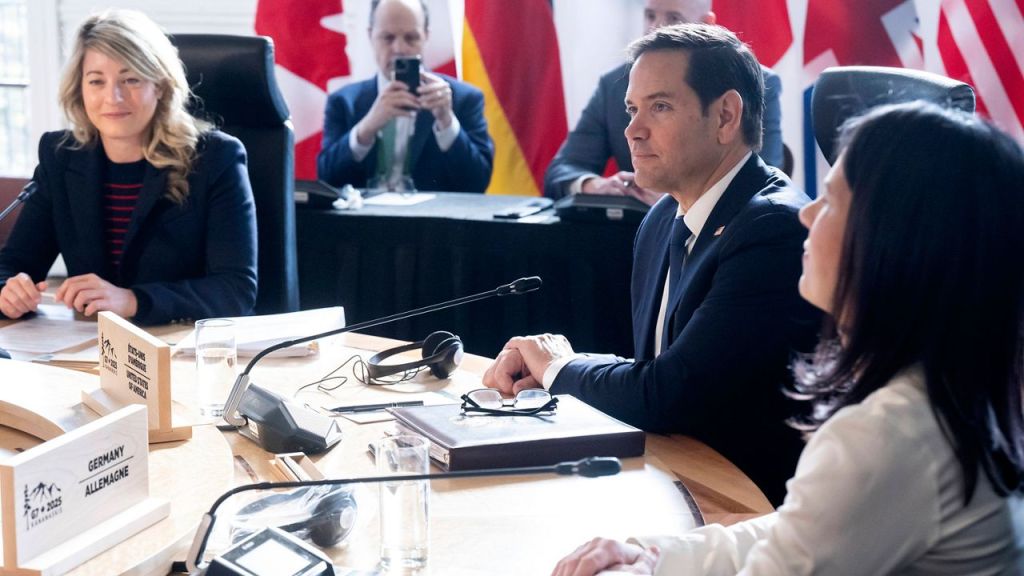
Marco Rubio, speaking after the G7 foreign ministers’ summit in Charlevoix, had the gall to suggest that Trump’s annexation fantasy was just an “economic argument” that “stands for itself.” Really? An economic argument? As if Canada’s entire existence hinges on whether the U.S. slaps a few tariffs on our exports.

When pressed about Trump’s repeated claims that the Canada-U.S. border is an “artificial line,” Rubio shrugged it off. According to him, there’s merely a “disagreement” between Trump and the Canadian government. No, Marco, it’s not a “disagreement.” It’s an outrageous, imperialist insult that no Canadian should tolerate.

Apparently, this all started back in December 2024 when then-Prime Minister Justin Trudeau met with Trump at Mar-a-Lago. Rubio claims Trudeau said Canada couldn’t survive if the U.S. imposed tariffs, and Trump, ever the megalomaniac, took that as an opening to suggest annexation. Now, let’s be clear: Trudeau has never confirmed saying anything remotely like that. But Trump, in his usual dishonest fashion, took it and ran – repeating the “51st state” nonsense so many times that even Trudeau, at first dismissing it as a joke, was forced to take it seriously.

Fast forward to today, and we have Trump sitting in the Oval Office with NATO Secretary-General Mark Rutte, once again declaring that Canada “only works as a state.” And what did Rutte, representing one of the world’s most powerful alliances, say? Nothing. Not a word. That’s NATO for you – silent when it comes to one of its founding members being treated like an American colony-in-waiting.

Thankfully, our new Prime Minister, Mark Carney, didn’t mince words. His response? “We will never, ever in any way, shape, or form be part of the United States.” Simple, direct, and exactly what needed to be said.

The sheer arrogance of Trump and his lackeys is breathtaking. Canada is a sovereign nation. We are not some economic vassal of the United States, nor are we waiting around for Washington to “save” us. The idea that our country exists only at the whim of American economic policy is an insult to everything we stand for.

Germany’s Foreign Minister, Annalena Baerbock, voiced strong support for Canada in response to U.S. President Donald Trump’s economic threats and remarks about making Canada an American state. She emphasized that sovereign borders must be respected, including those of Ukraine, Greenland, and Canada, and reaffirmed Germany’s close friendship with Canada. 

Make no mistake – this is not about economics. It’s about power, control, and America’s delusional belief that it can swallow up anything it wants. Canada has fought too hard, for too long, to let some washed-up real estate con artist and his yes-men dictate our future.

America can keep its chaos, its dysfunction, and its toxic brand of politics. Canada is, and always will be, its own nation. And the sooner Washington gets that through its thick skull, the better.