
From Limehouse to Left Populism: Why Corbyn’s New Party Feels Different

Last week, I wrote a general interest piece on the Corbyn–Sultana initiative to launch a new grassroots political party in the UK. After posting it, I realised I had a more personal connection, and a story worth telling.

I was there in 1981.

When the “Gang of Four” – Roy Jenkins, Shirley Williams, David Owen, and Bill Rodgers – strode out of Labour’s crumbling broad church and declared the need for a new political home, it felt like a break with the grey inevitability of two‑party Britain. Labour, under Michael Foot, was veering sharply left; the Conservatives, under Margaret Thatcher, were galloping into free‑market dogma. In between stood millions of voters – decent, pragmatic, social democrats, who wanted neither hard socialism nor hard monetarism.

Along with my girlfriend, I joined the Social Democratic Party because we thought it would be the vehicle for a new progressive realignment. The SDP promised modernisation, pro‑European internationalism, civil liberties, and a politics of reason over dogma. I chatted with David Owen when he visited Durham’s Student Union, and we discussed European integration and mixed economic models. We were going to break the mould.

Of course, the mould didn’t break.

The SDP, despite polling in the mid‑20s, was mugged by Britain’s electoral system. In 1983 we won 25% of the vote but just 23 seats. My girlfriend ran in that election as the SDP candidate in a London constituency and came in second. The Liberal Alliance gave us numbers, but also blurred the brand. By 1988, the merger into the Liberal Democrats marked the end of the experiment. David Owen kept a “continuing SDP” alive for a few more years, but it dwindled into irrelevance. The lesson seemed clear: you can’t break the mould if you can’t break first‑past‑the‑post.

Fast‑forward four decades.

Jeremy Corbyn, a figure I would once have dismissed as unelectable, has just launched a new left‑wing party with Zarah Sultana. The working title is “Your Party” –  a placeholder until the members choose the real name. It’s a start‑up political force aimed squarely at the people Starmer’s Labour has abandoned: young, working‑class voters, trade unionists, Muslim communities, tenants trapped by spiralling rents, and those appalled by Britain’s foreign policy silence over Gaza.

This is not a replay of the SDP. In fact, it is almost its mirror image. Where Owen’s SDP was a break from Labour’s leftward drift toward a moderate centre, Corbyn’s break is from Labour’s retreat to cautious centrism. The SDP sought to cool the fires of Bennite socialism; Corbyn wants to rekindle them, but with 21st century energy, and an unapologetic moral clarity.
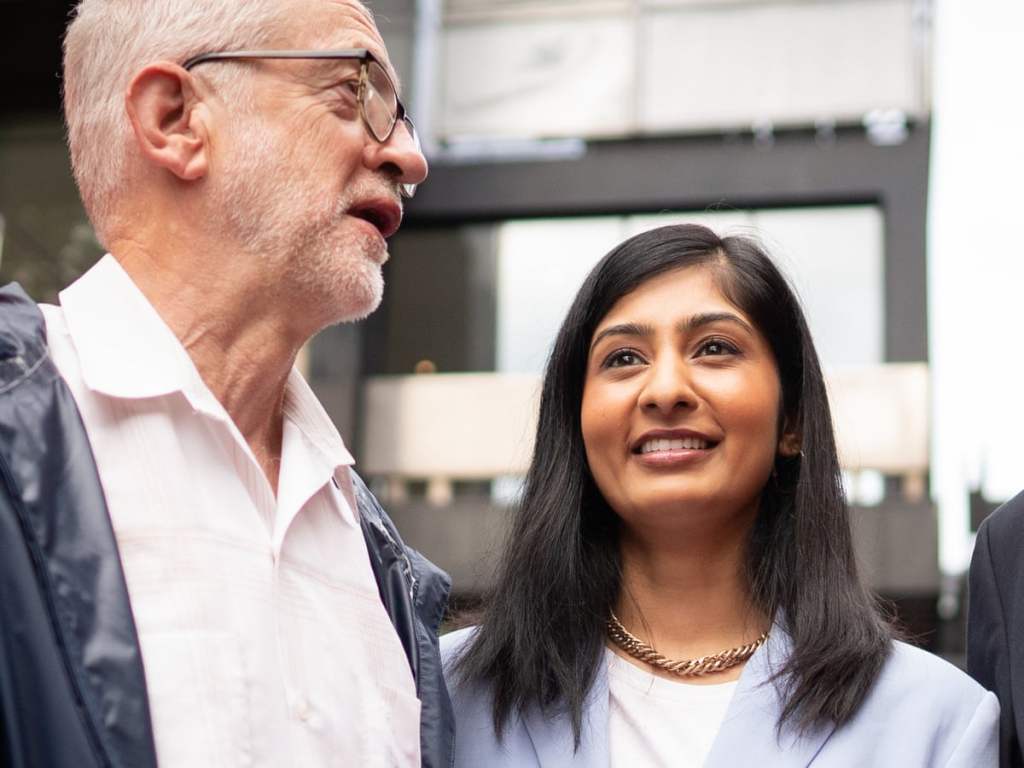
The early signs suggest an appetite for it. Within hours of launch, the new party reportedly gained 80,000 sign‑ups. Early polling shows it could attract up to 10% of the national vote and, strikingly, over 30% of voters aged 18 to 24. That’s not a niche; that’s a generation.

The platform is unashamedly radical: public ownership of rail, mail, and energy; wealth taxes; rent controls; and a foreign policy grounded in human rights, starting with an arms embargo on Israel. It’s the politics Labour once flirted with under Corbyn’s own leadership but has now buried under Starmer’s managerialism.

Of course, the familiar spectre of the electoral system looms over this effort too. Under first‑past‑the‑post, 10% of the vote without concentrated geographic strength delivers little in the way of seats. The same mechanics that kneecapped the SDP will bite here as well. Worse, the vote‑splitting effect could deliver seats to the Conservatives or Reform UK that might otherwise go Labour.

This is the main line of attack from Starmer loyalists, that Corbyn is dividing the left and letting the right in. I’ve heard this argument before. In the early ’80s, Labour accused the SDP of doing Thatcher’s bidding. And yes, in some seats we did make a Tory win easier, but that’s the nature of political pluralism: no party owns your vote.

The truth is that Labour in both eras created the conditions for a breakaway. In 1981, Labour’s embrace of unilateralism, its hostility to Europe, and its tolerance of factional extremism drove moderates away. In 2025, Labour’s embrace of fiscal caution, its refusal to reverse austerity, and its complicity in moral abdications on foreign policy have alienated a swathe of the progressive left.

There’s also a difference in energy. The SDP’s strength came from defecting MPs and respected establishment figures. That gave us media credibility, but also made us a party of insiders in exile. Corbyn’s movement is almost the opposite: driven by grassroots organisers, youthful energy, and activist networks built over years in Momentum, trade unions, and anti‑war campaigns. He’s starting with a mass base the SDP never had.

That matters.

Politics in 2025 is not politics in 1981. Social media can turn a well‑phrased message into a viral moment that reaches millions without needing permission from Fleet Street. Independent fundraising platforms can keep a party afloat without deep‑pocket donors. Organised communities can be mobilised quickly in ways we could barely imagine in the early ’80s.

But the hurdles remain. Charisma and clarity are not enough. Organisation, discipline, and a credible electoral strategy are vital. The SDP faltered because we could not translate national polling into local machinery that could deliver seats. If Corbyn wants to avoid our fate, he will need to learn that lesson quickly, and perhaps swallow the bitter pill of electoral pacts with the Greens and others in key marginals.

What draws me, a lapsed social democrat, to this project is the moral clarity. The SDP believed in decency and moderation; Corbyn’s party believes in justice and equality. The former was about making the system work better; the latter is about making a different system altogether. In an age of deepening inequality, climate emergency, and political cynicism, moderation feels inadequate.

In 1981, I thought the centre could hold. In 2025, I’m no longer so sure. The forces pulling Britain apart are not ideological factions in parliament but the grinding realities of low pay, unaffordable housing, public services on their knees, and a political class that treats foreign policy as an exercise in selective morality.

So yes, I will be watching Corbyn’s new party with hope, and with the long memory of someone who’s seen idealism crash against electoral reality before. The challenge will be to harness the passion without losing strategic focus, to avoid the trap of purity politics that comforts the faithful but leaves power to the enemy.

The SDP set out to break the mould and failed. Corbyn’s party may be trying to remould it entirely. If he can unite the moral urgency of the left with the organisational savvy of a winning campaign, this time might be different. And after forty years, I’d like to think the mould is already cracking.

The Political Earthquake Few Saw Coming

The United Kingdom’s political landscape is about to receive its most significant jolt in years. Former Labour leader Jeremy Corbyn, alongside independent MP Zarah Sultana, has confirmed the launch of a new grassroots political party, one that aims to occupy the political space Labour has steadily abandoned. Announced on July 24, 2025, the initiative has already attracted tens of thousands of supporters within hours, signalling a deep hunger for a bolder, unapologetically left‑wing alternative to the status quo. While the official name has yet to be chosen, the movement’s intent is unmistakable: to offer a platform rooted in social justice, economic fairness, and genuine community democracy.

From the outset, the project is being framed not as another Westminster‑centric vehicle, but as a federation of locally empowered organisations with a national vision. Core principles include wealth redistribution, ending austerity, public ownership of essential services, and a decisive foreign policy stance that rejects arms sales to Israel while affirming support for a free and independent Palestine. These are policies designed to galvanise the disillusioned, voters alienated by Labour’s cautious centrism and the stagnation of Britain’s two‑party stalemate.

The momentum is real. Reports vary, but early estimates suggest between 80,000 and 500,000 sign‑ups within the first day, an extraordinary show of energy for a movement still without a name. For Corbyn and Sultana, this is not simply a bid to reclaim the past, but an attempt to forge a coalition that can speak to the country’s present and future needs. The party’s inaugural conference, scheduled for later in 2025, will be a decisive moment. It will set the tone for how the organisation functions internally, what it will be called, and how it plans to compete in local and national elections.

Politically, the implications are substantial. Labour, under Keir Starmer, has bet heavily on attracting centrist swing voters, a strategy that risks alienating its traditional base. Corbyn’s party could become the rallying point for those who believe Labour has compromised too far, offering a home for trade unionists, younger voters, anti‑war campaigners, and those seeking transformative economic policy. The risk of splitting the progressive vote is real, but so too is the possibility of reshaping the national conversation, and forcing a recalibration of priorities within Labour itself.

Much will depend on the movement’s ability to convert enthusiasm into infrastructure. Building candidate pipelines, securing funding, and sustaining grassroots organisation will be critical. Corbyn’s long‑standing connection with activist networks and Sultana’s resonance with younger progressives provide a promising foundation. If that energy translates into effective campaigning, the party could make its mark far sooner than expected.

This is not just another fringe protest party emerging from the political wilderness. It is the crystallisation of years of grassroots frustration, now given structure, leadership, and the potential for scale. While sceptics will point to the electoral system’s unforgiving nature, history shows that determined movements with a clear moral compass can shift the terrain in surprising ways.

The UK is entering a period where political certainties no longer hold. In this volatile climate, new actors with courage and clarity can have an outsized impact. The Corbyn‑Sultana initiative is still in its infancy, but it has already tapped into a deep well of popular discontent. Watch this space – the story is only just beginning.

Nigel Farage: The Pint-Sized Prophet of Populism (And Other Tall Tales)

If there were ever a political equivalent of a pub bore who mistook volume for vision and nostalgia for nationalism, it would surely be Nigel Farage. A man who has turned the art of saying nothing loudly into a long-running solo act, Farage now finds himself back on the national stage, pint in one hand, populist outrage in the other, like some Poundland Churchill with a hangover and no sense of irony.

Farage is not so much a politician as he is a walking sentiment, equal parts grumble and grin, a one-man Brexit tribute band who simply refuses to leave the stage, even though the audience has changed, the tune is out of key, and most of the band have long since sobered up and gone home.

His comeback tour, cleverly rebranded as “Reform UK”, is less a political movement than a support group for people who think the country went downhill the moment rationing ended. Armed with a spreadsheet of cherry-picked grievances and a deeply suspicious love for “common sense,” Farage has returned to Westminster as if he’s just popped into the nation’s living room to remind us that he’s still very angry, and that he can still somehow get on telly.

Let’s rewind. This is the man who has never won a seat in Westminster in seven tries, and only managed it on the eighth, Clacton, bless its confused heart, where enough voters were presumably just hoping he’d shut up if they gave him something to do. For years, Farage has been like that one bloke at a barbecue who says he doesn’t want to run the country, then spends three hours explaining why everyone else is doing it wrong and how it used to be better when “you could still say what you liked.”

What does he stand for? That depends entirely on what week it is and who’s paying attention. Europe? He hates it, except when he’s drawing a salary from the European Parliament, where he famously turned up just enough to wave little flags and scowl like a teenager dragged to a family dinner. Immigration? Terrible thing, until you remember he’s married a German and once declared he’d happily take in Ukrainians (as long as they were “the right kind” of refugee). The monarchy? Loves it, but isn’t above throwing shade at King Charles if it means a few more headlines in the Mail.

Farage is the kind of man who could declare war on Brussels at breakfast, have a ‘fish and chip’ photo op by lunch, and be caught on a yacht with a Russian banker by dinner. He’s not consistent – he’s theatrical. His is a politics of performance, not policy. Ask him how to fix the NHS and he’ll answer with a Churchill quote, a puff of smoke, and a vague suggestion that if only people stood up straight and sang the anthem more often, all would be well.

And let’s talk about the pint. That ever-present glass of warm bitter isn’t just a prop – it’s practically a political philosophy. It says, “I’m one of you,” even as Farage hobnobs with hedge funders and flirts with conspiracy theories like they’re going out of fashion (spoiler: they aren’t, at least not on GB News). The pint is the mask, just as every Farage rant is the distraction. He rails against elites while being one. He promises change while offering the same tired menu of scapegoats and slogans.

His greatest trick, of course, was convincing half the country that Brexit was an answer, not a 12-part question to which no one has yet written a coherent reply. And when things inevitably began to unravel: when farmers panicked, fish rotted, and red tape multiplied like rabbits on a cider binge; Farage did what any master of misdirection would do: he changed the subject. Now it’s the “deep state,” or “wokeism,” or electric cars. Anything to keep the engine of indignation running.

Farage’s real superpower is survival. Like a political cockroach, he outlives scandals, failures, party collapses, and logic itself. Reform UK isn’t about reforming anything; it’s about reforming Farage, again and again, into whatever new flavour of rage the market demands. One week it’s immigration, the next it’s Net Zero, the next it’s some obscure rant about meat taxes or metric martyrs. The man reinvents himself more often than Madonna, and with even more eyeliner, if you count the smugness.

And now, astonishingly, he wants to be Prime Minister. Farage, who has never run anything larger than a press stunt, now fancies himself as the captain of HMS Britain. It’s like giving the keys to your house to the bloke who just finished yelling at the manager in Wetherspoons.

Britain deserves better than Farage. They deserve leaders with ideas, not just outrage. With plans, not just punchlines. And with principles that go beyond “whatever makes the headlines.”

But perhaps the biggest joke is that Farage is no joke at all. He’s a very real symptom of a very real problem: a political culture where volume trumps vision, and media clout outweighs moral clarity. He may make Brits laugh, roll their eyes, or rage, but the real danger is when we stop noticing the sleight of hand behind the show.

So enjoy the circus. But don’t buy the popcorn.