Europe 2040 – Military Power Without Full Federation

Introduction
By 2040, Europe remains a politically and militarily fragmented continent. Despite holding one of the largest combined economies globally, the lack of a fully federated European model constrains its ability to project independent military power. While selective nations—France, Germany, and the United Kingdom—maintain significant capabilities, structural fragmentation, divergent national priorities, and complex governance systems limit Europe’s strategic autonomy. This essay examines the interplay of structural, economic, and political factors that define Europe’s military posture in 2040, assessing both its achievements and persistent limitations.

Fragmented Military Capabilities
Europe’s military architecture remains characterized by a multiplicity of national forces operating independently. France continues to maintain its nuclear triad and expeditionary capability, Germany fields technologically advanced armored and air units, and Italy projects regional influence in the Mediterranean. Other nations, such as Poland, Sweden, and Spain, contribute niche capabilities, particularly in cyber operations, rapid reaction forces, and intelligence. Smaller states provide specialized units, maritime patrol, or logistics support, creating a patchwork network of competencies rather than a unified force.
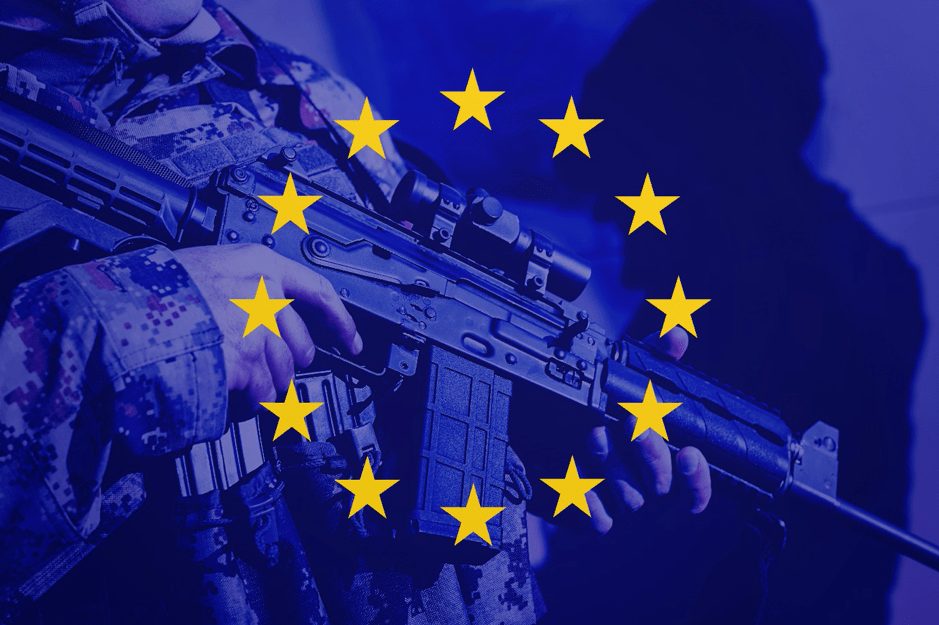
Coordination among these forces relies heavily on NATO and EU initiatives, such as PESCO and the European Defence Fund. While these programs enable some joint projects—like the Franco-German Main Ground Combat System or European satellite constellations—they remain voluntary, unevenly funded, and constrained by national political approval processes. Interoperability challenges persist. Differences in equipment, standards, and doctrines limit joint deployments, and multinational exercises rarely achieve the cohesion seen in fully unified forces like the U.S. military. Duplication of expensive programs—such as fifth-generation fighter jets, armored vehicles, and naval platforms—absorbs resources that could otherwise be used for operational readiness or strategic reach.

Reliance on Alliances
By 2040, Europe’s military security remains deeply intertwined with NATO, and by extension, the United States. U.S. nuclear and conventional capabilities continue to provide the ultimate deterrent, filling the strategic gaps that fragmented European forces cannot address independently. Europe has developed limited rapid-reaction forces, capable of responding to crises in Eastern Europe or North Africa. Yet sustained expeditionary operations beyond the continent’s periphery remain rare, and the logistical complexity of multinational operations constrains Europe’s ability to project power unilaterally.

The reliance on alliances introduces both opportunities and vulnerabilities. While NATO provides shared capabilities, it reinforces a strategic dependence that limits Europe’s ability to act independently, particularly in regions where U.S. interests diverge from European priorities. Additionally, coordination across multiple nations slows decision-making, delaying responses in rapidly evolving crises.

Political and Social Constraints
Europe’s military fragmentation reflects deep-seated political and social realities. National governments prioritize sovereignty, historical sensitivities, and domestic public opinion over centralized military integration. France maintains a strong independent nuclear posture, but attempts to build multinational European forces are constrained by reluctance among smaller states to cede influence. Germany, constrained by post-World War II norms and public skepticism about military engagements, limits its willingness to commit forces beyond NATO obligations. Smaller EU nations often prefer reliance on U.S. security guarantees rather than costly investments in expeditionary capabilities.

Demographic trends exacerbate these challenges. Aging populations across much of Western Europe reduce the pool of active-duty personnel, forcing militaries to rely increasingly on technology, automation, and private contractors. Recruitment shortfalls in countries like Italy, Spain, and Greece create gaps in capability, while wealthier states such as France and Germany struggle to integrate conscript-aged populations into modern, technologically advanced forces. Social constraints—such as skepticism about European military engagement—also influence political willingness to commit forces to conflicts outside Europe.

Technological and Strategic Achievements
Despite structural limitations, Europe in 2040 has achieved selective strategic successes. Investments in high-tech military domains—cyber defense, satellite-based intelligence, precision-guided long-range weapons, and autonomous systems—allow certain nations to exert disproportionate influence relative to conventional troop numbers. French and German space-based reconnaissance and missile capabilities, for example, provide leverage in regional security operations, particularly in Africa and Eastern Europe. Similarly, European cyber defense networks, though fragmented, are capable of coordinated responses to hybrid threats and disinformation campaigns.

Regional interventions have become more effective through voluntary coalition formations. French-led operations in North Africa and combined European deployments in Eastern Europe demonstrate the potential of pooled capabilities, even in the absence of federalized command structures. Nevertheless, these interventions remain short-term and limited in scale, reflecting political caution and resource constraints.

Europe in 2040 demonstrates the limits of military power without political federation. While individual nations retain significant capabilities, and regional coalition efforts allow for selective influence, fragmentation, political caution, and logistical inefficiency prevent Europe from achieving true global strategic autonomy. Economic wealth and technological sophistication partially offset these limitations, but Europe remains a secondary global military actor, capable of defending its interests and projecting influence regionally, but dependent on alliances for comprehensive global security. The trajectory suggests that without deeper political and military integration, Europe will remain influential but constrained, unable to rival the global reach of the United States or China.

After the Shock: Deterrence, Realignment, and the End of Assumed Leadership – Reshaping the West (Part 3) 

Once containment without war is attempted, the central question is no longer how allies respond to American aggression, but what follows if that response holds. Alliances are shaped as much by expectation as by capability. When expectations change, behavior follows.

The most immediate effect would be the collapse of assumed American indispensability.

For decades, NATO has operated on a quiet contradiction. European and Canadian allies publicly affirmed shared leadership while privately assuming that, in extremis, Washington would always anchor the system. A successful, coordinated effort to constrain a US administration would shatter that assumption. Not rhetorically, but operationally. Planning would proceed without default deference. Initiative would move outward rather than upward.

This would not mark the end of US power. It would mark the end of US exemption.

Deterrence would begin to function differently.

Traditional deterrence relies on the credible threat of force. What this crisis would demonstrate is the growing importance of denial deterrence and legitimacy deterrence. The message to future US administrations would be unambiguous. Military superiority does not guarantee political freedom of action. Aggression against allies triggers isolation, loss of access, and long term strategic diminishment.

This form of deterrence is slower, but it is cumulative. It does not require battlefield victories. It requires consistency.

Over time, American institutions themselves would begin to respond.

The United States is not monolithic. Power is distributed across federal agencies, courts, markets, states, corporations, and voters. Sustained external pressure, coupled with internal economic and diplomatic costs, would widen fractures between an aggressive executive and the broader system that depends on stability. Foreign policy isolation would bleed into domestic consequences. Investment would hesitate. Cooperation would thin. Elite consensus would fracture.

History suggests that empires rarely change course because they are defeated. They change course when the costs of dominance exceed the benefits.

For NATO and its partners, the longer term result would be structural diversification.

European defense integration would cease to be aspirational and become routine. Arctic governance would move toward multilateral control frameworks that deliberately dilute unilateral leverage. Intelligence and command structures would evolve to ensure continuity even if a major member becomes unreliable. None of this would require formal exits or dramatic declarations. It would occur through parallelism and redundancy.

The alliance would survive by becoming less centralized and less sentimental.

Globally, the signal would be unmistakable.

Russia and China would lose the ability to credibly argue that Western rules are merely instruments of American convenience. The moment allies demonstrate that those rules apply even to Washington, the narrative shifts. The claim to a rules based order becomes less rhetorical and more demonstrable. Power blocs would still compete, but the terms of legitimacy would tighten.

This would not produce harmony. It would produce constraint.

The most profound shift, however, would be psychological.

Once allies act decisively without waiting for American permission or rescue, the post Cold War era quietly ends. Not with collapse, but with maturation. The transatlantic relationship would no longer be defined by protection and gratitude, but by reciprocity and boundaries.

The United States would remain a critical partner when it chooses cooperation. It would cease to be treated as the system itself.

That distinction is the difference between alliance and dependency.

In that sense, a crisis triggered by Greenland would not simply test NATO. It would complete its evolution. From a structure built to contain an external threat, into one capable of enforcing norms internally without resorting to war.

The real question is not whether such a transformation is possible. The mechanisms exist. The capacity exists. The question is whether allies are willing to accept the discomfort that comes with adulthood in international politics.

Because once impunity is withdrawn, it cannot be restored without consent. And once consent is made conditional, power must finally learn restraint.

Article Five, Greenland, and the Fiction of Absolute Alliances – Reshaping the West (Part 1) 

NATO’s Article Five is often spoken of as if it were a law of nature rather than a political agreement. An attack on one is an attack on all. The phrase is repeated so often that it begins to sound automatic, inevitable, even mechanical. In practice, it is none of those things.

The hypothetical invasion or annexation of Greenland by the United States exposes the limits of Article Five with unusual clarity.

Greenland is an autonomous territory within the Kingdom of Denmark. Denmark is a full NATO member, and Greenland falls within NATO’s geographic scope. If a non NATO power were to land forces there, the alliance’s response would be swift and largely predictable. Consultations would be immediate. Article Five would almost certainly be invoked. Military planning would follow.

The situation changes fundamentally when the attacker is not outside the alliance, but at its center.

Article Five was never designed to restrain the most powerful member of NATO. It assumes a clear external adversary and a shared understanding of who constitutes a threat. There is no provision in the treaty that explains how to respond when the guarantor of collective defense becomes the source of aggression. NATO is a collective defense alliance, not a system of internal enforcement.

From a legal standpoint, Denmark’s options within NATO would be limited. Article Four consultations would be triggered at once. Emergency meetings of the North Atlantic Council would follow. Strong political statements would likely be issued. What would not follow is a clear, binding obligation for NATO members to take military action against the United States.

Politically, the outcome is even more constrained.

No NATO member would realistically initiate military action against the United States over Greenland. Major European powers would issue forceful condemnations, pursue emergency diplomacy, and press the matter through the United Nations and other multilateral forums. Canada would find itself in a deeply uncomfortable position, alarmed by the Arctic precedent but unwilling to escalate militarily against its closest ally. Smaller NATO members would be privately alarmed, yet publicly cautious, acutely aware that their security against Russia depends on the credibility of the American guarantee.

This is the reality that alliance theory often avoids stating directly. NATO operates by consensus within a structure of profoundly unequal power. The alliance’s credibility rests not only on legal commitments, but on the assumption that its most powerful member will act as a stabilizing force rather than a disruptive one.

An American annexation of Greenland would not trigger a unified military response under Article Five. It would instead produce a severe political crisis. NATO decision making would likely stall. Trust within the alliance would erode rapidly. European efforts toward strategic autonomy would accelerate, not as an abstract ambition but as a practical necessity.

The greatest damage would be neither territorial nor military. It would be institutional. Article Five would be revealed not as a universal shield, but as a conditional promise shaped by power, politics, and restraint. For NATO, the lesson would be stark. Collective defense works only as long as the strongest actor chooses to defend the system itself.

The Strategic Shift Behind the 2025 U.S. National Security Strategy

The newly released 2025 U.S. National Security Strategy signals a significant departure from the traditional principles that defined American foreign policy for decades. Longstanding commitments to collective defense, liberal internationalism, and multilateral cooperation have been replaced with a posture that treats global engagement as a burden and alliances as conditional assets rather than enduring partnerships.

This shift, framed as a necessary rebalancing of national priorities, is being interpreted by analysts and allied governments as a proactive threat. The threat is not overt or kinetic. Instead, it emerges through the document’s language, strategic preferences, and economic positioning. The resulting landscape places NATO allies, especially Canada, in a vulnerable and uncertain position.

A Reimagined Alliance System

The Strategy redefines alliances in transactional terms. Rather than relying on shared values, mutual defense responsibilities, and long-term strategic vision, the document characterizes alliances as fiscal and strategic obligations that must be justified by allies through increased spending and alignment with U.S. interests. Reports highlight the new emphasis on defense burden-sharing and the suggestion that U.S. commitments may be scaled back for countries that do not meet Washington’s expectations.

This reframing undermines the foundational trust of the NATO system. It places countries like Canada, which historically spends below preferred thresholds, in a position where strategic reliability could be questioned, weakening the security guarantees that NATO has long been built upon.

Europe Recast as a Strategic Project

The Strategy’s rhetoric toward Europe marks a sharp departure from conventional diplomatic framing. The document describes Europe as struggling with demographic decline, economic stagnation, and cultural erosion, and it presents the United States as a guardian poised to steer the continent’s political future. Analysts have flagged the Strategy’s explicit support for “patriotic” political movements in Europe, a development interpreted as a willingness to influence or reshape domestic politics within allied states.

Such language introduces profound uncertainty into the transatlantic relationship. Rather than treating allies as sovereign equals, the Strategy positions them as ideological battlegrounds. For Canada, this suggests that allies’ internal affairs may no longer be off-limits to U.S. strategic intervention, further eroding norms of mutual respect.

The Western Hemisphere as Exclusive American Sphere

A revival of a hemispheric dominance doctrine – effectively a twenty-first century interpretation of the Monroe Doctrine – marks one of the most consequential pivots in the document. The Strategy asserts the Western Hemisphere as an exclusive zone of American influence, intended to be economically aligned, politically manageable, and strategically compliant with U.S. goals.

This shift directly affects Canada. Economic interdependence, continental supply chains, and cross-border migration policies are recast as tools of strategic leverage. Analysts warn that this places Canada in a subordinate position in regional planning and policy formation. Canada’s economic autonomy becomes more limited under a framework that prioritizes U.S. control over hemispheric trade, energy, technology, and resource security.

From Partnership to Asset Management

The Strategy’s architecture suggests a broader conceptual change: allies are treated less as partners and more as assets whose value is measured against U.S. priorities. This represents a decisive break from the postwar model of shared responsibility and common purpose. Guarantees once considered automatic – such as the collective defense obligations that underpin NATO – appear increasingly conditional.

Such a shift introduces strategic instability. Allies must now anticipate fluctuating levels of American engagement based on domestic political calculations rather than consistent treaty commitments. This new posture raises questions about the reliability of alliances in moments of crisis.

Why the Strategy Constitutes a Proactive Threat

Several core elements of the document create a proactive threat to NATO partners and particularly to Canada.

  • Erosion of Collective Defense Norms
    By tying U.S. commitments to spending thresholds and ideological alignment, the Strategy weakens the notion of mutual defense and introduces uncertainty into NATO’s core purpose.
  • Weaponization of Economic Interdependence
    The emphasis on economic nationalism transforms North American trade and supply-chain relationships into pressure points that can be exploited for political or strategic gain.
  • Normalization of Political Intervention in Allied States
    The encouragement of “patriotic” European political movements signals a new willingness to involve itself in domestic ideological debates within allied countries.
  • Marginalization of Allies Not Deemed Strategically Essential
    Countries outside Washington’s immediate priorities risk being sidelined, placing Canada at long-term strategic risk.

A New Geopolitical Landscape for Canada

The 2025 National Security Strategy marks a reordering of global priorities that places Canada in a precarious position. The traditional assumptions underlying Canada’s security and economic planning – predictable U.S. leadership, reliable NATO guarantees, and a shared democratic project – are directly challenged by the Strategy’s new direction.

In this emerging landscape, Canada may face a future in which the United States no longer acts as a steady anchor of the transatlantic alliance, but instead as a dominant regional power pursuing unilateral advantage. The resulting realignment may require Canada and other NATO members to rethink foreign policy strategies, diversify partnerships, and strengthen regional autonomy to avoid becoming collateral variables in an American-centered strategic calculus.

This is the environment the new document creates: one where allies must navigate not the threat of abandonment, but the more subtle and destabilizing threat of conditional partnership, shifting expectations, and ideological intervention.

Allies Reclaiming Autonomy: The Growing Shift Away from U.S.-Made Military Equipment

Across NATO and allied nations, governments are increasingly rejecting U.S. defense options or cancelling long-term contracts, favoring domestic or European alternatives that offer control over manufacturing, maintenance, and upgrades.

For decades, the United States has dominated the global defense market, especially among NATO allies. Its model, sell advanced platforms, then tie buyers into decades of maintenance, upgrades, and proprietary service, has been remarkably profitable and politically influential. But that model is under pressure. Increasingly, U.S. allies are saying no: rejecting American options, cancelling planned contracts, or shifting to alternatives that offer greater operational and industrial autonomy.

Spain provides a recent example. While the country had previously considered U.S.-made platforms to modernize its air force, Madrid has turned toward European options such as the Eurofighter Typhoon and the Future Combat Air System. Officials cited cost, supply chain control, and the desire to retain domestic and European industrial participation as key drivers. Similar reasoning is guiding Portugal, which has reconsidered its replacement programs for aging aircraft, leaning toward European-built fighters rather than committing to U.S.-supplied F-35s.

Denmark illustrates the trend in air defense. In its largest-ever defense procurement, the Danish government opted for the Franco-Italian SAMP-T NG long-range system over the U.S.-made Patriot, citing both cost and delivery time. Denmark is also reviewing medium-range options from European manufacturers, emphasizing local or regional production and maintenance. This choice reflects the dual desire to strengthen European defense capabilities while reducing reliance on U.S.-based service contracts.

Other NATO members are making comparable moves. Switzerland, historically neutral, has expressed reservations about joining long-term U.S. programs, including the F-35, instead evaluating European alternatives that allow for national control over lifecycle management. Norway has similarly emphasized local assembly and domestic sustainment for fighter and patrol aircraft. The Netherlands, Belgium, and Greece have all shown interest in European or domestic solutions for naval, air, and missile systems, explicitly seeking contracts that do not lock them into decades-long U.S. maintenance agreements.

These choices reflect a broader strategic and economic calculation. U.S.-made systems, while technologically advanced, often require buyers to accept a near-perpetual dependency on American contractors for upgrades, parts, and service. Allies are increasingly reluctant to cede that control, recognizing that operational autonomy and local industrial development are critical to national security. European manufacturers, by contrast, are offering co-production, local assembly, and technology transfer that allow countries to maintain both sovereignty and economic benefit from defense programs.

The implications for the U.S. defense industry are substantial. Losing planned contracts or having allies cancel or decline U.S.-made systems threatens billions in revenue, particularly from the lucrative long-term service and maintenance components. Strategically, it reduces Washington’s leverage: allies that control their own equipment are less subject to subtle influence through supply and upgrade dependencies. Over time, the cumulative effect could reshape the defense-industrial landscape in Europe and beyond, challenging the assumption that U.S.-supplied hardware will dominate allied inventories.

Canada, with its submarine program and proposed Swedish fighter deal, stands as the most prominent example, but it is hardly alone. Across Europe and NATO, governments are asking whether reliance on U.S. contractors for decades-long service agreements is compatible with modern defense priorities. The answer increasingly appears to be “no.” Allies want control over manufacturing, maintenance, and upgrades, and they are willing to bypass traditional U.S. options to achieve it.

In short, the U.S. model of “buy once, pay forever” is losing favor. NATO members and other allies are embracing autonomy, local industrial participation, and diversified procurement, signaling a shift that could reverberate across global defense markets for decades. The message is clear: even America’s closest partners are no longer content to surrender operational control and economic benefit for decades-long contracts that primarily serve U.S. industry.

The Budapest Memorandum of 1994: A Cautionary Tale in Security Assurances

The Budapest Memorandum on Security Assurances, signed on 5 December 1994, stands as a pivotal moment in post-Cold War geopolitics. Emerging from the ashes of the Soviet Union, it marked a rare convergence of nuclear disarmament and multilateral diplomacy. Ukraine, Belarus, and Kazakhstan, each inheriting a share of the USSR’s vast nuclear arsenal, were persuaded to relinquish their strategic weapons in exchange for assurances from the United States, the United Kingdom, and the Russian Federation. The signing took place at an OSCE summit in the Hungarian capital, hence the document’s name.

At the heart of the memorandum was Ukraine’s possession of the third-largest nuclear arsenal in the world. Though the warheads were technically under Russian operational control, they remained physically on Ukrainian soil. The U.S. in particular led efforts to prevent the emergence of new nuclear states from the former Soviet republics, promoting the Treaty on the Non-Proliferation of Nuclear Weapons (NPT) as the legal mechanism for disarmament. In return for joining the NPT as a non-nuclear weapon state, Ukraine was promised political assurances regarding its sovereignty, territorial integrity, and security.

The terms of the Budapest Memorandum were significant, though pointedly not binding under international law. The signatories pledged to respect the independence and existing borders of Ukraine, refrain from the threat or use of force, and avoid economic coercion. They also committed to seek UN Security Council action if nuclear weapons were ever used against Ukraine, and promised not to use nuclear weapons against the country themselves. The inclusion of a clause requiring consultations in the event of disputes or threats was intended to provide a diplomatic channel in times of crisis.

What is critical to understand is that the memorandum was not a formal treaty. It lacked enforcement mechanisms and legal penalties, relying instead on political goodwill and international norms. This distinction would prove fatal to its credibility two decades later.

The annexation of Crimea by the Russian Federation in early 2014, followed by its support for separatists in the Donbas region, represented a direct challenge to the core principles enshrined in the Budapest Memorandum. Ukraine’s territorial integrity was violated by a state that had explicitly committed to uphold it. While the United States and the United Kingdom issued strong condemnations and imposed sanctions on Russia, neither country provided direct military support to Ukraine, citing the memorandum’s non-binding nature.

Russia, for its part, has argued that the circumstances of 2014, namely, the change in Ukraine’s government following the Maidan Revolution, nullified the commitments under the agreement. It has also claimed that Crimea’s “referendum” justifies its actions. These positions are widely rejected by the international legal community and by the other signatories of the memorandum, but the damage to the credibility of security assurances was done.

The legacy of the Budapest Memorandum is now viewed with a mix of regret and realism. It illustrates the limits of non-binding agreements in deterring aggression by great powers, and it has become a central reference point in discussions on nuclear disarmament and non-proliferation. For Ukraine, the memorandum is a bitter reminder of the price paid for denuclearization without robust, enforceable guarantees. For the global community, it raises hard questions about the viability of relying on political promises in an increasingly unstable world.

The Budapest case has also had ramifications beyond Eastern Europe. It has been cited by countries such as North Korea and Iran in debates over nuclear policy, reinforcing the perception that possession of nuclear weapons may offer more reliable security than any assurance signed on paper. In the decades since, the gap between rhetoric and reality in international security agreements has only widened.

Sources
• United States Department of State Archive. Background Briefing on Ukraine, March 2014. https://2009-2017.state.gov
• United Nations Office for Disarmament Affairs. Treaty on the Non-Proliferation of Nuclear Weaponshttps://disarmament.un.org
• Council on Foreign Relations. Why Ukraine Gave Up Its Nuclear Weapons, 2022. https://www.cfr.org/backgrounder/why-ukraine-gave-nuclear-weapons
• Chatham House. Ukraine, Russia and the West: The Budapest Memorandum at 30, 2023. https://www.chathamhouse.org

The Dragon at the Gate: China’s Quiet Reversal of the Peking Accord

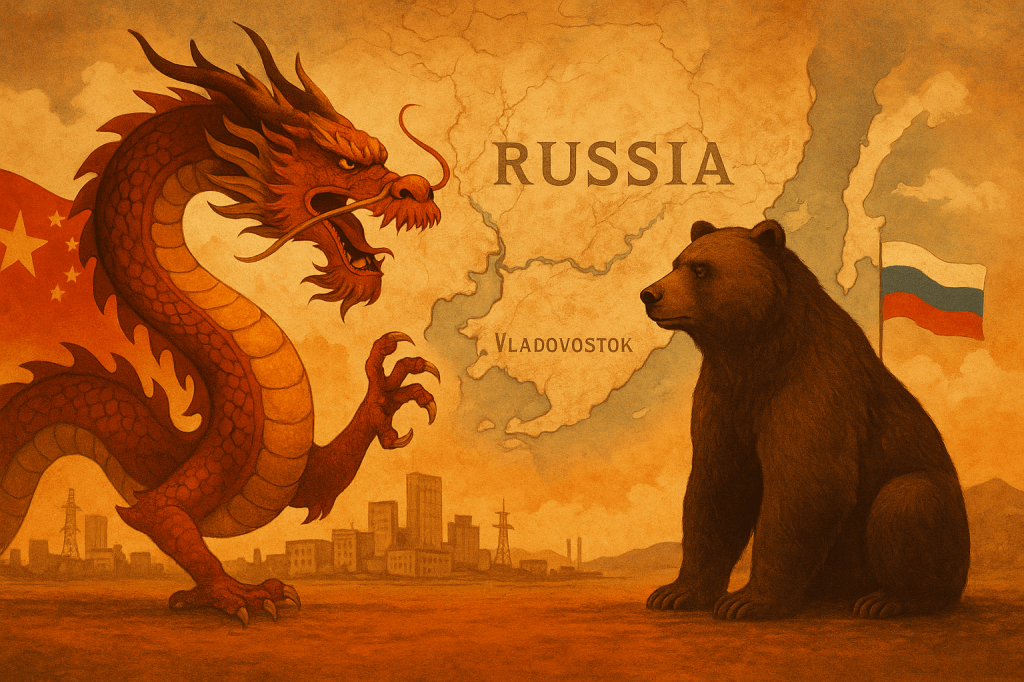
It’s a strange sight to behold – the old bear, once feared across continents, now leaning heavily on the dragon, who circles with a slow, calculating grace. Russia, once the hammer of the East, has been brought to heel by a grinding war in Ukraine, and while the West cuts ties and imposes sanctions, China, with the patience of a millennia-old civilization, sees opportunity, not just to profit, but perhaps to reshape history.

There’s a sense of irony that hangs over this moment. In 1860, the Qing dynasty signed the Peking Accord under duress, ceding vast swathes of land to the Russian Empire. That territory, now known as the Russian Far East, includes strategic regions like Vladivostok and the Amur Basin, lands that had once been part of China’s imperial periphery. The Chinese state, pragmatic in diplomacy, but deeply historical in self-conception, has never fully forgotten these losses. While official maps no longer lay claim to those regions, nationalist narratives in China occasionally whisper about redrawing what was once erased.

Fast forward to today, and the tables have turned. The war in Ukraine has battered Russia’s economy, and severed its connections to Europe. In desperation, Moscow has tilted eastward, selling gas, oil, and influence to Beijing at discount prices. This is not a partnership of equals. Russia needs Chinese markets, Chinese currency, and Chinese technology. China, meanwhile, gains leverage with every shipment of discounted crude, and every signed memorandum that ties the Russian economy tighter to the yuan. Where once they competed in Central Asia and the Arctic, now Russia finds itself the junior partner in a relationship it once dominated.

But China’s strategy isn’t conquest, it’s saturation. In the underpopulated stretches of Siberia and the Russian Far East, Chinese traders, laborers, and companies are embedding themselves quietly, but firmly. Towns along the border increasingly do their business in yuan, and many look more to Harbin or Heihe, cities in China’s Heilongjiang Province, than to Moscow. Infrastructure projects, often funded with Chinese capital, and executed by Chinese firms, are weaving a new economic fabric, one that binds these regions more to Beijing than to the Kremlin.

This isn’t a territorial war. China doesn’t need tanks to reverse the Peking Accord. It just needs time, capital, and a weakened Russia with few other friends. What we may be witnessing is not the formal return of lost lands, but something more subtle and enduring; a slow-motion annexation by way of economy, trade, and cultural seepage. A kind of imperial inversion, done not with gunboats, but with invoices and supply chains.

In geopolitics, history never dies, it just waits for the moment when the balance tilts. With every sanctioned ruble, and every Chinese-funded deal, the echoes of the 19th century grow louder. Russia may not yet realize it, but the dragon is already at the gates. Not to conquer, but to reclaim, softly, surely, and without ever having to fire a shot.

A Resilient Europe: Why the EU Will Withstand Political Upheaval

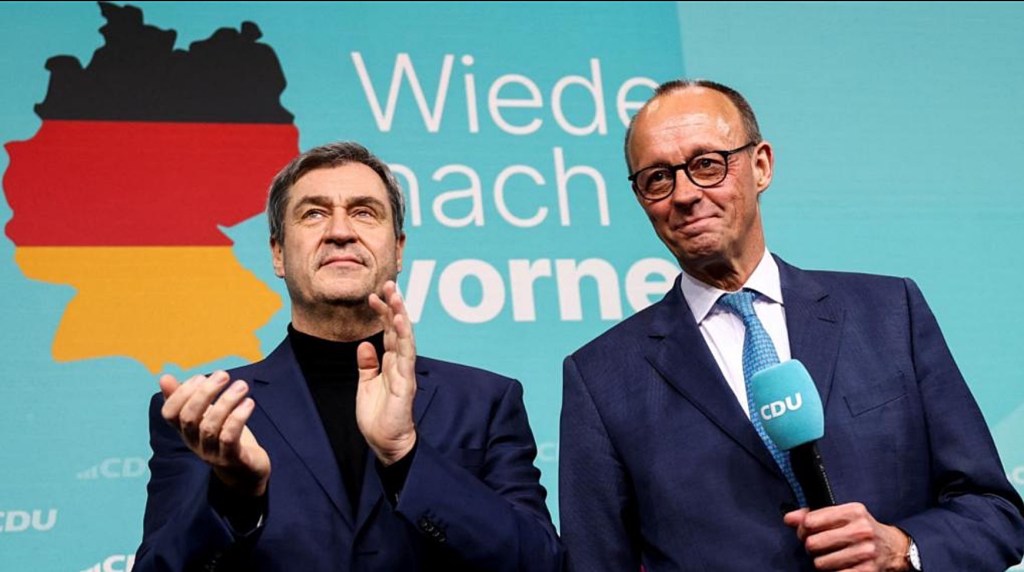
Germany’s federal election has sent ripples across Europe, highlighting both the challenges and the resilience of the continent’s democratic institutions. In a tightly contested race, the conservative CDU/CSU, led by Friedrich Merz, secured a narrow victory, while the far-right Alternative für Deutschland (AfD) achieved its most significant post-war result, gaining nearly 19.5% of the vote. This outcome underscores a growing political divide in Germany, but also reaffirms the enduring strength of its democratic processes. Despite fears of radicalism, mainstream parties have reaffirmed their commitment to upholding democratic norms, with Merz explicitly ruling out any coalition with the AfD.

The election was precipitated by the collapse of Chancellor Olaf Scholz’s coalition government, a victim of economic stagnation and internal disputes. While the Social Democrats (SPD) suffered their worst post-war result, the stability of Germany’s institutions ensures that the country remains a pillar of the European project. The transition to new leadership will undoubtedly come with challenges, but Germany’s role as a leading economic and political force within the EU remains unshaken.

Far-right rhetoric has gained traction in some regions, fueled by concerns over immigration and economic uncertainty. However, this trend is counterbalanced by the resilience of the European Union itself. The EU has repeatedly demonstrated its ability to navigate political turbulence among member states, acting as a stabilizing force that prioritizes economic strength, security, and democratic governance. The Franco-German alliance, while facing strains, remains central to European cohesion, and President Emmanuel Macron has been vocal about the need for stronger European integration to counter populist forces.

Transatlantic relations add another layer of complexity to the European political landscape. The return of Donald Trump to the White House has introduced unpredictability, particularly regarding U.S. support for Ukraine and potential economic policy shifts that could impact European markets. However, rather than weakening the EU, these external pressures have only reinforced the bloc’s determination to assert its independence on key issues such as defense, energy, and trade. Macron and other European leaders have continued to push for greater strategic autonomy, ensuring that Europe is not overly reliant on shifting U.S. policies.

Europe’s path to stability lies in its ability to reinforce its institutions, deepen cooperation among member states, and address the root causes of public discontent. By strengthening the European Commission’s role in economic planning, expanding security initiatives such as PESCO (Permanent Structured Cooperation), and implementing policies that promote inclusive economic growth, the EU can effectively counter the rise of extremism and maintain its position as a global leader in democratic governance.

Update
Since writing this piece, Friedrich Merz has spoken about a stronger, integrated EU, that can look after itself without assistance from the USA, and the possibility of exploring a European Defence Force outside of NATO.