
For two centuries, the world’s longest undefended border has stood as both a symbol and a contradiction. Between Canada and the United States lies a line that is deeply cooperative yet fiercely guarded, a frontier where trust and sovereignty meet in uneasy balance. That balance is being tested again with new calls from American legislators to expand the reach of U.S. law enforcement onto Canadian soil.
Republican Congressman Nicholas Langworthy, joined by Rep. Elise Stefanik, introduced the Integrated Cross-Border Law Enforcement Operations Expansion Act in September 2025. The bill directs the U.S. Department of Homeland Security to negotiate agreements allowing more American agents to operate in Canada under joint or integrated frameworks. It explicitly contemplates the stationing of U.S. officers in Canadian territory and the extension of U.S. legal protections to them while engaged in such operations. The proposal builds upon the existing Shiprider program, a bilateral maritime policing arrangement first authorized in 2012 that allows mixed crews of RCMP and U.S. Coast Guard officers to pursue suspects seamlessly across the Great Lakes and coastal waters (Government of Canada, 2012).
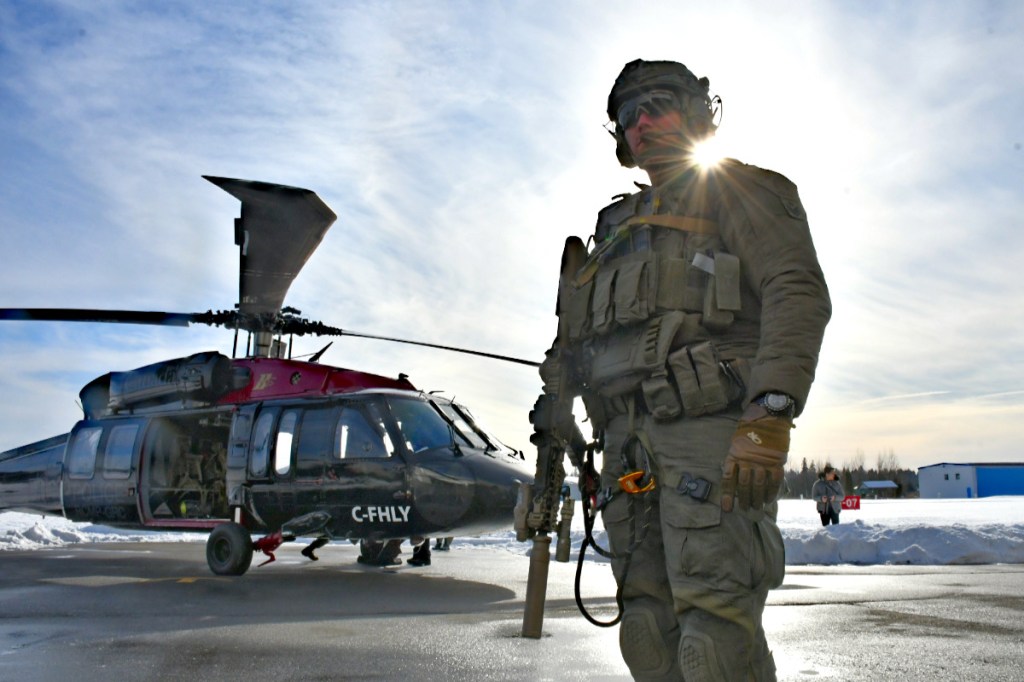
At its best, cooperation of this kind can prevent traffickers, smugglers, and violent extremists from exploiting jurisdictional seams. Integrated units already share intelligence, coordinate arrests, and conduct joint investigations on both sides of the line. In a world of fentanyl trafficking, encrypted communications, and drone-borne smuggling, no single agency can claim full visibility. The argument for “shared enforcement” rests on practical necessity.
But there is a deeper question about sovereignty and democratic accountability. Policing power is among the most sensitive expressions of a nation’s authority. Allowing foreign officers to act, even in partnership, raises profound legal and moral concerns. Who answers to whom when something goes wrong? What laws govern a use-of-force incident in Quebec if the officer is wearing an American badge? The existing Shiprider framework attempts to answer this by designating the officer in charge to be of the host nation and requiring all participants to be cross-designated and subject to local law. Any expansion would need to preserve, not erode, that principle.
So far, Ottawa has not publicly commented on the Langworthy-Stefanik proposal. The silence may reflect caution: few Canadian governments wish to appear either obstructionist toward U.S. security interests or complacent about sovereignty. Yet the issue deserves open discussion. Cross-border policing already shapes daily life along the St. Lawrence, the Great Lakes, and the Pacific coast. The next evolution could redefine how nations share force, intelligence, and responsibility.
What is being tested is not merely a policy, but a philosophy, whether two democracies can defend their people without blurring the line that defines them. The border has long been a place where we practice cooperation without surrender. The challenge now is to ensure it remains so as law enforcement grows more integrated, technologically driven, and politically charged.
The shadow of that line may lengthen or lighten, depending on how both nations choose to police it together.
Sources:
• “Stefanik, Langworthy Introduce Bill to Expand Cross-Border Law Enforcement Operations,” Stefanik.house.gov, Sept 19 2025.
• Integrated Cross-Border Law Enforcement Operations Act (S.C. 2012, c. 19, s. 361), Government of Canada.
• Government of Canada backgrounder, “Shiprider: Integrated Cross-Border Maritime Law Enforcement,” Public Safety Canada, 2013
 The Rowanwood Chronicles