
🔬 Yellowstone Supervolcano: What the Science Really Says in July 2025 🔬

Over the past few weeks, social media has once again erupted (pun intended) with dire warnings that Yellowstone’s “supervolcano” is about to blow. TikTok doomsayers cite minor earthquakes, thermal features, and even routine geyser activity as harbingers of catastrophe. But is there any truth to these claims?

The short answer is no. The United States Geological Survey (USGS), which monitors Yellowstone around the clock with some of the most sophisticated volcanic surveillance equipment in the world, has stated plainly: there is no sign of impending volcanic eruption.

Let’s break down the facts.

🌋 Current Volcano Status (July 2025)

According to the latest monthly update from the USGS Yellowstone Volcano Observatory (YVO), the volcano alert level remains at “NORMAL”, and the aviation color code is GREEN. These are the lowest possible threat levels.

  • In June 2025, a total of 60 small earthquakes were recorded in the Yellowstone region – the largest being magnitude 2.7. These are not unusual for the region, which experiences 1,000–3,000 small quakes annually due to tectonic and hydrothermal activity.
  • Ground deformation – which could suggest underground magma movement – has followed seasonal patterns, with about 3 cm of gradual subsidence (sinking) since October. This is a normal process that’s been ongoing for years and shows no signs of new magma intrusion.
  • No earthquake swarms or unusual uplift patterns have been detected.

Source: USGS Yellowstone Volcano Updates
🔥 What About the Geysers and Hydrothermal Eruptions?

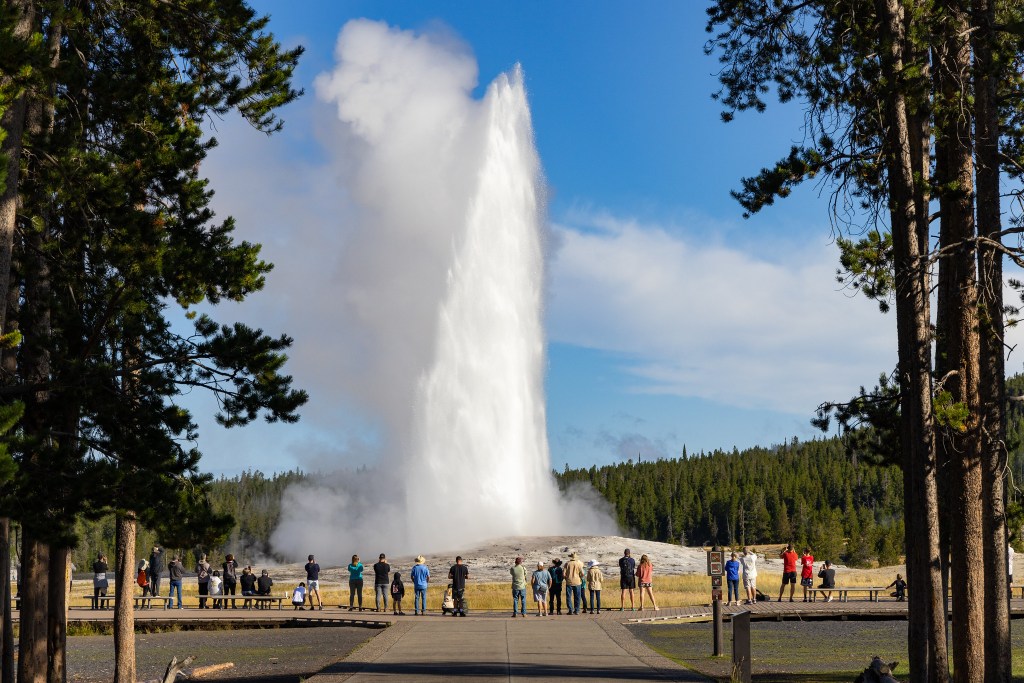
Much of the alarm online stems from a webcam video of a minor hydrothermal “eruption” at Black Diamond Pool, which occurred at 6:25 a.m. MDT on June 12, 2025. While visually striking, this was not a volcanic eruption. Hydrothermal explosions are steam-driven events caused by water heating rapidly beneath the surface – common in geyser basins like Biscuit Basin, where this event occurred.

These events do not indicate magma movement or increase the likelihood of a super-eruption.

Even the famed Steamboat Geyser, the world’s tallest active geyser, has had a busy year. But again, this activity is part of Yellowstone’s normal hydrothermal behaviour, which is separate from the volcanic system.

🧠 What the Science Says About Risk

New research published in 2025 using advanced imaging techniques (seismic tomography and magnetotellurics) has provided a more detailed look at Yellowstone’s subsurface magma system. Key findings include:

  • Four distinct magma bodies exist under Yellowstone, but they are mostly solidified (less than 15% melt), meaning they are not capable of producing a super-eruption.
  • A magma cap – a pressurized layer around 3.8 km deep – acts like a pressure relief valve, venting volcanic gases and preventing pressure buildup.
  • The risk of a major eruption is extremely low. The USGS estimates the annual probability of a super-eruption at 0.00014% – or 1 in 700,000.

Sources:

📡 Constant Monitoring and Global Attention

Yellowstone is not some forgotten natural hazard. It is among the most heavily monitored volcanic systems on Earth, with:

  • Over 40 seismic stations
  • Ground deformation sensors (GPS and InSAR)
  • Real-time gas emission detectors
  • Remote thermal imaging and high-resolution webcams

Additionally, new sensors were installed in 2024 in Biscuit Basin and Slough Creek to monitor hydrothermal features more precisely. Any significant change would be detected within minutes and shared widely by USGS, NOAA, and international volcanic monitoring organizations.

✅ Final Word

The truth is less dramatic than a TikTok clip, but far more reassuring. Yellowstone is a living, breathing volcanic and hydrothermal system, and minor earthquakes, geyser bursts, and steam explosions are all part of its normal geological rhythm.

The scientific consensus remains solid: there is no indication of any imminent eruption, let alone a catastrophic one. So while the Yellowstone landscape may be thrilling, the science is calm and clear.

If you want to stay informed without falling down conspiracy rabbit holes, bookmark the USGS Yellowstone Volcano Observatory or follow their official Twitter/X.

Don’t let fear hijack facts.
Mount Paektu: The Sleeping Giant of East Asia 

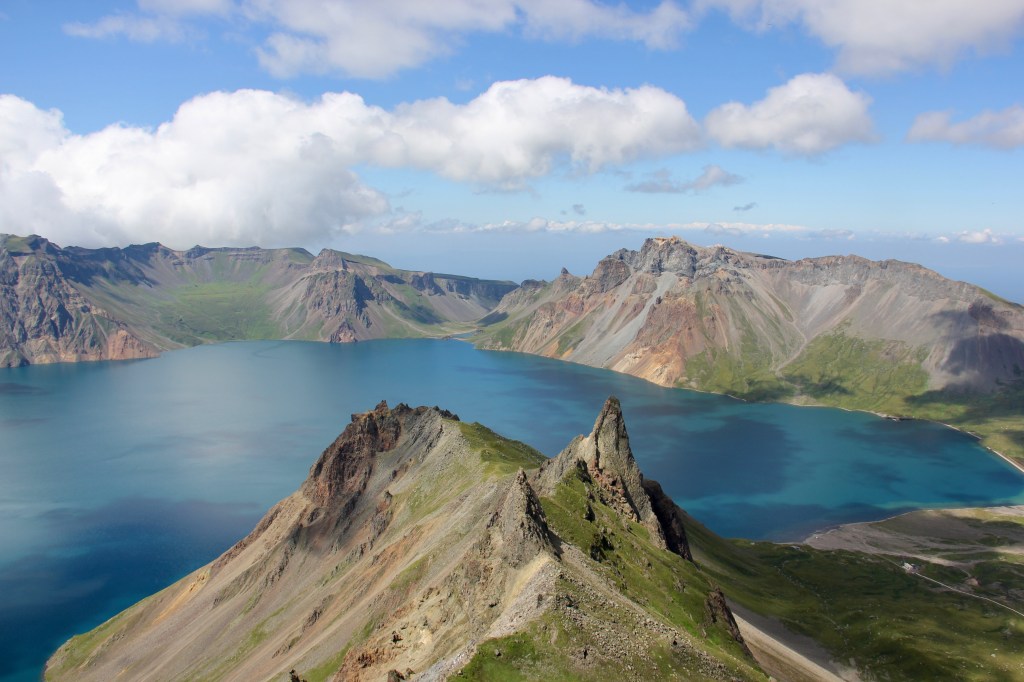
Mount Paektu, also known as Changbai Mountain in China, is an awe-inspiring stratovolcano straddling the border between North Korea and China. Towering at 2,744 meters (9,003 feet), it is the highest peak on the Korean Peninsula and holds profound cultural and historical significance. Revered in Korean and Manchu mythology, it is considered the mythical birthplace of the Korean people and an important symbol of national identity. However, beyond its legendary status lies a geological powerhouse with a history of catastrophic eruptions, the most infamous of which – known as the Millennium Eruption – ranks among the most extreme volcanic events of the past two millennia.

The Millennium Eruption of 946 CE was a cataclysmic event that ejected an estimated 100 cubic kilometers of pyroclastic material into the atmosphere. The eruption is thought to have been comparable in magnitude to the 1815 Tambora eruption, which triggered a global “year without a summer.” Ash from Paektu has been discovered in sediment cores as far away as Japan and even Greenland, underscoring the immense dispersal of volcanic material. This eruption reshaped the summit, forming the massive crater that now cradles Heaven Lake, a pristine but ominous caldera lake over two kilometers in diameter. The Millennium Eruption’s impact on regional populations remains the subject of archaeological and historical inquiry, with evidence suggesting widespread agricultural disruption and social upheaval in Korea, China, and Japan.

Despite its apparent dormancy, Mount Paektu is anything, but extinct. The volcano remains active, with geophysical studies indicating the presence of a sizable magma reservoir beneath its surface. Since its last recorded eruption in 1903, Mount Paektu has experienced episodic unrest. Between 2002 and 2005, significant seismic activity was detected in the region, accompanied by signs of crustal deformation and anomalous gas emissions. These indicators suggest that magma movement beneath the volcano is ongoing, increasing the likelihood of future eruptions. However, since that period, there have been no significant signs indicating an imminent eruption. As of early 2025, there are no reports of current eruptions or lava flows, and monitoring data has not shown any drastic changes in volcanic activity. Nonetheless, the volcano’s unpredictable nature means that continued vigilance is essential.

One of the primary concerns for volcanologists is the inflation of the underlying magma chamber. Ground deformation data, obtained through satellite radar and GPS measurements, suggest that pressure is gradually accumulating within the system. Additionally, increased concentrations of sulfur dioxide and carbon dioxide have been detected in the region, indicative of magma degassing at depth. Periodic low-magnitude earthquakes beneath the volcano further suggest that the subsurface magmatic system remains dynamic. Such activity is reminiscent of the precursory signals observed at other caldera-forming volcanoes, raising the possibility of a future eruption, though the timeline remains uncertain.

The prospect of a major eruption from Mount Paektu carries profound implications, both geologically and geopolitically. Given the volcano’s location along the North Korea-China border, coordinated scientific research and disaster preparedness efforts are challenging. North Korea’s political isolation severely restricts the ability of international researchers to conduct comprehensive studies, though limited collaborations have occurred, notably with the United Kingdom’s Cambridge University in the early 2010s. Despite these efforts, much remains unknown about the full extent of the magma system and the probability of a large-scale eruption.

A future eruption, particularly one on the scale of the Millennium Eruption, would have dire consequences for the region. Volcanic ashfall could devastate agriculture in northeastern China and the Korean Peninsula, leading to food shortages. Lahars and pyroclastic flows would pose immediate threats to settlements and infrastructure in the surrounding area. Air travel across East Asia would be severely disrupted, particularly if an eruption injected significant quantities of ash into the stratosphere. Furthermore, a high-volume ejection of sulfur dioxide could lead to temporary global cooling, disrupting weather patterns and monsoonal systems that are critical to agriculture in Asia.

Despite these risks, active monitoring efforts remain limited. While China operates seismic and gas monitoring stations on its side of the border, North Korea’s capabilities are largely unknown. Given the potential for widespread devastation, increased international cooperation in volcanic research and early warning systems is crucial. Mount Paektu is a sleeping giant, and while it may remain quiescent for decades or even centuries, history has shown that its eruptions can be both sudden and catastrophic. The scientific community must remain vigilant, ensuring that when the mountain awakens once more, humanity is as prepared as possible.