Pathways to a More Integrated European Military and Strategic Re-engagement

Introduction

Europe’s future military relevance depends on striking a balance between national sovereignty and collective security. While full political federation remains politically improbable, incremental integration offers a viable path to strengthen Europe’s defense posture. Effective integration must also consider re-engaging the United Kingdom, whose strategic absence following Brexit reduces cohesion. This essay examines practical pathways for military integration, governance innovations, and partnership strategies that preserve inclusivity while enhancing Europe’s security capabilities.
Gradual Military Integration

Incremental integration provides the most feasible path forward. By focusing on joint capabilities and pooled resources, Europe can enhance strategic autonomy without necessitating full federation.

  1. Expanded PESCO and European Defence Fund (EDF): Consolidating funding for strategic platforms—main battle tanks, next-generation fighter aircraft, missile defense, and unmanned systems—can reduce duplication and maximize efficiency. Shared R&D initiatives accelerate innovation in high-tech areas such as AI-enabled warfare, hypersonic weapons, and satellite reconnaissance.
  2. Transnational specialized units: Joint brigades or task forces could focus on cyber defense, intelligence, and rapid deployment. For example, a Franco-German cyber unit or a multinational EU rapid-reaction battalion could be deployed under a joint European command while maintaining national administrative oversight.
  3. Shared logistics and infrastructure: Pooling airlift, naval bases, ammunition depots, and maintenance facilities can enhance operational readiness and reduce costs. Centralized planning for strategic assets, such as long-range transport aircraft or naval logistics hubs, allows smaller states to participate meaningfully without sacrificing sovereignty.

Strategic Governance Models

Integration must respect political diversity while ensuring efficiency. Innovative governance approaches can maintain inclusivity:

  • Rotating command councils: Leadership of multinational units or strategic planning bodies rotates among member states, balancing influence and fostering trust.
  • Qualified majority decision-making: Military interventions could use weighted voting rather than unanimous consent, preventing strategic paralysis while giving smaller states meaningful participation in non-critical matters.
  • European defense planning hubs: Centralized entities for intelligence, strategic forecasting, and doctrine development would coordinate multinational exercises, procurement, and force deployment, streamlining operations while leaving operational execution to national units.

These mechanisms allow Europe to project strength collectively without requiring full political or fiscal federation, minimizing resistance from states wary of losing sovereignty.

Re-engaging the United Kingdom

The UK’s post-Brexit absence reduces Europe’s military cohesion and technological capacity. Strategic re-engagement could include:

  1. Flexible partnership agreements: The UK could participate in European defense projects without full EU membership, akin to Norway or Switzerland’s arrangement in EU programs, allowing it to contribute to R&D, joint exercises, and strategic planning.
  2. Joint technology initiatives: Collaborative development of high-tech platforms—such as unmanned systems, hypersonic weapons, and satellite constellations—leverages complementary capabilities and reinforces mutual strategic interests.
  3. Security dialogue forums: Regular consultations on emerging threats—cybersecurity, Arctic security, and hybrid warfare—would institutionalize cooperation and strengthen trust between the EU and the UK.

This approach recognizes post-Brexit political realities while leveraging the UK’s capabilities for collective security.

Leveraging Economic and Technological Strength

Europe’s economic power allows it to compensate for political fragmentation through technological specialization:

  • Cyber dominance: Coordinated intelligence sharing and defensive measures mitigate hybrid threats.
  • Space-based capabilities: European satellite constellations provide secure communications, reconnaissance, and navigation independent of foreign systems.
  • Autonomous and high-tech weapons systems: Automation reduces reliance on manpower, addressing demographic constraints across aging European populations.
  • Defense industrial consolidation: Shared investment in defense industries ensures competitive capabilities while preserving domestic employment and technological sovereignty.

These strategies enable Europe to punch above its weight in strategic terms while avoiding the political complexity of full federation.

Conclusion

Europe can strengthen its military and strategic posture without full federation by pursuing incremental, inclusive, and technologically driven integration. Pooled capabilities, innovative governance structures, and strategic partnerships—including with the UK—balance sovereignty with collective security. By 2040, such an approach positions Europe as a credible regional and global actor, capable of addressing regional crises, contributing meaningfully to global stability, and gradually increasing strategic autonomy. Incremental integration, rather than federation, thus represents a pragmatic and politically feasible pathway to European military relevance.
Europe 2040 – Military Power Without Full Federation

Introduction
By 2040, Europe remains a politically and militarily fragmented continent. Despite holding one of the largest combined economies globally, the lack of a fully federated European model constrains its ability to project independent military power. While selective nations—France, Germany, and the United Kingdom—maintain significant capabilities, structural fragmentation, divergent national priorities, and complex governance systems limit Europe’s strategic autonomy. This essay examines the interplay of structural, economic, and political factors that define Europe’s military posture in 2040, assessing both its achievements and persistent limitations.

Fragmented Military Capabilities
Europe’s military architecture remains characterized by a multiplicity of national forces operating independently. France continues to maintain its nuclear triad and expeditionary capability, Germany fields technologically advanced armored and air units, and Italy projects regional influence in the Mediterranean. Other nations, such as Poland, Sweden, and Spain, contribute niche capabilities, particularly in cyber operations, rapid reaction forces, and intelligence. Smaller states provide specialized units, maritime patrol, or logistics support, creating a patchwork network of competencies rather than a unified force.

Coordination among these forces relies heavily on NATO and EU initiatives, such as PESCO and the European Defence Fund. While these programs enable some joint projects—like the Franco-German Main Ground Combat System or European satellite constellations—they remain voluntary, unevenly funded, and constrained by national political approval processes. Interoperability challenges persist. Differences in equipment, standards, and doctrines limit joint deployments, and multinational exercises rarely achieve the cohesion seen in fully unified forces like the U.S. military. Duplication of expensive programs—such as fifth-generation fighter jets, armored vehicles, and naval platforms—absorbs resources that could otherwise be used for operational readiness or strategic reach.

Reliance on Alliances
By 2040, Europe’s military security remains deeply intertwined with NATO, and by extension, the United States. U.S. nuclear and conventional capabilities continue to provide the ultimate deterrent, filling the strategic gaps that fragmented European forces cannot address independently. Europe has developed limited rapid-reaction forces, capable of responding to crises in Eastern Europe or North Africa. Yet sustained expeditionary operations beyond the continent’s periphery remain rare, and the logistical complexity of multinational operations constrains Europe’s ability to project power unilaterally.

The reliance on alliances introduces both opportunities and vulnerabilities. While NATO provides shared capabilities, it reinforces a strategic dependence that limits Europe’s ability to act independently, particularly in regions where U.S. interests diverge from European priorities. Additionally, coordination across multiple nations slows decision-making, delaying responses in rapidly evolving crises.

Political and Social Constraints
Europe’s military fragmentation reflects deep-seated political and social realities. National governments prioritize sovereignty, historical sensitivities, and domestic public opinion over centralized military integration. France maintains a strong independent nuclear posture, but attempts to build multinational European forces are constrained by reluctance among smaller states to cede influence. Germany, constrained by post-World War II norms and public skepticism about military engagements, limits its willingness to commit forces beyond NATO obligations. Smaller EU nations often prefer reliance on U.S. security guarantees rather than costly investments in expeditionary capabilities.

Demographic trends exacerbate these challenges. Aging populations across much of Western Europe reduce the pool of active-duty personnel, forcing militaries to rely increasingly on technology, automation, and private contractors. Recruitment shortfalls in countries like Italy, Spain, and Greece create gaps in capability, while wealthier states such as France and Germany struggle to integrate conscript-aged populations into modern, technologically advanced forces. Social constraints—such as skepticism about European military engagement—also influence political willingness to commit forces to conflicts outside Europe.

Technological and Strategic Achievements
Despite structural limitations, Europe in 2040 has achieved selective strategic successes. Investments in high-tech military domains—cyber defense, satellite-based intelligence, precision-guided long-range weapons, and autonomous systems—allow certain nations to exert disproportionate influence relative to conventional troop numbers. French and German space-based reconnaissance and missile capabilities, for example, provide leverage in regional security operations, particularly in Africa and Eastern Europe. Similarly, European cyber defense networks, though fragmented, are capable of coordinated responses to hybrid threats and disinformation campaigns.

Regional interventions have become more effective through voluntary coalition formations. French-led operations in North Africa and combined European deployments in Eastern Europe demonstrate the potential of pooled capabilities, even in the absence of federalized command structures. Nevertheless, these interventions remain short-term and limited in scale, reflecting political caution and resource constraints.

Europe in 2040 demonstrates the limits of military power without political federation. While individual nations retain significant capabilities, and regional coalition efforts allow for selective influence, fragmentation, political caution, and logistical inefficiency prevent Europe from achieving true global strategic autonomy. Economic wealth and technological sophistication partially offset these limitations, but Europe remains a secondary global military actor, capable of defending its interests and projecting influence regionally, but dependent on alliances for comprehensive global security. The trajectory suggests that without deeper political and military integration, Europe will remain influential but constrained, unable to rival the global reach of the United States or China.

After Primacy: The Reordering of Alliances in a Post-American Western Bloc

The crisis imagined in Greenland is not important because of the territory itself. Its significance lies in what it would force into the open. The assumption that the West is synonymous with the United States has quietly structured global politics since 1945. Once that assumption breaks, the system does not collapse. It rebalances.

What follows is not a retreat from collective security, but its redistribution.

A reshaped NATO would emerge not through formal rupture, but through functional adaptation.

NATO’s defining feature has always been military integration under American leadership. In the post primacy phase, leadership would fragment without disappearing. The alliance would increasingly resemble a federation of security clusters rather than a single hierarchy. European command capacity would deepen. Arctic security would be governed through multilateral frameworks that deliberately limit unilateral dominance. Intelligence sharing would persist, but no longer assume uniform trust.

The United States would remain inside NATO, but no longer at its center of gravity.

This would not weaken deterrence. It would diversify it. Deterrence would rely less on the promise of overwhelming force and more on the certainty that aggression triggers coordinated exclusion, denial of access, and long term strategic isolation. NATO would become less reactive, less sentimental, and more conditional.

Security would be preserved not by loyalty, but by enforceable norms.

Parallel to this shift, a stronger economic alliance between the European Union and Canada would begin to take shape.

The logic is structural. Canada is economically integrated with the United States, but politically aligned with Europe on regulation, multilateralism, and rule based governance. As US reliability declines, Canada’s incentive to diversify deepens. Trade agreements would expand beyond goods to include energy coordination, industrial policy, research, and critical minerals. Arctic infrastructure would become a shared strategic priority rather than a bilateral vulnerability.

This would not be anti American. It would be post dependent.

The return of the United Kingdom to the European Union, while politically complex, becomes more conceivable in this environment.

Brexit was premised on a world in which the United States remained a stable anchor and global trade rules remained predictable. In a fragmented order, isolation loses its appeal. Economic gravity, regulatory coherence, and strategic relevance would pull London back toward Brussels. The argument would no longer be emotional or historical. It would be practical.

Outside the EU, the UK is exposed. Inside it, the UK is amplified.

Reintegration would not restore the pre Brexit EU. It would reshape it. A more security conscious, geopolitically assertive Europe would emerge, one less reliant on American mediation and more comfortable exercising power collectively.

As the Western bloc decentralizes, BRICS would evolve in response.

BRICS has never been a coherent alliance. It is a convergence of dissatisfaction rather than a shared project. Its internal contradictions are substantial. India and China remain strategic competitors. Brazil oscillates politically. South Africa balances aspiration with constraint. Russia has relied on confrontation to maintain relevance.

What changes in a post American West is not BRICS unity, but BRICS opportunity.

Without a US dominated Western bloc to react against, BRICS members gain room to maneuver independently. Economic experimentation increases. Regional leadership ambitions sharpen. Cooperation becomes more transactional and less ideological. The group shifts from rhetorical counterweight to pragmatic platform.

This does not produce a new bipolar order. It produces a looser multipolar field.

Russia and China, in particular, would recalibrate.

For decades, both have oriented strategy around resisting American dominance. Sanctions, military posture, and diplomatic narratives have been built on that axis. If the West ceases to function as a US proxy, that logic weakens. Europe becomes a distinct actor. Canada and parts of the Global South become independent centers of gravity.

China benefits most from this shift. Its preference has always been fragmentation over confrontation. A West that argues internally, but enforces norms collectively, is harder to demonize but easier to engage selectively. Economic statecraft replaces ideological struggle.

Russia faces a more constrained future.

Its leverage has depended on division within the West combined with American overreach. A Europe capable of autonomous defense and economic coordination leaves Moscow with fewer pressure points. Energy leverage erodes. Military intimidation loses marginal effectiveness. Russia remains disruptive, but increasingly regional rather than systemic.

The rebalancing does not eliminate conflict. It redistributes responsibility.

The defining feature of this new order is adulthood. Alliances cease to function as shelters and begin to function as contracts. Power remains uneven, but impunity is reduced. Legitimacy becomes a strategic asset rather than a rhetorical one.

The United States does not disappear from this system. It is repositioned.

It becomes a powerful participant rather than an unquestioned arbiter. When it cooperates, it is welcomed. When it coerces, it is constrained. This is not punishment. It is normalization.

The long arc of this transformation bends away from dominance and toward equilibrium.

The Greenland crisis, in this context, is remembered not as a territorial dispute, but as the moment when the post war order finally accepted what it had long resisted. Stability does not require a single center. It requires shared limits.

Once those limits are enforced, even the strongest actors must adapt.

Between Sovereignty and Survival: Britain’s Nuclear Reality

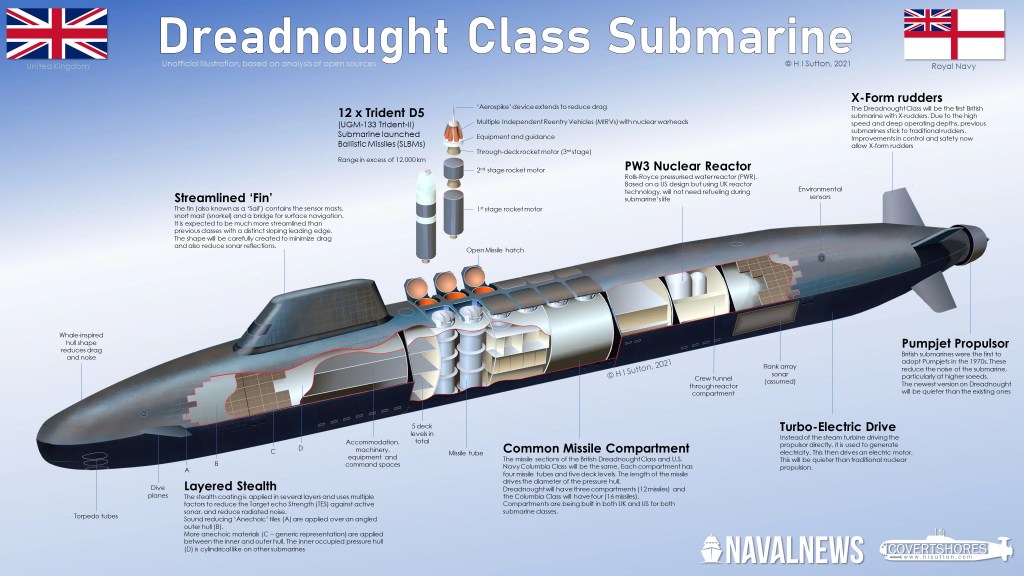
The keel-laying of HMS Dreadnought in March 2025 marked a milestone in Britain’s strategic deterrent program and the future of its nuclear-powered ballistic missile submarine (SSBN) fleet. As the first of four vessels in the new Dreadnought-class, this submarine embodies both an engineering triumph and a signal of sustained commitment to the UK’s Continuous At-Sea Deterrent (CASD), which has remained unbroken since 1969. At 153.6 meters and 17,200 tonnes, the Dreadnought will be the largest submarine ever operated by the Royal Navy: a floating cathedral of stealth, survivability, and silent lethality.

The new class is expected to replace the aging Vanguard-class submarines by the early 2030s and will be in service well into the 2070s. Powered by the Rolls-Royce PWR3 nuclear reactor, a substantial evolution from the PWR2 used in the Vanguards, the Dreadnoughts promise longer life, reduced maintenance, and quieter operation, essential for a vessel designed to avoid detection at all costs. Innovations in stealth include a reshaped hull form, advanced sound-dampening technologies, and X-shaped stern rudders for more agile maneuvering in deep water. The integration of BAE Systems’ Active Vehicle Control Management (AVCM) fly-by-wire system and Thales’ Sonar 2076 gives the submarine cutting-edge sensory and navigation capabilities.

Comfort and crew sustainability have not been overlooked. Designed to accommodate 130 personnel, the submarine includes improved living quarters, separate facilities for female sailors, a small gym, and an artificial lighting system to simulate day and night cycles, no small consideration for the psychological health of crews spending months submerged in strategic silence. Operationally, the class will carry 12 missile tubes using the Common Missile Compartment (CMC), co-developed with the United States. These tubes will launch the Trident II D5 ballistic missile, a weapon system that is central to the debate over British nuclear sovereignty.

For all its sovereign trappings, the UK’s nuclear deterrent is not entirely domestically independent. The Dreadnought-class, like its predecessor, remains intimately tied to US strategic infrastructure, a reality that undermines, in the view of some, the claim of an “independent” deterrent. The Trident II D5 missiles aboard Dreadnought are not built in Britain, but rather drawn from a shared pool maintained by the US Navy at Kings Bay, Georgia. These missiles are periodically rotated, serviced, and upgraded in the United States. The UK owns no domestic facility for full-cycle missile maintenance, which introduces a logistical and, some would argue, strategic dependency.

Even the warheads, while built and maintained at the Atomic Weapons Establishment in Aldermaston, are widely understood to be based on the American W76 design. British scientists have not tested a warhead since 1991, relying instead on simulation and US data. Further, the PWR3 reactor at the heart of the Dreadnought-class, although built by Rolls-Royce, is significantly influenced by the US Navy’s S9G reactor used in its Virginia-class attack submarines. This level of integration, from missile tubes to propulsion, reflects decades of close US-UK military cooperation, formalized in arrangements like the 1958 Mutual Defence Agreement.

Supporters of the Dreadnought program argue that such collaboration is not a weakness but a pragmatic alliance. By sharing R&D burdens and pooling procurement, the UK can field a credible nuclear deterrent without spending the tens of billions required for full-spectrum independence. Operational command and control of the submarines, including launch authority, remains fully in British hands, with final decision-making retained by the Prime Minister. Indeed, the “letters of last resort” carried on each submarine are uniquely British in character: a final instruction from one head of government to another in the event of national annihilation.

Yet critics maintain that the veneer of sovereignty cannot obscure the fact that a central pillar of British defence policy is structurally dependent on American goodwill, technology, and supply chains. In any future divergence of interests between London and Washington, or under a more isolationist US administration, the UK’s deterrent capability could be compromised, not technically, perhaps, but in terms of assuredness and resilience.

The Dreadnought-class represents both continuity and compromise. It is a technical marvel and a credible means of sustaining Britain’s strategic nuclear posture; but it is also a reminder that sovereignty in the nuclear age is often a layered illusion, one maintained not through autarky, but through alliance, collaboration, and trust in the enduring strength of an Anglo-American strategic partnership that remains, for now, as silent and watchful as the vessels patrolling the deep.