The House That Pierre Built

There is a faint creak coming from the blue house on Parliament Hill these days. Nothing as dramatic as a collapse. It is more like the weary sigh of old beams shifting under new weather. The Conservative caucus, still licking its wounds from a disappointing election, has begun to sound like that: restless, adjusting, unsure whether to stay or start packing boxes.

This week’s events made the sound louder. On Monday, Chris d’Entremont, MP for Nova Scotia’s Acadie–Annapolis, announced he was leaving the Conservatives to sit with Prime Minister Mark Carney’s Liberals. By Friday, Matt Jeneroux of Edmonton Riverbend revealed he would resign his seat in the spring. Two moves in five days would be noteworthy in any week. Coming before a leadership review, they ring like the snap of dry timber.

The facts are plain. D’Entremont said he could work more effectively for his region within government than in opposition. Jeneroux cited family and personal reasons, but the timing spoke volumes. Both men belong to the moderate, results-first wing of the party, the same wing that has looked increasingly uncomfortable under Pierre Poilievre’s sharply populist and combative leadership.

Poilievre remains a gifted communicator and fundraiser. A party is not built on charisma alone. The post-election landscape has left his caucus divided between those who want to double down on grievance politics and those who long for the days when Conservatives prided themselves on competence and calm. The upcoming January 2026 leadership review will force everyone to pick a side. Until then, MPs are doing the math on loyalty, re-election odds, and what they can still stomach.

There is arithmetic of another kind. Each defection moves the Liberals closer to a working majority and signals to uneasy Conservatives that crossing the floor might not mean political exile. It might mean relevance. Carney has left the door visibly ajar.

Beyond the chamber, Canadians watching from their kitchen tables may not feel much sympathy for inside-Ottawa melodrama, but they understand this much. When politicians start talking about family reasons, something larger is usually stirring in the walls.

So yes, the house still stands. But its timbers are talking. More MPs will listen to those creaks in the night and wonder whether to stay in a room where the wallpaper no longer feels like their colour.

Three possible tunes

If the past week is the prelude, the coming months could bring one of three tunes. The first is modest renovation. Poilievre steadies his leadership, wins the review, and a few more moderates quietly retire. The second is a managed reshuffle, with new leadership emerging after further defections. The third, less likely but not impossible, is a structural split. Red Tories in one wing, populists in another.

For now, the tea is still warm, the windows hold against the wind, and the Prime Minister has his recruitment list open. The rest of us can only keep an ear to the rafters and note how often the floorboards sigh.

Background and watchlist

The table below presents the verifiable facts we have, short background on each item, and why these MPs or groups are worth watching right now.

MP or GroupProvince or RidingStatus or FactsWhy to WatchSource Highlights
Chris d’EntremontNova Scotia · Acadie–AnnapolisCrossed the floor to the Liberals on November 4 2025First visible defection and the catalytic event. Cited alignment with government priorities.AP News November 4 2025 · Politico Canada November 4 2025
Matt JenerouxAlberta · Edmonton RiverbendAnnounced resignation effective spring 2026Timing fuels speculation of wider caucus unrest and coincides with a looming leadership review.Global News November 5 2025
Michael ChongOntario · Wellington–Halton HillsSenior moderate MP currently in caucusLong record of institutional moderation. Profile suggests potential isolation under combative leadership.Parliament of Canada profile · Hill Times analysis November 2025
Scott AitchisonOntario · Parry Sound–MuskokaFormer leadership candidate in 2022Advocates collegial tone and pragmatic policy. Leadership tone mismatch makes him a watchlist name.Leadership race records · CBC archives
Michelle Rempel GarnerAlberta · Calgary regionProminent independent Conservative voicePublicly critical on tone and culture issues. Could opt for retirement, re-alignment, or become a focal point for dissent.Policy Magazine profiles · Angus Reid commentary
Atlantic moderate MPsNova Scotia New Brunswick NewfoundlandGroup with regional pragmatic recordsRegionally pragmatic centrists who may feel alienated by Ottawa populism. The first defection came from this region.AP News November 2025 · Hill Times November 2025
Urban and suburban Ontario MPsGreater Toronto area and surrounding suburbsVarious MPs in ridings with narrow marginsIf local voters reject leader tone, re-election prospects dim and MPs may pre-emptively retire or seek other paths.Angus Reid Institute polling October 2025
Cross party pragmatistsVariousBackbenchers with a history of cross-party workThose who prefer cooperation to confrontation may choose to step away rather than remain in an increasingly combative caucus.Policy Magazine October 2025 · parliamentary reporting
Andrew Scheer and institutional figuresNationalSenior caucus roles and institutional influenceMore likely to organize a leadership challenge or delegate push than to cross the floor themselves.Hill Times November 2025 inside reporting

Speculation, modestly poured

If another resignation comes before Christmas, the pattern will be undeniable. The party’s centrist wing would be peeling away. A quiet exodus of three or four MPs could change committee balances and morale. Whether Poilievre can steady his caucus before the January review will decide if the blue house merely needs a new coat of paint or if the tenants start looking for a different address altogether.

Sources

  • AP News November 4 2025
  • Politico Canada November 4 2025
  • Global News November 5 2025
  • The Hill Times November 2025
  • Policy Magazine October 2025
  • Angus Reid Institute polling October 2025
  • Parliament of Canada public profiles and records

The Jade Tree and Carl Jung’s Synchronicity

I hadn’t thought about her in over a year. No particular reason. No emotional weight behind it. She just drifted across my mind, calmly, clearly, and I noted it, then moved on.

Half an hour later, my phone buzzed. A message from her. No small talk, no explanation. Just a photo of a jade tree I’d given her a while back. It looked healthy. Thriving, actually. She thought I’d like to see how well it was doing.

I thanked her for the photo, wished her well, and left it at that. I didn’t feel any great pull to re-engage, but the moment stayed with me, not because of her, but because of the timing. The randomness. The feeling that something just lined up.

Carl Jung had a name for this kind of thing: synchronicity. He defined it as a “meaningful coincidence”. Two or more events connected not by cause and effect, but by meaning. They happen together, seemingly by chance, but resonate with something deeper. He saw it as a sign that there’s more to reality than we can see or measure. That sometimes, our inner world and the outer world speak to each other. Quietly. Precisely.

I’m not someone who needs to romanticize everything. People reach out. Thoughts come and go. But there was something clean about this particular moment; no buildup, no emotional noise. Just the sense of a thread that hadn’t fully frayed. A small echo between two people, delivered through a jade tree and a phone screen.

There’s no need to dig into it more than that. I wasn’t longing for her. I wasn’t unresolved, but when synchronicity shows up like this, I pay attention. Not because I think it means something I need to act on, but because it reminds me I’m connected to more than just what’s in front of me.

Jung believed these moments reflected the presence of a collective unconscious, a shared field of symbolic meaning, memory, and emotion. A psychic network we’re all tuned into, whether we realize it or not. Maybe that’s true. Maybe it’s simpler than that. Maybe we just carry people with us in subtle ways, and now and then, something stirs.

What I know is this: there was no reason for her to reach out when she did. And no reason for me to be thinking of her right before. But she did. And I was. And I’m glad I noticed.

The jade tree is still growing. That’s enough.

Why We Must Rethink Policing: History, Failure, and a Path Forward

The Metropolitan Police Service (MPS) has long been emblematic of the modern police force, yet recent investigations, including the BBC Panorama undercover report and the Baroness Casey Review, have exposed deep-seated issues within the institution. These revelations highlight systemic racism, sexism, and a culture that often undermines public trust. This essay argues that the foundational purpose of policing—to protect property and maintain order—has evolved in a manner that no longer aligns with contemporary societal needs. Drawing on recent findings, it contends that the current model of policing is inadequate and proposes a reimagined approach to public safety.

Introduction

The inception of modern policing can be traced back to Sir Robert Peel’s establishment of the Metropolitan Police Service in 1829. Designed to protect property and maintain order, the force’s primary function was to serve the interests of the propertied classes. Over time, the role of police expanded to encompass broader public safety responsibilities. However, recent investigative reports have cast a spotlight on the MPS’s internal culture, revealing systemic issues that question the efficacy and fairness of the current policing model.

Historical Context: The Origins of Modern Policing

Sir Robert Peel’s creation of the MPS was predicated on the need to protect property and maintain social order. This foundational purpose embedded certain priorities within the institution, emphasizing control and enforcement over community engagement and support. As policing evolved, these priorities became ingrained in the institution’s culture, influencing recruitment, training, and operational strategies.

Recent Investigations and Findings

BBC Panorama Undercover Report

In a groundbreaking undercover investigation, BBC Panorama exposed disturbing behaviors within a central London custody suite. Officers were recorded making racist, misogynistic, and Islamophobic remarks, dismissing rape allegations, and boasting about harming detainees. This footage not only shocked the public but also underscored the existence of a toxic culture within the MPS that tolerates discriminatory behavior.

Baroness Casey Review

Commissioned in the wake of the murder of Sarah Everard by a serving officer, the Baroness Casey Review aimed to assess the standards of behavior and internal culture of the MPS. The 2023 report concluded that the MPS is institutionally racist, sexist, and homophobic. It identified systemic failures, including inadequate leadership, a lack of accountability, and a culture that tolerates discrimination. The review’s findings align with the concerns raised by the Panorama investigation, painting a grim picture of the institution’s internal dynamics.

The Inadequacy of the Current Policing Model

The revelations from these investigations suggest that the current model of policing is ill-equipped to serve the diverse and evolving needs of society. The emphasis on enforcement and control, rooted in the historical purpose of protecting property, has led to practices that disproportionately affect marginalized communities. For instance, Black Londoners are more likely to experience police powers such as stop and search, and there is a significant disproportionality in arrest rates.

Furthermore, the culture within the MPS, as highlighted by both the Panorama report and the Casey Review, often undermines public trust. Discriminatory behaviors are not only prevalent but are also tolerated or ignored, leading to a breakdown in the relationship between the police and the communities they serve.

The BBC Panorama Investigation: A Real-Time Illustration

The BBC Panorama undercover investigation inside a central Met custody unit documented officers making racist, misogynistic and Islamophobic remarks, dismissing rape allegations and boasting about harming detainees. The Met responded by suspending officers, disbanding the implicated custody team and opening fast-track disciplinary procedures. The Independent Office for Police Conduct launched further inquiries. The footage shocked national leaders and civil society and rekindled debate about whether incremental internal reform is adequate. The Panorama material must be read alongside the Casey review and prior IOPC reports to see the pattern of failure.

Rethinking Public Safety: Principles for a New Design

  • Separation of Enforcement and Care: Crisis responses, particularly those involving mental health, homelessness, and substance abuse, should be led by trained professionals such as social workers and healthcare providers.
  • Community-Based Policing: Policing should be localized, with officers embedded within communities to build trust and understanding, emphasizing prevention and engagement over enforcement.
  • Accountability and Transparency: Independent oversight bodies should monitor police conduct and ensure accountability. Transparency in operations is crucial to rebuild public trust.
  • Cultural Transformation: Address ingrained institutional discrimination with comprehensive training, clear policies, and a commitment to diversity and inclusion.

Conclusion

The recent investigations into the Metropolitan Police Service have illuminated deep-rooted issues that question the institution’s ability to serve the public effectively and equitably. The historical purpose of policing, focused on protecting property and maintaining order, has evolved in a manner that no longer aligns with the needs of contemporary society. By reimagining public safety through a model that emphasizes care, community engagement, accountability, and cultural transformation, we can build a system that truly serves all members of society. The Panorama footage, the Casey review findings and related inquiries make the imperative clear. It is time to take the harder path and redesign how we secure public safety for everyone.

References

  1. BBC Panorama. (2023). Undercover: Inside the Met.
  2. Casey, L. (2023). Baroness Casey Review: Independent Review into the Standards of Behaviour and Internal Culture of the Metropolitan Police Service.
  3. Hackney Council. (2023). The Met Police as an institution is broken.
  4. Southwark Council. (2023). Response to Baroness Casey’s Final Report.
  5. Mayor’s Office for Policing and Crime (MOPAC). (2024). London Policing Board Equality Impact Assessment.
  6. Independent Office for Police Conduct (IOPC). (2024). Race Discrimination Report.

Rediscovering Jett: A Stylish Neo-Noir Masterpiece

In the crowded landscape of television crime dramas, Jett stands out as a rare gem: an intoxicating blend of sleek visuals, sharp writing, and a powerhouse lead performance. Premiering on Cinemax in 2019, this nine-episode series, created by Sebastian Gutierrez, offers a fresh take on the heist genre, elevating it to an art form. Even on a rewatch, Jett demonstrates a remarkable ability to combine suspense, style, and character depth in ways few contemporary crime dramas achieve.

A Cinematic Aesthetic
From the very first frame, Jett captivates with its bold visual style. Cinematographer Cale Finot crafts a world drenched in neon hues, deep shadows, and rich textures, reminiscent of classic noir films. The lighting and composition are deliberate and cinematic, giving every scene a sense of immediacy and dramatic weight. The use of dynamic camera movements, precise framing, and occasional split-screen storytelling transforms each episode into a visually engaging experience, akin to watching a series of short, high-budget films. This aesthetic sophistication elevates what could have been a standard crime story into a fully immersive world, one that feels both stylish and dangerous at the same time.

A Script That Pops
Gutierrez’s writing is equally compelling, with dialogue that crackles with wit and tension. The series balances dark humor, high-stakes action, and nuanced character moments effortlessly. Every line feels purposeful, every twist is earned, and the pacing maintains a constant edge-of-your-seat energy. The narrative often weaves multiple storylines together, presenting a non-linear structure that rewards careful attention and repeated viewing. It’s a script that respects the audience’s intelligence, offering depth in its characterization while delivering thrills, suspense, and unexpected turns that keep viewers fully engaged.

Carla Gugino: A Tour de Force
At the heart of Jett is Carla Gugino’s mesmerizing performance as Daisy “Jett” Kowalski, a master thief reluctantly pulled back into a world she thought she had left behind. Gugino brings a rare combination of toughness, intelligence, and vulnerability to the role. Her physicality, subtle expressions, and emotional range create a character who is both formidable and relatable. Critics have rightly celebrated her performance as the anchor of the series, noting that Gugino elevates the show with her nuanced portrayal of a woman navigating loyalty, danger, and her own moral code.

A Cult Classic in the Making
Though its single-season run limited its reach, Jett has earned critical acclaim and cultivated a dedicated following. Its combination of visually stunning cinematography, razor-sharp writing, and a lead performance that commands attention makes it stand out in the modern television landscape. For viewers seeking a crime drama that merges style with substance, Jett is a must-watch—a series that proves even a short run can leave a lasting impression.

Why You Should Watch
In a television landscape crowded with crime dramas, Jett refuses to be just another series. Its cinematic flair, razor-sharp script, and Carla Gugino’s commanding performance combine to create a show that is as stylish as it is thrilling. Short, intense, and unforgettable, Jett proves that quality storytelling doesn’t need multiple seasons to make an impact. For fans of smart, edgy, and visually striking crime stories, this series is an absolute must-watch: a pulse-pounding ride that lingers long after the credits roll.

AI and the Future of Professional Writing: A Reframing

For centuries, every major technological shift has sparked fears about the death of the crafts it intersects. The printing press didn’t eliminate scribes, it transformed them. The rise of the internet and word processors didn’t end journalism, they redefined its forms. Now, artificial intelligence fronts the same familiar conversation: is AI killing professional writing, or is it once again reshaping it?

As a business consultant, I’ve immersed myself in digital tools: from CRMs to calendars, word processors to spreadsheets, not as existential threats, but as extensions of my capabilities. AI fits into that lineage. It doesn’t render me obsolete. It offers capacity, particularly, the capacity to offload mechanical work, and reclaim time for strategic, empathic, and creative labor.

The data shows this isn’t just a sentimental interpretation. Multiple studies document significant declines in demand for freelance writing roles. A Harvard Business Review–cited study that tracked 1.4 million freelance job listings found that, post-ChatGPT, demand for “automation-prone” jobs fell by 21%, with writing roles specifically dropping 30%  . Another analysis on Upwork revealed a 33% drop in writing postings between late 2022 and early 2024, while a separate study observed that, shortly after ChatGPT’s debut, freelance job hires declined by nearly 5% and monthly earnings by over 5% among writers.  These numbers are real. The shift has been painful for many in the profession.

Yet the picture isn’t uniform. Other data suggests that while routine or templated writing roles are indeed shrinking, strategic and creatively nuanced writing remains vibrant. Upwork reports that roles demanding human nuance: like copywriting, ghostwriting, and marketing content have actually surged, rising by 19–24% in mid-2023. Similarly, experts note that although basic web copy and boilerplate content are susceptible to automation, high-empathy, voice-driven writing continues to thrive.

My daily experience aligns with that trend. I don’t surrender to AI. I integrate it. I rely on it to break the blank page, sketch a structure, suggest keywords, or clarify phrasing. Yet I still craft, steer, and embed meaning, because that human judgment, that voice, is irreplaceable.

Many professionals are responding similarly. A qualitative study exploring how writers engage with AI identified four adaptive strategies, from resisting to embracing AI tools, each aimed at preserving human identity, enhancing workflow, or reaffirming credibility. A 2025 survey of 301 professional writers across 25+ languages highlighted both ethical concerns, and a nuanced realignment of expectations around AI adoption.

This is not unprecedented in academia: AI is already assisting with readability, grammar, and accessibility, especially for non-native authors, but not at the expense of critical thinking or academic integrity.  In fact, when carefully integrated, AI shows promise as an aid, not a replacement.

In this light, AI should not be viewed as the death of professional writing, but as a test of its boundaries: Where does machine-assisted work end and human insight begin? The profession isn’t collapsing, it’s clarifying its value. The roles that survive will not be those that can be automated, but those that can’t.

In that regard, we as writers, consultants, and professionals must decide: will we retreat into obsolescence or evolve into roles centered on empathy, strategy, and authentic voice? I choose the latter, not because it’s easier, but because it’s more necessary.

Sources
• Analysis of 1.4 million freelance job listings showing a 30% decline in demand for writing positions post-ChatGPT release
• Upwork data indicating a 33% decrease in writing job postings from late 2022 to early 2024
• Study of 92,547 freelance writers revealing a 5.2% drop in earnings and reduced job flow following ChatGPT’s launch  ort showing growth in high-nuance writing roles (copywriting, ghostwriting, content creation) in Q3 2023
• Analysis noting decreased demand (20–50%) for basic writing and translation, while creative and high-empathy roles remain resilient
• Qualitative research on writing professionals’ adaptive strategies around generative AI
• Survey of professional writers on AI usage, adoption challenges, and ethical considerations
• Academic studies indicating that AI tools can enhance writing mechanics and accessibility if integrated thoughtfully

The Independent Knowledge Worker and the Question of Marketability

Recently, I read a post from a well-known contributor on a community platform. This writer, an accomplished author with years of experience, lamented the decline of opportunities in her field. She spoke of a shrinking market, a lack of viable contracts, and the challenges of her geographical location in trying to generate meaningful revenue. Out of habit, I rarely respond to such posts, but this time I did. My response drew a public reply, and while I tend not to engage in prolonged debates on public forums, too often they dissolve into vitriol, I chose to bring the discussion here, to my own space, where ideas can be unpacked more thoughtfully.

Artificial Intelligence was seen as the main villain in this public debate, but I believe that’s a red herring. Yes, we are all adjusting to the challenge of AI, but the only constant in life is change, so what is the real issue here. 

The heart of the matter is this: the defining advantage of being an independent knowledge worker is precisely the ability to work from anywhere. The office is no longer a cubicle on the twentieth floor of a glass tower, but the laptop on your kitchen table, although I prefer my dedicated home office. The clients may live continents away, but the work flows seamlessly across time zones. In this economy, location is not the limitation it once was. The real limitation is mindset.

Even as I write this post, I am exchanging messages with an Argentine colleague who is currently based in Canada. She is orchestrating a major PR announcement for a company headquartered in the Netherlands. Just last week, I was on a call with a professional in Paraguay to discuss a project in Chile. Another colleague, specializing in agricultural and agri-food writing, maintains an active client list that stretches from Australia to Japan to Portugal. None of us share an office, or a city, but all of us share the same reality: we are independent professionals with global client bases, connected by skill, adaptability, and digital tools.

This is why I push back when I hear colleagues insist that their difficulties are rooted in market decline. It is not the shrinking of opportunity, but the narrowing of their willingness to market themselves that becomes the stumbling block. The truth is uncomfortable: talent alone does not guarantee survival.

The writer whose post sparked this reflection has produced over a hundred articles, essays, and commentaries that I have personally read. Her body of work is substantial, and her craft is evident. Yet the refrain of “just give me work, so I can do my job” misses the larger truth of freelancing. Writing is the service, but self-promotion is the business model. Without branding, without a visible signal to clients about why they should choose you over the hundreds of other qualified voices, the work will not come.

Whenever I submit a proposal for a project, I begin by ensuring I have the necessary expertise and experience; but the more important question quickly follows: “why me?” Why would this client entrust me with their project rather than the next bidder? If I cannot answer that persuasively, I do not waste time chasing the opportunity. The answer to “why me?” is not entitlement, nor is it a résumé; it is positioning, visibility, and the willingness to show that your work has unique value.

In the end, the challenge of independent knowledge work is not scarcity of markets, but the discipline of visibility. The professionals who thrive are those who accept that marketing is not a distraction from their craft, but a core part of it.

My Favorite Films Part III: Music, Story, and Cinematic Art

This third installment continues my celebration of cinema as a multisensory art form, with music once again our guide. These seven films span epochs, genres, and emotions, from epic battles to transcendent romance, each bound by the way soundscapes enrich story, character, and image. They are films where music isn’t background noise; it’s atmosphere, character, and memory, and I return to them because they resonate as deeply for my ears as they do for my eyes and heart.

12. Kingdom of Heaven (Director’s Cut)
2005 (Director’s Cut 2005) | Director: Ridley Scott | Writer: William Monahan

A blacksmith becomes a knight in Jerusalem, defending the city during the Crusades as faith, politics, and identity clash in epic conflict. The Director’s Cut restores 45 minutes of character depth and narrative clarity.

Why I like it: The Director’s Cut deepens the emotional stakes and moral tension, making every battle and moment of faith feel earned. Harry Gregson-Williams’s score elevates the walls of Jerusalem and the heart of its defenders. It’s a historical epic that resonates emotionally through its music, visuals, and a compassion-filled narrative.

13. Vicky Cristina Barcelona
2008 | Director/Writer: Woody Allen

Two American friends vacation in Barcelona, entangled in romance with a charismatic painter and his unstable ex-wife, a messy, sensual exploration of desire and self.

Why I like it: The vibrant Spanish setting and passionate performances draw me in, and the music, weaving classical and flamenco tones, makes the city sing. It’s playful, messy, and beautiful; like love itself, a collision of impulse, emotion, and art that I find utterly irresistible.

14. Dune: Part One & Part Two
2021 & 2024 | Director: Denis Villeneuve | Writers: Jon Spaihts, Denis Villeneuve, Eric Roth; Frank Herbert for Part Two

Set on the desert planet Arrakis, Paul Atreides becomes the prophesied leader, navigating politics, prophecy, and rebellion. The saga crescendos with alliances, revenge, and evolving destinies amid cosmic danger.

Why I like it: Villeneuve’s vision pairs epic scale with intimate emotion, and Hans Zimmer’s haunting score makes the spice-laden dunes thrum inside me. Part Two’s deeper political and emotional arc, “a love story first” even amid war, anchors its grandeur in human feeling, perfectly in tune with my love of story carried by sound and scope.

15. Across the Universe
2007 | Director: Julie Taymor | Writers: Dick Clement, Ian La Frenais, Julie Taymor

A psychedelic musical romance set against 1960s America, weaving 34 Beatles songs into a story of love, politics, and the counterculture era.

Why I like it: A film where soundtrack is substance – the Beatles’ music tells the emotions of war, youth, and love. Taymor’s visuals are feverish and inventive, and the songs don’t just play – they pulse. It’s a vivid dream of political and romantic energy that lives in my heart like a favorite song.

16. Cairo Time
2009 | Director/Writer: Ruba Nadda

A Canadian woman waiting for her husband in Cairo forms a quiet, unexpected connection with a local friend; an atmospheric film of longing and place.

Why I like it: It’s a film of small moments made powerful, the hush of Cairo mornings, unspoken longing, and ambient sound that’s almost music. Niall Byrne’s score gently underscores longing and cultural nuance. It’s a quiet romance, rich in atmosphere and subtle emotion.

17. Henry V
1989 | Director/Writer: Kenneth Branagh

Shakespeare’s history play brought to cinematic life. King Henry rallies his soldiers against overwhelming odds, blending heroic oratory with battlefield grit.

Why I like it: Branagh’s passionate performance, poetic language, and sweeping visuals are all heightened by Patrick Doyle’s stirring score. It moves me when words alone could not. It’s bravery made beautiful, sound and speech united in grand purpose.

18. Orlando
1992 | Director/Writer: Sally Potter

A gender-fluid soul wanders across centuries, shifting identity and time, in a cinematic ode to self, history, and transformation.

Why I like it: Orlando is visual poetry, and its minimalist, haunting score echoes Woolf’s timelessness. The film flows like a piece of ambient music, dreamlike and meditative, reminding me how cinema can feel like breathing through centuries. It’s as much emotion as art, ebbing in time and sound.

Closing Thoughts
These seven films span conflict, identity, wonder, and connectionyet what binds them for me is the music. Whether epic orchestras, Beatles melodies, ambient ambience, or subtle composition, each soundtrack shapes the story’s soul. They remind me that a film becomes unforgettable not just through how it looks or what happens, but how it feels. In this part of my personal canon, sound is the membrane between scene and heart, and these films resonate there.

My Favorite Films Part II: Music, Story, and Cinematic Art

Continuing my exploration of favorite films, this second collection also celebrates the interplay of music, storytelling, and cinematic artistry. These are films where the soundtrack does more than accompany the action – it shapes every emotion, enhances every character, and magnifies the power of performance and visual design. Each film here is a complete sensory experience, one that I return to because it moves me as much musically as it does narratively.

6. Pride and Prejudice (2005)
2005 | Director: Joe Wright | Writer: Deborah Moggach (from Austen)

Elizabeth Bennet challenges social norms and her own prejudices as she sparrs with Mr. Darcy, finding unexpected love.

Why I like it: Elizabeth’s intelligence, independence, and wit speak to me. Dario Marianelli’s piano-driven score guides every heartbeat, from tension to longing, heightening the romantic and social stakes. I love how the music works with the performances and cinematography to make subtle emotion tangible. It’s a film where intellect, feeling, and music are inseparable, mirroring my own appreciation for stories that engage both mind and heart.

7. Casino Royale
2006 | Director: Martin Campbell | Writers: Neal Purvis, Robert Wade, Paul Haggis (from Fleming)

James Bond earns his license to kill, facing betrayal, love, and his own emotional awakening in a deadly high-stakes game.

Why I like it: I enjoy seeing Bond stripped to his raw humanity, vulnerable yet cunning. The soundtrack – from Chris Cornell’s theme to tense orchestration – heightens every moment of risk and emotion. I love the fusion of storytelling, music, and action: the score amplifies tension and heartbreak alike, letting me experience the stakes as fully as the characters do.

8. Kill Bill Vol. 1 & 2
2003, 2004 | Director/Writer: Quentin Tarantino

A betrayed assassin, the Bride, embarks on a relentless, stylish quest for vengeance and, ultimately, peace.

Why I like it: The film is an operatic spectacle, and the music – spanning Ennio Morricone, Japanese pop, and rock – propels every fight, escape, and revelation. I revel in the intensity, style, and layered storytelling. The Bride’s journey is one of transformation, resilience, and autonomy, and the soundtrack ensures each beat lands with cinematic and emotional precision, making it unforgettable.

9. Possession (2002)
2002 | Director: Neil LaBute | Writers: David Henry Hwang, Laura Jones, Neil LaBute (from A. S. Byatt)

Modern scholars unravel the secret romance of two Victorian poets, uncovering parallels to their own lives and loves.

Why I like it: I love the way intellect, history, and romance intertwine. The haunting, lyrical music echoes the poets’ passion and underscores the emotional resonance across centuries. I’m drawn to stories where words, love, and discovery ripple through time, and the soundtrack ensures that every revelation and longing feels deeply felt.

10. Aliens
1986 | Director: James Cameron | Writers: James Cameron (screenplay); story by Cameron, David Giler, Walter Hill

Ellen Ripley returns to confront the alien menace, finding both terror and her fierce maternal strength.

Why I like it: Ripley’s courage and care inspire me. James Horner’s score heightens every moment of terror, heroism, and triumph. I’m drawn to the tension, the bonds of chosen family, and the way music amplifies every heartbeat, making suspense, action, and maternal devotion resonate with a visceral emotional power.

11. Moulin Rouge!
2001 | Director: Baz Luhrmann | Writers: Baz Luhrmann, Craig Pearce

A tragic love story set in a bohemian Paris cabaret, where art, passion, and sacrifice collide.

Why I like it: I’m swept up by the music, theatricality, and raw emotion. Every mash-up of pop and classical music is a sensory thrill, giving voice to passion and heartbreak. I love how the visuals, performance, and music coalesce, making the spectacle deeply moving and utterly alive, a perfect expression of art as a full-bodied experience.

Closing Thoughts
These films reaffirm my belief that cinema is a holistic art form, where music, narrative, performance, and visuals converse with one another to create a lasting emotional impact. From romance to action, from historical epic to modern tragedy, each selection captivates me through its unique harmony of sound and sight. Together with Part I, they form a personal canon – movies that I return to for inspiration, reflection, and the simple, enduring pleasure of being carried by story and music.

My Favorite Films Part I: Music, Story, and Cinematic Art

For me, a film is never just a story on a screen. I experience it as a convergence of senses and artistry: the framing of a shot, the cadence of dialogue, the nuance of performance, the sweep of production design – but always, equally, the music. A soundtrack can transform a scene, turning ordinary emotion into something transcendent, guiding my heart as much as the narrative guides my mind. This first part of my favorite films highlights those that move me through story, music, and cinematic craftsmanship, forming an immersive experience I return to again and again.

1. The Lord of the Rings (Extended Editions)
2001–2003 | Director: Peter Jackson | Writers: Fran Walsh, Philippa Boyens, Peter Jackson, Stephen Sinclair

A sweeping fantasy epic where hobbits, warriors, and kings unite to destroy the One Ring, resisting corruption and forging unlikely bonds amid war.

Why I like it: I’m captivated by the depth of the world and the moral stakes of loyalty, courage, and chosen family. Howard Shore’s score is integral, a musical backbone that elevates battle, sorrow, and triumph alike. The extended editions let me linger on every character nuance, visual detail, and the orchestral music that carries the emotional weight, making the story as immersive for the heart as it is for the eyes.

2. Blade Runner (Final Cut)
2007 (original 1982) | Director: Ridley Scott | Writers: Hampton Fancher, David Peoples

In a rain-soaked, neon Los Angeles, a weary detective hunts rogue replicants, blurring the line between human and artificial life.

Why I like it: I’m drawn to its meditation on identity and mortality, a story that lingers in the mind long after the credits. Vangelis’s haunting synthesizer score defines the atmosphere, turning every raindrop and neon reflection into a sonic experience. The music, cinematography, and acting fuse seamlessly, making me feel the melancholy, tension, and beauty of a world that’s both alien and intimately human.

3. Monsoon Wedding
2001 | Director: Mira Nair | Writer: Sabrina Dhawan

A chaotic Delhi wedding gathers extended family, exposing secrets, desires, and generational tensions while celebrating resilience and love.

Why I like it: The interwoven stories of love, family, and tradition resonate deeply with my own life. The music – Bollywood, classical, and folk – animates the chaos, making every dance, argument, and revelation pulse with rhythm and emotion. I return to this film for its warmth, humor, and humanity, and the soundtrack ensures I’m dancing emotionally as well as mentally, caught up in the joy and mess of life.

4. Lawrence of Arabia
1962 | Director: David Lean | Writers: Robert Bolt, Michael Wilson

A sweeping desert epic tracing T. E. Lawrence’s transformation from eccentric officer to legendary leader of the Arab Revolt.

Why I like it: The grandeur of the deserts and Lawrence’s moral complexity enthrall me. Maurice Jarre’s score turns the desert into a character, giving voice to both isolation and transcendence. I admire the cinematic sweep, the subtlety of performance, and the orchestral music that amplifies every moment of tension, courage, and reflection. The film reminds me of the vastness of human experience, both visually and musically.

5. The Martian
2015 | Director: Ridley Scott | Writer: Drew Goddard (novel by Andy Weir)

Stranded on Mars, astronaut Mark Watney survives through ingenuity, humor, and science until Earth can bring him home.

Why I like it: I love the optimism, wit, and relentless problem-solving. The use of 70s pop songs adds humor and heart, making the isolation bearable and delightfully human. Music becomes part of survival, and every track resonates with hope, playfulness, and ingenuity. The combination of scientific ingenuity, visual storytelling, and musical choices perfectly balances intellect, emotion, and entertainment for me.

Final Thoughts
These five films exemplify how music and narrative can intertwine to create something larger than the sum of their parts. From sweeping epics to intimate tales, each one offers a fully immersive experience, engaging my imagination, my emotions, and my ear for melody and harmony. They remind me that cinema is a multidimensional art, where sight, sound, and story can linger in memory long after the screen goes dark.

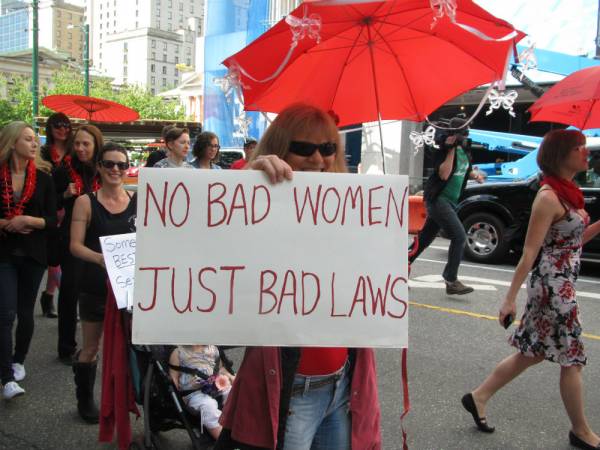
When a Sex Worker Calls a Lawyer a Whore: Feminism, Hypocrisy, and the Weight of Words

I recently witnessed a moment that was, in equal measure, jarring, ironic, and deeply revealing: a sex worker called a lawyer a whore. The word hit the air like a slap, not just because of who said it, but because of what it exposed. This wasn’t just a spat. It was a cultural moment that pulled back the curtain on how we still weaponize language soaked in misogyny, even among those who should, by all rights, know better.

Now, let’s pause here. The term whore has long been used to shame, control, and degrade women, especially those who dare to transgress sexual norms. Yet, in recent years, many sex workers have reclaimed it, asserting their agency and challenging the stigma. To hear someone from within that world hurl it as an insult is, on the surface, ironic. But beneath that irony lies something far more complex: a commentary on respectability, power, and the hypocrisy that still riddles both feminist and professional spaces.

When a sex worker calls a lawyer a whore, they’re not talking about sex. They’re talking about compromise, about selling out, about being willing to do anything for money or power while cloaking it in the illusion of respectability. It’s a sharp dig at the moral contradictions we tolerate in professional life. After all, lawyers and especially those in corporate or political circles, are often paid handsomely to defend the indefensible. They play the game in tailored suits and courtrooms, while sex workers do it in ways society still deems unacceptable. Yet only one of them gets a LinkedIn profile and a pension.

This, to me, is the hypocrisy at the heart of modern feminism. Too often, it uplifts professional women while distancing itself from those who work outside “respectable” labour categories. Mainstream feminism has made great strides, but it still struggles to make room for those whose empowerment doesn’t come with a university degree or a boardroom badge. Sex workers, domestic labourers, and other marginalized women are too often left out of the conversation, unless they serve as cautionary tales or symbols to be rescued.

And this is why the insult stung so sharply. The word “whore” still holds power, not because of what it means, but because of the shame we still attach to it. When used against a lawyer, it highlights the deep discomfort we have with the idea that all labour, whether it involves a courtroom or a bedroom, is transactional. That both women may be “selling themselves” in some fashion, but only one gets to pretend it’s noble.

Feminism, if it means anything today, must confront this hypocrisy head-on. It must stop drawing lines between the respectable and the reviled, the educated and the erotic. It must challenge the systems that make one woman a whore and another a hero, when both may be navigating the same capitalist dance – just with different music.

In that sense, maybe the insult wasn’t ironic at all. Maybe it was deadly accurate.