Unknown's avatar

About Chris McBean

Strategist, polyamorist, ergodox, permaculture & agroforestry hobbyist, craft ale & cider enthusiast, white settler in Canada of British descent; a wanderer who isn’t lost.

Lansdowne 2.0: The half-billion-dollar deal that asks Ottawa to trust again

There are moments in a city’s life when the decisions made at council chambers shape not just its skyline, but its soul. The redevelopment of Lansdowne Park has entered such a moment. The City calls it Lansdowne 2.0. Once again we are asked to believe that this time things will finally work out. I am respectfully saying: no thank you.

I support investing in our city’s infrastructure, in affordable housing, and in vibrant community spaces, but I am deeply opposed to the kind of public-private partnership (PPP) model that Ottawa keeps repeating – especially when the affordable housing promise is quietly reduced, when the public carries the risk, and the private partner walks away with much of the upside.

In the case of Lansdowne 2.0, the City and its private partner, Ottawa Sports and Entertainment Group (OSEG), propose to rebuild the north-side stands and arena, build new housing towers, bring retail/condo podiums, and “revitalize” the site. The projected cost is now $419 million, according to City documents. The City’s Auditor General warns the cost could be as much as $74-75 million more and that revenues may fall short by $10-30 million or more. That alone should give us pause, but the real problem goes beyond the balance sheet.

The public-private problem
The idea of PPPs sounds appealing: share risk, leverage private capital, deliver publicly beneficial projects faster. But the repeated pattern in Ottawa is that the public land, public debt and public oversight become the junior partner in the deal. When good times happen, the private side takes the returns; when costs rise or revenues shrink, the City and the taxpayer carry the burden. We know this from Lansdowne 1.0 and from other large projects in the city. The question is not simply “Is this a partnership?” but “Who bears the downside when things go off plan?”

The Auditor General’s review of Lansdowne 2.0 flagged that the City is “responsible for the cost of construction…..and any cost overruns” even though much of the revenue upside depends on later ‘waterfall’ arrivals. If we’re asked to commit hundreds of millions now in the hope of returns later, we must demand transparency, risk caps, guaranteed affordable housing and binding public-benefit commitments. Anything less is not renewal, it’s risk-shifting.

Affordable housing is not optional
At a time when Ottawa faces an acute housing affordability crisis, we are told that “housing towers” are part of the funding model for Lansdowne. But the developer’s track-record of promising affordable units, and then claiming they can’t deliver is worn and familiar. In the updated Lansdowne plan the number of guaranteed affordable units was cut or deferred and shifted toward “air-rights” revenues and condo sales, effectively betting public good on speculative real estate. Affordable housing should not be a line-item to trim when the spreadsheets wobble. It is the social licence that allows private profit on public land. Approving a plan that pares back affordable units yet asks for public exposure is indefensible.

Traffic, transit and neighbourhood liveability
The Lansdowne site sits beside the Rideau Canal, the Glebe and the Bank Street corridor – one of the most traffic-choked corridors in the city. Yet the plan envisions adding 770 new residential units (down from an original 1,200) on top of retail podiums. Meanwhile, the city’s own “Bank Street Active Transportation and Transit Priority Feasibility Study” (June 2024) underlines that Bank Street is already at capacity for cars and buses, that pedestrian and cycling infrastructure is insufficient and that any added vehicle traffic will further degrade mobility.

Without a clear strategy to manage car access, parking, transit loads, cycling/pedestrian safety and construction impacts, this redevelopment risks worsening gridlock and degrading the very neighbourhood livability the project claims to enhance.

Sports tenants and viability
One of the central rationales for Lansdowne 2.0 is that the existing arena and stands are aging and that new facilities will retain sports franchises and major events. Yet the plan, as approved, reduces capacity for hockey to 5,500 seats and concerts to around 6,500 – considerably smaller than many mid-sized arenas. Meanwhile, neighbouring downtown developments such as the proposed new arena for the Ottawa Senators raise questions: what is Lansdowne’s tenant strategy once the major franchise relocates? If the largest anchor tenant leaves, the revenue model collapses. The City is committing hundreds of millions without a transparent long-term sports strategy. Sports teams argue they cannot stay if capacity or amenities shrink. If they depart, the burden falls back on taxpayers.

Commercial podiums and vacant retail
The redevelopment includes a shift from 108,000 square feet of retail to 49,000 square feet; a cut because local business viability was weak in the first phase. Even today many of the commercial units around Lansdowne 1.0 remain vacant because rents are too high for independent businesses and the location’s infrastructure doesn’t support consistent foot traffic outside game days. The plan’s assumption that retail will compensate for public investment is shaky at best. Until we see real evidence of market demand and rental levels that support small business and serve neighbourhoods, not just downtown condo-dwellers, we are betting public money on commercial models that already failed once.

The opportunity cost
Let’s not forget what’s at stake. Nearly half a billion dollars in public exposure. Imagine what that money could do across the city: hundreds of affordable housing units in multiple wards, refurbished community centres, libraries, rinks, park renewal, neighbourhood transit links. Instead, we’re being asked to invest that money in one downtown site, tied to a private partner’s spreadsheet and future real-estate and event-market assumptions. This is a question of equity: do we serve one marquee site or many? Do we favour single big deals or dozens of small, proven community-led investments?

A better path forward
I believe in renewal. I believe Lansdowne and its broader site matter. But I cannot support the current model unless three things change:
1. Full transparency: release the full pro-forma, risk tables, debt-servicing schedules, and waterfall projections.
2. Binding affordable-housing guarantees: not aspirational “10 per cent of air-rights revenue,” but concrete units or legally-binding contributions to affordable-housing stock.
3. An urban-livability strategy: traffic and transit modelling for Bank Street and the Glebe; tenant guarantees for sports franchises; a retail strategy that supports small local business; and a cap on public exposure in cost overruns.

If a deal only works when the public is last in line for returns, when affordable housing is trimmed, when traffic worsens and local business fails, then we shouldn’t do it. That is not civic renewal. It is a subsidy for speculative dysfunction.

Public land, public money, public trust. If those three are not aligned, the right move is not to sign another 40-year partnership and hope for the best. It is to pause, open the books, redesign the deal and ensure the structure serves the city first, not the private partner. Ottawa can build better than this. It just needs to decide whose interests it wants to serve.

Sources:
• CityNews Ottawa: OSEG revamp cost jumps to $419 M.
• City of Ottawa / Engage Ottawa: Lansdowne 2.0 project/funding details.
• Auditor General of Ottawa: cost under-estimation, financial risk.
• Glebe Report: traffic/transportation study on Bank Street.

Good Cop, Bad Cop, and the Ghost of Ronald Reagan

The latest Canada-U.S. flare-up could almost be mistaken for political theatre. On one side of the stage, Ontario Premier Doug Ford channels a hard-nosed populist energy that plays perfectly to American conservative media. On the other, Prime Minister Mark Carney performs the part of the calm, worldly statesman who reassures allies that Canada still wants dialogue. Together they have turned a difficult trade moment with Donald Trump into something that looks suspiciously like a good-cop, bad-cop routine.

The flashpoint came when Ford’s government released an advertisement in mid-October quoting Ronald Reagan’s 1987 radio address on free trade. Using Reagan’s own words, “Over the long run, such trade barriers hurt every American worker and consumer. High tariffs inevitably lead to retaliation by foreign countries.” The ad struck a nerve south of the border. Ford’s communications team framed the clip as a warning to Trump not to reignite trade wars that would hurt both economies. The Reagan Foundation objected, calling it a misrepresentation and claiming no permission had been granted to edit the footage, but the real explosion came from Trump himself.

Within hours, Trump denounced the video as “fake,” accused Canada of using “fraudulent propaganda,” and declared that “all trade negotiations with Canada are hereby terminated.” The social-media fireworks were vintage Trump – equal parts bluster and strategy. Yet the Canadian side, particularly Carney, appeared unruffled. His office reiterated that Canada remained open to dialogue and emphasized the importance of “mutual respect.” It was classic de-escalation language, signalling steadiness in the face of chaos.

Ford, meanwhile, looked quite comfortable being the villain of the week in Washington. His supporters at home applauded the move as patriotic spine, and conservative talk shows in the U.S. replayed the Reagan clip endlessly. For Ford, this was not just about Ottawa’s trade posture, it was also domestic optics. Standing up to Trump sells well in parts of Ontario, but so does invoking Reagan, a hero to many small-c conservatives. The ad’s provocation was almost certainly deliberate.

Carney’s response complemented Ford’s aggression in a way that looked suspiciously coordinated. While Ford’s office blasted American protectionism, Carney quietly engaged in back-channel diplomacy. Reports from Washington described him as “measured but firm,” assuring Trump that Canada sought cooperation but could not accept one-sided terms. The effect was to let Ford raise the temperature so Carney could later cool it down, extracting concessions or at least opening a channel for reason.

For all its drama, the episode underscored a larger point about Canadian strategy. With Trump back in the White House and America’s politics as volatile as ever, Canada seems to be experimenting with pressure and persuasion in tandem. Ford’s bluster makes Carney’s calm look even more statesmanlike, while Carney’s civility makes Ford’s fury appear authentic rather than reckless. It is a risky dance, but one that may keep Trump guessing and Canada’s interests protected.

Whether the Reagan ad was a blunder or a calculated feint, it has achieved something no memo ever could: it reminded Washington that Canada can still play hardball, and that even ghosts from the Gipper’s era can be drafted into the game.

Finally, as a side note, perhaps Ford is double dipping a little bit, by using the Bad Cop routine to catalyze a run at the federal Conservative leadership. 

Sources:
Business Insider,
Politico,
AP News,
The Independent,
Reuters.

Five Things We Learned This Week

Week of October 18–24, 2025

This week mixed mass protest, big diplomacy, security planning and political theater. Here are five items that mattered between Oct 18 and Oct 24, 2025.

✊ No Kings — mass protests against Trump draw huge crowds (Oct 18–19)

Thousands of people joined “No Kings” rallies across U.S. cities and internationally on Oct 18–19, denouncing perceived autocratic moves by President Trump. Organizers reported millions taking part in thousands of marches; coverage described largely peaceful, high-energy demonstrations.

Why it matters: The scale shows sustained, organized civic resistance and will shape political messaging and mobilization ahead of coming months.

Sources: Multiple international outlets including Reuters, BBC, and AP reporting (Oct 18–19 2025).

🏛️ “Coalition of the willing” forms in London as Starmer, Zelenskyy pledge tougher action on Russian oil (Oct 24)

At a high-profile London meeting on Oct 24, UK Prime Minister Keir Starmer and Ukraine’s Volodymyr Zelenskyy joined European partners to pledge steps aimed at choking off Russian oil revenues and accelerating use of frozen Russian assets to support Ukraine. Leaders signaled coordinated action before year-end.

Why it matters: Targeting energy revenues would hit a major funding source for Russia’s war effort and represents a faster, coordinated European policy shift.

Source: The Guardian, BBC News, Politico Europe (Oct 24 2025).

🕊️ U.S. plots international stabilisation force and logistics hub to support Gaza ceasefire (Oct 24)

Reporting this week detailed U.S. plans to create an international force and bolster cargo/logistics hubs — centred on Egypt and neighbouring ports — to support stabilization and aid delivery in Gaza if a ceasefire deal advances. The effort aims to address security and humanitarian flow challenges.

Why it matters: If implemented, an international stabilisation and logistics architecture could materially improve humanitarian access and enforce ceasefire terms.

Source: The Washington Post, Al Jazeera, Haaretz (Oct 24 2025).

🌏 China’s Xi to visit South Korea for APEC (announced Oct 24)

China announced President Xi Jinping will travel to South Korea for the APEC summit (Oct 30–Nov 1) — a high-visibility regional trip that may include bilateral talks and signals China’s diplomatic calendar ahead of a likely US-China meeting.

Why it matters: Xi’s attendance sharpens the diplomatic spotlight on Asia-Pacific trade and could set the stage for high-stakes U.S.–China engagements.

Source: South China Morning Post, Reuters Asia, Yonhap News (Oct 24 2025).

🗣️ Senator Jeff Merkley delivers marathon speech opposing administration agenda (Oct 22)

On Oct 22 Senator Jeff Merkley completed a prolonged floor speech criticizing aspects of the President’s agenda and administration actions — a sustained act of Senate opposition during a fraught political period.

Why it matters: High-profile parliamentary pressure like this can slow or spotlight policy moves and energize public debate.

Source: C-SPAN, The Hill, New York Times (Oct 22 2025).

Closing thoughts: This week showed civic energy (mass demonstrations), diplomatic gearing (coalitions and summit visits), and practical planning for wartime stabilization and humanitarian delivery. Each story — whether in the streets or at summit tables — could change policy levers and public sentiment in the weeks ahead. All events were verified to have occurred between Oct 18 and Oct 24 2025.

The Mirage of Intimacy: Online Relationships and the Illusion of Closeness

In the digital age, relationships often begin, or even flourish, online. A message pings at midnight, and suddenly a conversation feels urgent, intimate, and deeply personal. The hours slip by as we reveal our thoughts, secrets, and vulnerabilities to someone whose physical presence we may never experience. Online connections have a remarkable capacity to feel profoundly close, sometimes more so than our in-person friendships. Yet, beneath this apparent closeness lies a subtle paradox: what feels intimate is often a carefully curated illusion, a projection of our desire for connection rather than a fully realized relational reality.

One of the most striking aspects of online communication is how quickly intimacy can develop. Psychological research identifies the “online disinhibition effect,” where people disclose personal thoughts, fears, and fantasies faster than they would in face-to-face interactions. Late-night chats, shared memes, and deep confessions create a sense of continuous access and emotional availability. In polyamorous or kink communities, this effect is amplified: the vulnerability required in these spaces: sharing desires, boundaries, and experiences, naturally fosters trust, even across screens. The result can be a rapid acceleration of closeness, sometimes outpacing the organic development of real-world relationships.

Yet, this intimacy is often an illusion. Online, we present curated versions of ourselves. We choose our words, images, and emojis carefully, emphasizing the aspects we hope will resonate. Likewise, the person on the other end is also performing a curated self, revealing only fragments of their life. This selective visibility can create a perception of depth that exceeds reality. We feel we know someone profoundly, when in truth, we are engaging with a projection of their identity shaped by context, desire, and expectation. The mind naturally fills in gaps, constructing a narrative of connection that may be more reflective of our own needs than the other person’s reality.

The challenges of this illusion are particularly pronounced in communities where trust and vulnerability are central. In kink or poly contexts, emotional intimacy can feel heightened through shared fantasies, discussions of boundaries, and the negotiation of desire. Yet these interactions, while genuine, exist in a digital space that strips away many grounding elements of relational reality. Physical cues, timing, and shared daily experiences – all critical for building resilient intimacy – are often absent. The result is a relationship that feels complete in our minds but is incomplete in practice.

This is not to suggest that online intimacy is inherently false. Many long-distance partnerships, mentorships, and friendships thrive entirely in digital form, creating meaningful and enduring bonds. The difference lies in grounding. Healthy online intimacy balances emotional openness with an awareness of the limitations inherent in digital interaction. It requires reflection, patience, and, when possible, opportunities for embodied connection that anchor the relationship in shared experience.

When this balance is absent, online relationships can become a double-edged sword. Misaligned expectations, idealization, and the absence of tangible reality can lead to disappointment, heartache, and confusion. We might overestimate the closeness we share, projecting onto the other person qualities or commitments that exist only in our own imagination. In extreme cases, this can strain in-person relationships, particularly in polyamorous or kink communities where multiple layers of connection must be navigated simultaneously.

The key is not to reject digital intimacy but to engage with it critically and consciously. Online relationships are powerful, evocative, and often transformative, but they are not replacements for embodied connection. They are a mirror, reflecting both the depth we feel and the gaps we cannot see. Recognizing this duality allows us to embrace the richness of online relationships while remaining attuned to the boundaries between perception and reality.

In the end, the lesson is subtle yet vital: intimacy is both real and illusory. The digital world magnifies our desire for connection, offering an immediacy and intensity that can feel intoxicating. Yet the most enduring relationships, whether online or offline, are those grounded in a balance of openness and discernment, imagination and reality. Understanding the mirage of digital closeness allows us to cherish the connection we feel while remaining aware of the distance it conceals. Only then can we navigate the fascinating, complex, and often intoxicating terrain of online intimacy with clarity, care, and compassion.

Not All Great Players Make Great Managers

In football, and I mean real football, a curious paradox persists: the world’s most dazzling players, those who commanded the pitch with poise and brilliance, often falter when tasked with leading a team from the dugout. While their on-field exploits are the stuff of legend, management requires an entirely different skill set; one that transcends talent and demands vision, communication, and an almost psychological finesse.

One of the most striking examples of this is Diego Maradona. Revered as perhaps the greatest footballer of all time, Maradona’s exploits for Argentina and Napoli were transcendent. Yet his stints as a manager were tumultuous at best. His tenure with the Argentinian national team, highlighted by an erratic 2010 World Cup campaign, was marked more by passion and unpredictability than tactical acumen. Argentina’s heavy 4-0 defeat to Germany in the quarter-finals underscored his limitations in preparing and organising a team.

Similarly, Thierry Henry’s managerial struggles stand in stark contrast to his glittering playing career. As a player, Henry was elegance personified, a prolific striker who terrified defenders and mesmerised fans. But his time as head coach of AS Monaco in 2018-19 was a sobering reminder that tactical genius on the field doesn’t automatically translate to success in the technical area. Monaco languished under his stewardship, and he was dismissed after just 20 matches.

Closer to home, England’s own Wayne Rooney serves as a more contemporary example of this phenomenon. Rooney’s playing career was a marvel: Manchester United’s all-time leading goalscorer, a talisman for England, and one of the most gifted players of his generation. Yet his foray into management has been fraught with challenges. After a difficult spell at Birmingham City, Rooney took the helm at Plymouth Argyle in May 2024. However, his tenure was short-lived; after just over seven months, he departed by mutual consent following a nine-game winless streak that left Plymouth at the bottom of the Championship table, having conceded a record 51 goals in 23 games. 

Frank Lampard is another case in point. A midfield maestro with Chelsea and one of England’s finest players, Lampard’s managerial career has been defined by inconsistency. While his tenure at Derby County was promising, his time at Chelsea, despite an initial spark, ended in disappointment, and his stint with Everton saw the club embroiled in a relegation battle. Lampard’s managerial journey highlights the difficulty of translating individual brilliance into sustained team success.

By contrast, it is often the unheralded players who shine in management. José Mourinho, for instance, never played professional football at a notable level. Yet his grasp of tactics, psychology, and man-management propelled him to the pinnacle of the sport, with Champions League triumphs and league titles across Europe. Similarly, Arsène Wenger’s unremarkable playing career belied a revolutionary approach to management that transformed Arsenal and English football as a whole.

The reasons for this discrepancy are manifold. Great players often rely on instinct and natural ability, traits that can’t be easily taught or replicated. When tasked with coaching, they may struggle to communicate effectively with players who don’t share their innate understanding of the game. By contrast, those with modest playing careers often spend years studying tactics, learning how to motivate diverse personalities, and honing a more methodical approach.

This is not to say that no great player can transition successfully into management. Zinedine Zidane’s tenure at Real Madrid, with three consecutive Champions League titles, is a glowing exception. Similarly, Pep Guardiola, whose playing career was respectable if not legendary, has become one of the most innovative managers of all time. These examples, however, remain rarities.

Ultimately, football is a game of nuances, and while the touch of genius can light up the pitch, success in the dugout requires a completely different form of brilliance. It is a reminder that in football, as in life, talent alone is rarely enough.

Food Security Requires a Canadian Grocery Fairness Act to Break the Supermarket Cartel

Food prices in Canada are now so high that a growing share of households are skipping meals or relying on food banks, yet the country’s dominant grocery chains continue to post record profits. It’s an economic contradiction that Canadians are no longer willing to ignore. After years of voluntary codes, polite meetings with industry leaders, and vague promises of self-regulation, the time has come for Parliament to act. Canada needs a Grocery Fairness and Anti-Cartel Act to restore competition, transparency, and trust in the food supply.

The data are damning. Between 2019 and 2024, grocery prices rose by more than 25 percent, outpacing both wages and overall inflation. Meanwhile, profit margins at the country’s three dominant players, Loblaw, Sobeys’ parent company Empire, and Metro, reached their highest levels in decades. These three corporations control nearly 60 percent of the national grocery market and, in some provinces, more than 75 percent. Despite the removal of gas taxes and a slowdown in supply chain costs, prices have not come down. The explanation is simple: the grocery sector operates as a de facto cartel.

Canadians have seen evidence of this before. In 2018, a major bread price-fixing scandal revealed collusion among suppliers and retailers that spanned more than a decade. The Competition Bureau’s investigation led to fines and admissions of wrongdoing, but no lasting structural change. The same corporate families and alliances continue to dominate shelf space, dictate supplier terms, and shape consumer prices. Voluntary codes have done little to curb their power. When a handful of companies can quietly move in lockstep on pricing, even without explicit collusion, the outcome is the same: higher costs for everyone else.

A Grocery Fairness Act would not be radical. It would simply align Canada with the kind of market safeguards that already exist in other developed economies. The United Kingdom established a Groceries Code Adjudicator in 2013 to oversee fair dealing between supermarkets and suppliers. The European Union enforces strict competition rules that prevent excessive market dominance and punish “tacit collusion.” Canada, by contrast, still relies on a Competition Act designed for a different era, one that assumes the threat to markets comes from explicit conspiracies rather than structural concentration.

The model law proposed by several economists and policy experts would impose a national market-share limit of 15 percent per grocery chain, and 25 percent in any province. Companies that exceed those thresholds would be required to divest stores or brands until the market is more balanced. It would also make the existing Grocery Code of Conduct legally binding rather than voluntary, ensuring that farmers and small suppliers are protected from arbitrary fees, delisting threats, and other coercive practices.

Most importantly, the law would require large grocers to publish detailed pricing and profit data by category, showing whether retail increases are justified by rising costs. If a chain’s margins expand while input costs stay flat, the public deserves to know. Transparency alone would discourage the kind of quiet, parallel pricing behaviour that has become the norm.

Critics will call this “interference in the market,” but the truth is that Canada no longer has a functioning grocery market in the classical sense. When three firms dominate distribution, logistics, and supply contracts, the market’s self-correcting mechanisms are broken. Economists call it “oligopolistic coordination”; ordinary Canadians call it being gouged at the checkout.

Breaking up concentration would also open the door to regional cooperatives, independent grocers, and Indigenous food enterprises that have been squeezed out of distribution networks. Local ownership builds resilience, especially in rural and northern communities where dependence on a single chain often leads to higher costs and poorer food access.

There is also a broader principle at stake: when corporations profit from a basic human necessity, government has a duty to ensure that profit is earned through efficiency, not exploitation. If the banking sector can be regulated for systemic risk and telecommunications companies for fair access, surely food, the most essential of goods, deserves the same scrutiny.

Canada’s political establishment has been slow to move. The federal government has encouraged the large chains to sign a voluntary code, but participation remains partial and unenforced. Provinces have little power to act independently. The result is a cycle of press releases, hearings, and photo opportunities, while the price of a loaf of bread continues to climb.

A Grocery Fairness and Anti-Cartel Act would mark a decisive shift. It would give the Competition Bureau real structural tools rather than case-by-case investigations. It would make transparency mandatory and collusion punishable by substantial fines or even criminal liability for executives. Most importantly, it would restore the principle that essential markets exist to serve citizens, not to enrich monopolies.

Canada prides itself on fairness. Yet fairness in the grocery aisle has become an illusion. If Parliament wants to restore public confidence and make life affordable again, it should begin not with subsidies or rebates, but with the courage to challenge the corporate concentration that underlies the problem. The country needs a real grocery market, competitive, transparent, and accountable. Anything less is a betrayal of every Canadian who still believes that food should be priced by cost, not by cartel.

Sources:
Statistics Canada, Consumer Price Index data 2019–2024;
Competition Bureau of Canada, Bread Price-Fixing Investigation Report (2018);
Office for National Statistics (UK), Groceries Code Adjudicator Review 2023;
European Commission, Competition Regulation 1/2003.

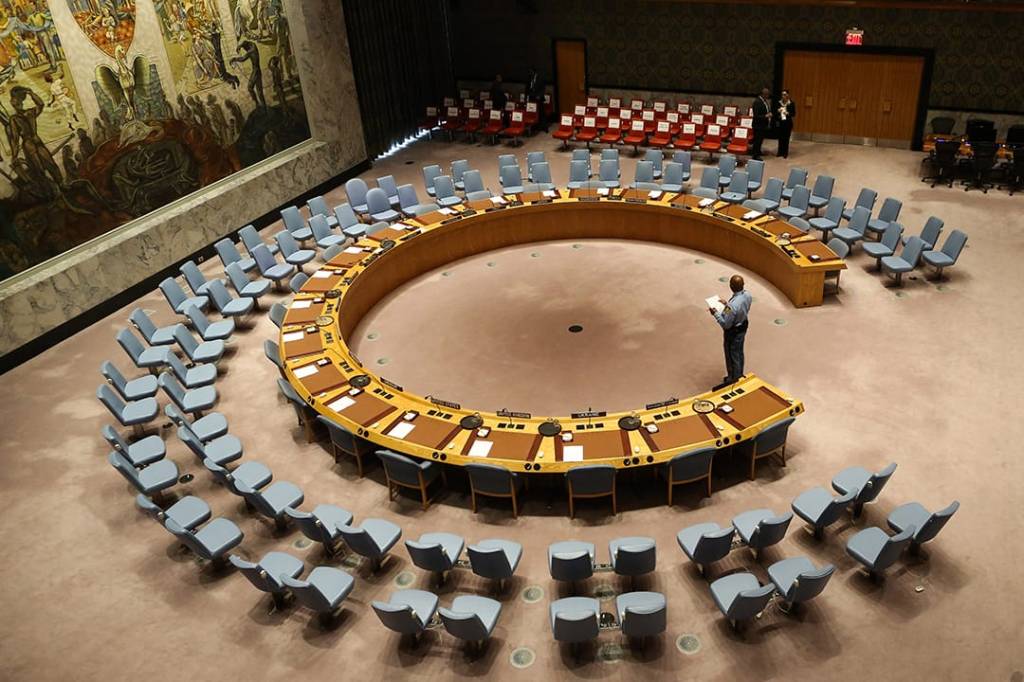
The UN’s Veto Trap: How Superpowers Sabotage Their Own Scapegoat 

The United Nations is often portrayed as the cornerstone of international diplomacy, a forum where nations come together to resolve disputes, prevent wars, and promote human rights. Yet, in practice, the UN is frequently cast as a convenient scapegoat by the very superpowers that designed it. Its structure, particularly the veto power held by the five permanent members of the Security Council, the United States, Russia, China, the United Kingdom, and France, has become a structural bottleneck, ensuring that decisive action is only possible when the interests of these nations align. Until the veto is removed, the UN will remain hamstrung, caught between high expectations and systemic limitations.

The veto was introduced in 1945 as a compromise to secure the participation of the world’s most powerful states. Without it, the founding members feared that superpowers might bypass or abandon the organization altogether. In theory, the veto was a stabilizing mechanism. In practice, it has become a tool for inaction. Consider Syria: during the ongoing civil war, Russia has repeatedly vetoed resolutions condemning the Assad regime and calling for intervention, while China has often supported Russia’s position. As a result, the Security Council has been paralyzed even in the face of clear evidence of atrocities, leaving millions of civilians exposed to violence. Western leaders then criticize the UN for inaction, conveniently ignoring the very vetoes that prevented it from acting.

Other historical examples reinforce this pattern. During the Rwandan genocide in 1994, the Security Council was slow to act, partly due to reluctance from major powers to commit troops or risk entanglement. The UN Assistance Mission in Rwanda (UNAMIR) was critically under-resourced, and resolutions to expand its mandate were delayed or watered down. Later, when Iraq invaded Kuwait in 1990, the Security Council acted decisively, but only because the superpowers’ interests aligned in opposing Saddam Hussein. This selective engagement demonstrates that the UN’s effectiveness is contingent less on law or morality than on the geopolitical priorities of the P5.

Even more recently, the Russian invasion of Ukraine in 2022 exposed the limitations of the UN system. Russia’s veto prevented any meaningful Security Council action, forcing Western nations to rely on unilateral sanctions, NATO coordination, and General Assembly resolutions that carry moral but not binding authority. Russia, in turn, dismissed UN criticism as biased or irrelevant, highlighting the paradox: the UN is invoked when it serves the interests of a superpower, and criticized when it does not. Similarly, the ongoing Israeli-Palestinian conflict shows how the U.S. veto has blocked resolutions condemning settlements or military actions, creating a perception that international law is applied selectively.

These examples illustrate a persistent problem: the UN is used by superpowers as both a tool and a scapegoat. It legitimizes actions when convenient, shields states from criticism, and is blamed for failures beyond its control. The veto allows a single nation to prevent collective action, regardless of the humanitarian or legal merits of a situation. Meanwhile, smaller nations, despite representing the vast majority of UN members, have little real influence. The General Assembly can issue resolutions expressing global consensus, but these are largely symbolic without enforcement mechanisms.

The solution is straightforward: no country should have veto power. The veto institutionalizes inequality and ensures that the UN cannot fulfill its mandate impartially. Proposals have been made to reform the Security Council, including requiring multiple vetoes to block a resolution or eliminating the veto for crimes against humanity, genocide, or aggression. Yet these reforms have stalled because the P5 have no incentive to relinquish privilege. True UN reform requires equalizing the decision-making process, where all nations have a voice and no single state can unilaterally obstruct action. Only then could the UN function as a legitimate arbiter of international law and human rights.

Until veto power is removed, the UN will continue to struggle. It will remain a forum where crises are debated but seldom resolved, where resolutions are celebrated symbolically but ignored in practice, and where superpowers externalize responsibility, casting the organization as weak or ineffectual while maintaining control behind the scenes. The world deserves a UN capable of enforcing its own principles, rather than one whose moral authority is hostage to the interests of a handful of powerful nations. Removing the veto is not just an administrative reform, it is a moral imperative, a prerequisite for a truly effective international system.

One Scale, One Union: Simplifying Federal Compensation for a Modern Public Service

Canada’s federal workforce is a patchwork of pay scales, bargaining units, and special arrangements that often pay employees differently for similar work. This complexity creates inefficiency, confuses managers, and undermines transparency. For decades, the federal government has wrestled with these issues, attempting harmonization through studies and pilot projects, but meaningful reform has never been fully implemented.

Prime Minister Mark Carney has the opportunity to finally address this problem by creating a single pay scale for all new hires and promotions, with a central bargaining agent to represent them. Starting April 1, 2027, this reform would apply to every new employee and to anyone promoted after that date. Over time, as legacy employees retire, the workforce would converge under a single, transparent framework, vastly simplifying management and reducing administrative costs.

The current problem
Federal employees are currently represented by multiple unions, covered under different collective agreements, and paid according to a variety of classification systems. Two employees performing essentially the same job in different departments may have different pay scales, benefits, and promotion paths. This complexity creates friction: managers spend more time navigating pay rules than supervising staff, bargaining is prolonged and repetitive, and HR systems are costly to maintain.

Promotions often compound the problem. Without a unified framework, employees may move between roles under different rules or remain in outdated pay bands indefinitely. This creates inequities and prevents the workforce from operating as a coherent system.

A proven foundation exists
Importantly, Canada has not been starting from scratch. During the 1990s, the federal government explored harmonizing job classifications and pay structures under the Universal Classification Standard (UCS) project. The Treasury Board and Public Service Commission produced extensive documentation, job definitions, and classification guidelines. Additional studies, such as the PS2000 project, analyzed potential efficiencies and pathways for standardization. Much of this work remains relevant today.

By leveraging existing frameworks, the government can implement a single pay scale and central bargaining agent far more quickly than starting from scratch. The definitions, classification structures, and analyses already exist, they need modernization, updating for today’s workforce, and political will to implement.

The proposal: one pay scale, one bargaining agent
The plan is straightforward. Starting April 1, 2027:
1. All new hires enter the federal public service under a single UCS-style pay scale, with clear levels tied to responsibility, experience, and job complexity.
2. Any promotions after this date automatically shift employees to the UCS-style scale and the central bargaining agent, ensuring convergence over time.
3. A single central bargaining agent represents all employees on the UVS scale, whether it is a restructured existing union or a newly created organization.

This approach eliminates the patchwork of bargaining units, reduces negotiation complexity, and ensures equitable pay and promotion practices. Employees understand where they fit in the system, managers can deploy staff more effectively, and the public service as a whole becomes easier to administer.

Benefits for government and taxpayers
A single pay scale reduces administrative overhead, simplifies HR planning, and facilitates mobility between departments. One bargaining agent prevents overlapping negotiations, saving months of time and tens of millions in potential costs. By tying promotions to the UCS system, inequities between legacy and new employees shrink naturally over time.

For taxpayers, the benefits are equally clear. Streamlined payroll systems, reduced HR costs, and more predictable budgeting allow funds to be redirected from administrative complexity into actual service delivery. Employees benefit from transparent, fair, and consistent compensation, while management gains clarity and flexibility.

Building a coherent, modern workforce
Canada’s federal public service is one of the largest in the developed world. To make it efficient, equitable, and responsive, it must operate on clear, uniform principles. A single pay scale and central bargaining agent, applied to new hires and promotions after April 1, 2027, provides exactly that.

This reform is achievable because the groundwork is already laid. The challenge is not designing the system, it is implementing it decisively. By building on past harmonization efforts and committing to a transparent framework, Carney can create a public service that is fairer for employees, easier for managers to oversee, and more accountable to Canadians.

Canada can no longer tolerate a federal workforce fragmented by pay scales, bargaining units, and inconsistent policies. One scale, one union, and a commitment to transparency is the path forward.

Project Ontario and Project 2025: Parallel Conservative Blueprints

The emergence of Project Ontario marks a new phase in Canadian conservative politics. While Premier Doug Ford’s Progressive Conservatives hold a comfortable majority, a group of policy advocates, commentators, and activists argue that his government has strayed too far from conservative principles. Through Project Ontario, they are pressing for a return to fiscal discipline, smaller government, and freer markets. The initiative is not a political party but a policy and advocacy movement aimed at shaping the direction of Ontario’s right. In many ways, it mirrors the role of Project 2025 in the United States: a blueprint designed to realign governance around more ideologically driven goals.

Project Ontario made its debut with a call for an autumn assembly of conservative thinkers, strategists, and policy experts. Its agenda emphasizes cutting red tape, lowering or reforming taxes, encouraging school choice, and tackling Ontario’s lagging productivity. Health care reform and housing affordability also feature heavily, framed through the lens of efficiency and deregulation. The group’s intellectual backbone comes from figures like Ginny Roth, Josh Dehaas, and Adam Zivo, with ties to institutions such as the Macdonald-Laurier Institute and the National Citizens Coalition. While the initiative presents itself as grassroots, it is clearly embedded within conservative policy networks.

Doug Ford has publicly dismissed Project Ontario, branding its supporters as “radical right” and “yahoos.” His sharp rejection underlines the political tension: while Ford governs from a pragmatic, populist center-right position, Project Ontario represents conservatives dissatisfied with compromise, seeking to tighten the ideological screws.

South of the border, Project 2025 represents the same instinct at a far larger scale. Organized by The Heritage Foundation, it is a sweeping plan to prepare a conservative administration for 2025. The nearly 900-page Mandate for Leadership: The Conservative Promise lays out detailed proposals for reshaping the executive branch, replacing civil servants with political loyalists, rolling back climate regulation, and imposing more conservative positions on education, immigration, and social policy. Its ambition is not merely to influence but to structurally reengineer American governance.

Comparing the two reveals important similarities. Both initiatives arise from frustration within conservative ranks, demanding that governments lean harder into free markets, deregulation, and fiscal restraint. Both set out to pre-write the policy script, defining what conservative governance “should” look like. And both blur the line between advocacy and preparation, building networks of people and ideas ready to be deployed when political openings appear.

Yet the differences are just as telling. Project Ontario is provincial, modest, and reformist. It seeks to push an existing government rather than overturn governing structures. Project 2025 is national, well-funded, and radical in scope, proposing changes that critics argue threaten democratic safeguards. Ontario’s conservatives debate incrementalism versus ideology within the safe confines of provincial policy; the U.S. effort aims at wholesale transformation of federal power.

The rise of Project Ontario highlights the pressures facing conservative parties across democracies. Governing requires compromise, but ideological movements demand purity. Whether Project Ontario grows into a defining force or remains a niche critique will depend on how well it mobilizes supporters, attracts funding, and survives Ford’s dismissive pushback. What is clear is that this is only the opening chapter of a story likely to grow louder in Ontario’s political landscape.

Watchlist: What to Track Next
Leadership: Will Project Ontario name formal leaders or remain a loose network of policy advocates?
Funding: Who finances the initiative, and how transparent will it be about its backers?
• Government Response: Will Ford continue to dismiss them, or be forced to absorb parts of their agenda to maintain support on his right flank?
Media Coverage: Do they gain traction in mainstream debate, or stay confined to policy circles?
Public Reception: Will Ontarians respond positively to their calls for fiscal restraint, or view them as too ideological for provincial politics?

The Language of Trust: Decoding the Atreides Battle Tongue

Every culture in Dune speaks a language of power. The Bene Gesserit command with tone, the Fremen bind their tribes with oath and chant, and the Spacing Guild negotiates in silence and shadow. Yet among the great Houses, no language is more intimate, or more revealing of Frank Herbert’s ideas about information and control, than the Atreides battle language. Unlike the grandiose tongues of religion or empire, it is not meant for ceremony or persuasion. It is meant for survival, and for the quiet coordination of people who trust each other enough to speak without words.

Herbert never gives us a full lexicon or grammar. The battle language is not a “constructed language” like Tolkien’s Quenya or the Klingon of Star Trek. Instead, it is a tactical code, a system of micro-communication rooted in the fusion of military discipline and Bene Gesserit precision. It is as much muscle memory as speech. The Atreides use it to share orders under enemy watch, to signal in the dark, to compress entire strategies into a blink or the brush of a hand. Its existence hints at an entire dimension of human language that operates beneath conscious sound: the level of tone, rhythm, and gesture that Herbert, with his background in psychology and semantics, understood as the real field of control.

The first Dune novel treats the battle language like an invisible character. We never hear it directly, but we see its effect: a wordless exchange between Paul and Jessica as they flee into the desert; a silent understanding between Duncan Idaho and his troops in Arrakeen; a private bond between family members that even the Sardaukar cannot crack. Each moment underscores the difference between the Atreides and their enemies. The Harkonnens rely on fear and brute force; the Atreides rely on discipline and trust. Their language becomes the purest expression of that trust; a shared code that only functions when the users believe utterly in each other.

Herbert’s decision not to translate it is what gives the battle language its power. Readers sense that it exists in full but are never allowed to enter it. This mirrors how communication actually works in tight human groups. Soldiers, families, and lovers all develop shorthand that outsiders can’t decode. Herbert turns this natural phenomenon into a literary device: we understand that Paul and Jessica are communicating, but the details stay behind the curtain. The secrecy itself becomes world-building.

It is also a commentary on the politics of language. Dune constantly reminds us that words are weapons. The Bene Gesserit Voice manipulates obedience; the imperial court twists prophecy and bureaucracy into control systems. The Atreides battle language resists that. It is not designed to dominate others, but to coordinate equals. Within it there is no hierarchy, only mutual comprehension. When Jessica and Paul use it, the moment transcends rank; mother and son become co-conspirators in survival. That equality is what makes it dangerous in the feudal universe of Dune.

Modern readers might see parallels to real-world codes: the silent hand signals of special forces, the Navajo code talkers of World War II, or even the private gestures of people who have spent a lifetime together. In information-theory terms, it is a high-efficiency, low-bandwidth communication system; dense with meaning, resistant to interception, optimized for trust rather than volume. Herbert understood long before the digital age that the most powerful communications are not the loudest, but the most exclusive.

There’s also something profoundly spiritual about it. The battle language, like the Bene Gesserit Voice, reveals Herbert’s fascination with consciousness itself. To master it is to master attention, to choose every breath and movement deliberately. In a universe where empires fall to propaganda and faith, the Atreides preserve a private domain of meaning. They speak the language of intent, not ideology. Each signal, each inflection, is a small act of autonomy against the cacophony of the Imperium.

Later novels let the concept fade, but its DNA survives. The God Emperor’s measured speech, the Fremen’s ritual silence, even Leto II’s cryptic pronouncements all echo the idea that communication is the true battlefield. When Leto says, “I am not speaking to you, I am teaching your descendants,” he is still practicing the same philosophy, language as strategy, encoded for a specific audience. The Atreides battle language is simply the most literal form of that philosophy.

Science-fiction often builds worlds through grand architecture and invented vocabularies, but Herbert builds his through silence. The battle language is world-building by omission. We never learn its words because, like any code of loyalty, it only exists between those who earned it. Readers remain outside its circle, and that distance is part of its allure.

To understand the Atreides battle language is to see what Dune is really about. Beneath the sandworms, the spice, and the politics, it is a study of communication; how words, gestures, and even pauses can shape civilizations. The Atreides spoke with efficiency, empathy, and purpose. In a universe addicted to domination, that was their real heresy.

Sources:
Herbert, Frank. Dune. Chilton Books, 1965.
Herbert, Frank. Children of Dune. Putnam, 1976.
Herbert, Brian, and Kevin J. Anderson. Prelude to Dune series. Bantam Spectra, 1999–2001.
Platt, R. “Semiotics of Control in the Dune Universe.” Speculative Linguistics Review, 2017.
“Language and Power in Frank Herbert’s Dune.” Science Fiction Studies, vol. 28, no. 1, 2001.