Unknown's avatar

About Chris McBean

Strategist, polyamorist, ergodox, permaculture & agroforestry hobbyist, craft ale & cider enthusiast, white settler in Canada of British descent; a wanderer who isn’t lost.

Five Things We Learned This Week

📅 Saturday, February 21 → Friday, February 27, 2026


🇺🇦 1) Ukraine War Enters a New Phase ⚔️

Ukraine’s war with Russia continued with intensified fighting and renewed Western support discussions. While front lines shifted only marginally, the scale of combat and equipment losses remained high.

Key points:

  • Heavy fighting persists in eastern regions
  • Ongoing debates over additional sanctions and aid
  • Concerns about long-term war fatigue in allied nations

➡️ The conflict remains one of the central drivers of global security uncertainty.


🇺🇸 2) U.S. Politics Heats Up Ahead of 2026 Elections 🗳️

Early maneuvering for the 2026 midterm elections accelerated, with both major parties sharpening their messaging on the economy, immigration, and national security.

Key points:

  • Campaign organizations expanding operations
  • Key swing states receiving early attention
  • Policy debates intensifying in Congress

➡️ Political rhetoric is expected to escalate as the election cycle unfolds.


📉 3) Global Economy Sends Mixed Signals 💹

Financial markets delivered uneven performance as inflation cooled in some regions while growth slowed in others. Central bank policies continue to dominate investor expectations.

Key points:

  • Interest rates remain a major concern
  • Energy prices fluctuate amid geopolitical risks
  • Manufacturing weakness in parts of Europe and Asia

➡️ Economists describe the outlook as fragile rather than stable.


🌦️ 4) Extreme Weather Continues Worldwide 🌪️

Floods, storms, and unusual temperature patterns affected multiple regions, highlighting the ongoing impact of climate volatility on infrastructure and communities.

Key points:

  • Flooding events in several countries
  • Drought concerns persist elsewhere
  • Rising costs for insurance and recovery

➡️ Scientists warn that extreme weather is becoming more frequent and disruptive.


🚀 5) Space Exploration Momentum Builds 🌕

National space agencies and private companies continued preparations for lunar and deep-space missions, underscoring the accelerating pace of the modern space race.

Key points:

  • New missions in development or testing
  • Growing international cooperation
  • Expanding role of commercial providers

➡️ Space exploration is increasingly multinational and commercially driven.


✨ The Big Picture

This week reflected a world balancing geopolitical tension, economic uncertainty, climate pressure, and technological ambition. Rather than a single dominant headline, multiple long-term trends continued to shape global events simultaneously.

Amalgamation? Lessons Niagara Cannot Afford to Ignore

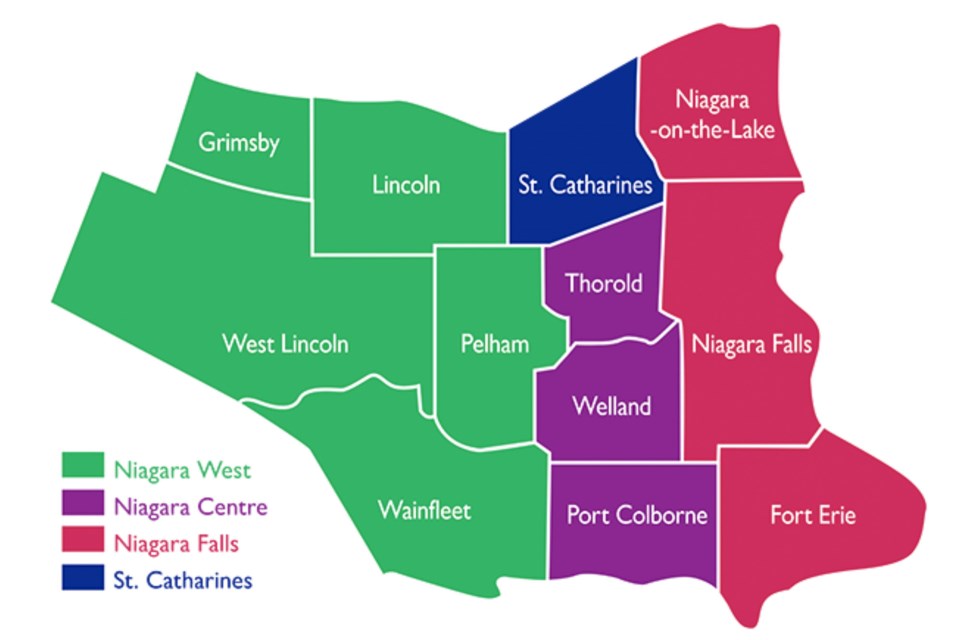
There is a recurring belief in Canadian municipal politics that scale solves problems. If governance feels messy, make it larger. If coordination is difficult, centralize it. If local voices disagree, fold them into a single chorus and call it harmony. The proposal to merge the municipalities of the Regional Municipality of Niagara into one city rests squarely on this assumption: that bigger government will behave more rationally, more efficiently, and more strategically than a collection of smaller ones.

History suggests otherwise.

Niagara is not a fragmented city waiting to be assembled. It is a region of distinct places bound together by geography, not by a single urban heartbeat. Niagara Falls lives on tourism and spectacle. St. Catharines functions as an educational, service, and industrial hub. Welland carries a canal town identity shaped by manufacturing and working-class roots. Niagara-on-the-Lake trades on heritage, agriculture, and controlled growth. The lakefront communities of west Niagara look toward Hamilton, not the Falls. Rural townships measure success in acres preserved, not towers approved.

To govern these places as though they share identical needs is not efficiency. It is administrative wishful thinking.

The Ottawa Example: A Warning, Not a Blueprint
Advocates of amalgamation frequently point to the creation of the modern Ottawa from the former Regional Municipality of Ottawa–Carleton as proof that diverse municipalities can be fused into a single functional city. What is often omitted is that the fusion solved technical coordination problems while creating enduring political ones.

Ottawa gained unified transit planning, standardized services, and the ability to execute large infrastructure projects. It also inherited a permanent rural-urban divide that shapes every budget, planning decision, and election cycle. Farmers in the outer wards pay for light rail they will never ride. Suburban taxpayers argue they subsidize downtown priorities. Former municipalities continue to organize politically along pre-2001 boundaries, a quarter century later.

Amalgamation did not erase local identity. It merely removed the local governments that once represented it.

Niagara would face this tension in amplified form. Ottawa, despite its diversity, had a dominant employment core and a single metropolitan labour market. Niagara has several centres and multiple economic logics. Tourism, agriculture, manufacturing, retirement living, cross-border trade, and suburban commuting do not pull in the same direction.

Power Will Flow Somewhere
Every amalgamation produces a gravitational centre, whether intended or not. Decisions must be made, staff must be housed, budgets must be prioritized. In a single Niagara city, influence would inevitably concentrate in the largest population centres, most likely St. Catharines or Niagara Falls. Smaller municipalities would not disappear, but their ability to shape outcomes would diminish.

This is not a moral failure. It is mathematics.

Residents of smaller towns would still vote, but their votes would be diluted across a much larger electorate. Local issues that once dominated council agendas would become minor items competing with region-wide priorities. A zoning dispute that matters deeply to a village could be invisible in a chamber preoccupied with housing targets or tourism infrastructure.

Democracy at scale becomes less intimate and more transactional.

Coordination Without Erasure
None of this suggests the status quo is perfect. Niagara does suffer from fragmented planning, duplicated administration, and occasional municipal rivalry. Regional transit integration demonstrates that cooperation can produce tangible benefits without dissolving local governments. Shared services for policing, utilities, and infrastructure can achieve economies of scale while preserving local autonomy.

The real strategic question is not whether Niagara needs to function more cohesively. It is whether cohesion requires uniformity.

A region can behave like a federation rather than a unitary state. Strong regional planning frameworks, binding growth strategies, and pooled services can align municipalities without forcing them into a single institutional mold. This approach accepts that diversity is not a problem to be engineered away but a reality to be governed intelligently.

Bigger Is Not the Same as Better
Large cities do not automatically make better decisions. They simply make larger ones. When those decisions are wrong, the consequences are correspondingly bigger. A misjudged development strategy, infrastructure investment, or tax policy applied across a half-million residents can entrench problems for decades.

Small municipalities, for all their limitations, retain the ability to experiment, adapt, and reflect local priorities quickly. They function as laboratories of governance. Amalgamation replaces this patchwork of experimentation with a single policy regime that must suit everyone and will inevitably fit some poorly.

Uniformity feels orderly from a distance. Up close, it can be suffocating.

The Strategic Path Forward
If Niagara seeks a more prosperous and coherent future, the priority should be integration of function rather than consolidation of identity. Build region-wide systems where scale truly matters: transit, major infrastructure, environmental management, economic promotion. Preserve local decision-making where place matters most: land use, community character, local services, cultural priorities.

The lesson from Ottawa is not that amalgamation fails or succeeds. It is that it solves some problems while creating others that cannot easily be reversed. Once municipalities disappear, recreating them is practically impossible.

Niagara does not need to become one city to act like a mature region. It needs governance arrangements that respect the fact that it is not one place, and never has been.

Bigger government can coordinate more. It cannot care more, listen better, or understand the nuances of twelve different communities at once. Those qualities arise from proximity, not scale.

Beyond the Cloud: How Artificial Intelligence Is Reshaping the Economics of SaaS

Artificial Intelligence is no longer an enhancement layered onto Software as a Service. It is rapidly becoming the force that is reshaping the SaaS model itself. What began as cloud-hosted software delivered by subscription is evolving into something closer to “intelligence as a service,” where the primary value lies not in the application interface but in the system’s ability to reason, predict, generate, and act.

From Software Delivery to Decision Delivery
Traditional SaaS focused on providing tools. AI-driven SaaS increasingly provides outcomes. Instead of merely storing data or enabling workflows, modern platforms analyze patterns, surface insights, and automate decisions in real time. Customer relationship systems forecast churn before it happens. Financial platforms detect anomalies and recommend actions. Marketing tools generate campaigns, segment audiences, and optimize performance continuously.

This shift changes the perceived role of software from passive infrastructure to active collaborator. Users are no longer just operators of systems. They are supervisors of autonomous processes. The interface becomes conversational, often powered by natural-language AI agents that allow users to request results rather than configure procedures.

The Rise of AI-Native SaaS
A new category of AI-native SaaS is emerging. These products are not traditional applications with AI features added later. They are built around large language models, machine learning pipelines, and continuous data feedback loops from the outset. In many cases, the application layer is thin, while the intelligence layer carries most of the value.

AI-native platforms can improve automatically as they process more data, creating compounding advantages for early leaders. This dynamic introduces a “winner-takes-most” tendency in some markets, where superior models attract more users, generating more data, which further improves performance.

Vertical SaaS is also being transformed by AI. Industry-specific systems now embed domain-trained models capable of interpreting specialized terminology, regulations, and workflows. A healthcare platform might summarize clinical notes and flag risks. A construction platform may analyze project schedules and predict delays. The result is software that behaves less like a toolset and more like an expert assistant tailored to a particular field.

Automation Becomes Autonomy
Automation has long been part of SaaS, but AI pushes it toward autonomy. Routine tasks such as data entry, scheduling, reporting, and customer support are increasingly handled end-to-end by intelligent agents. Multi-step workflows can now be executed with minimal human intervention, with systems monitoring outcomes and adjusting strategies dynamically.

This reduces labor costs and increases speed, but it also shifts responsibility. Organizations must now manage oversight, accountability, and risk associated with automated decisions. Human roles evolve toward exception handling, strategic direction, and ethical governance rather than routine execution.

Low-code and no-code tools are likewise changing under AI influence. Instead of building applications manually through visual interfaces, users can increasingly describe what they want in natural language and allow the system to generate workflows, integrations, or even full applications. Software creation itself becomes a conversational process.

New Economics and Pricing Models
AI significantly alters the economics of SaaS. Traditional subscription pricing assumed relatively stable marginal costs per user. AI workloads, especially those involving large models, introduce variable computational expenses tied to usage intensity. As a result, many providers are shifting toward consumption-based pricing, charging per query, per generated output, or per processing unit.

This model aligns revenue with cost but can introduce unpredictability for customers. Organizations must monitor usage carefully to avoid runaway expenses, while vendors must balance transparency with profitability. Some providers are experimenting with hybrid pricing structures that combine base subscriptions with metered AI usage.

At the same time, AI can dramatically increase perceived value. A tool that replaces hours of skilled labor may justify higher pricing than traditional software. The focus shifts from cost per seat to cost per outcome.

Data as the Strategic Asset
In AI-driven SaaS, data becomes the core competitive advantage. Proprietary datasets enable model training, fine-tuning, and continuous improvement. Vendors that control high-quality, domain-specific data can produce more accurate and reliable outputs than generic systems.

This dynamic strengthens customer lock-in. As organizations feed operational data into a platform, switching providers becomes more difficult because the accumulated context and model tuning may not transfer easily. Consequently, concerns about data ownership, portability, and privacy are intensifying.

Security requirements are also expanding. Protecting not only stored data but also model behavior, training pipelines, and generated outputs is now essential. Risks include data leakage through prompts, model manipulation, and exposure of sensitive information in generated content.

Human Trust, Transparency, and Governance
AI introduces new forms of risk that traditional SaaS did not face. Incorrect recommendations, biased outputs, or opaque decision processes can have significant real-world consequences. Providers must therefore invest in explainability, auditability, and safeguards that allow users to understand how conclusions are reached.

Regulatory scrutiny is increasing globally, particularly in sectors such as finance, healthcare, and public administration. Compliance frameworks will likely shape product design, requiring clear accountability for automated decisions and mechanisms for human override.

User trust will become a decisive factor in adoption. Organizations need confidence that AI systems are reliable, secure, and aligned with their objectives before delegating critical functions.

The Emergence of AI Platforms and Ecosystems
Many SaaS companies are evolving into AI platforms that host agents, plugins, and third-party models. Instead of a single application, customers access an ecosystem of specialized capabilities that can be orchestrated together. This mirrors the earlier transition from standalone software to cloud platforms, but with intelligence as the connective tissue.

Interoperability becomes crucial. Businesses increasingly expect AI systems to operate across tools, accessing data from multiple sources and executing actions across different platforms. The ability to integrate seamlessly may matter more than the strength of any individual feature.

Challenges and Competitive Pressures
The AI transformation of SaaS also lowers barriers to entry in some respects. New competitors can build viable products quickly by leveraging foundation models rather than developing complex software stacks from scratch. This accelerates innovation but intensifies competition.

At the same time, dependence on external AI infrastructure providers introduces strategic vulnerability. Changes in pricing, access, or model capabilities can ripple through entire product lines. Some companies are responding by developing proprietary models or hybrid architectures to maintain control.

Economic uncertainty adds another layer of complexity. While AI can reduce costs and boost productivity, organizations may hesitate to invest heavily without clear evidence of return. Vendors must demonstrate tangible business outcomes rather than technological novelty.

Toward Intelligence as a Utility
The trajectory of AI-driven SaaS suggests a future in which software behaves less like a static product and more like an adaptive service. Systems will continuously learn, personalize themselves to each organization, and coordinate actions across digital environments. Users will interact primarily through natural language, delegating complex tasks to intelligent agents.

In this emerging model, the value proposition shifts from access to software toward access to capability. Businesses will subscribe not just to tools, but to operational intelligence on demand.

The SaaS model is therefore not disappearing. It is mutating. As AI becomes embedded at every layer, the distinction between software, service, and expertise begins to blur. Providers that successfully combine technical innovation with trust, transparency, and measurable outcomes will define the next era of cloud computing.

On Polyamorous Grief

Grief is often imagined as singular. One loss, one relationship, one sanctioned form of mourning. This model works tolerably well in lives structured around exclusivity and clear social scripts. It fails, however, in lives where love is plural, interwoven, and ethically negotiated rather than socially assumed. In such lives, grief rarely arrives alone. It arrives layered.

Polyamorous grief is not a different emotion. It is the same grief, carrying more weight. What distinguishes it is not intensity, but structure.

Loss in polyamorous contexts rarely travels in straight lines. When one relationship changes or ends, the effects ripple outward. Bonds shift. Roles recalibrate. The emotional ecosystem reorganizes itself. Grief appears not only for what has been lost, but for what must now be reconfigured. There is sorrow for the person, and sorrow for the shape the world had taken around them.

This kind of grief is often compounded by invisibility. Not all losses are publicly legible. Some relationships were private by necessity or choice. Some were never named in ways others recognize as “real.” The absence of social acknowledgment does not lessen grief. It sharpens it. Pain unrecognized must still be carried, but now without witnesses.

There is also a particular tension between abundance and loss. Outsiders often assume that multiple connections dilute grief, as though love were a substance divided into smaller portions. In practice, the opposite is true. When love is plural, loss is experienced across multiple relational planes. One absence may echo differently in each bond it touched. The presence of other partners does not cancel grief. It often amplifies awareness of what is missing.

Polyamorous grief also resists sequencing. There is rarely a clean order in which feelings arrive. Relief, guilt, sadness, anger, longing, gratitude, and fear often coexist. The expectation that grief should follow a predictable path creates unnecessary strain. What is needed instead is permission for contradiction. Coherence, not linearity.

In healthy polyamorous systems, grief becomes a shared ethical task. Care must be taken not to rank losses or compare pain. Each person’s grief is real, even when its expression differs. The work lies in allowing multiple truths to exist simultaneously without forcing them into false equivalence. This is not easy. It requires emotional literacy, patience, and a willingness to tolerate discomfort without rushing to resolve it.

There is also grief for futures that will not arrive. Polyamory often involves explicit imagination: plans named aloud, possibilities discussed, trajectories held lightly but sincerely. When a relationship ends or a person is lost, these imagined futures dissolve. The mourning of unrealized potential is no less real for having remained hypothetical. It is part of the loss.

What steadies polyamorous grief, when it is steadied at all, is coherence. Grief becomes more bearable when relationships are grounded in clarity rather than assumption. When commitments were named. When endings are acknowledged rather than erased. When love is not retroactively denied in order to make loss easier to explain.

Coherence does not soften grief. It makes it survivable.

In coherent systems, grief is allowed to move. It is not required to justify itself. It is not asked to compete. It is given time and space to integrate into the ongoing fabric of connection. Bonds adapt. Some loosen. Some strengthen. The system changes, but it does not collapse.

Polyamorous grief, at its best, teaches something difficult and enduring: that love does not fail because it ends, and that grief does not indicate weakness in the structure that held the love. Loss is not proof that the experiment was flawed. It is evidence that something meaningful was allowed to exist.

Grief in plural lives asks for a particular kind of maturity. Not resilience as endurance, but resilience as integration. The ability to carry love forward without pretending it never mattered. The ability to let relationships change shape without erasing their history.

Peace, in the presence of polyamorous grief, does not come from closure. It comes from coherence. From the quiet knowledge that even in loss, the parts of life are still allowed to speak to one another honestly.

Small Nations, Shared Games: A Commonwealth Investment in the Future

For much of its modern history, the Commonwealth Games has drifted toward the logic of other mega-events: large cities, escalating costs, and a quiet assumption that only wealthy hosts need apply. Yet the Commonwealth itself is not a club of large powers. It is, numerically and culturally, a network dominated by small and developing states. Reimagining the Games so they are hosted by the smallest members, but financed collectively according to national GDP would not be charity. It would be strategic infrastructure policy disguised as sport.

Such a model would transform the Games from a periodic spectacle into a rotating development engine, deliberately directed toward places where capital investment produces the greatest long-term return.

Infrastructure Where It Matters Most
Small Commonwealth countries often face the same structural constraints: limited transport networks, fragile energy systems, housing shortages, and vulnerability to climate shocks. These are not failures of governance so much as arithmetic. When a nation of a few hundred thousand people must finance major infrastructure alone, projects either stall or never begin.

A GDP-weighted funding model would change that equation. Large economies such as CanadaAustraliaUnited Kingdom, and India could contribute proportionally without significant domestic strain, while host nations gain assets that would otherwise take generations to afford.

Crucially, these investments would not need to be limited to stadiums. Modern Games planning increasingly integrates:
• Airport and port expansion
• Renewable energy grids
• Water and sanitation upgrades
• Telecommunications networks
• Public transit
• Resilient housing

In developing contexts, these are not ancillary benefits. They are transformational foundations for economic growth.

Tourism as a Permanent Industry, Not a Seasonal Gamble
For many small states, tourism is already the primary economic engine. Hosting the Games would accelerate that sector by compressing decades of branding and infrastructure development into a single cycle.

Consider nations such as BarbadosMalta, or Seychelles. Global exposure from a major sporting event can reposition a country from niche destination to household name. Improved airports, hotels, and transport systems continue generating revenue long after the closing ceremony.

Unlike industrial mega-projects, tourism infrastructure scales naturally to local economies. A new terminal, cruise port, or transit corridor does not become obsolete. It becomes the backbone of a sustainable service economy.

Climate Resilience Disguised as Event Planning
Many of the Commonwealth’s smallest members sit on the front lines of climate change. Sea-level rise, stronger storms, and water insecurity are existential threats. Yet climate adaptation projects are expensive and often struggle to secure financing.

A collectively funded Games could prioritize resilient design as a requirement rather than an afterthought:
• Elevated and storm-resistant construction
• Microgrids powered by renewables
• Flood-resistant transport corridors
• Emergency response infrastructure
• Water security systems

In effect, the Commonwealth would be financing survival infrastructure under the politically palatable banner of sport.

Ending the Prestige Arms Race
Large hosts often overspend to signal global status, producing stadiums that struggle to find post-event uses. Small states cannot afford that kind of extravagance. Their constraints encourage practicality.

Facilities would likely be:
• Modular or temporary
• Scaled to local demand
• Designed for schools and community use
• Integrated into existing urban plans

The result could be the most sustainable version of a mega-event yet attempted, precisely because the host nation lacks the capacity for waste.

A More Meaningful Commonwealth
The Commonwealth frequently struggles to define its contemporary purpose beyond historical ties. A shared funding model for the Games would provide a concrete expression of mutual responsibility.

Citizens in wealthier countries would see tangible outcomes from their contributions: functioning infrastructure, stable partners, and strengthened trade relationships. Smaller nations would experience membership as materially beneficial rather than symbolic.

This is not altruism alone. Stability in vulnerable regions reduces migration pressures, disaster response costs, and geopolitical volatility. Development is cheaper than crisis management.

A Distributed Model for the Future
Logistical challenges are real, but not insurmountable. Events could be distributed across neighboring islands or regions, supported by temporary accommodations such as cruise ships and regional transport networks. Modern broadcasting reduces the need for centralized mega-venues, allowing the Games to function as a multi-site festival rather than a single urban takeover.

Such flexibility aligns with the geography of many small Commonwealth states, particularly in the Caribbean and Pacific.

Strategic Optimism
A Commonwealth Games hosted by its smallest members and funded by all according to capacity would represent a quiet, but profound shift in global thinking. It would suggest that international gatherings need not be competitions for prestige but opportunities for targeted development.

The return on investment would be measured not in medal tables but in decades of improved mobility, energy security, tourism revenue, and climate resilience.

In a world where large institutions often struggle to demonstrate relevance, this model would do something radical: it would build things that last, in places that need them most.

And in doing so, the Commonwealth would rediscover a purpose suited not to its past, but to its future.

Prince Edward County’s For Sale Signs

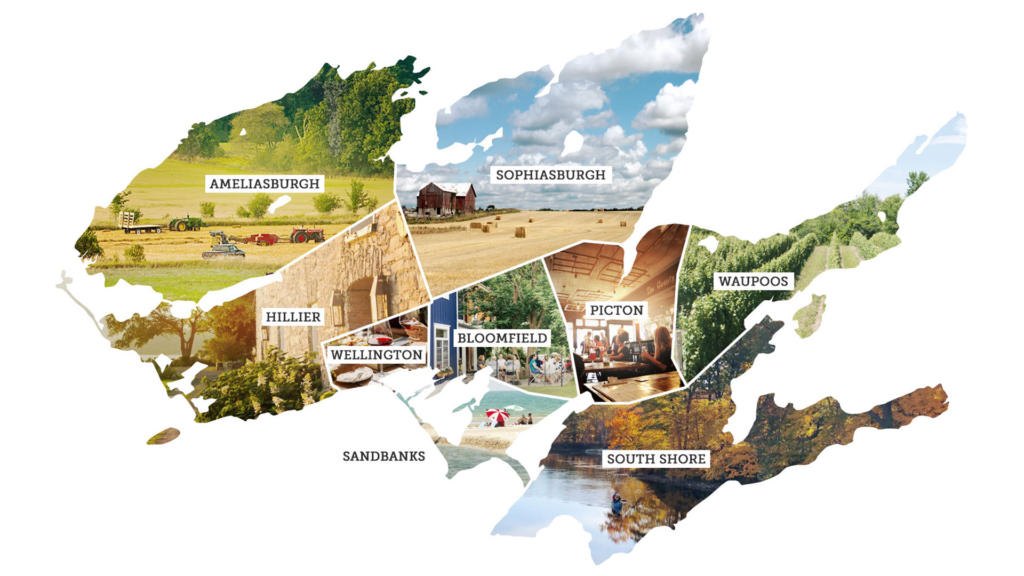
In Prince Edward County, the sudden cluster of “for sale” signs hanging on winery gates and brewery fences is not coincidence. It is the visible edge of a structural shift. What was once Ontario’s most romanticized craft-beverage frontier is entering its consolidation phase.

For two decades, the County was a story of pioneers. Thin limestone soils, lake-tempered winds and stubborn optimism produced a generation of estate wineries in Hillier, small-batch cider houses in Waupoos and farmhouse breweries tucked behind century barns. Many were founded between the early 2000s and mid-2010s. They were not built as scalable industrial operations. They were built as passion projects with hospitality rooms attached.

Now those founders are aging. Succession planning in lifestyle agriculture is notoriously weak. Children often pursued careers elsewhere. Managers were rarely given equity. The result is predictable: retirement without a natural buyer inside the tent.

But demographics alone do not explain the volume of listings.

Margins have tightened dramatically. Vineyard agriculture in the County is capital-intensive and climate-exposed. Vines take years to mature. Winter kill remains a risk. Labour costs have risen. Packaging, especially aluminum cans and glass, has been volatile and more expensive. Energy costs for fermentation and climate control have climbed. Insurance premiums have followed suit. A small producer making 5,000 to 20,000 cases annually does not have the purchasing leverage of a multinational brand.

Retail evolution adds another layer. Ontario’s beverage market has been liberalizing beyond the historic dominance of the Liquor Control Board of Ontario. On paper, more outlets should help local producers. In practice, broader distribution means competing on shelf space against scaled domestic brands and global imports with marketing budgets County operators cannot match. Boutique wineries built around cellar-door experiences now face a world that rewards consistent volume and supply chain reliability.

Tourism volatility compounds the stress. Prince Edward County’s beverage economy is profoundly seasonal. July and August can carry an entire year. A cool spring, wildfire smoke, a soft tourism season, or simply consumer belt-tightening can erase projected profits. Fixed costs do not shrink when weekend traffic does.

Land values further distort the equation. The County is no longer simply farmland. It is lifestyle real estate within reach of Toronto and Ottawa buyers. In areas like Hillier and Waupoos, vineyard acreage carries speculative value unrelated to grape yield. Owners approaching retirement can often extract more certainty by selling land and brand assets than by enduring another decade of climate risk and thin margins.

The recent spike in Ontario-focused buying following the removal of U.S. products from LCBO shelves created a short-term lift for local wine. Yet macro tailwinds do not erase micro fragility. Increased demand benefits those positioned to supply at scale. It does not automatically rescue a 15-acre estate winery with aging equipment and limited distribution.

There is also market saturation. Prince Edward County’s brand became its own magnet. Success attracted entrants. Tasting rooms multiplied. Craft beer, cider and wine competed not only with imports but with one another within a geographically tight region. Weekend tourism dollars are finite. Too many taprooms chasing the same visitor inevitably compresses revenue per operator.

None of this suggests collapse. It signals maturation. Every emerging wine region passes through romance, expansion, strain and consolidation. The County is entering the phase where well-capitalized buyers, regional consolidators and hospitality groups acquire established brands and infrastructure at more rational valuations.

For observers, the current listings are less a crisis than a transition. The era of founder-driven artisanal sprawl is giving way to professionalized, capital-structured ownership. Prince Edward County’s limestone soils are not going anywhere. The question is not whether wine, beer and cider will continue there. The question is who will own the next chapter, and at what scale.

The for-sale signs are not a verdict. They are the punctuation mark between one generation’s dream and the next generation’s balance sheet.

When the Disruptors Become the Establishment

Not that long ago, ride-share companies blew up the taxi business. Taxis were expensive, hard to find, and controlled by licensing systems that made competition almost impossible. Then along came apps that let you press a button and a car appeared. It felt modern, fair, even a little revolutionary. Companies like Uber and Lyft sold the idea that drivers would be their own bosses and riders would finally get decent service at a reasonable price. For a while, that story mostly held up. But success changes things. Once these companies became dominant, they started to look less like rebels and more like the system they replaced. They set the prices, they control which driver gets which trip, and they take a substantial cut of every ride. Drivers supply the car, the fuel, the insurance, and the risk, yet they have very little say in how the business actually runs. Over time, many drivers have realized they are not really independent operators. They are dependent on an app they do not control.

A Different Kind of Challenge
A newer company called Empower is challenging that arrangement in a way that makes the big platforms uncomfortable. Instead of taking a percentage from every trip, it charges drivers a flat monthly fee to use the software. Drivers keep the full fare and can set their own prices. In plain language, the app becomes a tool rather than a boss. That one change flips the economics. If a driver keeps all the money from each ride, even lower fares can still produce higher income. Riders may pay less, drivers may earn more, and the company makes its money from subscriptions instead of commissions. More importantly, drivers start thinking like small business owners again. They can build repeat customers, choose when and where they work, and decide what their time is worth. That shift in mindset may be more disruptive than the pricing model itself.

Why This Actually Threatens the Giants
The real power of the big ride-share companies is control. They control access to passengers, they control pricing, and they control the flow of work through opaque algorithms. Take away that control and they become much less special. A competitor does not need to replace them everywhere. It only needs enough drivers and riders in one city to make the service reliable. Once people can get rides without using the dominant app, loyalty disappears quickly. Most riders already keep multiple apps on their phones. They tap whichever one is cheapest or fastest. Drivers do the same. If a new platform lets them earn more per trip, they will use it alongside the old ones. Over time, that weakens the incumbents without any dramatic collapse.

The Driver Problem Nobody Fixed
There is also a deeper issue. Many drivers feel squeezed. Ride prices have gone up for passengers, but driver pay has often not kept pace. At the same time, drivers absorb rising costs for fuel, maintenance, insurance, and vehicle replacement. Add in sudden policy changes, confusing pay formulas, and the risk of being removed from the platform without much explanation, and frustration builds. When a workforce becomes resentful, it does not revolt all at once. It quietly looks for exits. A company that promises independence rather than dependence taps into that frustration. It does not need to convince every driver, only enough to create a viable alternative.

Regulation Will Decide the Outcome
Whether this new model spreads widely may depend less on business strategy and more on government rules. Cities require ride-share services to meet safety standards, carry commercial insurance, and follow licensing systems. Large corporations can absorb these costs easily. Smaller challengers often cannot, especially if they argue they are only software providers rather than transportation companies. Regulators say these rules protect passengers. Critics say they also protect incumbents from competition. Both things can be true at the same time.

From Revolutionary to Utility
Ride-sharing is no longer exciting. It is infrastructure, like electricity or broadband. People expect it to work and get annoyed when it does not. When a service becomes ordinary, price matters more than brand. That is dangerous for companies whose business model depends on taking a significant percentage of each transaction. If a cheaper option appears that is “good enough,” many users will drift toward it without much thought.

The Real Risk: Losing the Middleman Role
The biggest threat to the current giants is not a single rival taking over the market. It is losing their position as the gatekeeper between drivers and passengers. If drivers build direct relationships with customers or spread their work across several low-cost platforms, the dominant apps become just one channel among many. At that point, they cannot dictate terms as easily. Other industries have seen this pattern before. Once technology allows buyers and sellers to connect more directly, middlemen either adapt or shrink.

About Time Too
There is a certain irony here. Ride-share companies rose to power by arguing that the old taxi system was inefficient, overpriced, and overly controlled. Now they face challengers making very similar arguments about them. Whether companies like Empower ultimately succeed is almost secondary. Their existence proves the market is not as locked down as it once appeared. Uber and Lyft still have enormous advantages: brand recognition, scale, and regulatory approval. But they are no longer the only game in town, and the assumption that they would dominate forever is starting to look shaky.

In the end, this is not just a fight between companies. It is a test of who holds power in the gig economy. Is it the platform that owns the app, or the people who actually do the work? Uber and Lyft once showed that owning fleets of cars was not necessary to control transportation. Their new challengers are trying to show that owning the platform may not be enough either. History suggests that once a business model becomes comfortable and profitable, someone will eventually come along to make it uncomfortable again.

Five Things We Learned This Week

📅 Saturday, February 14 → Friday, February 20, 2026


🌑 1) “Ring of Fire” Solar Eclipse Crosses Antarctica

On February 17, an annular solar eclipse turned the Sun into a glowing ring as the Moon passed in front while near its farthest orbital point. The event’s path ran mostly over remote Antarctica, meaning few people witnessed it directly, though partial phases were visible in parts of the Southern Hemisphere.

Why it matters:

  • First solar eclipse of 2026
  • Start of a short eclipse season
  • Next major eclipse arrives August 12, 2026

🕊️ 2) Ukraine–Russia Peace Talks Move Forward (Cautiously)

Diplomatic efforts intensified as major powers pushed for negotiations aimed at ending the war by summer 2026. Ukraine agreed to participate, while Russia signaled skepticism about progress and conditions.

Why it matters:

  • Potential to reshape global security and energy markets
  • High uncertainty remains
  • Any breakthrough would be geopolitically significant

🌊 3) Severe Storms Batter Iberia

Powerful winter storms swept across Spain and Portugal, bringing heavy rain, flooding, landslides, and infrastructure damage. Saturated ground worsened impacts, leading to evacuations and transport disruptions.

Why it matters:

  • Illustrates intensifying winter storm patterns
  • Agricultural and economic losses reported
  • Ongoing recovery efforts across affected regions

🚀 4) Artemis II Moon Mission Cleared for March Launch

NASA confirmed a March 6 launch target for Artemis II, the first crewed lunar mission in more than 50 years. Four astronauts will fly around the Moon and return to Earth without landing.

Why it matters:

  • First humans beyond low-Earth orbit since Apollo
  • Includes a Canadian astronaut
  • Critical step toward future Moon landings and Mars missions

🔭 5) Rare Six-Planet Alignment Builds Toward Late-Month Peak

Multiple planets became visible together in the evening sky during this week, leading toward a rare alignment peak later in February. Several planets can be seen with the naked eye, while others require binoculars or a telescope.

Why it matters:

  • One of the year’s best skywatching events
  • Visible shortly after sunset
  • Boosts public interest in astronomy

🌟 Weekly Takeaway

This week blended rare celestial events, major geopolitical developments, extreme weather, and renewed momentum in human space exploration — a reminder that global change happens simultaneously across science, politics, and the natural world.

The Tool, Not the Threat: A Working Writer’s View of AI

For over thirsty years, I have watched new technologies arrive with dire predictions about the death of writing. Word processors were supposed to cheapen the craft. Hell, the first word processor I ever saw was a woman typing my hand written notes into WordPerfect 5.1 because I didn’t have a PC in my office. The internet was supposed to drown it. Content mills were supposed to replace it. search engines were going to kill the art of research. None of those things eliminated professional writers. They changed the terrain, certainly, but the core of the work remained stubbornly human. Artificial intelligence feels like the latest version of the same story. Louder, faster, more unsettling to some, but still just a tool.

I have not lost a single client to AI. Not one. That fact alone says more than any think piece about disruption ever could.

Clients do not hire me because I can type sentences. They hire me because I can understand what they are trying to say when they do not yet know how to say it. They hire judgment, discretion, experience, tone, and the ability to shape messy reality into something coherent and purposeful. AI can generate text, but it cannot sit in a meeting, read the emotional weather in the room, or recognize when the real problem is not what anyone is saying out loud. Writing, at the professional level, is as much about interpretation as composition.

Where AI has proven useful is in the mechanical parts of the process. Every writer knows how much time disappears into outlining, restructuring, exploring angles that may or may not work, or turning over phrasing again and again to test clarity. AI can absorb some of that friction. It can offer starting points, alternate framings, rough summaries, or structural suggestions. I do not mistake these for finished work. I treat them the way a carpenter treats pre-cut lumber. It saves time on the rough work so that more attention can go into the joinery that actually matters. My father was a shop fitter, a carpenter who specialized in bank and pub finishes.  When power tools came along, they didn’t do away with his job, they made parts of it simpler, and faster.  

AI has become a surprisingly effective thinking partner. Writing is solitary, and the gap between draft and feedback can stretch for days or weeks. AI collapses that gap. I can test an argument, ask for objections, explore different tones, or pressure see whether an idea holds together. It does not replace human editors (I still pay an editor) or trusted readers, but it prevents the creative process from stalling in silence. The blank page is less intimidating when it answers back.

Research is another area where the tool earns its keep, provided it is used with caution. I do not outsource truth to a machine, but I do use it to map the landscape. It can identify key themes, terminology, opposing viewpoints, and places worth digging deeper. Instead of wandering through sources hoping something useful appears, I begin with a provisional sketch of the terrain. Verification still belongs to me. Interpretation certainly belongs to me, but the orientation phase moves faster.

Perhaps most unexpectedly, AI has helped me see my own voice more clearly. By generating alternative versions of a passage in different styles, I can feel immediately what does not sound like me. The contrast sharpens rather than dilutes identity. When everything generic is available instantly, specificity becomes more visible. It is like hearing your own accent only after listening to someone else speak. I have a clear writing voice which AI can’t reproduce, but it can help remove the messy, overly wordy passages, and cut to the chase of the matter.  

The fear that AI will eliminate professional writing misunderstands what clients are actually purchasing. They are not buying words. They are buying understanding and reliability. They are buying the ability to handle sensitive material without creating risk. They are buying someone who can ask the uncomfortable clarifying question, or who knows when fewer words will serve better than more. No algorithm signs its name to a document and assumes responsibility for the consequences. A human does every time I deliver a final product.  

There is also a strange upside to the flood of machine-generated prose. As average writing becomes easier to produce, distinctive writing becomes easier to recognize. Competent, but generic text is now abundant. Work that carries perspective, nuance, and lived experience stands out more sharply by comparison. In that sense, AI may be raising the value of mastery, even as it lowers the cost of mediocrity.

None of this makes the tool harmless. Used lazily, it produces bland, interchangeable language that feels polished, but is actually hollow. We have seen this time and time again on news social media as businesses look to cut costs. Used uncritically, it can amplify errors, and like any power tool, it rewards skill and punishes carelessness. I find it most useful when I remain firmly in charge, treating it as an assistant, rather than an author.

Ultimately, AI has not changed why I write or how I think about the work. It has simply reduced some of the friction around the edges. The heavy lifting of meaning, judgment, empathy, and responsibility still falls exactly where it always has: on the human being behind the keyboard.

After decades in this profession, the arrival of AI does not feel like an extinction event. It feels like someone added a new set of tools to my desktop. The craft remains. The clients remain. The blank page remains. I just have one more way to wrestle it all into submission.

The Eighth Silence: On the Emergence of a New Human Species

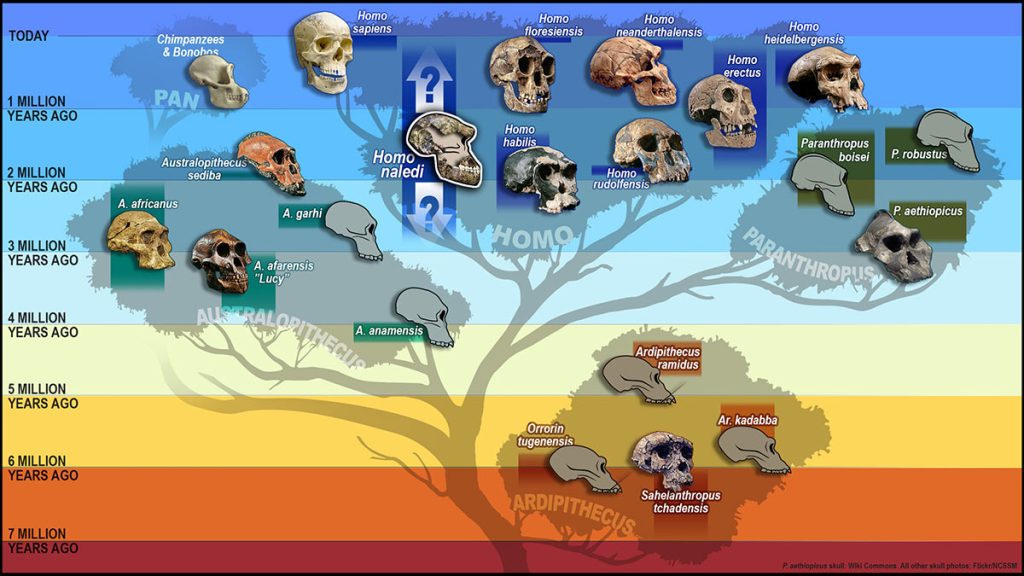
We now know that least eight human species walked the Earth roughly two hundred thousand years ago. Homo sapiens shared the planet with Homo neanderthalensis, Homo heidelbergensis, Homo floresiensis, Homo naledi, Denisovans, and others whose fossil traces remain incomplete or disputed. These populations overlapped in time, geography, and in some cases behavior. They hunted similar prey, shaped stone tools, buried their dead, and adapted to radically different ecological niches. None of them understood themselves as species. That distinction would only become visible after most of them were gone.

Paleoanthropology has repeatedly demonstrated that human evolution is not a clean sequence, but a braided stream. Species diverged, converged, interbred, and vanished in patterns that resist simple narratives of progress. Genetic evidence now confirms that Homo sapiens did not replace other humans through isolation alone, but through partial interbreeding followed by demographic dominance. The boundary between species was porous, unstable, and context-dependent. Speciation, as it occurred in the human lineage, was neither tidy nor immediately legible to those living within it.

Homo sapiens itself emerged slowly, marked less by sudden anatomical novelty than by shifts in cognition, social organization, and symbolic capacity. Early sapiens were not obviously superior in strength or survival skills. Their eventual dominance appears to have been driven by abstract reasoning, cooperative flexibility, and the ability to operate within increasingly complex symbolic systems. These advantages were invisible in the short term and decisive only over long spans of time. Dominance, in evolutionary terms, is always clearer in retrospect.

The modern assumption that human evolution has effectively ceased rests on a misunderstanding of how evolution operates. Evolution does not stop when a species becomes culturally complex. It accelerates when environments change faster than inherited adaptations can comfortably track. The current human environment has shifted more dramatically in the last century than during any comparable period since the emergence of symbolic cognition. This shift is not merely technological. It is cognitive, perceptual, and ecological.

People today live in a world shaped more by complex systems and ideas than by the physical environment. Day-to-day survival increasingly depends on dealing with symbols like money, rules, screens, and data instead of direct human contact or practical tasks in the real world. We often respond to information rather than people, and to problems that are spread out over time and distance and filtered through technology.

These conditions are very different from the ones human brains evolved for. As a result, the gap between how we are wired and how we now live is not a small issue, but a basic feature of modern life.

Within this context, neurodivergent humans are typically framed as statistical outliers within Homo sapiens. Their traits are classified as disorders or deficits, defined by deviation from neurotypical norms of social intuition, emotional regulation, sensory processing, and attentional control. These norms are treated as universal human baselines rather than historically contingent adaptations. Paleoanthropology offers no support for this assumption. Across the human lineage, variation in cognition has been the raw material of adaptation, not an error to be corrected.

Species are not defined solely by reproductive isolation. While this criterion is useful in some contexts, it fails to capture the complexity of speciation in organisms with overlapping ranges, long generation times, and strong cultural mediation. Human evolution in particular demonstrates that species can remain genetically compatible while diverging behaviorally, cognitively, and ecologically. Neanderthals and sapiens interbred, yet maintained distinct adaptive strategies for tens of thousands of years. Genetic permeability did not prevent species distinction. It accompanied it.

A more functional definition of species emphasizes adaptive coherence. A species can be understood as a population that shares a stable strategy for engaging with its environment, reinforced across generations by ecological fit, social organization, and assortative reproduction. By this definition, neurodivergent humans exhibit early markers of speciation. Their traits do not appear randomly or independently. They cluster into a coherent cognitive architecture that interacts with contemporary environments in systematically different ways.

Common features of this architecture include altered sensory thresholds, atypical dopamine regulation, nonlinear associative thinking, heightened pattern recognition, reduced dependence on social reward, and the capacity for sustained focus detached from immediate interpersonal feedback. These traits are often treated as impairments because they conflict with institutions designed around neurotypical cognition. However, from an evolutionary perspective, impairment is inseparable from context. Traits that are maladaptive in one environment may be advantageous in another.

Paleoanthropological evidence suggests that early Homo sapiens may themselves have appeared cognitively unusual relative to contemporaries. Increased abstraction, symbolic behavior, and reduced reliance on immediate sensory cues may have seemed inefficient or socially disruptive in environments favoring embodied skill and direct coordination. What later proved adaptive was not immediately recognized as such. Divergence is often misclassified as dysfunction until selection pressures reveal its utility.

The contemporary environment amplifies this dynamic. Technological systems magnify cognitive differences rather than smoothing them. Pattern recognition scales. Hyperfocus compounds. Reduced sensitivity to social signaling becomes an advantage in machine-mediated contexts. Neurodivergent humans increasingly occupy niches where their cognitive architecture is not merely tolerated but essential. These niches are expanding, not contracting.

At the same time, cultural mechanisms delay recognition of divergence. Diagnostic frameworks emphasize normalization. Educational and occupational systems reward masking. Neurodivergent individuals are pressured to simulate neurotypical behavior to survive socially and economically. Masking functions as a short-term adaptation, allowing individuals to pass within the dominant species. It does not eliminate divergence. It obscures it.

Crucially, neurodivergent humans are now able to find one another across distance, forming communities, collaborations, and reproductive pairings that were historically unlikely. Assortative mating among neurodivergent individuals is increasing, even when unacknowledged. Over time, such patterns reinforce divergence by stabilizing cognitive traits across generations. Paleoanthropology suggests that similar processes operated in the emergence of earlier human species, long before reproductive isolation became absolute.

This argument does not imply hierarchy or inevitability. Evolution does not produce winners in a moral sense. It produces strategies that persist or fail under specific conditions. Multiple human species once coexisted. Their fates were shaped by climate instability, technological shifts, competition, and chance. Coexistence was unstable, but not impossible. Replacement was not intentional. It was emergent.

The ethical discomfort provoked by the idea of a new human species is itself revealing. Modern societies are deeply invested in the concept of a singular humanity progressing linearly toward improvement. Speciation disrupts this narrative. It suggests that difference is not a temporary deviation but an enduring feature of human evolution. The impulse to medicalize or suppress divergence reflects fear of fragmentation rather than scientific caution.

Extinction, when it occurs, rarely announces itself. Species disappear not through catastrophe alone but through gradual mismatch. They persist as long as their adaptive strategies align with prevailing conditions. When those conditions shift, decline appears ordinary until it becomes irreversible. Paleoanthropology repeatedly shows that the disappearance of human species was likely experienced by those living through it as continuity, not collapse.

The greatest constraint on human evolution in the present era may not be genetic but cultural. Systems optimized for a single cognitive profile suppress variation precisely when environmental volatility demands it. By narrowing the range of acceptable cognition, contemporary societies risk reducing humanity’s adaptive capacity at a moment of unprecedented change.

If a new human species is emerging, it will not announce itself in language or law. It will be identified through diagnoses, productivity metrics, and behavioral correction. Its members will be told they are defective versions of something else. History suggests that this is not how defectiveness appears. It is how divergence appears when judged by the standards of the outgoing form.

Evolution is always legible in hindsight and opaque in the present. Species are named after they dominate or after they vanish. Those living through transitions rarely recognize their significance. If neurodivergent humans represent the early formation of a new human species, the evidence will not be found in declarations of identity but in the slow accumulation of adaptive coherence.

Humanity has never been singular for long. The silence surrounding this possibility may simply be the eighth time it has forgotten that fact.