Unknown's avatar

About Chris McBean

Strategist, polyamorist, ergodox, permaculture & agroforestry hobbyist, craft ale & cider enthusiast, white settler in Canada of British descent; a wanderer who isn’t lost.

Five Things We Learned This Week

📅 Saturday, February 14 → Friday, February 20, 2026


🌑 1) “Ring of Fire” Solar Eclipse Crosses Antarctica

On February 17, an annular solar eclipse turned the Sun into a glowing ring as the Moon passed in front while near its farthest orbital point. The event’s path ran mostly over remote Antarctica, meaning few people witnessed it directly, though partial phases were visible in parts of the Southern Hemisphere.

Why it matters:

  • First solar eclipse of 2026
  • Start of a short eclipse season
  • Next major eclipse arrives August 12, 2026

🕊️ 2) Ukraine–Russia Peace Talks Move Forward (Cautiously)

Diplomatic efforts intensified as major powers pushed for negotiations aimed at ending the war by summer 2026. Ukraine agreed to participate, while Russia signaled skepticism about progress and conditions.

Why it matters:

  • Potential to reshape global security and energy markets
  • High uncertainty remains
  • Any breakthrough would be geopolitically significant

🌊 3) Severe Storms Batter Iberia

Powerful winter storms swept across Spain and Portugal, bringing heavy rain, flooding, landslides, and infrastructure damage. Saturated ground worsened impacts, leading to evacuations and transport disruptions.

Why it matters:

  • Illustrates intensifying winter storm patterns
  • Agricultural and economic losses reported
  • Ongoing recovery efforts across affected regions

🚀 4) Artemis II Moon Mission Cleared for March Launch

NASA confirmed a March 6 launch target for Artemis II, the first crewed lunar mission in more than 50 years. Four astronauts will fly around the Moon and return to Earth without landing.

Why it matters:

  • First humans beyond low-Earth orbit since Apollo
  • Includes a Canadian astronaut
  • Critical step toward future Moon landings and Mars missions

🔭 5) Rare Six-Planet Alignment Builds Toward Late-Month Peak

Multiple planets became visible together in the evening sky during this week, leading toward a rare alignment peak later in February. Several planets can be seen with the naked eye, while others require binoculars or a telescope.

Why it matters:

  • One of the year’s best skywatching events
  • Visible shortly after sunset
  • Boosts public interest in astronomy

🌟 Weekly Takeaway

This week blended rare celestial events, major geopolitical developments, extreme weather, and renewed momentum in human space exploration — a reminder that global change happens simultaneously across science, politics, and the natural world.

The Tool, Not the Threat: A Working Writer’s View of AI

For over thirsty years, I have watched new technologies arrive with dire predictions about the death of writing. Word processors were supposed to cheapen the craft. Hell, the first word processor I ever saw was a woman typing my hand written notes into WordPerfect 5.1 because I didn’t have a PC in my office. The internet was supposed to drown it. Content mills were supposed to replace it. search engines were going to kill the art of research. None of those things eliminated professional writers. They changed the terrain, certainly, but the core of the work remained stubbornly human. Artificial intelligence feels like the latest version of the same story. Louder, faster, more unsettling to some, but still just a tool.

I have not lost a single client to AI. Not one. That fact alone says more than any think piece about disruption ever could.

Clients do not hire me because I can type sentences. They hire me because I can understand what they are trying to say when they do not yet know how to say it. They hire judgment, discretion, experience, tone, and the ability to shape messy reality into something coherent and purposeful. AI can generate text, but it cannot sit in a meeting, read the emotional weather in the room, or recognize when the real problem is not what anyone is saying out loud. Writing, at the professional level, is as much about interpretation as composition.

Where AI has proven useful is in the mechanical parts of the process. Every writer knows how much time disappears into outlining, restructuring, exploring angles that may or may not work, or turning over phrasing again and again to test clarity. AI can absorb some of that friction. It can offer starting points, alternate framings, rough summaries, or structural suggestions. I do not mistake these for finished work. I treat them the way a carpenter treats pre-cut lumber. It saves time on the rough work so that more attention can go into the joinery that actually matters. My father was a shop fitter, a carpenter who specialized in bank and pub finishes.  When power tools came along, they didn’t do away with his job, they made parts of it simpler, and faster.  

AI has become a surprisingly effective thinking partner. Writing is solitary, and the gap between draft and feedback can stretch for days or weeks. AI collapses that gap. I can test an argument, ask for objections, explore different tones, or pressure see whether an idea holds together. It does not replace human editors (I still pay an editor) or trusted readers, but it prevents the creative process from stalling in silence. The blank page is less intimidating when it answers back.

Research is another area where the tool earns its keep, provided it is used with caution. I do not outsource truth to a machine, but I do use it to map the landscape. It can identify key themes, terminology, opposing viewpoints, and places worth digging deeper. Instead of wandering through sources hoping something useful appears, I begin with a provisional sketch of the terrain. Verification still belongs to me. Interpretation certainly belongs to me, but the orientation phase moves faster.

Perhaps most unexpectedly, AI has helped me see my own voice more clearly. By generating alternative versions of a passage in different styles, I can feel immediately what does not sound like me. The contrast sharpens rather than dilutes identity. When everything generic is available instantly, specificity becomes more visible. It is like hearing your own accent only after listening to someone else speak. I have a clear writing voice which AI can’t reproduce, but it can help remove the messy, overly wordy passages, and cut to the chase of the matter.  

The fear that AI will eliminate professional writing misunderstands what clients are actually purchasing. They are not buying words. They are buying understanding and reliability. They are buying the ability to handle sensitive material without creating risk. They are buying someone who can ask the uncomfortable clarifying question, or who knows when fewer words will serve better than more. No algorithm signs its name to a document and assumes responsibility for the consequences. A human does every time I deliver a final product.  

There is also a strange upside to the flood of machine-generated prose. As average writing becomes easier to produce, distinctive writing becomes easier to recognize. Competent, but generic text is now abundant. Work that carries perspective, nuance, and lived experience stands out more sharply by comparison. In that sense, AI may be raising the value of mastery, even as it lowers the cost of mediocrity.

None of this makes the tool harmless. Used lazily, it produces bland, interchangeable language that feels polished, but is actually hollow. We have seen this time and time again on news social media as businesses look to cut costs. Used uncritically, it can amplify errors, and like any power tool, it rewards skill and punishes carelessness. I find it most useful when I remain firmly in charge, treating it as an assistant, rather than an author.

Ultimately, AI has not changed why I write or how I think about the work. It has simply reduced some of the friction around the edges. The heavy lifting of meaning, judgment, empathy, and responsibility still falls exactly where it always has: on the human being behind the keyboard.

After decades in this profession, the arrival of AI does not feel like an extinction event. It feels like someone added a new set of tools to my desktop. The craft remains. The clients remain. The blank page remains. I just have one more way to wrestle it all into submission.

The Eighth Silence: On the Emergence of a New Human Species

We now know that least eight human species walked the Earth roughly two hundred thousand years ago. Homo sapiens shared the planet with Homo neanderthalensis, Homo heidelbergensis, Homo floresiensis, Homo naledi, Denisovans, and others whose fossil traces remain incomplete or disputed. These populations overlapped in time, geography, and in some cases behavior. They hunted similar prey, shaped stone tools, buried their dead, and adapted to radically different ecological niches. None of them understood themselves as species. That distinction would only become visible after most of them were gone.

Paleoanthropology has repeatedly demonstrated that human evolution is not a clean sequence, but a braided stream. Species diverged, converged, interbred, and vanished in patterns that resist simple narratives of progress. Genetic evidence now confirms that Homo sapiens did not replace other humans through isolation alone, but through partial interbreeding followed by demographic dominance. The boundary between species was porous, unstable, and context-dependent. Speciation, as it occurred in the human lineage, was neither tidy nor immediately legible to those living within it.

Homo sapiens itself emerged slowly, marked less by sudden anatomical novelty than by shifts in cognition, social organization, and symbolic capacity. Early sapiens were not obviously superior in strength or survival skills. Their eventual dominance appears to have been driven by abstract reasoning, cooperative flexibility, and the ability to operate within increasingly complex symbolic systems. These advantages were invisible in the short term and decisive only over long spans of time. Dominance, in evolutionary terms, is always clearer in retrospect.

The modern assumption that human evolution has effectively ceased rests on a misunderstanding of how evolution operates. Evolution does not stop when a species becomes culturally complex. It accelerates when environments change faster than inherited adaptations can comfortably track. The current human environment has shifted more dramatically in the last century than during any comparable period since the emergence of symbolic cognition. This shift is not merely technological. It is cognitive, perceptual, and ecological.

People today live in a world shaped more by complex systems and ideas than by the physical environment. Day-to-day survival increasingly depends on dealing with symbols like money, rules, screens, and data instead of direct human contact or practical tasks in the real world. We often respond to information rather than people, and to problems that are spread out over time and distance and filtered through technology.

These conditions are very different from the ones human brains evolved for. As a result, the gap between how we are wired and how we now live is not a small issue, but a basic feature of modern life.

Within this context, neurodivergent humans are typically framed as statistical outliers within Homo sapiens. Their traits are classified as disorders or deficits, defined by deviation from neurotypical norms of social intuition, emotional regulation, sensory processing, and attentional control. These norms are treated as universal human baselines rather than historically contingent adaptations. Paleoanthropology offers no support for this assumption. Across the human lineage, variation in cognition has been the raw material of adaptation, not an error to be corrected.

Species are not defined solely by reproductive isolation. While this criterion is useful in some contexts, it fails to capture the complexity of speciation in organisms with overlapping ranges, long generation times, and strong cultural mediation. Human evolution in particular demonstrates that species can remain genetically compatible while diverging behaviorally, cognitively, and ecologically. Neanderthals and sapiens interbred, yet maintained distinct adaptive strategies for tens of thousands of years. Genetic permeability did not prevent species distinction. It accompanied it.

A more functional definition of species emphasizes adaptive coherence. A species can be understood as a population that shares a stable strategy for engaging with its environment, reinforced across generations by ecological fit, social organization, and assortative reproduction. By this definition, neurodivergent humans exhibit early markers of speciation. Their traits do not appear randomly or independently. They cluster into a coherent cognitive architecture that interacts with contemporary environments in systematically different ways.

Common features of this architecture include altered sensory thresholds, atypical dopamine regulation, nonlinear associative thinking, heightened pattern recognition, reduced dependence on social reward, and the capacity for sustained focus detached from immediate interpersonal feedback. These traits are often treated as impairments because they conflict with institutions designed around neurotypical cognition. However, from an evolutionary perspective, impairment is inseparable from context. Traits that are maladaptive in one environment may be advantageous in another.

Paleoanthropological evidence suggests that early Homo sapiens may themselves have appeared cognitively unusual relative to contemporaries. Increased abstraction, symbolic behavior, and reduced reliance on immediate sensory cues may have seemed inefficient or socially disruptive in environments favoring embodied skill and direct coordination. What later proved adaptive was not immediately recognized as such. Divergence is often misclassified as dysfunction until selection pressures reveal its utility.

The contemporary environment amplifies this dynamic. Technological systems magnify cognitive differences rather than smoothing them. Pattern recognition scales. Hyperfocus compounds. Reduced sensitivity to social signaling becomes an advantage in machine-mediated contexts. Neurodivergent humans increasingly occupy niches where their cognitive architecture is not merely tolerated but essential. These niches are expanding, not contracting.

At the same time, cultural mechanisms delay recognition of divergence. Diagnostic frameworks emphasize normalization. Educational and occupational systems reward masking. Neurodivergent individuals are pressured to simulate neurotypical behavior to survive socially and economically. Masking functions as a short-term adaptation, allowing individuals to pass within the dominant species. It does not eliminate divergence. It obscures it.

Crucially, neurodivergent humans are now able to find one another across distance, forming communities, collaborations, and reproductive pairings that were historically unlikely. Assortative mating among neurodivergent individuals is increasing, even when unacknowledged. Over time, such patterns reinforce divergence by stabilizing cognitive traits across generations. Paleoanthropology suggests that similar processes operated in the emergence of earlier human species, long before reproductive isolation became absolute.

This argument does not imply hierarchy or inevitability. Evolution does not produce winners in a moral sense. It produces strategies that persist or fail under specific conditions. Multiple human species once coexisted. Their fates were shaped by climate instability, technological shifts, competition, and chance. Coexistence was unstable, but not impossible. Replacement was not intentional. It was emergent.

The ethical discomfort provoked by the idea of a new human species is itself revealing. Modern societies are deeply invested in the concept of a singular humanity progressing linearly toward improvement. Speciation disrupts this narrative. It suggests that difference is not a temporary deviation but an enduring feature of human evolution. The impulse to medicalize or suppress divergence reflects fear of fragmentation rather than scientific caution.

Extinction, when it occurs, rarely announces itself. Species disappear not through catastrophe alone but through gradual mismatch. They persist as long as their adaptive strategies align with prevailing conditions. When those conditions shift, decline appears ordinary until it becomes irreversible. Paleoanthropology repeatedly shows that the disappearance of human species was likely experienced by those living through it as continuity, not collapse.

The greatest constraint on human evolution in the present era may not be genetic but cultural. Systems optimized for a single cognitive profile suppress variation precisely when environmental volatility demands it. By narrowing the range of acceptable cognition, contemporary societies risk reducing humanity’s adaptive capacity at a moment of unprecedented change.

If a new human species is emerging, it will not announce itself in language or law. It will be identified through diagnoses, productivity metrics, and behavioral correction. Its members will be told they are defective versions of something else. History suggests that this is not how defectiveness appears. It is how divergence appears when judged by the standards of the outgoing form.

Evolution is always legible in hindsight and opaque in the present. Species are named after they dominate or after they vanish. Those living through transitions rarely recognize their significance. If neurodivergent humans represent the early formation of a new human species, the evidence will not be found in declarations of identity but in the slow accumulation of adaptive coherence.

Humanity has never been singular for long. The silence surrounding this possibility may simply be the eighth time it has forgotten that fact.

VIA Rail and Its Core Mission: Connecting Communities in Eastern Canada

In recent years, VIA Rail has faced internal and external pressures to prioritize speed and efficiency over regional accessibility, with proposals suggesting the reduction of service to smaller towns along the southern corridor in favor of focusing on larger urban centers. While such an approach might seem rational from a purely commercial perspective, it fundamentally misunderstands VIA Rail’s statutory mandate and the public value of its service. The introduction of a high-speed network such as Altos further underscores the importance of VIA Rail fulfilling its original mission: providing essential rail connectivity to smaller cities, towns, and villages in eastern Canada as part of a cohesive national transportation network.

VIA Rail’s mandate is not to compete with high-speed intercity travel. Its core purpose is to ensure that communities which lack alternative rapid transportation options remain linked to major metropolitan centers. Towns like Belleville, Kingston, Brockville, and Cornwall rely on VIA Rail for access to jobs, education, health care, and commerce. Reducing service to these communities in favor of express connections between larger cities would sever vital lifelines and exacerbate regional inequality, undermining the social and economic fabric of eastern Canada.

The coming of Altos high-speed rail makes this role even clearer. High-speed service is designed to connect major urban anchors quickly, leaving no capacity or mandate for serving smaller towns along the route. By concentrating on long-distance, limited-stop service, Altos will meet the demand for speed without addressing the needs of communities that depend on regular, accessible rail service. VIA Rail, therefore, must retain and enhance its focus on regional connectivity, ensuring that small and mid-sized communities continue to be fully integrated into Canada’s national transportation framework.

Investing in VIA Rail’s southern corridor for smaller-community service yields tangible benefits. Frequent, reliable connections allow residents of towns and villages to access economic opportunities in larger centers without requiring private vehicles or air travel, while supporting local economies by maintaining links for tourism, commerce, and labor mobility. Service improvements, schedule reliability, and modernized rolling stock for regional service are far more aligned with VIA Rail’s mission than reallocating resources toward high-speed, limited-stop service.

In the context of national rail strategy, VIA Rail’s mandate should be reaffirmed and protected. It is not a commercial exercise to maximize speed between cities, but a public service designed to ensure connectivity, accessibility, and equity. As Altos takes on the role of rapid intercity travel, VIA Rail must double down on its responsibility to smaller communities, strengthening the southern corridor as a reliable and inclusive lifeline for eastern Canada. Maintaining this distinction between high-speed and regional service is essential for a balanced, effective, and socially responsible rail network.

Five Things We Learned This Week

📅 February 7 – February 13, 2026


🛡️ 1. Europe Signals a Historic Security Shift

At the Munich Security Conference, European leaders openly discussed preparing for a world where U.S. protection may no longer be guaranteed 🇪🇺⚔️.

  • Greater European military autonomy
  • Expanded defense spending
  • Discussion of relying on France’s nuclear deterrent

The tone was stark: leaders warned that the post-Cold War security framework may be fading. This points toward a long-term restructuring of global power relationships.


✈️ 2. Italy Moves to Ban Strikes During the Winter Olympics

With millions expected to travel for the Milano-Cortina Winter Games, Italy announced emergency measures to prevent airport shutdowns 🚫✈️.

  • Planned labor strikes threatened major disruption
  • Government intervention to suspend airport walkouts
  • Security concerns following prior transport incidents

Hosting the Olympics often leads governments to prioritize uninterrupted transport and security over normal labor actions.


🎭 3. Massive Indian Cultural Festival in Kuwait

More than 700 performers showcased Indian heritage at a major open-air festival on Kuwait’s Green Island 🇮🇳🎶.

  • Traditional dance and music performances
  • Food, crafts, and cultural exhibits
  • Strong participation from expatriate communities
  • Free public access

The event highlighted the growing influence of diaspora communities and cultural diplomacy in the Gulf region.


🛰️ 4. Drone Strikes Target Ukrainian Infrastructure

Large-scale Russian drone attacks struck energy facilities and port infrastructure, particularly around Odesa ⚡🚁.

  • Damage to power systems
  • Economic disruption
  • Pressure on export routes
  • Ongoing humanitarian risks

The conflict continues to shape global security, energy markets, and political alignment across Europe.


🪐 5. Saturn Enters Aries — A Cultural Moment

Saturn’s transition into Aries generated widespread global attention in astrology circles 🔮✨.

  • Last occurred in the late 1990s
  • Interpreted as a period of accountability and upheaval
  • Major engagement across social media and popular culture

Regardless of scientific validity, such symbolic narratives often reflect public mood and influence social discourse.


🌟 Weekly Takeaway

This week revealed structural shifts rather than a single dominant headline — evolving security alliances, governments prioritizing mega-events, ongoing war impacts, expanding cultural globalization, and a search for meaning in uncertain times.

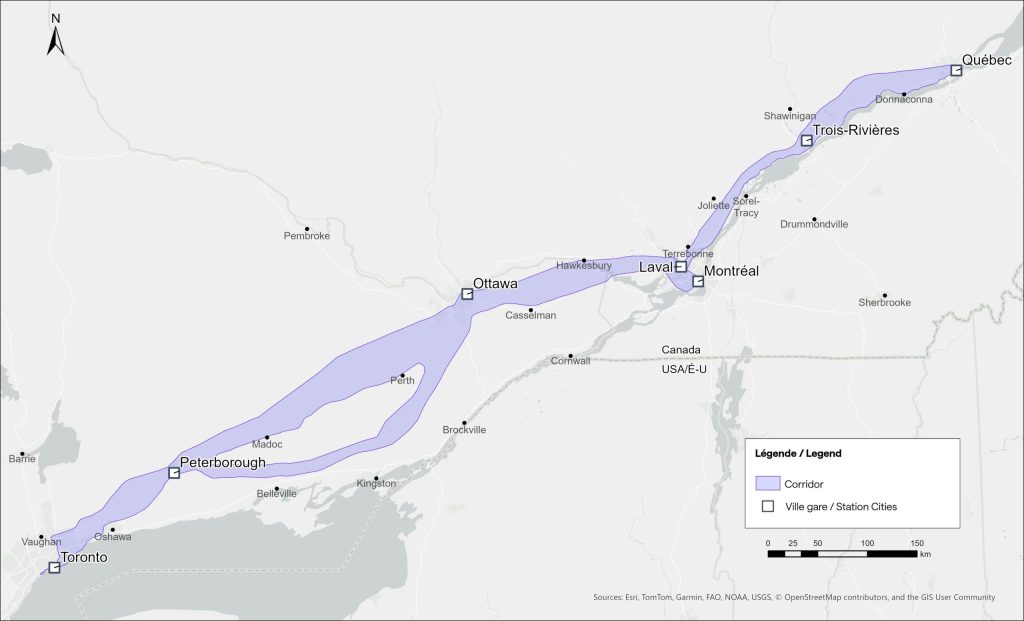
Balancing High-Speed Rail and Regional Connectivity: The Case for a Northern Altos Corridor

Canada faces a pivotal moment in defining the future of intercity rail. The introduction of a high-speed Altos service presents an opportunity to transform long-distance travel between major metropolitan centers, but its success hinges on the careful delineation of its corridor. Too often, proposals conflate high-speed ambitions with the realities of existing rail service, risking operational compromise. A northern alignment for Altos, distinct from the established southern VIA Rail corridor, represents the most effective solution for both speed and regional accessibility.

High-speed rail and conventional intercity service serve fundamentally different purposes. Altos is designed to connect major urban anchors directly, minimizing travel time through long, straight alignments, gentle curves, and full grade separation. Introducing intermediate stops at towns such as Belleville, Kingston, or Brockville would impose braking and acceleration penalties, schedule complexity, and infrastructure constraints that erode the system’s core value proposition. High-speed rail cannot achieve transformative travel times if it is forced to behave like conventional regional service.

The southern VIA Rail corridor, by contrast, exists to serve the communities that rely on rail for connectivity rather than speed. VIA Rail’s mandate is not to compete with high-speed intercity travel, but to provide reliable, frequent service linking smaller towns and cities to major urban centers. Belleville, Kingston, Brockville, and other communities depend on these connections for economic, social, and educational purposes. By maintaining the southern corridor for VIA, the service can focus on its core function: ensuring that smaller communities remain linked to metropolitan hubs, rather than attempting to serve as a high-speed through-route that would compromise both speed and accessibility.

Quantitative projections reinforce the strategic logic of a dedicated high-speed alignment. The planned Alto network between Toronto and Quebec City is expected to reach speeds up to 300 km/h, potentially reducing the current Montreal–Toronto rail journey from more than five hours to approximately three hours on high-speed track, a reduction of over 40 percent in travel time. Such reductions are a key driver of modal shift, since international evidence finds that high-speed rail that cuts travel times can attract a large share of travelers from road and air, significantly boosting ridership compared with conventional rail. In Canada’s case, future high-speed service could carry tens of millions of passengers annually, far exceeding the ridership of existing VIA Rail services, while generating an estimated $15 billion to $27 billion in economic value over decades through time savings, productivity gains, and reduced congestion. These figures underscore the economic rationale for building a system capable of truly high-speed operation rather than one constrained by mixed-traffic regional service.(altotrain.ca)

Routing Altos along a northern corridor also presents broader economic and developmental opportunities. A dedicated alignment can open new nodes of growth, stimulate investment in previously underserved areas, and create jobs in planning, construction, and operations. At the same time, VIA Rail can concentrate on fulfilling its statutory mandate: providing essential rail service to smaller communities, improving reliability, frequency, and accessibility along the southern corridor without interference from high-speed trains. This dual approach maximizes the overall utility of Canada’s rail network, ensuring that both large and small communities benefit.

Ultimately, the future balance of intercity rail depends on recognizing the distinct roles of each service. Altos should focus on moving cities closer together, achieving rapid, reliable intercity travel. VIA Rail should remain the backbone of regional connectivity, serving intermediate towns with frequent, accessible service that links them effectively to major urban centers. By allowing each system to fulfill its intended function, Canada can achieve a rail network that is both fast and inclusive, transformative yet equitable.

Beyond the Capital: Why Federal Work Must Follow Where Canada Is Growing

In the old rhythms of Canadian public service, the federal workplace was always Ottawa. Parliament Hill, rising above the banks of the Ottawa River, anchored not just governance, but geography itself. For decades, the logic was simple. If government work was done in one place, then the people who did that work would go there.

That logic no longer fits the country we live in.

What is often framed as an “Ottawa problem” – empty office towers, struggling downtown businesses, and debates about return-to-office mandates – is in fact a regional and national economic issue. The conversation has focused narrowly on the capital’s core, while ignoring the quieter, more fragile economies that surround it.

Small towns and villages do not have the economic buffers that large cities enjoy. They do not have diversified commercial districts, deep tourism markets, or the ability to absorb sudden shocks. When people leave town every weekday morning and return only to sleep, the effects are immediate and visible. Cafés close. Retail shrinks. Volunteer organizations struggle. Municipal tax bases flatten. One employer leaving, one policy shift, one lost opportunity can tip the balance.

And yet, this is where population growth is increasingly happening.

Across Eastern Ontario and much of Canada, families are choosing towns like Kemptville not because they are cheaper versions of cities, but because they offer something cities increasingly cannot. Space. Community. A sense of belonging. The growth is not speculative. It is real, measurable, and ongoing. The problem is that economic policy, particularly federal workplace policy, has not kept pace with that shift.

This is why North Grenville Mayor Nancy Peckford’s proposal to establish a federal remote work hub in Kemptville deserves to be understood as more than a local initiative. It is a response to a structural imbalance. Peckford pointed to the Kemptville Campus as an ideal off-site federal workspace, with secure buildings, high-speed internet, and flexible co-working space. Its location, she noted, offers a practical alternative to grinding commutes and limited parking in downtown Ottawa.

But the deeper argument is economic.

When federal employees work where they live, money circulates locally. Lunch is bought on Main Street, not in a food court. Childcare is local. Errands happen mid-day. The economic multiplier effect in a small town is outsized because the base is smaller. A handful of stable, well-paid jobs can sustain multiple businesses. The presence of daytime professionals supports services that would otherwise be unviable.

Large cities, including Ottawa, undoubtedly face challenges, yet they are resilient in ways small towns are not. They attract private investment. They adapt. They reconfigure. Small towns rarely get that luxury. Growth may be happening there, but it is fragile growth, easily reversed if policy decisions treat these places as peripheral rather than integral.

There is also the environmental dimension, one that aligns neatly with federal climate commitments. Long daily commutes from surrounding communities into Ottawa generate emissions that are entirely avoidable. Distributed work hubs reduce traffic congestion, lower greenhouse gas output, and do so without massive infrastructure spending. This is climate policy that improves lives rather than restricting them.

Mayor Peckford framed her proposal in terms of quality of life and community sustainability, emphasizing the importance of keeping people close to their families and rooted in their towns. That framing matters. It acknowledges that public servants are not abstract units of labour. They are neighbours, parents, volunteers, and taxpayers.

Ottawa will always matter. Parliament Hill will always be the symbolic heart of federal governance. But a modern public service does not need to be physically concentrated in one city to remain effective, coherent, or accountable.

If anything, the legitimacy of federal institutions is strengthened when they are visibly embedded across the regions they serve.

Kemptville’s proposal points toward a future where federal employment supports not just a capital city, but an entire constellation of towns and villages that are quietly doing the work of growing Canada. It is not about taking something away from Ottawa. It is about recognizing where the country already is – and where it is going.

Will the Rise of U.S. Progressives Help Revive the Canadian NDP?

The election of Zohran Mamdani as mayor of New York City marks a qualitative shift in North American progressive politics. This is no longer a story about insurgents pushing from the margins. It is about democratic socialists governing major institutions, commanding budgets, shaping public narratives, and translating movement demands into administrative power.

Alongside figures like Alexandria Ocasio-Cortez and Bernie Sanders, Mamdani’s ascent signals that U.S. progressivism has entered a new phase. The question for Canada is no longer whether these ideas resonate culturally, but whether the Canadian New Democratic Party is capable of learning the deeper strategic lessons now on offer.

The answer remains conditional. The NDP can benefit from the American progressive surge only if it studies how power is being built and exercised, not just how it is branded.

Structural and Cultural Constraints
Canada’s parliamentary, multi-party system should in theory favour a social democratic party. The NDP does not need to fight a hostile primary system or operate as a faction inside a centre-right coalition party, as U.S. progressives must within the Democrats. Yet despite this structural advantage, the NDP has struggled to convert progressive sentiment into durable electoral growth.

The party remains caught between ideological clarity and managerial caution. It often campaigns as a movement party while governing, or aspiring to govern, as a risk-averse administrator. This has produced a persistent credibility gap. Movement activists do not feel represented between elections, while swing voters hear careful policy talk without an emotionally compelling story of change.

Meanwhile, U.S. progressive discourse has become culturally influential in Canada. Class-conscious language, housing-first politics, and explicit critiques of corporate power now circulate widely through social media and activist networks. But cultural influence does not automatically translate into organizational renewal. That requires infrastructure, discipline, and leadership development.

From Insurgency to Governance: The Mamdani Moment
Mamdani’s election as New York City mayor is significant precisely because it closes the loop between organizing and governing. His political roots lie in tenant unions, transit justice campaigns, and DSA-backed electoral work that treated municipal power as a strategic prize rather than a symbolic platform.

As mayor, Mamdani now governs through the same principles that animated his rise: rent stabilization, public ownership, resistance to privatization, and an explicit alignment with working-class and immigrant communities. Crucially, these commitments are not framed as ideological abstractions, but as practical solutions to daily crises like housing costs, transit access, and public services.

This matters for the Canadian NDP because it demonstrates that democratic socialist politics can scale without dilution when rooted in permanent organizing structures. The DSA model, now validated at the level of North America’s largest city, treats elections as moments in an ongoing campaign rather than endpoints. Governance becomes an extension of movement pressure, not its replacement.

By contrast, the NDP remains largely election-centric. Local riding associations often go dormant between cycles. Policy development is centralized. Grassroots energy is mobilized episodically, then dissipates. Even when the party holds power provincially or influences federal policy, it rarely uses that position to expand organizing capacity outside the party itself.

Some Canadian organizations have attempted to replicate aspects of the DSA approach, including Courage Coalition and SomeOfUs. These efforts show promise but remain disconnected from a mass electoral vehicle capable of sustaining them. Mamdani’s mayoralty demonstrates what becomes possible when that gap is closed.

What the NDP Would Need to Change
If the NDP wants to benefit from the U.S. progressive breakthrough, including Mamdani’s victory, it would need to make several strategic shifts.

First, it must invest in permanent grassroots infrastructure that exists independently of campaign timelines. Organizing around housing, labour rights, and public services cannot be treated as messaging exercises. They must be lived relationships.

Second, the party must reclaim class-based language without apology. Housing affordability, food prices, wages, and corporate profiteering are not niche issues. They are the material conditions shaping political identity. Mamdani’s success shows that naming antagonists clearly does not alienate voters when tied to credible solutions.

Third, bold policy must be localized and nationalized in Canadian terms. Public power, green industrial policy, and decommodified housing already align with Canada’s institutional history. Crown corporations, cooperative ownership, and Indigenous-led land stewardship provide a domestic frame that avoids shallow American mimicry.

Fourth, the NDP must cultivate leaders who organize year-round and govern transparently, rather than relying on tightly controlled national figures. Mamdani’s credibility did not emerge from media polish but from years of visible, accountable work.

Finally, the party must abandon technocratic restraint as its default tone. Emotional resonance is not manipulation. It is how people recognize themselves in politics. Urgency, fairness, and dignity are not slogans. They are organizing principles.

A Blueprint, Not a Shortcut
The rise of U.S. progressives, now culminating in Mamdani’s mayoralty, does not offer the NDP an easy revival narrative. What it offers instead is a blueprint for how movements become institutions without losing their soul.

The NDP does not lack progressive values. What it lacks is a movement culture capable of sustaining those values under pressure. Mamdani’s transition from organizer to mayor shows that such a culture can win, govern, and endure.

Whether the NDP studies that lesson seriously, or continues to treat U.S. progressivism as aesthetic inspiration rather than structural instruction, will determine whether it remains a protest party with influence, or becomes a governing force with momentum.

Sources
Mamdani, Z. 2024. Interviews and public statements as New York City mayor. Jacobin.
McGrane, D. 2019. The New NDP: Moderation, Modernization, and Political Marketing. UBC Press.
Taylor, K. 2023. “The lessons Jagmeet Singh should learn from Bernie Sanders.” Policy Options.
Democratic Socialists of America NYC. 2022 to 2025. Electoral and governance strategy documents.

The Politics of Distraction: Why Alberta’s Complaints Matter Less Than They Appear

A fair reading is that a significant share of Alberta’s current complaints function as sideshows, but not empty ones. They are distractions with a purpose, and that purpose is political rather than policy-driven.

At the federal level, the Carney government’s real files are structural and unforgiving: restoring long-term productivity, managing a fragile transition to a low-carbon economy without regional collapse, stabilizing housing and infrastructure finance, and navigating a volatile global trade and security environment. None of those problems yield to symbolic confrontation. They require boring competence, capital discipline, and political stamina. Against that backdrop, disputes over judicial appointments, equalization rhetoric, or procedural grievances are comparatively low-impact on Canada’s material trajectory.

From Alberta’s perspective, however, these conflicts are useful theatre. They re-center politics on identity, grievance, and sovereignty rather than on questions where provincial governments have fewer clean answers of their own. A public argument about judges, Ottawa elites, or federal overreach is easier to sustain than a hard conversation about Alberta’s economic diversification, fiscal exposure to commodity cycles, or long-term labour force constraints. These fights allow provincial leaders to frame themselves as defenders rather than managers.

For the Carney government, the danger is not that these complaints derail core policy, but that they consume political oxygen. Every hour spent responding to performative ultimatums is an hour not spent building coalitions around housing finance reform or industrial strategy. The risk is cumulative. A steady drip of constitutional agitation can distort the agenda, forcing Ottawa into a reactive posture that favours short-term messaging over long-term statecraft.

That said, dismissing the disputes entirely would be a mistake. Sideshows still shape public mood. They erode trust in institutions, normalize the idea that core democratic guardrails are negotiable, and create a climate where substantive reform becomes harder to explain and sell. The judicial appointment fight matters less for what it changes immediately than for what it signals: a willingness to challenge institutional norms to score political points.

In the bigger picture, then, Alberta’s complaints are not the main story of Canada’s moment, but they are part of the background noise that can either be managed or allowed to metastasize. The test for the Carney government will be whether it can keep its focus on the genuinely consequential files while refusing to let performative conflict define the national agenda. Governments lose momentum not when they face opposition, but when they mistake noise for substance.

The EPL Profit and Sustainability Trap

🏟️ Why England’s richest league needs a fairer way to grow everyone, not just the elite

Few leagues on Earth stir as much emotion as the English Premier League. From the roar of St James’ Park to night matches at Anfield and Old Trafford, the drama is as much about identity and history as it is about trophies. Yet beneath the surface of titles and television deals lies a less visible but equally powerful force shaping outcomes: financial regulation.

For years, fans have watched ambitious clubs, including Newcastle United, invest in their squads and attempt to climb the competitive ladder, only to find themselves constrained by rules that were never designed to equalize opportunity. At the same time, the unresolved Manchester City case has exposed how unclear regulations and uneven enforcement undermine trust in the system itself.

📉 What the Profit and Sustainability Rules Were Meant to Do

The Premier League’s Profit and Sustainability Rules were introduced to prevent clubs from spending themselves into financial ruin. English football has lived through administrations, fire sales, and collapsed clubs, and the instinct to prevent that chaos is understandable.

However, PSR focuses narrowly on accounting losses rather than competitive reality. Clubs are limited in how much they can lose over a rolling period, regardless of their ownership structure or growth phase. The problem is that football success is not driven by losses but by proportional investment.

A club with enormous global revenues can spend aggressively while remaining compliant. A club with a smaller commercial base but ambitious ownership is punished for trying to close the gap. In effect, the rules freeze historical advantage into place.

🏰 The Structural Advantage of the Big Six

The so-called Big Six are not simply better-run football clubs. They benefit from decades of accumulated advantages: global fanbases, commercial partnerships, repeated European qualification, and media exposure that reinforces all of the above.

PSR does nothing to counter this structural reality. Instead, it reinforces it. Clubs outside the elite are expected to grow revenue first, but revenue growth in football usually follows success, not the other way around. This circular logic ensures that the top stay on top.

⚠️ Manchester City and the Crisis of Enforcement

The prolonged Manchester City case highlights a second, equally damaging flaw. When rules are vague, poorly drafted, or legally fragile, enforcement becomes slow, inconsistent, or impossible.

Regardless of one’s view on City’s guilt or innocence, the lesson is clear. A regulatory framework that collapses under legal challenge is not fit for purpose. Fans lose faith when some clubs appear untouchable, while others face swift punishment.

🛠️ A Fairer and More Logical Alternative

If the Premier League genuinely wants sustainability without entrenching inequality, reform must be structural rather than cosmetic. A fair system could rest on four simple principles.

📊 1. Revenue-Based Squad Spending Limits

Instead of limiting losses, total football expenditure should be capped as a percentage of audited revenue. For example, wages and transfer amortisation combined could be limited to seventy percent of revenue.

This scales naturally. Bigger clubs can still spend more, but only in proportion to what they actually generate. Ambitious clubs are encouraged to grow income, not suppress investment.

💰 2. Progressive Revenue Distribution

Broadcast income should be distributed more progressively. Lower-table clubs should receive higher proportional shares, while clubs qualifying for European competition receive less domestic redistribution.

This does not punish success. It recognises that competitive leagues require genuine upward mobility.

🔍 3. Clear, Enforceable Rules

Financial regulations must be written in plain language, legally robust, and enforceable within defined timelines. If clubs are to be held accountable, the rules must survive scrutiny.

🏗️ 4. Incentives for Long-Term Investment

Clubs that invest in academies, infrastructure, and homegrown players should receive regulatory credits. These investments strengthen English football as a whole and reduce reliance on short-term transfer inflation.

🏁 Conclusion: Sustainability Should Not Mean Stagnation

The current system treats financial losses as the problem while ignoring structural inequality as the cause. A fairer framework would reward real growth, allow ambition within limits, and apply rules consistently to all.

For Newcastle supporters and fans of every club outside the traditional elite, fairness does not mean guaranteed success. It means a league where intelligent management, strategic investment, and long-term planning are allowed to compete with inherited advantage.

Football thrives on hope. Regulation should protect that hope, not quietly legislate it out of existence.