Unknown's avatar

About Chris McBean

Strategist, polyamorist, ergodox, permaculture & agroforestry hobbyist, craft ale & cider enthusiast, white settler in Canada of British descent; a wanderer who isn’t lost.

Five Things We Learned This Week

Date: February 7, 2026
Range: Saturday to Friday


1️⃣ 🌎 New START Treaty Expires

The New START nuclear arms reduction treaty between the United States and Russia officially expired this week, ending the last remaining bilateral limits on strategic nuclear arsenals. Analysts warned the lapse increases global security uncertainty and complicates future arms-control negotiations.

2️⃣ 🕊️ Rafah Crossing Reopens for Humanitarian Access

The Rafah border crossing between Gaza and Egypt reopened on a limited basis, allowing humanitarian aid deliveries and medical evacuations. The move comes amid a fragile ceasefire, with international agencies stressing the ongoing risks facing civilians.

3️⃣ 🌍 Extreme Weather Strains Infrastructure Worldwide

Severe floods, storms, and temperature extremes affected multiple regions this week, damaging infrastructure and overwhelming emergency services. Colombia reported major flooding and bridge collapses, while Europe and North America faced related climate-driven disruptions.

4️⃣ 🦴 Rare Dinosaur Discovery Advances Science

Paleontologists announced the discovery of a new dinosaur species preserved with exceptional detail, including cellular-level skin structures. The find offers new insight into Cretaceous-era ecosystems and the evolution of large herbivorous dinosaurs.

5️⃣ ❄️ Winter Olympics Open in Italy

The 2026 Winter Olympic Games officially opened in Milan and Cortina d’Ampezzo, featuring a large-scale ceremony celebrating Italian culture and international cooperation. Nearly 3,000 athletes from more than 90 countries are competing across winter sports disciplines.


📌 Notable Context From the Week

  • ☢️ Humanitarian agencies warned of worsening conditions in parts of the Sahel and West Africa.
  • 🏗️ Major infrastructure and climate-related funding commitments featured in several national budgets.
  • 🌐 Diplomatic efforts continued globally amid rising geopolitical and environmental pressures.

More Than a Provincial Dispute: Judicial Appointments and the Fragility of Democratic Norms

The announcement by Premier Danielle Smith that Alberta will withhold funding for new judicial appointments unless the federal government gives the province a formal role in selecting those judges has jolted political observers across Canada. The premier’s letter to Prime Minister Mark Carney makes explicit what had previously been a background tension in Canadian federalism: provincial frustration with the federal judicial appointment process and an insistence that courts reflect local values and expectations. Smith argues that this reform would “strengthen public confidence in the administration of justice, promote national unity within Alberta and ensure judicial decision-making reflects the values and expectations of Albertans.” Her government has proposed an advisory committee with equal representation from Alberta and the federal government to assess and recommend candidates.  

The direct Alberta issue is almost simple to state and glaringly complex to resolve. Superior court judges who serve in Alberta are appointed by the federal government and paid by Ottawa, while the province bears the cost of court infrastructure and support staff. Under Canada’s current judicial appointment system the federal government relies on independent advisory committees that include representatives appointed by provinces and law societies, but ultimate appointment power rests with the federal cabinet and prime minister. Fraser’s office has pushed back firmly against Smith’s ultimatum, underscoring that the existing process is designed to preserve judicial independence by keeping appointments “at arm’s length from political influence.” In rejecting Alberta’s call for change, the federal justice minister emphasized that judges need to make decisions “without fear and without seeking the favour of those who have power over appointments” and cautioned that threats tied to funding could undermine democratic norms.  

This dispute resonates far beyond courtrooms. At its heart is an age-old constitutional question about the separation of powers and the boundary between political authority and judicial independence. Democracies rest on the premise that the judiciary should act as a check on executive and legislative power, not as an extension of it. The Canadian model tries to balance federal appointment authority with advisory input from provinces, but it deliberately avoids direct political control at the provincial level. By threatening to leverage provincial funding to gain influence, Smith’s government crosses into a zone that legal experts and critics argue already risks encroaching on judicial neutrality. The federal government’s emphasis on maintaining the current process without succumbing to political pressure underscores the idea that judicial appointments should not be bargains to be struck in the course of intergovernmental brinkmanship.  

The wider context in which this debate unfolds reflects broader tensions in Canadian politics. Across Western liberal democracies, debates over judicial review, “activist” judges, and institutional legitimacy have become flashpoints in partisan discourse. The insistence that judges “reflect local values” can be read as part of a populist challenge to established institutions, one that demands greater control by elected governments over courts seen as aloof or counter-majoritarian. Yet the counter-argument — articulated by judicial leaders and constitutional scholars — is that treating courts as political prizes erodes the very safeguards that protect minority rights and hold governments accountable to law rather than political expediency. Maintaining the independence of the judiciary is not an abstract procedural goal but a foundational element of a functioning constitutional order.  

The choice facing Canadian democracy, therefore, is not merely one of process reform or intergovernmental negotiation. It is a question of how a mature democratic system balances competing imperatives: responsiveness to provincial concerns, unity within a federated polity, and the insulation of core legal institutions from the pressures of partisan contestation. Premier Smith’s initiative invites a national conversation about these imperatives, but it also highlights the risks inherent in coupling financial leverage to demands for political influence over courts. History offers cautionary examples of how populist challenges to judicial autonomy can spiral into broader constitutional crises when governments seek control over the arbiters of legal disputes. The stakes, in Canada’s case, are not limited to Alberta’s courts but extend to the very integrity of judicial independence and the confidence citizens place in the rule of law.  

Ontario’s Blue Cheeses and the Discipline of Restraint

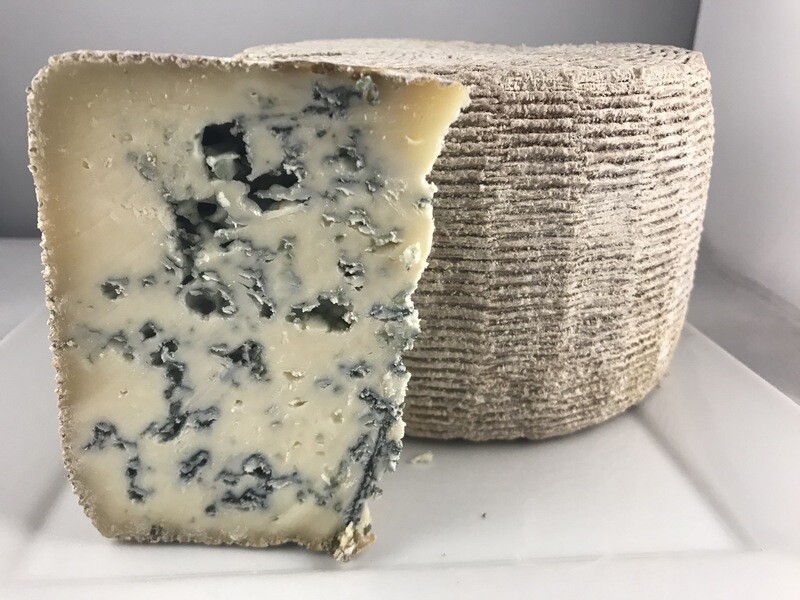
Ontario’s blue cheeses occupy a distinctive place within Canada’s dairy landscape. They do not dominate by volume, nor do they pursue the extremity that often defines international blue-cheese prestige. Instead, Ontario producers have developed a reputation for restraint, balance, and technical discipline. In a category often tempted by pungency for its own sake, Ontario blues tend to privilege structure and repeatability. That choice has quietly earned them national and international respect.

At the centre of this story is Celtic Blue Reserve, produced by Glengarry Fine Cheese in eastern Ontario. It is widely regarded as the province’s flagship blue and, by extension, one of the most important cheeses ever produced in Canada. Its recognition as Best in Show at the American Cheese Society competition was not a novelty outcome but a validation of method. The cheese combines dense, creamy paste with assertive but measured blue veining. Salt, tang, and cultured sweetness remain in equilibrium. Nothing dominates, and nothing feels unfinished. It is a blue cheese built for confidence rather than shock.

The success of the Reserve rests on foundations laid by the original Celtic Blue, which remains a mainstay on Ontario cheese boards. This earlier expression is milder, softer, and intentionally accessible. Its importance lies not in awards but in function. It established that Ontario blues could invite rather than challenge the eater. In doing so, it broadened the audience for blue cheese within the province and created space for more ambitious expressions to follow.

Ontario’s blue-cheese identity is not confined to a single producer. Krüger Blue, made with Guernsey milk in eastern Ontario, represents a more rustic and assertive branch of the same tradition. Richer milk brings deeper colour and a more aromatic profile, with flavours that lean toward earth and cellar rather than cream and butter. Its recognition at the World Cheese Awards signals that Ontario blues can scale intensity without losing composure.

Sheep’s-milk blues such as Highland Blue further complicate the picture. These cheeses tend to display layered flavours, faint spice, and a denser mouthfeel. They appeal to experienced blue-cheese drinkers looking for depth rather than familiarity. Their presence matters because it shows that Ontario producers are not confined to a single style, even if balance remains the common thread.

Acknowledging this does not require diminishing the achievements of other provinces. Quebec’s monastic blues bring historical continuity and spiritual craft. British Columbia’s brie-style blues explore lushness and surface-ripened elegance. Yet Ontario’s contribution is different. It is less about inheritance or stylistic flourish and more about calibration. Ontario blues succeed because they are engineered carefully, aged deliberately, and released only when the elements align.

The defining characteristic of Ontario blue cheese is therefore not boldness, but control. These are cheeses designed to be eaten often rather than remembered once. They sit comfortably on the table, return well to the palate, and reward familiarity. In a category that often celebrates excess, Ontario has chosen discipline, and the results speak quietly but persuasively for themselves.

Sources:
Glengarry Fine Cheese Company. Celtic Blue and Celtic Blue Reserve Product Information and Awards.
https://glengarrycheese.ca
American Cheese Society. Award Winners Archive.
https://www.cheesesociety.org
World Cheese Awards. Medal Winners Database.
https://worldcheeseawards.com
Lakeview Cheese Galore. Ontario Artisan Blue Cheese Listings and Producer Notes.
https://lakeviewcheesegalore.ca
TasteAtlas. Best Rated Blue Cheeses in Canada.
https://www.tasteatlas.com/best-rated-blue-cheeses-in-canada

Sworn to the Crown, Signing for Separation: Alberta’s Oath Problem

When Alberta MLAs take their seats in the Legislative Assembly, they swear an oath of allegiance to the Crown. It’s not optional. It’s not ceremonial theater. It’s a legal requirement under the Legislative Assembly Act, a pledge of loyalty to the constitutional order they’re about to serve within.

So what happens when those same MLAs sign a petition advocating for Alberta’s separation from Canada?

They break that oath.

Let’s be clear about what the Crown represents. It’s not just a distant monarch in another country. In Canada’s constitutional framework, the Crown is the Canadian state. Swearing allegiance to the Crown means swearing allegiance to Canada’s sovereignty and constitutional order. You can’t pledge loyalty to that framework while simultaneously working to dismantle it. The two positions are fundamentally incompatible.

Some might argue that advocating for political change through democratic means is itself protected within the system, that exploring sovereignty options is legitimate political discourse. That’s a convenient dodge. There’s a difference between debating constitutional reform and actively campaigning to break up the country. Signing a separation petition isn’t abstract discussion – it’s concrete political action toward ending the very state you’ve sworn allegiance to.

Quebec recognized this contradiction, and did something about it. In December 2022, Quebec passed legislation making the oath to the Crown optional for MNAs. They kept only the oath to “the people of Quebec” as mandatory. This came after PQ and Québec Solidaire MNAs refused to swear allegiance to King Charles III following the 2022 election. Rather than maintain the hypocrisy, Quebec changed the law.

That’s the point. Quebec understood that you can’t have it both ways. If your MLAs are going to advocate for separation, don’t make them swear loyalty to what they’re trying to leave. Alberta has made no such change. Alberta MLAs still take the full oath to the Crown, knowing exactly what it entails.

Which means Alberta MLAs who sign separation petitions are doing so while bound by an oath they’ve violated. They voluntarily swore allegiance, then voluntarily betrayed it. No one forced them to take the oath. No one forced them to seek public office. They chose both, and apparently saw no contradiction.

This isn’t about whether separation itself is right or wrong. It’s about integrity in public office. It’s about whether the oaths our elected officials take actually mean something, or whether they’re just words to be discarded when politically convenient.

Public office requires public trust. That trust rests on the assumption that when someone swears an oath, they intend to keep it. When MLAs sign separation petitions after swearing allegiance to the Crown, they tell Albertans that their word means nothing, that oaths are performative, that constitutional obligations can be ignored whenever political expediency demands it.

If Alberta MLAs want to advocate for separation, they should do what Quebec did: change the oath. Until then, signing that petition isn’t political courage. It’s oath-breaking, plain and simple.​​​​​​​​​​​​​​​​

Aston Brook Green – Before Student Housing Became a Product

This week, Aston Students’ Union handed over The Green (originally called Aston Brook Green) to Midland Heart, ending forty-five years of student-led housing. On paper, it is just a change of management. A shift in responsibility. Another entry in the long story of how universities house their students.

In practice, it marks the end of something rarer.

For nearly half a century, The Green was a place where students were not treated primarily as customers, nor as problems to be managed. They were treated as adults capable of running a community. Affordability, stability, and shared responsibility mattered more than luxury or profit. That was what defined the place.

I lived there as an undergrad from 1983 to 1985, and was elected Chairperson of the Aston Students’ Union for the final year.  At the time, it did not feel historic. It felt ordinary. And that, looking back, was the most telling detail of all.

What The Green Was
The Green began in the early 1980s, a Students’ Union project built on converted Victorian terraces a short walk from campus. Midland Heart owned the properties, but the Students’ Union ran the show. Wardens, offices, rules, social events – they were all there, but in a way that trusted students to be responsible rather than policing them.

Rent was low, all utility bills included. Students with part-time jobs could manage it easily, and that alone changed the atmosphere. The buildings were basic: functional kitchens, shared bathrooms, laundry rooms that smelled faintly of detergent and late-night pasta. It did not matter. Residents understood that sufficiency was enough, and that the space could be transformed by their participation in it. The walk to and from the campus was about 15 mins, and best done in groups at night, as the canal area was in its early stages of redevelopment and Chester St was badly lit.  

Life in the Early Years
For those of us there in the early to mid 1980s, it was almost magical in its ordinariness. Students acted as wardens, organised events, kept an eye on one another. Rules existed, but the emphasis was on community, not judgment.

Daily life was modest: cooking, cleaning, laundry, repairing what broke. The terraces were designed to encourage chance meetings, small conversations, accidental friendships. Staff were approachable. Advice and guidance were available, quietly, without ceremony.

Aston Brook Green had a rhythm. Work and study punctuated life, but social bonds carried it along. Each year, new residents arrived and old ones left, yet the sense of continuity persisted, held together by wardens, traditions, and the expectations everyone shared. House parties, new romances, and late night study groups were all part of daily life at The Green. 

Why It Worked
The Green succeeded not because of facilities, or because it was convenient, or even because it was cheap. It succeeded because it trusted its residents, because it assumed that young adults could act responsibly if given the space.

Affordability mattered. When students were not preoccupied with paying exorbitant rent, they had capacity to engage, contribute, and create. They learned more than their courses could teach: how to live together, how to manage conflict, how to take care of each other. According to the Students’ Union, over its lifetime The Green supported around 6,750 students (about 150 residents each year) and ended up saving students millions of pounds compared with typical student rents in the area. 

For decades, it proved that student housing could be about more than profit. That a minimal, trusting system could produce safety, respect, and stability. That is worth remembering.

What Is Lost
With the handover, that model changes. Students will still live in the same buildings, but under management focused on efficiency, risk, and oversight. The ethos of self-governance, of trust and shared responsibility, will no longer be the organizing principle.

The loss is subtle, but significant. It is not just the buildings. It is a way of living together, quietly assumed, practiced over generations. It is the disappearance of a model in which students mattered as participants, not simply tenants.

Memory as Stewardship
Remembering Aston Brook Green is itself a form of society care. To recall its open spaces, its tiny kitchens, its community laundry units is to recognize that something unusual once existed. Affordable, student-led housing is possible. Community, trust, and sufficiency can coexist with study, work, and the pressures of young adulthood.

Forty-five years is a long time. The Green was not just a place to live. It was a framework for learning how to live together with intention. It nurtured generations of students. Its legacy endures, in memory and in principle, even as the keys change hands.

A Civilization With Nowhere to Hide

What if humanity suddenly became fully telepathic. Not the occasional spooky hunch or party trick, but full-time, universal, always-on mind sharing. No mute button. No privacy settings. This would not be an upgrade like glasses or Wi-Fi. It would be more like removing the walls from every house on Earth and then acting surprised when everyone feels awkward.

Telepathy would not give us a new way to communicate so much as take away the barriers that currently make social life possible. Modern civilization quietly assumes that thoughts are private, speech is optional, and silence is allowed. Telepathy flips that table. Even if we developed good manners about it, the basic fact would remain. Everyone can hear the background noise in everyone else’s head. Privacy would no longer be the default. It would be a skill. Possibly an advanced one.

The first casualty would be the private self. The modern identity is mostly an internal narration. I am who I tell myself I am, plus maybe a slightly edited version for public release. In a telepathic world, identity becomes a group project. You are not only who you think you are. You are also who other people experience you to be from the inside. The autobiography is now co-authored, whether you like it or not.

Psychologically, this would be rough. Very rough. All the stray thoughts, unflattering impulses, half-baked judgments, and unresolved contradictions would be on display. The comforting illusion that other people are mentally tidy would vanish almost immediately. But something interesting might happen after the initial collective mortification. Once everyone knows, firsthand, that minds are chaotic, inconsistent, and occasionally ridiculous, the idea that a person can be defined by their worst thought becomes hard to maintain. Hypocrisy stops being shocking and starts being recognisable. Compassion, no longer a lofty ideal, becomes simple realism.

Relationships would change faster than anything else. Romantic, family, and even casual connections currently rely on selective disclosure, strategic silence, and the occasional “I’m fine” that absolutely is not fine. Telepathy removes these tools. There is no hiding resentment. No unspoken longing. No passive-aggressive cheerfulness. Emotional reality shows up on time, every time.

This would eliminate entire classes of relational harm. Gaslighting collapses when intent is visible. Manipulation struggles when motives are obvious. Consent becomes clearer because desire and hesitation are directly perceived instead of guessed at. On the downside, relationships become harder to maintain casually. Holding someone else’s unfiltered mental life takes effort. Emotional labour stops being a metaphor and becomes an actual daily task. Social circles would likely shrink. Fewer relationships, deeper ones, and absolutely no room for emotional freeloading.

Culture would also have to adjust. Much of what we call culture is a shared performance held together by controlled narratives and selective expression. Telepathy makes this difficult. Propaganda loses its edge when internal contradictions light up like a dashboard warning. Charisma without sincerity evaporates. Leadership becomes less about how well you speak and more about whether your beliefs, intentions, and actions actually line up.

Art would survive, but it would have to work harder. When everyone can already feel what everyone else feels, simple expression becomes redundant. Art shifts from saying “this is my inner world” to asking “what else could our inner worlds become”. Its job moves from communication to transformation. Humour, thankfully, remains essential. Shared absurdity, sudden insight, and collective recognition of how strange all this is would be vital pressure valves. In a world with very little psychic privacy, laughter might be the last refuge.

Power structures would not vanish, but they would be exposed. Hierarchies depend on information asymmetry. So do bureaucracies, surveillance systems, and most forms of exploitation. When intention is visible, coercion becomes harder to dress up as politeness. Power still exists, but it has to be honest about itself.

New rules would emerge to cope. Societies would need norms around mental boundaries, attentional consent, and the right not to be overwhelmed. Silence and solitude would become protected resources. Crime would change shape. Some harms would decline as empathy increases and escalation becomes visible early. New harms would appear, including psychic intrusion and emotional flooding. Justice would focus less on discovering what happened and more on repairing what everyone already knows.

At the civilisational level, coordination becomes easier. Shared understanding lowers the cost of cooperation. Large projects, crisis response, and collective problem-solving accelerate. Humanity begins to function less like a collection of arguing tribes and more like a single, slightly neurotic superorganism.

And yet, something precious would need defending. Individuality would no longer be assumed. It would have to be actively protected. Silence, distance, and mental rest would become scarce and possibly sacred. Borders would matter less as lived experience replaces abstraction. Nationalism, which relies on imagined differences and curated stories, would struggle to survive sustained psychic contact with real human lives. The idea of “the other” becomes difficult to maintain when you can feel their Tuesday afternoon.

Which brings us to the central problem of a telepathic civilisation. Connection would be solved. That part is easy. The real challenge would be learning when not to connect. Creativity, dissent, and novelty often arise from friction, misunderstanding, and partial knowledge. Total transparency risks smoothing the world flat.

The future of such a species would not depend on its ability to hear one another. That would be effortless. It would depend on its wisdom in choosing when to close the door, dim the noise, and let a little mystery survive.

Revel Cider “Soma” 2018 Pét-Nat Apple Wine from Ontario

Soma is the sort of bottle that looks like it’s about to behave itself, and then gently does not. I bought this wine when it was first released and it’s been sitting in my cellar waiting for the right moment to help celebrate life. 

Made by Revel Cider in Ontario, the 2018 Soma is a Pétillant-Naturel apple wine, which is a polite way of saying it was allowed to do its own thing. Nothing added, nothing taken away. The apples were cryoconcentrated by winter itself, left to freeze so the good bits could huddle together and become more interesting. Wild yeasts were invited in. Fermentation finished in the bottle. Bubbles happened naturally. Order was optional.

In the glass, Soma arrives lightly coloured, with a fine, energetic sparkle. There is sediment, because of course there is, and it’s best treated like a houseguest who means well. Pour gently if you prefer clarity. Embrace it if you enjoy a little texture and mystery. Either approach is correct.

On the nose, this is all orchard and apple skin, with a hint of cider cellar and fresh bread dough drifting in from the fermentation. It flirts briefly with funk, then thinks better of it. The result is fresh, restrained, and quietly confident rather than loud or performative.

The palate is dry, crisp, and surprisingly serious beneath its playful fizz. The cryoconcentration gives the cider some backbone, adding depth and structure without tipping into sweetness. Apple flavours are precise and grown-up: more skin and flesh than juice. The bubbles keep things lively, lifting the acidity and carrying everything neatly through to a clean, savoury finish that knows when to leave.

At around 11.5 percent alcohol, Soma is very much a sit-down cider, not a lawnmower cider. It behaves more like a natural wine that happens to be made from apples, and it rewards being served cold, upright, and with a bit of attention. It’s excellent on its own and even better with food, particularly cheese or anything roasted and comforting.

The 2018 Soma manages the neat trick of being thoughtful without being smug. It’s playful without being silly, natural without being preachy, and serious enough to keep your interest while still feeling like it’s having fun. A bottle that sparkles, literally and otherwise.

The Cherrys Books: Family, Adventure, and Imagination

William Matthew Scott, better known by his pen name Will Scott, was a British writer born in 1893 in Leeds, Yorkshire, and active as a novelist, playwright, short-story writer, and children’s author until his death in 1964 in Herne Bay, Kent. In his earlier career he wrote detective novels and plays including The Limping Man, and is said to have contributed around 2,000 short stories to magazines and newspapers, which was considered a record in the United Kingdom during his lifetime. His shift into children’s fiction came relatively late and was inspired by his own grandchildren, for whom he began inventing stories that eventually became The Cherrys series.  

Published between 1952 and 1965The Cherrys consists of 14 books aimed at children around ten years old. These books are set in a series of fictional English villages and bays, often around the Kentish coast, and centre on a single extended family: Captain and Mrs Cherry and their four children, Jimmy, Jane, Roy, and Pam. The family’s unusual animal companions, a monkey named Mr Watson and a parrot called Joseph, add to the charm of the stories.  

At the heart of The Cherrys is a simple but powerful idea: childhood is an adventure to be nurtured by imagination and shared experience. Rather than portraying children operating independently of adults, as was common in much children’s fiction of the era, these books emphasize active parental involvement, especially through the father figure, Captain Cherry. A retired explorer, he delights in creating games, puzzles, treasure hunts, mystery trails, and “happenings” that turn ordinary days into extraordinary quests. These events span coastlines, forests, gardens, and even indoor spaces transformed by imagination into jungles, deserts, or deserted islands.  

The recurring concept of a “happening” – a structured, imaginative adventure, is one of the defining features of the series. Whether decoding maps, tracking mysterious figures, solving puzzles, or embarking on seaside explorations, each book presents a series of linked episodes that encourage curiosity, teamwork, problem-solving, and play. Scott’s approach reflects a belief in the value of learning through play, where the boundaries between fantasy and reality are fluid but always grounded in cooperative activity with family and friends.  

Another important theme in The Cherrys is engagement with the natural and built environment. Scott often provided maps of the stories’ fictional settings, such as Market Cray or St Denis Bay, and used them as stages for the characters’ activities. This emphasis on place encourages readers to see their own landscapes as rich with potential for discovery. The stories also reflect a positive view of the mid-century British countryside and coast, celebrating local topography and community life.  

Because Scott was writing at a time when much of children’s literature featured independent adventures without adults, The Cherrys stood out in its portrayal of grown-ups as co-adventurers rather than obstacles. This inclusive structure bridges the generational gap, showing children and adults working together, learning from one another, and finding joy in shared challenges.  

Despite their popularity in their day, these books are no longer in print, making them a somewhat forgotten gem of 1950s and 1960s British children’s literature. Yet for those who discover them today, the series offers a window into a world where imagination, family bonds, adventure, and everyday wonder are woven seamlessly into the narrative fabric. 

Five Things We Have Learned This Week

🗞️ Five Things: Jan 24–30, 2026

Date: January 31, 2026
Range: Saturday to Friday


1️⃣ 🌐 UN Financial Crisis & Global Governance Strain

The United Nations warned it could face a serious financial shortfall by mid-2026 due to unpaid member dues and outdated funding structures. Secretary-General António Guterres called for urgent reforms and renewed commitments to sustain multilateral institutions.

2️⃣ 🇺🇸 U.S. Nationwide General Strike & Immigration Protests

Large-scale protests and coordinated labor actions took place across the United States following controversial immigration enforcement actions. Unions and advocacy groups framed the events as a response to broader concerns about civil rights, policing, and federal authority.

3️⃣ 🧠 China Accelerates AI & Technology Strategy

China moved to ease constraints on artificial intelligence development by approving imports of advanced AI chips, while senior leadership emphasized AI as a defining technology of the era. The moves signal intensified competition in global AI and semiconductor ecosystems.

4️⃣ 🤝 Gulf Support for Lebanon & Regional Recovery

Qatar announced hundreds of millions of dollars in reconstruction and infrastructure support for Lebanon, alongside humanitarian initiatives tied to refugee resettlement and regional stability. The commitments reflect renewed Gulf engagement in Levant recovery efforts.

5️⃣ 🏛️ UAE Expands Role as Global Convening Hub

The United Arab Emirates confirmed it will host six major international summits in February, covering global governance, digital trade, health innovation, and tolerance. The move reinforces the UAE’s positioning as a central platform for international dialogue.


📌 Notable Context From the Week

  • 🚢 Global ports issued updated operational guidance amid ongoing supply-chain congestion and weather disruptions.
  • 🔥 International health agencies continued campaigns against neglected tropical diseases despite funding pressures.
  • 🪙 Debate intensified around the influence of major AI leaders and the concentration of power in the tech sector.

Beyond Tariffs: How the EU – India Free Trade Agreement Signals a New Trade Order

The conclusion of the European Union – India Free Trade Agreement (FTA)marks a defining moment in global economic governance, drawing to a close nearly two decades of intermittent negotiations and signalling a recalibration of economic power in a fracturing global trade system. Known in press briefings as the “mother of all deals,” this comprehensive pact expands market access, slashes tariffs on a historic scale, and positions both partners to mitigate the impact of rising protectionism by third countries. This essay analyzes the pact’s economic architecture, geopolitical drivers, and implications for the broader global order.  

At the heart of the pact is an expansive liberalization of trade in goods and services. The agreement eliminates or significantly reduces tariffs on over 90% of traded goods by value, with India granting preferential access to more than 99% of Indian exports and the EU offering liberalization on approximately 97% of its exports to India. Major industrial sectors: machinery, chemicals, pharmaceuticals, medical and optical equipment will see tariff lines phased out across multi-year timetables. Special quotas and phased reductions on sensitive lines such as automobiles reflect carefully calibrated concessions designed to balance domestic political interests with international commitments; cars imported from the EU will face duties reduced from up to 110 % today to single-digit levels under an annual quota regime.  

Services and investment chapters are similarly consequential. EU firms gain enhanced access to India’s services sectors, including financial services, maritime transport and professional services, while intellectual property protections are strengthened to align Indian and European frameworks, critical for sectors reliant on predictable rights enforcement. The agreement also includes provisions for cooperation on customs procedures and dispute resolution, signalling an intent to reduce non-tariff barriers that often impede real-world commerce.  

The strategic timing of the FTA’s conclusion cannot be divorced from the changing global trade architecture. Both India and the EU have faced increasing volatility in their trade relationships with the United States, where elevated tariffs and trade tensions have disrupted traditional export patterns and encouraged market diversification. In this context, the FTA functions as a risk-mitigation strategy, reducing reliance on markets where tariff policies are unpredictable and asserting a rules-based alternative anchored in predictable market access and regulatory cooperation. For India, which currently faces tariff rates as high as 50 % in some third-country markets, the deal offers a pathway toward diversification and deeper integration into global value chains.  

Moreover, the pact reflects a broader geopolitical calculus. The EU and India together represent a market of approximately 2 billion people and a substantial share of global GDP. Strengthening bilateral economic ties serves as a hedge against the economic influence of China, and aligning regulations and standards contributes to the EU’s broader strategy of consolidating like-minded partners with robust legal and market frameworks. The agreement also dovetails with complementary FTAs, such as the UK–India deal, enhancing India’s connectivity with major advanced economies.  

Critically, the FTA embeds sustainability and regulatory cooperation into its economic architecture. Chapters addressing environmental protections, labour standards, and sustainable development aim to balance liberalized trade with social and ecological commitments. The inclusion of structured cooperation on climate action, supported by financial pledges from the EU, situates this trade pact within a broader normative framework seeking to reconcile growth with sustainability imperatives.  

Despite its ambition, implementation challenges remain. The agreement requires formal ratification by the European Parliament, member states, and the Indian Union Cabinet before entering into force. Domestic constituencies, particularly in agriculture and automobile sectors, will continue to influence the pace and contours of implementation. The phased nature of tariff reductions, especially in politically sensitive areas, illustrates the enduring tension between economic liberalization and domestic economic safeguards.  

The EU – India Free Trade Agreement represents a landmark in twenty first century trade policy. Its comprehensive coverage of goods, services, and regulatory cooperation; enacted against a backdrop of rising global tariff volatility, positions it as both an economic catalyst and a strategic bulwark within a more fragmented global trade order. As implementation unfolds, the agreement’s success will largely depend on how effectively this new architecture can foster deeper economic integration while respecting the diverse economic imperatives of its signatories.  

Sources:
Policy, outcomes and tariff details: EU–India Free Trade Agreement Chapter Summary, European Commission policy memo, 2026
India-EU FTA coverage and preferential access statistics, The Economic Times, January 2026;
Strategic context and export liberalisation figures, European Union official releases and reports, 2026;
Integration of services and sustainability provisions, policy analyses, 2026.