Unknown's avatar

About Chris McBean

Strategist, polyamorist, ergodox, permaculture & agroforestry hobbyist, craft ale & cider enthusiast, white settler in Canada of British descent; a wanderer who isn’t lost.

Canada and India: The Long Negotiation Toward a Necessary Partnership

Trade agreements are rarely about trade alone. They are instruments of strategic positioning, domestic reassurance, and geopolitical signaling. The proposed Comprehensive Economic Partnership Agreement between Canada and India sits squarely at this intersection. It is less a conventional tariff-cutting exercise than a test of whether two pluralistic democracies with complicated domestic politics can construct a durable economic relationship in a fragmenting global order.

For Canada, the motivation is increasingly structural rather than opportunistic. An export economy anchored overwhelmingly to the United States faces persistent vulnerability to policy shifts south of the border. The impulse to diversify markets is not new, but recent protectionist currents and the volatility of U.S. trade policy have transformed diversification from aspiration into necessity. India, with its scale, growth trajectory, and relative institutional stability, represents one of the few markets capable of absorbing Canadian exports at meaningful volume while also offering reciprocal opportunities.

India’s motivation is different. New Delhi seeks capital, technology, energy security, and access to advanced services while preserving policy autonomy and protecting domestic producers. Indian trade strategy has historically favored gradualism, selective liberalization, and strong safeguards for agriculture and small industry. Any agreement with Canada will therefore reflect asymmetry not only in economic structure but also in negotiating philosophy.

The present talks must also be understood as a recovery operation. Bilateral relations were deeply strained by political tensions and security allegations in recent years. The resumption of negotiations signals a pragmatic decision on both sides that economic interests outweigh diplomatic estrangement. However, the shadow of mistrust has not disappeared. Trade negotiators may speak the language of tariffs and regulatory alignment, but political leaders must manage constituencies that view the other country through a lens of suspicion. This complicates ratification even if technical negotiations succeed.

Structural Complementarities and Frictions
At first glance, the Canadian and Indian economies appear complementary. Canada is resource-rich, capital-intensive, and export-oriented in commodities and advanced services. India is labor-abundant, manufacturing-aspiring, and consumption-driven. In theory, this creates a classic pattern of mutually beneficial exchange: resources and expertise flowing one way, manufactured goods and services the other.

Agriculture illustrates both promise and tension. Canada is a major exporter of pulses, grains, and oilseeds that India periodically requires to stabilize domestic food prices. Yet India also protects its farmers aggressively for social and political reasons. Tariffs, quotas, and sudden regulatory changes are common policy tools in New Delhi’s domestic management of food security. Canadian producers seek predictable access; Indian policymakers seek flexibility. Reconciling these priorities will be among the most technically complex elements of any agreement.

Manufactured goods pose a different challenge. India wants improved access for its industrial exports, particularly in sectors where it aims to move up the value chain. Canadian industry, smaller in scale and already exposed to U.S. competition, may resist additional pressure from lower-cost producers. Trade agreements often redistribute opportunity within economies as much as between them, creating domestic winners and losers whose political influence shapes final outcomes.

Energy, Minerals, and the Strategic Core
If there is a single domain capable of anchoring a durable Canada–India partnership, it is energy and critical resources. India’s economic expansion will require enormous quantities of fuel, electricity generation capacity, and raw materials for infrastructure and technology. Canada possesses many of these in abundance, from hydrocarbons to uranium to battery minerals.

Uranium cooperation is particularly significant. India’s nuclear energy program is expanding as part of its strategy to reduce carbon intensity while maintaining baseload power. Canadian uranium, already exported to several countries under strict safeguards, could become a cornerstone of this effort. Such trade is not merely commercial; it embeds long-term strategic interdependence through supply contracts, regulatory oversight, and technological cooperation.

Critical minerals represent another convergence point. The global transition toward electrification and digital infrastructure has elevated materials such as lithium, nickel, and cobalt from niche commodities to strategic assets. Canada seeks reliable buyers and investment in extraction and processing. India seeks secure supply chains independent of geopolitical rivals. Agreements in this domain may proceed faster than broader trade liberalization because both sides perceive them as mutually reinforcing national priorities.

Energy exports more broadly face logistical constraints. Canada’s infrastructure has historically been oriented toward the U.S. market. Expanding shipments to Asia requires pipelines, liquefaction facilities, and port capacity that take years to build and are subject to domestic environmental debates. Thus, even if market access improves on paper, physical delivery capabilities will shape the real economic impact.

Services, Mobility, and the Human Dimension
Trade in the twenty-first century increasingly involves services, knowledge, and people rather than goods alone. Canada’s strengths in education, finance, engineering, and digital industries align with India’s demand for advanced expertise. Conversely, India’s vast pool of skilled professionals seeks opportunities abroad, including temporary work arrangements and educational pathways.

Mobility provisions are therefore likely to be politically sensitive but economically important. Canadian policymakers must balance labor market needs with public concerns about immigration levels. Indian negotiators view mobility as a central benefit of any agreement. Achieving equilibrium may require targeted programs for specific sectors rather than broad liberalization.

Educational links deserve special attention. India is one of the largest sources of international students in Canada, generating both economic activity and long-term people-to-people ties. Regulatory changes affecting student visas have already demonstrated how quickly this channel can expand or contract. A trade framework that stabilizes educational cooperation would have effects far beyond tuition revenues, influencing innovation networks and diaspora relations.

Political Economy and Ratification Risks
Even the most carefully negotiated agreement must survive domestic politics. In Canada, provinces hold significant authority over areas such as natural resources and procurement. Their support is essential. Agricultural regions, manufacturing hubs, and energy-producing provinces will evaluate the deal through different lenses, potentially producing a fragmented national consensus.

In India, federal structures and state-level interests also complicate implementation. Agricultural policy in particular is intertwined with regional politics and rural livelihoods. National leaders may sign agreements that require delicate internal balancing to enforce.

Public perception will matter as much as economic modeling. Trade deals are often judged not by aggregate gains but by visible disruptions. Industries facing adjustment costs mobilize more effectively than diffuse beneficiaries. A government that frames the agreement as part of a broader strategy for economic resilience rather than a narrow commercial bargain stands a better chance of sustaining support.

Timeline Realities and the Meaning of “Signing”
Predictions that a comprehensive agreement could be concluded within a single year should be treated cautiously. Modern trade agreements are sprawling legal instruments covering intellectual property, digital governance, investment rules, dispute settlement mechanisms, and environmental standards. Negotiating these provisions typically requires years.

A more plausible scenario involves a staged process. An initial framework agreement or “early harvest” package could address less contentious areas such as investment facilitation, cooperation on energy and minerals, and selected tariff reductions. This would allow political leaders to demonstrate progress while leaving more difficult issues for subsequent rounds.

Such incrementalism aligns with India’s negotiating tradition and Canada’s desire for tangible diversification gains. It also reflects the reality that trust, once damaged, must be rebuilt gradually.

Strategic Significance Beyond Commerce
Ultimately, the importance of a Canada–India partnership extends beyond bilateral trade statistics. It represents a recalibration of middle-power diplomacy in an era when the global system is increasingly defined by great-power rivalry and economic fragmentation. For Canada, engagement with India signals participation in the Indo-Pacific’s economic architecture. For India, deeper ties with a G7 country reinforce its status as a central actor rather than a peripheral one.

The agreement, if realized, would not replace Canada’s relationship with the United States, nor would it transform India into Canada’s primary market. Its value lies in diversification, resilience, and optionality. In a world where supply chains can be weaponized and alliances can shift abruptly, having multiple reliable partners is itself a form of economic security.

Whether the deal is signed this year or several years hence, the direction of travel is clear. Both countries perceive that disengagement carries higher long-term costs than cooperation, even when cooperation is difficult. Trade agreements often emerge not from optimism but from recognition of shared necessity. The Canada–India negotiations appear to fit this pattern precisely.

Big Mac’s Rant from the Armchair

By Big Mac, the OAP Blogger from Byker

Right then, pet, pull up a chair and stick kettle on, ‘cause Big Mac’s got summat to say about this lot in black an’ white.

Ah divvent care what any pundit on the telly says, man, this run of defeats from Newcastle United is nowt to dee wi’ tired legs, small squads, Mercury in retrograde, or the price of Greggs pasties. These lads are paid more in a week than ah got in forty year at the shipyard, and ah managed not to fall apart every time someone put pressure on us.

Up front, we’ve got all the menace of a wet digestive biscuit.

The ball goes oot wide, comes back in, nowt happens. Again. And again. It’s like watchin’ someone try to open a tin of beans with a spoon. There’s graft, aye, but absolutely nee progress. Striker’s stood there surrounded by defenders like he’s lost at Eldon Square on a Saturday. Midfield? Miles away. If they were any deeper they’d be in Sunderland.

And dinna get us started on creativity. Used to be we’d have lads stormin’ into the box like bargain hunters at a Boxing Day sale. Now it’s all polite, like they’re queuin’ for the post office.

Then yesterday against Everton, wor back four went from solid brick wall to soggy Rich Tea in about five minutes.

Full-backs both halfway to Whitley Bay when we lose the ball. Centre-halves lookin’ at each other like, “You gan, nah you gan,” while some Everton lad just strolls through the gap like he’s walkin’ his dog on the Town Moor. Defensive midfield screen? Missing. Probably stuck in traffic on the Tyne Bridge.

It was pure panic stations. Not organised panic like a fire drill. Proper kitchen-on-fire panic.

Pressing’s gone all to pot as well.

One lad charges in like an overexcited labrador, the rest stand off like they’ve just remembered they left the iron on. Opponents ping two passes and suddenly they’re in acres of space, and wor defence is backpedallin’ faster than me when ah accidentally liked a Facebook post from 2012.

That famous intensity? Looks less like controlled aggression and more like eight blokes chasin’ the same carrier bag doon Shields Road.

Confidence, mind, that’s the sneaky one.

Ye can see it. Extra touch here. Wrong pass there. Shot when they should pass, pass when they should leather it. It’s like they’re all tryin’ not to be the one who messes up, which of course guarantees somebody will.

Football’s a simple game made complicated by overthinkin’. And right now, this lot are thinkin’ so hard they could power the Metro.

But here’s the thing, pet.

This isn’t a bad team. Not even close. It’s a good engine runnin’ slightly out of tune. Timing off. Distances wrong. Press half a second late. Runs half a yard short. At this level, that’s the difference between lookin’ like world-beaters and lookin’ like you’ve accidentally wandered into the wrong five-a-side pitch.

Give them a spark, one scruffy win, one moment where the ball pings in off someone’s backside, and suddenly they’ll look like Brazil ‘70 again.

Until then, Big Mac will be here in his armchair, mutterin’ into his tea, shoutin’ at the telly, and wonderin’ why nobody ever just shoots when ah tell them to.

Because honestly, pet…

It’s not complicated.

Put ball in net.

Stop other lot puttin’ ball in net.

Try not to defend like you’ve just met each other in the car park.

Haway The Lads!

Sovereignty Is Not a Procurement Option

For most of the postwar era, Canada treated defence dependence on the United States not as a vulnerability but as a convenience. Geography, shared language, integrated command structures, and the comforting mythology of permanent alignment made it easy to believe that continental security was a solved problem. The bill would always be paid in Washington. The industrial base would always be American. Canadian sovereignty, in practical terms, would be exercised mainly through polite consultation. That arrangement delivered peace dividends, but it also produced a quiet atrophy of national capability.

The emerging shift associated with Mark Carney signals a different mood. Not anti-American, not theatrical, simply overdue. Strategic adulthood rarely arrives with fanfare. It arrives when a country realizes that dependence is not the same thing as partnership, and that insurance policies only work if one can pay the premium personally when required.

Canada is not uniquely weak, nor uniquely trapped. It is simply a medium-sized power that spent three decades optimizing for efficiency instead of resilience. Defence procurement favored off-the-shelf purchases from the largest supplier. Supply chains stretched across borders because accountants, not strategists, set the terms. Domestic production became episodic, revived only when a crisis or regional jobs program demanded it, then allowed to fade again. None of this was irrational. It was merely short-sighted.

Yet history offers a reminder that capability can be rebuilt when a state decides it matters. During the Second World War, Canada transformed itself into one of the world’s major industrial producers almost overnight, constructing ships, aircraft, vehicles, and munitions at a scale wildly disproportionate to its population. The lesson is not that such mobilization should be repeated, but that industrial capacity is not a natural resource. It is a political decision sustained over time.

Aerospace as Proof of Latent Capacity
Canada’s aerospace sector demonstrates what consistent investment can achieve. Firms such as BombardierPratt & Whitney CanadaBell Textron Canada, and CAE occupy world-class positions in their niches. Engines designed in Quebec power aircraft on every continent. Flight simulators built in Montreal train pilots from dozens of air forces. These are not symbolic achievements. They are the infrastructure of modern military power, even when marketed as civilian products.

What is striking is not that Canada lacks expertise, but that it rarely organizes this expertise toward sovereign capability. The country produces components for other nations’ systems while importing finished platforms for its own forces. It is the industrial equivalent of exporting lumber and importing furniture. Economically sensible in peacetime, strategically questionable in an era defined by contested supply chains.

Shipbuilding and the Slow Return of Patience
Naval construction tells a similar story. After decades of decline, Canada chose to rebuild shipyards through long-term programs rather than one-off contracts. Irving Shipbuilding and Seaspan are now producing vessels again, slowly reconstituting skills that had nearly vanished. The process has been expensive, imperfect, and frequently criticized. It is also precisely how industrial capacity is restored: by accepting that competence cannot be purchased instantly from abroad.

The deeper lesson is psychological. A country accustomed to buying finished products must relearn how to tolerate development risk, schedule overruns, and the political discomfort of long timelines. Sovereignty is not a subscription service with monthly billing. It is capital expenditure.

None of this implies a clean break from the United States, nor should it. The continental defense relationship is anchored in geography and mutual interest, not sentimentality. Integrated warning systems, intelligence sharing, and joint planning are rational responses to a shared landmass facing the Arctic. What changes is the assumption that Canada must therefore remain permanently industrially subordinate. Allies can cooperate without one being structurally dependent on the other’s factories.

Critics often argue that Canada lacks the scale to sustain a full defense industry. The argument is only half true. No middle power produces everything domestically, including the United States, which relies on global supply chains despite its rhetoric of self-reliance. The real question is not whether Canada can be fully independent. It is which capabilities are too important to outsource indefinitely. Ammunition, surveillance systems, cyber tools, Arctic infrastructure, and logistics resilience fall into that category far more than prestige platforms designed primarily for alliance interoperability.

Economic logic alone will never justify these investments. Autonomy is inefficient by design. Domestic production costs more than bulk purchasing from a superpower. Redundant supply chains look wasteful until the moment they become essential. The decision to proceed anyway reflects a shift from peacetime accounting to strategic accounting, where resilience has value even when it sits idle.

There is also a quiet geopolitical realism behind the change. The United States itself has become less predictable, not necessarily hostile, but increasingly focused on internal priorities and great-power competition elsewhere. Allies are being encouraged, sometimes bluntly, to shoulder more responsibility. Taking that message seriously is not disloyalty. It is compliance.

From this perspective, the move toward greater Canadian defence autonomy feels less like a bold new doctrine and more like catching up with the obvious. A wealthy G7 country with vast territory, critical resources, and Arctic frontage should not rely on external production for core security needs. That it has done so for so long reflects historical good fortune as much as strategic wisdom.

The transition will be slow, uneven, and occasionally frustrating. Procurement systems will resist change. Budgets will provoke domestic debate. Some projects will fail. Others will succeed quietly and receive little attention because resilience rarely makes headlines. Over time, however, a more balanced posture can emerge: one in which Canada remains a committed ally while also possessing the means to act when alliance consensus falters.

In that sense, the prevailing attitude of “about time” is not triumphalism but relief. A mature state does not measure sovereignty by how loudly it proclaims independence, but by how calmly it prepares for the possibility of standing on its own. Moving in that direction now, before necessity turns into crisis, is not alarmism. It is prudence finally outrunning complacency.

Five Things We Learned This Week

📅 Saturday, February 21 → Friday, February 27, 2026


🇺🇦 1) Ukraine War Enters a New Phase ⚔️

Ukraine’s war with Russia continued with intensified fighting and renewed Western support discussions. While front lines shifted only marginally, the scale of combat and equipment losses remained high.

Key points:

  • Heavy fighting persists in eastern regions
  • Ongoing debates over additional sanctions and aid
  • Concerns about long-term war fatigue in allied nations

➡️ The conflict remains one of the central drivers of global security uncertainty.


🇺🇸 2) U.S. Politics Heats Up Ahead of 2026 Elections 🗳️

Early maneuvering for the 2026 midterm elections accelerated, with both major parties sharpening their messaging on the economy, immigration, and national security.

Key points:

  • Campaign organizations expanding operations
  • Key swing states receiving early attention
  • Policy debates intensifying in Congress

➡️ Political rhetoric is expected to escalate as the election cycle unfolds.


📉 3) Global Economy Sends Mixed Signals 💹

Financial markets delivered uneven performance as inflation cooled in some regions while growth slowed in others. Central bank policies continue to dominate investor expectations.

Key points:

  • Interest rates remain a major concern
  • Energy prices fluctuate amid geopolitical risks
  • Manufacturing weakness in parts of Europe and Asia

➡️ Economists describe the outlook as fragile rather than stable.


🌦️ 4) Extreme Weather Continues Worldwide 🌪️

Floods, storms, and unusual temperature patterns affected multiple regions, highlighting the ongoing impact of climate volatility on infrastructure and communities.

Key points:

  • Flooding events in several countries
  • Drought concerns persist elsewhere
  • Rising costs for insurance and recovery

➡️ Scientists warn that extreme weather is becoming more frequent and disruptive.


🚀 5) Space Exploration Momentum Builds 🌕

National space agencies and private companies continued preparations for lunar and deep-space missions, underscoring the accelerating pace of the modern space race.

Key points:

  • New missions in development or testing
  • Growing international cooperation
  • Expanding role of commercial providers

➡️ Space exploration is increasingly multinational and commercially driven.


✨ The Big Picture

This week reflected a world balancing geopolitical tension, economic uncertainty, climate pressure, and technological ambition. Rather than a single dominant headline, multiple long-term trends continued to shape global events simultaneously.

Amalgamation? Lessons Niagara Cannot Afford to Ignore

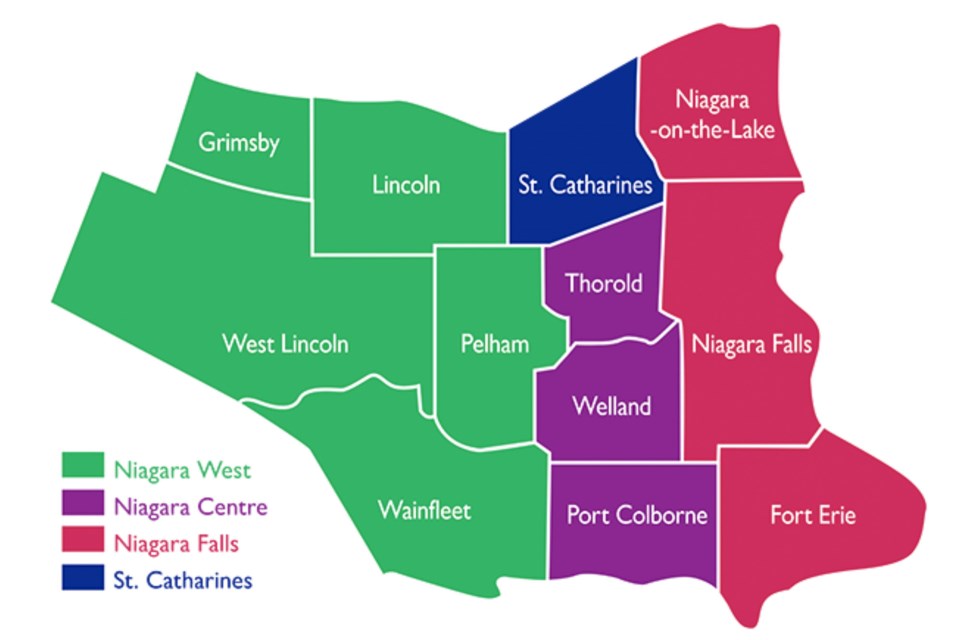
There is a recurring belief in Canadian municipal politics that scale solves problems. If governance feels messy, make it larger. If coordination is difficult, centralize it. If local voices disagree, fold them into a single chorus and call it harmony. The proposal to merge the municipalities of the Regional Municipality of Niagara into one city rests squarely on this assumption: that bigger government will behave more rationally, more efficiently, and more strategically than a collection of smaller ones.

History suggests otherwise.

Niagara is not a fragmented city waiting to be assembled. It is a region of distinct places bound together by geography, not by a single urban heartbeat. Niagara Falls lives on tourism and spectacle. St. Catharines functions as an educational, service, and industrial hub. Welland carries a canal town identity shaped by manufacturing and working-class roots. Niagara-on-the-Lake trades on heritage, agriculture, and controlled growth. The lakefront communities of west Niagara look toward Hamilton, not the Falls. Rural townships measure success in acres preserved, not towers approved.

To govern these places as though they share identical needs is not efficiency. It is administrative wishful thinking.

The Ottawa Example: A Warning, Not a Blueprint
Advocates of amalgamation frequently point to the creation of the modern Ottawa from the former Regional Municipality of Ottawa–Carleton as proof that diverse municipalities can be fused into a single functional city. What is often omitted is that the fusion solved technical coordination problems while creating enduring political ones.

Ottawa gained unified transit planning, standardized services, and the ability to execute large infrastructure projects. It also inherited a permanent rural-urban divide that shapes every budget, planning decision, and election cycle. Farmers in the outer wards pay for light rail they will never ride. Suburban taxpayers argue they subsidize downtown priorities. Former municipalities continue to organize politically along pre-2001 boundaries, a quarter century later.

Amalgamation did not erase local identity. It merely removed the local governments that once represented it.

Niagara would face this tension in amplified form. Ottawa, despite its diversity, had a dominant employment core and a single metropolitan labour market. Niagara has several centres and multiple economic logics. Tourism, agriculture, manufacturing, retirement living, cross-border trade, and suburban commuting do not pull in the same direction.

Power Will Flow Somewhere
Every amalgamation produces a gravitational centre, whether intended or not. Decisions must be made, staff must be housed, budgets must be prioritized. In a single Niagara city, influence would inevitably concentrate in the largest population centres, most likely St. Catharines or Niagara Falls. Smaller municipalities would not disappear, but their ability to shape outcomes would diminish.

This is not a moral failure. It is mathematics.

Residents of smaller towns would still vote, but their votes would be diluted across a much larger electorate. Local issues that once dominated council agendas would become minor items competing with region-wide priorities. A zoning dispute that matters deeply to a village could be invisible in a chamber preoccupied with housing targets or tourism infrastructure.

Democracy at scale becomes less intimate and more transactional.

Coordination Without Erasure
None of this suggests the status quo is perfect. Niagara does suffer from fragmented planning, duplicated administration, and occasional municipal rivalry. Regional transit integration demonstrates that cooperation can produce tangible benefits without dissolving local governments. Shared services for policing, utilities, and infrastructure can achieve economies of scale while preserving local autonomy.

The real strategic question is not whether Niagara needs to function more cohesively. It is whether cohesion requires uniformity.

A region can behave like a federation rather than a unitary state. Strong regional planning frameworks, binding growth strategies, and pooled services can align municipalities without forcing them into a single institutional mold. This approach accepts that diversity is not a problem to be engineered away but a reality to be governed intelligently.

Bigger Is Not the Same as Better
Large cities do not automatically make better decisions. They simply make larger ones. When those decisions are wrong, the consequences are correspondingly bigger. A misjudged development strategy, infrastructure investment, or tax policy applied across a half-million residents can entrench problems for decades.

Small municipalities, for all their limitations, retain the ability to experiment, adapt, and reflect local priorities quickly. They function as laboratories of governance. Amalgamation replaces this patchwork of experimentation with a single policy regime that must suit everyone and will inevitably fit some poorly.

Uniformity feels orderly from a distance. Up close, it can be suffocating.

The Strategic Path Forward
If Niagara seeks a more prosperous and coherent future, the priority should be integration of function rather than consolidation of identity. Build region-wide systems where scale truly matters: transit, major infrastructure, environmental management, economic promotion. Preserve local decision-making where place matters most: land use, community character, local services, cultural priorities.

The lesson from Ottawa is not that amalgamation fails or succeeds. It is that it solves some problems while creating others that cannot easily be reversed. Once municipalities disappear, recreating them is practically impossible.

Niagara does not need to become one city to act like a mature region. It needs governance arrangements that respect the fact that it is not one place, and never has been.

Bigger government can coordinate more. It cannot care more, listen better, or understand the nuances of twelve different communities at once. Those qualities arise from proximity, not scale.

Beyond the Cloud: How Artificial Intelligence Is Reshaping the Economics of SaaS

Artificial Intelligence is no longer an enhancement layered onto Software as a Service. It is rapidly becoming the force that is reshaping the SaaS model itself. What began as cloud-hosted software delivered by subscription is evolving into something closer to “intelligence as a service,” where the primary value lies not in the application interface but in the system’s ability to reason, predict, generate, and act.

From Software Delivery to Decision Delivery
Traditional SaaS focused on providing tools. AI-driven SaaS increasingly provides outcomes. Instead of merely storing data or enabling workflows, modern platforms analyze patterns, surface insights, and automate decisions in real time. Customer relationship systems forecast churn before it happens. Financial platforms detect anomalies and recommend actions. Marketing tools generate campaigns, segment audiences, and optimize performance continuously.

This shift changes the perceived role of software from passive infrastructure to active collaborator. Users are no longer just operators of systems. They are supervisors of autonomous processes. The interface becomes conversational, often powered by natural-language AI agents that allow users to request results rather than configure procedures.

The Rise of AI-Native SaaS
A new category of AI-native SaaS is emerging. These products are not traditional applications with AI features added later. They are built around large language models, machine learning pipelines, and continuous data feedback loops from the outset. In many cases, the application layer is thin, while the intelligence layer carries most of the value.

AI-native platforms can improve automatically as they process more data, creating compounding advantages for early leaders. This dynamic introduces a “winner-takes-most” tendency in some markets, where superior models attract more users, generating more data, which further improves performance.

Vertical SaaS is also being transformed by AI. Industry-specific systems now embed domain-trained models capable of interpreting specialized terminology, regulations, and workflows. A healthcare platform might summarize clinical notes and flag risks. A construction platform may analyze project schedules and predict delays. The result is software that behaves less like a toolset and more like an expert assistant tailored to a particular field.

Automation Becomes Autonomy
Automation has long been part of SaaS, but AI pushes it toward autonomy. Routine tasks such as data entry, scheduling, reporting, and customer support are increasingly handled end-to-end by intelligent agents. Multi-step workflows can now be executed with minimal human intervention, with systems monitoring outcomes and adjusting strategies dynamically.

This reduces labor costs and increases speed, but it also shifts responsibility. Organizations must now manage oversight, accountability, and risk associated with automated decisions. Human roles evolve toward exception handling, strategic direction, and ethical governance rather than routine execution.

Low-code and no-code tools are likewise changing under AI influence. Instead of building applications manually through visual interfaces, users can increasingly describe what they want in natural language and allow the system to generate workflows, integrations, or even full applications. Software creation itself becomes a conversational process.

New Economics and Pricing Models
AI significantly alters the economics of SaaS. Traditional subscription pricing assumed relatively stable marginal costs per user. AI workloads, especially those involving large models, introduce variable computational expenses tied to usage intensity. As a result, many providers are shifting toward consumption-based pricing, charging per query, per generated output, or per processing unit.

This model aligns revenue with cost but can introduce unpredictability for customers. Organizations must monitor usage carefully to avoid runaway expenses, while vendors must balance transparency with profitability. Some providers are experimenting with hybrid pricing structures that combine base subscriptions with metered AI usage.

At the same time, AI can dramatically increase perceived value. A tool that replaces hours of skilled labor may justify higher pricing than traditional software. The focus shifts from cost per seat to cost per outcome.

Data as the Strategic Asset
In AI-driven SaaS, data becomes the core competitive advantage. Proprietary datasets enable model training, fine-tuning, and continuous improvement. Vendors that control high-quality, domain-specific data can produce more accurate and reliable outputs than generic systems.

This dynamic strengthens customer lock-in. As organizations feed operational data into a platform, switching providers becomes more difficult because the accumulated context and model tuning may not transfer easily. Consequently, concerns about data ownership, portability, and privacy are intensifying.

Security requirements are also expanding. Protecting not only stored data but also model behavior, training pipelines, and generated outputs is now essential. Risks include data leakage through prompts, model manipulation, and exposure of sensitive information in generated content.

Human Trust, Transparency, and Governance
AI introduces new forms of risk that traditional SaaS did not face. Incorrect recommendations, biased outputs, or opaque decision processes can have significant real-world consequences. Providers must therefore invest in explainability, auditability, and safeguards that allow users to understand how conclusions are reached.

Regulatory scrutiny is increasing globally, particularly in sectors such as finance, healthcare, and public administration. Compliance frameworks will likely shape product design, requiring clear accountability for automated decisions and mechanisms for human override.

User trust will become a decisive factor in adoption. Organizations need confidence that AI systems are reliable, secure, and aligned with their objectives before delegating critical functions.

The Emergence of AI Platforms and Ecosystems
Many SaaS companies are evolving into AI platforms that host agents, plugins, and third-party models. Instead of a single application, customers access an ecosystem of specialized capabilities that can be orchestrated together. This mirrors the earlier transition from standalone software to cloud platforms, but with intelligence as the connective tissue.

Interoperability becomes crucial. Businesses increasingly expect AI systems to operate across tools, accessing data from multiple sources and executing actions across different platforms. The ability to integrate seamlessly may matter more than the strength of any individual feature.

Challenges and Competitive Pressures
The AI transformation of SaaS also lowers barriers to entry in some respects. New competitors can build viable products quickly by leveraging foundation models rather than developing complex software stacks from scratch. This accelerates innovation but intensifies competition.

At the same time, dependence on external AI infrastructure providers introduces strategic vulnerability. Changes in pricing, access, or model capabilities can ripple through entire product lines. Some companies are responding by developing proprietary models or hybrid architectures to maintain control.

Economic uncertainty adds another layer of complexity. While AI can reduce costs and boost productivity, organizations may hesitate to invest heavily without clear evidence of return. Vendors must demonstrate tangible business outcomes rather than technological novelty.

Toward Intelligence as a Utility
The trajectory of AI-driven SaaS suggests a future in which software behaves less like a static product and more like an adaptive service. Systems will continuously learn, personalize themselves to each organization, and coordinate actions across digital environments. Users will interact primarily through natural language, delegating complex tasks to intelligent agents.

In this emerging model, the value proposition shifts from access to software toward access to capability. Businesses will subscribe not just to tools, but to operational intelligence on demand.

The SaaS model is therefore not disappearing. It is mutating. As AI becomes embedded at every layer, the distinction between software, service, and expertise begins to blur. Providers that successfully combine technical innovation with trust, transparency, and measurable outcomes will define the next era of cloud computing.

On Polyamorous Grief

Grief is often imagined as singular. One loss, one relationship, one sanctioned form of mourning. This model works tolerably well in lives structured around exclusivity and clear social scripts. It fails, however, in lives where love is plural, interwoven, and ethically negotiated rather than socially assumed. In such lives, grief rarely arrives alone. It arrives layered.

Polyamorous grief is not a different emotion. It is the same grief, carrying more weight. What distinguishes it is not intensity, but structure.

Loss in polyamorous contexts rarely travels in straight lines. When one relationship changes or ends, the effects ripple outward. Bonds shift. Roles recalibrate. The emotional ecosystem reorganizes itself. Grief appears not only for what has been lost, but for what must now be reconfigured. There is sorrow for the person, and sorrow for the shape the world had taken around them.

This kind of grief is often compounded by invisibility. Not all losses are publicly legible. Some relationships were private by necessity or choice. Some were never named in ways others recognize as “real.” The absence of social acknowledgment does not lessen grief. It sharpens it. Pain unrecognized must still be carried, but now without witnesses.

There is also a particular tension between abundance and loss. Outsiders often assume that multiple connections dilute grief, as though love were a substance divided into smaller portions. In practice, the opposite is true. When love is plural, loss is experienced across multiple relational planes. One absence may echo differently in each bond it touched. The presence of other partners does not cancel grief. It often amplifies awareness of what is missing.

Polyamorous grief also resists sequencing. There is rarely a clean order in which feelings arrive. Relief, guilt, sadness, anger, longing, gratitude, and fear often coexist. The expectation that grief should follow a predictable path creates unnecessary strain. What is needed instead is permission for contradiction. Coherence, not linearity.

In healthy polyamorous systems, grief becomes a shared ethical task. Care must be taken not to rank losses or compare pain. Each person’s grief is real, even when its expression differs. The work lies in allowing multiple truths to exist simultaneously without forcing them into false equivalence. This is not easy. It requires emotional literacy, patience, and a willingness to tolerate discomfort without rushing to resolve it.

There is also grief for futures that will not arrive. Polyamory often involves explicit imagination: plans named aloud, possibilities discussed, trajectories held lightly but sincerely. When a relationship ends or a person is lost, these imagined futures dissolve. The mourning of unrealized potential is no less real for having remained hypothetical. It is part of the loss.

What steadies polyamorous grief, when it is steadied at all, is coherence. Grief becomes more bearable when relationships are grounded in clarity rather than assumption. When commitments were named. When endings are acknowledged rather than erased. When love is not retroactively denied in order to make loss easier to explain.

Coherence does not soften grief. It makes it survivable.

In coherent systems, grief is allowed to move. It is not required to justify itself. It is not asked to compete. It is given time and space to integrate into the ongoing fabric of connection. Bonds adapt. Some loosen. Some strengthen. The system changes, but it does not collapse.

Polyamorous grief, at its best, teaches something difficult and enduring: that love does not fail because it ends, and that grief does not indicate weakness in the structure that held the love. Loss is not proof that the experiment was flawed. It is evidence that something meaningful was allowed to exist.

Grief in plural lives asks for a particular kind of maturity. Not resilience as endurance, but resilience as integration. The ability to carry love forward without pretending it never mattered. The ability to let relationships change shape without erasing their history.

Peace, in the presence of polyamorous grief, does not come from closure. It comes from coherence. From the quiet knowledge that even in loss, the parts of life are still allowed to speak to one another honestly.

Small Nations, Shared Games: A Commonwealth Investment in the Future

For much of its modern history, the Commonwealth Games has drifted toward the logic of other mega-events: large cities, escalating costs, and a quiet assumption that only wealthy hosts need apply. Yet the Commonwealth itself is not a club of large powers. It is, numerically and culturally, a network dominated by small and developing states. Reimagining the Games so they are hosted by the smallest members, but financed collectively according to national GDP would not be charity. It would be strategic infrastructure policy disguised as sport.

Such a model would transform the Games from a periodic spectacle into a rotating development engine, deliberately directed toward places where capital investment produces the greatest long-term return.

Infrastructure Where It Matters Most
Small Commonwealth countries often face the same structural constraints: limited transport networks, fragile energy systems, housing shortages, and vulnerability to climate shocks. These are not failures of governance so much as arithmetic. When a nation of a few hundred thousand people must finance major infrastructure alone, projects either stall or never begin.

A GDP-weighted funding model would change that equation. Large economies such as CanadaAustraliaUnited Kingdom, and India could contribute proportionally without significant domestic strain, while host nations gain assets that would otherwise take generations to afford.

Crucially, these investments would not need to be limited to stadiums. Modern Games planning increasingly integrates:
• Airport and port expansion
• Renewable energy grids
• Water and sanitation upgrades
• Telecommunications networks
• Public transit
• Resilient housing

In developing contexts, these are not ancillary benefits. They are transformational foundations for economic growth.

Tourism as a Permanent Industry, Not a Seasonal Gamble
For many small states, tourism is already the primary economic engine. Hosting the Games would accelerate that sector by compressing decades of branding and infrastructure development into a single cycle.

Consider nations such as BarbadosMalta, or Seychelles. Global exposure from a major sporting event can reposition a country from niche destination to household name. Improved airports, hotels, and transport systems continue generating revenue long after the closing ceremony.

Unlike industrial mega-projects, tourism infrastructure scales naturally to local economies. A new terminal, cruise port, or transit corridor does not become obsolete. It becomes the backbone of a sustainable service economy.

Climate Resilience Disguised as Event Planning
Many of the Commonwealth’s smallest members sit on the front lines of climate change. Sea-level rise, stronger storms, and water insecurity are existential threats. Yet climate adaptation projects are expensive and often struggle to secure financing.

A collectively funded Games could prioritize resilient design as a requirement rather than an afterthought:
• Elevated and storm-resistant construction
• Microgrids powered by renewables
• Flood-resistant transport corridors
• Emergency response infrastructure
• Water security systems

In effect, the Commonwealth would be financing survival infrastructure under the politically palatable banner of sport.

Ending the Prestige Arms Race
Large hosts often overspend to signal global status, producing stadiums that struggle to find post-event uses. Small states cannot afford that kind of extravagance. Their constraints encourage practicality.

Facilities would likely be:
• Modular or temporary
• Scaled to local demand
• Designed for schools and community use
• Integrated into existing urban plans

The result could be the most sustainable version of a mega-event yet attempted, precisely because the host nation lacks the capacity for waste.

A More Meaningful Commonwealth
The Commonwealth frequently struggles to define its contemporary purpose beyond historical ties. A shared funding model for the Games would provide a concrete expression of mutual responsibility.

Citizens in wealthier countries would see tangible outcomes from their contributions: functioning infrastructure, stable partners, and strengthened trade relationships. Smaller nations would experience membership as materially beneficial rather than symbolic.

This is not altruism alone. Stability in vulnerable regions reduces migration pressures, disaster response costs, and geopolitical volatility. Development is cheaper than crisis management.

A Distributed Model for the Future
Logistical challenges are real, but not insurmountable. Events could be distributed across neighboring islands or regions, supported by temporary accommodations such as cruise ships and regional transport networks. Modern broadcasting reduces the need for centralized mega-venues, allowing the Games to function as a multi-site festival rather than a single urban takeover.

Such flexibility aligns with the geography of many small Commonwealth states, particularly in the Caribbean and Pacific.

Strategic Optimism
A Commonwealth Games hosted by its smallest members and funded by all according to capacity would represent a quiet, but profound shift in global thinking. It would suggest that international gatherings need not be competitions for prestige but opportunities for targeted development.

The return on investment would be measured not in medal tables but in decades of improved mobility, energy security, tourism revenue, and climate resilience.

In a world where large institutions often struggle to demonstrate relevance, this model would do something radical: it would build things that last, in places that need them most.

And in doing so, the Commonwealth would rediscover a purpose suited not to its past, but to its future.

Prince Edward County’s For Sale Signs

In Prince Edward County, the sudden cluster of “for sale” signs hanging on winery gates and brewery fences is not coincidence. It is the visible edge of a structural shift. What was once Ontario’s most romanticized craft-beverage frontier is entering its consolidation phase.

For two decades, the County was a story of pioneers. Thin limestone soils, lake-tempered winds and stubborn optimism produced a generation of estate wineries in Hillier, small-batch cider houses in Waupoos and farmhouse breweries tucked behind century barns. Many were founded between the early 2000s and mid-2010s. They were not built as scalable industrial operations. They were built as passion projects with hospitality rooms attached.

Now those founders are aging. Succession planning in lifestyle agriculture is notoriously weak. Children often pursued careers elsewhere. Managers were rarely given equity. The result is predictable: retirement without a natural buyer inside the tent.

But demographics alone do not explain the volume of listings.

Margins have tightened dramatically. Vineyard agriculture in the County is capital-intensive and climate-exposed. Vines take years to mature. Winter kill remains a risk. Labour costs have risen. Packaging, especially aluminum cans and glass, has been volatile and more expensive. Energy costs for fermentation and climate control have climbed. Insurance premiums have followed suit. A small producer making 5,000 to 20,000 cases annually does not have the purchasing leverage of a multinational brand.

Retail evolution adds another layer. Ontario’s beverage market has been liberalizing beyond the historic dominance of the Liquor Control Board of Ontario. On paper, more outlets should help local producers. In practice, broader distribution means competing on shelf space against scaled domestic brands and global imports with marketing budgets County operators cannot match. Boutique wineries built around cellar-door experiences now face a world that rewards consistent volume and supply chain reliability.

Tourism volatility compounds the stress. Prince Edward County’s beverage economy is profoundly seasonal. July and August can carry an entire year. A cool spring, wildfire smoke, a soft tourism season, or simply consumer belt-tightening can erase projected profits. Fixed costs do not shrink when weekend traffic does.

Land values further distort the equation. The County is no longer simply farmland. It is lifestyle real estate within reach of Toronto and Ottawa buyers. In areas like Hillier and Waupoos, vineyard acreage carries speculative value unrelated to grape yield. Owners approaching retirement can often extract more certainty by selling land and brand assets than by enduring another decade of climate risk and thin margins.

The recent spike in Ontario-focused buying following the removal of U.S. products from LCBO shelves created a short-term lift for local wine. Yet macro tailwinds do not erase micro fragility. Increased demand benefits those positioned to supply at scale. It does not automatically rescue a 15-acre estate winery with aging equipment and limited distribution.

There is also market saturation. Prince Edward County’s brand became its own magnet. Success attracted entrants. Tasting rooms multiplied. Craft beer, cider and wine competed not only with imports but with one another within a geographically tight region. Weekend tourism dollars are finite. Too many taprooms chasing the same visitor inevitably compresses revenue per operator.

None of this suggests collapse. It signals maturation. Every emerging wine region passes through romance, expansion, strain and consolidation. The County is entering the phase where well-capitalized buyers, regional consolidators and hospitality groups acquire established brands and infrastructure at more rational valuations.

For observers, the current listings are less a crisis than a transition. The era of founder-driven artisanal sprawl is giving way to professionalized, capital-structured ownership. Prince Edward County’s limestone soils are not going anywhere. The question is not whether wine, beer and cider will continue there. The question is who will own the next chapter, and at what scale.

The for-sale signs are not a verdict. They are the punctuation mark between one generation’s dream and the next generation’s balance sheet.

When the Disruptors Become the Establishment

Not that long ago, ride-share companies blew up the taxi business. Taxis were expensive, hard to find, and controlled by licensing systems that made competition almost impossible. Then along came apps that let you press a button and a car appeared. It felt modern, fair, even a little revolutionary. Companies like Uber and Lyft sold the idea that drivers would be their own bosses and riders would finally get decent service at a reasonable price. For a while, that story mostly held up. But success changes things. Once these companies became dominant, they started to look less like rebels and more like the system they replaced. They set the prices, they control which driver gets which trip, and they take a substantial cut of every ride. Drivers supply the car, the fuel, the insurance, and the risk, yet they have very little say in how the business actually runs. Over time, many drivers have realized they are not really independent operators. They are dependent on an app they do not control.

A Different Kind of Challenge
A newer company called Empower is challenging that arrangement in a way that makes the big platforms uncomfortable. Instead of taking a percentage from every trip, it charges drivers a flat monthly fee to use the software. Drivers keep the full fare and can set their own prices. In plain language, the app becomes a tool rather than a boss. That one change flips the economics. If a driver keeps all the money from each ride, even lower fares can still produce higher income. Riders may pay less, drivers may earn more, and the company makes its money from subscriptions instead of commissions. More importantly, drivers start thinking like small business owners again. They can build repeat customers, choose when and where they work, and decide what their time is worth. That shift in mindset may be more disruptive than the pricing model itself.

Why This Actually Threatens the Giants
The real power of the big ride-share companies is control. They control access to passengers, they control pricing, and they control the flow of work through opaque algorithms. Take away that control and they become much less special. A competitor does not need to replace them everywhere. It only needs enough drivers and riders in one city to make the service reliable. Once people can get rides without using the dominant app, loyalty disappears quickly. Most riders already keep multiple apps on their phones. They tap whichever one is cheapest or fastest. Drivers do the same. If a new platform lets them earn more per trip, they will use it alongside the old ones. Over time, that weakens the incumbents without any dramatic collapse.

The Driver Problem Nobody Fixed
There is also a deeper issue. Many drivers feel squeezed. Ride prices have gone up for passengers, but driver pay has often not kept pace. At the same time, drivers absorb rising costs for fuel, maintenance, insurance, and vehicle replacement. Add in sudden policy changes, confusing pay formulas, and the risk of being removed from the platform without much explanation, and frustration builds. When a workforce becomes resentful, it does not revolt all at once. It quietly looks for exits. A company that promises independence rather than dependence taps into that frustration. It does not need to convince every driver, only enough to create a viable alternative.

Regulation Will Decide the Outcome
Whether this new model spreads widely may depend less on business strategy and more on government rules. Cities require ride-share services to meet safety standards, carry commercial insurance, and follow licensing systems. Large corporations can absorb these costs easily. Smaller challengers often cannot, especially if they argue they are only software providers rather than transportation companies. Regulators say these rules protect passengers. Critics say they also protect incumbents from competition. Both things can be true at the same time.

From Revolutionary to Utility
Ride-sharing is no longer exciting. It is infrastructure, like electricity or broadband. People expect it to work and get annoyed when it does not. When a service becomes ordinary, price matters more than brand. That is dangerous for companies whose business model depends on taking a significant percentage of each transaction. If a cheaper option appears that is “good enough,” many users will drift toward it without much thought.

The Real Risk: Losing the Middleman Role
The biggest threat to the current giants is not a single rival taking over the market. It is losing their position as the gatekeeper between drivers and passengers. If drivers build direct relationships with customers or spread their work across several low-cost platforms, the dominant apps become just one channel among many. At that point, they cannot dictate terms as easily. Other industries have seen this pattern before. Once technology allows buyers and sellers to connect more directly, middlemen either adapt or shrink.

About Time Too
There is a certain irony here. Ride-share companies rose to power by arguing that the old taxi system was inefficient, overpriced, and overly controlled. Now they face challengers making very similar arguments about them. Whether companies like Empower ultimately succeed is almost secondary. Their existence proves the market is not as locked down as it once appeared. Uber and Lyft still have enormous advantages: brand recognition, scale, and regulatory approval. But they are no longer the only game in town, and the assumption that they would dominate forever is starting to look shaky.

In the end, this is not just a fight between companies. It is a test of who holds power in the gig economy. Is it the platform that owns the app, or the people who actually do the work? Uber and Lyft once showed that owning fleets of cars was not necessary to control transportation. Their new challengers are trying to show that owning the platform may not be enough either. History suggests that once a business model becomes comfortable and profitable, someone will eventually come along to make it uncomfortable again.