Beyond Tariffs: How the EU – India Free Trade Agreement Signals a New Trade Order

The conclusion of the European Union – India Free Trade Agreement (FTA)marks a defining moment in global economic governance, drawing to a close nearly two decades of intermittent negotiations and signalling a recalibration of economic power in a fracturing global trade system. Known in press briefings as the “mother of all deals,” this comprehensive pact expands market access, slashes tariffs on a historic scale, and positions both partners to mitigate the impact of rising protectionism by third countries. This essay analyzes the pact’s economic architecture, geopolitical drivers, and implications for the broader global order.  

At the heart of the pact is an expansive liberalization of trade in goods and services. The agreement eliminates or significantly reduces tariffs on over 90% of traded goods by value, with India granting preferential access to more than 99% of Indian exports and the EU offering liberalization on approximately 97% of its exports to India. Major industrial sectors: machinery, chemicals, pharmaceuticals, medical and optical equipment will see tariff lines phased out across multi-year timetables. Special quotas and phased reductions on sensitive lines such as automobiles reflect carefully calibrated concessions designed to balance domestic political interests with international commitments; cars imported from the EU will face duties reduced from up to 110 % today to single-digit levels under an annual quota regime.  

Services and investment chapters are similarly consequential. EU firms gain enhanced access to India’s services sectors, including financial services, maritime transport and professional services, while intellectual property protections are strengthened to align Indian and European frameworks, critical for sectors reliant on predictable rights enforcement. The agreement also includes provisions for cooperation on customs procedures and dispute resolution, signalling an intent to reduce non-tariff barriers that often impede real-world commerce.  

The strategic timing of the FTA’s conclusion cannot be divorced from the changing global trade architecture. Both India and the EU have faced increasing volatility in their trade relationships with the United States, where elevated tariffs and trade tensions have disrupted traditional export patterns and encouraged market diversification. In this context, the FTA functions as a risk-mitigation strategy, reducing reliance on markets where tariff policies are unpredictable and asserting a rules-based alternative anchored in predictable market access and regulatory cooperation. For India, which currently faces tariff rates as high as 50 % in some third-country markets, the deal offers a pathway toward diversification and deeper integration into global value chains.  

Moreover, the pact reflects a broader geopolitical calculus. The EU and India together represent a market of approximately 2 billion people and a substantial share of global GDP. Strengthening bilateral economic ties serves as a hedge against the economic influence of China, and aligning regulations and standards contributes to the EU’s broader strategy of consolidating like-minded partners with robust legal and market frameworks. The agreement also dovetails with complementary FTAs, such as the UK–India deal, enhancing India’s connectivity with major advanced economies.  

Critically, the FTA embeds sustainability and regulatory cooperation into its economic architecture. Chapters addressing environmental protections, labour standards, and sustainable development aim to balance liberalized trade with social and ecological commitments. The inclusion of structured cooperation on climate action, supported by financial pledges from the EU, situates this trade pact within a broader normative framework seeking to reconcile growth with sustainability imperatives.  

Despite its ambition, implementation challenges remain. The agreement requires formal ratification by the European Parliament, member states, and the Indian Union Cabinet before entering into force. Domestic constituencies, particularly in agriculture and automobile sectors, will continue to influence the pace and contours of implementation. The phased nature of tariff reductions, especially in politically sensitive areas, illustrates the enduring tension between economic liberalization and domestic economic safeguards.  

The EU – India Free Trade Agreement represents a landmark in twenty first century trade policy. Its comprehensive coverage of goods, services, and regulatory cooperation; enacted against a backdrop of rising global tariff volatility, positions it as both an economic catalyst and a strategic bulwark within a more fragmented global trade order. As implementation unfolds, the agreement’s success will largely depend on how effectively this new architecture can foster deeper economic integration while respecting the diverse economic imperatives of its signatories.  

Sources:
Policy, outcomes and tariff details: EU–India Free Trade Agreement Chapter Summary, European Commission policy memo, 2026
India-EU FTA coverage and preferential access statistics, The Economic Times, January 2026;
Strategic context and export liberalisation figures, European Union official releases and reports, 2026;
Integration of services and sustainability provisions, policy analyses, 2026.  

Five Hundred Posts

This is the 500th post on Rowanwood Chronicles, and I want to pause for a moment rather than rush past the number.

Five hundred posts means months of thinking in public. It means essays written early in the morning with coffee going cold, notes drafted in train stations and kitchens, arguments refined and re-refined, and ideas that only became clear because I was willing to write them out imperfectly first. It means following threads of geopolitics, technology, culture, relationships, power, science fiction, and lived experience wherever they led, even when they led somewhere uncomfortable or unfashionable.

This blog was never intended to be a brand or a platform. It has always been a workshop. A place to test ideas, to connect dots, to push back against lazy thinking, and to explore what it means to live ethically and deliberately in a complicated world. Some posts have aged well. Others mark exactly where my thinking was at the time, and I am content to leave them there as signposts rather than monuments.

What has surprised me most over these five hundred posts is not how much I have written, but how much I have learned from the responses, private messages, disagreements, and quiet readers who later surfaced to say, “That piece helped me name something.” Writing in public creates a strange kind of community, one built less on agreement than on shared curiosity.

To those who have been reading since the early days, thank you for staying. To those who arrived last week, welcome. To those who argue with me in good faith, you have sharpened my thinking more than you know. And to those who read quietly without ever commenting, you are still part of this.

I have no intention of slowing down. There are still too many systems to interrogate, futures to imagine, and human stories worth telling. Five hundred posts in, Rowanwood Chronicles remains what it has always been: a place to think carefully, write honestly, and refuse simple answers.

Onward.

Canada’s Strategic Realignment in a Fragmenting Trade Order

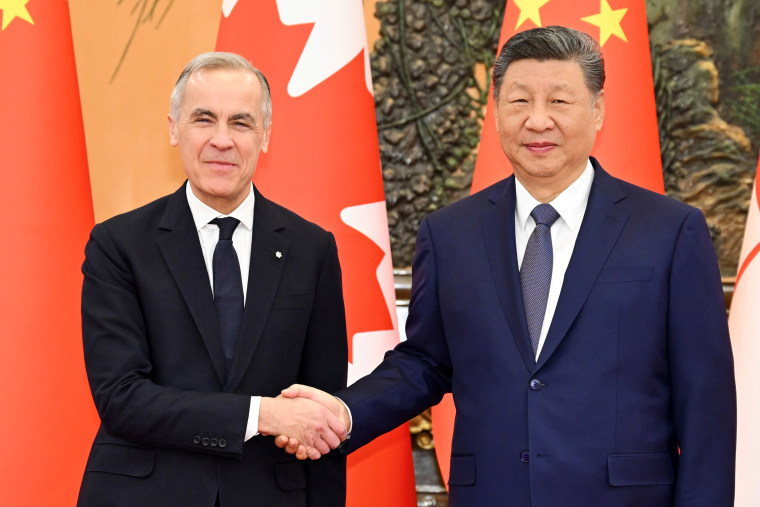
The announcement of a preliminary trade agreement between Canada and the People’s Republic of China marks a consequential inflection point in the global economic architecture. After years of diplomatic estrangement rooted in the 2018 detention of Huawei’s chief financial officer and attendant reprisals, Ottawa and Beijing have agreed to reduce bilateral trade barriers through a calibrated package of tariff concessions. Canada will permit up to 49,000 Chinese-made electric vehicles to enter its market annually at a reduced tariff of 6.1 percent, a return to pre-friction levels from the 2020s. In exchange, China will sharply cut its punitive tariffs on Canadian canola seed from combined rates near 85 percent down to about 15 percent, while lifting discriminatory levies on key exports such as canola meal, lobsters, crabs, and peas. These changes are expected to unlock roughly $3 billion in new Canadian export orders and signal a thaw in a protracted trade dispute.  

This agreement emerges against a backdrop of intensifying US-China economic competition and a United States increasingly inclined toward protectionist measures. The United States maintains significant tariffs on Chinese electric vehicles and other strategically sensitive sectors, rooted in concerns about industrial policy, technological transfer, and national security. Canada’s decision to diverge from a more restrictive approach reflects both structural economic imperatives and evolving geopolitical realities. With roughly three-quarters of Canadian exports traditionally destined for the United States and less than four percent for China, Ottawa’s longstanding dependence on the US market has been a defining feature of its trade strategy. The latest negotiation illustrates a deliberate pursuit of diversification in the face of unpredictable US policy shifts.  

At the heart of this emerging alignment is a sober recognition of China’s dominant position in the global electric-vehicle and clean-technology ecosystem. China accounts for a majority share of global EV production, lithium-ion battery cell manufacturing, and solar panel capacity, a lead that Western policymakers have struggled to counteract through subsidies or industrial policy alone. By integrating Chinese EVs into the Canadian market through a regulated tariff-quota system, Ottawa positions itself to benefit from more competitive prices and accelerated adoption of low-emission vehicles, even as domestic industry voices warn of competitive displacement.  

The divergence between Ottawa and Washington on trade policy toward China carries deeper strategic significance. Historically, Canada has aligned closely with US economic and security policy, particularly within the framework of the United States–Mexico–Canada Agreement (USMCA). Canada’s recalibration suggests a growing willingness among middle powers to pursue “interest-based” engagement with Beijing that does not hew strictly to US strategic preferences. This trend is symptomatic of a broader fracturing in the global trade order, in which rising geopolitical competition has weakened the coherence of multilateral frameworks once anchored by US leadership. According to recent geopolitical scholarship, trade flows and global value chains increasingly reflect shifting alignments, with countries navigating between competing spheres of influence amid overlapping crises and supply chain stresses.  

For the United States, this development presents a diplomatic quandary. A unified North American stance on trade with China amplified US leverage in negotiations with Beijing. Canada’s independent course potentially dilutes that leverage and underscores the limits of expectation that allied economies will subordinate their economic interests to US strategic imperatives. Washington’s initial reaction has been measured but critical, framing Canada’s move as “problematic” even as it acknowledges Ottawa’s sovereign right to pursue its own agreements. Such rhetoric highlights the tension between aligning with US China-policy goals and defending national economic interests in a volatile global environment.  

At a structural level, the Canada–China deal exemplifies a broader reconfiguration of global trade relationships in an era of geopolitical competition. The traditional model of a US-centric trade order is giving way to a more multipolar economic landscape in which regional power centers and bilateral arrangements exert greater influence. Emerging trade partnerships, whether in clean technology, agriculture, or energy cooperation, reflect pragmatic calculations by states seeking stability, market access, and technological advantage. The interplay between geopolitical alignment and economic policy suggests that future trade patterns will be shaped less by universal norms and more by strategic hedging, selective engagement, and competitive statecraft.

In this context, the Canada–China agreement serves as both a practical economic arrangement and a geopolitical signal. It indicates an era in which middle powers aspire to greater autonomy in foreign economic policy, navigating between competing great powers and recalibrating long-standing alliances to safeguard national interests within a fragmented system of global trade.

Public Funding for Private Arenas: Economic Realities Behind the Ottawa Senators Proposal

The renewed push for a taxpayer supported arena at Ottawa’s LeBreton Flats arrives at a moment when the economic evidence is clear. Professional sports franchises continue to seek public subsidies while independent academic research demonstrates that taxpayer funded arenas provide little to no measurable economic return to host cities.

The current lobbying effort by Capital Sports Development Inc. mirrors a common strategy in North America: frame the project as an economic generator rather than a private entertainment investment. The empirical data provides a different assessment.

Economic research and city outcomes

Consensus across economic literature is stable. Major reviews and empirical studies show that sports arenas do not create net new economic activity. Spending at arenas typically reallocates existing entertainment consumption within a city. Construction jobs are temporary. Longer term measures such as regional GDP, employment, and household income do not show statistically significant improvement following arena construction.

Representative findings

StudyScopeFinding
Noll & ZimbalistMultiple stadium projectsEconomic effects extremely small or negative
Coates & HumphreysCross city panel analysesNo association between franchises and long term income growth
Bradbury, Coates & Humphreys (2023)Historical reviewLittle to no tangible economic impact from stadium subsidies
Journalist’s Resource (2024)Literature roundupPublic stadium funding rarely produces the projected economic returns

Comparative evidence from recent arena projects

Recent Canadian and North American arena projects reveal the scale of public exposure when municipal and provincial governments participate. The table below summarizes selected examples and a chart illustrates the variation in public contributions.

Arena ProjectApproximate Public Contribution (Millions CAD)Funding Notes
Calgary Event Centre537Municipal and provincial contributions for arena and district infrastructure
Rogers Place, Edmonton226Municipal funding combined with tax increment and CRL mechanisms
UBS Arena, New York0Privately financed on state land lease
T-Mobile Arena, Las Vegas0Privately financed

Why public private partnerships often underperform

Public private partnerships are presented as compromise solutions but frequently shift long term fiscal risk onto taxpayers while securing stable private returns for franchise owners. Cost overruns, maintenance liabilities and revenue shortfalls commonly become municipal obligations. Promised spinoff benefits such as meaningful tourism increases or broad district revitalization are often overstated in proponent studies.

Opportunity cost

Public funds allocated to stadium projects carry opportunity costs. Funds used for an arena are not available for transit, housing, healthcare, climate adaptation or education. These alternatives typically deliver higher social and economic returns than subsidizing privately owned entertainment facilities. Private financing eliminates this trade off.

Policy conclusion

Evidence supports a default policy of requiring private financing for professional sports facilities. Public funds should be reserved for investments that yield broad-based returns and reduce systemic risk for residents. Where public contributions are proposed they should be subject to independent review, enforceable community benefits, strict caps on public exposure and, where appropriate, direct public approval through referendum or legislative vote.

Sources and further reading

  • Bradbury, J C, Coates, D and Humphreys, B R. The economics of stadium subsidies. Policy retrospective. 2023.
  • Coates, D and Humphreys, B R. Do subsidies for sports franchises, stadiums, and mega events work? Econ Journal Watch.
  • Noll, R G and Zimbalist, A. Sports, Jobs and Taxes. Review of economic impacts of sports teams and stadiums.
  • Journalist’s Resource. Public funding for sports stadiums: a primer and research roundup. 2024.
  • Reporting on Ottawa Senators lobbying activity and StrategyCorp engagement. SportsBusiness Journal and national coverage.

For readers seeking original reports and news coverage please consult academic databases and major news outlets for the documents cited above.

The Fragile Independence of NGOs: Funding, Mission, and the Cost of Survival

After more than 25 years advising organizations across sectors, I’ve come to appreciate the vital role NGOs play in filling the gaps governments can’t, or won’t, address. From frontline social services to environmental stewardship to global health and education, their work is often visionary, community-led, and deeply human. But I’ve also seen behind the curtain. And one uncomfortable truth emerges time and again: far too many NGOs are built on a financial foundation so narrow that one funding shift, often from a single government department, can bring the entire structure down.

This doesn’t mean these organizations lack heart or competence. Quite the opposite, but when 60 to 80 percent of their time and energy is spent chasing the next tranche of funding just to pay rent or keep skeleton staff employed, something is clearly out of balance. I’ve worked with executive directors who are more skilled in crafting grant proposals than in delivering the programs they were trained to lead. I’ve seen staff burn out, not from the intensity of service delivery, but from the treadmill of fundraising cycles that reward persistence over purpose.

The tension is most pronounced when a single government agency becomes the main or only funder. In those cases, the NGO may retain its legal independence, but it quickly becomes functionally dependent, unable to challenge policy, adapt freely, or pivot when the community’s needs shift. I’ve often told boards in strategic planning sessions: “If your NGO would cease to exist tomorrow without that one government grant, then you don’t have a sustainable organization, you have an outsourced program.”

This is not a call for cynicism. It’s a call for structural realism. NGOs need funding. Governments have a legitimate role in supporting social initiatives. But the risk lies in overconcentration. With no diversified base of support, whether from individual donors, private philanthropy, earned income, or even modest membership models, NGOs are vulnerable not only to budget cuts, but to shifts in political ideology. A change in government should not spell the end of essential community services. And yet, it too often does.

What’s the solution? It starts with transparency and strategy. Boards must get serious about income diversity, even if that means reimagining their business model. Funders, including governments, should fund core operations, not just shiny new projects, and do so on multi-year terms to allow for proper planning. And NGO leaders need to communicate their value clearly, not just to funders, but to the communities they serve and the public at large. You can’t build resilience without buy-in.

Supporting NGOs doesn’t mean ignoring their structural weaknesses. In fact, the best way to support them is to help them confront those weaknesses head-on. Mission matters. But so does the means of sustaining it. And in today’s volatile funding landscape, the most mission-driven thing an NGO can do might just be to get smart about its money.

A Year in the Wilds of The Rowanwood Chronicles

A reflective essay by the fellow who somehow decided that blogging about politics, climate, gender, and quantum mechanics was a relaxing hobby

I did not set out to become a blogger. No one does. Blogging is something that happens to you when you’ve said “someone should really write about this” one too many times and then realize the someone is you. That was my first year of The Rowanwood Chronicles. A steady accumulation of small irritations, large curiosities, and the occasional planetary existential dread finally pressuring me into a keyboard.

Over the past twelve months I have written about food systems, seismic faults, mononormativity, AI governance, and the demise of centralized social media platforms. This is, I admit, not a tidy list. Most writers pick a lane. I picked several highways, a few dirt roads, and one unmarked trail that led straight into a thicket of gender theory. Some readers have thanked me. Others have quietly backed away like I had started talking about cryptocurrency at a family barbecue. Fair enough.

The funny thing about running a blog with the byline “Conversations That Might Just Matter” is that you end up feeling mildly responsible for the state of the world. Somewhere in the back of my mind I became convinced that if I took one week off, climate policy would collapse, privacy laws would be gutted by corporate lawyers, and Canada would discover a massive geological fault running directly under my house. It is exhausting being the only person preventing civilization from tipping off its axis, but I have bravely carried on.

Along the way, I learned a few things.

First, people really do want long-form writing. They want context. They want to know why their health system is groaning like a Victorian heroine on a staircase. They want someone to explain decentralized social media without sounding like a blockchain evangelist who drinks only powdered mushroom tea. They want nuance rendered in plain language. I can do that. Sometimes even coherently.

Second, writing about politics is like trying to pet a squirrel. You can do it, but you have to keep your hands calm, your movements measured, and be prepared for the possibility that something small and unpredictable will bite you. Every time I published a political piece, I felt like I was tiptoeing across a frozen lake holding a hot cup of tea. Most of the time it held. Some days it cracked.

Third, the world is endlessly, maddeningly fascinating. One moment I was researching drought-related crop instability in the Global South. The next, I was reading government reports about flood plain management. Then I found myself knee-deep in a rabbit hole about the Tintina Fault, which sits there in the Yukon like an unbothered geological time bomb politely waiting its turn. Writing the blog became my excuse to satisfy every curiosity I have ever had. It turns out I have many.

What surprised me most was what readers responded to. Not the posts where I worked terribly hard to sound authoritative. Not the deeply researched pieces where I combed through reports like a librarian possessed. No. What people loved most were the pieces where I sounded like myself. Slightly bemused. Occasionally outraged. Often caffeinated. Always trying to understand the world without pretending to have mastered it.

That was the gift of the year. The realization that a blog does not need to be grand to be meaningful. It simply needs to be honest. Steady. And maybe a little mischievous.

I will admit that I sometimes wondered whether writing about governance, equity, and science from my small corner of Canada made any difference at all. But each time someone wrote to say a post clarified something for them, or started a discussion in their household, or helped them feel less alone in their confusion about the world, I remembered why I started.

I began The Rowanwood Chronicles because I wanted to understand things. I kept writing because I realized other people wanted to understand them too.

So here I am, a year older, slightly better informed, and armed with a list of future topics that spans everything from biodiversity corridors to the psychology of certainty. The world is complicated. My curiosity is incurable. And The Rowanwood Chronicles is still the place where I try to make sense of it all.

If nothing else, this year taught me that even in a noisy world full of predictions and outrage, there is room for thoughtful conversation. There is room for humour. There is room for stubborn optimism. And there is definitely room for one more cup of tea before I press publish.

Montreal on Tap: How a Legendary Brewery School Will Shape Canada’s Craft Scene

Since its founding in 1872 in Chicago, the Siebel Institute has stood as a cornerstone of brewing education in North America. Its decision to relocate classroom operations to Montréal beginning January 2026 marks more than the closing of a historic chapter in U.S. brewing history. It signals a shift in where brewing knowledge, innovation, and the future of craft beer will be cultivated.  

At its new address on rue Sainte‑Catherine East, the school will be colocated with a baking and fermentation training facility run by its parent company. The move was explicitly justified by difficulties created by recent U.S. regulatory changes, especially obstacles for international students who, by the Institute’s own account, make up the majority of its student body.  

That this shift is happening now is significant. The Canadian craft beer scene is not fringe or marginal. On the contrary, the market has been growing steadily: in 2024 the Canadian craft beer industry produced about 1.8 million hectolitres, and industry analysts expect output to rise to 2.3 million hectolitres by 2033.  

The arrival of Siebel amplifies several emergent dynamics. First, it will bring a high level of technical brewing education, historically concentrated in the United States, into Canada. For Canadian, Québécois, and even international students, now studying in Montréal rather than Chicago, the barrier to access is lowered. Brewing will become more than an artisanal trade learned on the job; it becomes a discipline taught with academic rigour and breadth.

It reinforces Canada’s growing identity as a brewing hub. Québec already has a deep craft beer tradition, including well‑established brewpubs and microbreweries that trace local heritage while experimenting with modern styles. The consolidation of advanced brewing education in Montréal will likely accelerate innovation, experimentation, and quality, raising the bar for the entire Quebecois brewing community and influencing national trends. Indeed a Montreal brewer described Siebel as “one of the few schools in North America that offers classes on brewing.”  

The timing connects to broader consumer and economic trends. As Canadians increasingly favour locally brewed, artisanal beers; with taste, provenance, and authenticity valued the craft beer segment is poised for expansion.   By anchoring educational infrastructure in Canada, brewing knowledge and technical capacity become part of that expansion rather than imported after the fact.

The relocation underscores a cultural shift: brewing is no longer just a subculture of beer enthusiasts and hobbyists. It is becoming a discipline, a profession, and a pillar of local economies and regional identities. Labour, supply‑chain, agriculture, tourism, and community culture all circle back to the brewery. In that sense, Siebel’s move to Montréal should not be read as the quiet shuttering of a school, but as the planting of a seed: a seed for a more mature, more technically grounded, more globally competitive Canadian brewing industry.

The significance lies not merely in changing postal codes. It lies in the fact that a venerable American institution, one whose graduates helped shape generations of breweries, has chosen to anchor its future within Canada. That choice reflects where the industry sees opportunity, where students now find access, and where brewing’s next generation of artisans and innovators are likely to train.

Results Over Bureaucracy: Transforming Federal Management and Workforce Planning

Canada’s federal government employs hundreds of thousands of people, yet far too often, success is measured by inputs rather than results. Hours worked, meetings attended, or forms completed dominate performance metrics, while citizens experience delays, inconsistent service, and bureaucratic frustration. Prime Minister Mark Carney has an opportunity to change this by embracing outcomes-based management and coupling it with a planned reduction of the federal workforce—a strategy that improves efficiency without undermining service delivery.

The case for outcomes-based management
Currently, federal management emphasizes process compliance over actual impact. Staff are assessed on whether they followed procedures, logged sufficient hours, or completed internal forms. While accountability is important, focusing on inputs rather than outputs fosters risk aversion, discourages initiative, and prioritizes process over public value.

Outcomes-based management flips this paradigm. Departments and employees are held accountable for tangible results: timeliness, accuracy, citizen satisfaction, and measurable program goals. Performance evaluation becomes tied to impact rather than paperwork. Managers are empowered to allocate resources strategically, encourage innovation, and remove obstacles that slow delivery. Employees gain clarity on expectations, flexibility in execution, and motivation to improve services.

This approach is widely recognized internationally as best practice in public administration. Governments that adopt outcomes-focused management report faster service delivery, higher citizen satisfaction, and better use of limited resources. It is a tool for effectiveness as much as efficiency.

Planned workforce reduction: 5% annually
Outcomes-based management alone does not shrink government, but it creates the environment to do so responsibly. With clearer accountability for results, the government can reduce headcount without impairing services. A planned 5% annual reduction over five years, achieved through retirements, attrition, and more selective hiring, offers a predictable, sustainable path to a smaller, more focused public service.

No mass layoffs are necessary. Instead, positions are left unfilled where feasible, and recruitment is limited to essential roles. Over five years, the workforce contracts by approximately 23%, freeing funds for high-priority programs while maintaining core services. At the end of the cycle, a full review assesses outcomes: delivery quality, service metrics, and costs. Adjustments can be made if reductions have inadvertently affected citizens’ experience.

Synergy with the other reforms
This plan works hand-in-hand with the other two reforms proposed: eliminating internal cost recovery and adopting a single pay scale with one bargaining agent. With fewer staff and a streamlined compensation system, management gains greater clarity and control. Removing internal billing and administrative overhead frees staff to focus on outcomes, while a unified pay scale ensures fair and consistent compensation as the workforce shrinks. Together, these reforms create a coherent, accountable, and modern public service.

Benefits for Canadians
Outcomes-based management and planned workforce reduction offer multiple benefits:
1. Efficiency gains: Staff focus on work that delivers measurable results rather than administrative juggling.
2. Cost savings: Attrition-based reductions lower salary and benefits expenditures without disruptive layoffs.
3. Transparency: Clear metrics demonstrate value to taxpayers, building public trust.
4. Resilience and innovation: Departments adapt faster, encouraging problem-solving and continuous improvement.

Political and administrative feasibility
Canada has successfully experimented with elements of outcomes-based management in programs such as the Treasury Board’s Results-Based Management Framework and departmental performance agreements. These initiatives demonstrate that the federal bureaucracy can shift focus from inputs to results if given clear mandates and strong leadership. Coupled with a predictable downsizing plan, the government can modernize staffing while maintaining accountability and service quality.

A smarter, results-driven public service
Prime Minister Carney has the opportunity to reshape Ottawa’s culture. Moving from input-focused bureaucracy to outcomes-based management, and pairing it with a responsible workforce reduction, creates a public service that delivers more for less. Citizens experience faster, more reliable services; employees understand expectations and have clarity in their roles; and the government maximizes value from every dollar spent.

Together with eliminating internal cost recovery and adopting a single pay scale, this reform completes a trio of policies that make the federal government smaller, smarter, and more accountable. Canadians deserve a public service focused not on paperwork, but on results that matter. This is the path to a modern, efficient, and effective Ottawa.

One Scale, One Union: Simplifying Federal Compensation for a Modern Public Service

Canada’s federal workforce is a patchwork of pay scales, bargaining units, and special arrangements that often pay employees differently for similar work. This complexity creates inefficiency, confuses managers, and undermines transparency. For decades, the federal government has wrestled with these issues, attempting harmonization through studies and pilot projects, but meaningful reform has never been fully implemented.

Prime Minister Mark Carney has the opportunity to finally address this problem by creating a single pay scale for all new hires and promotions, with a central bargaining agent to represent them. Starting April 1, 2027, this reform would apply to every new employee and to anyone promoted after that date. Over time, as legacy employees retire, the workforce would converge under a single, transparent framework, vastly simplifying management and reducing administrative costs.

The current problem
Federal employees are currently represented by multiple unions, covered under different collective agreements, and paid according to a variety of classification systems. Two employees performing essentially the same job in different departments may have different pay scales, benefits, and promotion paths. This complexity creates friction: managers spend more time navigating pay rules than supervising staff, bargaining is prolonged and repetitive, and HR systems are costly to maintain.

Promotions often compound the problem. Without a unified framework, employees may move between roles under different rules or remain in outdated pay bands indefinitely. This creates inequities and prevents the workforce from operating as a coherent system.

A proven foundation exists
Importantly, Canada has not been starting from scratch. During the 1990s, the federal government explored harmonizing job classifications and pay structures under the Universal Classification Standard (UCS) project. The Treasury Board and Public Service Commission produced extensive documentation, job definitions, and classification guidelines. Additional studies, such as the PS2000 project, analyzed potential efficiencies and pathways for standardization. Much of this work remains relevant today.

By leveraging existing frameworks, the government can implement a single pay scale and central bargaining agent far more quickly than starting from scratch. The definitions, classification structures, and analyses already exist, they need modernization, updating for today’s workforce, and political will to implement.

The proposal: one pay scale, one bargaining agent
The plan is straightforward. Starting April 1, 2027:
1. All new hires enter the federal public service under a single UCS-style pay scale, with clear levels tied to responsibility, experience, and job complexity.
2. Any promotions after this date automatically shift employees to the UCS-style scale and the central bargaining agent, ensuring convergence over time.
3. A single central bargaining agent represents all employees on the UVS scale, whether it is a restructured existing union or a newly created organization.

This approach eliminates the patchwork of bargaining units, reduces negotiation complexity, and ensures equitable pay and promotion practices. Employees understand where they fit in the system, managers can deploy staff more effectively, and the public service as a whole becomes easier to administer.

Benefits for government and taxpayers
A single pay scale reduces administrative overhead, simplifies HR planning, and facilitates mobility between departments. One bargaining agent prevents overlapping negotiations, saving months of time and tens of millions in potential costs. By tying promotions to the UCS system, inequities between legacy and new employees shrink naturally over time.

For taxpayers, the benefits are equally clear. Streamlined payroll systems, reduced HR costs, and more predictable budgeting allow funds to be redirected from administrative complexity into actual service delivery. Employees benefit from transparent, fair, and consistent compensation, while management gains clarity and flexibility.

Building a coherent, modern workforce
Canada’s federal public service is one of the largest in the developed world. To make it efficient, equitable, and responsive, it must operate on clear, uniform principles. A single pay scale and central bargaining agent, applied to new hires and promotions after April 1, 2027, provides exactly that.

This reform is achievable because the groundwork is already laid. The challenge is not designing the system, it is implementing it decisively. By building on past harmonization efforts and committing to a transparent framework, Carney can create a public service that is fairer for employees, easier for managers to oversee, and more accountable to Canadians.

Canada can no longer tolerate a federal workforce fragmented by pay scales, bargaining units, and inconsistent policies. One scale, one union, and a commitment to transparency is the path forward.

Ending Ottawa’s Shadow Economy: Why Internal Cost Recovery Has to Go

One of the least visible, but most wasteful features of the federal government is something few Canadians ever hear about: internal cost recovery. It sounds harmless, even sensible. In practice, it is a bureaucratic shadow economy; departments billing each other for services, shuffling money back and forth across the federal ledger, and employing armies of staff to process transactions that produce no benefit for the public.

Prime Minister Mark Carney has spoken about making government smaller, smarter, and more accountable. Ending internal cost recovery would be one of the most powerful first steps in that direction.

What is internal cost recovery?
In theory, cost recovery ensures that when one department provides a service to another, the costs are borne by the recipient. For example, the Department of Justice bills departments for legal services. Shared Services Canada invoices other agencies for IT support. Administrative services, from payroll to translation to communications, are often cross-billed.

The intent was to make departments more aware of their costs, encouraging efficiency. In reality, it has created a closed-loop billing system that ties up thousands of public servants in paperwork and accounting exercises that add no value to taxpayers. Money flows from one government pocket to another, with staff tracking, reconciling, and auditing every movement.

Why it fails
The problem is that federal departments do not operate like businesses. There is no competition to drive down prices, no customer base to discipline quality, and no profit incentive to innovate. Cost recovery becomes an elaborate exercise in bookkeeping without the benefits of market discipline. Worse, it creates incentives for departments to prioritize revenue generation over service.

Take Justice Canada. Its “clients” are other departments. The more billable hours it can record, the more revenue it pulls in. Yet this revenue is not real, it is funded by taxpayers in the first place, laundered through another department’s budget. The system distorts priorities and consumes time that should be spent on delivering legal clarity, not chasing internal invoices.

Shared Services Canada provides another case. It was created to streamline IT across government, but its billing model has forced agencies into a vendor-client relationship with an entity that cannot be avoided. Agencies complain, invoices circulate, disputes arise, and the system groans under its own artificial complexity.

The hidden cost of staff time
Every invoice issued, processed, and reconciled requires public servants to handle it. Treasury Board has to monitor flows, departmental finance units have to manage transfers, and auditors have to verify them. Entire teams are employed in these transactions. None of this work would be necessary if departments were simply budgeted to deliver their services directly, as they should be.

Ending internal cost recovery could free thousands of hours of staff time each year. That time could be redirected to real work: drafting better policies, improving service delivery, or responding more quickly to citizens. In a public service already stretched for talent, reducing waste should be a top priority.

What should replace it?
The solution is straightforward. Departments should receive direct appropriations for the services they provide, based on realistic needs and demand forecasts. Justice should be funded to provide legal advice across government. Shared Services should be funded to deliver IT. Translation services should be budgeted to serve the entire public service.

Instead of charging their “clients,” these organizations should be judged on outcomes: timeliness, quality, and responsiveness. Treasury Board can hold them accountable through performance reviews, not through a maze of invoices.

The political case for reform
Ending cost recovery would not only save money; it would simplify government in a way Canadians could understand. Imagine explaining to the public that their tax dollars currently pay for one department to send an invoice to another, then pay again for that invoice to be processed, then pay once more for it to be reconciled, all for money that never leaves the federal accounts. Most Canadians would rightly ask: why not just stop?

This is low-hanging fruit in government reform. It does not involve painful layoffs or dramatic structural upheavals. It simply requires the courage to admit a failed system and replace it with something simpler and better.

A smarter Ottawa
Ending internal cost recovery will not solve every problem in Ottawa. But it is a symbol of the kind of reform Canadians expect: eliminating waste, cutting bureaucracy, and focusing staff time on serving the public. It sends a signal that government exists to deliver value to citizens, not to maintain pointless internal economies.

Prime Minister Carney has spoken about building a leaner and more effective government. Ending cost recovery is the perfect starting point. It demonstrates seriousness about reform, frees capacity across departments, and sets the tone for larger changes to follow.

Canadians are ready for a government that respects their time and their money. The shadow economy of cost recovery has run its course. It is time to end it.