Wide-lens perspectives on war, peace, diplomacy, and Canada’s shifting role in the world. These posts bring clarity to complex global tensions, offering historical framing, regional context, and principled viewpoints rooted in informed curiosity and public interest.
⚖️ 1. International Women’s Day Sparks Global Demonstrations
March 8 marked International Women’s Day, with marches, political rallies, and policy announcements across dozens of countries. Demonstrations focused on issues such as equal pay, reproductive rights, education access, and women’s political representation.
Why it matters:
One of the world’s largest annual civic mobilizations
Increasing pressure for gender-equity legislation
A major platform for labour and social justice campaigns
🏅 2. 2026 Winter Paralympics Begin in Italy
The Winter Paralympic Games officially opened in Milan and Cortina d’Ampezzo and entered their first full week of competition. More than 600 athletes from over 50 countries are competing in alpine skiing, para-hockey, biathlon, and other adaptive sports.
Why it matters:
One of the largest international adaptive-sport events
Growing global recognition of Paralympic athletes
Increasing investment in inclusive sport programs
🌌 3. Strong Solar Winds Trigger Northern Lights Displays
Fast solar winds from the Sun increased geomagnetic activity this week, producing bright aurora displays across northern regions of North America and Europe. Observers in parts of Canada and the northern United States reported strong viewing conditions.
Why it matters:
The Sun is approaching the peak of its 11-year solar cycle
Auroras may become more frequent in the coming year
Strong solar storms can affect satellites and power grids
🌍 4. Middle East War Continues to Disrupt Regional Air Travel
The ongoing conflict in the Middle East continued to disrupt aviation across the region this week, forcing airlines to reroute or cancel flights and operate reduced schedules. Major aviation hubs reported delays and reduced capacity as airlines avoided conflict zones.
Why it matters:
Major impact on global aviation routes
Energy markets and shipping lanes remain volatile
The conflict is now affecting international travel and logistics
❄️ 5. World Speed Skating Championships Conclude in the Netherlands
The World Allround Speed Skating Championships took place in Heerenveen, Netherlands, bringing together many of the world’s best skaters for a demanding multi-distance competition that determines the sport’s most complete athletes.
Why it matters:
One of the sport’s most prestigious annual championships
Key preparation for Olympic-level competition
Continues the Netherlands’ role as a global centre of speed skating
🌟 The Big Picture
The second week of March illustrated the diverse forces shaping the global moment: civic activism, international sport, space-weather phenomena, geopolitical conflict, and major cultural events all unfolding simultaneously across the planet.
Researchers announced early results from a Phase 3 clinical trial of a new Alzheimer’s treatment, showing slowed cognitive decline in patients with early-stage disease. The drug targets beta-amyloid accumulation and could become the first major therapy to meaningfully alter disease progression.
Why it matters:
Could transform treatment for millions worldwide
Offers hope for early intervention strategies
Signals growing investment in neurodegenerative disease research
🌕 2. A Total Lunar “Blood Moon” Eclipse
A spectacular total lunar eclipse on March 3 turned the Moon a deep red color for viewers across North America, the Pacific region, and parts of Asia and Australia. The event occurs when Earth moves directly between the Sun and Moon, casting a shadow that filters sunlight through Earth’s atmosphere.
Why it matters:
First lunar eclipse of 2026
Visible across large parts of the world
Part of a broader series of eclipses occurring in 2025–2026
🚀 3. Artemis II Moon Mission Moves Toward Launch
NASA moved closer to launching Artemis II, the first crewed lunar mission since the Apollo era. The mission’s launch window opened March 6 and will send astronauts on a journey around the Moon and back to Earth.
Why it matters:
First humans to travel beyond low-Earth orbit in over 50 years
Includes a Canadian astronaut
A key step toward future lunar landings and eventual Mars missions
🏅 4. 2026 Winter Paralympics Open in Italy
The 2026 Winter Paralympic Games officially opened on March 6 with a ceremony in Verona, Italy. Athletes from dozens of countries will compete in alpine skiing, biathlon, para-hockey, and other events across northern Italy.
Why it matters:
Hundreds of athletes representing more than 50 countries
Growing global recognition of adaptive sport
Major international sporting event following the Winter Olympics
🌌 5. Solar Activity Sparks Northern Lights Displays
Strong solar activity produced geomagnetic storms that triggered vivid northern lights displays across parts of Canada and the northern United States. Some locations farther south than usual also reported aurora sightings.
Why it matters:
Solar activity is approaching the peak of its cycle
Auroras becoming more frequent and widespread
Space weather can affect satellites and power systems
🌟 The Big Picture
The first week of March highlighted a mix of breakthroughs in science and medicine, remarkable astronomical events, major sporting competitions, and natural phenomena, illustrating the wide-ranging forces shaping our world.
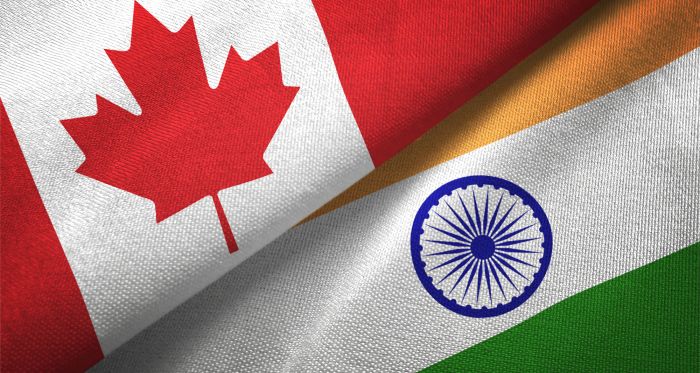
Trade agreements are rarely about trade alone. They are instruments of strategic positioning, domestic reassurance, and geopolitical signaling. The proposed Comprehensive Economic Partnership Agreement between Canada and India sits squarely at this intersection. It is less a conventional tariff-cutting exercise than a test of whether two pluralistic democracies with complicated domestic politics can construct a durable economic relationship in a fragmenting global order.
For Canada, the motivation is increasingly structural rather than opportunistic. An export economy anchored overwhelmingly to the United States faces persistent vulnerability to policy shifts south of the border. The impulse to diversify markets is not new, but recent protectionist currents and the volatility of U.S. trade policy have transformed diversification from aspiration into necessity. India, with its scale, growth trajectory, and relative institutional stability, represents one of the few markets capable of absorbing Canadian exports at meaningful volume while also offering reciprocal opportunities.
India’s motivation is different. New Delhi seeks capital, technology, energy security, and access to advanced services while preserving policy autonomy and protecting domestic producers. Indian trade strategy has historically favored gradualism, selective liberalization, and strong safeguards for agriculture and small industry. Any agreement with Canada will therefore reflect asymmetry not only in economic structure but also in negotiating philosophy.
The present talks must also be understood as a recovery operation. Bilateral relations were deeply strained by political tensions and security allegations in recent years. The resumption of negotiations signals a pragmatic decision on both sides that economic interests outweigh diplomatic estrangement. However, the shadow of mistrust has not disappeared. Trade negotiators may speak the language of tariffs and regulatory alignment, but political leaders must manage constituencies that view the other country through a lens of suspicion. This complicates ratification even if technical negotiations succeed.
Structural Complementarities and Frictions At first glance, the Canadian and Indian economies appear complementary. Canada is resource-rich, capital-intensive, and export-oriented in commodities and advanced services. India is labor-abundant, manufacturing-aspiring, and consumption-driven. In theory, this creates a classic pattern of mutually beneficial exchange: resources and expertise flowing one way, manufactured goods and services the other.
Agriculture illustrates both promise and tension. Canada is a major exporter of pulses, grains, and oilseeds that India periodically requires to stabilize domestic food prices. Yet India also protects its farmers aggressively for social and political reasons. Tariffs, quotas, and sudden regulatory changes are common policy tools in New Delhi’s domestic management of food security. Canadian producers seek predictable access; Indian policymakers seek flexibility. Reconciling these priorities will be among the most technically complex elements of any agreement.
Manufactured goods pose a different challenge. India wants improved access for its industrial exports, particularly in sectors where it aims to move up the value chain. Canadian industry, smaller in scale and already exposed to U.S. competition, may resist additional pressure from lower-cost producers. Trade agreements often redistribute opportunity within economies as much as between them, creating domestic winners and losers whose political influence shapes final outcomes.
Energy, Minerals, and the Strategic Core If there is a single domain capable of anchoring a durable Canada–India partnership, it is energy and critical resources. India’s economic expansion will require enormous quantities of fuel, electricity generation capacity, and raw materials for infrastructure and technology. Canada possesses many of these in abundance, from hydrocarbons to uranium to battery minerals.
Uranium cooperation is particularly significant. India’s nuclear energy program is expanding as part of its strategy to reduce carbon intensity while maintaining baseload power. Canadian uranium, already exported to several countries under strict safeguards, could become a cornerstone of this effort. Such trade is not merely commercial; it embeds long-term strategic interdependence through supply contracts, regulatory oversight, and technological cooperation.
Critical minerals represent another convergence point. The global transition toward electrification and digital infrastructure has elevated materials such as lithium, nickel, and cobalt from niche commodities to strategic assets. Canada seeks reliable buyers and investment in extraction and processing. India seeks secure supply chains independent of geopolitical rivals. Agreements in this domain may proceed faster than broader trade liberalization because both sides perceive them as mutually reinforcing national priorities.
Energy exports more broadly face logistical constraints. Canada’s infrastructure has historically been oriented toward the U.S. market. Expanding shipments to Asia requires pipelines, liquefaction facilities, and port capacity that take years to build and are subject to domestic environmental debates. Thus, even if market access improves on paper, physical delivery capabilities will shape the real economic impact.
Services, Mobility, and the Human Dimension Trade in the twenty-first century increasingly involves services, knowledge, and people rather than goods alone. Canada’s strengths in education, finance, engineering, and digital industries align with India’s demand for advanced expertise. Conversely, India’s vast pool of skilled professionals seeks opportunities abroad, including temporary work arrangements and educational pathways.
Mobility provisions are therefore likely to be politically sensitive but economically important. Canadian policymakers must balance labor market needs with public concerns about immigration levels. Indian negotiators view mobility as a central benefit of any agreement. Achieving equilibrium may require targeted programs for specific sectors rather than broad liberalization.
Educational links deserve special attention. India is one of the largest sources of international students in Canada, generating both economic activity and long-term people-to-people ties. Regulatory changes affecting student visas have already demonstrated how quickly this channel can expand or contract. A trade framework that stabilizes educational cooperation would have effects far beyond tuition revenues, influencing innovation networks and diaspora relations.
Political Economy and Ratification Risks Even the most carefully negotiated agreement must survive domestic politics. In Canada, provinces hold significant authority over areas such as natural resources and procurement. Their support is essential. Agricultural regions, manufacturing hubs, and energy-producing provinces will evaluate the deal through different lenses, potentially producing a fragmented national consensus.
In India, federal structures and state-level interests also complicate implementation. Agricultural policy in particular is intertwined with regional politics and rural livelihoods. National leaders may sign agreements that require delicate internal balancing to enforce.
Public perception will matter as much as economic modeling. Trade deals are often judged not by aggregate gains but by visible disruptions. Industries facing adjustment costs mobilize more effectively than diffuse beneficiaries. A government that frames the agreement as part of a broader strategy for economic resilience rather than a narrow commercial bargain stands a better chance of sustaining support.
Timeline Realities and the Meaning of “Signing” Predictions that a comprehensive agreement could be concluded within a single year should be treated cautiously. Modern trade agreements are sprawling legal instruments covering intellectual property, digital governance, investment rules, dispute settlement mechanisms, and environmental standards. Negotiating these provisions typically requires years.
A more plausible scenario involves a staged process. An initial framework agreement or “early harvest” package could address less contentious areas such as investment facilitation, cooperation on energy and minerals, and selected tariff reductions. This would allow political leaders to demonstrate progress while leaving more difficult issues for subsequent rounds.
Such incrementalism aligns with India’s negotiating tradition and Canada’s desire for tangible diversification gains. It also reflects the reality that trust, once damaged, must be rebuilt gradually.
Strategic Significance Beyond Commerce Ultimately, the importance of a Canada–India partnership extends beyond bilateral trade statistics. It represents a recalibration of middle-power diplomacy in an era when the global system is increasingly defined by great-power rivalry and economic fragmentation. For Canada, engagement with India signals participation in the Indo-Pacific’s economic architecture. For India, deeper ties with a G7 country reinforce its status as a central actor rather than a peripheral one.
The agreement, if realized, would not replace Canada’s relationship with the United States, nor would it transform India into Canada’s primary market. Its value lies in diversification, resilience, and optionality. In a world where supply chains can be weaponized and alliances can shift abruptly, having multiple reliable partners is itself a form of economic security.
Whether the deal is signed this year or several years hence, the direction of travel is clear. Both countries perceive that disengagement carries higher long-term costs than cooperation, even when cooperation is difficult. Trade agreements often emerge not from optimism but from recognition of shared necessity. The Canada–India negotiations appear to fit this pattern precisely.
📅 Saturday, February 21 → Friday, February 27, 2026
🇺🇦 1) Ukraine War Enters a New Phase ⚔️
Ukraine’s war with Russia continued with intensified fighting and renewed Western support discussions. While front lines shifted only marginally, the scale of combat and equipment losses remained high.
Key points:
Heavy fighting persists in eastern regions
Ongoing debates over additional sanctions and aid
Concerns about long-term war fatigue in allied nations
➡️ The conflict remains one of the central drivers of global security uncertainty.
🇺🇸 2) U.S. Politics Heats Up Ahead of 2026 Elections 🗳️
Early maneuvering for the 2026 midterm elections accelerated, with both major parties sharpening their messaging on the economy, immigration, and national security.
Key points:
Campaign organizations expanding operations
Key swing states receiving early attention
Policy debates intensifying in Congress
➡️ Political rhetoric is expected to escalate as the election cycle unfolds.
📉 3) Global Economy Sends Mixed Signals 💹
Financial markets delivered uneven performance as inflation cooled in some regions while growth slowed in others. Central bank policies continue to dominate investor expectations.
Key points:
Interest rates remain a major concern
Energy prices fluctuate amid geopolitical risks
Manufacturing weakness in parts of Europe and Asia
➡️ Economists describe the outlook as fragile rather than stable.
🌦️ 4) Extreme Weather Continues Worldwide 🌪️
Floods, storms, and unusual temperature patterns affected multiple regions, highlighting the ongoing impact of climate volatility on infrastructure and communities.
Key points:
Flooding events in several countries
Drought concerns persist elsewhere
Rising costs for insurance and recovery
➡️ Scientists warn that extreme weather is becoming more frequent and disruptive.
🚀 5) Space Exploration Momentum Builds 🌕
National space agencies and private companies continued preparations for lunar and deep-space missions, underscoring the accelerating pace of the modern space race.
Key points:
New missions in development or testing
Growing international cooperation
Expanding role of commercial providers
➡️ Space exploration is increasingly multinational and commercially driven.
✨ The Big Picture
This week reflected a world balancing geopolitical tension, economic uncertainty, climate pressure, and technological ambition. Rather than a single dominant headline, multiple long-term trends continued to shape global events simultaneously.
For much of its modern history, the Commonwealth Games has drifted toward the logic of other mega-events: large cities, escalating costs, and a quiet assumption that only wealthy hosts need apply. Yet the Commonwealth itself is not a club of large powers. It is, numerically and culturally, a network dominated by small and developing states. Reimagining the Games so they are hosted by the smallest members, but financed collectively according to national GDP would not be charity. It would be strategic infrastructure policy disguised as sport.
Such a model would transform the Games from a periodic spectacle into a rotating development engine, deliberately directed toward places where capital investment produces the greatest long-term return.
Infrastructure Where It Matters Most Small Commonwealth countries often face the same structural constraints: limited transport networks, fragile energy systems, housing shortages, and vulnerability to climate shocks. These are not failures of governance so much as arithmetic. When a nation of a few hundred thousand people must finance major infrastructure alone, projects either stall or never begin.
A GDP-weighted funding model would change that equation. Large economies such as Canada, Australia, United Kingdom, and India could contribute proportionally without significant domestic strain, while host nations gain assets that would otherwise take generations to afford.
Crucially, these investments would not need to be limited to stadiums. Modern Games planning increasingly integrates: • Airport and port expansion • Renewable energy grids • Water and sanitation upgrades • Telecommunications networks • Public transit • Resilient housing
In developing contexts, these are not ancillary benefits. They are transformational foundations for economic growth.
Tourism as a Permanent Industry, Not a Seasonal Gamble For many small states, tourism is already the primary economic engine. Hosting the Games would accelerate that sector by compressing decades of branding and infrastructure development into a single cycle.
Consider nations such as Barbados, Malta, or Seychelles. Global exposure from a major sporting event can reposition a country from niche destination to household name. Improved airports, hotels, and transport systems continue generating revenue long after the closing ceremony.
Unlike industrial mega-projects, tourism infrastructure scales naturally to local economies. A new terminal, cruise port, or transit corridor does not become obsolete. It becomes the backbone of a sustainable service economy.
Climate Resilience Disguised as Event Planning Many of the Commonwealth’s smallest members sit on the front lines of climate change. Sea-level rise, stronger storms, and water insecurity are existential threats. Yet climate adaptation projects are expensive and often struggle to secure financing.
A collectively funded Games could prioritize resilient design as a requirement rather than an afterthought: • Elevated and storm-resistant construction • Microgrids powered by renewables • Flood-resistant transport corridors • Emergency response infrastructure • Water security systems
In effect, the Commonwealth would be financing survival infrastructure under the politically palatable banner of sport.
Ending the Prestige Arms Race Large hosts often overspend to signal global status, producing stadiums that struggle to find post-event uses. Small states cannot afford that kind of extravagance. Their constraints encourage practicality.
Facilities would likely be: • Modular or temporary • Scaled to local demand • Designed for schools and community use • Integrated into existing urban plans
The result could be the most sustainable version of a mega-event yet attempted, precisely because the host nation lacks the capacity for waste.
A More Meaningful Commonwealth The Commonwealth frequently struggles to define its contemporary purpose beyond historical ties. A shared funding model for the Games would provide a concrete expression of mutual responsibility.
Citizens in wealthier countries would see tangible outcomes from their contributions: functioning infrastructure, stable partners, and strengthened trade relationships. Smaller nations would experience membership as materially beneficial rather than symbolic.
This is not altruism alone. Stability in vulnerable regions reduces migration pressures, disaster response costs, and geopolitical volatility. Development is cheaper than crisis management.
A Distributed Model for the Future Logistical challenges are real, but not insurmountable. Events could be distributed across neighboring islands or regions, supported by temporary accommodations such as cruise ships and regional transport networks. Modern broadcasting reduces the need for centralized mega-venues, allowing the Games to function as a multi-site festival rather than a single urban takeover.
Such flexibility aligns with the geography of many small Commonwealth states, particularly in the Caribbean and Pacific.
Strategic Optimism A Commonwealth Games hosted by its smallest members and funded by all according to capacity would represent a quiet, but profound shift in global thinking. It would suggest that international gatherings need not be competitions for prestige but opportunities for targeted development.
The return on investment would be measured not in medal tables but in decades of improved mobility, energy security, tourism revenue, and climate resilience.
In a world where large institutions often struggle to demonstrate relevance, this model would do something radical: it would build things that last, in places that need them most.
And in doing so, the Commonwealth would rediscover a purpose suited not to its past, but to its future.
📅 Saturday, February 14 → Friday, February 20, 2026
🌑 1) “Ring of Fire” Solar Eclipse Crosses Antarctica
On February 17, an annular solar eclipse turned the Sun into a glowing ring as the Moon passed in front while near its farthest orbital point. The event’s path ran mostly over remote Antarctica, meaning few people witnessed it directly, though partial phases were visible in parts of the Southern Hemisphere.
Diplomatic efforts intensified as major powers pushed for negotiations aimed at ending the war by summer 2026. Ukraine agreed to participate, while Russia signaled skepticism about progress and conditions.
Why it matters:
Potential to reshape global security and energy markets
High uncertainty remains
Any breakthrough would be geopolitically significant
🌊 3) Severe Storms Batter Iberia
Powerful winter storms swept across Spain and Portugal, bringing heavy rain, flooding, landslides, and infrastructure damage. Saturated ground worsened impacts, leading to evacuations and transport disruptions.
Why it matters:
Illustrates intensifying winter storm patterns
Agricultural and economic losses reported
Ongoing recovery efforts across affected regions
🚀 4) Artemis II Moon Mission Cleared for March Launch
NASA confirmed a March 6 launch target for Artemis II, the first crewed lunar mission in more than 50 years. Four astronauts will fly around the Moon and return to Earth without landing.
Why it matters:
First humans beyond low-Earth orbit since Apollo
Includes a Canadian astronaut
Critical step toward future Moon landings and Mars missions
Multiple planets became visible together in the evening sky during this week, leading toward a rare alignment peak later in February. Several planets can be seen with the naked eye, while others require binoculars or a telescope.
Why it matters:
One of the year’s best skywatching events
Visible shortly after sunset
Boosts public interest in astronomy
🌟 Weekly Takeaway
This week blended rare celestial events, major geopolitical developments, extreme weather, and renewed momentum in human space exploration — a reminder that global change happens simultaneously across science, politics, and the natural world.
At the Munich Security Conference, European leaders openly discussed preparing for a world where U.S. protection may no longer be guaranteed 🇪🇺⚔️.
Greater European military autonomy
Expanded defense spending
Discussion of relying on France’s nuclear deterrent
The tone was stark: leaders warned that the post-Cold War security framework may be fading. This points toward a long-term restructuring of global power relationships.
✈️ 2. Italy Moves to Ban Strikes During the Winter Olympics
With millions expected to travel for the Milano-Cortina Winter Games, Italy announced emergency measures to prevent airport shutdowns 🚫✈️.
Planned labor strikes threatened major disruption
Government intervention to suspend airport walkouts
Security concerns following prior transport incidents
Hosting the Olympics often leads governments to prioritize uninterrupted transport and security over normal labor actions.
🎭 3. Massive Indian Cultural Festival in Kuwait
More than 700 performers showcased Indian heritage at a major open-air festival on Kuwait’s Green Island 🇮🇳🎶.
Traditional dance and music performances
Food, crafts, and cultural exhibits
Strong participation from expatriate communities
Free public access
The event highlighted the growing influence of diaspora communities and cultural diplomacy in the Gulf region.
Large-scale Russian drone attacks struck energy facilities and port infrastructure, particularly around Odesa ⚡🚁.
Damage to power systems
Economic disruption
Pressure on export routes
Ongoing humanitarian risks
The conflict continues to shape global security, energy markets, and political alignment across Europe.
🪐 5. Saturn Enters Aries — A Cultural Moment
Saturn’s transition into Aries generated widespread global attention in astrology circles 🔮✨.
Last occurred in the late 1990s
Interpreted as a period of accountability and upheaval
Major engagement across social media and popular culture
Regardless of scientific validity, such symbolic narratives often reflect public mood and influence social discourse.
🌟 Weekly Takeaway
This week revealed structural shifts rather than a single dominant headline — evolving security alliances, governments prioritizing mega-events, ongoing war impacts, expanding cultural globalization, and a search for meaning in uncertain times.
The election of Zohran Mamdani as mayor of New York City marks a qualitative shift in North American progressive politics. This is no longer a story about insurgents pushing from the margins. It is about democratic socialists governing major institutions, commanding budgets, shaping public narratives, and translating movement demands into administrative power.
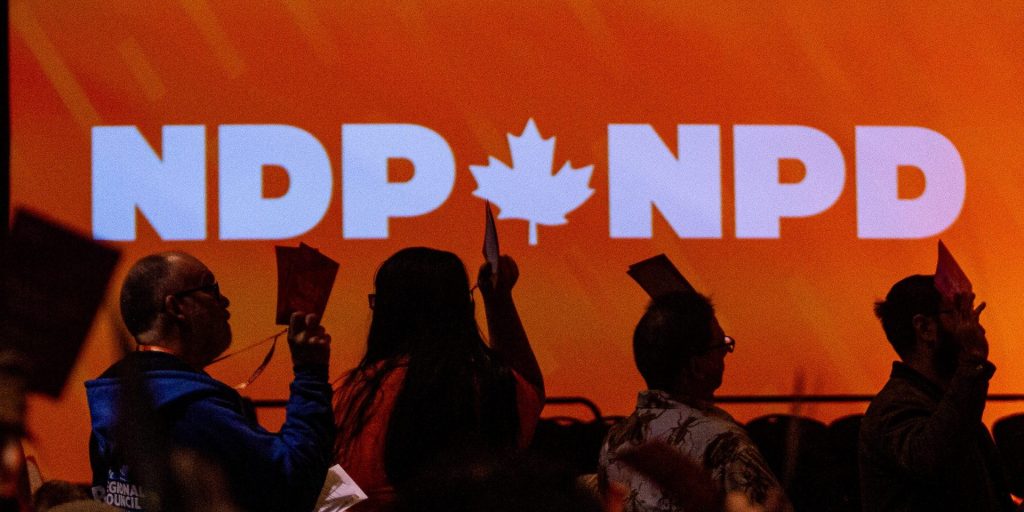
Alongside figures like Alexandria Ocasio-Cortez and Bernie Sanders, Mamdani’s ascent signals that U.S. progressivism has entered a new phase. The question for Canada is no longer whether these ideas resonate culturally, but whether the Canadian New Democratic Party is capable of learning the deeper strategic lessons now on offer.
The answer remains conditional. The NDP can benefit from the American progressive surge only if it studies how power is being built and exercised, not just how it is branded.
Structural and Cultural Constraints Canada’s parliamentary, multi-party system should in theory favour a social democratic party. The NDP does not need to fight a hostile primary system or operate as a faction inside a centre-right coalition party, as U.S. progressives must within the Democrats. Yet despite this structural advantage, the NDP has struggled to convert progressive sentiment into durable electoral growth.
The party remains caught between ideological clarity and managerial caution. It often campaigns as a movement party while governing, or aspiring to govern, as a risk-averse administrator. This has produced a persistent credibility gap. Movement activists do not feel represented between elections, while swing voters hear careful policy talk without an emotionally compelling story of change.
Meanwhile, U.S. progressive discourse has become culturally influential in Canada. Class-conscious language, housing-first politics, and explicit critiques of corporate power now circulate widely through social media and activist networks. But cultural influence does not automatically translate into organizational renewal. That requires infrastructure, discipline, and leadership development.
From Insurgency to Governance: The Mamdani Moment Mamdani’s election as New York City mayor is significant precisely because it closes the loop between organizing and governing. His political roots lie in tenant unions, transit justice campaigns, and DSA-backed electoral work that treated municipal power as a strategic prize rather than a symbolic platform.
As mayor, Mamdani now governs through the same principles that animated his rise: rent stabilization, public ownership, resistance to privatization, and an explicit alignment with working-class and immigrant communities. Crucially, these commitments are not framed as ideological abstractions, but as practical solutions to daily crises like housing costs, transit access, and public services.
This matters for the Canadian NDP because it demonstrates that democratic socialist politics can scale without dilution when rooted in permanent organizing structures. The DSA model, now validated at the level of North America’s largest city, treats elections as moments in an ongoing campaign rather than endpoints. Governance becomes an extension of movement pressure, not its replacement.
By contrast, the NDP remains largely election-centric. Local riding associations often go dormant between cycles. Policy development is centralized. Grassroots energy is mobilized episodically, then dissipates. Even when the party holds power provincially or influences federal policy, it rarely uses that position to expand organizing capacity outside the party itself.
Some Canadian organizations have attempted to replicate aspects of the DSA approach, including Courage Coalition and SomeOfUs. These efforts show promise but remain disconnected from a mass electoral vehicle capable of sustaining them. Mamdani’s mayoralty demonstrates what becomes possible when that gap is closed.
What the NDP Would Need to Change If the NDP wants to benefit from the U.S. progressive breakthrough, including Mamdani’s victory, it would need to make several strategic shifts.
First, it must invest in permanent grassroots infrastructure that exists independently of campaign timelines. Organizing around housing, labour rights, and public services cannot be treated as messaging exercises. They must be lived relationships.
Second, the party must reclaim class-based language without apology. Housing affordability, food prices, wages, and corporate profiteering are not niche issues. They are the material conditions shaping political identity. Mamdani’s success shows that naming antagonists clearly does not alienate voters when tied to credible solutions.
Third, bold policy must be localized and nationalized in Canadian terms. Public power, green industrial policy, and decommodified housing already align with Canada’s institutional history. Crown corporations, cooperative ownership, and Indigenous-led land stewardship provide a domestic frame that avoids shallow American mimicry.
Fourth, the NDP must cultivate leaders who organize year-round and govern transparently, rather than relying on tightly controlled national figures. Mamdani’s credibility did not emerge from media polish but from years of visible, accountable work.
Finally, the party must abandon technocratic restraint as its default tone. Emotional resonance is not manipulation. It is how people recognize themselves in politics. Urgency, fairness, and dignity are not slogans. They are organizing principles.
A Blueprint, Not a Shortcut The rise of U.S. progressives, now culminating in Mamdani’s mayoralty, does not offer the NDP an easy revival narrative. What it offers instead is a blueprint for how movements become institutions without losing their soul.
The NDP does not lack progressive values. What it lacks is a movement culture capable of sustaining those values under pressure. Mamdani’s transition from organizer to mayor shows that such a culture can win, govern, and endure.
Whether the NDP studies that lesson seriously, or continues to treat U.S. progressivism as aesthetic inspiration rather than structural instruction, will determine whether it remains a protest party with influence, or becomes a governing force with momentum.
Sources Mamdani, Z. 2024. Interviews and public statements as New York City mayor. Jacobin. McGrane, D. 2019. The New NDP: Moderation, Modernization, and Political Marketing. UBC Press. Taylor, K. 2023. “The lessons Jagmeet Singh should learn from Bernie Sanders.” Policy Options. Democratic Socialists of America NYC. 2022 to 2025. Electoral and governance strategy documents.
The New START nuclear arms reduction treaty between the United States and Russia officially expired this week, ending the last remaining bilateral limits on strategic nuclear arsenals. Analysts warned the lapse increases global security uncertainty and complicates future arms-control negotiations.
2️⃣ 🕊️ Rafah Crossing Reopens for Humanitarian Access
The Rafah border crossing between Gaza and Egypt reopened on a limited basis, allowing humanitarian aid deliveries and medical evacuations. The move comes amid a fragile ceasefire, with international agencies stressing the ongoing risks facing civilians.
Severe floods, storms, and temperature extremes affected multiple regions this week, damaging infrastructure and overwhelming emergency services. Colombia reported major flooding and bridge collapses, while Europe and North America faced related climate-driven disruptions.
4️⃣ 🦴 Rare Dinosaur Discovery Advances Science
Paleontologists announced the discovery of a new dinosaur species preserved with exceptional detail, including cellular-level skin structures. The find offers new insight into Cretaceous-era ecosystems and the evolution of large herbivorous dinosaurs.
5️⃣ ❄️ Winter Olympics Open in Italy
The 2026 Winter Olympic Games officially opened in Milan and Cortina d’Ampezzo, featuring a large-scale ceremony celebrating Italian culture and international cooperation. Nearly 3,000 athletes from more than 90 countries are competing across winter sports disciplines.
📌 Notable Context From the Week
☢️ Humanitarian agencies warned of worsening conditions in parts of the Sahel and West Africa.
🏗️ Major infrastructure and climate-related funding commitments featured in several national budgets.
🌐 Diplomatic efforts continued globally amid rising geopolitical and environmental pressures.
1️⃣ 🌐 UN Financial Crisis & Global Governance Strain
The United Nations warned it could face a serious financial shortfall by mid-2026 due to unpaid member dues and outdated funding structures. Secretary-General António Guterres called for urgent reforms and renewed commitments to sustain multilateral institutions.
2️⃣ 🇺🇸 U.S. Nationwide General Strike & Immigration Protests
Large-scale protests and coordinated labor actions took place across the United States following controversial immigration enforcement actions. Unions and advocacy groups framed the events as a response to broader concerns about civil rights, policing, and federal authority.
3️⃣ 🧠 China Accelerates AI & Technology Strategy
China moved to ease constraints on artificial intelligence development by approving imports of advanced AI chips, while senior leadership emphasized AI as a defining technology of the era. The moves signal intensified competition in global AI and semiconductor ecosystems.
4️⃣ 🤝 Gulf Support for Lebanon & Regional Recovery
Qatar announced hundreds of millions of dollars in reconstruction and infrastructure support for Lebanon, alongside humanitarian initiatives tied to refugee resettlement and regional stability. The commitments reflect renewed Gulf engagement in Levant recovery efforts.
5️⃣ 🏛️ UAE Expands Role as Global Convening Hub
The United Arab Emirates confirmed it will host six major international summits in February, covering global governance, digital trade, health innovation, and tolerance. The move reinforces the UAE’s positioning as a central platform for international dialogue.
📌 Notable Context From the Week
🚢 Global ports issued updated operational guidance amid ongoing supply-chain congestion and weather disruptions.
🔥 International health agencies continued campaigns against neglected tropical diseases despite funding pressures.
🪙 Debate intensified around the influence of major AI leaders and the concentration of power in the tech sector.


 The Rowanwood Chronicles