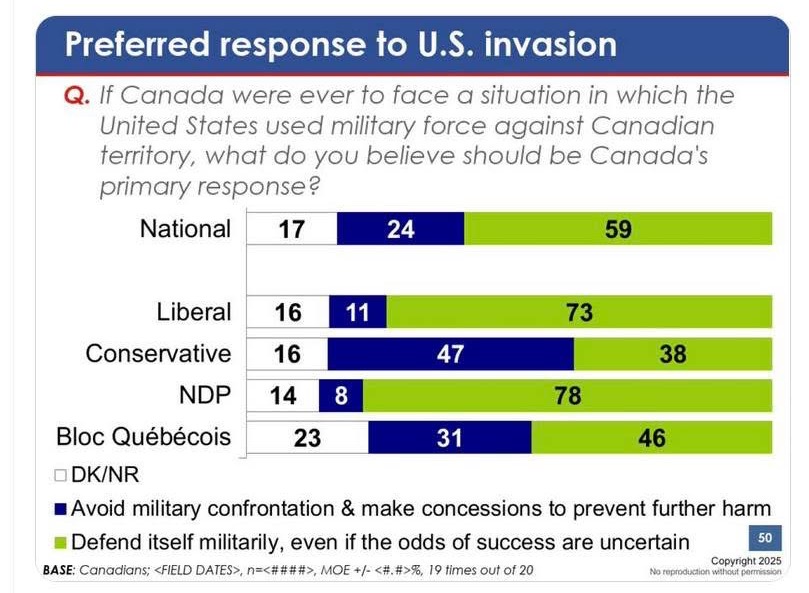
Sovereignty Requires Ships, Not Statements

There is a certain comforting myth Canadians like to tell themselves about the North. That sovereignty is something you declare, map, and defend with the occasional patrol and a strongly worded statement. It is a tidy story. It is also no longer true.

The Arctic is changing faster than our habits of thought. Ice patterns are less predictable, shipping seasons are longer, and great powers are no longer treating the polar regions as distant margins. They are treating them as operating environments. In that context, the Royal Canadian Navy’s quiet exploration of heavy, ice-capable amphibious landing ships deserves far more public attention than it has received.

These would not be symbols. They would be tools.

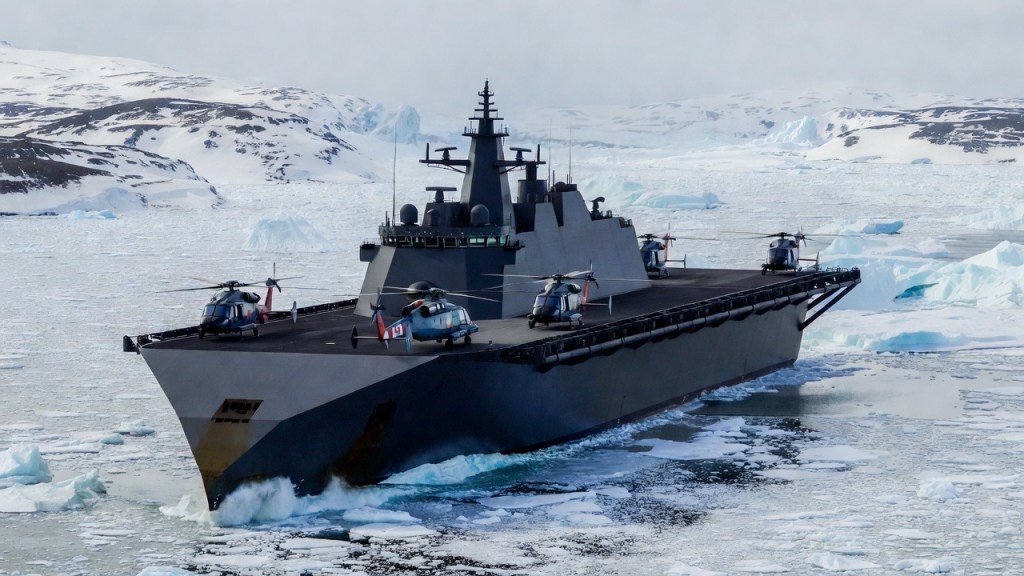
The idea is straightforward. Build Polar Class 2 amphibious ships capable of breaking ice, carrying troops and vehicles, and landing them directly onto undeveloped shorelines. In other words, floating bases that can operate independently across the Arctic archipelago, where ports are rare, airfields are limited, and weather regularly laughs at planning assumptions made in Ottawa.

This matters because Canada’s Arctic problem has never been about law. It has always been about logistics.

We claim a vast northern territory, but our ability to operate there is thin, seasonal, and fragile. We fly in when we can, sail in when ice allows, and leave when winter asserts itself. Presence is episodic. Capability is constrained. Persistence is mostly aspirational.

Russia, by contrast, has spent decades building the unglamorous machinery of Arctic power. Ice-strengthened amphibious ships. Heavy logistics vessels. A fleet designed not to visit the Arctic but to live in it. This is not about imminent conflict. It is about what serious states do when they intend to control their operating environment.

A Canadian Arctic mobile base would change the conversation. It would allow the movement of troops, Rangers, equipment, and supplies without waiting for ports that do not exist. It would support disaster response, search and rescue, medical care, and environmental protection in regions where help currently arrives late or not at all. It would give commanders options that do not depend on fragile airlift chains or ideal weather windows.

Just as importantly, it would allow Canada to stay.

Polar Class 2 capability is the dividing line between symbolism and seriousness. These ships could operate year-round in heavy ice, not just skirt the edges of the season. That is what credibility looks like in the Arctic. Not constant activity, but the unquestioned ability to act when required.

There is also a domestic dimension that should not be dismissed. Designing and building these vessels in Canadian shipyards would deepen national expertise in Arctic naval architecture and ice operations. It would anchor the National Shipbuilding Strategy in future capability rather than replacement alone. Sovereignty is reinforced when a country can design, build, crew, and sustain the tools it needs for its own geography.

None of this is cheap or easy. Crewing will be difficult. Sustainment will be demanding. Political patience will be tested the first time costs rise or timelines slip. That is always the case with real capability, which is why symbolic alternatives are so tempting.

But the alternative path is well worn and well known. Light patrol ships. Seasonal deployments. Carefully photographed exercises. Earnest speeches about the North delivered from comfortable distances.

At some point, a country has to decide whether its Arctic is a talking point or a responsibility.

Amphibious, ice-capable ships are not about militarizing the North. They are about acknowledging reality. The Arctic is not becoming less important. It is becoming more accessible, more contested, and more consequential. Sovereignty, in that world, is not what you say. It is what you can do, consistently, in all seasons.

The North does not need grand gestures. It needs presence that endures.

Canadian Rural Access Inequalities 

Canada often celebrates its vast rural, remote, and northern regions as integral to its identity, yet the majority of financial resources and policy attention remain concentrated in urban centers. While cities drive much of the economy, neglecting rural and northern areas undermines the long-term sustainability of the country. These regions are critical for natural resource industries, agriculture, and preserving Canada’s cultural heritage, yet they face declining populations, crumbling infrastructure, and limited services.

Despite the guarantees of the Canadian Charter of Rights and Freedoms, which emphasizes equality and fairness, these regions frequently face disparities in healthcare, education, infrastructure, and other essential services. These inequities persist due to a combination of logistical, financial, and policy-related barriers. Below is a discussion of this premise, supported by examples and potential solutions.

Challenges Faced by Rural, Remote, and Northern Communities
1. Healthcare Disparities
Remote communities often experience significant shortages of healthcare professionals, facilities, and specialized care. For instance, residents in northern Manitoba or Nunavut might travel hundreds or even thousands of kilometers to access basic medical care.
Example: In Nunavut, life expectancy is 10 years shorter than the national average, largely due to limited access to healthcare and the high cost of transporting goods and services.

2. Education Inequities
Access to quality education is another persistent issue. Small, remote communities may have only one school, often underfunded and lacking specialized programs, teachers, or technology.
Example: Many First Nations reserves face underfunded schools, with per-student funding far below what urban or provincial schools receive.

3. Infrastructure Gaps
The lack of reliable infrastructure, such as roads, internet access, and public transit, further marginalizes these communities.
Example: In rural Ontario and northern Quebec, poor internet connectivity has hindered students’ access to online learning opportunities, particularly during the COVID-19 pandemic.

4. Economic Disparities
Many rural and northern regions rely on resource extraction industries, which are cyclical and often leave communities economically vulnerable. Diversification of local economies is limited by the lack of investment and infrastructure.

5. Climate Challenges
Northern communities are disproportionately affected by climate change. Melting permafrost damages homes and infrastructure, while extreme weather events increase the costs of living and delivering essential services.

Causes of Inequities
1. Geography and Population Density
The low population density of rural and northern regions increases the cost of delivering services, making it less appealing for private companies and harder for governments to justify investments.

2. Policy Gaps
Federal and provincial governments often adopt a one-size-fits-all approach to programs, which fails to consider the unique needs of remote communities. For example, healthcare and education funding formulas are typically based on population rather than geographic need.

3. Jurisdictional Challenges
Overlap between federal, provincial, and municipal responsibilities can lead to delays, inefficiencies, or outright neglect. Indigenous communities, in particular, face systemic inequities due to ongoing jurisdictional disputes (e.g., the federal government’s underfunding of Indigenous child welfare services).

Potential Solutions
1. Tailored Policies and Funding
Governments should allocate funding based on need rather than population. For example, increasing healthcare subsidies for rural and northern areas could attract professionals through loan forgiveness programs or financial incentives.

2. Invest in Infrastructure
Investing in critical infrastructure such as broadband internet, roads, and public transit would connect isolated regions with urban centers, enabling better access to services.
Example: The Universal Broadband Fund has made strides in improving rural internet access, but continued expansion is necessary.

3. Support for Indigenous Communities
Indigenous communities often face compounded challenges. Ensuring equitable funding for on-reserve schools, healthcare, and housing would address systemic inequities.
Example: Implementing the recommendations of the Truth and Reconciliation Commission could help bridge gaps in access to education and other services.

4. Decentralized Service Delivery
Adopting community-led approaches and decentralizing decision-making processes would empower local governments and organizations to tailor programs to their specific needs.

5. Mobile and Digital Solutions
Expanding the use of telemedicine and online learning platforms can bridge gaps in healthcare and education. However, this requires concurrent investment in digital infrastructure.

6. Sustainable Economic Development
Governments should invest in programs to diversify local economies by supporting industries such as tourism, renewable energy, and sustainable agriculture.

While Canada prides itself on its commitment to equality, rural, remote, and northern communities continue to lag behind due to systemic barriers and geographic realities. Addressing these challenges requires a combination of targeted policies, increased investment, and a commitment to collaboration across all levels of government. By focusing on long-term solutions, Canada can uphold the values enshrined in its Charter of Rights and ensure fair and equitable access to programs and services for all its citizens.

Rebalancing financial resources is essential to support infrastructure, healthcare, and economic development in these areas. Strategic investment would not only boost regional economies but also safeguard the Canada we pride ourselves on.

For further reading, the following sources provide valuable insights:
• “Life and Death in Northern Canada,” Canadian Medical Association Journal (CMAJ)
• “Broadband Connectivity in Rural and Remote Areas,” Canadian Radio-television and Telecommunications Commission (CRTC)
• Truth and Reconciliation Commission of Canada: Calls to Action

After Primacy: The Reordering of Alliances in a Post-American Western Bloc

The crisis imagined in Greenland is not important because of the territory itself. Its significance lies in what it would force into the open. The assumption that the West is synonymous with the United States has quietly structured global politics since 1945. Once that assumption breaks, the system does not collapse. It rebalances.

What follows is not a retreat from collective security, but its redistribution.

A reshaped NATO would emerge not through formal rupture, but through functional adaptation.

NATO’s defining feature has always been military integration under American leadership. In the post primacy phase, leadership would fragment without disappearing. The alliance would increasingly resemble a federation of security clusters rather than a single hierarchy. European command capacity would deepen. Arctic security would be governed through multilateral frameworks that deliberately limit unilateral dominance. Intelligence sharing would persist, but no longer assume uniform trust.

The United States would remain inside NATO, but no longer at its center of gravity.

This would not weaken deterrence. It would diversify it. Deterrence would rely less on the promise of overwhelming force and more on the certainty that aggression triggers coordinated exclusion, denial of access, and long term strategic isolation. NATO would become less reactive, less sentimental, and more conditional.

Security would be preserved not by loyalty, but by enforceable norms.

Parallel to this shift, a stronger economic alliance between the European Union and Canada would begin to take shape.

The logic is structural. Canada is economically integrated with the United States, but politically aligned with Europe on regulation, multilateralism, and rule based governance. As US reliability declines, Canada’s incentive to diversify deepens. Trade agreements would expand beyond goods to include energy coordination, industrial policy, research, and critical minerals. Arctic infrastructure would become a shared strategic priority rather than a bilateral vulnerability.

This would not be anti American. It would be post dependent.

The return of the United Kingdom to the European Union, while politically complex, becomes more conceivable in this environment.

Brexit was premised on a world in which the United States remained a stable anchor and global trade rules remained predictable. In a fragmented order, isolation loses its appeal. Economic gravity, regulatory coherence, and strategic relevance would pull London back toward Brussels. The argument would no longer be emotional or historical. It would be practical.

Outside the EU, the UK is exposed. Inside it, the UK is amplified.

Reintegration would not restore the pre Brexit EU. It would reshape it. A more security conscious, geopolitically assertive Europe would emerge, one less reliant on American mediation and more comfortable exercising power collectively.

As the Western bloc decentralizes, BRICS would evolve in response.

BRICS has never been a coherent alliance. It is a convergence of dissatisfaction rather than a shared project. Its internal contradictions are substantial. India and China remain strategic competitors. Brazil oscillates politically. South Africa balances aspiration with constraint. Russia has relied on confrontation to maintain relevance.

What changes in a post American West is not BRICS unity, but BRICS opportunity.

Without a US dominated Western bloc to react against, BRICS members gain room to maneuver independently. Economic experimentation increases. Regional leadership ambitions sharpen. Cooperation becomes more transactional and less ideological. The group shifts from rhetorical counterweight to pragmatic platform.

This does not produce a new bipolar order. It produces a looser multipolar field.

Russia and China, in particular, would recalibrate.

For decades, both have oriented strategy around resisting American dominance. Sanctions, military posture, and diplomatic narratives have been built on that axis. If the West ceases to function as a US proxy, that logic weakens. Europe becomes a distinct actor. Canada and parts of the Global South become independent centers of gravity.

China benefits most from this shift. Its preference has always been fragmentation over confrontation. A West that argues internally, but enforces norms collectively, is harder to demonize but easier to engage selectively. Economic statecraft replaces ideological struggle.

Russia faces a more constrained future.

Its leverage has depended on division within the West combined with American overreach. A Europe capable of autonomous defense and economic coordination leaves Moscow with fewer pressure points. Energy leverage erodes. Military intimidation loses marginal effectiveness. Russia remains disruptive, but increasingly regional rather than systemic.

The rebalancing does not eliminate conflict. It redistributes responsibility.

The defining feature of this new order is adulthood. Alliances cease to function as shelters and begin to function as contracts. Power remains uneven, but impunity is reduced. Legitimacy becomes a strategic asset rather than a rhetorical one.

The United States does not disappear from this system. It is repositioned.

It becomes a powerful participant rather than an unquestioned arbiter. When it cooperates, it is welcomed. When it coerces, it is constrained. This is not punishment. It is normalization.

The long arc of this transformation bends away from dominance and toward equilibrium.

The Greenland crisis, in this context, is remembered not as a territorial dispute, but as the moment when the post war order finally accepted what it had long resisted. Stability does not require a single center. It requires shared limits.

Once those limits are enforced, even the strongest actors must adapt.

After the Shock: Deterrence, Realignment, and the End of Assumed Leadership – Reshaping the West (Part 3) 

Once containment without war is attempted, the central question is no longer how allies respond to American aggression, but what follows if that response holds. Alliances are shaped as much by expectation as by capability. When expectations change, behavior follows.

The most immediate effect would be the collapse of assumed American indispensability.

For decades, NATO has operated on a quiet contradiction. European and Canadian allies publicly affirmed shared leadership while privately assuming that, in extremis, Washington would always anchor the system. A successful, coordinated effort to constrain a US administration would shatter that assumption. Not rhetorically, but operationally. Planning would proceed without default deference. Initiative would move outward rather than upward.

This would not mark the end of US power. It would mark the end of US exemption.

Deterrence would begin to function differently.

Traditional deterrence relies on the credible threat of force. What this crisis would demonstrate is the growing importance of denial deterrence and legitimacy deterrence. The message to future US administrations would be unambiguous. Military superiority does not guarantee political freedom of action. Aggression against allies triggers isolation, loss of access, and long term strategic diminishment.

This form of deterrence is slower, but it is cumulative. It does not require battlefield victories. It requires consistency.

Over time, American institutions themselves would begin to respond.

The United States is not monolithic. Power is distributed across federal agencies, courts, markets, states, corporations, and voters. Sustained external pressure, coupled with internal economic and diplomatic costs, would widen fractures between an aggressive executive and the broader system that depends on stability. Foreign policy isolation would bleed into domestic consequences. Investment would hesitate. Cooperation would thin. Elite consensus would fracture.

History suggests that empires rarely change course because they are defeated. They change course when the costs of dominance exceed the benefits.

For NATO and its partners, the longer term result would be structural diversification.

European defense integration would cease to be aspirational and become routine. Arctic governance would move toward multilateral control frameworks that deliberately dilute unilateral leverage. Intelligence and command structures would evolve to ensure continuity even if a major member becomes unreliable. None of this would require formal exits or dramatic declarations. It would occur through parallelism and redundancy.

The alliance would survive by becoming less centralized and less sentimental.

Globally, the signal would be unmistakable.

Russia and China would lose the ability to credibly argue that Western rules are merely instruments of American convenience. The moment allies demonstrate that those rules apply even to Washington, the narrative shifts. The claim to a rules based order becomes less rhetorical and more demonstrable. Power blocs would still compete, but the terms of legitimacy would tighten.

This would not produce harmony. It would produce constraint.

The most profound shift, however, would be psychological.

Once allies act decisively without waiting for American permission or rescue, the post Cold War era quietly ends. Not with collapse, but with maturation. The transatlantic relationship would no longer be defined by protection and gratitude, but by reciprocity and boundaries.

The United States would remain a critical partner when it chooses cooperation. It would cease to be treated as the system itself.

That distinction is the difference between alliance and dependency.

In that sense, a crisis triggered by Greenland would not simply test NATO. It would complete its evolution. From a structure built to contain an external threat, into one capable of enforcing norms internally without resorting to war.

The real question is not whether such a transformation is possible. The mechanisms exist. The capacity exists. The question is whether allies are willing to accept the discomfort that comes with adulthood in international politics.

Because once impunity is withdrawn, it cannot be restored without consent. And once consent is made conditional, power must finally learn restraint.

Containment Without War: Ending Alliance Impunity in the Twenty First Century – Reshaping the West (Part 2) 

If Part One exposes the fiction of automatic alliance protection, Part Two must confront a harder truth. The absence of a military response does not require submission. This is not 1938, and restraint need not mean appeasement.

A United States move against Greenland under a Trump administration would demand a response designed not to soothe Washington, but to constrain it. The tools exist. What has been lacking is the willingness to use them against an ally that behaves as though alliance membership confers impunity.

The first step would be political isolation, executed collectively and without ambiguity.

NATO members, alongside key non NATO partners, would need to suspend routine diplomatic engagement with the US administration itself. Not the American state. Not American civil society. The administration. This distinction matters. Ambassadors would be recalled for consultations. High level bilateral visits would cease. Joint communiqués would be frozen. Washington would find itself formally present in institutions, but substantively sidelined.

This is not symbolic. Modern power depends on access, legitimacy, and agenda setting. Denying those channels turns raw power into blunt force, costly and inefficient.

The second step would be economic containment, targeted and coordinated.

The mid twentieth century model of blanket sanctions is outdated. Today’s leverage lies in regulatory power, market access, and standards. European states, Canada, and aligned partners would move to restrict US firms closely tied to the administration’s political and financial ecosystem. Defense procurement would be restructured. Technology partnerships would be paused. Financial scrutiny would intensify under existing anti corruption and transparency frameworks.

None of this would require new treaties. It would require resolve.

The message would be clear. Aggression inside the alliance triggers costs that cannot be offset by military dominance alone.

Third, alliance structures themselves would need to adapt in real time.

NATO decision making, already consensus based, would be deliberately narrowed. US participation in strategic planning, intelligence fusion, and Arctic coordination would be curtailed on the grounds of conflict of interest. Parallel European led and transatlantic minus one mechanisms would emerge rapidly, not as an ideological project, but as operational necessity.

This would mark a shift from alliance dependence to alliance resilience.

The fourth pillar would be legal and normative escalation.

Denmark, backed by partners, would pursue coordinated legal action across international forums. Not in the expectation that courts alone would reverse an annexation, but to delegitimize it relentlessly. Every ruling, every advisory opinion, every formal objection would build a cumulative case. The objective would not be immediate reversal, but long term unsustainability.

Occupation without recognition is expensive. Annexation without legitimacy corrodes from within.

Finally, and most critically, allies would need to speak directly to the American public over the head of the administration.

This is not interference. It is alliance preservation. The distinction between a government and a people becomes essential when one diverges sharply from shared norms. Clear, consistent messaging would emphasize that cooperation remains available the moment aggression ceases. The door would not be closed. It would be firmly guarded.

The aim of this strategy is not punishment for its own sake. It is containment without war.

The twentieth century taught the cost of appeasing expansionist behavior. The twenty first century demands something more precise. Not tanks crossing borders, but access withdrawn. Not ultimatums, but coordinated exclusion. Not moral outrage alone, but structural consequences.

A United States that chooses coercion over cooperation cannot be met with nostalgia for past alliances. It must be met with a clear boundary. Power inside a system does not grant license to dismantle it.

The survival of NATO, and of the broader rules based order it claims to defend, would depend on allies finally acting as though that principle applies to everyone. Including the strongest member of the room.

Ottawa at 25: The Amalgamation That Never Delivered

As Ottawa approaches the 25th anniversary of amalgamation this January, the moment invites a frank assessment. In 2001 the provincial government promised that merging 13 municipalities into a single-tier City of Ottawa would streamline governance, cut waste, improve services and stabilize taxes. Amalgamation was sold as modern, efficient and inevitable, a rational response to the untidy patchwork of local governments that once defined the region.

Two and a half decades later the record is far more complicated. Some benefits were real. Many others were aspirational. And for large portions of the city, especially rural and semi-rural communities, amalgamation has been a system that works to them, not for them. Bigger, it turns out, was not better.

The Promise of Better Services – The Reality of Uneven Delivery
The early pitch for amalgamation was simple: unify services and everyone wins. In practice, the outcome has been uneven across geography and income.

Urban residents gained the most. They saw expanded recreation programming, new library access and coordinated planning. Rural areas, by contrast, experienced reduced responsiveness in road maintenance, snow clearing, bylaw enforcement and transit. Communities like West Carleton, Rideau-Goulbourn and Osgoode have spent two decades reminding City Hall that “one size fits all” is not a service model; it is a compromise imposed on communities with profoundly different needs.

The city’s signature public-transit investment – the O-Train LRT system – was supposed to embody the advantages of centralization. Instead it has become a case study in the limits of mega-city governance: severe construction delays, cost overruns, and a nationally publicized public inquiry detailing systemic failures in oversight, transparency and project management. The LRT problems are not merely technical. They illustrate the deeper strain of running a sprawling municipality where accountability is diffused across layers of bureaucracy rather than rooted in local leadership.

The Financial Question: Where Were the Savings?
The financial rationale for amalgamation rested on scale. A bigger city would deliver efficiencies; efficiencies would reduce costs; reduced costs would protect taxpayers.

This never materialized.

Transition costs reached an estimated $189 million. Savings projections were optimistic, not guaranteed. The Transition Board did not promise tax cuts, and indeed taxes did not fall. In many rural and suburban areas they increased sharply, partly due to uniform tax policies that replaced diverse local rates.

Cost pressures accumulated in other ways:
• The city’s share of funding for provincial property-assessment operations has outpaced inflation every year since amalgamation.
• Capital projects, particularly transit, have grown more expensive while their benefits remain unevenly distributed.
• Ottawa now faces an annual transit operating shortfall approaching $140 million, straining a tax base already stretched by road, infrastructure and policing costs.

The efficiencies that were supposed to stabilize municipal finances largely failed to appear. In their place came the financial stresses of a city whose physical footprint rivals Toronto’s but without the provincial funding model Toronto enjoys.

Lost Local Control – And Lost Trust
Perhaps the most significant cost of amalgamation has been the erosion of local governance. Prior to 2001 communities had councils attuned to their unique needs and accountable to residents they lived beside. Today many rural and semi-rural residents feel politically peripheral; listened to, but not heard.

Ward representation cannot replicate local councils. Nor can city-wide policies reflect the distinct rhythms of a village like Manotick, the agricultural economy of Osgoode, or the infrastructure realities of West Carleton. The result has been a steady accumulation of resentment: a sense that rural areas subsidize urban priorities while their own needs remain secondary.

The weakening of local identity has democratic implications. Decision-making concentrated at the centre becomes less transparent, less responsive and harder for residents to influence. The LRT inquiry offered a stark reminder of what can happen when oversight drifts too far from citizens and too far from the specific communities most affected.

A Quarter Century Later: What Has Ottawa Gained – And What Has It Lost?
It would be simplistic to call Ottawa’s amalgamation a failure. Some benefits are undeniable: unified planning, expanded programming, strengthened economic-development strategies and early years of reasonably controlled citywide spending.

But at a structural level, amalgamation has not delivered its central promises. Taxes did not fall. Services did not equalize. Financial pressures did not ease. The governance system is more centralized but not more accountable. And the diversity of Ottawa’s communities – rural, suburban and urban – often exceeds the capacity of a single administrative structure to manage well.

The lesson is not that amalgamation should be reversed. The lesson is that centralized government must be paired with robust local power, transparent decision-making and an honest recognition that “efficiency” cannot override community identity or regional diversity.

As the 25-year mark approaches, Ottawa has an opportunity to look clearly at what was promised, what was delivered and what must change to make this city work fairly for everyone. Amalgamation may be permanent, but its shortcomings do not have to be.

Sources: 
en.wikipedia.org
todayinottawashistory.wordpress.com
app06.ottawa.ca (Rural Affairs Committee reports)
ottawa.ca (Long-Range Financial Plan II and III)
spcottawa.on.ca (WOCRC rural community report)
imfg.org (Single-tier municipal governance studies)
globalnews.ca (Ottawa LRT Public Inquiry)
ottawa.citynews.ca (Transit financial shortfall)
obj.ca (De-amalgamation commentary)

The Strategic Shift Behind the 2025 U.S. National Security Strategy

The newly released 2025 U.S. National Security Strategy signals a significant departure from the traditional principles that defined American foreign policy for decades. Longstanding commitments to collective defense, liberal internationalism, and multilateral cooperation have been replaced with a posture that treats global engagement as a burden and alliances as conditional assets rather than enduring partnerships.

This shift, framed as a necessary rebalancing of national priorities, is being interpreted by analysts and allied governments as a proactive threat. The threat is not overt or kinetic. Instead, it emerges through the document’s language, strategic preferences, and economic positioning. The resulting landscape places NATO allies, especially Canada, in a vulnerable and uncertain position.

A Reimagined Alliance System

The Strategy redefines alliances in transactional terms. Rather than relying on shared values, mutual defense responsibilities, and long-term strategic vision, the document characterizes alliances as fiscal and strategic obligations that must be justified by allies through increased spending and alignment with U.S. interests. Reports highlight the new emphasis on defense burden-sharing and the suggestion that U.S. commitments may be scaled back for countries that do not meet Washington’s expectations.

This reframing undermines the foundational trust of the NATO system. It places countries like Canada, which historically spends below preferred thresholds, in a position where strategic reliability could be questioned, weakening the security guarantees that NATO has long been built upon.

Europe Recast as a Strategic Project

The Strategy’s rhetoric toward Europe marks a sharp departure from conventional diplomatic framing. The document describes Europe as struggling with demographic decline, economic stagnation, and cultural erosion, and it presents the United States as a guardian poised to steer the continent’s political future. Analysts have flagged the Strategy’s explicit support for “patriotic” political movements in Europe, a development interpreted as a willingness to influence or reshape domestic politics within allied states.

Such language introduces profound uncertainty into the transatlantic relationship. Rather than treating allies as sovereign equals, the Strategy positions them as ideological battlegrounds. For Canada, this suggests that allies’ internal affairs may no longer be off-limits to U.S. strategic intervention, further eroding norms of mutual respect.

The Western Hemisphere as Exclusive American Sphere

A revival of a hemispheric dominance doctrine – effectively a twenty-first century interpretation of the Monroe Doctrine – marks one of the most consequential pivots in the document. The Strategy asserts the Western Hemisphere as an exclusive zone of American influence, intended to be economically aligned, politically manageable, and strategically compliant with U.S. goals.

This shift directly affects Canada. Economic interdependence, continental supply chains, and cross-border migration policies are recast as tools of strategic leverage. Analysts warn that this places Canada in a subordinate position in regional planning and policy formation. Canada’s economic autonomy becomes more limited under a framework that prioritizes U.S. control over hemispheric trade, energy, technology, and resource security.

From Partnership to Asset Management

The Strategy’s architecture suggests a broader conceptual change: allies are treated less as partners and more as assets whose value is measured against U.S. priorities. This represents a decisive break from the postwar model of shared responsibility and common purpose. Guarantees once considered automatic – such as the collective defense obligations that underpin NATO – appear increasingly conditional.

Such a shift introduces strategic instability. Allies must now anticipate fluctuating levels of American engagement based on domestic political calculations rather than consistent treaty commitments. This new posture raises questions about the reliability of alliances in moments of crisis.

Why the Strategy Constitutes a Proactive Threat

Several core elements of the document create a proactive threat to NATO partners and particularly to Canada.

  • Erosion of Collective Defense Norms
    By tying U.S. commitments to spending thresholds and ideological alignment, the Strategy weakens the notion of mutual defense and introduces uncertainty into NATO’s core purpose.
  • Weaponization of Economic Interdependence
    The emphasis on economic nationalism transforms North American trade and supply-chain relationships into pressure points that can be exploited for political or strategic gain.
  • Normalization of Political Intervention in Allied States
    The encouragement of “patriotic” European political movements signals a new willingness to involve itself in domestic ideological debates within allied countries.
  • Marginalization of Allies Not Deemed Strategically Essential
    Countries outside Washington’s immediate priorities risk being sidelined, placing Canada at long-term strategic risk.

A New Geopolitical Landscape for Canada

The 2025 National Security Strategy marks a reordering of global priorities that places Canada in a precarious position. The traditional assumptions underlying Canada’s security and economic planning – predictable U.S. leadership, reliable NATO guarantees, and a shared democratic project – are directly challenged by the Strategy’s new direction.

In this emerging landscape, Canada may face a future in which the United States no longer acts as a steady anchor of the transatlantic alliance, but instead as a dominant regional power pursuing unilateral advantage. The resulting realignment may require Canada and other NATO members to rethink foreign policy strategies, diversify partnerships, and strengthen regional autonomy to avoid becoming collateral variables in an American-centered strategic calculus.

This is the environment the new document creates: one where allies must navigate not the threat of abandonment, but the more subtle and destabilizing threat of conditional partnership, shifting expectations, and ideological intervention.

Australia: The Prize No One Talks About

There’s a story playing out on the world stage that barely makes a ripple in most media cycles. While the headlines fixate on Ukraine, Gaza, or Taiwan, an unspoken contest is quietly unfolding for influence over a country that has, for too long, been treated as a polite and distant cousin in global affairs: Australia.

We’re used to thinking of the United States as having eyes on Canada, economically, culturally, and strategically. The integration is old news: NORAD, pipelines, the world’s longest undefended border, and the quiet assumptions of shared destiny. But if you really want to understand the next chapter of global power politics, don’t look north. Look west. Look south. Look to Australia.

What’s emerging now is not a scramble for land or flags, but for strategic intimacy, a deep intertwining of interests, logistics, defense capabilities, and ideological alignment. Australia is the prize not because it’s weak, but because it’s vital: geographically, economically, and politically.

The American Pivot
The United States is already entrenched. Through AUKUS, it has committed to helping Australia build nuclear-powered submarines and integrate into the U.S. military-industrial supply chain. But this is more than just a defense pact. It’s about locking Australia into a security and technology architecture that positions it as a forward base for U.S. naval and cyber operations, a southern anchor against Chinese ambitions in the Indo-Pacific.

What few people understand is this: Australia is becoming America’s new front line. Not in the sense of war, but in the grand strategy of containment, deterrence, and projection. The U.S. doesn’t want Australia as a vassal, it wants it as a platform, a co-pilot, a bulwark. In many ways, it’s happening already.

India Enters the Frame
But Washington isn’t the only capital watching Canberra. New Delhi is quietly but deliberately courting Australia too, not for bases, but for bonds.

India sees Australia through a different lens: not as a strategic outpost, but as an extension of its civilizational, economic, and diasporic reach. With a large and growing Indian community in Australia, rising trade links, and joint naval exercises in the Indian Ocean, India’s interest is long-term and layered.

What India understands, and what many in the West overlook, is that Australia is a natural expansion point for a rising democratic Asia. It’s a source of energy, food, space, and credibility. In a world where climate instability and resource scarcity are redefining security, having Australia in your corner isn’t optional. It’s essential.

Why It Matters
This isn’t a turf war. It’s not a return to Cold War blocs. It’s more fluid than that, a web of influence where infrastructure, education, culture, and soft power matter just as much as tanks and treaties.

The real story is this: Australia is shifting from the periphery to the center of global strategic thought. It’s no longer just “down under.” It’s at the crossroads of the world’s most dynamic (and dangerous) geopolitical contest: the one unfolding across the Indo-Pacific.

And here’s the kicker: Australians are waking up to this. The era of benign non-alignment is over. The decisions they make in the next decade, about alliances, sovereignty, and identity — will echo far beyond their shores.

So the next time someone tells you it’s all about Europe or the South China Sea, remind them: The most consequential strategic competition of the 21st century might just be quietly unfolding in the sunburnt country; and it’s not just China who’s watching. The U.S. and India are, too. And they both want Australia in their future.

A Year in the Wilds of The Rowanwood Chronicles

A reflective essay by the fellow who somehow decided that blogging about politics, climate, gender, and quantum mechanics was a relaxing hobby

I did not set out to become a blogger. No one does. Blogging is something that happens to you when you’ve said “someone should really write about this” one too many times and then realize the someone is you. That was my first year of The Rowanwood Chronicles. A steady accumulation of small irritations, large curiosities, and the occasional planetary existential dread finally pressuring me into a keyboard.

Over the past twelve months I have written about food systems, seismic faults, mononormativity, AI governance, and the demise of centralized social media platforms. This is, I admit, not a tidy list. Most writers pick a lane. I picked several highways, a few dirt roads, and one unmarked trail that led straight into a thicket of gender theory. Some readers have thanked me. Others have quietly backed away like I had started talking about cryptocurrency at a family barbecue. Fair enough.

The funny thing about running a blog with the byline “Conversations That Might Just Matter” is that you end up feeling mildly responsible for the state of the world. Somewhere in the back of my mind I became convinced that if I took one week off, climate policy would collapse, privacy laws would be gutted by corporate lawyers, and Canada would discover a massive geological fault running directly under my house. It is exhausting being the only person preventing civilization from tipping off its axis, but I have bravely carried on.

Along the way, I learned a few things.

First, people really do want long-form writing. They want context. They want to know why their health system is groaning like a Victorian heroine on a staircase. They want someone to explain decentralized social media without sounding like a blockchain evangelist who drinks only powdered mushroom tea. They want nuance rendered in plain language. I can do that. Sometimes even coherently.

Second, writing about politics is like trying to pet a squirrel. You can do it, but you have to keep your hands calm, your movements measured, and be prepared for the possibility that something small and unpredictable will bite you. Every time I published a political piece, I felt like I was tiptoeing across a frozen lake holding a hot cup of tea. Most of the time it held. Some days it cracked.

Third, the world is endlessly, maddeningly fascinating. One moment I was researching drought-related crop instability in the Global South. The next, I was reading government reports about flood plain management. Then I found myself knee-deep in a rabbit hole about the Tintina Fault, which sits there in the Yukon like an unbothered geological time bomb politely waiting its turn. Writing the blog became my excuse to satisfy every curiosity I have ever had. It turns out I have many.

What surprised me most was what readers responded to. Not the posts where I worked terribly hard to sound authoritative. Not the deeply researched pieces where I combed through reports like a librarian possessed. No. What people loved most were the pieces where I sounded like myself. Slightly bemused. Occasionally outraged. Often caffeinated. Always trying to understand the world without pretending to have mastered it.

That was the gift of the year. The realization that a blog does not need to be grand to be meaningful. It simply needs to be honest. Steady. And maybe a little mischievous.

I will admit that I sometimes wondered whether writing about governance, equity, and science from my small corner of Canada made any difference at all. But each time someone wrote to say a post clarified something for them, or started a discussion in their household, or helped them feel less alone in their confusion about the world, I remembered why I started.

I began The Rowanwood Chronicles because I wanted to understand things. I kept writing because I realized other people wanted to understand them too.

So here I am, a year older, slightly better informed, and armed with a list of future topics that spans everything from biodiversity corridors to the psychology of certainty. The world is complicated. My curiosity is incurable. And The Rowanwood Chronicles is still the place where I try to make sense of it all.

If nothing else, this year taught me that even in a noisy world full of predictions and outrage, there is room for thoughtful conversation. There is room for humour. There is room for stubborn optimism. And there is definitely room for one more cup of tea before I press publish.

Montreal on Tap: How a Legendary Brewery School Will Shape Canada’s Craft Scene

Since its founding in 1872 in Chicago, the Siebel Institute has stood as a cornerstone of brewing education in North America. Its decision to relocate classroom operations to Montréal beginning January 2026 marks more than the closing of a historic chapter in U.S. brewing history. It signals a shift in where brewing knowledge, innovation, and the future of craft beer will be cultivated.  

At its new address on rue Sainte‑Catherine East, the school will be colocated with a baking and fermentation training facility run by its parent company. The move was explicitly justified by difficulties created by recent U.S. regulatory changes, especially obstacles for international students who, by the Institute’s own account, make up the majority of its student body.  

That this shift is happening now is significant. The Canadian craft beer scene is not fringe or marginal. On the contrary, the market has been growing steadily: in 2024 the Canadian craft beer industry produced about 1.8 million hectolitres, and industry analysts expect output to rise to 2.3 million hectolitres by 2033.  

The arrival of Siebel amplifies several emergent dynamics. First, it will bring a high level of technical brewing education, historically concentrated in the United States, into Canada. For Canadian, Québécois, and even international students, now studying in Montréal rather than Chicago, the barrier to access is lowered. Brewing will become more than an artisanal trade learned on the job; it becomes a discipline taught with academic rigour and breadth.

It reinforces Canada’s growing identity as a brewing hub. Québec already has a deep craft beer tradition, including well‑established brewpubs and microbreweries that trace local heritage while experimenting with modern styles. The consolidation of advanced brewing education in Montréal will likely accelerate innovation, experimentation, and quality, raising the bar for the entire Quebecois brewing community and influencing national trends. Indeed a Montreal brewer described Siebel as “one of the few schools in North America that offers classes on brewing.”  

The timing connects to broader consumer and economic trends. As Canadians increasingly favour locally brewed, artisanal beers; with taste, provenance, and authenticity valued the craft beer segment is poised for expansion.   By anchoring educational infrastructure in Canada, brewing knowledge and technical capacity become part of that expansion rather than imported after the fact.

The relocation underscores a cultural shift: brewing is no longer just a subculture of beer enthusiasts and hobbyists. It is becoming a discipline, a profession, and a pillar of local economies and regional identities. Labour, supply‑chain, agriculture, tourism, and community culture all circle back to the brewery. In that sense, Siebel’s move to Montréal should not be read as the quiet shuttering of a school, but as the planting of a seed: a seed for a more mature, more technically grounded, more globally competitive Canadian brewing industry.

The significance lies not merely in changing postal codes. It lies in the fact that a venerable American institution, one whose graduates helped shape generations of breweries, has chosen to anchor its future within Canada. That choice reflects where the industry sees opportunity, where students now find access, and where brewing’s next generation of artisans and innovators are likely to train.