Amalgamation? Lessons Niagara Cannot Afford to Ignore

There is a recurring belief in Canadian municipal politics that scale solves problems. If governance feels messy, make it larger. If coordination is difficult, centralize it. If local voices disagree, fold them into a single chorus and call it harmony. The proposal to merge the municipalities of the Regional Municipality of Niagara into one city rests squarely on this assumption: that bigger government will behave more rationally, more efficiently, and more strategically than a collection of smaller ones.

History suggests otherwise.

Niagara is not a fragmented city waiting to be assembled. It is a region of distinct places bound together by geography, not by a single urban heartbeat. Niagara Falls lives on tourism and spectacle. St. Catharines functions as an educational, service, and industrial hub. Welland carries a canal town identity shaped by manufacturing and working-class roots. Niagara-on-the-Lake trades on heritage, agriculture, and controlled growth. The lakefront communities of west Niagara look toward Hamilton, not the Falls. Rural townships measure success in acres preserved, not towers approved.

To govern these places as though they share identical needs is not efficiency. It is administrative wishful thinking.

The Ottawa Example: A Warning, Not a Blueprint
Advocates of amalgamation frequently point to the creation of the modern Ottawa from the former Regional Municipality of Ottawa–Carleton as proof that diverse municipalities can be fused into a single functional city. What is often omitted is that the fusion solved technical coordination problems while creating enduring political ones.

Ottawa gained unified transit planning, standardized services, and the ability to execute large infrastructure projects. It also inherited a permanent rural-urban divide that shapes every budget, planning decision, and election cycle. Farmers in the outer wards pay for light rail they will never ride. Suburban taxpayers argue they subsidize downtown priorities. Former municipalities continue to organize politically along pre-2001 boundaries, a quarter century later.

Amalgamation did not erase local identity. It merely removed the local governments that once represented it.

Niagara would face this tension in amplified form. Ottawa, despite its diversity, had a dominant employment core and a single metropolitan labour market. Niagara has several centres and multiple economic logics. Tourism, agriculture, manufacturing, retirement living, cross-border trade, and suburban commuting do not pull in the same direction.

Power Will Flow Somewhere
Every amalgamation produces a gravitational centre, whether intended or not. Decisions must be made, staff must be housed, budgets must be prioritized. In a single Niagara city, influence would inevitably concentrate in the largest population centres, most likely St. Catharines or Niagara Falls. Smaller municipalities would not disappear, but their ability to shape outcomes would diminish.

This is not a moral failure. It is mathematics.

Residents of smaller towns would still vote, but their votes would be diluted across a much larger electorate. Local issues that once dominated council agendas would become minor items competing with region-wide priorities. A zoning dispute that matters deeply to a village could be invisible in a chamber preoccupied with housing targets or tourism infrastructure.

Democracy at scale becomes less intimate and more transactional.

Coordination Without Erasure
None of this suggests the status quo is perfect. Niagara does suffer from fragmented planning, duplicated administration, and occasional municipal rivalry. Regional transit integration demonstrates that cooperation can produce tangible benefits without dissolving local governments. Shared services for policing, utilities, and infrastructure can achieve economies of scale while preserving local autonomy.

The real strategic question is not whether Niagara needs to function more cohesively. It is whether cohesion requires uniformity.

A region can behave like a federation rather than a unitary state. Strong regional planning frameworks, binding growth strategies, and pooled services can align municipalities without forcing them into a single institutional mold. This approach accepts that diversity is not a problem to be engineered away but a reality to be governed intelligently.

Bigger Is Not the Same as Better
Large cities do not automatically make better decisions. They simply make larger ones. When those decisions are wrong, the consequences are correspondingly bigger. A misjudged development strategy, infrastructure investment, or tax policy applied across a half-million residents can entrench problems for decades.

Small municipalities, for all their limitations, retain the ability to experiment, adapt, and reflect local priorities quickly. They function as laboratories of governance. Amalgamation replaces this patchwork of experimentation with a single policy regime that must suit everyone and will inevitably fit some poorly.

Uniformity feels orderly from a distance. Up close, it can be suffocating.

The Strategic Path Forward
If Niagara seeks a more prosperous and coherent future, the priority should be integration of function rather than consolidation of identity. Build region-wide systems where scale truly matters: transit, major infrastructure, environmental management, economic promotion. Preserve local decision-making where place matters most: land use, community character, local services, cultural priorities.

The lesson from Ottawa is not that amalgamation fails or succeeds. It is that it solves some problems while creating others that cannot easily be reversed. Once municipalities disappear, recreating them is practically impossible.

Niagara does not need to become one city to act like a mature region. It needs governance arrangements that respect the fact that it is not one place, and never has been.

Bigger government can coordinate more. It cannot care more, listen better, or understand the nuances of twelve different communities at once. Those qualities arise from proximity, not scale.


Small Nations, Shared Games: A Commonwealth Investment in the Future

For much of its modern history, the Commonwealth Games has drifted toward the logic of other mega-events: large cities, escalating costs, and a quiet assumption that only wealthy hosts need apply. Yet the Commonwealth itself is not a club of large powers. It is, numerically and culturally, a network dominated by small and developing states. Reimagining the Games so they are hosted by the smallest members, but financed collectively according to national GDP would not be charity. It would be strategic infrastructure policy disguised as sport.

Such a model would transform the Games from a periodic spectacle into a rotating development engine, deliberately directed toward places where capital investment produces the greatest long-term return.

Infrastructure Where It Matters Most
Small Commonwealth countries often face the same structural constraints: limited transport networks, fragile energy systems, housing shortages, and vulnerability to climate shocks. These are not failures of governance so much as arithmetic. When a nation of a few hundred thousand people must finance major infrastructure alone, projects either stall or never begin.

A GDP-weighted funding model would change that equation. Large economies such as CanadaAustraliaUnited Kingdom, and India could contribute proportionally without significant domestic strain, while host nations gain assets that would otherwise take generations to afford.

Crucially, these investments would not need to be limited to stadiums. Modern Games planning increasingly integrates:
• Airport and port expansion
• Renewable energy grids
• Water and sanitation upgrades
• Telecommunications networks
• Public transit
• Resilient housing

In developing contexts, these are not ancillary benefits. They are transformational foundations for economic growth.

Tourism as a Permanent Industry, Not a Seasonal Gamble
For many small states, tourism is already the primary economic engine. Hosting the Games would accelerate that sector by compressing decades of branding and infrastructure development into a single cycle.

Consider nations such as BarbadosMalta, or Seychelles. Global exposure from a major sporting event can reposition a country from niche destination to household name. Improved airports, hotels, and transport systems continue generating revenue long after the closing ceremony.

Unlike industrial mega-projects, tourism infrastructure scales naturally to local economies. A new terminal, cruise port, or transit corridor does not become obsolete. It becomes the backbone of a sustainable service economy.

Climate Resilience Disguised as Event Planning
Many of the Commonwealth’s smallest members sit on the front lines of climate change. Sea-level rise, stronger storms, and water insecurity are existential threats. Yet climate adaptation projects are expensive and often struggle to secure financing.

A collectively funded Games could prioritize resilient design as a requirement rather than an afterthought:
• Elevated and storm-resistant construction
• Microgrids powered by renewables
• Flood-resistant transport corridors
• Emergency response infrastructure
• Water security systems

In effect, the Commonwealth would be financing survival infrastructure under the politically palatable banner of sport.

Ending the Prestige Arms Race
Large hosts often overspend to signal global status, producing stadiums that struggle to find post-event uses. Small states cannot afford that kind of extravagance. Their constraints encourage practicality.

Facilities would likely be:
• Modular or temporary
• Scaled to local demand
• Designed for schools and community use
• Integrated into existing urban plans

The result could be the most sustainable version of a mega-event yet attempted, precisely because the host nation lacks the capacity for waste.

A More Meaningful Commonwealth
The Commonwealth frequently struggles to define its contemporary purpose beyond historical ties. A shared funding model for the Games would provide a concrete expression of mutual responsibility.

Citizens in wealthier countries would see tangible outcomes from their contributions: functioning infrastructure, stable partners, and strengthened trade relationships. Smaller nations would experience membership as materially beneficial rather than symbolic.

This is not altruism alone. Stability in vulnerable regions reduces migration pressures, disaster response costs, and geopolitical volatility. Development is cheaper than crisis management.

A Distributed Model for the Future
Logistical challenges are real, but not insurmountable. Events could be distributed across neighboring islands or regions, supported by temporary accommodations such as cruise ships and regional transport networks. Modern broadcasting reduces the need for centralized mega-venues, allowing the Games to function as a multi-site festival rather than a single urban takeover.

Such flexibility aligns with the geography of many small Commonwealth states, particularly in the Caribbean and Pacific.

Strategic Optimism
A Commonwealth Games hosted by its smallest members and funded by all according to capacity would represent a quiet, but profound shift in global thinking. It would suggest that international gatherings need not be competitions for prestige but opportunities for targeted development.

The return on investment would be measured not in medal tables but in decades of improved mobility, energy security, tourism revenue, and climate resilience.

In a world where large institutions often struggle to demonstrate relevance, this model would do something radical: it would build things that last, in places that need them most.

And in doing so, the Commonwealth would rediscover a purpose suited not to its past, but to its future.

When the Disruptors Become the Establishment

Not that long ago, ride-share companies blew up the taxi business. Taxis were expensive, hard to find, and controlled by licensing systems that made competition almost impossible. Then along came apps that let you press a button and a car appeared. It felt modern, fair, even a little revolutionary. Companies like Uber and Lyft sold the idea that drivers would be their own bosses and riders would finally get decent service at a reasonable price. For a while, that story mostly held up. But success changes things. Once these companies became dominant, they started to look less like rebels and more like the system they replaced. They set the prices, they control which driver gets which trip, and they take a substantial cut of every ride. Drivers supply the car, the fuel, the insurance, and the risk, yet they have very little say in how the business actually runs. Over time, many drivers have realized they are not really independent operators. They are dependent on an app they do not control.

A Different Kind of Challenge
A newer company called Empower is challenging that arrangement in a way that makes the big platforms uncomfortable. Instead of taking a percentage from every trip, it charges drivers a flat monthly fee to use the software. Drivers keep the full fare and can set their own prices. In plain language, the app becomes a tool rather than a boss. That one change flips the economics. If a driver keeps all the money from each ride, even lower fares can still produce higher income. Riders may pay less, drivers may earn more, and the company makes its money from subscriptions instead of commissions. More importantly, drivers start thinking like small business owners again. They can build repeat customers, choose when and where they work, and decide what their time is worth. That shift in mindset may be more disruptive than the pricing model itself.

Why This Actually Threatens the Giants
The real power of the big ride-share companies is control. They control access to passengers, they control pricing, and they control the flow of work through opaque algorithms. Take away that control and they become much less special. A competitor does not need to replace them everywhere. It only needs enough drivers and riders in one city to make the service reliable. Once people can get rides without using the dominant app, loyalty disappears quickly. Most riders already keep multiple apps on their phones. They tap whichever one is cheapest or fastest. Drivers do the same. If a new platform lets them earn more per trip, they will use it alongside the old ones. Over time, that weakens the incumbents without any dramatic collapse.

The Driver Problem Nobody Fixed
There is also a deeper issue. Many drivers feel squeezed. Ride prices have gone up for passengers, but driver pay has often not kept pace. At the same time, drivers absorb rising costs for fuel, maintenance, insurance, and vehicle replacement. Add in sudden policy changes, confusing pay formulas, and the risk of being removed from the platform without much explanation, and frustration builds. When a workforce becomes resentful, it does not revolt all at once. It quietly looks for exits. A company that promises independence rather than dependence taps into that frustration. It does not need to convince every driver, only enough to create a viable alternative.

Regulation Will Decide the Outcome
Whether this new model spreads widely may depend less on business strategy and more on government rules. Cities require ride-share services to meet safety standards, carry commercial insurance, and follow licensing systems. Large corporations can absorb these costs easily. Smaller challengers often cannot, especially if they argue they are only software providers rather than transportation companies. Regulators say these rules protect passengers. Critics say they also protect incumbents from competition. Both things can be true at the same time.

From Revolutionary to Utility
Ride-sharing is no longer exciting. It is infrastructure, like electricity or broadband. People expect it to work and get annoyed when it does not. When a service becomes ordinary, price matters more than brand. That is dangerous for companies whose business model depends on taking a significant percentage of each transaction. If a cheaper option appears that is “good enough,” many users will drift toward it without much thought.

The Real Risk: Losing the Middleman Role
The biggest threat to the current giants is not a single rival taking over the market. It is losing their position as the gatekeeper between drivers and passengers. If drivers build direct relationships with customers or spread their work across several low-cost platforms, the dominant apps become just one channel among many. At that point, they cannot dictate terms as easily. Other industries have seen this pattern before. Once technology allows buyers and sellers to connect more directly, middlemen either adapt or shrink.

About Time Too
There is a certain irony here. Ride-share companies rose to power by arguing that the old taxi system was inefficient, overpriced, and overly controlled. Now they face challengers making very similar arguments about them. Whether companies like Empower ultimately succeed is almost secondary. Their existence proves the market is not as locked down as it once appeared. Uber and Lyft still have enormous advantages: brand recognition, scale, and regulatory approval. But they are no longer the only game in town, and the assumption that they would dominate forever is starting to look shaky.

In the end, this is not just a fight between companies. It is a test of who holds power in the gig economy. Is it the platform that owns the app, or the people who actually do the work? Uber and Lyft once showed that owning fleets of cars was not necessary to control transportation. Their new challengers are trying to show that owning the platform may not be enough either. History suggests that once a business model becomes comfortable and profitable, someone will eventually come along to make it uncomfortable again.

VIA Rail and Its Core Mission: Connecting Communities in Eastern Canada

In recent years, VIA Rail has faced internal and external pressures to prioritize speed and efficiency over regional accessibility, with proposals suggesting the reduction of service to smaller towns along the southern corridor in favor of focusing on larger urban centers. While such an approach might seem rational from a purely commercial perspective, it fundamentally misunderstands VIA Rail’s statutory mandate and the public value of its service. The introduction of a high-speed network such as Altos further underscores the importance of VIA Rail fulfilling its original mission: providing essential rail connectivity to smaller cities, towns, and villages in eastern Canada as part of a cohesive national transportation network.

VIA Rail’s mandate is not to compete with high-speed intercity travel. Its core purpose is to ensure that communities which lack alternative rapid transportation options remain linked to major metropolitan centers. Towns like Belleville, Kingston, Brockville, and Cornwall rely on VIA Rail for access to jobs, education, health care, and commerce. Reducing service to these communities in favor of express connections between larger cities would sever vital lifelines and exacerbate regional inequality, undermining the social and economic fabric of eastern Canada.

The coming of Altos high-speed rail makes this role even clearer. High-speed service is designed to connect major urban anchors quickly, leaving no capacity or mandate for serving smaller towns along the route. By concentrating on long-distance, limited-stop service, Altos will meet the demand for speed without addressing the needs of communities that depend on regular, accessible rail service. VIA Rail, therefore, must retain and enhance its focus on regional connectivity, ensuring that small and mid-sized communities continue to be fully integrated into Canada’s national transportation framework.

Investing in VIA Rail’s southern corridor for smaller-community service yields tangible benefits. Frequent, reliable connections allow residents of towns and villages to access economic opportunities in larger centers without requiring private vehicles or air travel, while supporting local economies by maintaining links for tourism, commerce, and labor mobility. Service improvements, schedule reliability, and modernized rolling stock for regional service are far more aligned with VIA Rail’s mission than reallocating resources toward high-speed, limited-stop service.

In the context of national rail strategy, VIA Rail’s mandate should be reaffirmed and protected. It is not a commercial exercise to maximize speed between cities, but a public service designed to ensure connectivity, accessibility, and equity. As Altos takes on the role of rapid intercity travel, VIA Rail must double down on its responsibility to smaller communities, strengthening the southern corridor as a reliable and inclusive lifeline for eastern Canada. Maintaining this distinction between high-speed and regional service is essential for a balanced, effective, and socially responsible rail network.

Five Things We Learned This Week

📅 February 7 – February 13, 2026


🛡️ 1. Europe Signals a Historic Security Shift

At the Munich Security Conference, European leaders openly discussed preparing for a world where U.S. protection may no longer be guaranteed 🇪🇺⚔️.

  • Greater European military autonomy
  • Expanded defense spending
  • Discussion of relying on France’s nuclear deterrent

The tone was stark: leaders warned that the post-Cold War security framework may be fading. This points toward a long-term restructuring of global power relationships.


✈️ 2. Italy Moves to Ban Strikes During the Winter Olympics

With millions expected to travel for the Milano-Cortina Winter Games, Italy announced emergency measures to prevent airport shutdowns 🚫✈️.

  • Planned labor strikes threatened major disruption
  • Government intervention to suspend airport walkouts
  • Security concerns following prior transport incidents

Hosting the Olympics often leads governments to prioritize uninterrupted transport and security over normal labor actions.


🎭 3. Massive Indian Cultural Festival in Kuwait

More than 700 performers showcased Indian heritage at a major open-air festival on Kuwait’s Green Island 🇮🇳🎶.

  • Traditional dance and music performances
  • Food, crafts, and cultural exhibits
  • Strong participation from expatriate communities
  • Free public access

The event highlighted the growing influence of diaspora communities and cultural diplomacy in the Gulf region.


🛰️ 4. Drone Strikes Target Ukrainian Infrastructure

Large-scale Russian drone attacks struck energy facilities and port infrastructure, particularly around Odesa ⚡🚁.

  • Damage to power systems
  • Economic disruption
  • Pressure on export routes
  • Ongoing humanitarian risks

The conflict continues to shape global security, energy markets, and political alignment across Europe.


🪐 5. Saturn Enters Aries — A Cultural Moment

Saturn’s transition into Aries generated widespread global attention in astrology circles 🔮✨.

  • Last occurred in the late 1990s
  • Interpreted as a period of accountability and upheaval
  • Major engagement across social media and popular culture

Regardless of scientific validity, such symbolic narratives often reflect public mood and influence social discourse.


🌟 Weekly Takeaway

This week revealed structural shifts rather than a single dominant headline — evolving security alliances, governments prioritizing mega-events, ongoing war impacts, expanding cultural globalization, and a search for meaning in uncertain times.

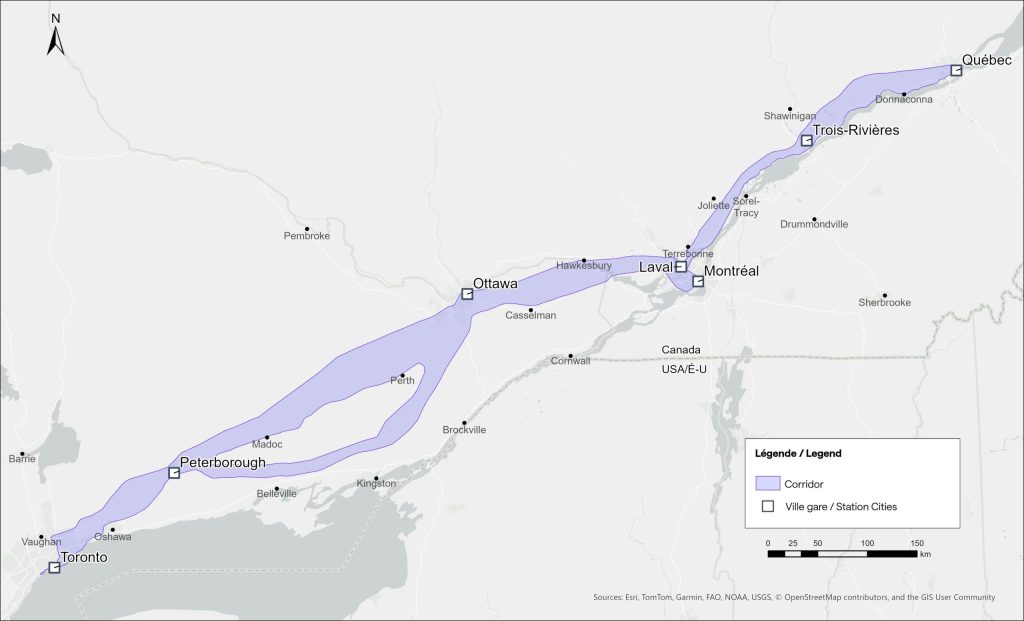
Balancing High-Speed Rail and Regional Connectivity: The Case for a Northern Altos Corridor

Canada faces a pivotal moment in defining the future of intercity rail. The introduction of a high-speed Altos service presents an opportunity to transform long-distance travel between major metropolitan centers, but its success hinges on the careful delineation of its corridor. Too often, proposals conflate high-speed ambitions with the realities of existing rail service, risking operational compromise. A northern alignment for Altos, distinct from the established southern VIA Rail corridor, represents the most effective solution for both speed and regional accessibility.

High-speed rail and conventional intercity service serve fundamentally different purposes. Altos is designed to connect major urban anchors directly, minimizing travel time through long, straight alignments, gentle curves, and full grade separation. Introducing intermediate stops at towns such as Belleville, Kingston, or Brockville would impose braking and acceleration penalties, schedule complexity, and infrastructure constraints that erode the system’s core value proposition. High-speed rail cannot achieve transformative travel times if it is forced to behave like conventional regional service.

The southern VIA Rail corridor, by contrast, exists to serve the communities that rely on rail for connectivity rather than speed. VIA Rail’s mandate is not to compete with high-speed intercity travel, but to provide reliable, frequent service linking smaller towns and cities to major urban centers. Belleville, Kingston, Brockville, and other communities depend on these connections for economic, social, and educational purposes. By maintaining the southern corridor for VIA, the service can focus on its core function: ensuring that smaller communities remain linked to metropolitan hubs, rather than attempting to serve as a high-speed through-route that would compromise both speed and accessibility.

Quantitative projections reinforce the strategic logic of a dedicated high-speed alignment. The planned Alto network between Toronto and Quebec City is expected to reach speeds up to 300 km/h, potentially reducing the current Montreal–Toronto rail journey from more than five hours to approximately three hours on high-speed track, a reduction of over 40 percent in travel time. Such reductions are a key driver of modal shift, since international evidence finds that high-speed rail that cuts travel times can attract a large share of travelers from road and air, significantly boosting ridership compared with conventional rail. In Canada’s case, future high-speed service could carry tens of millions of passengers annually, far exceeding the ridership of existing VIA Rail services, while generating an estimated $15 billion to $27 billion in economic value over decades through time savings, productivity gains, and reduced congestion. These figures underscore the economic rationale for building a system capable of truly high-speed operation rather than one constrained by mixed-traffic regional service.(altotrain.ca)

Routing Altos along a northern corridor also presents broader economic and developmental opportunities. A dedicated alignment can open new nodes of growth, stimulate investment in previously underserved areas, and create jobs in planning, construction, and operations. At the same time, VIA Rail can concentrate on fulfilling its statutory mandate: providing essential rail service to smaller communities, improving reliability, frequency, and accessibility along the southern corridor without interference from high-speed trains. This dual approach maximizes the overall utility of Canada’s rail network, ensuring that both large and small communities benefit.

Ultimately, the future balance of intercity rail depends on recognizing the distinct roles of each service. Altos should focus on moving cities closer together, achieving rapid, reliable intercity travel. VIA Rail should remain the backbone of regional connectivity, serving intermediate towns with frequent, accessible service that links them effectively to major urban centers. By allowing each system to fulfill its intended function, Canada can achieve a rail network that is both fast and inclusive, transformative yet equitable.

Beyond the Capital: Why Federal Work Must Follow Where Canada Is Growing

In the old rhythms of Canadian public service, the federal workplace was always Ottawa. Parliament Hill, rising above the banks of the Ottawa River, anchored not just governance, but geography itself. For decades, the logic was simple. If government work was done in one place, then the people who did that work would go there.

That logic no longer fits the country we live in.

What is often framed as an “Ottawa problem” – empty office towers, struggling downtown businesses, and debates about return-to-office mandates – is in fact a regional and national economic issue. The conversation has focused narrowly on the capital’s core, while ignoring the quieter, more fragile economies that surround it.

Small towns and villages do not have the economic buffers that large cities enjoy. They do not have diversified commercial districts, deep tourism markets, or the ability to absorb sudden shocks. When people leave town every weekday morning and return only to sleep, the effects are immediate and visible. Cafés close. Retail shrinks. Volunteer organizations struggle. Municipal tax bases flatten. One employer leaving, one policy shift, one lost opportunity can tip the balance.

And yet, this is where population growth is increasingly happening.

Across Eastern Ontario and much of Canada, families are choosing towns like Kemptville not because they are cheaper versions of cities, but because they offer something cities increasingly cannot. Space. Community. A sense of belonging. The growth is not speculative. It is real, measurable, and ongoing. The problem is that economic policy, particularly federal workplace policy, has not kept pace with that shift.

This is why North Grenville Mayor Nancy Peckford’s proposal to establish a federal remote work hub in Kemptville deserves to be understood as more than a local initiative. It is a response to a structural imbalance. Peckford pointed to the Kemptville Campus as an ideal off-site federal workspace, with secure buildings, high-speed internet, and flexible co-working space. Its location, she noted, offers a practical alternative to grinding commutes and limited parking in downtown Ottawa.

But the deeper argument is economic.

When federal employees work where they live, money circulates locally. Lunch is bought on Main Street, not in a food court. Childcare is local. Errands happen mid-day. The economic multiplier effect in a small town is outsized because the base is smaller. A handful of stable, well-paid jobs can sustain multiple businesses. The presence of daytime professionals supports services that would otherwise be unviable.

Large cities, including Ottawa, undoubtedly face challenges, yet they are resilient in ways small towns are not. They attract private investment. They adapt. They reconfigure. Small towns rarely get that luxury. Growth may be happening there, but it is fragile growth, easily reversed if policy decisions treat these places as peripheral rather than integral.

There is also the environmental dimension, one that aligns neatly with federal climate commitments. Long daily commutes from surrounding communities into Ottawa generate emissions that are entirely avoidable. Distributed work hubs reduce traffic congestion, lower greenhouse gas output, and do so without massive infrastructure spending. This is climate policy that improves lives rather than restricting them.

Mayor Peckford framed her proposal in terms of quality of life and community sustainability, emphasizing the importance of keeping people close to their families and rooted in their towns. That framing matters. It acknowledges that public servants are not abstract units of labour. They are neighbours, parents, volunteers, and taxpayers.

Ottawa will always matter. Parliament Hill will always be the symbolic heart of federal governance. But a modern public service does not need to be physically concentrated in one city to remain effective, coherent, or accountable.

If anything, the legitimacy of federal institutions is strengthened when they are visibly embedded across the regions they serve.

Kemptville’s proposal points toward a future where federal employment supports not just a capital city, but an entire constellation of towns and villages that are quietly doing the work of growing Canada. It is not about taking something away from Ottawa. It is about recognizing where the country already is – and where it is going.

Will the Rise of U.S. Progressives Help Revive the Canadian NDP?

The election of Zohran Mamdani as mayor of New York City marks a qualitative shift in North American progressive politics. This is no longer a story about insurgents pushing from the margins. It is about democratic socialists governing major institutions, commanding budgets, shaping public narratives, and translating movement demands into administrative power.

Alongside figures like Alexandria Ocasio-Cortez and Bernie Sanders, Mamdani’s ascent signals that U.S. progressivism has entered a new phase. The question for Canada is no longer whether these ideas resonate culturally, but whether the Canadian New Democratic Party is capable of learning the deeper strategic lessons now on offer.

The answer remains conditional. The NDP can benefit from the American progressive surge only if it studies how power is being built and exercised, not just how it is branded.

Structural and Cultural Constraints
Canada’s parliamentary, multi-party system should in theory favour a social democratic party. The NDP does not need to fight a hostile primary system or operate as a faction inside a centre-right coalition party, as U.S. progressives must within the Democrats. Yet despite this structural advantage, the NDP has struggled to convert progressive sentiment into durable electoral growth.

The party remains caught between ideological clarity and managerial caution. It often campaigns as a movement party while governing, or aspiring to govern, as a risk-averse administrator. This has produced a persistent credibility gap. Movement activists do not feel represented between elections, while swing voters hear careful policy talk without an emotionally compelling story of change.

Meanwhile, U.S. progressive discourse has become culturally influential in Canada. Class-conscious language, housing-first politics, and explicit critiques of corporate power now circulate widely through social media and activist networks. But cultural influence does not automatically translate into organizational renewal. That requires infrastructure, discipline, and leadership development.

From Insurgency to Governance: The Mamdani Moment
Mamdani’s election as New York City mayor is significant precisely because it closes the loop between organizing and governing. His political roots lie in tenant unions, transit justice campaigns, and DSA-backed electoral work that treated municipal power as a strategic prize rather than a symbolic platform.

As mayor, Mamdani now governs through the same principles that animated his rise: rent stabilization, public ownership, resistance to privatization, and an explicit alignment with working-class and immigrant communities. Crucially, these commitments are not framed as ideological abstractions, but as practical solutions to daily crises like housing costs, transit access, and public services.

This matters for the Canadian NDP because it demonstrates that democratic socialist politics can scale without dilution when rooted in permanent organizing structures. The DSA model, now validated at the level of North America’s largest city, treats elections as moments in an ongoing campaign rather than endpoints. Governance becomes an extension of movement pressure, not its replacement.

By contrast, the NDP remains largely election-centric. Local riding associations often go dormant between cycles. Policy development is centralized. Grassroots energy is mobilized episodically, then dissipates. Even when the party holds power provincially or influences federal policy, it rarely uses that position to expand organizing capacity outside the party itself.

Some Canadian organizations have attempted to replicate aspects of the DSA approach, including Courage Coalition and SomeOfUs. These efforts show promise but remain disconnected from a mass electoral vehicle capable of sustaining them. Mamdani’s mayoralty demonstrates what becomes possible when that gap is closed.

What the NDP Would Need to Change
If the NDP wants to benefit from the U.S. progressive breakthrough, including Mamdani’s victory, it would need to make several strategic shifts.

First, it must invest in permanent grassroots infrastructure that exists independently of campaign timelines. Organizing around housing, labour rights, and public services cannot be treated as messaging exercises. They must be lived relationships.

Second, the party must reclaim class-based language without apology. Housing affordability, food prices, wages, and corporate profiteering are not niche issues. They are the material conditions shaping political identity. Mamdani’s success shows that naming antagonists clearly does not alienate voters when tied to credible solutions.

Third, bold policy must be localized and nationalized in Canadian terms. Public power, green industrial policy, and decommodified housing already align with Canada’s institutional history. Crown corporations, cooperative ownership, and Indigenous-led land stewardship provide a domestic frame that avoids shallow American mimicry.

Fourth, the NDP must cultivate leaders who organize year-round and govern transparently, rather than relying on tightly controlled national figures. Mamdani’s credibility did not emerge from media polish but from years of visible, accountable work.

Finally, the party must abandon technocratic restraint as its default tone. Emotional resonance is not manipulation. It is how people recognize themselves in politics. Urgency, fairness, and dignity are not slogans. They are organizing principles.

A Blueprint, Not a Shortcut
The rise of U.S. progressives, now culminating in Mamdani’s mayoralty, does not offer the NDP an easy revival narrative. What it offers instead is a blueprint for how movements become institutions without losing their soul.

The NDP does not lack progressive values. What it lacks is a movement culture capable of sustaining those values under pressure. Mamdani’s transition from organizer to mayor shows that such a culture can win, govern, and endure.

Whether the NDP studies that lesson seriously, or continues to treat U.S. progressivism as aesthetic inspiration rather than structural instruction, will determine whether it remains a protest party with influence, or becomes a governing force with momentum.

Sources
Mamdani, Z. 2024. Interviews and public statements as New York City mayor. Jacobin.
McGrane, D. 2019. The New NDP: Moderation, Modernization, and Political Marketing. UBC Press.
Taylor, K. 2023. “The lessons Jagmeet Singh should learn from Bernie Sanders.” Policy Options.
Democratic Socialists of America NYC. 2022 to 2025. Electoral and governance strategy documents.

The Politics of Distraction: Why Alberta’s Complaints Matter Less Than They Appear

A fair reading is that a significant share of Alberta’s current complaints function as sideshows, but not empty ones. They are distractions with a purpose, and that purpose is political rather than policy-driven.

At the federal level, the Carney government’s real files are structural and unforgiving: restoring long-term productivity, managing a fragile transition to a low-carbon economy without regional collapse, stabilizing housing and infrastructure finance, and navigating a volatile global trade and security environment. None of those problems yield to symbolic confrontation. They require boring competence, capital discipline, and political stamina. Against that backdrop, disputes over judicial appointments, equalization rhetoric, or procedural grievances are comparatively low-impact on Canada’s material trajectory.

From Alberta’s perspective, however, these conflicts are useful theatre. They re-center politics on identity, grievance, and sovereignty rather than on questions where provincial governments have fewer clean answers of their own. A public argument about judges, Ottawa elites, or federal overreach is easier to sustain than a hard conversation about Alberta’s economic diversification, fiscal exposure to commodity cycles, or long-term labour force constraints. These fights allow provincial leaders to frame themselves as defenders rather than managers.

For the Carney government, the danger is not that these complaints derail core policy, but that they consume political oxygen. Every hour spent responding to performative ultimatums is an hour not spent building coalitions around housing finance reform or industrial strategy. The risk is cumulative. A steady drip of constitutional agitation can distort the agenda, forcing Ottawa into a reactive posture that favours short-term messaging over long-term statecraft.

That said, dismissing the disputes entirely would be a mistake. Sideshows still shape public mood. They erode trust in institutions, normalize the idea that core democratic guardrails are negotiable, and create a climate where substantive reform becomes harder to explain and sell. The judicial appointment fight matters less for what it changes immediately than for what it signals: a willingness to challenge institutional norms to score political points.

In the bigger picture, then, Alberta’s complaints are not the main story of Canada’s moment, but they are part of the background noise that can either be managed or allowed to metastasize. The test for the Carney government will be whether it can keep its focus on the genuinely consequential files while refusing to let performative conflict define the national agenda. Governments lose momentum not when they face opposition, but when they mistake noise for substance.

Five Things We Learned This Week

Date: February 7, 2026
Range: Saturday to Friday


1️⃣ 🌎 New START Treaty Expires

The New START nuclear arms reduction treaty between the United States and Russia officially expired this week, ending the last remaining bilateral limits on strategic nuclear arsenals. Analysts warned the lapse increases global security uncertainty and complicates future arms-control negotiations.

2️⃣ 🕊️ Rafah Crossing Reopens for Humanitarian Access

The Rafah border crossing between Gaza and Egypt reopened on a limited basis, allowing humanitarian aid deliveries and medical evacuations. The move comes amid a fragile ceasefire, with international agencies stressing the ongoing risks facing civilians.

3️⃣ 🌍 Extreme Weather Strains Infrastructure Worldwide

Severe floods, storms, and temperature extremes affected multiple regions this week, damaging infrastructure and overwhelming emergency services. Colombia reported major flooding and bridge collapses, while Europe and North America faced related climate-driven disruptions.

4️⃣ 🦴 Rare Dinosaur Discovery Advances Science

Paleontologists announced the discovery of a new dinosaur species preserved with exceptional detail, including cellular-level skin structures. The find offers new insight into Cretaceous-era ecosystems and the evolution of large herbivorous dinosaurs.

5️⃣ ❄️ Winter Olympics Open in Italy

The 2026 Winter Olympic Games officially opened in Milan and Cortina d’Ampezzo, featuring a large-scale ceremony celebrating Italian culture and international cooperation. Nearly 3,000 athletes from more than 90 countries are competing across winter sports disciplines.


📌 Notable Context From the Week

  • ☢️ Humanitarian agencies warned of worsening conditions in parts of the Sahel and West Africa.
  • 🏗️ Major infrastructure and climate-related funding commitments featured in several national budgets.
  • 🌐 Diplomatic efforts continued globally amid rising geopolitical and environmental pressures.