The Fragile Independence of NGOs: Funding, Mission, and the Cost of Survival

After more than 25 years advising organizations across sectors, I’ve come to appreciate the vital role NGOs play in filling the gaps governments can’t, or won’t, address. From frontline social services to environmental stewardship to global health and education, their work is often visionary, community-led, and deeply human. But I’ve also seen behind the curtain. And one uncomfortable truth emerges time and again: far too many NGOs are built on a financial foundation so narrow that one funding shift, often from a single government department, can bring the entire structure down.

This doesn’t mean these organizations lack heart or competence. Quite the opposite, but when 60 to 80 percent of their time and energy is spent chasing the next tranche of funding just to pay rent or keep skeleton staff employed, something is clearly out of balance. I’ve worked with executive directors who are more skilled in crafting grant proposals than in delivering the programs they were trained to lead. I’ve seen staff burn out, not from the intensity of service delivery, but from the treadmill of fundraising cycles that reward persistence over purpose.

The tension is most pronounced when a single government agency becomes the main or only funder. In those cases, the NGO may retain its legal independence, but it quickly becomes functionally dependent, unable to challenge policy, adapt freely, or pivot when the community’s needs shift. I’ve often told boards in strategic planning sessions: “If your NGO would cease to exist tomorrow without that one government grant, then you don’t have a sustainable organization, you have an outsourced program.”

This is not a call for cynicism. It’s a call for structural realism. NGOs need funding. Governments have a legitimate role in supporting social initiatives. But the risk lies in overconcentration. With no diversified base of support, whether from individual donors, private philanthropy, earned income, or even modest membership models, NGOs are vulnerable not only to budget cuts, but to shifts in political ideology. A change in government should not spell the end of essential community services. And yet, it too often does.

What’s the solution? It starts with transparency and strategy. Boards must get serious about income diversity, even if that means reimagining their business model. Funders, including governments, should fund core operations, not just shiny new projects, and do so on multi-year terms to allow for proper planning. And NGO leaders need to communicate their value clearly, not just to funders, but to the communities they serve and the public at large. You can’t build resilience without buy-in.

Supporting NGOs doesn’t mean ignoring their structural weaknesses. In fact, the best way to support them is to help them confront those weaknesses head-on. Mission matters. But so does the means of sustaining it. And in today’s volatile funding landscape, the most mission-driven thing an NGO can do might just be to get smart about its money.

Ottawa Amalgamation Failures: A Critical Reassessment  

Bigger is not always beautiful, especially when it comes to communities or, more specifically, municipalities. The 2001 amalgamation of Ottawa and its surrounding municipalities was sold as a transformation: a streamlined government delivering better services, greater efficiency, and lower taxes. In practice the results have been far more ambiguous.

Background: What Was Amalgamated – And What Was Promised
On January 1, 2001, the former municipalities that made up the Regional Municipality of Ottawa–Carleton – 11 lower-tier municipalities plus the former City of Ottawa, were merged into a single-tier municipality: the modern City of Ottawa.  

The rationale was that this consolidation would reduce duplication, unify planning and services, and deliver cost efficiencies through economies of scale. The transition cost was estimated at about $189 million, with the province covering $142 million and the City paying roughly $47 million. The projection for savings from personnel reductions was substantial: roughly $30.7 million in the first year, rising to $84 million by 2003.  

Despite these savings projections, the Transition Board did not promise any tax reductions.  

Mixed Outcomes: Services – Gains, Losses, and Uneven Distribution
One of the primary promises was standardized and enhanced municipal services across the entire new city. In many respects there were improvements, but the benefits have been uneven, and in some rural/suburban zones residents still feel left behind.

What improved
• Services such as recreation programming and library access were expanded. After amalgamation, rural areas enjoyed a jump in activity: for example, by 2007 the rural recreation program catalogue offered 444 programs (up from 62 in 2002).
• The unified municipal structure also enabled coordinated economic development efforts. For example, rural-tourism initiatives (like “Ottawa’s Countryside”) and a “Directional Farm Signage Program” helped rural businesses and agriculture get city-wide support.
• In terms of per-household spending, in its early years the amalgamated city kept overall operating spending roughly on par with a seven-city average of Ontario municipalities; only about 4% higher. And compared with a large city like City of Toronto, Ottawa’s spending was about 30% lower.  

But many promises – Especially in rural and suburban zones, fell short
• Rural residents have repeatedly voiced that core municipal services (road maintenance, snow clearing, local transit, policing) received lower priority compared to urban wards. A longstanding sense of alienation persists among many rural communities toward City Hall.
• The transition diluted local, community-by-community decision-making. Individual municipalities had previously tailored services to local needs; under the amalgamated governance many rural or semi-rural concerns are subsumed under city-wide priorities. This resulted in delays and bureaucratic inefficiencies for issues that once had local responsiveness.
• Perhaps most glaring: the city’s signature transit project, the O‑Train / Ottawa LRT system, has been plagued by cost overruns, operational problems and service reliability issues – undermining its value as a major public-transit asset. A public inquiry’s recent report pointed out serious failures in municipal oversight and transparency around the LRT project.

That failure has broader consequences because many suburban and rural residents rely on a single bus line or intermittent routes, but see a disproportionate share of taxes diverted to an increasingly controversial urban rail system.

Taxes and Finances: Savings Promised – But Higher Costs and New Burdens
One of the largest expectations was that amalgamation would lower costs for taxpayers. That premise has proven questionable.
• Although the transition plan forecast substantial savings from staff reductions, the resulting efficiencies did not translate into widespread tax reductions. None were promised.
• From 2001 to 2005, Ottawa’s property-assessment base grew by 11.1%. Over the same period, education-tax levies on residential properties increased by 33.7%, costing Ottawa homeowners roughly $28 million more than in other Ontario municipalities.
• The uniform tax regime (rather than multiple municipal rates) had disproportionate impacts on suburban and rural homeowners. In many cases they faced tax hikes without corresponding improvements to local services.
• Meanwhile, certain structural costs increased: for instance, the cost share owed to the provincial property-assessment authority (Municipal Property Assessment Corporation or MPAC) rose by 25% since amalgamation, about 5% annually, outpacing inflation and municipal tax increases. That cost is borne by taxpayers.
• In more recent years, the city faces major financial stress. The municipal transit system alone is projected to run an annual operating shortfall of $140 million. Policing, infrastructure maintenance and other capital demands contribute to mounting city-wide debt burdens. As one commentary put it, “there was no tangible, financial benefit from amalgamation.”

These fiscal pressures undercut the core argument for amalgamation — that centralization would lead to stable or lower taxes with better services.

Loss of Local Representation and Identity
Amalgamation replaced dozens of municipal councils and local governance structures with a centralized city council responsible for a vastly larger and more diverse geography and population. That shift came with trade-offs.
• Rural and semi-rural communities lost significant political influence once they became part of a larger ward-based structure. Special “area” or “service” rates were introduced for rural areas, reflecting recognition that service needs differed, but also institutionalizing a two-tier system within the same city.
• Local identity and “small-town” character in villages such as Manotick was diluted. For example, development proposals in Manotick in the mid-2000s (for thousands of new homes) sparked strong concern among local residents that the community’s character would disappear under city-wide policies.
• According to early post-amalgamation polling (2002), many rural respondents rated the new city structure poorly. Among rural residents, 38% said services “need improvement” or rated city performance “terrible,” 43% said “OK,” and only 17% rated things “good” or “excellent.”

The sense of local alienation persists decades later: many rural residents still regard themselves as under-represented and overlooked by City Hall. 

Infrastructure, Planning and Transit: Centralization Meets Complexity – And Breakdown
One of the biggest undertakings after amalgamation has been transit and infrastructure. But the centralized city structure has struggled under the weight of that complexity.
• The O-Train / Ottawa LRT project was to be a flagship symbol of a modernized, unified city-wide transit network. Instead it has become a cautionary tale. A recent public inquiry blamed both the managing company and the city’s leadership for “repeated failures and an abrogation of municipal oversight.”
• Financial burdens from large capital projects like LRT expansion have stressed city budgets. After cost overruns for Stage 1 and 2 of the O-Train project, the burden has fallen heavily on Ottawa taxpayers – unlike comparable projects in the Greater Toronto Area, where provincial or federal funding covers a larger share.
• Meanwhile, suburban sprawl and rural-suburban developments, once under small local municipalities, now stretch the city’s infrastructure capacity. Roads, snow clearing, policing and transit are far more challenging to deliver equitably in a sprawling city than in smaller, more compact municipalities.

The core problem is scale: centralizing everything in a single administration has made it difficult to provide suitable, tailored services across widely different communities, from dense downtown to rural farmland.

Governance and Democratic Legitimacy: Promises of Efficiency at the Cost of Democratic Depth
The transition to a mega-city altered not just service delivery but democratic engagement.
•  Pre-amalgamation, many local decisions:  planning, development, budget priorities were made by small municipal councils familiar with the needs of their residents. Post-amalgamation, those decisions occur within a larger, more remote bureaucracy. Many rural residents feel they no longer have a meaningful political voice.
• The centralization also introduced a complexity of governance that can hamper accountability. As seen with the LRT fiasco, oversight over massive capital projects can become diffuse and abstract, weakening the ability of residents to hold decision-makers to account.
• The uniform tax and service model – despite the wildly different needs of urban, suburban, and rural zones, reflects what critics call “one-size-fits-all governance.” That rarely serves any locality optimally, and often disadvantages those outside the urban core.

A Complicated Legacy – Not an Unqualified Disaster, But Far From the Hopes
It would be unfair to paint the amalgamation as an unmitigated catastrophe. Some benefits have accrued: coordinated planning, a unified transit vision (even if imperfect), expanded recreation and library services, economic development strategies that support rural businesses and agriculture, and, in the early years, per-household spending relatively comparable to peer municipalities.

The long-term trade-offs have been steep: higher taxes (particularly education taxes), rising costs for essential services like property-assessment operations beyond inflation, growing debt burdens, inequitable distribution of services across geography, and a weakened sense of local representation, especially in rural and semi-rural areas.

The classic promise of “efficiency through scale” has often collided with the messy reality of delivering diverse, place-specific services across a vast and varied territory.

Centralization as Compromise
The 2001 amalgamation of Ottawa was a bold gamble: a bet that centralization would bring coherence, cost savings, and improved service delivery. Four decades of experience show that the outcome is deeply mixed.

For some residents the transition delivered real benefits: greater access to recreation, library services, coordinated economic strategies, and the possibility of a unified urban vision. For many others, especially outside the downtown core, it meant increased taxes, loss of local autonomy, and a sense of being perpetually overlooked as part of a sprawling bureaucracy.

In the end, amalgamation delivered some of its promises, but at a cost that, for many, outweighs the benefits. Ultimately the experiment reveals a fundamental truth: size and scale alone do not guarantee better governance. Without careful attention to representation, equity, diverse local needs and transparent oversight, centralization too often becomes a compromise, not a solution.

A Year in the Wilds of The Rowanwood Chronicles

A reflective essay by the fellow who somehow decided that blogging about politics, climate, gender, and quantum mechanics was a relaxing hobby

I did not set out to become a blogger. No one does. Blogging is something that happens to you when you’ve said “someone should really write about this” one too many times and then realize the someone is you. That was my first year of The Rowanwood Chronicles. A steady accumulation of small irritations, large curiosities, and the occasional planetary existential dread finally pressuring me into a keyboard.

Over the past twelve months I have written about food systems, seismic faults, mononormativity, AI governance, and the demise of centralized social media platforms. This is, I admit, not a tidy list. Most writers pick a lane. I picked several highways, a few dirt roads, and one unmarked trail that led straight into a thicket of gender theory. Some readers have thanked me. Others have quietly backed away like I had started talking about cryptocurrency at a family barbecue. Fair enough.

The funny thing about running a blog with the byline “Conversations That Might Just Matter” is that you end up feeling mildly responsible for the state of the world. Somewhere in the back of my mind I became convinced that if I took one week off, climate policy would collapse, privacy laws would be gutted by corporate lawyers, and Canada would discover a massive geological fault running directly under my house. It is exhausting being the only person preventing civilization from tipping off its axis, but I have bravely carried on.

Along the way, I learned a few things.

First, people really do want long-form writing. They want context. They want to know why their health system is groaning like a Victorian heroine on a staircase. They want someone to explain decentralized social media without sounding like a blockchain evangelist who drinks only powdered mushroom tea. They want nuance rendered in plain language. I can do that. Sometimes even coherently.

Second, writing about politics is like trying to pet a squirrel. You can do it, but you have to keep your hands calm, your movements measured, and be prepared for the possibility that something small and unpredictable will bite you. Every time I published a political piece, I felt like I was tiptoeing across a frozen lake holding a hot cup of tea. Most of the time it held. Some days it cracked.

Third, the world is endlessly, maddeningly fascinating. One moment I was researching drought-related crop instability in the Global South. The next, I was reading government reports about flood plain management. Then I found myself knee-deep in a rabbit hole about the Tintina Fault, which sits there in the Yukon like an unbothered geological time bomb politely waiting its turn. Writing the blog became my excuse to satisfy every curiosity I have ever had. It turns out I have many.

What surprised me most was what readers responded to. Not the posts where I worked terribly hard to sound authoritative. Not the deeply researched pieces where I combed through reports like a librarian possessed. No. What people loved most were the pieces where I sounded like myself. Slightly bemused. Occasionally outraged. Often caffeinated. Always trying to understand the world without pretending to have mastered it.

That was the gift of the year. The realization that a blog does not need to be grand to be meaningful. It simply needs to be honest. Steady. And maybe a little mischievous.

I will admit that I sometimes wondered whether writing about governance, equity, and science from my small corner of Canada made any difference at all. But each time someone wrote to say a post clarified something for them, or started a discussion in their household, or helped them feel less alone in their confusion about the world, I remembered why I started.

I began The Rowanwood Chronicles because I wanted to understand things. I kept writing because I realized other people wanted to understand them too.

So here I am, a year older, slightly better informed, and armed with a list of future topics that spans everything from biodiversity corridors to the psychology of certainty. The world is complicated. My curiosity is incurable. And The Rowanwood Chronicles is still the place where I try to make sense of it all.

If nothing else, this year taught me that even in a noisy world full of predictions and outrage, there is room for thoughtful conversation. There is room for humour. There is room for stubborn optimism. And there is definitely room for one more cup of tea before I press publish.

The EU as a Cultural Confederation: How Brussels Empowers Regional Voices Across Europe

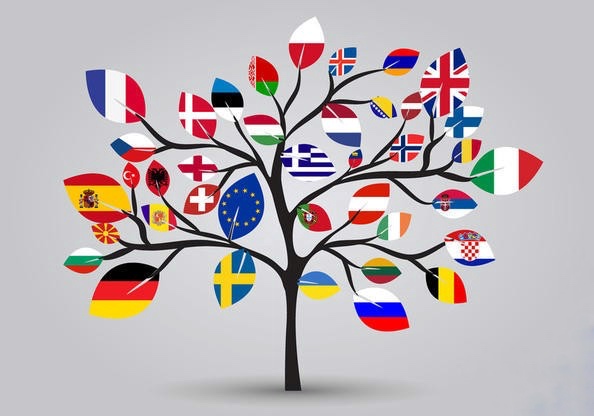
When discussing the European Union, especially in British or nationalist-leaning media, the usual tropes are economic red tape, democratic deficits, and faceless bureaucrats imposing uniformity. What is strikingly underappreciated is the EU’s role as a tireless and strategic supporter of Europe’s regional cultures: its languages, music, visual arts, literature, and festivals. Far from being a homogenising force, the EU acts as a cultural confederation, empowering the peripheries and amplifying diversity through centralised frameworks and substantial funding.

The legal foundation for this approach is enshrined in Article 167 of the Treaty on the Functioning of the European Union, which commits the EU to respect its members’ national and regional diversity, and to promote the common cultural heritage. This commitment is not symbolic, it’s operationalised through policies and investment tools that strengthen cultural ecosystems often neglected by national governments. A striking example is the Creative Europeprogramme, with a budget of over €2.44 billion for 2021–2027. This fund supports regional festivals, translation projects, heritage preservation, and artistic mobility, placing local cultures on a continental stage.

Let’s consider some examples. In the north of Sweden, Sámi artists and musicians have received EU support to maintain traditional music forms like joik, while also experimenting with modern fusion styles. In the Basque Country, EU funding has gone into language revitalisation efforts, helping schools, theatres, and broadcasters produce content in Euskara, a language that for decades was banned under Franco’s Spain. In Friesland, the Netherlands, similar funding has supported children’s books, cultural programming, and visual arts in the Frisian language – another minority tongue that survives today in part because of EU cultural policy.

Beyond the arts, the EU’s European Regional Development Fund (ERDF) and European Social Fund (ESF) have proven vital in building cultural infrastructure in economically disadvantaged areas. For example, in Maribor, Slovenia, once a declining industrial town, ERDF funds helped regenerate derelict buildings into art spaces and performance venues during its tenure as European Capital of Culture in 2012. This led to a flourishing of local art initiatives, job creation in the creative sector, and a renewed sense of community identity. Similar transformations have occurred in Plzeň, Czech Republic and Matera, Italy, cities that gained international cultural status thanks to EU support.

One of the EU’s most visionary initiatives is the European Capitals of Cultureprogramme. This initiative does more than bring tourism; it energises local traditions and gives underrepresented regions international attention. Košice, a Slovak city with a rich but lesser-known cultural history, used its 2013 designation to invest in a multicultural arts centre in a former barracks, host Roma music festivals, and highlight the region’s Jewish and Hungarian heritage. Galway, in Ireland, similarly used its 2020 status to foreground Irish-language poetry, traditional music, and storytelling – even if the pandemic altered some of its plans. In each case, the EU served as both patron and platform.

Language diversity is another cornerstone of EU cultural engagement. Though language policy is largely a national prerogative, the EU reinforces regional and minority languages through programmes linked to the European Charter for Regional or Minority Languages. While this charter operates under the Council of Europe, EU institutions work to align policies that protect language rights and support educational initiatives. The Multilingualism Policy, the Erasmus+ programme, and Creative Europe’s translation grants all contribute to preserving Europe’s linguistic diversity.

Furthermore, the EU promotes intercultural exchange and mobility. Through Culture Moves Europe and Erasmus+, thousands of young artists, musicians, writers, and curators have studied, collaborated, and performed across borders. A young fiddler from Brittany can now collaborate with an Estonian folk singer or a Roma dancer from Hungary. These encounters not only enrich the individuals involved but also build cultural bridges that counter xenophobia and nationalist retrenchment.

Critics argue that the EU’s involvement in culture infringes on national sovereignty or encourages a superficial “Euro-culture.” But this misunderstands the structural genius of the EU’s approach. Rather than imposing cultural norms, the EU centralises support mechanisms while decentralising access, ensuring local actors are the ones defining, producing, and showcasing their culture. In effect, the EU empowers regions to bypass national gatekeepers and express their identities on their own terms.

This model has also proven resilient in times of crisis. Following Russia’s invasion of Ukraine, the EU mobilised cultural solidarity quickly, supporting Ukrainian artists and cultural heritage sites both inside and outside the country. Cross-border cooperation projects in Poland, Slovakia, and Romania sprang into action, demonstrating how EU cultural infrastructure can respond nimbly to geopolitical emergencies.

In a world where many nations are becoming more inward-looking and where minority cultures are under threat from political centralisation, the EU stands as a rare example of a supranational body committed to diversity in action, not just in rhetoric. It is not perfect. Bureaucratic hurdles remain, and access to funding can be unequal. But the direction of travel is clear: support local, fund the fringe, and celebrate the plural.

If the soul of Europe lies in its mosaics of culture, then the EU, quietly, consistently, and strategically, acts as its curator.

Sources:
European Commission – Creative Europe
European Commission – Regional Policy
Council of Europe – European Charter for Regional or Minority Languages
European Commission – European Capitals of Culture
European Commission – Culture Moves Europe
European Commission – Multilingualism and Language Policy

Five Things We Learned This Week

Five Things: November 22 to 28

Here are five global developments worth noting this week, drawn from a wide range of international reporting and not confined to any single news outlet.

1. 🌋 Iceland’s Grindavík Volcano Stabilizes After New Fissure Activity

Geologists in Iceland reported that seismic activity near Grindavík slowed after a brief eruption scare earlier in the week. Though magma movement remains active underground, emergency crews have stabilized the zone and residents are cautiously optimistic about returning home.

Sources: Icelandic Met Office, RÚV, BBC World

2. 🛰️ Japan’s SLIM Lander Powered Back On

Japan surprised the global space community by successfully re-establishing partial communications with the SLIM lunar lander, which had been offline due to power and temperature constraints. Engineers are assessing what new data can be captured before the next lunar night.

Sources: JAXA Briefing, NHK, SpaceNews

3. 📚 Argentina Announces Major National Library Restoration Effort

Argentina’s Ministry of Culture launched a significant restoration program for the National Library in Buenos Aires, including digitization of rare archives and structural modernization. The project is expected to take three years and employ over two hundred specialists.

Sources: Página/12, El País, Associated Press

4. 🛢️ North Sea Energy Transition Project Moves Ahead

The United Kingdom and Norway signed a new cooperative agreement expanding their joint North Sea energy transition corridor. The plan accelerates development of subsea cables, carbon capture networks, and offshore wind linkages expected to reduce regional emissions through 2035.

Sources: The Guardian, NRK, Financial Times

5. 🐘 Kenya Reports Significant Decline in Elephant Poaching

Conservation agencies in Kenya announced that elephant poaching has reached its lowest level in over two decades, crediting increased ranger patrols, community-based wildlife programs, and newly deployed drone surveillance.

Sources: Kenya Wildlife Service, Al-Jazeera, Africanews


Five Things is a weekly Rowanwood Chronicles feature tracking global developments from Saturday to Friday.

The Hidden Cost of Closing Local Public Health Units

Update
The board of Southeast Public Health (SEPH) has passed a motion asking its CEO to reconsider a plan to shutter eight rural offices and explain what led to that decision. The call comes as officials across eastern Ontario speak out against the proposed closures, which were due to take effect in March. SEPH announced last week that it planned to terminated leases in Almonte, Gananoque, Kemptville, Napanee, Perth, Picton and Trenton. An eighth office in Cloyne which SEPH owns would be sold.

When you’ve lived long enough in a rural place, you develop a sense for which institutions actually bind a community together. Some of them are obvious; the hockey arena, the library, the one café where you run into half the town before nine in the morning. Others do their work quietly. Public health units fall into that latter category. They never announce their importance; they simply keep a community ticking along.

That’s why the proposed closure of the Kemptville public health unit has struck such a deep chord in eastern Ontario. To anyone outside the region, it probably looks like a simple administrative shuffle: move the services to Ottawa or Kingston and carry on. But those who live here know that distance has a way of turning a small inconvenience into a real barrier. Rural health research is clear on that point. Canadian Institute for Health Information (CIHI) notes that rural residents face travel burdens six times higher than people in cities, and that even modest distance cuts down uptake of preventive care. It’s not theory. It’s Thursday morning in North Grenville.

A public health visit is rarely glamorous. Nobody posts a celebratory photo after getting their drinking-water sample tested or updating their child’s vaccination record, but these are the tasks that keep a place running, in the same way tightening a hinge keeps a door from falling off. When the unit is close, as the Kemptville unit is, tucked neatly beside the hospital, parents can stop in between shifts, seniors can get help without arranging a ride, and newcomers can manage the long list of small bureaucratic necessities required to make a life in a new place. When that office moves forty, sixty or maybe eighty kilometres down the road, the entire calculation changes.

People take a full day off work. Children miss school. A family without a reliable car postpones the visit until “next month.” And a problem that could have been handled locally becomes an emergency that costs everyone more: the household, the employer, and the healthcare system itself. That is the part governments always seem to forget: the cost of a rural resident sitting in a car for two hours is not measured in fuel receipts alone. It’s measured in missed wages, lost productivity, and the slow erosion of trust in the very systems meant to safeguard public health.

There is also the quieter economic impact. Studies of rural healthcare closures show a pattern: when services disappear, the ripple effects spread. Local hiring dries up. Families choose to settle elsewhere. Seniors relocate to be closer to care. The community loses a little more gravity, a little more anchoring. Rural towns rarely collapse in dramatic fashion; they thin out one service at a time.

All of this feels especially unnecessary in a place like North Grenville. The region is one of the fastest-growing in eastern Ontario. School enrolment is up. Housing construction is steady. The local hospital is expanding, not shrinking. The public health unit is not some neglected outpost; it’s a well-used, well-located service connected directly to the community’s primary health campus. Closing it now is the policy equivalent of removing the front steps during a house renovation: technically possible, but it makes entering the home far harder for everyone.

Public health is fundamentally about prevention, and prevention only works when it’s woven into daily life. When it’s close, familiar, and easy to reach. Kemptville has all of those conditions already. The proposal to centralize services somewhere down Highway 416 or the 401 misunderstands the landscape entirely. Rural communities don’t need systems pulled farther away. They need them held closer, strengthened, and modernized in place.

The truth is simple: local public health units are part of rural infrastructure. Not decorative. Not optional. They are as important as roads, schools, and clean water. You invest in them because they prevent larger problems; social, economic, and medical from taking root.

And in a growing rural township like North Grenville, the smart money isn’t on withdrawal. It’s on staying put.

Britain’s Return to Europe: A Vision Rooted in Purpose, Not Nostalgia

Across the United Kingdom, a quiet reckoning is underway. Eight years after the Brexit referendum, the promise of a bold new chapter outside the European Union lies in tatters. Instead of renewed sovereignty and global resurgence, the country finds itself diminished: economically weaker, diplomatically isolated, and socially fragmented. For many, it is no longer a question of whether we should rejoin the EU, but how, and when.

Yet to speak of rejoining is to confront difficult truths. The journey back will not be quick. It will demand political leadership, public engagement, and diplomatic humility. But for a nation with Britain’s history, talents, and spirit, the path, though long, is both viable and vital. What lies at the end of that path is not simply a restoration of past privileges, but a reclaiming of our rightful place among Europe’s community of nations.

The first step must be political courage. While public opinion is shifting, particularly among younger generations and those long unconvinced by the false dawn of Brexit, the political establishment remains hesitant. The shadow of the 2016 referendum still looms large. Yet true leadership does not bow to ghosts; it charts a course forward. A future government must be willing to speak frankly to the British people: about the costs of Brexit, about the realities of international cooperation, and about the immense benefits of restoring our partnership with Europe.

Equally crucial is the task of restoring trust, both at home and abroad. The manner in which the UK left the EU, marked by bluster and broken commitments, left scars in Brussels and beyond. If Britain is to re-enter the fold, it must do so not as a reluctant exception-seeker, but as a committed and respectful partner. There can be no return to the days of opt-outs and special deals. We must approach accession not with entitlement, but with earnest intent, ready to meet the responsibilities of membership and contribute fully to the shared European project.

Legally and procedurally, rejoining would require a formal application under Article 49 of the Treaty on European Union. This would involve, in principle, a willingness to engage with all facets of membership, including the euro and Schengen, even if transitional arrangements are negotiated. There can be no illusions of a “lite” version of membership. The EU today is not the same bloc we left, it is more integrated, more self-assured. Britain must return on terms of mutual respect, not exception.

But if the process is demanding, the rewards are profound. Economically, the toll of Brexit is undeniable. The Office for Budget Responsibility estimates a 4% permanent reduction in GDP, an astonishing figure that translates into stagnating wages, struggling businesses, and faltering public services. Rejoining the Single Market would ease the friction that now stifles trade; full membership would restore investor confidence, supply chain resilience, and long-term economic momentum.

The argument is not merely about pounds and pence. On the world stage, Britain has not become more powerful post-Brexit, it has become peripheral. While we remain a respected military ally through NATO, our absence from the EU’s decision-making tables has cost us influence on climate policy, digital regulation, and global standards. In an era defined by democratic backsliding and geopolitical rivalry, our values: openness, rule of law, multilateralism, are best defended as part of a European alliance, not apart from it.

There is also a human dimension to this story, one often lost in policy debates. Brexit severed the everyday connections that bound us to our neighbours: the right to study in Paris, to work in Berlin, to fall in love in Lisbon without visas or barriers. Young Britons have had opportunities stripped from them. Scientists and artists find collaboration curtailed. Rejoining is not just an economic necessity, it is a moral obligation to restore the freedoms our citizens once took for granted.

And we cannot overlook the unity of the United Kingdom itself. Brexit has aggravated constitutional fault lines. Scotland and Northern Ireland voted to remain. The subsequent fallout, particularly around the Northern Ireland Protocol, has exposed the fragility of our Union. A return to the EU would not solve every issue, but it would provide a stable framework in which our nations might rediscover common cause, rather than drift further apart.

This journey will take time. It may begin with small, confident steps: rejoining Erasmus, aligning regulatory frameworks, re-entering common programmes. But these must be steps along a clearly signposted road, not gestures to nowhere. The destination, full EU membership, must be embraced not as a retreat to the past, but as a leap toward the future.

Britain belongs in Europe. Not just because of shared geography, but because of shared values: democracy, dignity, justice, and peace. We left on the back of a broken promise. We can return with purpose. And when we do, it will not be as the Britain that left, but as a Britain renewed, ready to lead once more, not from the sidelines, but from the heart of Europe.

Why Canada Needs Scandinavian-Style Healthcare

Canada stands at a crossroads. After decades of underfunding, patchwork reforms, and increasing pressure on provincial systems, it has become clear that tinkering around the edges will not save our healthcare. The discussion is no longer about marginal policy adjustments. It is about fundamental structure, equity, and national priorities.

The emergence of more private clinics across the provinces signals a shift that should alarm anyone who believes healthcare is a public good rather than a marketplace. These clinics, often operating in legal grey areas, effectively allow those with means to bypass wait times. Whenever that happens, the wealthy exit the shared system and the political incentive to invest in the public infrastructure weakens. The logic is simple. When elites can buy their way into faster care, they stop fighting for the kind of universal system that benefits everyone.

If Canada wants the best possible healthcare, the solution is not more private clinics. It is adopting the guiding principles of the Scandinavian model. Denmark, Norway, Sweden, Finland, and Iceland have built systems where high-quality care is universal, publicly funded, and delivered within a single unified framework. These countries consistently outperform Canada in access, outcomes, preventative care, and equity. Their success is not accidental. It comes from three structural principles that Canada must embrace if it wants to lead the world rather than trail behind it:

  1. A single-tier system with no private escape hatch. Everyone, including the wealthy, participates in the same system, which creates constant political pressure to maintain high quality. You get better healthcare when everyone — especially the most influential — depends on the same hospitals and clinics.
  2. High and stable public investment. Scandinavian countries fund healthcare at levels that match the real needs of their populations. Healthcare workers, equipment, and facilities are not considered costs to minimize but critical infrastructure, as essential as clean water or transportation.
  3. Integrated national planning. Instead of fragmented provincial systems, Scandinavian countries operate with cohesive national strategies. Canada’s provincial patchwork creates duplication, competition for resources, and wildly inconsistent service quality. A national framework would produce unified standards, better resource allocation, and greater accountability.

Canada can choose this path. It can reaffirm that healthcare is a public good, not a commodity. But doing so requires political courage and a public willingness to reject the slow creep of privatization. Allowing a private system to grow alongside the public system is not harmless. It undermines the very foundation of universal care.

If Canada truly wants world-class healthcare, the answer is not creating more private lanes. It is building a system where private lanes are unnecessary because the public system is so strong, so well-funded, and so well-managed that everyone is treated with the same quality and dignity. The Scandinavian model proves that this is both possible and sustainable.

To protect universal healthcare, Canada must follow those lessons. We need a single, high-functioning system that everyone pays into and everyone relies on. Only then will the political will align with the real needs of Canadians. Only then can we build the best healthcare system in the world.


Sources and Studies

  • Canadian Institute for Health Information. “Health Spending in Canada.”
  • OECD Health Statistics. “Health at a Glance” reports.
  • World Health Organization. “Universal Health Coverage: Evidence from Nordic Countries.”
  • European Observatory on Health Systems and Policies. “Nordic Health System Profiles.”
  • Commonwealth Fund. “International Health Policy Survey” annual comparative studies.
  • Government of Canada. “Canada Health Act Annual Report.”
  • University of Toronto Institute of Health Policy. “Public vs Private Delivery: Impacts on Wait Times and Equity.”
  • Fraser Institute critique reports on privatization proposals, for contrast and analysis.
  • Norwegian Ministry of Health. “Organisation of the Norwegian Health Services.”
  • Swedish National Board of Health and Welfare. “Equity and Quality in the Swedish Health System.”
  • Danish Ministry of Health. “Health System Performance and Financing.”

Yesterday in Washington

Washington likes to believe it understands itself. Staffers stride through hallways with the old confidence that policy, power, and predictable alliances still define the town. But yesterday the city felt like it had been tipped on its side. The familiar landmarks were still there, the marble still gleaming, the security lines still long, yet the political gravity had shifted. Something in the air made even the most seasoned observers pause. The rhythms were off. The choreography was wrong. The script had been changed without warning.

It began with the House vote. A resolution denouncing the supposed horrors of socialism sailed through with 285 votes. Eighty-six Democrats joined Republicans in an act that looked, to many, like a public renunciation of their own party’s progressive wing. Senior Democrats who had once embraced the energy of their younger socialists suddenly stood at the podium to praise a line of rhetoric that could have been lifted from a mid-century anticommunist tract. It was symbolic and it was safe, yet it carried the unmistakable sting of disloyalty. In a political moment defined by economic anxiety, this vote felt like an attempt to distance the party from the very language that had helped fuel its grassroots revival.

Then came the Oval Office.

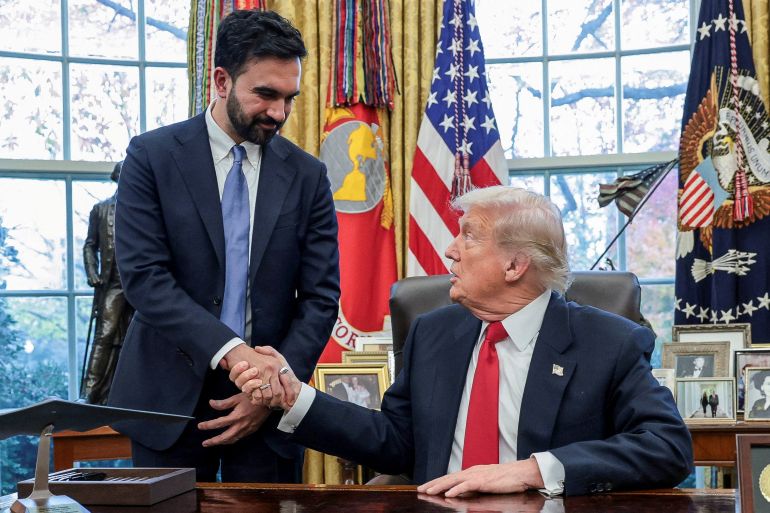
Within hours of the anti-socialism vote, Zohran Mamdani, the democratic socialist mayor-elect of New York City, walked through the gates of the White House. Cameras rolled as Donald Trump, the man who had built years of rallies on the promise of defeating socialism, suddenly praised Mamdani as rational and pragmatic. The same leader who had weaponized the word socialism now spoke about affordability, collaboration, and even the possibility of making a life in Mamdani’s New York. Reporters searched for context, staffers searched for talking points, and the city searched for its footing.

It was the kind of contradiction Washington hates because it cannot be easily spun. Democrats had voted to distance themselves from socialism while Trump offered the socialist of the hour a political embrace. Progressives stared at their own leadership in disbelief. Conservatives stared at Trump in confusion. Centrists stared at both sides and wondered whether anyone was still playing by recognizable rules. By late afternoon, Washington felt like it had been rewritten by a novelist with a sense of humor and a taste for irony.

Meanwhile Mamdani himself appeared untouched by the chaos swirling around him. He brushed off the congressional vote and spoke instead about affordability and governance. He treated the Oval Office meeting not as a political earthquake but as a practical encounter with a president who happened, on this particular day, to be in a generous mood. His calmness only amplified the surreal tone of the day. The city was upside down. The socialist was steady. The partisans were unmoored.

By evening, analysts were already scrambling to interpret the meaning of it all. Was Trump repositioning himself. Were Democrats attempting to signal caution to suburban voters. Was this simply political theater without consequence. Or had Washington revealed something deeper. The sense of an old order losing its predictability. The sense that ideological labels no longer behave as they are expected to. The sense that alliances can flip in the space of an afternoon.

For a brief moment, the capital looked like a place where the usual logic had cracked. The marble buildings and polished floors remained, but the stories being told within them no longer lined up with the roles each character was supposed to play. It was a day that left Washington blinking in the light, unsure of whether it had witnessed a temporary disruption or an early sign that the political axis itself is beginning to tilt.

Five Things We Learned This Week

Week of November 15–21, 2025

⚖️ 1. EU Moves to Limit Big Tech Power

European regulators proposed sweeping rules on Nov 18 to curb dominant tech companies, including stricter data-sharing requirements and restrictions on self-preferencing.

Why it matters: This could reshape how major platforms operate across Europe and force Big Tech to open up more, potentially leveling the playing field for smaller competitors.

🌍 2. COP30 Leaders Agree on New Climate Finance Pledge

On Nov 19, world leaders at COP30 committed to a $150 billion fund over the next five years aimed at helping vulnerable developing nations adapt to climate change.

Why it matters: This may mark a turning point for climate justice by providing crucial resources for countries facing rising seas, extreme weather, and food insecurity.

🔬 3. University Scientists Create Recyclable Batteries with 90% Efficiency

A European research team announced on Nov 20 the development of a new battery design that is both high-efficiency (approximately 90 percent) and made from fully recyclable materials.

Why it matters: If scalable, this could dramatically cut the environmental impact of batteries for electric vehicles and energy storage.

🧠 4. Breakthrough in Early Alzheimer’s Detection

On Nov 21, a biotech company revealed a blood test that can predict early Alzheimer’s disease with over 85 percent accuracy, even before symptoms appear.

Why it matters: Early detection enables earlier interventions, potentially slowing disease progression and improving long-term outcomes.

🛢️ 5. Iran and Saudi Arabia Sign Oil-Export Infrastructure Deal

On Nov 17, Iran and Saudi Arabia signed a historic agreement to jointly develop pipeline and export infrastructure after years of strained relations.

Why it matters: The deal could reshape energy dynamics in the region, ease geopolitical tensions, and potentially affect global oil prices.

This week delivered a rare mix of scientific breakthroughs, political shifts, and geopolitical surprises. Each event hints at broader changes taking shape across the world. As always, the Rowanwood Chronicles will keep watching how these threads unfold in the weeks ahead.